





What safety standards should buyers expect for LED stage lights?
- 1) How do I verify LM-79, LM-80 and TM-21 reports for LED stage fixtures — what minimum values and documentation should I expect?
- 2) What safety certifications should buyers expect for LED stage lights used in touring rigs and permanent installs?
- 3) What IP and IK ratings do I need for outdoor concerts vs indoor theatres, and how should I validate those claims?
- 4) How can I ensure a moving head or LED panel is truly flicker-free for broadcast and slow‑motion cameras — what specs and measurements should I require?
- 5) For rigging and electrical safety, what structural load ratings, secondary safety attachments, and driver protections should I require from LED stage light suppliers?
- 6) What control protocol compliance (DMX512-A, RDM, sACN) and electrical compatibility should buyers confirm to avoid control failures on tour?
- Concluding summary
Stage Lighting Design: Safety Standards & Buying Checklist for LED Stage Lights
As LED stage lighting specialists (VelloLight), we see the same purchasing pain points over and over: ambiguous specs, missing test reports, and unclear safety/rigging data. Below are six specific, technical questions beginners often ask that have incomplete answers online — followed by in-depth, practical answers you can use when selecting fixtures for theater, broadcast, touring, or outdoor events. The guidance references established photometric and safety test reports (LM-79, LM-80, TM-21), control protocols (DMX512-A, RDM, sACN), ingress/impact ratings (IP/IK) and safety certifications (UL/CE/ETL, IEC 62471, RoHS). Contact us at www.vellolight.com or info@vellolight.com for a quote tailored to your stage lighting design needs.
1) How do I verify LM-79, LM-80 and TM-21 reports for LED stage fixtures — what minimum values and documentation should I expect?
Why this matters: Photometric and lumen-maintenance data determine real-world brightness, color performance and lifetime. Many sellers post only lumen or watt values without certified test reports.
What to request from the manufacturer/supplier:
- LM-79 report: full photometric and electrical test for the complete LED luminaire (delivered luminous flux, power consumption, CCT, CRI/TLCI, spectral power distribution, lumen output with beam angle and lux/throw charts). Ensure the report is from an accredited lab and dated within the product’s test-cycle.
- LM-80 reports: test data for the LED packages used in the fixture (measured luminous flux over time at specified junction temperatures and drive currents). LM-80 is for LED packages, not entire fixtures, but it’s the basis for projecting life.
- TM-21 projection: shows how the manufacturer extrapolates the LM-80 data to predict lumen maintenance (Lx) over time. TM-21 allows extrapolation only within rules defined by the IES — verify the test length and permitted extrapolation multiplier used.
Practical minimum expectations (industry practice):
- LM-79: Ask for lux maps/photometric files (IES/LDT) and the test lab accreditation. Verify delivered lumens at fixture output — not just LED chip spec.
- LM-80: Expect LM-80 data for the LED packages used. Tests are commonly 6,000–10,000 hours; longer test durations provide more reliable TM-21 projections.
- TM-21: Check the projected L70 or L90 lifetime and the underlying LM-80 duration. For professional stage lights, L70 > 30,000–50,000 hours is a reasonable expectation; for broadcast-grade fixtures aim for higher lumen maintenance or verified L90 curves.
How to interpret: If the supplier only posts LED chip efficacy but no LM-79 photometric report and no TM-21 projection, treat claims about lifetime and output as marketing — insist on certificates from accredited labs before large purchases.
2) What safety certifications should buyers expect for LED stage lights used in touring rigs and permanent installs?
Why this matters: Different venues and countries require different regulatory marks; touring gear must satisfy multiple territories and broadcast clients often require additional photobiological and EMC assurances.
Core standards and marks to request:
- Electrical safety: CE (EU Declaration of Conformity including Low Voltage Directive and relevant harmonized standards), UKCA (UK), UL 1598 / UL 8750 or ETL listing (North America) for luminaires/LED equipment. These confirm the fixture meets recognized electrical safety requirements for the region.
- EMC and harmonic standards: EN 55032 / EN 55015 (radiated/conducted emissions) and EN 61000-3-2 (harmonic current), where applicable for EU markets; equivalent FCC/ICES rules in North America.
- Photobiological safety: IEC 62471 (photobiological safety of lamps and lamp systems). For fixtures used near performers or cameras, ask for the IEC 62471 evaluation or statement of compliance; for camera-heavy work (broadcast/slow-motion) low blue-light hazard classification is preferred.
- Hazardous substances and chemical compliance: RoHS (2011/65/EU and amendment 2015/863) and REACH declarations for EU markets.
- Ingress and impact: IP rating per IEC 60529 for outdoor suitability (IP20 indoor, IP65/IP66 for outdoor fixtures exposed to weather) and IK rating per EN 62262 for impact resistance if subject to rough handling.
- Quality systems: ISO 9001 certification for the manufacturer is a positive sign of production quality control (not a substitute for product certifications).
Practical approach: For touring fixtures expect UL/ETL or CE/UKCA plus IEC 62471 and EMC test summaries; for permanent house lighting verify local approvals and an installation-grade manual with wiring diagrams and ambient temperature derating. If a fixture will be used in multiple markets, require multi-region markings or appropriate local certifications.
3) What IP and IK ratings do I need for outdoor concerts vs indoor theatres, and how should I validate those claims?
Why this matters: Outdoor shows expose fixtures to rain, dust, and physical knocks; indoor theatre rigs face different environmental and mechanical stresses. Vendors often list IP/IP65 on marketing pages without test certificates.
Guidelines by environment:
- Indoor theatrical/fixed house use: IP20 is typical and acceptable for indoor use where fixtures are protected; IK ratings are less critical but useful for areas with high handling or hard stage use.
- Semi-protected outdoor (covered festival stages, under a roof): IP54–IP65 are common targets. IP54 resists splashing/dust; IP65 protects against jets of water and is frequently specified for fixtures that may get rain or spray.
- Fully exposed outdoor (open-air arena, front-of-house flown fixtures): Target IP66 or better and robust corrosion-resistant finishes. Ensure ventilation paths are sealed and pressure-equalization membranes are used where necessary.
IK/impact: For touring fixtures that will be repeatedly racked and handled, ask for at least IK07–IK08 impact resistance specs and evidence of mechanical testing if your environment is rough.
Validation steps:
- Request certified test reports to IEC/EN 60529 for IP and EN 62262 for IK from an accredited lab.
- Examine seals, cable entries and housing materials in person: look for gasketing, silicone seals, and IP-rated connectors (e.g., IP65-rated multicore or waterproof power in/out).
- Verify cooling approach — sealed fixtures use passive or sealed convection designs; ensure thermal derating is documented (maximum ambient temperature) because sealing changes thermal performance.
4) How can I ensure a moving head or LED panel is truly flicker-free for broadcast and slow‑motion cameras — what specs and measurements should I require?
Why this matters: Flicker or banding ruins slow-motion capture and live broadcast. Marketing statements like “flicker-free” are often unqualified.
Key measurements and specs to demand:
- Flicker metrics: Ask for percentage flicker (% modulation), flicker index, and Stroboscopic Visibility Measure (SVM) or similar camera-visible metrics measured across dimming range and color-mixing modes. For broadcast work, aim for % flicker well below 1% and SVM values in a conservative range (lower is better).
- PWM frequency / dimming technology: Know whether the fixture uses high-frequency PWM, constant-current reduction (CCR), or hybrid dimming. For camera-critical use, high-frequency PWM (several kHz) or CCR with linear control is preferred — many rental/broadcast houses require PWM frequencies above 4–5 kHz; some camera departments prefer >10 kHz or driver technologies that eliminate visible modulation at camera frame rates.
- Test across modes: Insist on measurements at 0–100% dimming, all preset colors (RGB/white), and at different frame rates (e.g., 50/60 Hz and high-speed camera speeds used on your shoots). Flicker can appear only in narrow dimming windows or color mixes.
Practical acceptance criteria: For live broadcast and slow-motion capture, require documented flicker data from the supplier and on-site camera tests before the event. If in doubt, ask for an on-site demo or a rental trial to evaluate banding under your specific camera systems.
5) For rigging and electrical safety, what structural load ratings, secondary safety attachments, and driver protections should I require from LED stage light suppliers?
Why this matters: Faulty mechanical attachments or missing safety documentation are real hazards in rigging operations. Buyers often receive fixtures without clear working-load limits or attachment specs.
Mechanical/rigging checklist:
- Marked lifting/suspension points: Fixtures must have clearly marked suspension points (M10/M12 eyebolt points or dedicated clamp points) with stamped Working Load Limit (WLL) or Safe Working Load (SWL) and part numbers for hardware. Ask for the WLL certificate and the manufacturer’s installation manual.
- Secondary safety attachment: All flown or overhead fixtures must include a secondary safety point for a safety cable. The secondary point must be load-rated and independent of the primary clamp attachment.
- Hardware compatibility: Confirm rigging clamp types, cotter pins, load-rated shackles and whether the fixture requires a specific truss clamp or adaptor for rated suspension.
- Documentation: A clear mechanical data sheet showing mass, center-of-gravity, recommended clamp torque, and any asymmetrical load conditions. For large fixtures, include certified drawings for truss installers.
Electrical/driver protections:
- Active protections: Drivers with over-temperature shutdown, short-circuit protection, surge protection (MOVs or transient suppressors), and thermal management. Ask for driver specification sheets showing over-temp setpoints and recovery behavior.
- Power details: Provide universal input (100–240 V AC, 50/60 Hz) or state regional versions; include inrush current (Ipeak) data and whether soft-start or inrush-limiting is used — important when multiple fixtures are on the same breaker or dimmer rack.
- Power factor and harmonics: For professional installs and touring, expect active PFC with power factor >0.9 and harmonic current info (EN 61000-3-2 compliance where applicable).
Operational advice: Require the manufacturer to supply installation and maintenance manuals, torque values, and certified load tests for each rigging accessory. If planning a tour, require a single-sku fixture that ships with the same certified rigging and electrical documentation in all territories.
6) What control protocol compliance (DMX512-A, RDM, sACN) and electrical compatibility should buyers confirm to avoid control failures on tour?
Why this matters: Mismatched control protocols or poor electrical specs lead to intermittent behavior, lost fixtures mid-show, or corrupted patching across networks.
Control protocol checklist:
- DMX compatibility: Confirm DMX512-A compliance for basic control and ask for DMX pinout and input/output isolation details. Many fixtures now support multiple modes (channels for single-color, RGB, RGBA, pixel mapping).
- RDM support: For touring/large installs, RDM (E1.20) is a valuable feature to remotely address and configure fixtures — request RDM compatibility if you manage large numbers of fixtures remotely.
- Network protocols: If your system uses Ethernet-based lighting control, ensure sACN (E1.31) or Art-Net support and confirm how pixel data and universes are mapped. Ask for documentation of multicast/unicast behavior, streaming limits and recommended network architecture.
Electrical compatibility:
- Input voltage range and international variants: For touring, prefer universal input drivers (100–240 V, 50/60 Hz) or specify which region the unit is built for to avoid using local transformers/adapters that invalidate certifications.
- Power factor and inrush: Require PF >0.9 (ideally >0.95) for large deployments and ask for inrush current values. Large arrays of LED fixtures can trip breakers at turn-on if inrush current is not limited or staged.
- Control isolation and grounding: Look for galvanic isolation on DMX inputs and clear grounding instructions in the manual to avoid ground-loop noise and signal corruption — particularly important in long-run DMX installations on trusses.
Testing recommendation: Before a major deployment or tour, stage a pre-tour run using your control system to simulate maximum universe counts, pixel mapping, and typical power-up sequences; validate both DMX/RDM responses and power distribution behavior.
Concluding summary
When buying LED stage lights for professional stage lighting design, insist on verifiable photometric reports (LM-79, LM-80, TM-21), regional electrical and EMC marks (CE/UKCA, UL/ETL), IEC 62471 photobiological evaluation, IP/IK certification for environmental use, documented flicker metrics for broadcast, and clearly certified rigging and electrical data (WLL/SWL, inrush, PF, driver protections). These attributes minimize downtime, protect performers and crews, and ensure consistent color and output for theatre, broadcast and touring environments.
Advantages of buying compliant, well-documented LED stage lights include lower lifecycle cost through predictable lumen maintenance, safer rigging and installs, reduced risk of broadcast flicker or camera banding, easier cross-border touring and faster troubleshooting. For a custom selection and a competitive quote tailored to your venue or tour, contact VelloLight at www.vellolight.com or info@vellolight.com — we can provide test reports, photometric files and rigging certificates with every quotation.
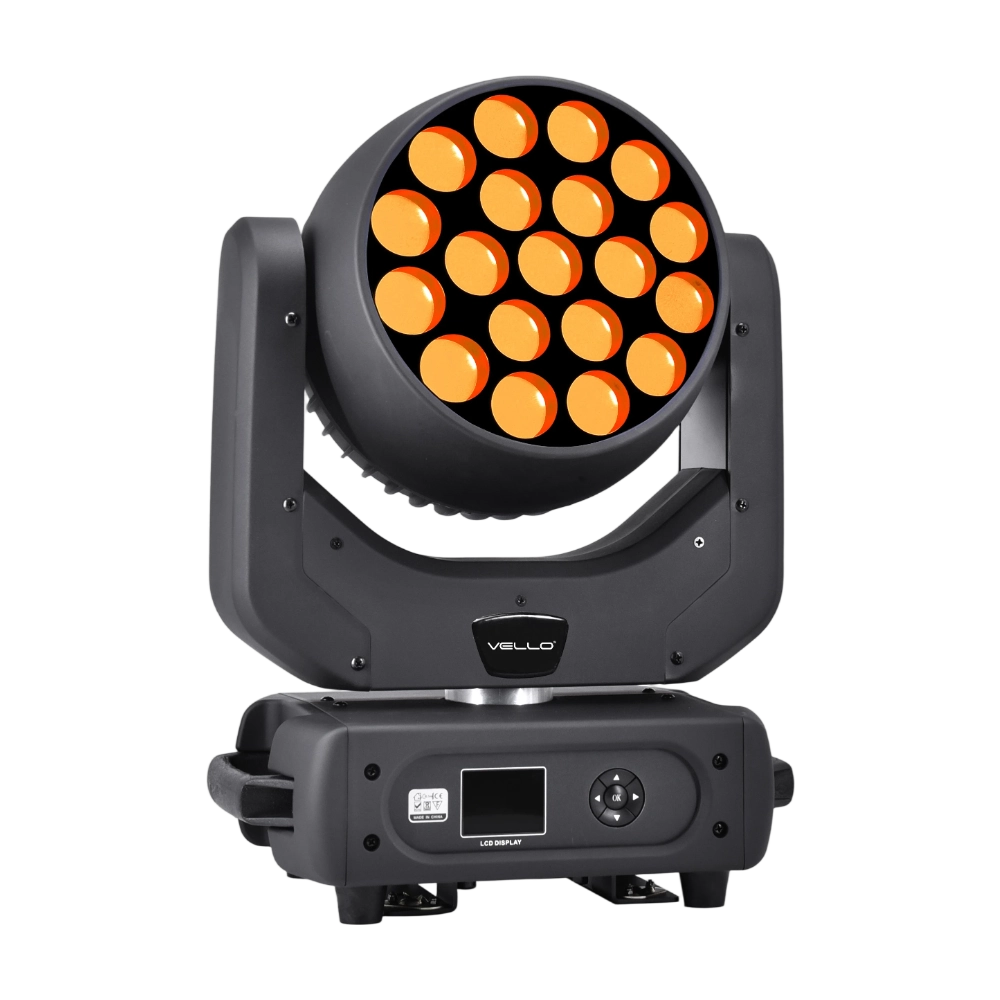
Major categories
Do you offer samples?
Samples are available for certain models. Please confirm with our sales team for details.
What is the usual lead time?
Standard models are typically shipped within 7–15 working days after payment. Customized items may vary.
Do your products support customization?
Yes. We offer OEM and ODM services tailored to project needs, including design, optics, and control compatibility.
What is the warranty period for your products?
Most products come with a standard 1–2 year warranty. Please refer to product details or contract terms for specifics.
Do you ship internationally?
Yes. We offer sea, air, and express delivery to many countries and regions worldwide.
You may also like
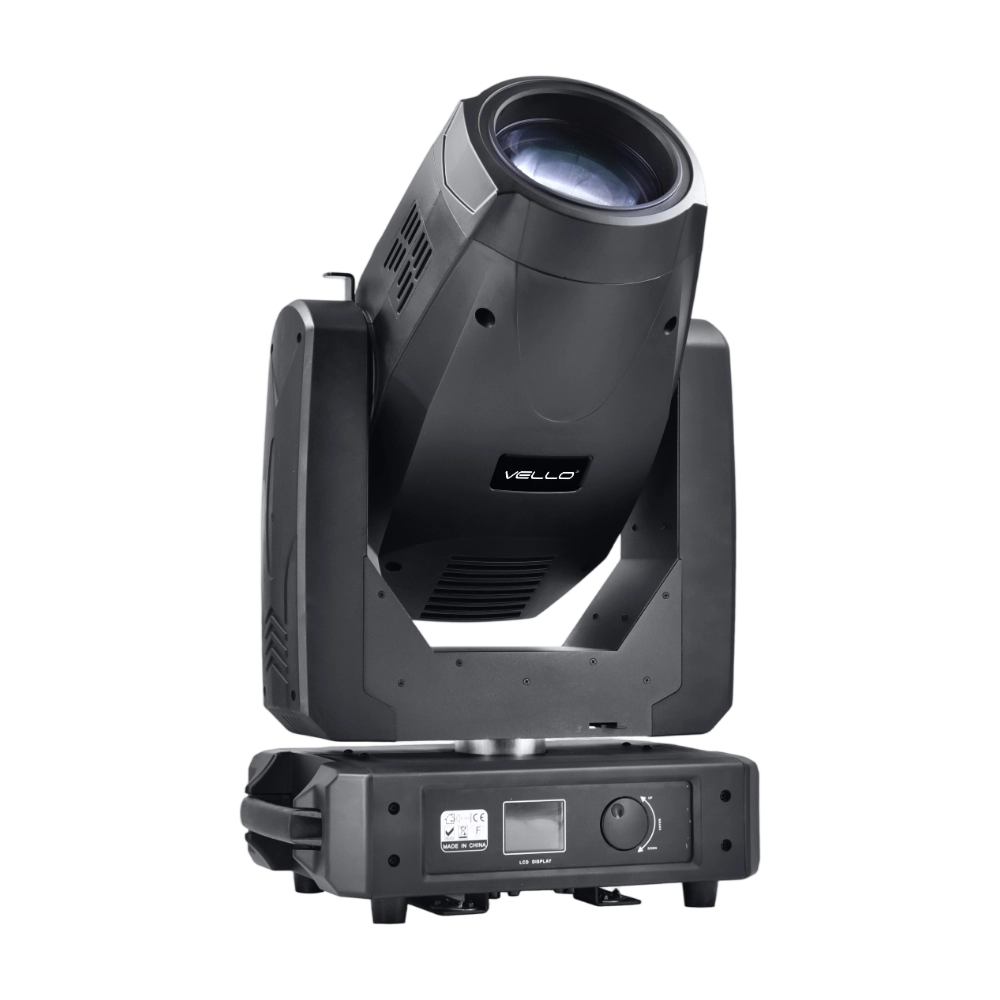
The BSW450 is a high-performance moving head fixture equipped with an original Osram 420W bulb, delivering exceptional brightness, precision, and versatility. Designed for professional stage applications, it seamlessly combines beam, spot, and wash functions in one compact unit, making it a powerful all-in-one lighting solution.
VELLO Studio Light TH 600 - High-performance studio light for photography and video. Flicker-free output, adjustable intensity, accurate color rendering, and robust design. Perfect for studios, shoots, streaming, and pro content creation.
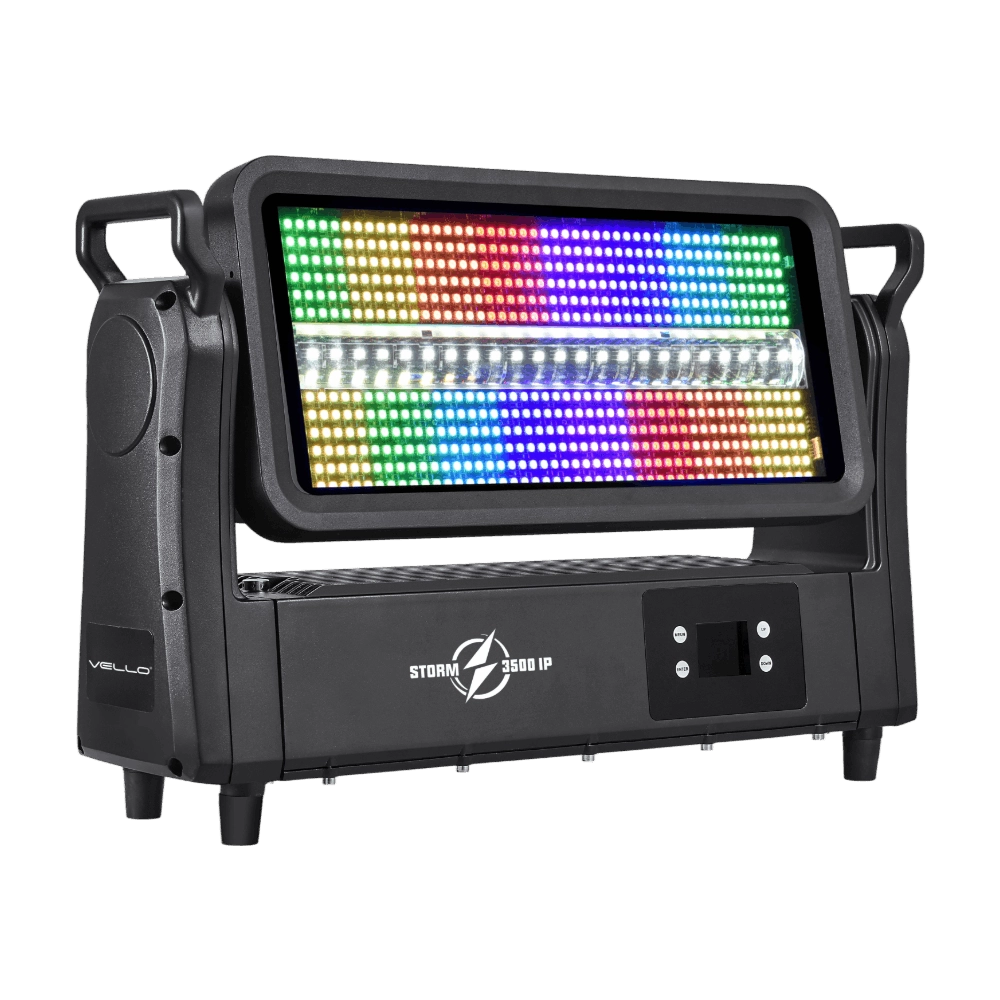
Storm 3500IP is a high-power 1200W outdoor-rated LED strobe and wash fixture, fitted with 576 pieces of 5050 RGB LEDs and 72 pieces of 12W cool white LEDs for brilliant, punchy effects with pixel-level control. Featuring IP65 protection, a wide 220° tilt, a strong RGBW strobe, DMX-controlled frost, and a 0–100% linear dimmer, it ensures versatile output from powerful to soft washes. With silent, flicker-free operation, multiple DMX channel modes, and robust die-cast aluminum housing, Storm 3500IP is built for demanding concerts, festivals, and large outdoor events.
The LED XP800 is a 600W moving head wash fixture, equipped with 37 × 20W Osram RGBW LEDs for brilliant color mixing and high output. With a wide 6°–50° electronic zoom, it easily transitions from sharp beams to smooth washes. The fixture supports 3-ring pixel control and an adjustable CTO range (2800K–8500K) for versatile applications. Featuring 540° pan / 310° tilt, high-speed 3-phase motors, and multiple DMX modes (16/28 channels), XP800 delivers powerful, precise, and dynamic performance. Compact and durable, it is an excellent choice for stages, theaters, and large-scale events requiring high brightness and flexibility.
◌ Let Us Support Your Project
Request a Custom Quote and Technical Support
Fill out the form below, and our sales team will contact you shortly with product details, pricing, and customer service options.
Rest assured that your privacy is important to us, and all information provided will be handled with the utmost confidentiality.
By clicking "Send your message," I agree to your processing my personal data.
To see how to withdraw your consent, how to control your personal data, and how we process it, please see our Privacy Policy and Terms of Use.
Over 20 Years of Innovation in Stage & Studio Lighting
© 2026 VELLO. All Rights Reserved. 粤ICP备20023734号
Join our socials
VELLO
Whatsapp: +8613902276704
Vello Lighting
VelloLights