





How do LED stage lights reduce energy costs for live events?
- 1) How do I calculate total power and circuit needs when replacing 1,000W halogens with LED ellipsoidals for a 2,000-seat theater?
- 2) How do LED stage lights reduce energy costs for live events—exact mechanisms and how to calculate savings?
- 3) How do I verify LED fixture flicker and camera compatibility for live-streamed shows and high-frame-rate cameras?
- 4) When deploying hundreds of LED moving heads for festivals, how do I design power distribution to avoid inrush trips and ensure reliability?
- 5) How do I compare beam quality and color rendering (RGB vs RGBW vs Tunable White) for theatrical lighting with live actors and cameras?
- 6) How do I estimate total cost of ownership (TCO) for networked LED stage lights—including firmware updates, spare parts, and obsolescence for a 5–10 year touring cycle?
Professional Stage Lighting Equipment: 6 Practical LED Answers for Buyers
Summary: Practical, purchase-focused answers to six advanced beginner questions about professional stage lighting equipment and how LED stage lights reduce energy costs for live events. Covers power calculations, flicker/camera compatibility, photometrics, distribution, color rendering, and total cost of ownership. Contact www.vellolight.com or info@vellolight.com for a quote.
1) How do I calculate total power and circuit needs when replacing 1,000W halogens with LED ellipsoidals for a 2,000-seat theater?
Why this matters: Buyers often get surprised by breaker trips or inrush issues after retrofit. You need a method that accounts for rated running watts, power factor, continuous-load rules, and inrush currents specific to professional stage lighting equipment.
Step-by-step method (use manufacturer photometrics and real fixture specs):
- Determine the lighting target: required illuminance (lux or footcandles) on stage from your lighting designer or code. If unknown, get an IES or photometric target from design software (Vectorworks/Lightwright/WYSIWYG).
- Choose candidate LED ellipsoidals and collect real specs: running power (W), power factor (PF), inrush current (A or surge), and photometric output (lumens or lux at distances / IES files). Modern professional LED fixtures usually publish PF (often ≥0.9) and rated running watts; use those numbers rather than nameplate only.
- Calculate the number of fixtures required: use the fixture lux output at your throw distance (from IES) to reach target lux. If you only have lumen values, use photometric conversion in lighting software. Don’t rely solely on “equivalent wattage” claims from manufacturers.
- Calculate continuous electrical load per fixture: running watts ÷ PF = apparent watts (VA). For multiple fixtures, sum apparent watts to size transformers/circuits. For continuous loads (>3 hours), follow local electrical codes: in the US, size circuit at 125% of continuous load (i.e., use 80% rule for breaker loading).
- Account for inrush: consult the fixture inrush spec in amps or coulombs. Large numbers of LED moving heads or fixtures with switching supplies can create high simultaneous inrush when powered on. Use soft-start PDUs, staggered power-up, or inrush limiting devices. Never assume steady running current equals safe breaker sizing.
- Practical check: build a sample rig on a temporary distro and measure running current with a clamp meter and inrush with a recording meter or power analyzer. This empirical test catches undocumented behavior.
Example (methodology, not a universal value): if 40 LED ellipsoidals each draw 150W running (PF 0.95), running VA ≈ 40 × (150/0.95) ≈ 6,316 VA ~ 6.3 kW. For a continuous load, plan circuits so no single breaker sees more than 80% of its rating under sustained operation. For inrush, if each fixture specification lists a start surge of 10 A for 10 ms, avoid switching all 40 on a single circuit simultaneously; use staggered soft-start PDUs.
Bottom line: use IES photometrics for fixture counts, sum apparent power for circuit sizing, and treat inrush as a separate limiting factor—soft-start and staged powering are standard in professional stage lighting equipment deployments.
2) How do LED stage lights reduce energy costs for live events—exact mechanisms and how to calculate savings?
Why this matters: Many venues and promoters say “LEDs save energy” but buyers need concrete methods to estimate savings—including reduced HVAC load and maintenance—so they can justify capital expenditure.
How LEDs reduce costs (specific mechanisms):
- Higher luminous efficacy: LEDs convert more electrical energy to usable light (lumens per watt) compared with incandescent or halogen fixtures, so you need fewer watts to reach the same on-stage lux.
- Directional light and optics: LED fixtures deliver light where you need it (narrower beam options, integrated lenses), reducing wasted light and reflector losses common in conventional fixtures.
- Lower heat output: LEDs emit much less radiant heat to the stage and into the venue. This reduces HVAC cooling loads during performances—especially meaningful in long-run shows or enclosed spaces.
- Efficient dimming and control: Digital drivers and DMX/Art-Net control allow precise dimming curves, time-based cues, and occupancy/timing strategies that minimize on-time and energy draw.
- Reduced maintenance: Typical LED engine lifespans (many professional fixtures rated ~50,000 hours) substantially reduce lamp replacement, spare inventory, and labor costs compared with replacement cycles of halogen/incandescent lamps.
How to calculate savings (practical formula):Energy savings per show = (Sum of old fixture wattage − Sum of new LED fixture wattage) × show hours × kWh price.Add HVAC savings separately: estimate percentage of lighting energy that becomes cooling load (varies by venue); reduced lighting heat lowers cooling runtime and energy. Use an HVAC engineer for precise HVAC delta, or conservatively assume a 20–40% HVAC reduction on the lighting portion in many indoor venues.
Worked example (method only): Replace ten 1,000W halogens (10,000W total running) with ten LED fixtures that deliver equivalent stage lux at 300W each (3,000W total). Direct lighting power reduction = 7,000W. For a 4-hour show at $0.12/kWh: savings per show = 7 kW × 4 h × $0.12 = $3.36. Over a season of 100 shows, direct electricity savings ≈ $336. Maintenance and lamp-replacement savings multiply that figure—lamp replacement for ten 1,000W halogen lamps (cost + labor) every few hundred hours often exceeds the direct energy savings.
Consider total cost of ownership (TCO): include capital cost, energy, maintenance labor, spare modules, and residual value. In many pro deployments, LEDs pay back via combined energy + maintenance savings plus operational advantages (less stage heat, faster rig turnaround).
3) How do I verify LED fixture flicker and camera compatibility for live-streamed shows and high-frame-rate cameras?
Why this matters: Rolling-shutter cameras and high frame rates reveal PWM flicker that audiences see on stream but performers don’t. Many beginner buyers get fixtures that work in person but flicker on camera.
What to check before buying:
- Manufacturer claims: look for explicit camera/flicker specs. Phrases such as “flicker-free at 24–120 fps” or “broadcast-rated” are meaningful only if backed by technical detail (test conditions, shutter speeds, and sensor readout type).
- Driver type and PWM strategy: professional fixtures intended for camera work usually use high-frequency current regulation or multi-level LED drivers to avoid low-frequency PWM. If a datasheet lists PWM frequency, it should be well above your camera shutter artifact region—but verify empirically.
- Testing methods: film the fixture with the same camera(s) and settings you’ll use (frame rate and shutter angle/speed). Check at all relevant dim levels, because flicker may appear in specific ranges. A smartphone high-speed camera can expose flicker, but an oscilloscope or light meter (flicker meter) gives quantitative confirmation.
- DMX and control effects: ensure that the fixture is not using low-frequency strobe or visible PWM when dimming via DMX. Some fixtures have “flicker-free” modes or broadcast presets accessible via RDM, menu, or firmware update.
Practical recommendations:
- When purchasing for broadcast or streaming, specify “camera-tested at your required frame rates” in the RFP. Ask the vendor to provide test footage or independent flicker measurements at your exact camera frame rates and shutter angles.
- Prefer fixtures that explicitly support broadcast workflows (TLCI/CRI data, linear dimming curves, and built-in broadcast presets).
- If flicker appears in tests, ask about firmware updates, alternate drivers, or different dimming curves; some manufacturers can enable higher PWM frequencies or different control profiles.
4) When deploying hundreds of LED moving heads for festivals, how do I design power distribution to avoid inrush trips and ensure reliability?
Why this matters: On-site failures or nuisance trips cost shows real money. Large touring rigs need a power strategy that accounts for inrush, cable loss, local distro, and stage reliability.
Core strategy:
- Obtain manufacturer inrush and running-current specs for each fixture. Inrush is not proportional to running watts and can be the decisive factor for breaker selection and mains coordination.
- Design distro by grouping fixtures by running current and inrush profile. Put high-inrush fixtures on separate circuits or feed them via PDUs with soft-start capability.
- Use staged power-up sequences or remote soft-start PDUs that ramp power to fixture clusters to minimize simultaneous inrush spikes. Many professional PDUs include sequencing and current limiting that are purpose-built for lighting rigs.
- Size cable runs and select breaker trip curves suitable for inrush: use type D breakers or selective coordination where necessary, and observe local electrical codes for continuous loads and derating.
- Include redundancy and local sub-distribution: large festivals often use multiple distribution points fed from different feeds to avoid single-point failures and reduce cable losses.
- Document and test: stage plot, power plan, and a rehearsal test with the full rig at the venue (or a full-power dry run) are essential. Measure actual inrush and running currents with a power analyzer and adjust the plan.
Operational tips: maintain spares for PDUs and common driver boards, train road crews to never cold-power all fixtures simultaneously, and include clear labelling on distro for quick troubleshooting.
5) How do I compare beam quality and color rendering (RGB vs RGBW vs Tunable White) for theatrical lighting with live actors and cameras?
Why this matters: Stage designers and rental buyers care about skin tone fidelity on both stage and camera. Not all LED mixing strategies produce equivalent spectral output or color rendering.
Key concepts:
- Spectral Power Distribution (SPD): the actual spectral output matters more than claimed RGB values. RGB emitters mix red/green/blue LEDs to create colors, but they often lack spectral energy in wavelengths needed to render skin tones accurately.
- RGBW / RGBA / RGB + Amber: adding a white or amber emitter supplies broader spectral coverage, improving color rendering for whites and pastels, and producing more natural skin tones. For broadcast use, tunable white sources with continuous CCT control are often essential.
- CRI vs TLCI: CRI (Color Rendering Index) was designed for broad-spectrum sources; TLCI (Television Lighting Consistency Index) is more useful for camera workflows. For camera-critical work, aim for fixtures with TLCI ≥ 90 if possible; professional broadcast fixtures will list this metric.
- Metamerism and gels: color that looks fine to the eye on stage may shift on camera. Test fixtures with costumes and camera systems used in production. Sometimes a hybrid approach (LED wash plus a tuned white point from a dedicated white channel) provides the best real-world result.
Buying guidance:
- Request SPDs and TLCI/CRI data from vendors and test with your camera. Don’t assume “RGB is fine.”
- For drama/theatre with many close player shots, prioritize fixtures with additional white/amber chips and documented camera performance.
- Where possible, audition fixtures in-situ with costume and camera to detect metameric failures before purchase.
6) How do I estimate total cost of ownership (TCO) for networked LED stage lights—including firmware updates, spare parts, and obsolescence for a 5–10 year touring cycle?
Why this matters: Up-front cost is only part of the story. Buyers need to factor firmware support, spare part availability, interoperability, and depreciation—especially for touring companies that expect multi-year, multi-market usage.
Components of TCO to model:
- Initial capex: purchase price, freight, customs, and initial training.
- Energy: estimated kWh × local rates × expected annual hours. Use measured running watts for accuracy.
- Maintenance: spare modules, replacement fans, power supplies, and expected labor hours. LED engines last longer than lamps, but power supplies and fans may need service (plan for periodic fan replacement on moving fixtures).
- Firmware/support: include vendor SLA for firmware updates, RDM/Art-Net compatibility patches, and expected availability of critical firmware fixes for the product lifecycle. Proprietary control protocols can increase risk—favor vendors who commit to long-term support and open standards (DMX512, sACN, Art-Net, RDM).
- Obsolescence/resale: factor expected useful life (many pros assume 7–10 years for touring gear) and estimate residual value or trade-in options.
- Downtime and show-impact risk: quantify potential revenue loss per day of downtime; this often dwarfs maintenance spend and argues for better support contracts and spares.
Practical TCO workflow:
- Collect real-world inputs: running watts, expected annual hours, mean time between failures (MTBF) from vendor, spare part costs, and support SLA terms.
- Make conservative assumptions for moving parts (fans, power supplies) and electronics obsolescence. Plan for at least 1–2 spare fixtures per 50 in a touring fleet.
- Negotiate firmware and support clauses into purchase contracts: ask for defined response windows, firmware version commitments, and rollback options. This reduces operational risk.
- Run a 5-year cash flow model that includes capex, annual energy, annual maintenance labor and parts, and residual value. Use this to compare vendors, not just sticker price.
Summary concluding paragraph:
Upgrading to professional LED stage lighting equipment delivers measurable benefits: substantial energy and HVAC savings, lower lamp-replacement costs, improved control precision (DMX/Art‑Net/sACN), better on-camera performance when fixtures are chosen for TLCI/CRI and flicker-free drivers, and operational advantages such as lighter rigs and faster setup. To realize these benefits you must verify photometrics with IES files, account for power factor and inrush in your distro plan, test camera compatibility, and factor firmware/support into your TCO model. When specified and deployed correctly, LED fixtures improve show quality and reduce both recurring costs and production risk.
For a tailored power plan, photometric layout, or fleet TCO estimate for your venue or tour, contact us for a quote at www.vellolight.com or info@vellolight.com.
Major categories
What is the usual lead time?
Standard models are typically shipped within 7–15 working days after payment. Customized items may vary.
Do your products support customization?
Yes. We offer OEM and ODM services tailored to project needs, including design, optics, and control compatibility.
Do you offer samples?
Samples are available for certain models. Please confirm with our sales team for details.
What is the warranty period for your products?
Most products come with a standard 1–2 year warranty. Please refer to product details or contract terms for specifics.
Do you ship internationally?
Yes. We offer sea, air, and express delivery to many countries and regions worldwide.
You may also like
Golden Eyes 250IP is a 300W outdoor-rated blinder and effect fixture, featuring a 250W COB LED as the main light source and 16 pieces of 3W RGB LEDs as secondary effects. With IP65 protection, selectable CCT (1800K / 3200K / 5600K), a strong strobe, and a retro-style background glow, it delivers both a powerful punch and creative atmospheres. Silent, flicker-free operation, multiple DMX modes, and robust housing make the Golden Eyes 250IP ideal for concerts, festivals, and outdoor productions.
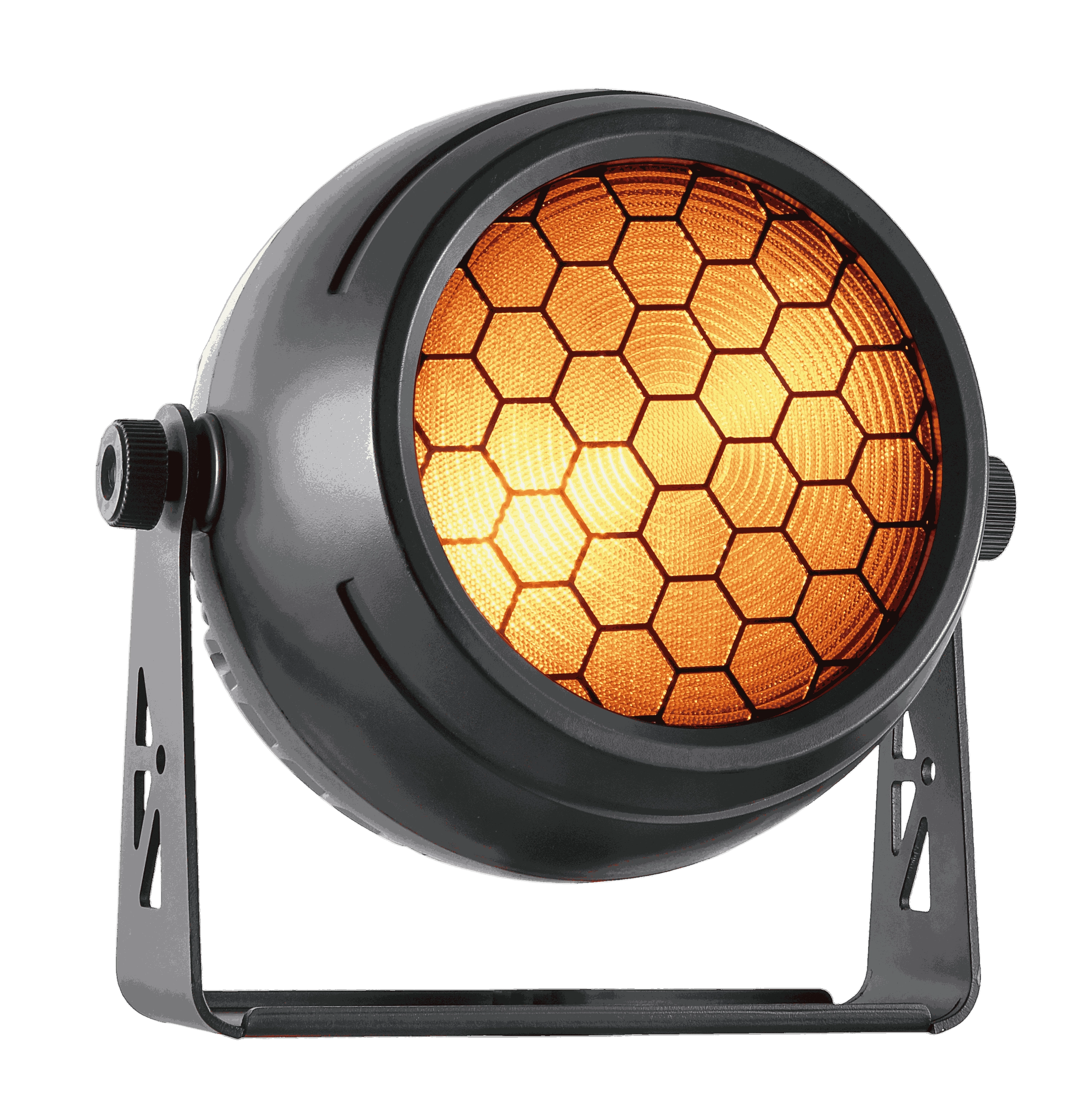
VELLO Studio Light TH 600 - High-performance studio light for photography and video. Flicker-free output, adjustable intensity, accurate color rendering, and robust design. Perfect for studios, shoots, streaming, and pro content creation.
Solar Par 200 RGBW is a 200W IP65-rated outdoor LED par, powered by a high-power 200W 4-in-1 COB LED for vibrant RGBW color mixing and smooth output. With optional 30° or 50° lens angles, flicker-free dimming, and multiple DMX channel modes, it offers versatile performance for stages, architectural lighting, and outdoor events. Built with a robust die-cast aluminum housing and equipped with Seetronic IP65 DMX and PowerCON in/out, Solar Par 200 delivers reliable, weather-resistant operation in any environment.
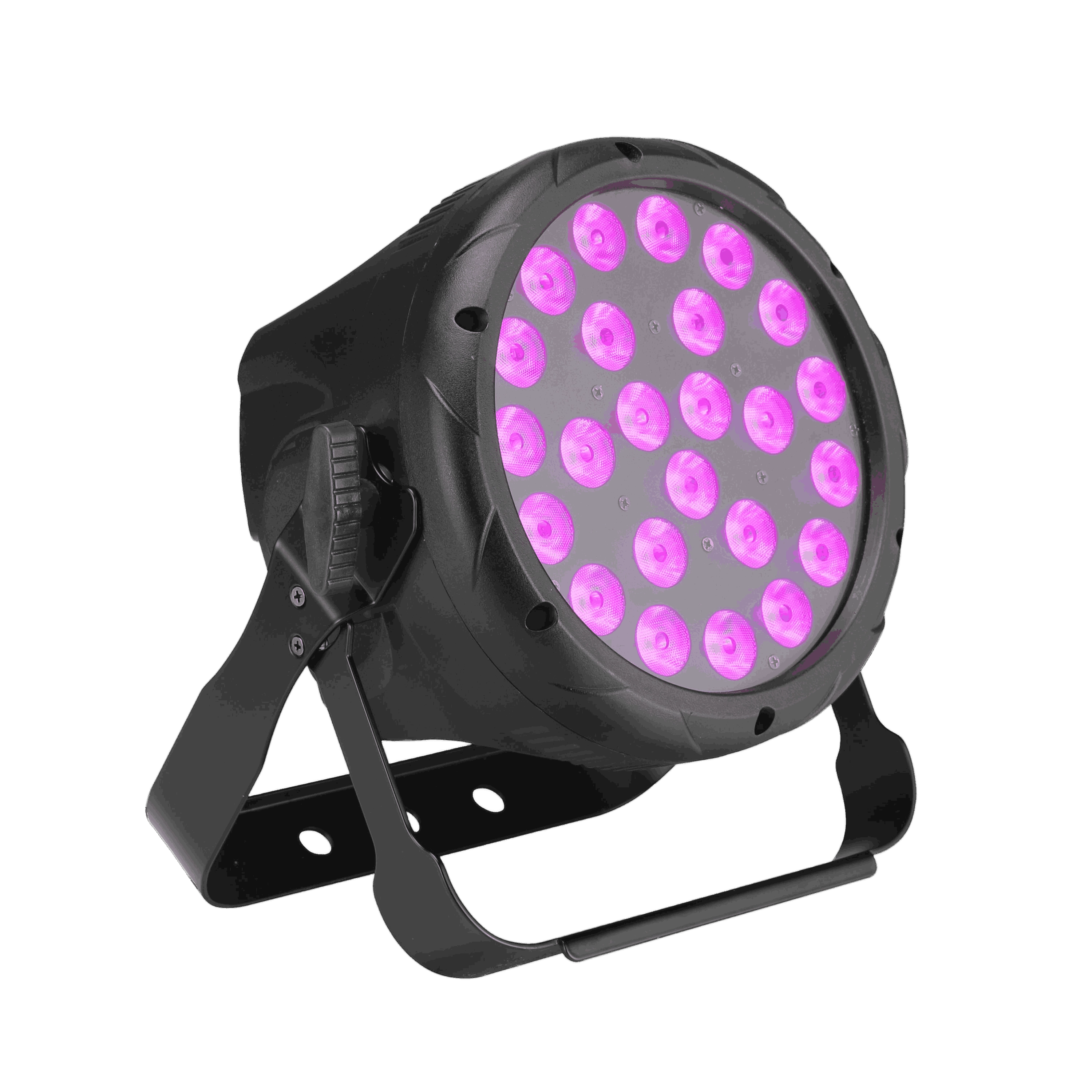
The LED Shining Par 24 is a robust 250W RGBW par fixture with 24 × 10W LEDs delivering vivid colors and smooth washes. Featuring 25°/45° lens options, flicker-free output, and a 0–100% dimmer, it is optimized for both stage and architectural use. With IP20 protection, a compact design, and DMX control (4/5/8 channels), it provides reliable performance for events, installations, and theaters.
◌ Let Us Support Your Project
Request a Custom Quote and Technical Support
Fill out the form below, and our sales team will contact you shortly with product details, pricing, and customer service options.
Rest assured that your privacy is important to us, and all information provided will be handled with the utmost confidentiality.
By clicking "Send your message," I agree to your processing my personal data.
To see how to withdraw your consent, how to control your personal data, and how we process it, please see our Privacy Policy and Terms of Use.
Over 20 Years of Innovation in Stage & Studio Lighting
© 2026 VELLO. All Rights Reserved. 粤ICP备20023734号
Join our socials
VELLO
Whatsapp: +8613902276704
Vello Lighting
VelloLights