


How do LED fixtures differ from traditional theater lights?
- 1. How do I calculate how many LED fixtures I need to reach a target lux level on my stage?
- 2. How can I verify an LED fixture will reproduce skin tones and theatrical colors as well as a tungsten ellipsoidal?
- 3. What technical specs indicate an LED fixture will dim smoothly on live camera feeds without flicker?
- 4. What optical and mechanical features tell me an LED fixture can replicate the hard-edge and shuttering of a traditional ellipsoidal (ERS)?
- 5. What are realistic long-term maintenance costs and service points for LED fixtures compared to incandescent fixtures?
- 6. When specifying LED moving lights for gobos and texture effects, which optical specs most affect projection sharpness and color fidelity?
Stage Lighting Design: How LED Fixtures Differ from Traditional Theater Lights
This article answers six specific, purchase-oriented questions frequently asked by lighting designers and venue buyers about LED stage lights. It embeds practical stage lighting design concepts—lighting plot considerations, beam angle, color temperature, dimming curve, control protocols, lumen output and CRI—so you can specify fixtures with confidence.
1. How do I calculate how many LED fixtures I need to reach a target lux level on my stage?
Beginner resources often skip step-by-step lux-to-fixture math. Use these real, repeatable steps based on photometric fundamentals (lux = lumens per square meter):
- Step 1—Define target lux. For small theater front washes designers commonly target 300–600 lx on stage; for film/TV or high-detail work you may need 800–1200 lx.
- Step 2—Measure stage area (m²). Multiply width × depth. Example: 10 m × 8 m = 80 m².
- Step 3—Compute required luminous flux (total lumens) = target lux × area. Example: 500 lx × 80 m² = 40,000 lumens.
- Step 4—Use the fixture’s published usable lumen output (not raw LED chip lumens). If a fixture lists 6,000 lm output for a stage wash, required fixtures = 40,000 / 6,000 = 6.67 → round up to 7 fixtures.
- Step 5—Adjust for throw, beam angle and mounting. Narrow beams (10–30° spot) concentrate lumens and require fewer fixtures for a given lux on a focused area. Wide wash optics (≥60°) spread lumens—expect to increase counts by 10–40% depending on overlap.
- Step 6—Factor in system losses and duty cycle. Add 10–20% spare capacity for color gels, shutters, gobos and aging. LED engines also experience lumen depreciation (L70). Typical professional LEDs are rated L70 at 50,000–100,000 hours; plan for 10–20% lumen drop over years.
Quick checklist for procurement: always use the fixture’s photometric chart (lux @ distance / beam angle), check the beam profile (flat or hot center), and ask manufacturers for a lighting plot or simulated lux map for your venue. For broadcast use the TLCI values as well as lux numbers.
2. How can I verify an LED fixture will reproduce skin tones and theatrical colors as well as a tungsten ellipsoidal?
Many online answers stop at “check CRI.” That’s insufficient for theater and camera applications. Use multiple metrics and the spectral power distribution (SPD):
- CRI (Ra): General indicator; professional fixtures should be CRI ≥ 90 for accurate color rendition. However CRI has blind spots—especially for red tones.
- TLCI: For broadcast, prefer TLCI (Television Lighting Consistency Index) values; aim ≥ 90 to minimize camera color correction.
- Spectral Power Distribution (SPD): Ask for the SPD graph. A smooth, full-spectrum SPD without deep troughs in the red band preserves skin tones. Two fixtures with identical CRI can look different on faces if SPDs vary.
- Color temperature and tuning: Ensure the fixture offers stable correlated color temperature (CCT) with minimal tint shift across dimming. Tunable white engines should show consistent color (±100K) across output ranges.
- Delta E / TM-30: Where available, TM-30 or Delta-E metrics provide more nuanced color fidelity data.
Practical procurement steps: request SPD and TLCI reports from the vendor, test a loaner fixture on an actor under intended gels or makeup, and evaluate at working dim levels. For critical front-light positions choose fixtures with CRI 92+ and published TLCI for broadcast scenarios.
3. What technical specs indicate an LED fixture will dim smoothly on live camera feeds without flicker?
Online answers often miss camera shutter interactions and PWM details. Key specs and checks:
- Flicker-Free / Camera Safe: Look for manufacturer statements that the fixture is “flicker-free” for broadcast and high-frame-rate capture.
- PWM Frequency and Driver Type: Low-cost LEDs may use visible-frequency PWM (hundreds of Hz). For camera-safe dimming, drivers should use high-frequency PWM (several kHz to >10 kHz) or true constant-current control with linear dimming. Ask for the PWM frequency or dimming method.
- Control Protocols: Ensure the fixture supports modern protocols—DMX512 (with proper frame rates), RDM for remote device management, and network protocols (Art-Net, sACN). Some fixtures allow higher update rates for smoother fades and pixel mapping.
- Dimming Curve Options: Fixtures that offer selectable dimming curves (linear, logarithmic, Stage/ANSI) let you match perceived brightness to traditional incandescent curves and avoid abrupt drops at low levels.
- Camera Tests: Insist on a camera test at your expected shutter speeds and frame rates (e.g., 24–120 fps). High-speed cameras are more sensitive to micro-flicker—demand documented lab or field test results.
If you’re specifying for broadcast: require TLCI data, confirmed PWM frequency or driver architecture, and vendor-provided camera test footage at typical frame rates. When possible, test a demo fixture on-camera in your venue.
4. What optical and mechanical features tell me an LED fixture can replicate the hard-edge and shuttering of a traditional ellipsoidal (ERS)?
Buyers assume LEDs cannot match ellipsoidals; modern fixtures can approximate or replace them if you check these specs:
- Beam Angle and Zoom Ratio: Ellipsoidals produce hard-edged beams; look for LED spots with narrow minimum beam angles (≤10°) and tight zoom ratios that preserve edge definition across throw distances.
- Shuttering and Barn Doors: Mechanical shutters in LED profiles or internal iris/shutter modules are essential for clean framing. Verify shutter positions are true and that shutters do not vignette the LED optics.
- Lens Quality and Throw Projection: High quality coated glass lenses and accurate projection throw ratios improve gobo sharpness. Check the manufacturer’s gobo projection charts (gobo size, sharpness at specified throw distances).
- Frost/Focal Plane: A true focal-plane gate or interchangeable frost accessory lets you create hard or soft edges similar to a Fresnel or ERS. Confirm whether frosts and gate accessories are vendor-supplied and serviceable.
- Gobo Compatibility: For sharp gobos choose fixtures with dedicated gobo wheels, glass gobo support, and recommended gobo sizes. Some LEDs heat-sensitive optics—only fixtures rated for glass gobos should be used for detailed projection.
For a like-for-like replacement, ask for side-by-side photometric comparisons and a gobo projection test at your venue’s typical throw distances. If you need exact tungsten-like diffusion characteristics, consider hybrid approaches (LED sources driving traditional optical blocks) or keep a limited number of incandescent ERSs for critical looks.
5. What are realistic long-term maintenance costs and service points for LED fixtures compared to incandescent fixtures?
Many guides exaggerate LED maintenance-free claims. Here are realistic expectations backed by industry norms:
- LED Lifespan: Professional LEDs are typically rated L70 at 50,000–100,000 hours. That reduces lamp replacement frequency dramatically versus tungsten (which may need replacement after hundreds to a few thousand hours).
- Common Failure Parts: For LED fixtures the most frequent service items are cooling fans, power supplies/drivers, connectors/sockets, and occasionally LED modules/COB arrays. Incandescent fixtures mainly require bulb replacements and socket maintenance.
- Serviceability: Choose fixtures with modular LED engines and user-replaceable drivers. This reduces downtime and lowers repair costs. Verify availability of spare parts and local repair centers.
- Energy and HVAC Savings: LED fixtures typically use 60–90% less electrical power than comparable incandescent fixtures, reducing utility costs and backstage HVAC load. Savings reduce total cost of ownership (TCO) over 3–7 years in many venues.
- Warranty and Support: Professional fixtures commonly come with 3–5 year warranties. Check whether the warranty covers LED modules, drivers and labor. Request Mean Time Between Failures (MTBF) and return-to-base vs on-site service options.
Example TCO approach: calculate yearly lamp/parts cost + electricity + labor for both systems. For many venues, LEDs pay back the higher upfront cost in 2–6 years through energy and lamp-savings, but factor in replacement fans and driver repairs in the model.
6. When specifying LED moving lights for gobos and texture effects, which optical specs most affect projection sharpness and color fidelity?
Purchasing decisions for gobos and texture effects must go beyond lumens and color mixing. Focus on:
- Gobo Engine Quality: Glass gobos produce the sharpest projection. Verify the fixture’s gobo wheel supports glass gobos and check recommended gobo diameters and focal plane tolerances.
- Zoom Range and Throw Distance: A longer throw with adjustable zoom preserves gobo scale and sharpness. Check projection charts for sharpness at typical distances.
- Optical Resolution: Look for specifications or test images showing edge definition, chromatic aberration, and contrast. Coated multi-element glass optics reduce chromatic fringe and maintain crisp pattern edges.
- Color Mixing Method: CMY or color-tuning white engines usually give smoother continuous color blends for textured effects versus discrete RGB or RGBW mixers. For subtle pastels and theatrical gels, CMY or 4‑channel color mixing is preferable.
- Pixel Control and Effects: For animated textures and pixel-mapped gobos, ensure the fixture supports per-pixel control, high update rates (Art-Net/sACN), and sufficient onboard memory for complex macros.
When evaluating moving fixtures, request demo projection of your specific gobos (or sample art). Ask about heat management—some fixtures have temperature limits for glass gobos—and verify warranty coverage for gobo-related optics.
Concluding summary — advantages of LED stage lights
LED stage lights deliver major operational advantages for modern stage lighting design: substantially lower energy consumption (often 60–90% less than incandescent equivalents), longer service intervals (L70 commonly 50,000+ hours), flexible color control and pixel mapping, and reduced backstage heat load. When you evaluate LED fixtures, prioritize measured photometrics (lux @ distance), CRI/TLCI and SPD data, flicker-free drivers and dimming curves, optical quality for projection or hard-edge work, serviceability and spare parts availability, and clear warranty/support terms. These factors ensure LED fixtures meet both creative and operational requirements.
For a tailored fixture selection and a quote for your venue, contact us at www.vellolight.com or email info@vellolight.com—our team can provide demo tests, lux maps and cost-of-ownership estimates specific to your stage lighting design needs.
Major categories
What is the usual lead time?
Standard models are typically shipped within 7–15 working days after payment. Customized items may vary.
Do your products support customization?
Yes. We offer OEM and ODM services tailored to project needs, including design, optics, and control compatibility.
What is the warranty period for your products?
Most products come with a standard 1–2 year warranty. Please refer to product details or contract terms for specifics.
Do you ship internationally?
Yes. We offer sea, air, and express delivery to many countries and regions worldwide.
Do you offer samples?
Samples are available for certain models. Please confirm with our sales team for details.
You may also like
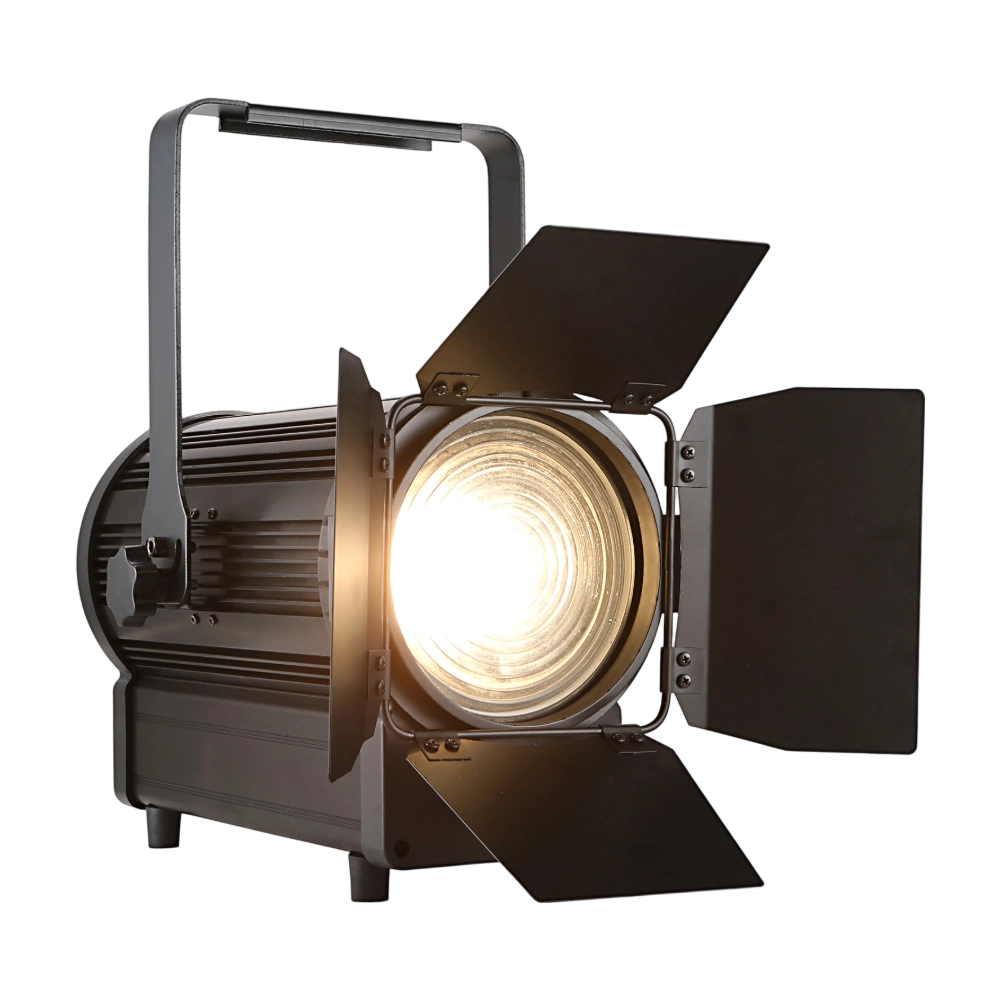
The TH250 Fresnel CTO is a compact yet powerful 250W LED Fresnel fixture. Equipped with dual 125W WW/CW lamps, it offers CTO adjustment (3000K–6000K) and CRI ≥97 for true-to-life color rendering. The 15°–50° zoom and electronic dimming make it versatile for stage and studio use. With flicker-free output, silent operation, and DMX/manual zoom, the TH250 is an ideal energy-efficient alternative to conventional Fresnels.
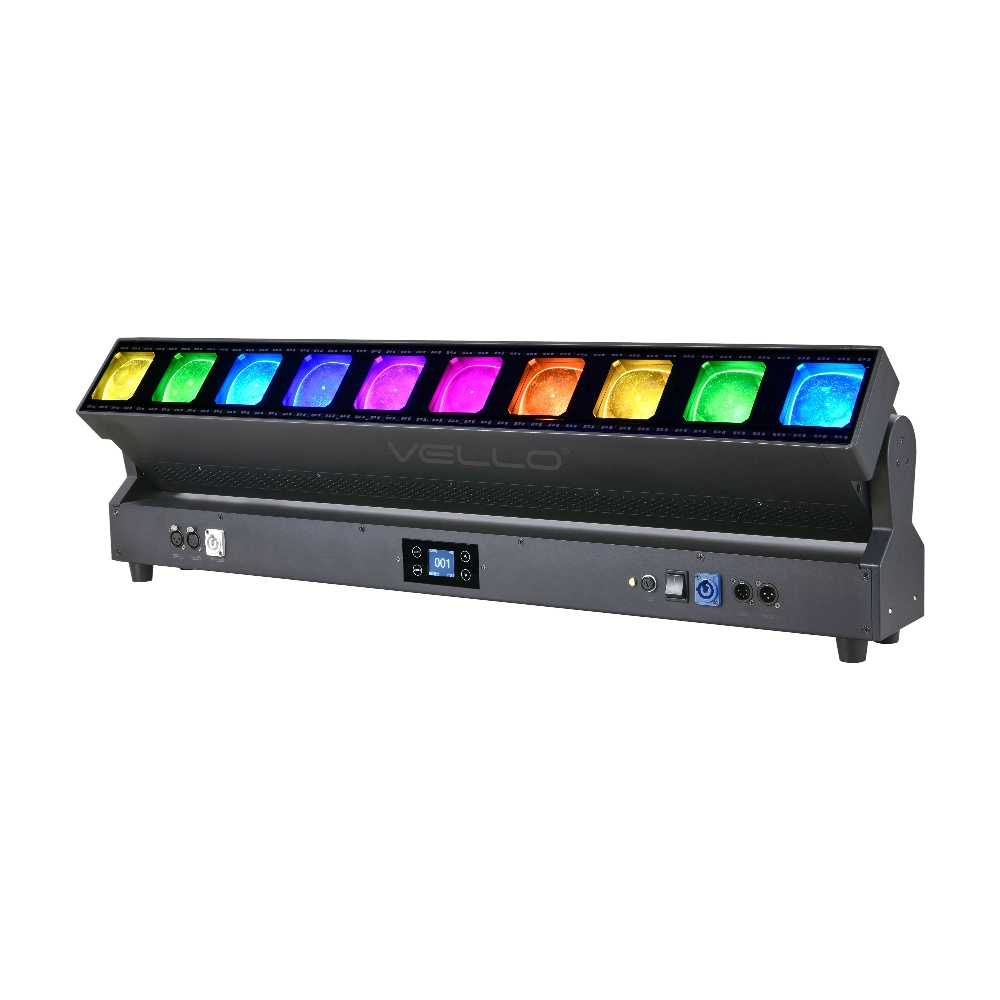
Max Wash X7 is a 750W super moving head wash fixture, equipped with 19 × 40W 7-in-1 RGB+A+C+L LEDs delivering rich colors, high brightness, and a super high CRI ≥95. With a wide 6.1°–50° electronic zoom and advanced 3-ring pixel control, it creates both powerful beams and smooth washes. The fixture supports CTO adjustment (3200K, 4200K, 5600K, 6800K) across four presets for versatile color temperature control. Featuring 540° pan / 310° tilt, high-speed motors, multiple DMX channel modes, and a durable heat-proof housing, Max Wash X-7 is designed for concerts, TV studios, and large productions demanding next-level wash performance with precision and creativity.
The LED Magic T-10F is a powerful 800W linear LED wash bar equipped with 10 × 80W 4-in-1 RGBW LEDs plus additional backlight effects. With a 20°–35° zoom, pixel control per LED, and versatile CTO/CW/WW backlight options, it creates dynamic visual effects. Supporting up to 170 DMX channels, it delivers precise control for advanced shows. Silent, flicker-free, and robust, the T-10F is perfect for concerts, TV productions, and large venues.
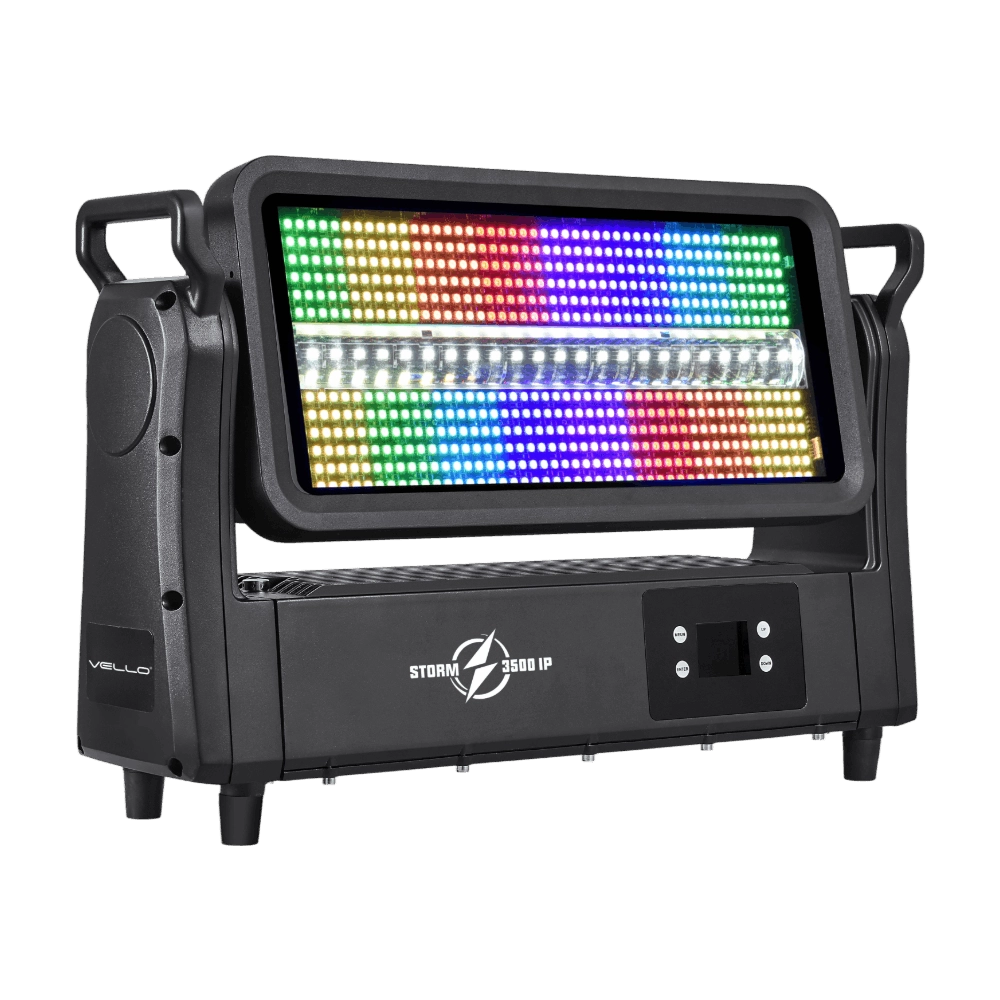
Storm 3500IP is a high-power 1200W outdoor-rated LED strobe and wash fixture, fitted with 576 pieces of 5050 RGB LEDs and 72 pieces of 12W cool white LEDs for brilliant, punchy effects with pixel-level control. Featuring IP65 protection, a wide 220° tilt, a strong RGBW strobe, DMX-controlled frost, and a 0–100% linear dimmer, it ensures versatile output from powerful to soft washes. With silent, flicker-free operation, multiple DMX channel modes, and robust die-cast aluminum housing, Storm 3500IP is built for demanding concerts, festivals, and large outdoor events.
◌ Let Us Support Your Project
Request a Custom Quote and Technical Support
Fill out the form below, and our sales team will contact you shortly with product details, pricing, and customer service options.
Rest assured that your privacy is important to us, and all information provided will be handled with the utmost confidentiality.
By clicking "Send your message," I agree to your processing my personal data.
To see how to withdraw your consent, how to control your personal data, and how we process it, please see our Privacy Policy and Terms of Use.
Over 20 Years of Innovation in Stage & Studio Lighting
© 2026 VELLO. All Rights Reserved. 粤ICP备20023734号
Join our socials
VELLO
Whatsapp: +8613902276704
Vello Lighting
VelloLights