




How do beam angle and optics affect LED stage light performance?
- 1) How do I calculate the beam angle and candela required to achieve a target lux on stage for a 15m throw in a 500-seat theater?
- 2) For sharp gobo projection and crisp profiles, what optics (TIR, aspheric, glass lens) and beam-edge control do I need to avoid hotspot and loss of contrast?
- 3) How does beam angle selection interact with lumen depreciation (LM‑80/LM‑79 data and L70 lifetime) when buying fixtures for touring vs. fixed installations?
- 4) What photometric deliverables (IES files, candela distribution polar plots, lux maps) should I demand to accurately compare LED stage light beam performance?
- 5) How do multi-lens TIR vs single aspheric optics affect color mixing, off-axis color shift and perceived uniformity in RGBW LED washes?
- 6) How do optics, beam angle and PWM dimming frequency interact to prevent camera flicker and banding in live-streamed events?
1) How do I calculate the beam angle and candela required to achieve a target lux on stage for a 15m throw in a 500-seat theater?
Why this pain point matters: Venue designers and rental buyers often pick fixtures by lumen rating alone and then find actual stage illuminance (lux) is far lower than expected at long throws.
Key formulas (industry-standard):
- Beam diameter at distance D: beam_diameter = 2 * D * tan(θ/2)
- Solid angle (steradians) for beam angle θ: Ω = 2π(1 − cos(θ/2))
- Luminous intensity (candela) = luminous flux (lumens) / Ω
- Illuminance (lux) at distance D from a point-source approximation: E = I / D^2 (I in cd, D in meters)
Practical worked example: you need ~200 lux on the front-of-stage area at 15 m (a typical theatrical cue for moderate visibility). Suppose you are evaluating a 2,000 lm LED profile. If you choose a 10° beam:
- θ = 10°, θ/2 = 5°. Ω = 2π(1 − cos5°) ≈ 0.0239 sr.
- Estimated luminous intensity I ≈ 2000 lm / 0.0239 sr ≈ 83,700 cd.
- Lux at 15 m: E = 83,700 / (15^2) = 83,700 / 225 ≈ 372 lux.
What this shows: a narrow 10° beam concentrates lumens into high candela and will exceed 200 lux at 15 m. If the same 2,000 lm fixture used a 40° beam, Ω increases, candela falls and lux at 15 m may drop below your target.
Buying guidance:
- Use the beam diameter formula to ensure the beam covers the performance area (for 15 m and 10° beam, diameter ≈ 2*15*tan5° ≈ 2.6 m).
- Ask manufacturers for photometric reports (IES files or candela distribution curves) and LM‑79 reports to confirm predicted lux at your throw distance rather than relying only on lumens.
- When in doubt, choose fixtures with zoom or interchangeable optics so you can adapt beam angle to different stages.
2) For sharp gobo projection and crisp profiles, what optics (TIR, aspheric, glass lens) and beam-edge control do I need to avoid hotspot and loss of contrast?
Why this pain point matters: Beginners buy “beam” fixtures and expect sharp gobos. Many fixtures produce a bright central hotspot and soft edges, ruining pattern projection.
Optics and their effects:
- TIR (Total Internal Reflection) lenses are compact and efficient for small-profile fixtures and offer good uniformity but can show slight field curvature affecting very sharp gobos.
- Aspheric glass lenses (multi-element) provide the best imaging precision and low chromatic aberration—preferred for ellipsoidals and high-contrast gobo work.
- Reflector + lens systems (typical in ellipsoidals) deliver strong focus control and knife-edge shading; High Quality glass optics keep edges hard without hotspots.
Practical tip: For crisp gobos, choose a fixture with a true profile/ellipsoidal optical train, glass lenses, 1:1 imaging capability, and a narrow beam option (typically ≤10°). Request MTF or gobo projection samples from the manufacturer and test a live projection if possible.
3) How does beam angle selection interact with lumen depreciation (LM‑80/LM‑79 data and L70 lifetime) when buying fixtures for touring vs. fixed installations?
Why this pain point matters: Touring systems often run fixtures at high drive current and narrow beam modes, increasing thermal stress and accelerating lumen depreciation. Fixed installs might prioritize long L70 life.
Standards and real data points:
- LM‑79: standardized test for LED fixture photometric measurements — ask for LM‑79 reports to compare real lumens and spectral power distribution.
- LM‑80: LED package test for lumen maintenance; LM‑80 results are used to project L70 or L90 lifetime via TM‑21 calculations. L70 50,000 hours is common for quality stage fixtures; cheaper LEDs may have lower projections.
Practical effects of optics on depreciation:
- Narrow-beam modes concentrate heat in secondary optics and phosphors; ensure fixture thermal design (heatsink, active cooling) matches intended use to preserve lumen maintenance.
- Zoom mechanisms add mechanical complexity—higher failure risk on tour unless built to theatrical duty cycles.
Buying guidance:
- For touring: prioritize robust mechanical optics (sealed glass, durable motors), proven LM‑80/TM‑21 projections, and higher driver/LED derating to reduce thermal stress.
- For fixed installs: you can trade some initial cost for long-term lumen maintenance and quieter cooling; smaller optics with better heat sinking can extend runtime and L70 life.
4) What photometric deliverables (IES files, candela distribution polar plots, lux maps) should I demand to accurately compare LED stage light beam performance?
Why this pain point matters: Marketing lumens and vague beam-angle numbers are insufficient to compare fixtures. Buyers need standard deliverables to model real-world behavior.
Must-have data from manufacturers:
- IES (or EULUMDAT) file for fixture — can be loaded into lighting design software (WYSIWYG, LightConverse, Capture) to simulate lux on stage and audience spill.
- LM‑79 photometric report — provides measured lumen output, spectral distribution, and power consumption.
- Candela distribution/polar intensity plots — show hot-spot characteristics and beam falloff at given vertical/horizontal planes.
- Beam angle specification (both beam and field angle) — field angle often defined at 10% of peak intensity; compare both when matching coverage.
- Photometric lux maps for standard throws (e.g., 10m, 15m, 20m) from the factory are very useful for quick comparisons.
Buying checklist:
- Load IES files into your lighting plot to confirm coverage, lux levels, and overlap behavior before purchase.
- Check test conditions in LM‑79 reports (ambient temperature, measurement distance) to ensure apples-to-apples comparison.
5) How do multi-lens TIR vs single aspheric optics affect color mixing, off-axis color shift and perceived uniformity in RGBW LED washes?
Why this pain point matters: Designers expect smooth color mixing across a wide wash. Poor optics create visible color fringing and non-uniformity at the beam edges.
Optical behaviors:
- TIR optics (commonly used with clustered LEDs) are highly efficient and compact; they can give good center uniformity but may show some color separation off-axis if LEDs are not well binned or if secondary diffusion is inadequate.
- Multi-element aspheric glass optics typically improve color homogenization for closely packed LED arrays and reduce chromatic aberrations—resulting in smoother color across the beam.
- Homogenizing integrators (light pipes, diffusers) inside the fixture equalize color but can reduce peak candela; there is always a trade-off between top intensity and uniform color mixing.
Practical checks:
- Request photos or video of full-intensity RGB mixes at multiple throw distances and angles to spot edge color shift.
- Look for fixtures that specify MacAdam ellipse steps for white consistency and provide TM‑30 or CRI data for whites—high-quality white balance indicates better color control in general.
6) How do optics, beam angle and PWM dimming frequency interact to prevent camera flicker and banding in live-streamed events?
Why this pain point matters: Lighting that looks fine to the eye can flicker or show rolling bands on camera. This is a frequent complaint in hybrid/broadcasted productions.
Technical interactions:
- PWM dimming frequency: lower PWM frequencies can produce visible flicker on cameras (especially at high shutter speeds). For broadcast, manufacturers commonly use higher-frequency drivers (>4 kHz to 20+ kHz) or linear current control to reduce strobing.
- Beam angle and optics affect apparent flicker because a narrow, high‑candela beam creates more contrast; any temporal variation in output is more visible on camera with narrow beams than with broad, diffused washes.
- Camera shutter vs. PWM: Rolling shutters and frame rates interact with harmonic frequencies—always test fixtures on the actual camera models used in production.
Practical recommendations:
- Request the PWM frequency specification (and ideally an oscilloscope capture) from the manufacturer. For broadcast-safe operation, prefer fixtures advertising high-frequency PWM or flicker-free/linear dimming modes.
- Test a sample fixture in-situ with your cameras (various frame rates and shutter angles) before committing large fleets for a tour or broadcast event.
- When doing audience-camera mixes, favor fixtures with good beam control (barn doors, shutters) and diffusion options to reduce contrast that magnifies flicker artifacts.
Concluding summary: Choosing the right beam angle and optics is central to successful stage lighting design for LED fixtures. Correct beam angle selection ensures required lux and stage coverage; high-quality glass/aspheric optics or well-engineered TIR systems shape beam uniformity, gobo sharpness, color mixing, and camera performance. Always request LM‑79/LM‑80/IES data, ask for photometric files and real-world projection samples, and test fixtures with your venue throw distances and cameras before purchase.
Advantages of selecting proper beam angle and optics: improved lux efficiency (less wasted light), precise coverage and overlap with fewer fixtures, sharper gobos and profiles, smoother color mixing and uniform washes, extended LED lifetime by matching thermal design to optical use, and predictable camera-safe operation for broadcast.
For project-specific photometric modeling or a tailored quote, contact us for a consultation and quote: visit www.vellolight.com or email info@vellolight.com.
Major categories
Do your products support customization?
Yes. We offer OEM and ODM services tailored to project needs, including design, optics, and control compatibility.
What is the warranty period for your products?
Most products come with a standard 1–2 year warranty. Please refer to product details or contract terms for specifics.
Do you offer samples?
Samples are available for certain models. Please confirm with our sales team for details.
Do you ship internationally?
Yes. We offer sea, air, and express delivery to many countries and regions worldwide.
What is the usual lead time?
Standard models are typically shipped within 7–15 working days after payment. Customized items may vary.
You may also like
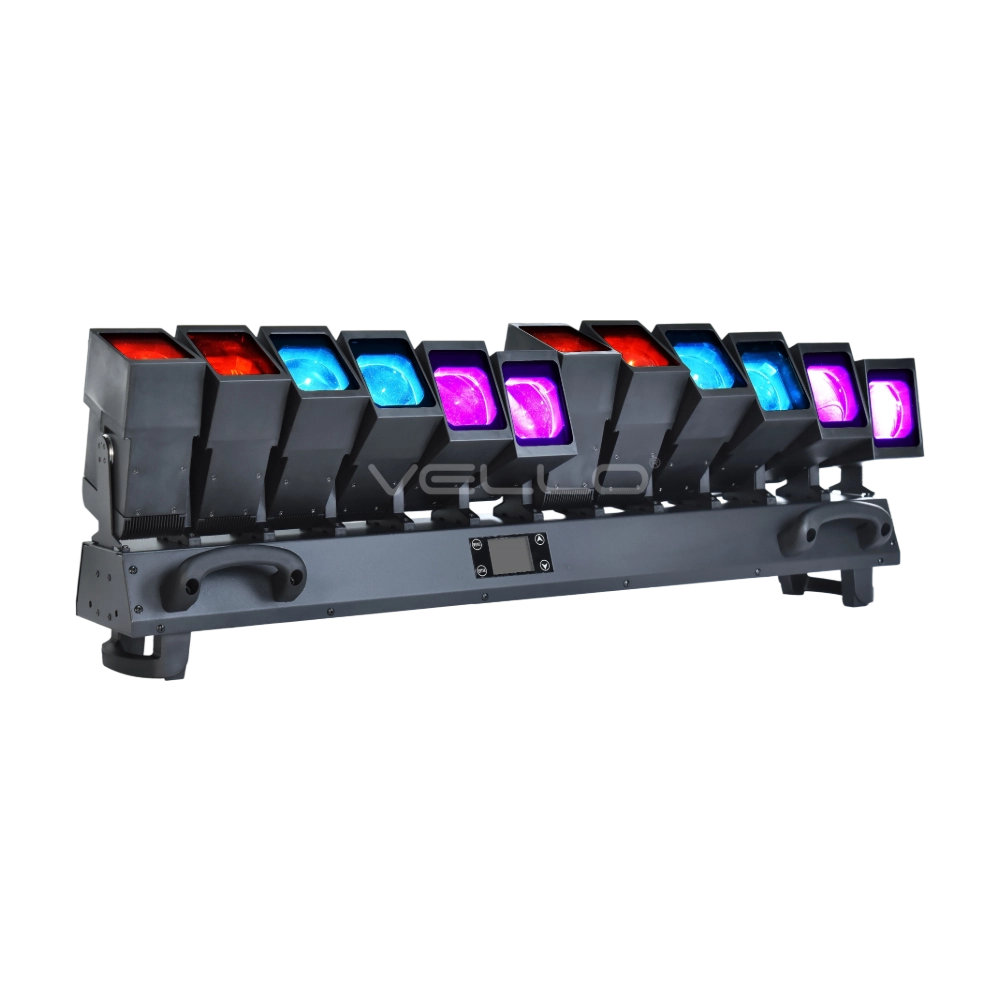
The LED Octopus S-12 is an advanced 800W moving bar fixture with 12 × 60W Osram RGBW LEDs, each controllable by pixel. Offering a 3.5°–36° zoom, 220° tilt movement, and precise dimming, it creates stunning dynamic effects. With multiple DMX modes (up to 179 channels) and auto-correction with a magnetic encoder, it ensures smooth operation. Designed for professional touring and installations, the S-12 delivers unmatched brightness, flexibility, and creative control.
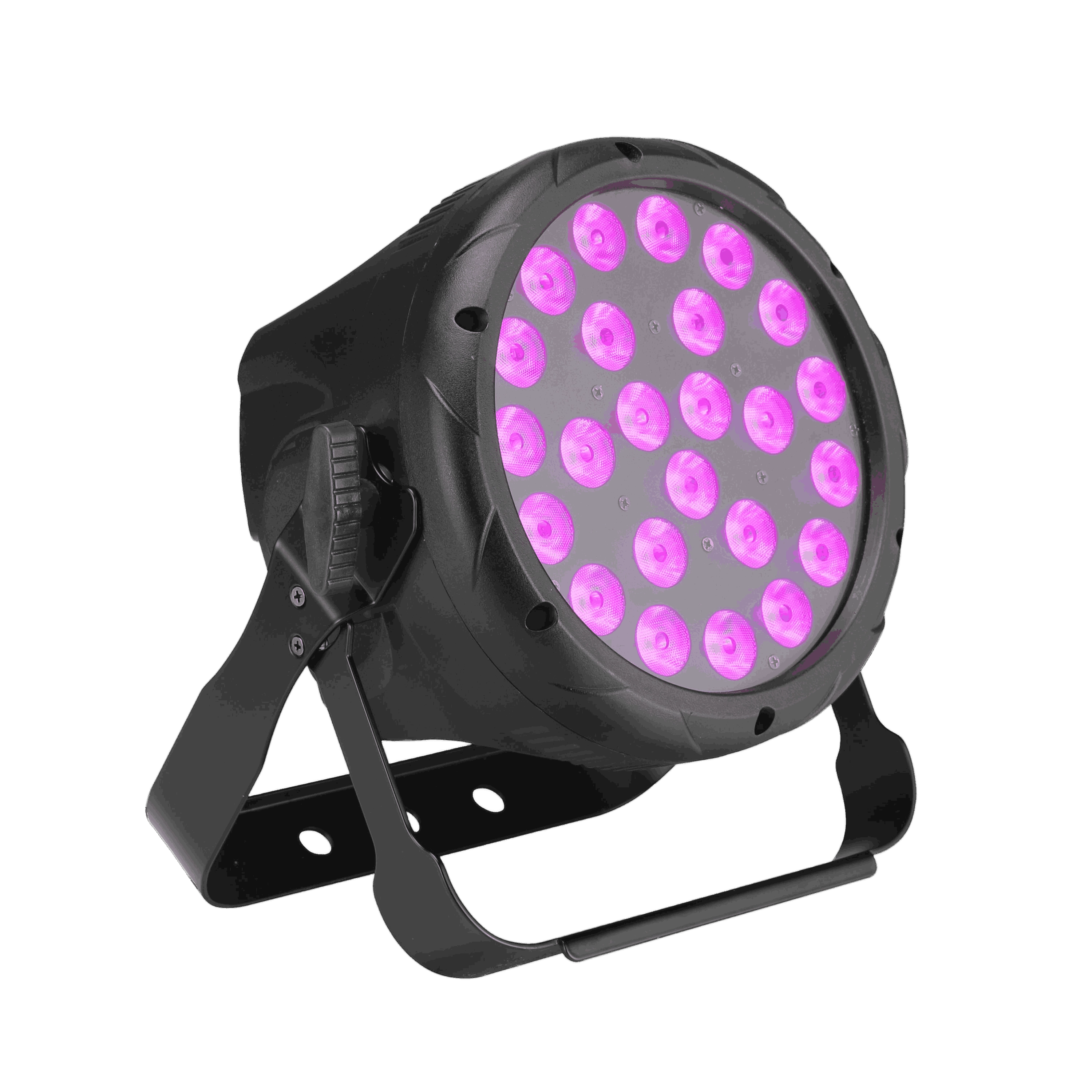
The LED Shining Par 24 is a robust 250W RGBW par fixture with 24 × 10W LEDs delivering vivid colors and smooth washes. Featuring 25°/45° lens options, flicker-free output, and a 0–100% dimmer, it is optimized for both stage and architectural use. With IP20 protection, a compact design, and DMX control (4/5/8 channels), it provides reliable performance for events, installations, and theaters.
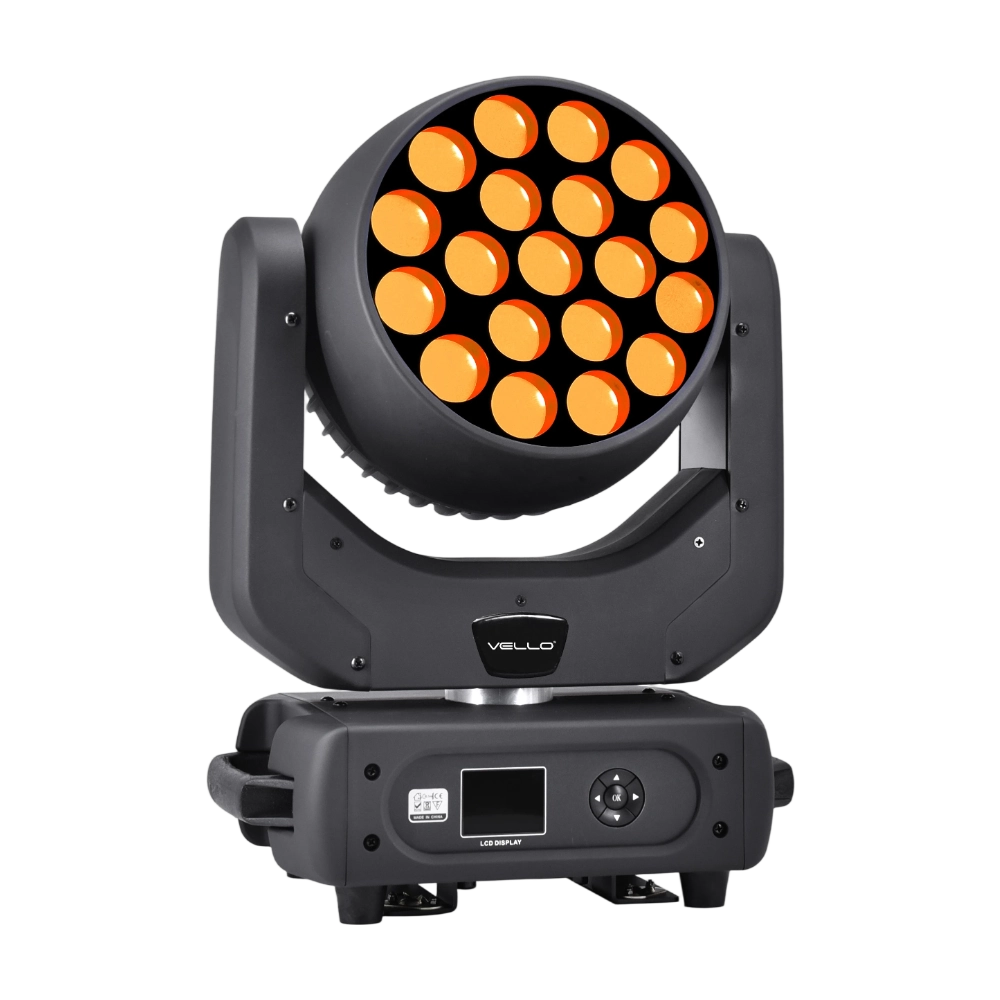
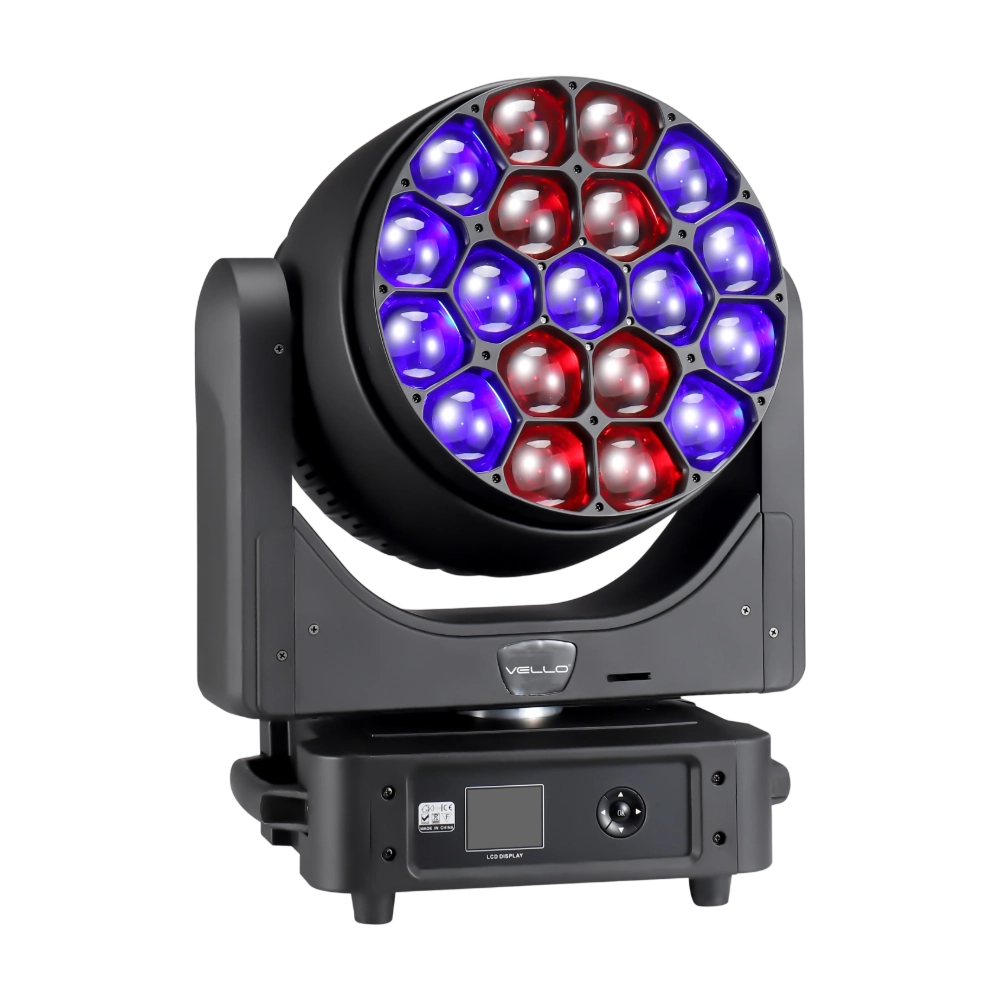
LED Bee Eyes K20 is a 750W high-output moving head wash powered by 19 × 40W Osram RGBW LEDs for intense brightness and rich color mixing. With a 4°–60° electronic zoom and wide CTO range (2700K–8000K), it seamlessly shifts from narrow beams to broad washes. Each LED can be controlled individually for advanced pixel mapping, while the rotating lens wheel creates striking dynamic effects. Featuring 540° pan / 270° tilt, multiple DMX channel modes, and robust construction, the K20 delivers exceptional flexibility and power—perfect for large concerts, stage shows, and high-impact visual productions.
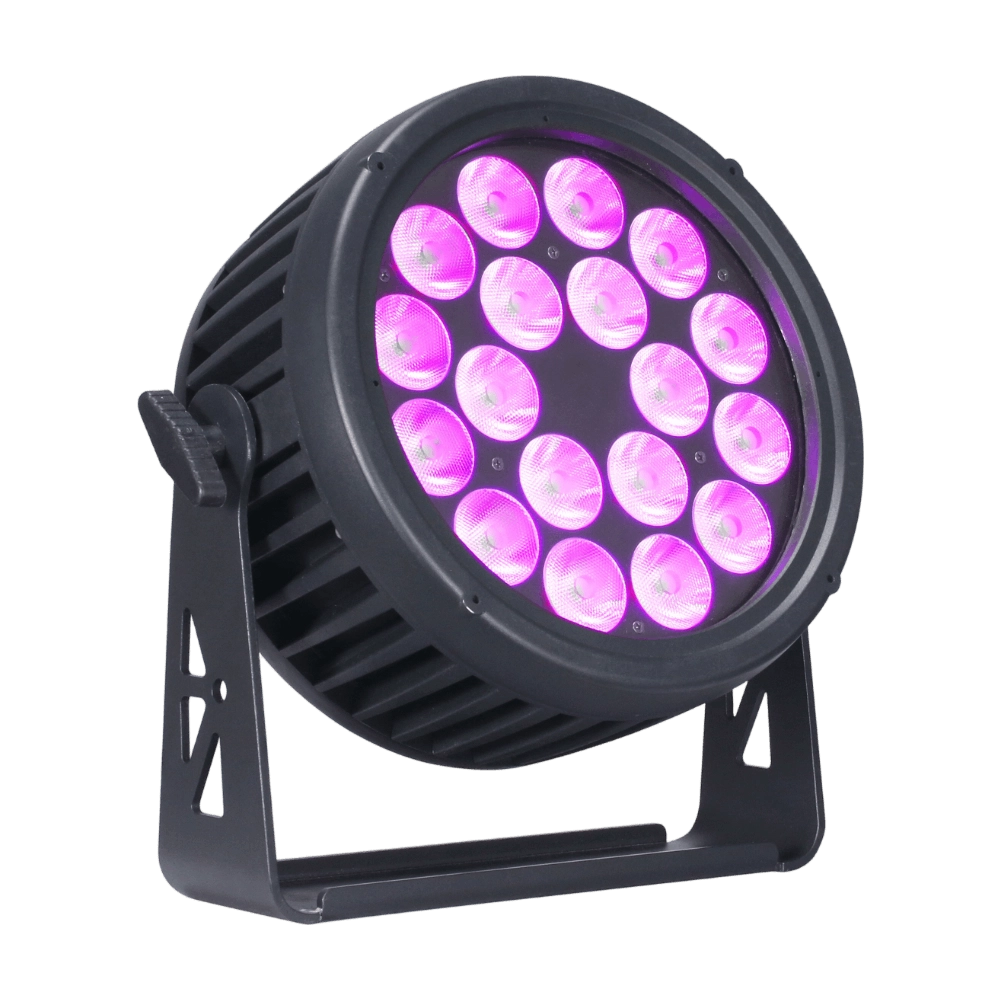
The LED Mac Par 18 offers 180W of output with 18 × 10W RGBW LEDs for brilliant, even color washes. Featuring a long 50,000-hour LED lifetime, flicker-free output, and 25°/45° lens options, it ensures flexibility in stage, event, and installation setups. Its rugged die-cast aluminum housing, IP65 rating, and DMX control modes make it a versatile wash solution.
◌ Let Us Support Your Project
Request a Custom Quote and Technical Support
Fill out the form below, and our sales team will contact you shortly with product details, pricing, and customer service options.
Rest assured that your privacy is important to us, and all information provided will be handled with the utmost confidentiality.
By clicking "Send your message," I agree to your processing my personal data.
To see how to withdraw your consent, how to control your personal data, and how we process it, please see our Privacy Policy and Terms of Use.
Over 20 Years of Innovation in Stage & Studio Lighting
© 2026 VELLO. All Rights Reserved. 粤ICP备20023734号
Join our socials
VELLO
Whatsapp: +8613902276704
Vello Lighting
VelloLights