





Why wireless stage lighting is transforming touring productions?
- 1) How do I estimate real-world run-time of battery-powered LED moving heads across multiple sets?
- 2) What wireless DMX protocol and RF planning minimizes dropouts and passes international venue RF inspections?
- 3) How do I calculate required lumen output and beam angles to replace legacy discharge fixtures on a 20m × 12m stage?
- 4) What are best practices for firmware management, RDM setup and remote troubleshooting on long tours?
- 5) How should I plan power distribution and inrush/inverter loads for racks of LED stage lights to avoid tripping breakers?
- 6) How do wireless pixel-mapped LED battens handle latency and synchronization for timecode-driven shows with video playback?
1) How do I estimate real-world run-time of battery-powered LED moving heads across multiple sets?
Begin with watt-hours (Wh) and realistic system losses. Most mobile power packs (flight-case batteries or V-mount packs) publish capacity in Wh. Use this formula: estimated runtime (hours) = battery Wh / (fixture watts × system loss factor). For system loss, use 0.80–0.90 to account for battery-to-driver conversion, cable loss, and DC–DC inefficiencies (0.85 is a good baseline).
Example workflow:
- Collect specs: battery (e.g., 500 Wh), fixture draw (e.g., 60 W).
- Compute raw hours: 500 / 60 = 8.33 hours.
- Apply losses: 8.33 × 0.85 ≈ 7.1 hours usable runtime.
Practical considerations:
- Inrush and peak draw: LEDs can have short peak currents during startup. Ensure battery packs or power-distribution devices can tolerate inrush without tripping protection.
- Depth-of-discharge (DoD): For long life, many ops avoid discharging lithium packs below 20% — reserve margin reduces real-world runtime by ~15–25%.
- Temperature and aging: Cold environments reduce effective capacity; after hundreds of cycles capacity may decline 10–25% depending on chemistry and charging practices.
- Monitoring and redundancy: Always spec power-monitor telemetry (voltage and remaining Wh) and prepare hot-swap or parallel battery rigs to avoid show interruptions. Use a real-time battery management system (BMS) display on stage or at FOH.
Buying checklist:
- Choose packs rated in Wh and with rated continuous discharge current ≥ 2× expected fixture draw to cover peaks.
- Prefer packs with intelligent BMS, fuel-gauge telemetry and hot-swap capability.
- For touring, plan charging cycles and spare packs to guarantee multiple sets and rapid turnaround between shows.
Embedded keywords: battery-powered moving heads, runtime (Wh), BMS, hot-swap, LED stage lights.
2) What wireless DMX protocol and RF planning minimizes dropouts and passes international venue RF inspections?
Start with standards and venue compliance: wired DMX uses DMX512-A (ANSI E1.11), while RDM (ANSI E1.20) gives bidirectional device management. For wireless, widely used proprietary/standardized options include LumenRadio’s CRMX and Wireless Solution’s W-DMX. Each vendor documents frequency usage; some operate in license-free ISM bands (2.4 GHz, 5 GHz, and regional sub-GHz bands), others use frequency-hopping to improve resilience.
Best practices for tour-grade wireless DMX:
- Select product with frequency-hopping, diversity antennas and AES encryption where shows demand security (e.g., high-profile tours).
- Build a frequency plan. 2.4 GHz is crowded (Wi‑Fi, BLE). If CRMX or W-DMX offers 900 MHz or dual-band, prefer less congested bands in busy venues — but check country regulations (900 MHz may be restricted/licensed in some regions).
- Use directional antennas (where applicable) to reduce multipath interference in arenas, and place transceivers with clear line-of-sight when possible.
- Configure network topology: for consoles that support sACN (ANSI E1.31) or Art-Net, convert to wireless DMX only at the last hop. Keep console → Ethernet → wireless gateway on a dedicated network or VLAN; use managed switches and disable unnecessary multicast flooding.
- Have wired DMX backup and fallback addressing (RDM inspection to confirm addressing) and pre-run RF scans at load-in.
Regulatory and logistic notes:
- RF regulations vary by country: always check local authorities and venue RF policies. Some tours require RF coordination or temporary licenses.
- For reliability, many touring productions run hybrid models: wireless for fixtures that benefit most (battery fixtures, moving FOH) and wired DMX for mission-critical paths.
Embedded keywords: wireless DMX, CRMX, LumenRadio, frequency-hopping, sACN, Art-Net, RDM, RF planning.
3) How do I calculate required lumen output and beam angles to replace legacy discharge fixtures on a 20m × 12m stage?
Don’t rely on lumen numbers alone — replace photometric performance with photometric data. The proper approach uses fixture IES files or the manufacturer’s photometric charts and lighting design software (WYSIWYG, Capture) to model lux levels and beam coverage.
Step-by-step method:
- Define target illuminance (lux) per zone. Typical ranges: theatrical scenes 300–1,000 lux on actors depending on style; concerts or broadcast requirements commonly target 1,000–3,000 lux on key performers. Confirm your project’s target (house, camera, or artistic requirement).
- Obtain fixture data: total lumen output, beam angle (full-width half-max), and ideally luminous intensity distribution (candela) or IES file.
- Use the photometric formula or software: approximate center beam illuminance E_center (lux) ≈ I (cd) / distance^2, where I can be derived from Φ (lumens) and beam angle θ by I ≈ Φ / (2π (1 − cos(θ/2))). Software automates this and accounts for multiple overlapping beams.
- Model the grid: place fixtures at planned trim heights and calculate lux across the 20m × 12m plane. Pay attention to fringe uniformity (min/max ratios should typically be better than 5:1 for concerts, tighter for theatre).
Practical rules of thumb:
- Narrow spots (<10°) concentrate lux on key performers but create hard edges; wider washes (30°–60°) require more lumens for even coverage.
- A single moving-head wash specified at 20° delivering X lumens will give much higher center lux than the same lumens in a 60° wash. Use IES files to compare.
- If replacing a 1kW/2kW discharge, compare both luminous efficacy (lm/W) and optical system—you may need multiple LED fixtures to replicate wash uniformity of one discharge source.
Embedded keywords: lumen output, beam angle, IES files, lighting design software, LED wash fixtures, photometric data, lux calculation.
4) What are best practices for firmware management, RDM setup and remote troubleshooting on long tours?
Maintaining firmware and RDM workflows on tour prevents address drift, feature mismatches and downtime.
Operational checklist:
- Version control: log fixture firmware versions and driver/console compatibility in a centralized spreadsheet or asset-management tool. Test firmware upgrades in a lab before a tour to avoid regressions.
- RDM strategy: use RDM (ANSI E1.20) during load-in to confirm fixture IDs, personalities and addresses. Enable RDM discovery in a controlled manner (one DMX universe at a time) to avoid network congestion.
- Remote upgrades: prefer fixture vendors that support USB-C OTA upgrades or network firmware upgrades over Art-Net/sACN when available. Always have a local flash kit (vendor USB tool and laptop) and the vendor’s recovery image.
- Diagnostics: equip the road crew with a portable RDM/DMX analyser and the ability to capture logs. Many modern fixtures expose telemetry (temperature, driver errors, LED channel limits) accessible via RDM or vendor web tools.
- Backup plans: keep a core stock of swapped fixtures pre-addressed (or pre-configured personalities) and maintain a patch map to hot-swap fixtures quickly.
Embedded keywords: RDM (ANSI E1.20), firmware updates, DMX512-A, remote device management, fixture telemetry, OTA upgrades.
5) How should I plan power distribution and inrush/inverter loads for racks of LED stage lights to avoid tripping breakers?
LED fixtures have lower steady-state power than equivalent discharge lamps but can display significant inrush at startup and variable power factor characteristics. Proper planning avoids nuisance trips and stress on generators.
Design steps:
- Measure or obtain inrush figures: request peak inrush current and steady-state wattage from vendors. If unavailable, measure a prototype with a clamp meter.
- Phase balancing: evenly distribute loads across three phases and balance per-branch circuits to reduce neutral currents.
- Headroom and derating: design with 20–30% headroom above expected steady-state power to handle dimmer preheat, effects and motor starts.
- Inrush mitigation: use soft-start devices, inrush limiters or staggered powering via switched distro panels. For battery or inverter systems ensure continuous rating and surge handling match inrush peaks.
- Power factor correction (PFC): many modern LED drivers include active PFC to reduce apparent power (VA). Check VA vs W ratings for your fixtures to ensure correct generator sizing.
- Distribution hardware: use proper gauge cabling for long runs to reduce voltage drop; use IP-rated distro for outdoor rigs (IP65 if required). Include ground-fault protection and local disconnects for safety.
Embedded keywords: inrush current, power factor correction, power distribution, generator sizing, LED drivers, IP-rated outdoor stage lights.
6) How do wireless pixel-mapped LED battens handle latency and synchronization for timecode-driven shows with video playback?
Pixel-mapped LED fixtures must be tightly synchronized to picture and timecode. Network architecture and protocol choice determine latency and jitter.
Key concepts and best practices:
- Use time-synchronized networks: PTP (IEEE 1588) can provide sub-millisecond synchronization when supported by console and fixtures. Some lighting networks offer internal sync forms if PTP is not available.
- Choose deterministic streaming: multicast sACN (E1.31) or Art-Net for pixel data are common. For larger arrays, use sACN unicast or sACN stream reservation to avoid packet collisions on busy switches.
- Reduce hops and jitter: use a dedicated managed Ethernet network for lighting with IGMP snooping enabled; avoid Wi‑Fi segments for pixel streams — only use wireless DMX gateways at the last hop.
- Acceptable latency: for video-aligned cues, target end‑to‑end latency under one video frame (16–33 ms depending on frame rate). Many modern pixel fixtures and networks achieve single-digit ms latency; validate in pre-production.
- Fallbacks: many pixel fixtures support standalone playback from onboard memory triggered by timecode or MIDI to prevent network issues from affecting shows.
Testing checklist:
- Rehearse with full pixel load and measure latency via a video camera at show frame-rate.
- Use managed switches, separate VLANs for control, and route video and lighting traffic separately where possible.
Embedded keywords: pixel mapping, sACN, Art-Net, PTP time sync, pixel-mapped LED battens, latency, managed switches.
Concluding summary
Wireless stage lighting and modern LED stage lights transform touring production by reducing cable logistics, enabling battery-powered placements, and delivering high-efficiency lumen output with pixel-level control. The trade-offs are predictable: you must plan RF coordination, power capacity and firmware lifecycle. When designers pair rigorous photometric modelling (using IES files and lighting design software) with robust RF and power planning (inrush mitigation, PFC, managed sACN/Art-Net networks and RDM-enabled device management), tours gain faster load‑ins, more flexible rigging positions, and reliable show playback.
For a tailored equipment quote or to review a touring spec sheet, contact our sales & technical team for a quotation: www.vellolight.com or info@vellolight.com. VelloLight’s team can advise on fixture selection, wireless gateways, distro and on‑tour workflows.
Standards referenced: DMX512-A (ANSI E1.11), RDM (ANSI E1.20), sACN (ANSI E1.31), PTP (IEEE 1588).
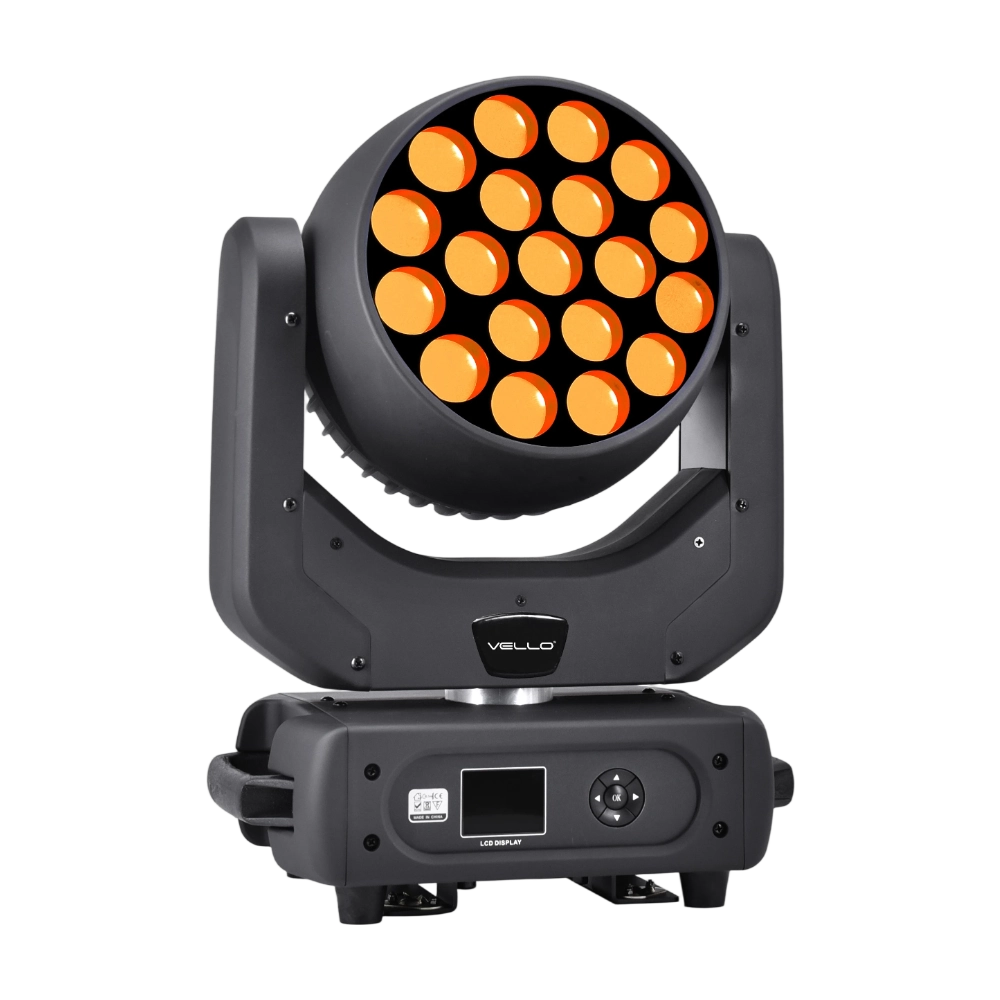
Major categories
Do you ship internationally?
Yes. We offer sea, air, and express delivery to many countries and regions worldwide.
Do you offer samples?
Samples are available for certain models. Please confirm with our sales team for details.
What is the warranty period for your products?
Most products come with a standard 1–2 year warranty. Please refer to product details or contract terms for specifics.
What is the usual lead time?
Standard models are typically shipped within 7–15 working days after payment. Customized items may vary.
Do your products support customization?
Yes. We offer OEM and ODM services tailored to project needs, including design, optics, and control compatibility.
You may also like
VELLO Studio Light TH 600 - High-performance studio light for photography and video. Flicker-free output, adjustable intensity, accurate color rendering, and robust design. Perfect for studios, shoots, streaming, and pro content creation.
Golden Eyes 250IP is a 300W outdoor-rated blinder and effect fixture, featuring a 250W COB LED as the main light source and 16 pieces of 3W RGB LEDs as secondary effects. With IP65 protection, selectable CCT (1800K / 3200K / 5600K), a strong strobe, and a retro-style background glow, it delivers both a powerful punch and creative atmospheres. Silent, flicker-free operation, multiple DMX modes, and robust housing make the Golden Eyes 250IP ideal for concerts, festivals, and outdoor productions.
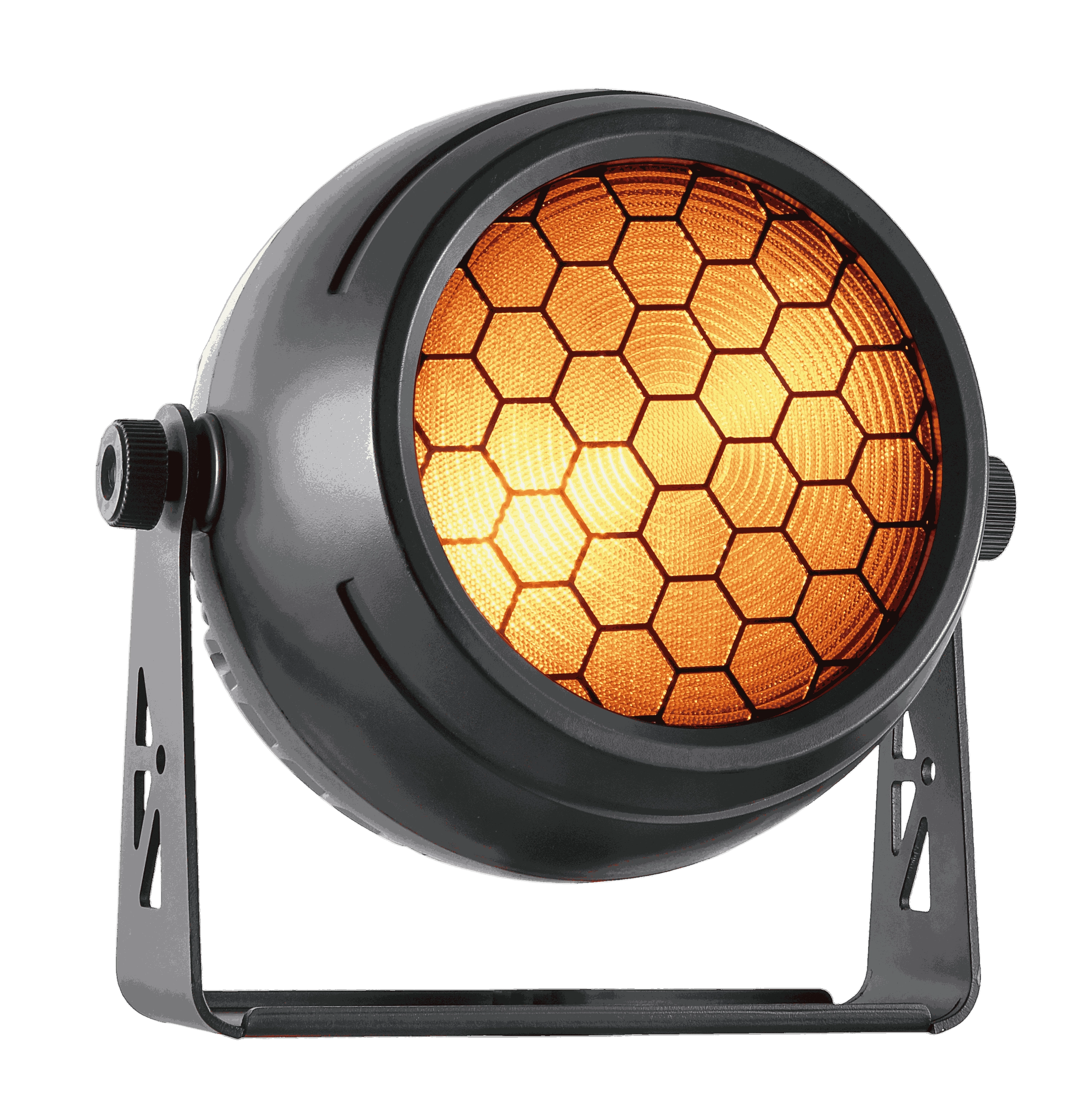
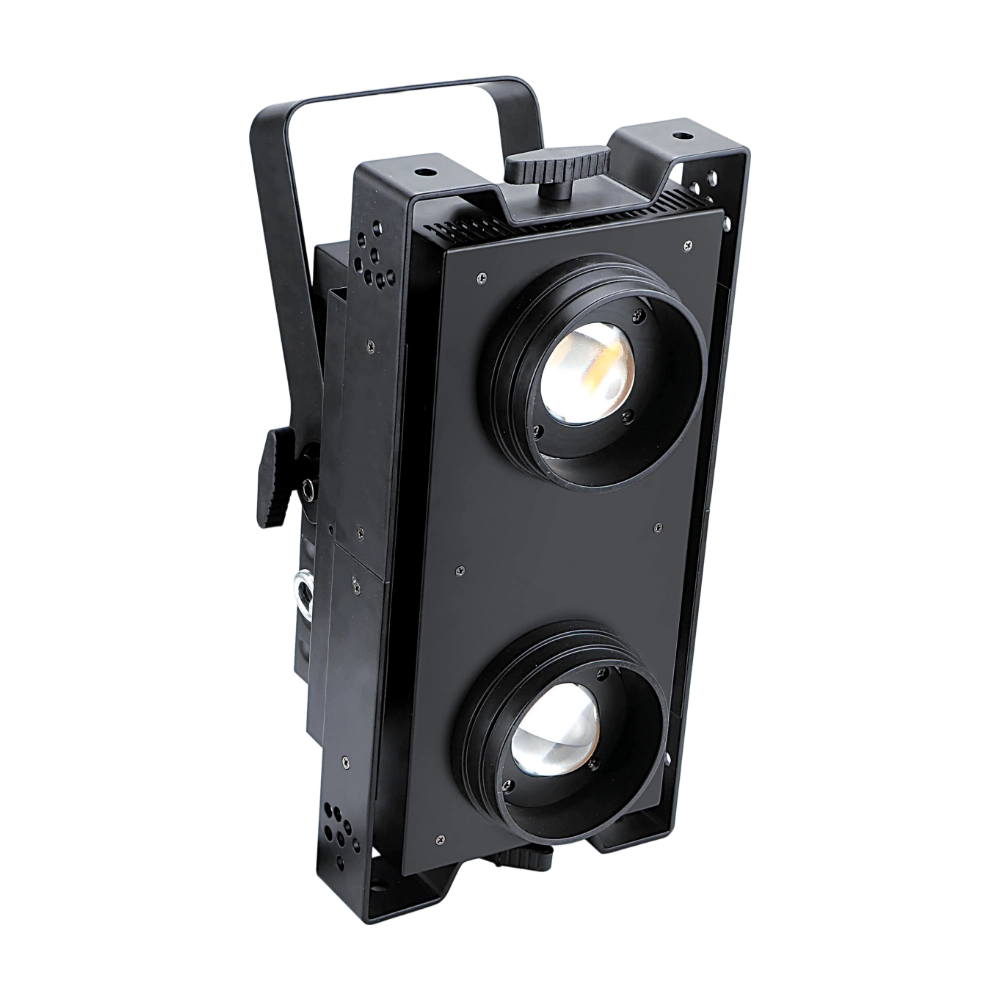
LED Blinder 300CTO is a 300W high-output stage blinder, powered by 2 × 150W LEDs with adjustable CTO (3200K–6000K) and super high CRI ≥97 for natural, camera-ready light. Featuring IP20/IP44 protection options, ±20° adjustable head tilt, and both horizontal and vertical mounting, it offers flexible setup for concerts and stage productions. With smooth 0–100% dimming, variable strobe, 16-bit dimmer curves, and independent or joint control of each head, the LED Blinder 300CTO delivers a powerful punch, versatile effects, and reliable flicker-free performance for professional lighting applications.
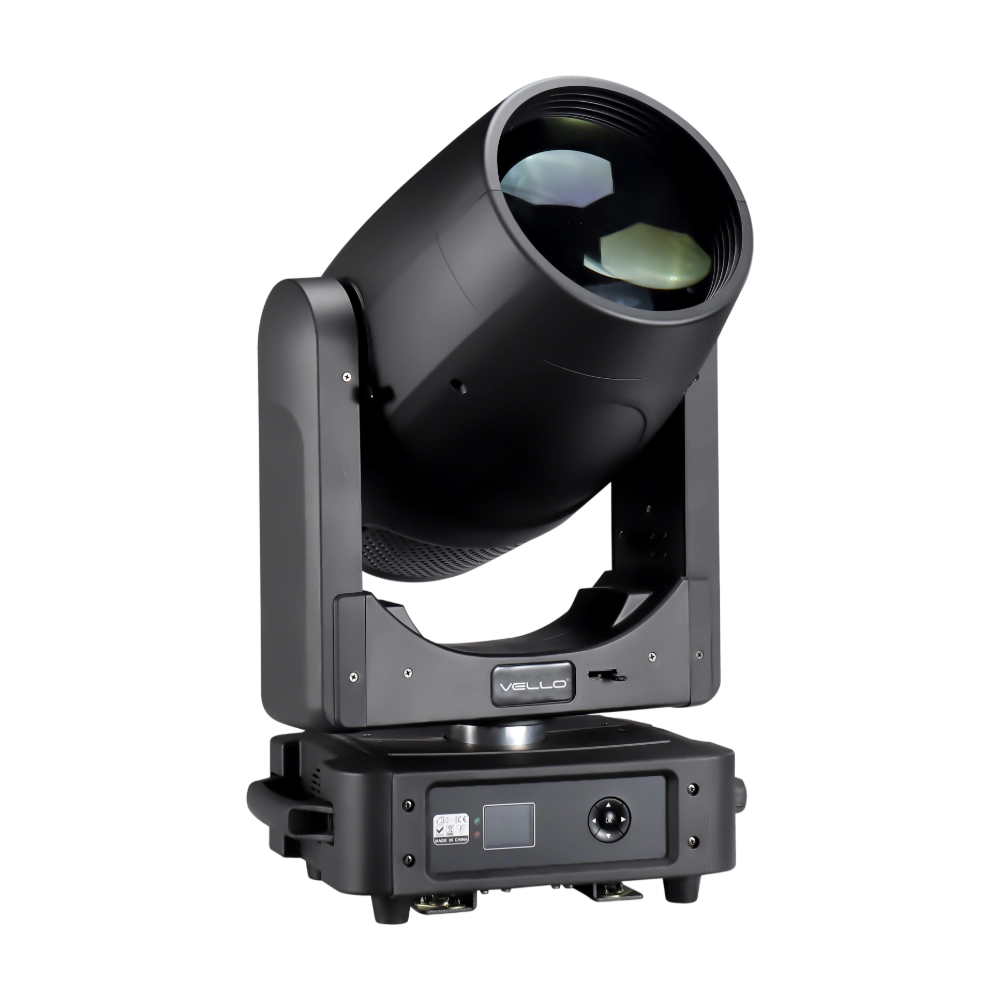
The BSW450 is a high-performance moving head fixture equipped with an original Osram 420W bulb, delivering exceptional brightness, precision, and versatility. Designed for professional stage applications, it seamlessly combines beam, spot, and wash functions in one compact unit, making it a powerful all-in-one lighting solution.
◌ Let Us Support Your Project
Request a Custom Quote and Technical Support
Fill out the form below, and our sales team will contact you shortly with product details, pricing, and customer service options.
Rest assured that your privacy is important to us, and all information provided will be handled with the utmost confidentiality.
By clicking "Send your message," I agree to your processing my personal data.
To see how to withdraw your consent, how to control your personal data, and how we process it, please see our Privacy Policy and Terms of Use.
Over 20 Years of Innovation in Stage & Studio Lighting
© 2026 VELLO. All Rights Reserved. 粤ICP备20023734号
Join our socials
VELLO
Whatsapp: +8613902276704
Vello Lighting
VelloLights