





What are the key components of professional stage lighting systems
- 1. How do I size fixtures (moving heads, washes, and spots) for a 500-seat theater or a 20m × 10m stage to hit target lux levels?
- 2. Manufacturers list lumens, lux, or LED chip wattage—how do I objectively compare fixtures?
- 3. How can I ensure LED fixtures won’t flicker on multi-camera live streams and how do I test them before purchase?
- 4. For a touring rig of 12 moving heads, what power distribution and inrush management do I need to avoid tripping breakers on stage?
- 5. How do I choose IP-rated LED fixtures for outdoor festivals—what does IP65 vs IP20 practically mean and what else matters?
- 6. Which control architecture should I standardize on (DMX512, RDM, Art‑Net, sACN, or wireless DMX) to keep setups scalable and avoid addressing headaches?
- Concluding summary: Why choose LED stage lights when purchasing professional stage lighting equipment?
Professional Stage Lighting Equipment: 6 Hard Questions Beginners Miss About LED Stage Lights
Buying LED stage lights and other professional stage lighting equipment is more than picking the brightest fixture on the list. This guide answers six specific, technical questions beginners commonly struggle with—each answer includes practical checks, numbers to watch, and purchase criteria you can use when evaluating fixtures, consoles, and systems.
1. How do I size fixtures (moving heads, washes, and spots) for a 500-seat theater or a 20m × 10m stage to hit target lux levels?
Beginners often choose fixtures by wattage or marketing lumens instead of using photometrics and coverage. The right approach is measurement-driven: set target illuminance, use manufacturer photometric curves (IES/LDT), and calculate coverage/uniformity.
Step-by-step:
- Decide target lux (illuminance) for your use case. Typical targets: theatrical plays 300–750 lux on actors, musical concerts 500–1,000 lux on performers for photography, and rehearsal practice 150–300 lux. Pick a realistic number for your venue and camera needs.
- Measure throw distance(s): measure from fixture mounting positions to the stage surface and any downstage/upstage differences. For example, overhead FOH to center stage might be 8–12 m.
- Obtain the fixture’s photometric data (IES/LDT files or manufacturer lux charts). Many manufacturers publish lux at given distances and beam angles—use these rather than quoted lumens.
- Determine beam coverage: beam diameter at a distance ≈ 2 × distance × tan(beam angle / 2). This tells you how many fixtures are needed to cover the stage with desired overlap for uniformity (aim 10–30% overlap depending on the look).
- Check uniformity: uniformity = average lux / minimum lux. For theatre, aim for ≥ 3:1 average/min, and for precise camera work aim for ≤ 2:1.
- Make a simple layout: use fixture beam angle and lux charts to place fixtures so their coverage overlaps evenly. Lighting software that imports IES files (Capture, WYSIWYG, Vectorworks Spotlight) will simulate lux maps and help finalize numbers.
Practical example (conceptual): to evenly light a 20 m × 10 m stage to ~500 lux using 40° wash fixtures mounted 10 m away, use the lux chart from the manufacturer instead of estimating from wattage. If a single wash gives 700 lux at 10 m in center but drops to 250 lux at the edges, you will need more fixtures with narrower beams or additional key/fill positions rather than simply increasing wattage.
Key buying checks: verify the supplier provides IES/LDT files, ask for photometric lux charts at common distances, and run a small mock-up on-site if possible.
2. Manufacturers list lumens, lux, or LED chip wattage—how do I objectively compare fixtures?
Comparing fixtures is a frequent pain point because vendors use different metrics. Use consistent, application-focused metrics and verify by testing.
Metrics to prioritize:
- Photometric files (IES/LDT) and published lux at distance for given beam angles — these are the most useful for real-world comparison.
- Measured luminous flux (lumens) is useful but can be misleading if beam angles differ widely. Lumens alone don’t describe intensity at distance.
- Luminous intensity (candela) and lux at distance give you the real on-stage illuminance you need.
- Color accuracy: CRI is useful but for broadcast/filmed events check TLCI (Television Lighting Consistency Index). For LED stage fixtures, aim for CRI ≥ 90 or TLCI ≥ 90 when cameras are involved.
- Efficiency: lumens per watt is a useful comparative number, but verify with photometrics.
- Bin and consistency: ask for SDCM (Standard Deviation of Color Matching) or LED binning data—lower SDCM means more consistent color fixture-to-fixture.
Practical validation steps:
- Request IES files and import them into lighting design software to compare lux maps for your venue.
- Ask suppliers for on-site demo or rent a sample fixture to test at the correct throw distance and under camera conditions.
- When possible, verify manufacturer claims with third-party photometric reports or published lab tests.
3. How can I ensure LED fixtures won’t flicker on multi-camera live streams and how do I test them before purchase?
Video flicker from PWM (pulse-width modulation) dimming or driver electronics is a common and urgent issue. For live streaming and TV you cannot rely on visual inspection alone—measure and specify requirements.
What to require from fixtures:
- Flicker-free operation at camera frame rates: look for PWM frequencies well above typical camera frame multiples. Practical spec: PWM or dimming frequency ≥ 3–6 kHz with no visible modulation across 24–60 fps and high-speed capture. Higher is safer for high frame-rate shoots.
- Driver design: choose fixtures with constant-current drivers and documented high-frequency dimming or linear dimming curves for broadcast.
- TLCI or measured spectral distribution: a full-spectrum output reduces banding and color shifts on camera.
How to test fixtures:
- Use a camera test: record fixtures at relevant frame rates and shutter speeds (e.g., 25/50/100 fps for PAL/Filmmaking; 30/60/120 fps for NTSC/high-speed). Check for pulsing, banding, or exposure inconsistency across dimming levels.
- Use a flicker meter or oscilloscope: measure the optical waveform or the LED driver output waveform to check modulation depth and frequency.
- Test dimming curves: evaluate brightness uniformity across 0–100% dim and check for color shift at low levels. For broadcast, low-end control should remain smooth without stepping.
Buying tip: require camera-friendly specs in your RFP and ask for on-camera demo footage under the exact frame rates you use. Suppliers who cannot provide test footage or technical PWM specs are a red flag.
4. For a touring rig of 12 moving heads, what power distribution and inrush management do I need to avoid tripping breakers on stage?
Touring rigs present two electrical challenges: peak (inrush) currents at power-up and steady-state load. Planning prevents nuisance trips and reduces downtime.
Planning checklist:
- Determine steady-state current: use each fixture’s rated power (W) divided by voltage to estimate running current, then add 20–30% headroom. For example, twelve 600 W fixtures = 7,200 W; at 230 V that’s ≈31.3 A steady. Add headroom for other loads (consoles, amps) and your safety margin.
- Account for inrush current: many LED drivers have cold inrush many times steady current at switch-on. Use a power sequencer/soft-start or an inrush current limiter to stagger power-on or limit spikes.
- Power factor and harmonics: choose fixtures with active PFC (power factor correction); PFC ≥0.9 is common for professional fixtures. Poor PF increases apparent power draw on circuits.
- Use correct cabling and connectors: heavy-gauge multicore or separate circuits sized to the steady-state load; use Neutrik powerCON TRUE1 or equivalent touring-grade connectors; label and lock power feeds.
- Circuit distribution: split loads across multiple circuits/phase legs. Don’t put an entire rig on a single breaker. Use RCBO (residual current breaker with overload) per distro where available.
- Cooling and ambient derating: in hot environments, drivers can draw more current or trip thermal protection—factor in ambient temperature derating per manufacturer specs.
Operational best practices:
- Use a power sequencer to stagger fixtures when powering on (e.g., 3–5 second intervals) to reduce inrush aggregation.
- Test at venue with full rig before show day and bring spare fuses, PDUs, and a known-good power sequencer.
- Consult a qualified touring electrician for final distro design; touring regulations and local codes vary and must be followed.
5. How do I choose IP-rated LED fixtures for outdoor festivals—what does IP65 vs IP20 practically mean and what else matters?
IP rating is necessary but not sufficient for festival reliability. IP codes (Ingress Protection) tell you about protection against solids (first digit) and liquids (second digit). For example, IP20 is indoor-use only (no water protection), IP65 is dust-tight and protected against water jets. For outdoor, many buyers assume IP65 is enough—but there are other failures to consider.
Checklist beyond IP number:
- Sealing and drainage: fixtures should have appropriate glanded cable entries, pressure-relief membranes to equalize pressure, and drainage for condensation.
- Connector type and sealing: use outdoor-rated power and data connectors (IP67 powerCON TRUE1 TOP, IP67 XLR RDM solutions, M12 or glanded RJ45 for Ethernet) and ensure protective sealing caps if unused.
- Cooling strategy: IP-rated fixtures often limit airflow; ensure the driver and LEDs are adequately cooled under rated ambient temperatures. Check manufacturer’s maximum ambient (Ta) and derating curves.
- Corrosion resistance: outdoor rigs face salt and humidity—choose marine-grade coatings, stainless fasteners, and non-corroding clamps for coastal festivals.
- Serviceability: verify you can access driver modules and LED boards for repair without breaking seal integrity; modular replaceable parts reduce downtime.
- Conformal coating and PCB protection: protects electronics from moisture; ask for conformal-coated PCBs in high-humidity or salt-air environments.
Buying tip: ask for an outdoor test report, sample test footage after extended weather exposure, or references from festival users. Prefer fixtures designed for outdoor use (IP65/IP66) with documented Ta limits, sealed connectors, and a clear service plan.
6. Which control architecture should I standardize on (DMX512, RDM, Art‑Net, sACN, or wireless DMX) to keep setups scalable and avoid addressing headaches?
Control planning avoids last-minute repatching and network collisions. The right mix depends on scale, redundancy needs, and remote management requirements.
Guidelines:
- Small to mid-size venues: a single DMX512 universe (up to 512 channels) is still common. For better management, use RDM (Remote Device Management) to configure addresses and query fixture status—RDM requires compatible hardware.
- Large rigs and touring: use Art‑Net or sACN (E1.31) over Ethernet to carry multiple universes reliably. sACN is standardized by ESTA (ANSI E1.31) and often preferred for robust networked control; Art‑Net is widely supported but proprietary.
- Wireless DMX: useful for temporary installs and FOH-to-fly locations—use high-quality systems with diversity receivers and encryption (if required). Always have wired backups for critical fixtures.
- Addressing strategy: maintain a documented patch (spreadsheet) where each fixture has a unique logical name, starting DMX address, universe number, and physical hang location. Use RDM to verify addresses from the console where possible.
- Layered topology and redundancy: for mission-critical shows, distribute control over managed switches with VLANs and enable Art‑Net/sACN redundancy. Use multicast sACN where supported and configure IGMP snooping on switches to minimize traffic flooding.
- Monitoring and remote config: choose fixtures and consoles that support RDM and SNMP/OSC for remote diagnostics and status reporting during tours.
Operational best practices: label every cable and port, keep spare nodes and a DMX terminator on hand, and create a standard network diagram you follow across venues. Train your crew to use network tools (ping, ArtNetMon) to quickly identify conflicts.
Concluding summary: Why choose LED stage lights when purchasing professional stage lighting equipment?
LED stage lights offer key advantages for most modern productions: higher energy efficiency and lower operating cost, significantly longer lamp life (commonly 50,000–100,000 hours for LEDs), reduced heat load on stage, flexible color mixing without gels, compact form factors for moving-heads and LED profiles, and advanced networked control via DMX/RDM/Art‑Net/sACN. When properly specified—paying attention to photometrics (IES files), color rendering (CRI/TLCI), flicker performance for cameras, power factor/inrush management, IP protection, and serviceability—LED fixtures deliver reliable, predictable results and lower total cost of ownership compared with legacy sources.
If you need a tailored equipment list, photometric layout, or a quote for fixtures, control, and power distribution for your venue or tour, contact us for a quote at www.vellolight.com or info@vellolight.com.
Major categories
Do your products support customization?
Yes. We offer OEM and ODM services tailored to project needs, including design, optics, and control compatibility.
What is the warranty period for your products?
Most products come with a standard 1–2 year warranty. Please refer to product details or contract terms for specifics.
Do you ship internationally?
Yes. We offer sea, air, and express delivery to many countries and regions worldwide.
What is the usual lead time?
Standard models are typically shipped within 7–15 working days after payment. Customized items may vary.
Do you offer samples?
Samples are available for certain models. Please confirm with our sales team for details.
You may also like
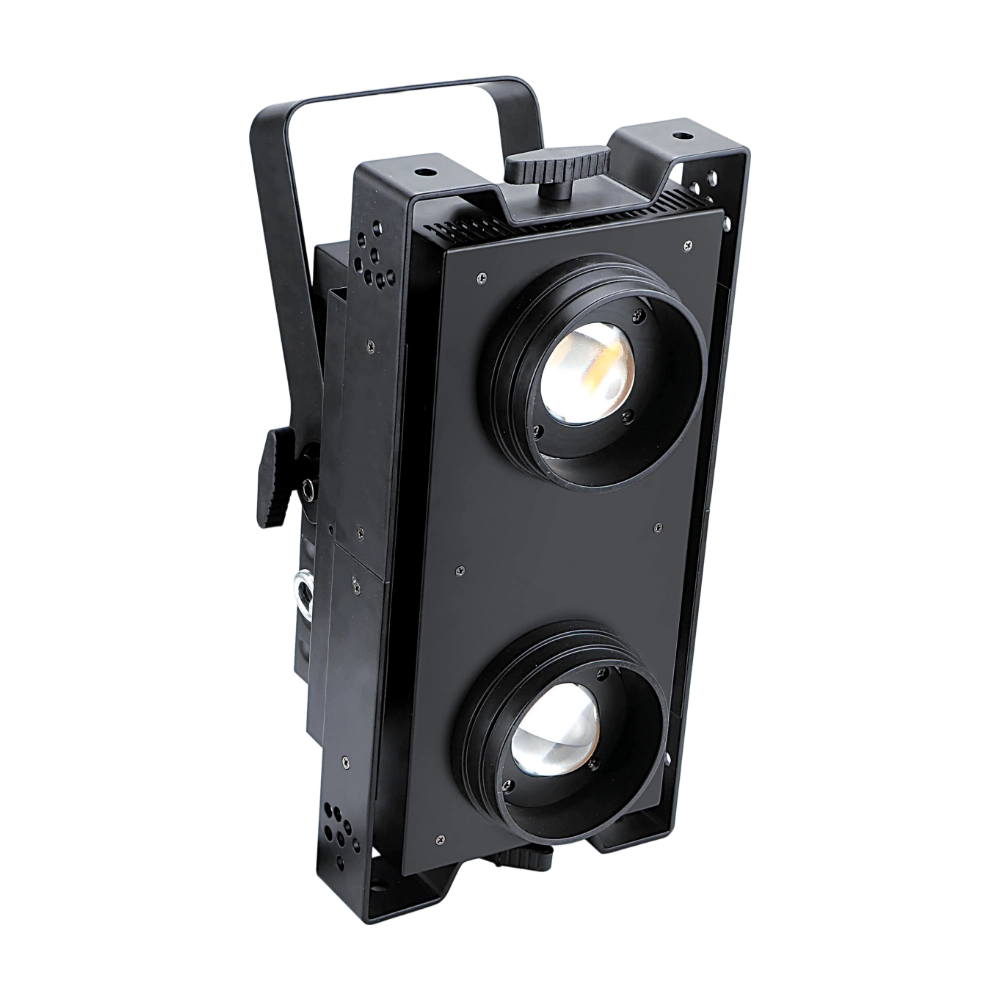
LED Blinder 300CTO is a 300W high-output stage blinder, powered by 2 × 150W LEDs with adjustable CTO (3200K–6000K) and super high CRI ≥97 for natural, camera-ready light. Featuring IP20/IP44 protection options, ±20° adjustable head tilt, and both horizontal and vertical mounting, it offers flexible setup for concerts and stage productions. With smooth 0–100% dimming, variable strobe, 16-bit dimmer curves, and independent or joint control of each head, the LED Blinder 300CTO delivers a powerful punch, versatile effects, and reliable flicker-free performance for professional lighting applications.
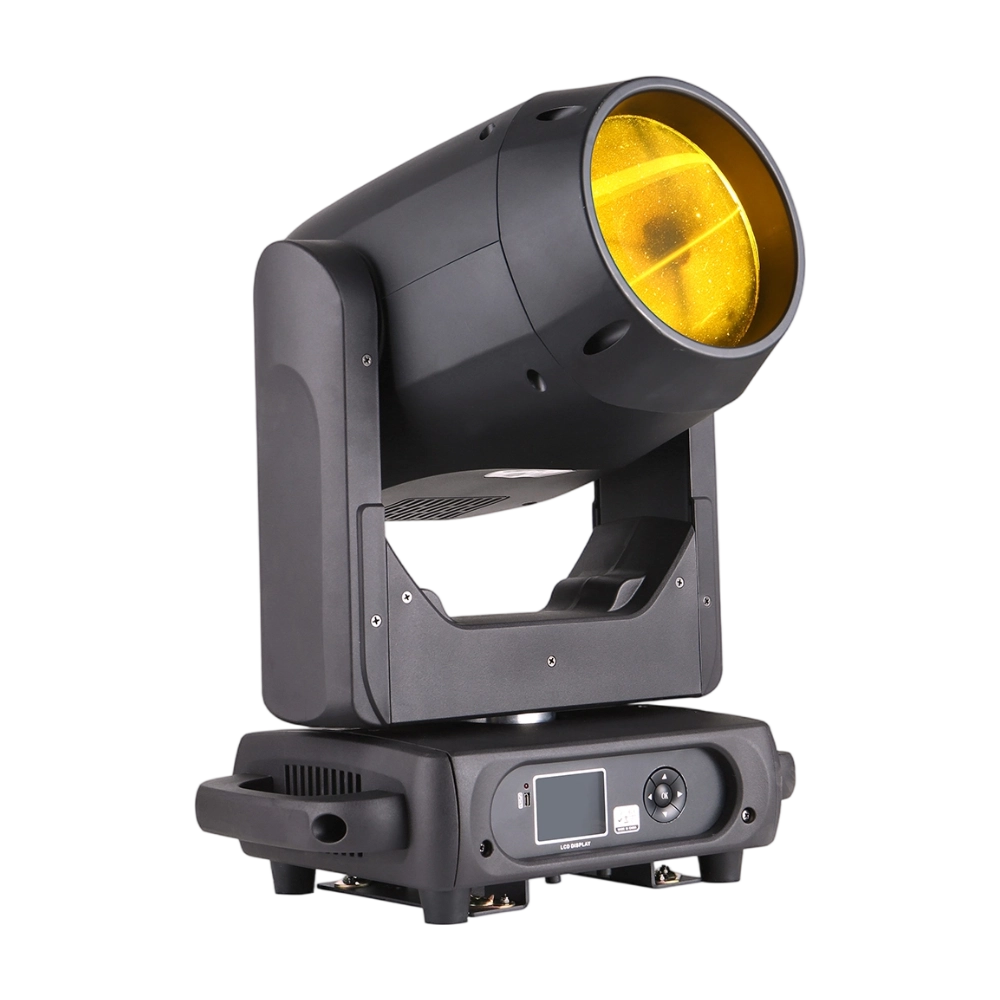
BEAM360 is a 400W high-power moving head beam equipped with an OSRAM SIRIUS 311W discharge lamp, delivering a sharp 1.8° beam with super brightness. It features 14 colors + open, 12 fixed metal gobos + open, and dual prisms (8-facet circular + 8+16 multi-facet combination) for dynamic aerial effects. With 540° pan / 270° tilt, 16-bit movement, and linear frost and focus, BEAM360 ensures precision and versatility. Compact yet powerful, it rivals traditional 575W moving heads, making it ideal for concerts, clubs, and large-scale stage productions.
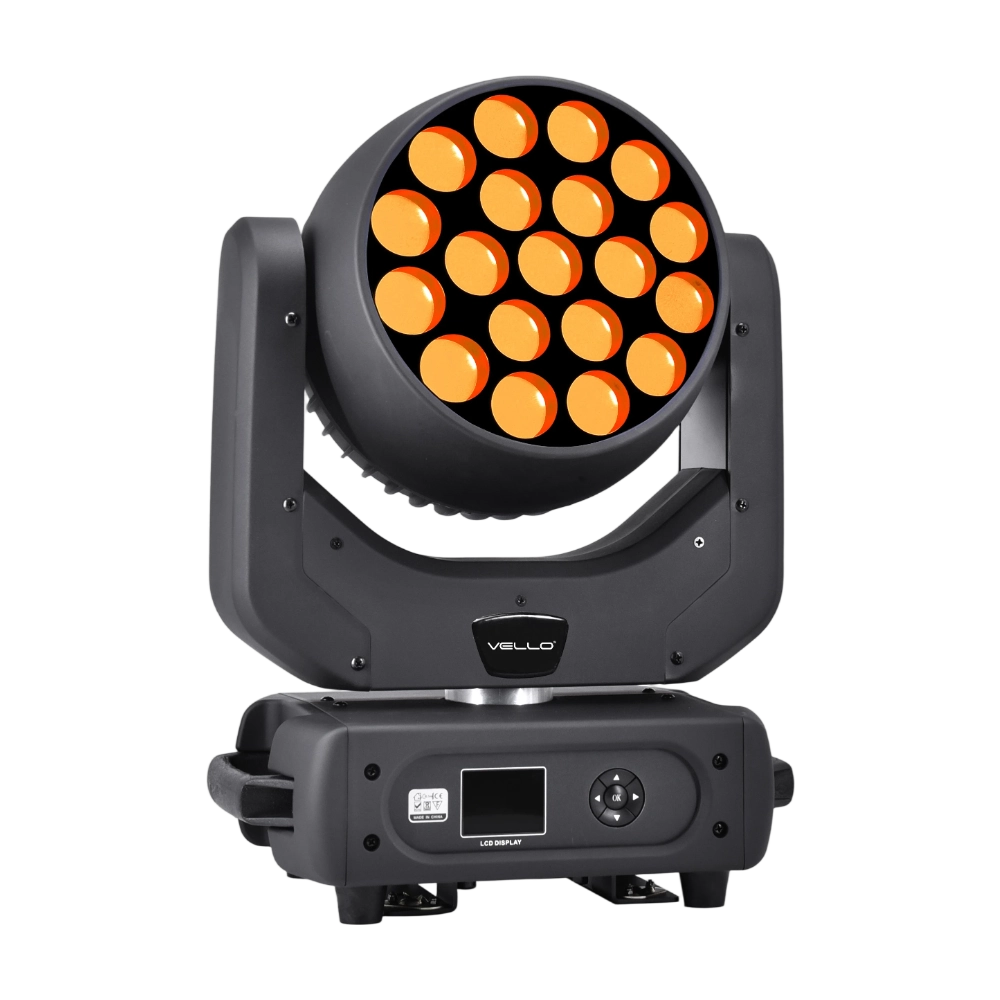
Max Wash X7 is a 750W super moving head wash fixture, equipped with 19 × 40W 7-in-1 RGB+A+C+L LEDs delivering rich colors, high brightness, and a super high CRI ≥95. With a wide 6.1°–50° electronic zoom and advanced 3-ring pixel control, it creates both powerful beams and smooth washes. The fixture supports CTO adjustment (3200K, 4200K, 5600K, 6800K) across four presets for versatile color temperature control. Featuring 540° pan / 310° tilt, high-speed motors, multiple DMX channel modes, and a durable heat-proof housing, Max Wash X-7 is designed for concerts, TV studios, and large productions demanding next-level wash performance with precision and creativity.
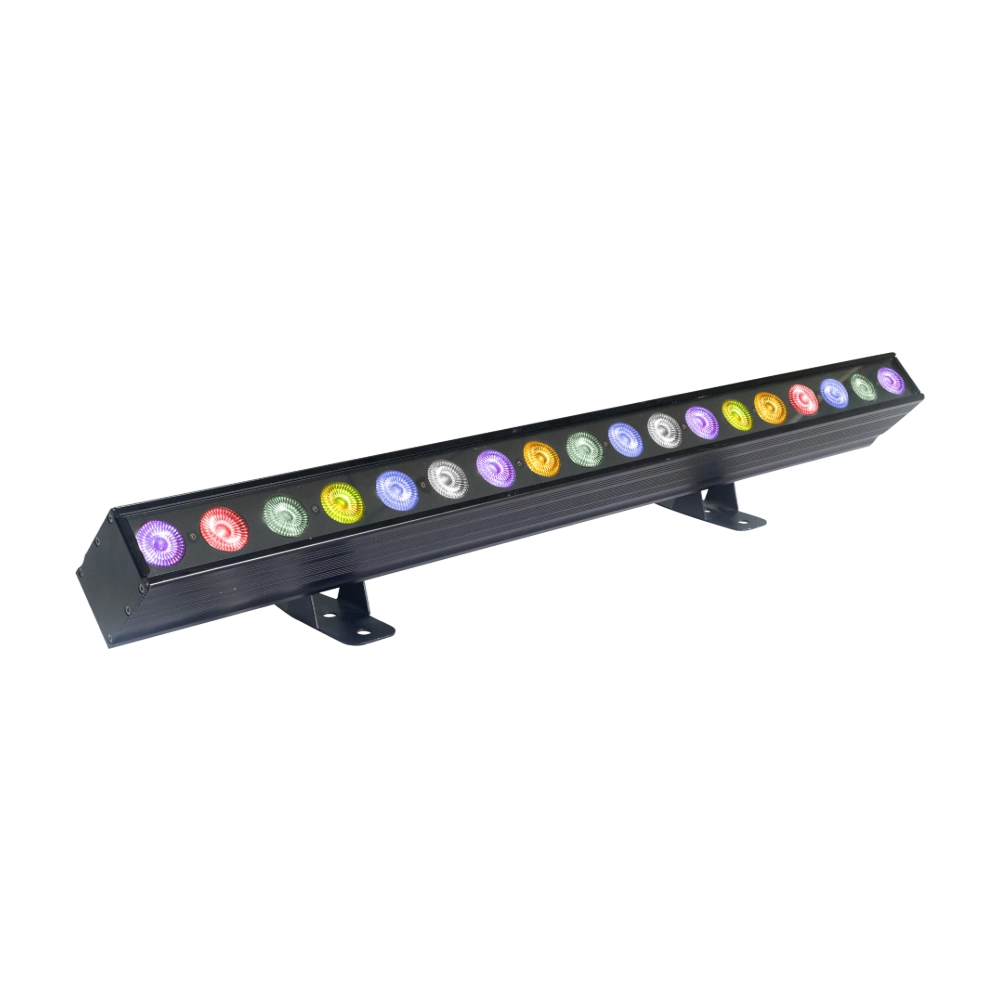
The LED SlimBar 1841 Pixel is a sleek 300W pixel LED bar with 15 × 15W RGBW LEDs + 120 × 0.5W RGBW SMD LEDs, arranged for powerful washes and pixel effects. Offering multiple lens options (6°/15°/25°/45°), 21–180 DMX channels, and individual LED control, it provides endless creative possibilities. Lightweight yet powerful, it’s perfect for stage backdrops, visual effects, and architectural lighting.
◌ Let Us Support Your Project
Request a Custom Quote and Technical Support
Fill out the form below, and our sales team will contact you shortly with product details, pricing, and customer service options.
Rest assured that your privacy is important to us, and all information provided will be handled with the utmost confidentiality.
By clicking "Send your message," I agree to your processing my personal data.
To see how to withdraw your consent, how to control your personal data, and how we process it, please see our Privacy Policy and Terms of Use.
Over 20 Years of Innovation in Stage & Studio Lighting
© 2026 VELLO. All Rights Reserved. 粤ICP备20023734号
Join our socials
VELLO
Whatsapp: +8613902276704
Vello Lighting
VelloLights