





How do professional stage lighting fixtures work: basics explained
- 1) How do I compare lumens, lux and beam angle when selecting moving heads for a 500-seat theatre?
- 2) Which LED fixtures are truly flicker-free for live broadcast and how can I verify this before purchase?
- 3) How do I choose between DMX512, Art-Net, sACN and wireless options for a fixed venue rig to avoid control glitches?
- 4) How do I evaluate color accuracy for fixtures intended for broadcast — CRI vs TLCI, color temperature control and color gamuts?
- 5) How to predict maintenance costs and lifetime (L70) for an LED rig — what spares and warranties should I insist on?
- 6) Which IP-rated outdoor LED stage lights avoid color shift and overheating in summer festivals?
- Concluding summary: Advantages of professional LED stage lighting equipment
Professional Stage Lighting Equipment: In-Depth Answers for LED Buyers
This post answers 6 specific, buyer-focused questions about professional stage lighting equipment and how professional stage lighting fixtures work. Each answer covers practical tests, spec interpretation, calculations, and procurement checkpoints for LED stage lights, moving heads, LED wash fixtures, and system control (DMX512, sAC-Net, Art-Net).
1) How do I compare lumens, lux and beam angle when selecting moving heads for a 500-seat theatre?
Why this matters: Manufacturers often publish lumen totals that hide beam geometry. For a mid-sized theatre you need practical on-stage lux (illuminance at performer height), not just raw lumens.
Key metrics and the correct method:
- Luminous flux (lumens) = total light output across all angles.
- Beam angle (full width at half maximum, FWHM) determines how concentrated that light is.
- Luminous intensity (candela, cd) = lumens / solid angle (steradians). Solid angle for a conical beam = Ω = 2π(1 - cos(half-angle)).
- Illuminance (lux) at distance d = candela / d².
Practical worked example (realistic numbers):If a LED moving head claims 20,000 lm and has a 10° beam angle (half-angle = 5°):
cos(5°) ≈ 0.99619 → Ω = 2π(1 - 0.99619) ≈ 0.0239 sr.Candela ≈ 20,000 lm / 0.0239 sr ≈ 837,000 cd.At d = 10 m → lux ≈ 837,000 / (10²) = 8,370 lx.
Compare with same fixture at 40° beam (half-angle 20°):cos(20°) ≈ 0.9397 → Ω ≈ 0.379 sr → cd ≈ 20,000 / 0.379 ≈ 52,770 cd → at 10 m: ≈ 528 lx.
What to do when buying:
- Ask vendors for beam angle at FWHM and lumen output for each beam mode (spot/beam/wash) — moving heads and LED washes often quote different outputs per mode.
- Calculate lux at your throw distances (stage depth and house FOH to stage). Use the candela/ distance² method rather than raw lumens to estimate performer illuminance.
- Confirm published lumen figures are measured per IES LM-79 where possible — that gives reliable flux and distribution data.
2) Which LED fixtures are truly flicker-free for live broadcast and how can I verify this before purchase?
Why this matters: Live TV and multi-camera shoots reveal LED flicker that isn’t visible to the eye. Outdated or cheap fixtures use low PWM frequency or coarse dimming that causes strobing and banding on cameras.
What to check in the spec sheet:
- PWM (pulse-width modulation) frequency — ask for the actual PWM frequency used for channel dimming and pixel modes. For reliable camera compatibility, prefer PWM > 20 kHz with dithering.
- Dimming resolution — 16-bit (or internal 16-bit processing) produces smoother ramping and reduces banding in gradients compared to 8-bit.
- Frame-synced or camera-sync modes — some fixtures can synchronize PWM to an incoming frame rate or to an external sync to eliminate beats with camera shutter speeds.
- Flicker-free / cinema mode explicitly listed; check which frame rates it supports (24/25/30/50/60/120 fps).
Practical tests before purchase or rental:
- Camera test: record the fixture while running at typical dim values using cameras at 24/25/30/50/60/120fps. Look for banding, rolling bars, or strobing across all frame rates you use.
- Smartphone quick test: while not definitive, a modern phone at 60/120 fps can reveal gross flicker. However, professional broadcast cameras are more sensitive.
- Ask for a factory test report or demo footage from the vendor at multiple frame rates and dimming levels.
Why driver design matters: high-end fixtures use constant-current LED drivers with high-frequency PWM and internal dithering, or analog current dimming schemes with high-resolution DACs. Also check for thermal management — heat-induced PWM variation can create flicker over time.
3) How do I choose between DMX512, Art-Net, sACN and wireless options for a fixed venue rig to avoid control glitches?
Why this matters: Control reliability is critical for performances. Beginners often mix protocols without planning universe counts, redundancy, or latency for pixel-mapped LED arrays.
Guidelines:
- DMX512 (wired) = deterministic and simple; best for short runs and individual fixture control. Use good-quality, terminated DMX runs and avoid long daisychains when possible.
- Art-Net and sACN = Ethernet-based protocols that scale to many universes. sACN (streaming ACN) is designed for large, professional networks and tends to be the preferred choice for new installations; Art-Net is widely supported but can be noisy on networks unless isolated VLANs are used.
- RDM = Remote Device Management over DMX. Essential for commissioning — lets you remotely set addresses, query status and update firmware on compatible fixtures.
- Wireless (CRMX/LumenRadio, W-DMX) = good for truss-mounted moving heads or temporary rigs where cabling is impractical. Choose proven systems (LumenRadio CRMX, Wireless Solution's W-DMX) with proven latency and mesh capabilities. Always plan for RF interference and have wired fallback for critical fixtures.
Best practices for a fixed venue:
- Design a redundant control network: primary and backup consoles; separate VLANs for lighting and other networks; managed switches with IGMP snooping for sACN/Art-Net distribution.
- Calculate universe requirement early: a single RGB pixel strip with 512 pixels can consume multiple DMX channels. Add a 20–30% buffer for future expansion.
- Use power and data distribution enclosures at rig points. Label and document every universe, port, and patch. Implement RDM for easier maintenance.
4) How do I evaluate color accuracy for fixtures intended for broadcast — CRI vs TLCI, color temperature control and color gamuts?
Why this matters: Stage lights that look fine to the eye can render skin tones poorly on camera. Traditional CRI (Ra) has limitations for LEDs; TLCI (TV Lighting Consistency Index) is a better broadcast metric.
What to require and test:
- TLCI score — for broadcast use require TLCI ≥ 90 for key fixtures. TLCI assesses how a camera captures colors illuminated by the light source and suggests a camera LUT to correct color errors.
- CRI is still useful; Ra ≥ 90 is a good baseline for accurate mixed-color rendering, but note CRI doesn’t cover all LEDs’ spectral quirks.
- Color temperature (CCT) range and accuracy — look for fixtures with calibrated CCT, at least ±100 K at 3,200 K/5,600 K points, and presets for common white points (2,700–10,000 K).
- Color models: HSI or RGBW plus virtual gel libraries — LED wash fixtures with separate amber/white/UV LEDs (RGBWA+) produce more natural whites and pastels than simple RGB mixes.
- Delta C / uv error — advanced spec sheets include Δuv or ΔE values for white point accuracy. ΔE < 1 is excellent; < 3 is acceptable for many broadcast uses.
Practical validation:
- Request TLCI/CRI reports and spectral power distribution (SPD) charts. SPD charts show gaps or spikes in emission that cause odd camera shifts.
- Run on-camera tests with the specific camera systems you use; apply any recommended camera LUTs and verify skin tones and saturation across the gamut.
5) How to predict maintenance costs and lifetime (L70) for an LED rig — what spares and warranties should I insist on?
Why this matters: LEDs reduce lamp replacement costs but other components (drivers, fans, power supplies, optics) still fail. TCO (total cost of ownership) depends on real-world lifetime and serviceability.
Key spec items:
- L70 lifetime rating — the time until the LEDs reach 70% of initial light output. Many professional fixtures are rated 50,000–100,000 hours; verify the L70 value and conditions (Ta, thermal load).
- MTBF and driver warranty — LED drivers and power supplies are common failure points. Ask for MTBF data and a minimum 3–5 year warranty on electronics for professionally used fixtures.
- Fans vs passive cooling — fan-cooled units may require fan replacement every few years; fanless/heatsink designs reduce moving-part failure but may be larger and more thermally conservative.
- Serviceability — modular optics, replaceable LED engines, and user-replaceable drivers cut maintenance time and cost. Confirm parts availability and lead times from the vendor/manufacturer.
Spares and commissioning checklist:
- Keep spares for consumable parts: 5–10% of your fixture count (or at least one of each key model) for drivers, fans, and optics modules.
- Document firmware versions and keep images/backup configurations. Modern fixtures use RDM and firmware updates — plan update windows and test before shows.
- Plan preventive maintenance: electrical checks, connector inspections (powerCON, 3-phase), and cleaning optics every 6–12 months in dusty venues.
6) Which IP-rated outdoor LED stage lights avoid color shift and overheating in summer festivals?
Why this matters: Outdoor fixtures see humidity, dust, rain and large temperature swings. A low IP rating or inadequate thermal design results in water ingress, corrosion, color shift and premature driver failure.
What to specify:
- IP rating appropriate for exposure: IP65 (dust tight and water jet) is minimum for exposed outdoor use; IP66/IP67 for harsher conditions or submersion probability. For truss under a canopy IP54 might be acceptable, but never risk IP54 for open-air front-of-house fixtures subject to spray or gusting rain.
- Conformal-coated PCBs and corrosion-resistant housings — ensure the fixture uses marine-grade fasteners and coatings for coastal festivals.
- Thermal management: check if outdoor fixtures derate output at high ambient temperatures. A specification describing lumen output at 25 °C and 45 °C is useful. Prefer fixtures that maintain color temperature and have thermal protection that avoids abrupt mode changes during a show.
- Ingress-proof connectors: specify IP65-rated power/data connectors or protective enclosures; standard powerCON or NEUTRIK connectors must be the weatherproof variants for outdoor use.
Field verification before purchase:
- Request test reports including humidity and salt-fog resistance if you plan coastal shows.
- Ask about on-site failure history in similar climates and vendor references from outdoor festivals.
Concluding summary: Advantages of professional LED stage lighting equipment
Modern LED stage lights deliver higher efficiency, color control, low operational cost, and flexible beam shaping (gobos, zoom, motorized focus) compared with legacy discharge fixtures. When you select fixtures with documented TLCI/CRI, high PWM frequencies and 16-bit dimming, IP-rated housings for outdoor use, and robust control options (sACN/Art-Net with RDM), you minimize risk and total cost of ownership. Prioritize serviceability (replaceable LED engines, spare parts), verified lux calculations for your venue, and proven wireless/control systems for reliability.
For project quotes, spec sheets, and demo tests tailored to your venue, contact us for a quote at www.vellolight.com or email info@vellolight.com.
Major categories
What is the warranty period for your products?
Most products come with a standard 1–2 year warranty. Please refer to product details or contract terms for specifics.
Do your products support customization?
Yes. We offer OEM and ODM services tailored to project needs, including design, optics, and control compatibility.
Do you ship internationally?
Yes. We offer sea, air, and express delivery to many countries and regions worldwide.
What is the usual lead time?
Standard models are typically shipped within 7–15 working days after payment. Customized items may vary.
Do you offer samples?
Samples are available for certain models. Please confirm with our sales team for details.
You may also like
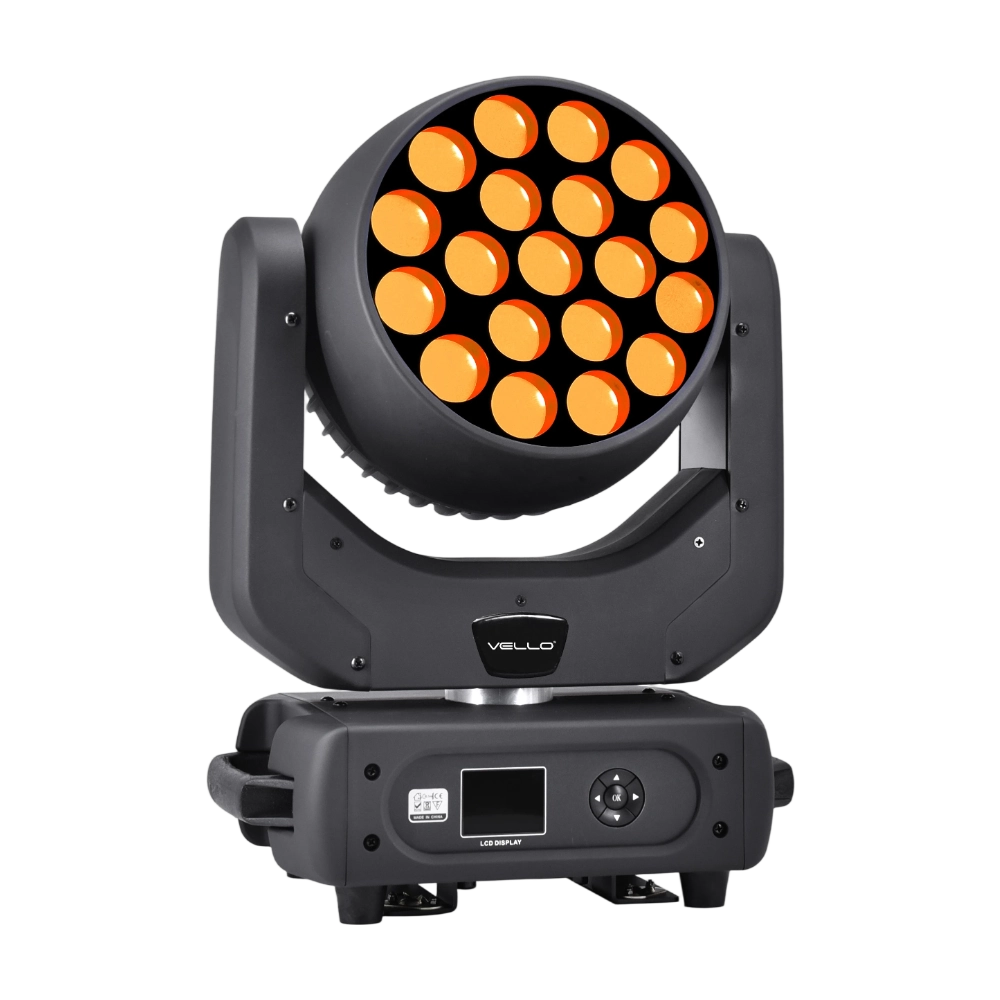
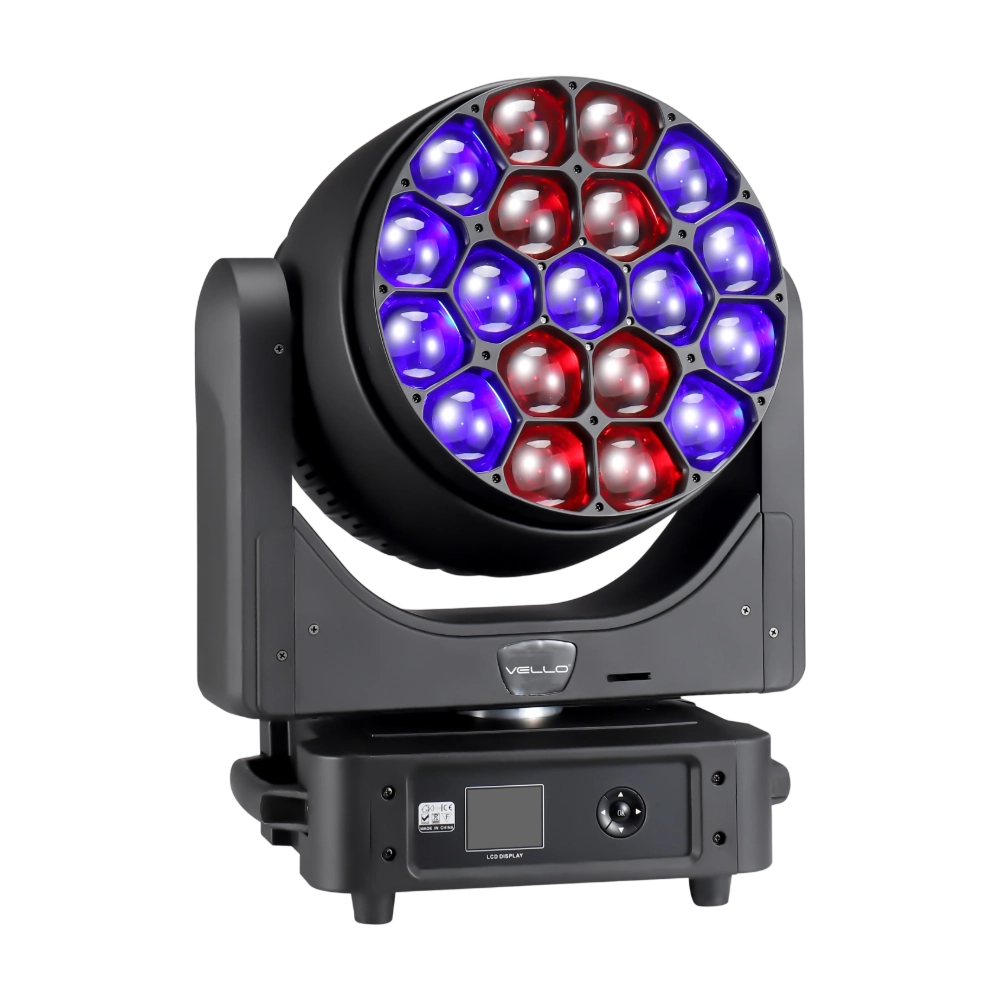
LED Bee Eyes K20 is a 750W high-output moving head wash powered by 19 × 40W Osram RGBW LEDs for intense brightness and rich color mixing. With a 4°–60° electronic zoom and wide CTO range (2700K–8000K), it seamlessly shifts from narrow beams to broad washes. Each LED can be controlled individually for advanced pixel mapping, while the rotating lens wheel creates striking dynamic effects. Featuring 540° pan / 270° tilt, multiple DMX channel modes, and robust construction, the K20 delivers exceptional flexibility and power—perfect for large concerts, stage shows, and high-impact visual productions.
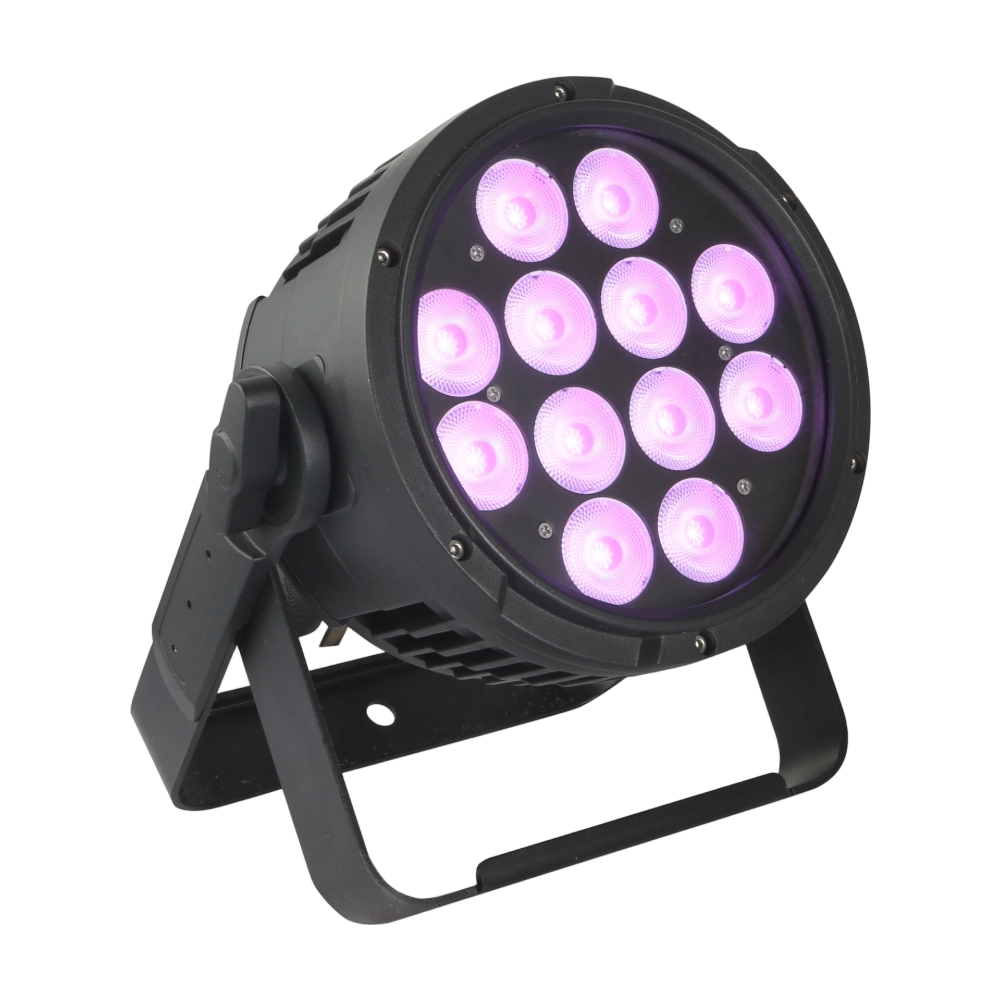
The LED Mac Par 12 is a durable 120W RGBW par light, featuring 12 × 10W 4-in-1 LEDs. With a 25°/40° lens option and smooth 0–100% dimming, it produces vibrant color mixing with silent, low-noise performance. Designed with IP65 protection, it is suitable for both indoor and outdoor use. Compact and powerful, this unit is ideal for architectural lighting, stages, and events.
The LED XP800 is a 600W moving head wash fixture, equipped with 37 × 20W Osram RGBW LEDs for brilliant color mixing and high output. With a wide 6°–50° electronic zoom, it easily transitions from sharp beams to smooth washes. The fixture supports 3-ring pixel control and an adjustable CTO range (2800K–8500K) for versatile applications. Featuring 540° pan / 310° tilt, high-speed 3-phase motors, and multiple DMX modes (16/28 channels), XP800 delivers powerful, precise, and dynamic performance. Compact and durable, it is an excellent choice for stages, theaters, and large-scale events requiring high brightness and flexibility.
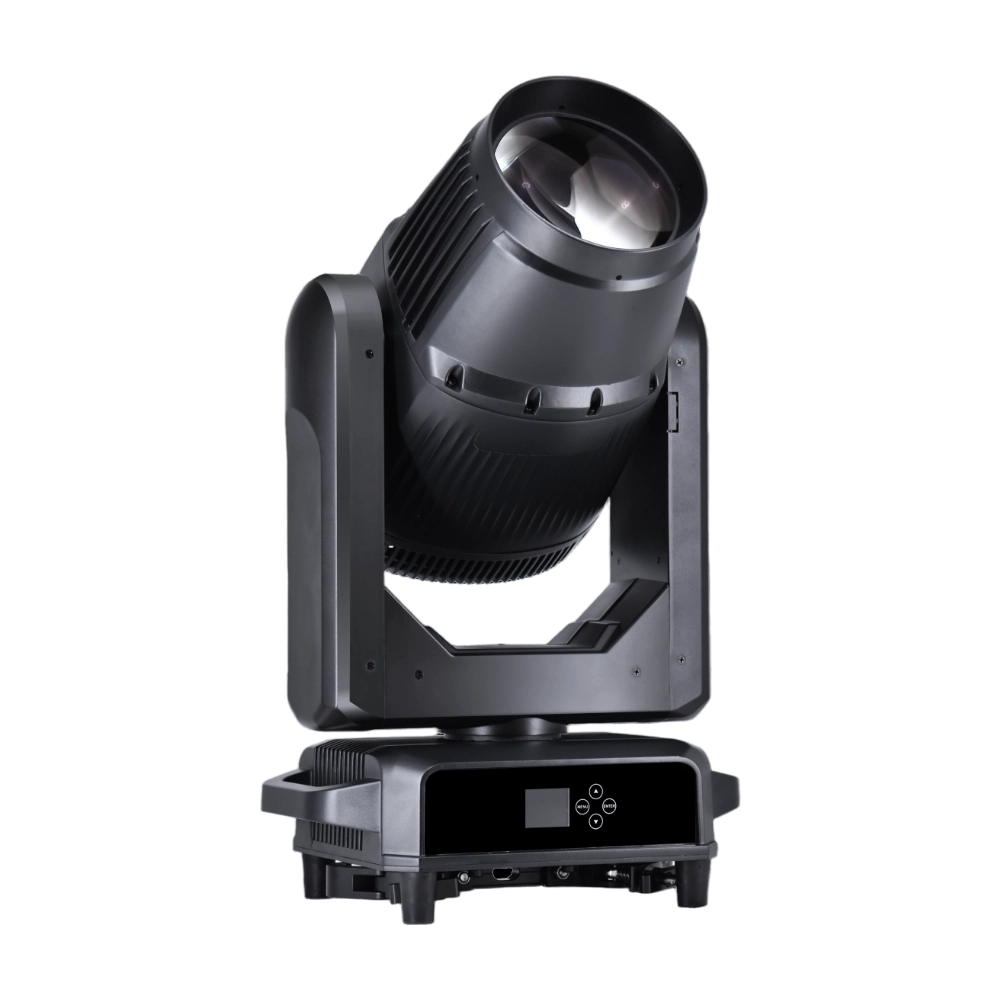
AK550 is an outdoor IP66 550W high-performance moving head spot powered by a Japanese Ushio 390W bulb, delivering a sharp 2° beam with rich colors and precise effects. It features 15 gobos + open, a 14-color wheel, dual prisms (8-facet and 16-facet honeycomb), and linear frost and focus for versatile looks. With 540° pan / 270° tilt, 16-bit movement, automatic position correction, and an LCD touch display, the AK550 ensures precision and reliability. Built with a compact, lightweight body and IP66 outdoor-rated housing, it offers strong output and flexible control (DMX512, Master/Slave, standalone) and is ideal for both touring and outdoor events.
◌ Let Us Support Your Project
Request a Custom Quote and Technical Support
Fill out the form below, and our sales team will contact you shortly with product details, pricing, and customer service options.
Rest assured that your privacy is important to us, and all information provided will be handled with the utmost confidentiality.
By clicking "Send your message," I agree to your processing my personal data.
To see how to withdraw your consent, how to control your personal data, and how we process it, please see our Privacy Policy and Terms of Use.
Over 20 Years of Innovation in Stage & Studio Lighting
© 2026 VELLO. All Rights Reserved. 粤ICP备20023734号
Join our socials
VELLO
Whatsapp: +8613902276704
Vello Lighting
VelloLights