





What is professional stage lighting equipment and why it matters
- 1) How do I calculate the number and placement of LED wash lights to reach a target lux on stage given specified lumens and beam angle?
- 2) How can I verify a manufacturer's lumen, CCT and CRI/TLCI claims before placing a bulk LED fixture order?
- 3) Which control protocols and network architecture prevent latency and dropouts for 200+ LED fixtures at a festival?
- 4) Should I buy RGBW, RGBA, or full‑spectrum LED engines to keep consistent skin tones on camera?
- 5) What are realistic LED fixture lifespan, maintenance intervals and spare part planning for a rental company?
- 6) What electrical specifications should I verify to prevent power issues when daisy‑chaining LED moving heads (inrush, PFC, THD)?
Author: VelloLight technical team (www.vellolight.com). This buyer-focused article answers 6 specific, often poorly explained questions beginners and procurement teams face when selecting professional stage lighting equipment and LED stage lights. Each section gives practical checks, formulas and procurement best practices grounded in industry standards (DMX512-A, LM‑79, IES guidance) to help you spec, test and deploy fixtures.
1) How do I calculate the number and placement of LED wash lights to reach a target lux on stage given specified lumens and beam angle?
Why this matters: Manufacturers often publish lumen output and beam angle but not how that translates to measurable lux at your hang height. Without a simple calculation you can underlight performers or overbuy fixtures.
Step‑by‑step method (practical, based on photometric geometry):
1. Convert beam angle (θ) to beam diameter at distance D: beam_diameter = 2 × D × tan(θ/2). Example: θ=45°, D=10m → diameter ≈ 8.28 m.
2. Compute beam footprint area: area = π × (beam_diameter/2)^2. Example area ≈ 53.9 m².
3. Estimate on‑axis lux from a fixture: lux ≈ fixture_lumens × optic_efficiency / area. Use optic_efficiency 0.75–0.9 to account for internal losses (lenses, reflectors). Example: 10,000 lm fixture, 0.8 efficiency → lux ≈ (10,000 × 0.8) / 53.9 ≈ 148 lux.
4. For multiple fixtures, lux is additive on a flat stage surface: total_lux ≈ sum of individual lux contributions (make sure overlap and off‑axis falloff are considered).
Practical checks: request the IES photometric file from the manufacturer. An IES file gives candela distribution so you can run accurate lux contours in lighting design software (WYSIWYG, Capture, AGi32). Always plan 10–20% headroom for front‑of‑house attenuation, dimmer curves and color gels/filters (or color mixing losses with RGBW engines).
2) How can I verify a manufacturer's lumen, CCT and CRI/TLCI claims before placing a bulk LED fixture order?
Why this matters: Spec books often list optimistic lumen, CRI or TLCI numbers. For broadcast and theatrical shows these metrics directly affect color rendering, white balance and post‑production grading.
What to request from suppliers:
- LM‑79 test reports (measured photometric performance) and LM‑80 LED chip data when available.
- IES (or EULUMDAT) files for fixture distribution and candela data.
- Spectral Power Distribution (SPD) charts and measured CRI and TLCI values at the CCT you plan to use (e.g., 3200K/5600K).
- Bin codes for LED chips and details on color calibration or calibration profiles applied at factory.
On receipt of samples or a pilot batch:
- Measure lux and CCT on axis with a calibrated spectrometer or colorimeter. Compare measured lumens/lux/CCT to spec.
- Verify TLCI/CRI using a third‑party spectroradiometer; for broadcast aim for TLCI ≥ 90 or specified spectral quality rather than relying on CRI alone.
- Ask for long‑term color shift data or accelerated life testing; large fleets should demand color consistency tolerances (Δuv/ΔE targets).
3) Which control protocols and network architecture prevent latency and dropouts for 200+ LED fixtures at a festival?
Why this matters: Large installs push DMX channel counts, and poor network design causes flicker, lost frames, or corrupted pixel maps.
Key principles and steps:
- Use sACN or Art‑Net over Ethernet for high channel counts and pixel mapping. Each DMX universe is 512 channels—map fixtures into multiple universes and use nodes where needed.
- Prefer Cat6 runs to nodes and use managed gigabit switches with IGMP snooping to control multicast traffic. Without IGMP, multicast can flood ports and cause packet loss.
- Topology: avoid single long daisy chains of Ethernet. Use a star or segmented ring with redundant paths and network switches placed near clusters of fixtures.
- Use RDM for remote addressing and status monitoring; verify fixtures and nodes support RDM and the lighting console supports addressing over the same network.
- Segment control and general data traffic—do not mix venue Wi‑Fi/backstage office traffic on the same switch unless VLANs and QoS are configured.
- Power distribution must mirror signal segmentation. Keep power runs short, balance loads, and provide earth continuity and isolation where required.
Practical failsafes: set consoles to use unicast or curated multicast for pixel data (reduces unnecessary load), employ heartbeat/redundant consoles for critical shows, and always test the full channel count in a network rehearsal with recording of packet loss and latency.
4) Should I buy RGBW, RGBA, or full‑spectrum LED engines to keep consistent skin tones on camera?
Why this matters: Color mixing engines impact color rendering, metamerism and how skin tones look on live broadcast and recorded video.
Selection guidelines:
- Prefer fixtures with documented TLCI and SPD curves over simple CRI numbers. TLCI is designed for camera fidelity; for broadcast aim for TLCI ≥ 90 in the operating CCT.
- RGB-only mixing produces poorer white and pastel color quality; adding dedicated white LEDs (RGBW or RGBA/FC) improves gamut and tunable CCT control. Full‑spectrum (multi‑chip) engines produce smoother whites and fewer metameric failures.
- For skin tones, choose fixtures with adjustable color temperature (tunable white/CCT) and calibrated color presets. CMY/FC mixing in profile fixtures gives better continuous color control than coarse RGB steps.
- Check dimmer curves and bit depth (8‑bit vs 16‑bit color control). Higher control resolution reduces banding and stepping visible on camera, especially on smooth gradients and slow fades.
Recommendation: For mixed live/broadcast work, specify fixtures with a dedicated white emitter (RGBW or 5‑in‑1), TLCI data at your CCT, and firmware that supports 16‑bit color channels or smooth interpolation. Ask for camera footage tests from the manufacturer, and if possible, run your own camera tests at the venue distances and lighting angles you will use.
5) What are realistic LED fixture lifespan, maintenance intervals and spare part planning for a rental company?
Why this matters: LED diodes last longer than discharge lamps but drivers, fans and optics still fail. Rental houses need realistic MTBF planning and spare inventories to avoid show failures.
Typical lifespans and failure modes:
- LED diode life: 50,000–100,000 hours to L70 under recommended drive current and thermal conditions. Real operational life depends on duty cycle and cooling.
- Drivers/electronics and fans: these commonly fail sooner (5–10 years typical) and are often the first service items.
- Optics and lenses: can yellow or scratch over long periods; cleaning schedules reduce light loss and scatter.
Maintenance and spares planning:
- Implement a service log per fixture with burn hours, repairs and firmware updates.
- Run-in new fixtures for 24–72 hours before first hire to catch early failures.
- Keep spare inventory: minimum 5–10% of fleet as hot spares for critical shows; for electronics/fans plan 2–5% extra of common replaceable parts per year.
- Schedule preventive maintenance annually or every 1,000–2,000 run hours: clean Heatsinks, check solder joints, update firmware, check connectors and bearings.
Cost planning: factor driver/module replacement costs and potential module re‑binning for color consistency into total cost of ownership. For rental pricing, amortize expected maintenance costs over the fixture's useful life and include spare ratios that match your busiest event loads.
6) What electrical specifications should I verify to prevent power issues when daisy‑chaining LED moving heads (inrush, PFC, THD)?
Why this matters: Poorly specified power can trip breakers, blow fuses or cause flicker—especially when many fixtures cold‑start simultaneously.
Electrical checks before purchase:
- Nominal power draw (watts) at full intensity and typical operating modes (many vendors list both).
- Power factor correction (PFC): aim for PFC ≥ 0.9 for efficient use of mains and to avoid neutral overload on three‑phase systems.
- Inrush (cold‑start) current: request peak inrush current and duration. High inrush can trip upstream breakers even if steady‑state current is low—use soft‑start, inrush limiters or staggered powering to avoid nuisance trips.
- Total Harmonic Distortion (THD): high THD can affect sensitive audio and dimming electronics—ask for THD specs and whether the fixture meets IEC harmonic standards.
- Recommended cable gauge and max run length—verify voltage drop at expected run distances and loads.
Operational practices:
- Use appropriately rated distro boxes and breakers sized for peak inrush or use power sequencers to ramp groups of fixtures.
- Prefer fixtures with inrush control and robust PFC if you run many units from the same breaker.
- Label and record per‑fixture power consumption in your inventory system; during load‑in perform a power walk to measure real draw and fine‑tune distribution.
Conclusion — advantages of investing in professional LED stage lighting equipment
Professional LED stage lights deliver major advantages for live events and rental fleets: substantial energy savings compared with discharge lamps, longer usable life, far less heat on stage, instant color control and pixel‑mapping capability for modern visual design. When you specify fixtures with verified photometrics (LM‑79/IES), high TLCI/CRI, robust drivers (good PFC and low THD), and networked control (RDM, Art‑Net/sACN) you reduce on‑site risk, simplify maintenance and improve on‑camera results. For rental businesses, planning spares (5–10%), preventive maintenance schedules and careful power/network topologies minimizes downtime and total cost of ownership.
For an accurate quote tailored to your show size, lux targets, network architecture and spares plan, contact us for a quote: www.vellolight.com or info@vellolight.com.
Major categories
Do you ship internationally?
Yes. We offer sea, air, and express delivery to many countries and regions worldwide.
What is the usual lead time?
Standard models are typically shipped within 7–15 working days after payment. Customized items may vary.
Do your products support customization?
Yes. We offer OEM and ODM services tailored to project needs, including design, optics, and control compatibility.
What is the warranty period for your products?
Most products come with a standard 1–2 year warranty. Please refer to product details or contract terms for specifics.
Do you offer samples?
Samples are available for certain models. Please confirm with our sales team for details.
You may also like
The LED SlimBar 1841 Pixel is a sleek 300W pixel LED bar with 15 × 15W RGBW LEDs + 120 × 0.5W RGBW SMD LEDs, arranged for powerful washes and pixel effects. Offering multiple lens options (6°/15°/25°/45°), 21–180 DMX channels, and individual LED control, it provides endless creative possibilities. Lightweight yet powerful, it’s perfect for stage backdrops, visual effects, and architectural lighting.
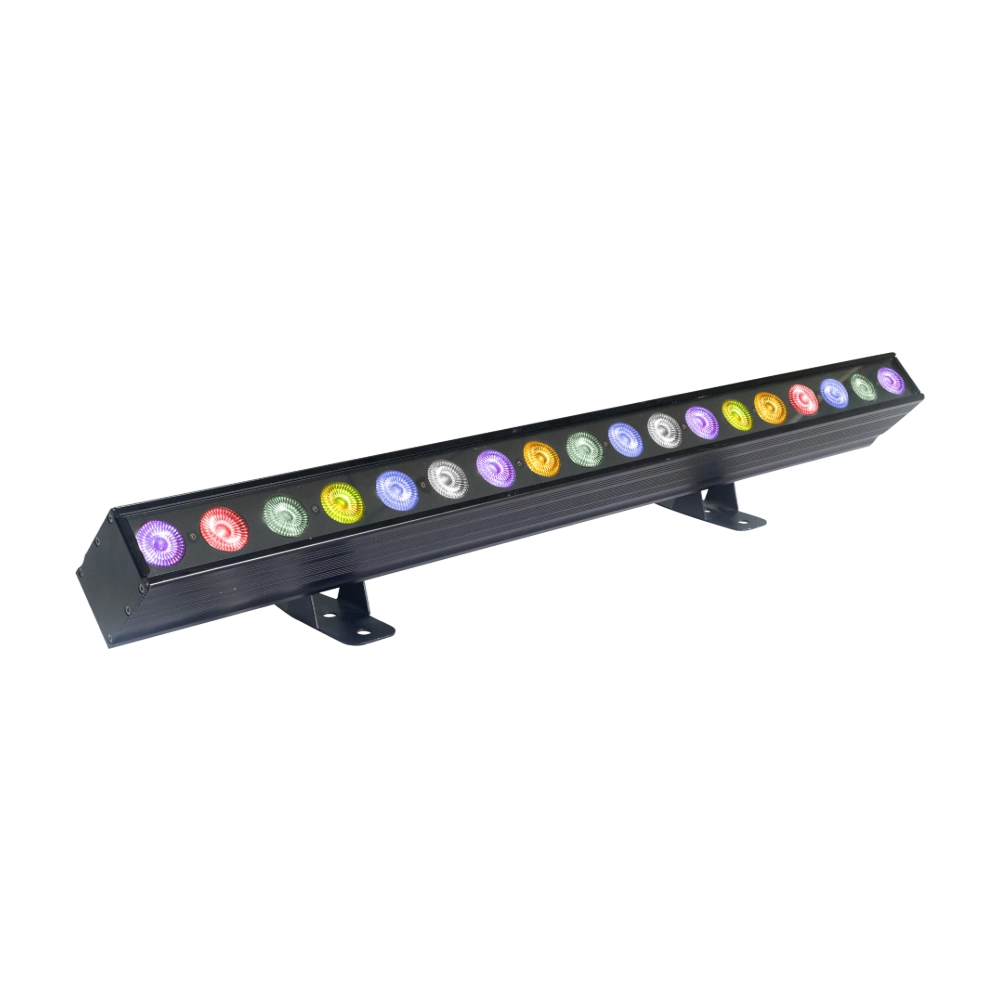
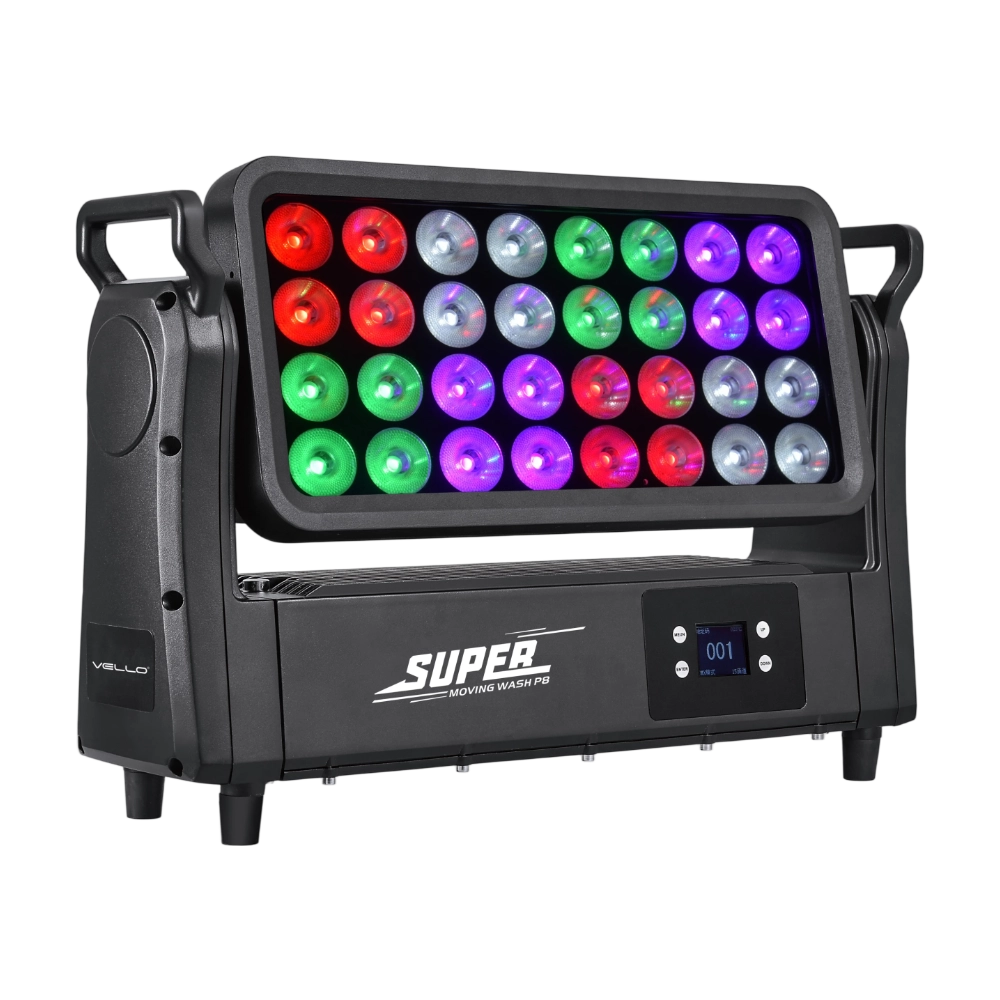
Top Wash P8 is a 1200W high-power IP65 LED wash light, equipped with 32 × 40W RGBW 4-in-1 LEDs for vibrant color mixing and powerful output. With 8 pixel sections (4 LEDs per group), selectable lens angles of 6° / 25° / 45°, and optional extra filters, it offers flexibility for both narrow beams and wide washes. The fixture supports strong RGBW strobe effects, smooth 0–100% linear dimming, and precise pixel control. Featuring a 220° tilt range, silent flicker-free performance, and multiple DMX modes, Top Wash P8 is built for large-scale concerts, outdoor events, and architectural lighting where high brightness and reliability are essential.
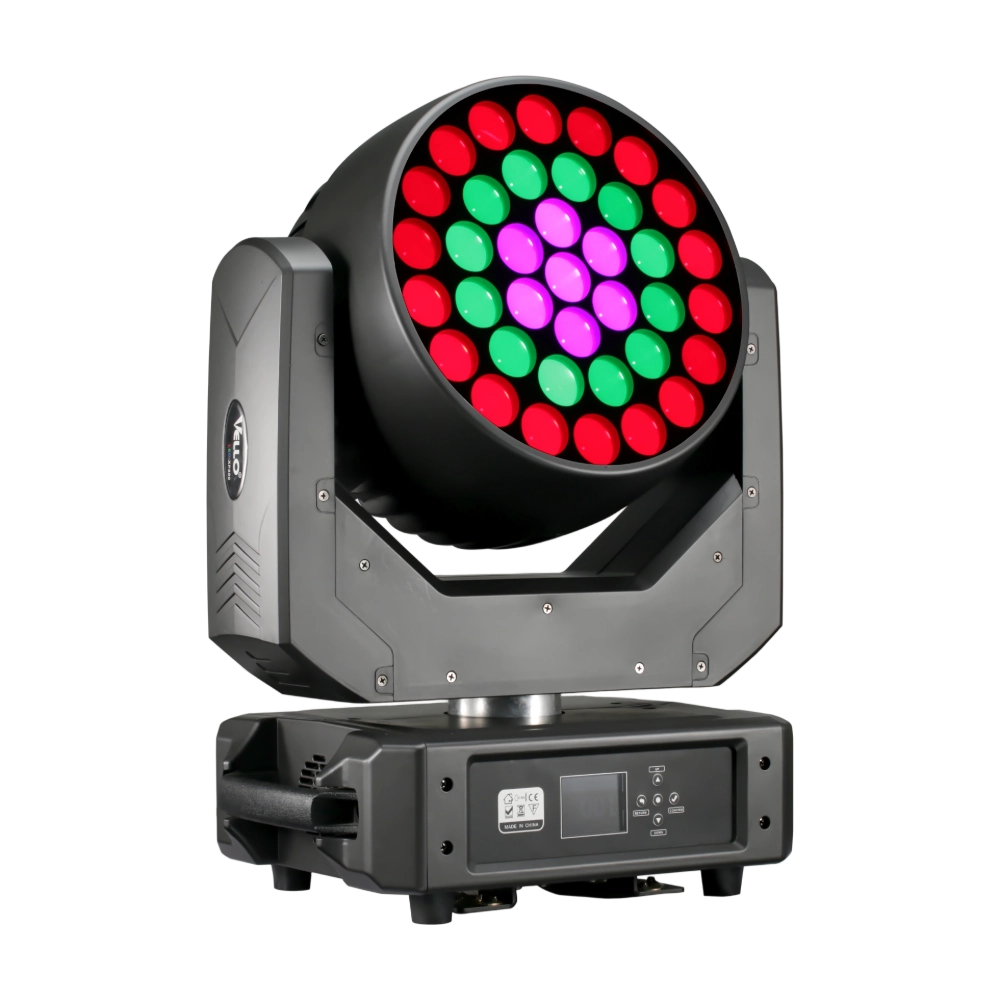
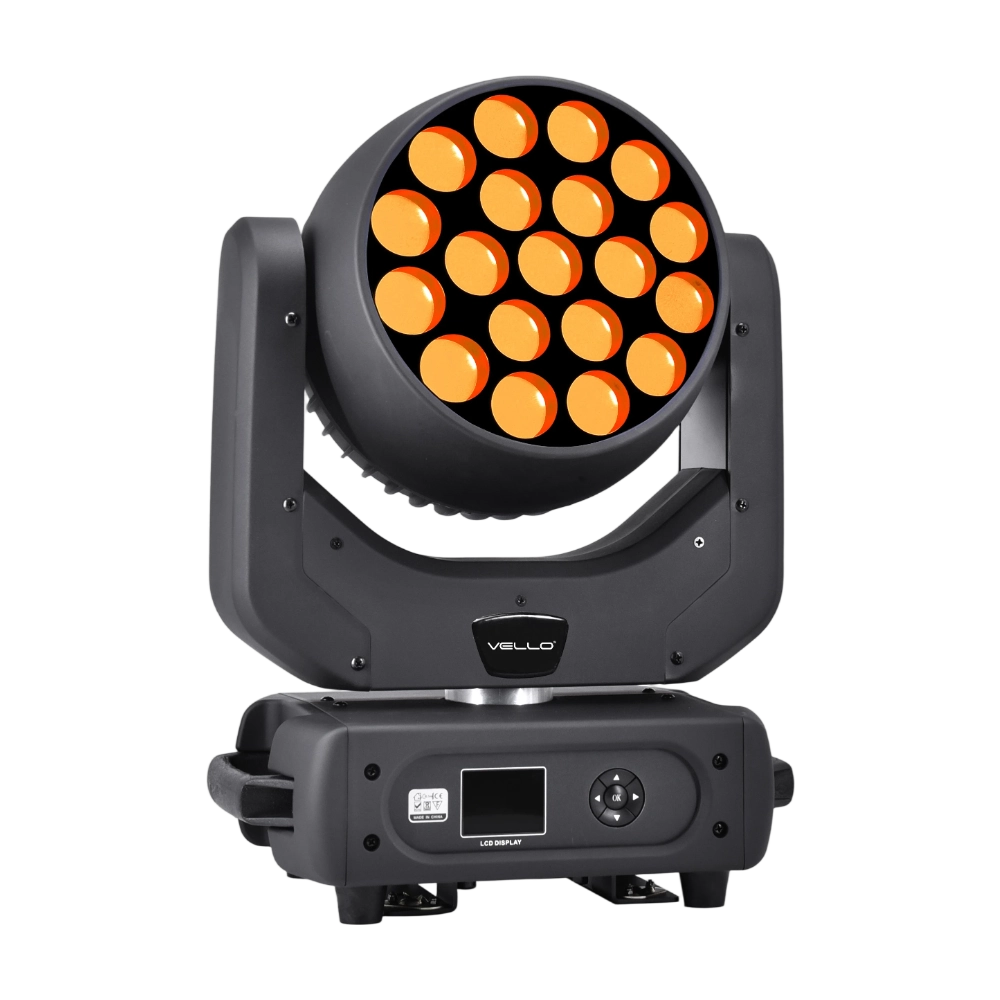
The LED XP800 is a 600W moving head wash fixture, equipped with 37 × 20W Osram RGBW LEDs for brilliant color mixing and high output. With a wide 6°–50° electronic zoom, it easily transitions from sharp beams to smooth washes. The fixture supports 3-ring pixel control and an adjustable CTO range (2800K–8500K) for versatile applications. Featuring 540° pan / 310° tilt, high-speed 3-phase motors, and multiple DMX modes (16/28 channels), XP800 delivers powerful, precise, and dynamic performance. Compact and durable, it is an excellent choice for stages, theaters, and large-scale events requiring high brightness and flexibility.
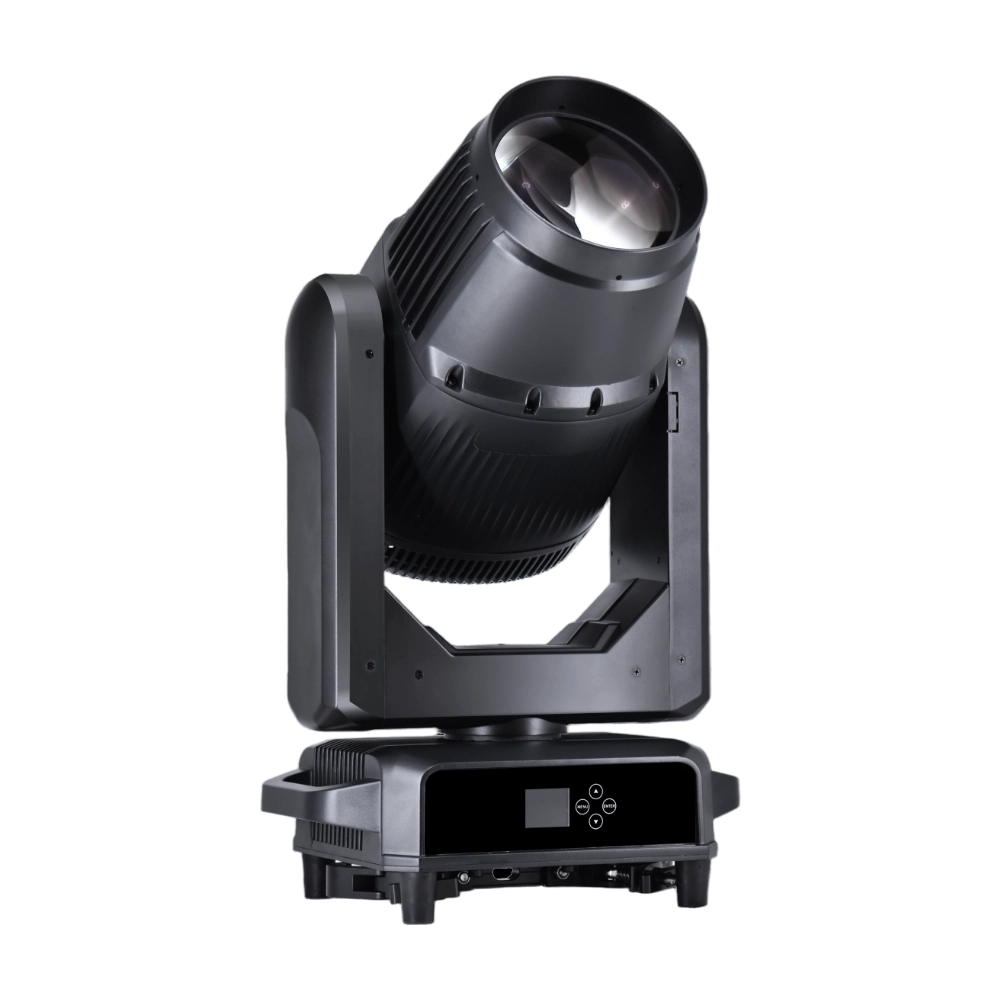
AK550 is an outdoor IP66 550W high-performance moving head spot powered by a Japanese Ushio 390W bulb, delivering a sharp 2° beam with rich colors and precise effects. It features 15 gobos + open, a 14-color wheel, dual prisms (8-facet and 16-facet honeycomb), and linear frost and focus for versatile looks. With 540° pan / 270° tilt, 16-bit movement, automatic position correction, and an LCD touch display, the AK550 ensures precision and reliability. Built with a compact, lightweight body and IP66 outdoor-rated housing, it offers strong output and flexible control (DMX512, Master/Slave, standalone) and is ideal for both touring and outdoor events.
◌ Let Us Support Your Project
Request a Custom Quote and Technical Support
Fill out the form below, and our sales team will contact you shortly with product details, pricing, and customer service options.
Rest assured that your privacy is important to us, and all information provided will be handled with the utmost confidentiality.
By clicking "Send your message," I agree to your processing my personal data.
To see how to withdraw your consent, how to control your personal data, and how we process it, please see our Privacy Policy and Terms of Use.
Over 20 Years of Innovation in Stage & Studio Lighting
© 2026 VELLO. All Rights Reserved. 粤ICP备20023734号
Join our socials
VELLO
Whatsapp: +8613902276704
Vello Lighting
VelloLights