





Why pixel mapping matters for modern LED stage designs?
- 1) How do I size pixel pitch and mapping resolution for a stage LED screen so on-stage video and moving-head pixel-mapping appear sharp to audiences at different viewing distances?
- 2) When specifying a touring LED rig, how do I calculate power needs, avoid inrush/trip issues, and prevent visible flicker on broadcast cameras?
- 3) For pixel mapping moving-head arrays and LED tubes, which control architecture (DMX, Art-Net, sACN, SPI) minimizes latency and scale limits — and how do I set up the network to avoid packet loss?
- 4) Should I pick SPI-based pixel controllers, DMX pixel nodes, or a dedicated media server/console for my first pixel-mapped show?
- 5) How do I evaluate real-world brightness and color accuracy (CRI/TLCI/TM-30) for LED wash, spot, and pixel fixtures — and not just rely on vendor lumen claims?
- 6) For touring and long-term installs, what durability, IP rating, and serviceability specs should I insist on when buying LED stage lights and pixel fixtures?
As a professional content writer with deep SEO, GEO and LED stage lights experience, this article answers six specific long-tail questions beginners often find poorly addressed online. Each answer gives actionable specs, industry best practices, and purchase checklists for buying professional stage lighting equipment and implementing pixel mapping in modern LED stage designs.
1) How do I size pixel pitch and mapping resolution for a stage LED screen so on-stage video and moving-head pixel-mapping appear sharp to audiences at different viewing distances?
Pain point: Buyers buy an LED video wall or pixel-mappable fixtures that look blocky from the audience or waste budget on unnecessarily fine pitch.
Practical approach and numbers:
- Use the common industry rule-of-thumb: recommended optimal viewing distance in meters ≈ pixel pitch in millimetres. For example, a P3 (3mm) screen will look optimal ~3 meters away; P4 ≈ 4m; P5 ≈ 5m. This rule is widely used for quick planning and aligns with visual acuity considerations used in LED rental and install specs.
- For blended setups combining LED walls and pixel-mapped moving heads or fixtures, match perceived resolution rather than physical pixel pitch. If the LED wall is P4 and audience primary sightline averages 6–10m, mapping moving-head pixel matrices so that effective pixel density roughly equals the wall’s perceived resolution prevents aliasing or mismatched details.
- Calculate required mapping pixels: measure the mapped area in pixels (wall width in meters × 1000 ÷ pitch). For moving heads or pixel tubes, design logical grids (e.g., 16×32 nodes) whose total pixel count maps neatly into your media server output universes to avoid wasted channels.
- Camera and broadcast constraints: if the show will be filmed, you may need denser pitch (smaller mm value) or higher refresh/PWM to avoid camera banding; consult the production camera team. As a guideline, choose a pitch at least equal to the minimum camera-to-screen distance in meters or smaller.
Purchase checklist:
- Ask vendor for a pixel density mock-up at your venue sightlines (rendering or physical mock-up).
- Confirm physical pixel pitch, panel seam width, and brightness (nits) to match ambient stage lighting.
- Plan pixel-mapping grids so the media server outputs integer multiples of fixture matrices to simplify Art-Net/sACN addressing.
2) When specifying a touring LED rig, how do I calculate power needs, avoid inrush/trip issues, and prevent visible flicker on broadcast cameras?
Pain point: Touring buyers under-spec mains, trip breakers, or discover flicker under camera that stops a show.
Power planning best practices:
- Continuous load rule: follow the 80% circuit loading guideline (NEC/common touring practice). For 120V/15A circuits, 15A×120V=1800W, safe continuous load ≈ 1440W. For 230V/16A circuits (Europe), 16A×230V=3680W, safe continuous ≈ 2944W. Always calculate per-circuit loads and distribute evenly across phases.
- Account for peak inrush: LED drivers and capacitors create inrush current that can exceed steady-state draw. Specify inrush-limiting or stagger power-on sequences, and use PDUs or racks with soft-start where possible. When booking venue power, disclose expected inrush to venue technicians.
- Flicker & cameras: LED fixtures use PWM. For live broadcast or high-shutter-speed cameras, aim for LED drivers and fixtures with PWM frequencies ≥2–4 kHz and pixel refresh rates high enough to avoid rolling-band artifacts. Many professional LED walls and fixtures advertise camera-friendly PWM; confirm with the manufacturer and ask for camera tests if possible.
- Power connectors & distribution: use robust power connectors (Neutrik PowerCON TRUE1 or industry-standard stage power options) and rugged distribution boxes. Label and secure all cable runs and apply proper strain reliefs for touring loads.
Operational checklist:
- Create a power schedule showing per-unit steady wattage, peak inrush, and per-circuit grouping before the load-in.
- Require a stage electrician to bring appropriate breakers, soft-start PDUs, and a power sequencer if inrush is significant.
- Request camera tests from the vendor or perform camera sweep tests at relevant shutter speeds.
3) For pixel mapping moving-head arrays and LED tubes, which control architecture (DMX, Art-Net, sACN, SPI) minimizes latency and scale limits — and how do I set up the network to avoid packet loss?
Pain point: Beginners hit latency, dropouts, or frame-stutter when mapping many pixels over large rigs.
Protocol guidance and network design:
- DMX512: still the baseline for single-fixture control and smaller rigs (512 channels per universe). For pixel-mapped arrays, DMX is quickly exhausted once each pixel needs RGB(A) channels.
- SPI (WS281x/APA102 family): used for LED strips and low-cost panels where a node expects serial data. SPI is fast for small runs but impractical for large distributed networks without gateway nodes.
- Ethernet-based Art-Net and sACN: industry standard for large pixel systems. Art-Net is simple and widely supported; sACN (E1.31) is engineered for large, reliable distributed control and is preferred by modern consoles and media servers. Both travel over UDP so network design matters.
- Scaling & latency: plan for <40ms end-to-end latency for live performance; many systems are sub-20ms. Use a media server or mapping console that outputs multiple universes efficiently. Each Art-Net/sACN universe maps to 512 channels — plan the number of universes based on pixel count.
Network best practices to avoid packet loss:
- Use a dedicated lighting network separate from FOH office/Wi‑Fi traffic.
- Employ managed Gigabit switches with IGMP snooping to limit multicast flooding. Avoid cheap unmanaged switches when carrying many Art-Net/sACN universes.
- Use EtherCON/Ethernet locking connectors on fixtures and nodes; run redundant paths for critical fixtures when supported.
- Set static IPs or DHCP reservations for controllers and nodes to simplify addressing. Document IP schema (e.g., 10.10.x.x per sub-rig).
- Segment large deployments using subnets or VLANs when a single switch cannot handle universe count; keep cabling star or ring topologies per manufacturer advice.
4) Should I pick SPI-based pixel controllers, DMX pixel nodes, or a dedicated media server/console for my first pixel-mapped show?
Pain point: Uncertainty whether to buy cheap SPI controllers or invest in a media server and multiple Ethernet nodes.
Decision factors:
- Project size & flexibility: For small decorative runs and LED strips, low-cost SPI controllers (USB/TTL gateways) can be fine. For anything involving many moving fixtures, multi-universe walls, or professional cueing, invest in a media server or mapping console and Ethernet pixel nodes (Art-Net/sACN to SPI/DMX nodes).
- Control features: Media servers provide timeline-based playback, pixel mapping tools, masking, warping, and realtime video mapping — essential for synchronized visual content. Consoles add show control features, timecode, and deeper lighting integration.
- Reliability & support: Professional pixel nodes and media servers are built for touring (robust enclosures, firmware support, 1Gb Ethernet, redundant power options). Low-cost SPI gadgets often lack documentation and long-term support.
Recommended starter architecture for a professional outcome:
- Media server or mapping-capable lighting console as the source of pixel data.
- Gigabit managed switch with IGMP snooping and sufficient bandwidth.
- Distributed Art-Net/sACN-to-SPI/DMX nodes placed near LED arrays (reduces cable length and latency).
- Backup plan: hardware backup device and a documented recovery procedure for node firmware.
5) How do I evaluate real-world brightness and color accuracy (CRI/TLCI/TM-30) for LED wash, spot, and pixel fixtures — and not just rely on vendor lumen claims?
Pain point: Buyers find spec-sheets with inflated lumen figures or RGB-only fixtures that render skin tones poorly under stage mixes.
What to check and test:
- Lumen specs vs lux on stage: lumen output is a useful comparative metric, but practical effect depends on beam angle and distance. Request a lux plot or measured lux at specific distance/angle from the vendor — or measure with a calibrated light meter in your venue.
- Color rendering: For theatrical use, look for CRI ≥ 80 for white light accuracy; for broadcast/film, TLCI or TM-30 scores are more relevant. TLCI ≥ 90 is typical for broadcast-grade fixtures. If the manufacturer provides spectral power distribution (SPD) data, use that to assess how colors and skin tones will render.
- LED mixing: Fixtures using additional LEDs (RGBW, RGBA, or RGB + amber/white) produce better whites and pastel colors than RGB-only units. For faithful whites, fixtures with dedicated white LEDs (tunable CCT) or high-CRI white emitters are preferred.
- Perceived brightness: Beam control (lens quality, beam angle, zoom range), and optical efficiency determine how bright the audience perceives the source. Narrow beams concentrate lumens; wide washes look softer.
Procurement & test checklist:
- Request photometric files (IES/LLPA series) or lux charts for common throw distances.
- Ask for TLCI/TM-30 or CRI figures and, if possible, SPD graphs.
- Perform on-site demo with flesh tones and common costumes under mix levels you plan to use.
6) For touring and long-term installs, what durability, IP rating, and serviceability specs should I insist on when buying LED stage lights and pixel fixtures?
Pain point: Fixtures fail mid-tour, connectors break, or firmware can't be updated — causing costly downtime.
Key durability and maintainability considerations:
- IP rating: For outdoor use or partially exposed stages choose IP65-rated cabinets and fixtures (dust-tight + water jets). For indoor venues, IP20 is common. When fixtures are used outdoors occasionally, prefer at least IP54 or protect them in weatherproof housings.
- Connectors & ruggedness: Use fixtures with industry-standard robust connectors: locking EtherCON for networking, 5-pin XLR for DMX backup, and locking power options (PowerCON TRUE1 or stage-grade connectors). Avoid consumer-grade micro USB ports for permanent production use.
- Field serviceability: Choose fixtures with modular LEDs/drivers, available spare parts (power supplies, driver boards, data nodes), and accessible service manuals. Ask vendors about MTBF/MTTR averages and local support/parts availability.
- Firmware & software: Confirm firmware upgrade paths (USB vs network), changelog access, and whether the vendor provides regular updates. For pixel systems, confirm node firmware can be updated in the field without removing fixtures.
- Cases & transport: For touring rigs, purchase fit-for-purpose flight cases and shock-mount pallets sized to fixture groups. This reduces failure rates and connector fatigue.
Procurement checklist:
- Request IP rating and an overview of service parts availability in your territory.
- Require vendor to document recommended maintenance schedule and available local service centers.
- Negotiate initial spares (driver boards, LED modules, power supplies) into the purchase for touring fleets.
Why pixel mapping matters for modern LED stage designs
Pixel mapping transforms static lighting rigs into dynamic, content-driven visual systems that unify LED walls, moving heads, tubes and fixtures into a single visual canvas. This creates higher production value: synchronized visuals, tighter integration with camera workflows, and the ability to repurpose lighting fixtures as video surfaces. For creative directors and lighting designers pixel mapping enables precise choreography of color, motion and texture that traditional fixture-by-fixture control cannot match.
Contact us for a quote or to discuss application-specific specifications: visit www.vellolight.com or email info@vellolight.com.
Major categories
What is the usual lead time?
Standard models are typically shipped within 7–15 working days after payment. Customized items may vary.
Do you ship internationally?
Yes. We offer sea, air, and express delivery to many countries and regions worldwide.
Do you offer samples?
Samples are available for certain models. Please confirm with our sales team for details.
What is the warranty period for your products?
Most products come with a standard 1–2 year warranty. Please refer to product details or contract terms for specifics.
Do your products support customization?
Yes. We offer OEM and ODM services tailored to project needs, including design, optics, and control compatibility.
You may also like
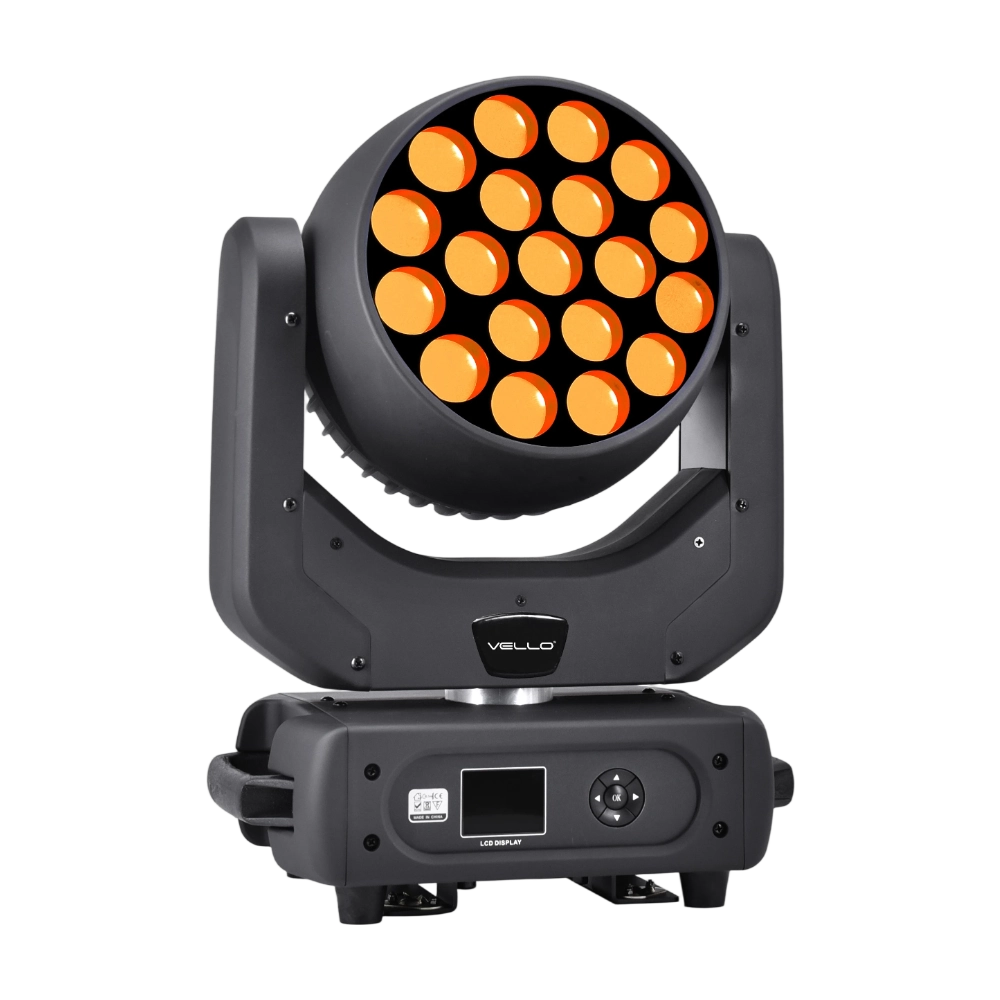
Max Wash X7 is a 750W super moving head wash fixture, equipped with 19 × 40W 7-in-1 RGB+A+C+L LEDs delivering rich colors, high brightness, and a super high CRI ≥95. With a wide 6.1°–50° electronic zoom and advanced 3-ring pixel control, it creates both powerful beams and smooth washes. The fixture supports CTO adjustment (3200K, 4200K, 5600K, 6800K) across four presets for versatile color temperature control. Featuring 540° pan / 310° tilt, high-speed motors, multiple DMX channel modes, and a durable heat-proof housing, Max Wash X-7 is designed for concerts, TV studios, and large productions demanding next-level wash performance with precision and creativity.
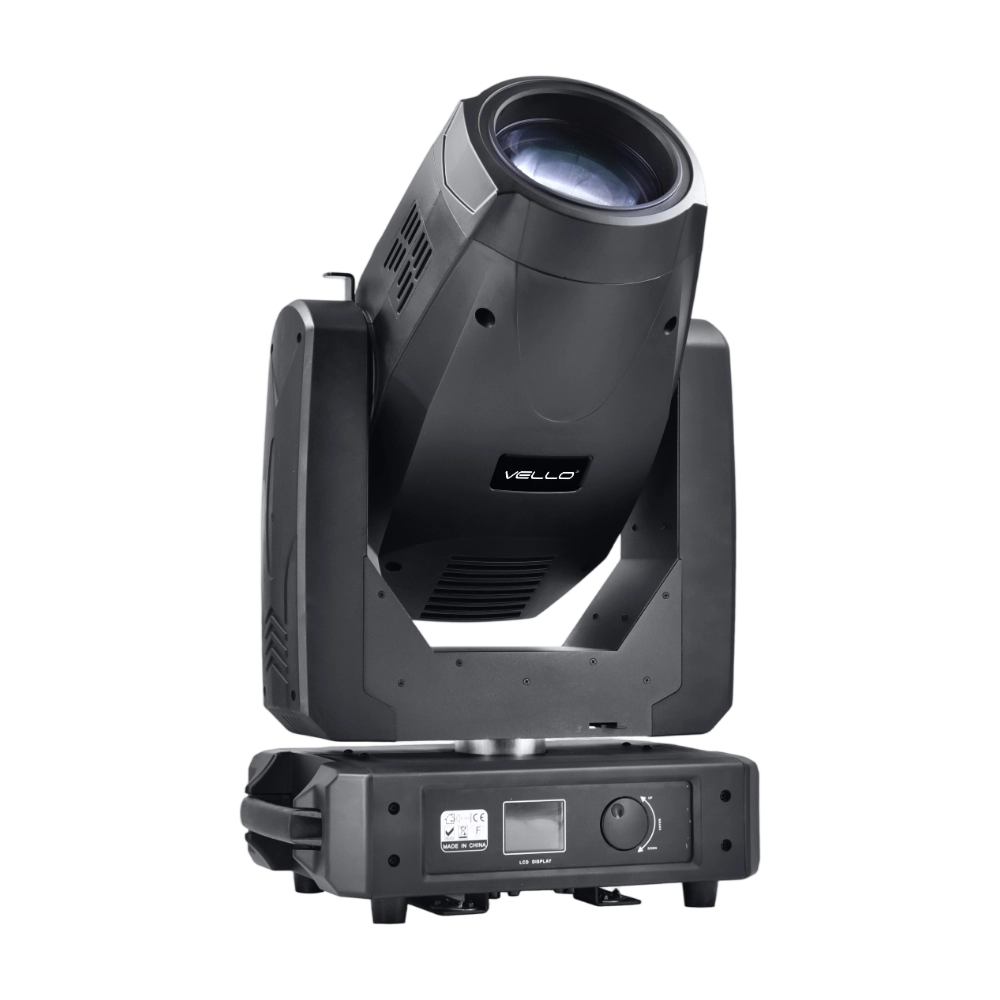
The BSW450 is a high-performance moving head fixture equipped with an original Osram 420W bulb, delivering exceptional brightness, precision, and versatility. Designed for professional stage applications, it seamlessly combines beam, spot, and wash functions in one compact unit, making it a powerful all-in-one lighting solution.
The LED XP800 is a 600W moving head wash fixture, equipped with 37 × 20W Osram RGBW LEDs for brilliant color mixing and high output. With a wide 6°–50° electronic zoom, it easily transitions from sharp beams to smooth washes. The fixture supports 3-ring pixel control and an adjustable CTO range (2800K–8500K) for versatile applications. Featuring 540° pan / 310° tilt, high-speed 3-phase motors, and multiple DMX modes (16/28 channels), XP800 delivers powerful, precise, and dynamic performance. Compact and durable, it is an excellent choice for stages, theaters, and large-scale events requiring high brightness and flexibility.
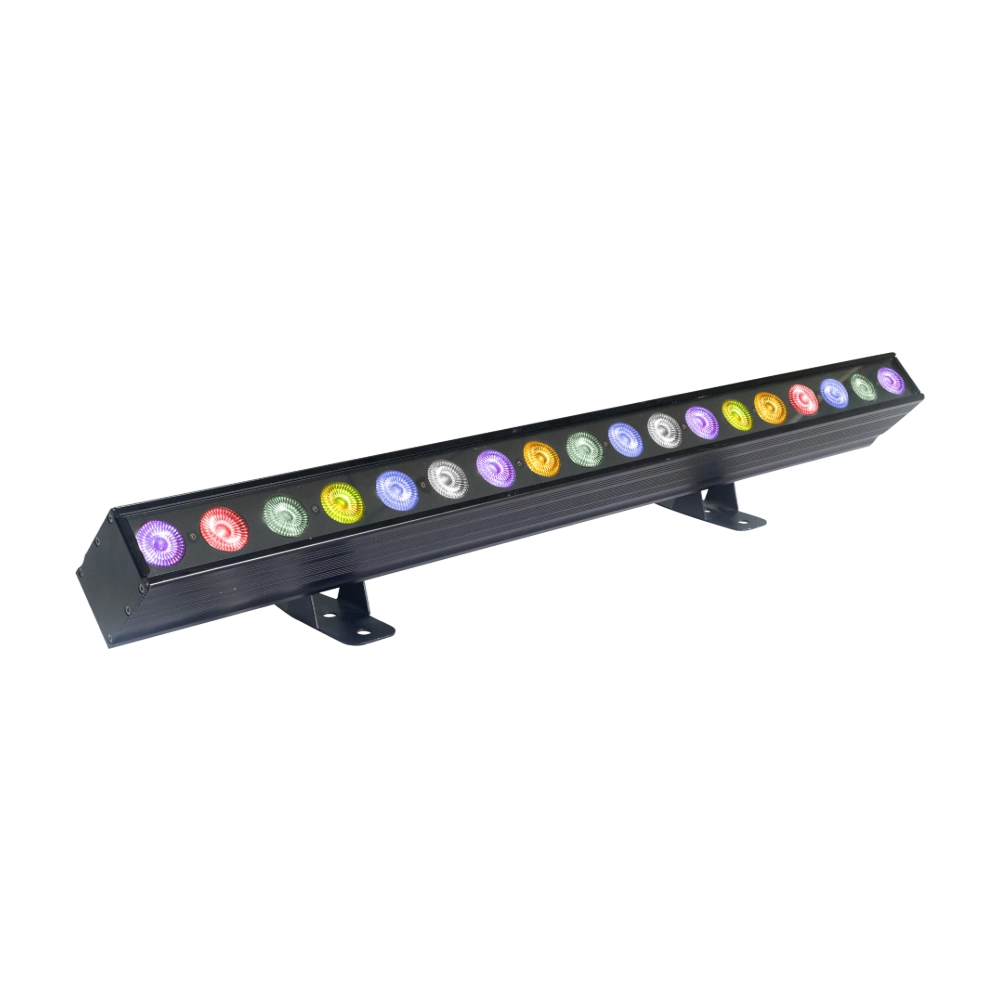
The LED SlimBar 1841 Pixel is a sleek 300W pixel LED bar with 15 × 15W RGBW LEDs + 120 × 0.5W RGBW SMD LEDs, arranged for powerful washes and pixel effects. Offering multiple lens options (6°/15°/25°/45°), 21–180 DMX channels, and individual LED control, it provides endless creative possibilities. Lightweight yet powerful, it’s perfect for stage backdrops, visual effects, and architectural lighting.
◌ Let Us Support Your Project
Request a Custom Quote and Technical Support
Fill out the form below, and our sales team will contact you shortly with product details, pricing, and customer service options.
Rest assured that your privacy is important to us, and all information provided will be handled with the utmost confidentiality.
By clicking "Send your message," I agree to your processing my personal data.
To see how to withdraw your consent, how to control your personal data, and how we process it, please see our Privacy Policy and Terms of Use.
Over 20 Years of Innovation in Stage & Studio Lighting
© 2026 VELLO. All Rights Reserved. 粤ICP备20023734号
Join our socials
VELLO
Whatsapp: +8613902276704
Vello Lighting
VelloLights