





How does laser and LED integration affect stage visuals?
- 1) What minimum lumen output, beam angle and lux target should I request for professional stage lighting equipment for a 1,000-seat theatre to ensure even front wash and reliable throw?
- 2) How do I compare LED moving-head beam fixtures vs traditional discharge movers for long-throw concerts when choosing professional stage lighting equipment?
- 3) How can I verify a fixture's flicker-free performance for high-frame-rate broadcast or slow-motion cameras without lab equipment?
- 4) What safety steps and compliance documentation must I demand when integrating Class 3B/4 lasers with LED wash and moving heads for indoor shows?
- 5) How does ILDA/DMX/Art-Net pixel-mapping affect latency and synchronization when I combine lasers and LED pixel-mapped strips, and how can I minimize sync issues?
- 6) Which power distribution, cooling and environmental derating specs should I insist on when purchasing high-density LED stage lighting equipment for outdoor summer festivals?
- Concluding summary: advantages of professional stage lighting equipment and laser+LED integration
Professional Stage Lighting Equipment: Laser + LED Integration Answers for Buyers
Choosing professional stage lighting equipment that integrates LEDs and lasers is more than picking bright fixtures. Buyers need specific guidance on lux targets, beam geometry, control latency, safety compliance, heat derating, and camera-friendly operation. Below are six detailed, beginner-focused long-tail questions with practical checklists and data-driven advice to help you buy wisely.
1) What minimum lumen output, beam angle and lux target should I request for professional stage lighting equipment for a 1,000-seat theatre to ensure even front wash and reliable throw?
Start with an application-driven lux target and work backwards to beam angle and nominal lumen output. Typical targets: theatrical front wash 300–500 lux on stage for live audiences; broadcast or camera-heavy musicals often require 500–800 lux. For dynamic concert stages targets vary, but aim for 200–600 lux depending on content.
Checklist & method:
- Define target illuminance: choose 300–500 lux (theatre) or 500–800 lux (broadcast).
- Measure or estimate throw distance: measure from fixture position to stage surface (e.g., 10–25 m).
- Select beam angle for coverage: wide wash fixtures (40°–80°) for even coverage; ellipsoidal/follow/spot (5°–25°) for key/specials. Use wider angles for house washes, tighter beams for accents and gobos.
- Calculate approximate lumens per fixture: lux target × area (m2) = lumens required on that area. Use photometric files (IES/LM-63) from the vendor to translate lumens and beam angle into lux at your throw distance—ask for manufacturer lux plots for your exact hang positions.
- Factor fixture efficiency and real-world output: LED fixture white-point and LED binning affect delivered lumens. Request measured lux/IES at specific throw distances rather than nominal lumens alone.
Why ask vendors for IES files and lux plots? Because declared lumen numbers (e.g., “20,000 lm”) don’t tell you how concentrated that light is: a 20,000 lm wash gives different lux depending on beam angle. For predictable results insist on photometric data and a simple calculation demo for your venue layout.
2) How do I compare LED moving-head beam fixtures vs traditional discharge movers for long-throw concerts when choosing professional stage lighting equipment?
Key tradeoffs are luminous efficacy, color mixing, contrast/edge, and maintenance. Modern LED moving-head beam fixtures deliver high lumens per watt and precise color (RGBW or RGBMA), while high-pressure discharge (e.g., xenon, arc) historically offered tighter beam edges and long throw with very high center intensity.
Comparison checklist:
- Peak center lux at specified throw—request manufacturer beam charts at 20m/40m/60m.
- Beam edge definition and gobosharpness—discharge lamps often have harder edges; modern LED engines with good optics and collimation can approach similar performance.
- Color rendering and presets—RGBW/RGBMA LEDs give rich saturated colors and continuous white tuning (CCT). For skin tones and broadcast, ask for CRI/TLCI data (aim for TLCI≥90 or CRI≥90 when video is critical).
- Maintenance, lamp life and operating cost—LEDs typically have 20,000–50,000+ hours and lower power draw; discharge lamps require lamp changes and warm-up time.
- Power draw and cooling—LEDs are more efficient, but some high-output LED movers still draw significant current and need robust power distribution and ventilation.
Decision tip: For long-throw arena concerts where center punch is king, insist on photometric proof. If color versatility, lower operating cost, and instant strobe/freeze are priorities, high-output LED moving heads generally win. Where possible, test side-by-side at representative throw distances.
3) How can I verify a fixture's flicker-free performance for high-frame-rate broadcast or slow-motion cameras without lab equipment?
Flicker for cameras arises from PWM dimming or inconsistent LED driver refresh. You can perform low-cost, practical tests to validate fixtures.
Practical tests:
- Smartphone slow-motion test: film the fixture dimmed at various intensities using a smartphone at its highest frame rate (120/240 fps). Look for banding or strobing in the footage. No banding indicates effective flicker control for that camera framerate.
- Camera shutter sweep: use the production camera's range of shutter angles and frame rates (24/50/120 fps). If adjusting shutter or frame rate reveals bands, the fixture may require a higher PWM frequency or different driver modes.
- Manufacturer specs: request PWM frequency and flicker-control modes. For broadcast-safe operation, modern fixtures should use PWM frequencies >4 kHz; many pro fixtures use >10–20 kHz or constant-current drivers with engineered dimming curves.
- Ask for third-party test reports or on-site demos: reputable manufacturers will provide broadcast-verified measurements or allow a short-term loan/demo for camera testing.
Note: Different camera sensors react differently. Always verify with the actual cameras and shutter angles you will use in production.
4) What safety steps and compliance documentation must I demand when integrating Class 3B/4 lasers with LED wash and moving heads for indoor shows?
Laser integration dramatically raises safety requirements. Lasers capable of producing visible audience beams must be handled per laser safety standards and local regulations.
Mandatory steps and documentation:
- Standards & risk assessment: require compliance with ANSI Z136.1 (U.S.) and IEC 60825-1/IEC 60825-14 (international) for classification and risk assessment. Insist on a written laser risk assessment for the specific venue and show.
- Laser classification & labeling: vendor must supply Class designation (1–4) and a technical file including output power, wavelength, and beam geometries.
- Safety engineering controls: interlocks, key switches, emergency stop, beam stops and remote disable must be present and tested. Audience scanning with Class 3B/4 should only be performed under strict control with a Laser Safety Officer (LSO).
- Operator qualifications: require proof that operators are trained and that a named LSO is assigned for each show when using Class 3B/4 lasers.
- Integration with LEDs: ensure lasers are time-synced via ILDA/Art-Net and that safety interlocks operate across control domains (e.g., if DMX blackout occurs, laser interlock triggers). Document that fail-safe behavior is tested.
- Insurance & permits: obtain permits required by local authorities, and ensure insurance policies cover laser use in performance context.
Bottom line: don’t accept vague promises. Require the full laser technical file, risk assessment, and operator credentials before approving integration with LED fixtures.
5) How does ILDA/DMX/Art-Net pixel-mapping affect latency and synchronization when I combine lasers and LED pixel-mapped strips, and how can I minimize sync issues?
Mixing control transports (ILDA for lasers, DMX/Art-Net/sACN for LED pixels) introduces potential timing and frame-rate mismatches. Understanding protocol frame rates and how nodes buffer data helps avoid visible lag or tearing.
Key points and mitigation:
- Protocol characteristics: DMX512 (legacy) updates at ~44 Hz per universe at 250 kbps; Art-Net and sACN over Ethernet allow faster and parallel universes. ILDA is optimized for analog laser scanners but many laser systems now accept ILDA-over-DMX or networked ILDA wrappers.
- Use Ethernet-native solutions: for pixel-mapped RGB/RGBW strips, prefer Art-Net or sACN with dedicated switch and multicast/unicast strategies. This allows higher refresh (hundreds of fps) and lower latency than chained DMX universes.
- Timecode & genlock: for frame-accurate synchronization between lasers and video/pixel content, use SMPTE timecode, MIDI timecode or PTP/NTP genlock-capable devices. Many media servers (e.g., Resolume, Hippotizer, Watchout) support synchronized outputs for both laser and pixel controllers.
- Minimize hops and buffering: use nodes with deterministic buffering and ensure network switches are gigabit-managed or at least unmanaged but dedicated. Avoid sending Art-Net across non-dedicated congested networks.
- Test for worst-case latency: measure end-to-end latency under show conditions (full pixel count and DMX universe load). If lasers are driven by ILDA, ensure the laser controller supports frame-accurate triggers or sample clocking from your media server.
Practical tip: Architect your show with one media server controlling both laser cues (via ILDA/laser controller) and pixel maps (via Art-Net/sACN). Use SMPTE/PTP to lock devices and reduce perceived lag to under a single video frame.
6) Which power distribution, cooling and environmental derating specs should I insist on when purchasing high-density LED stage lighting equipment for outdoor summer festivals?
High-output LED fixtures produce heat in drivers and LEDs; ambient temperature, humidity, and altitude affect performance and lifetime. For outdoor festivals, demand clear spec data and plan your power infrastructure accordingly.
What to require:
- Operating temperature and derating curve: ask for power derating graphs (e.g., rated at 25°C with derating above 40°C). Many fixtures reduce output or increase fan speed beyond 35–45°C—get the exact curves.
- IP rating & ingress protection: for outdoor use, pick IP65 or higher for fixtures exposed to weather. Remember moving heads and fixtures with vents often have IP54 or lower—use cover strategies or weather-rated versions.
- Power factor & inrush: require power factor correction (PFC) ≥0.9 and provide RMS current and inrush values. High inrush on many LED fixtures can trip breakers—plan soft-start or staggered power-on sequences and adequate breaker sizing.
- Cooling strategy: passive vs active cooling—passive-cooled LED fixtures are more robust in dusty outdoor environments; active-cooled units require intake/exhaust clearance and regular maintenance.
- Altitude and humidity considerations: at high altitude or high humidity, cooling is less efficient—review manufacturer altitude derating and condensation prevention specs.
- Recommended PDUs and distribution: use stage-rated multicore distro, IEC locking or camlock connectors as appropriate; distribute loads across phases and include residual-current (RCD) protection where required by venue/local code.
Procurement tip: require an environmental performance appendix in the quote that includes derating curves, IP rating, PFC, inrush current, and recommended mounting orientation. That prevents surprises on hot festival days.
Concluding summary: advantages of professional stage lighting equipment and laser+LED integration
Integrating modern LED fixtures with carefully controlled lasers unlocks richer visuals, lower operating cost, and precise creative control. Advantages include lower power consumption and maintenance from LEDs, sharper color and dynamic effects from pixel-mapped LED arrays, and high-impact aerial effects from lasers when used safely. Proper selection—based on photometric data, flicker testing for cameras, robust DMX/Art-Net/ILDA synchronization, and strict laser safety compliance—ensures reliability in theaters, broadcast, and live concerts. Always insist on IES files, TLCI/CRI data for camera work, PWM/frequency specs for flicker, environmental derating curves, and laser risk assessments per ANSI/IEC standards.
For a tailored equipment list, IES photometric demos for your venue, or a formal quote, contact us at www.vellolight.com or email info@vellolight.com — we can provide on-site testing and certified laser safety documentation.
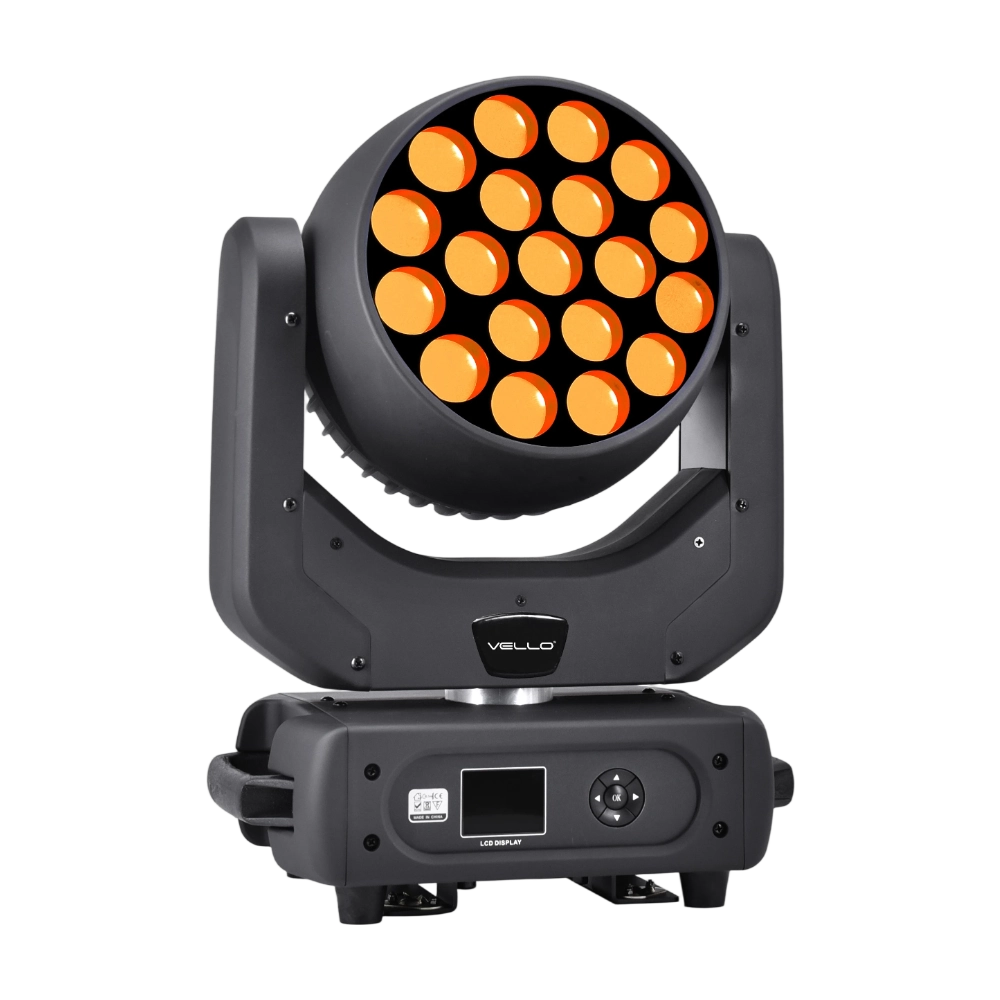
Major categories
Do you offer samples?
Samples are available for certain models. Please confirm with our sales team for details.
What is the usual lead time?
Standard models are typically shipped within 7–15 working days after payment. Customized items may vary.
Do your products support customization?
Yes. We offer OEM and ODM services tailored to project needs, including design, optics, and control compatibility.
What is the warranty period for your products?
Most products come with a standard 1–2 year warranty. Please refer to product details or contract terms for specifics.
Do you ship internationally?
Yes. We offer sea, air, and express delivery to many countries and regions worldwide.
You may also like
Golden Eyes 250IP is a 300W outdoor-rated blinder and effect fixture, featuring a 250W COB LED as the main light source and 16 pieces of 3W RGB LEDs as secondary effects. With IP65 protection, selectable CCT (1800K / 3200K / 5600K), a strong strobe, and a retro-style background glow, it delivers both a powerful punch and creative atmospheres. Silent, flicker-free operation, multiple DMX modes, and robust housing make the Golden Eyes 250IP ideal for concerts, festivals, and outdoor productions.
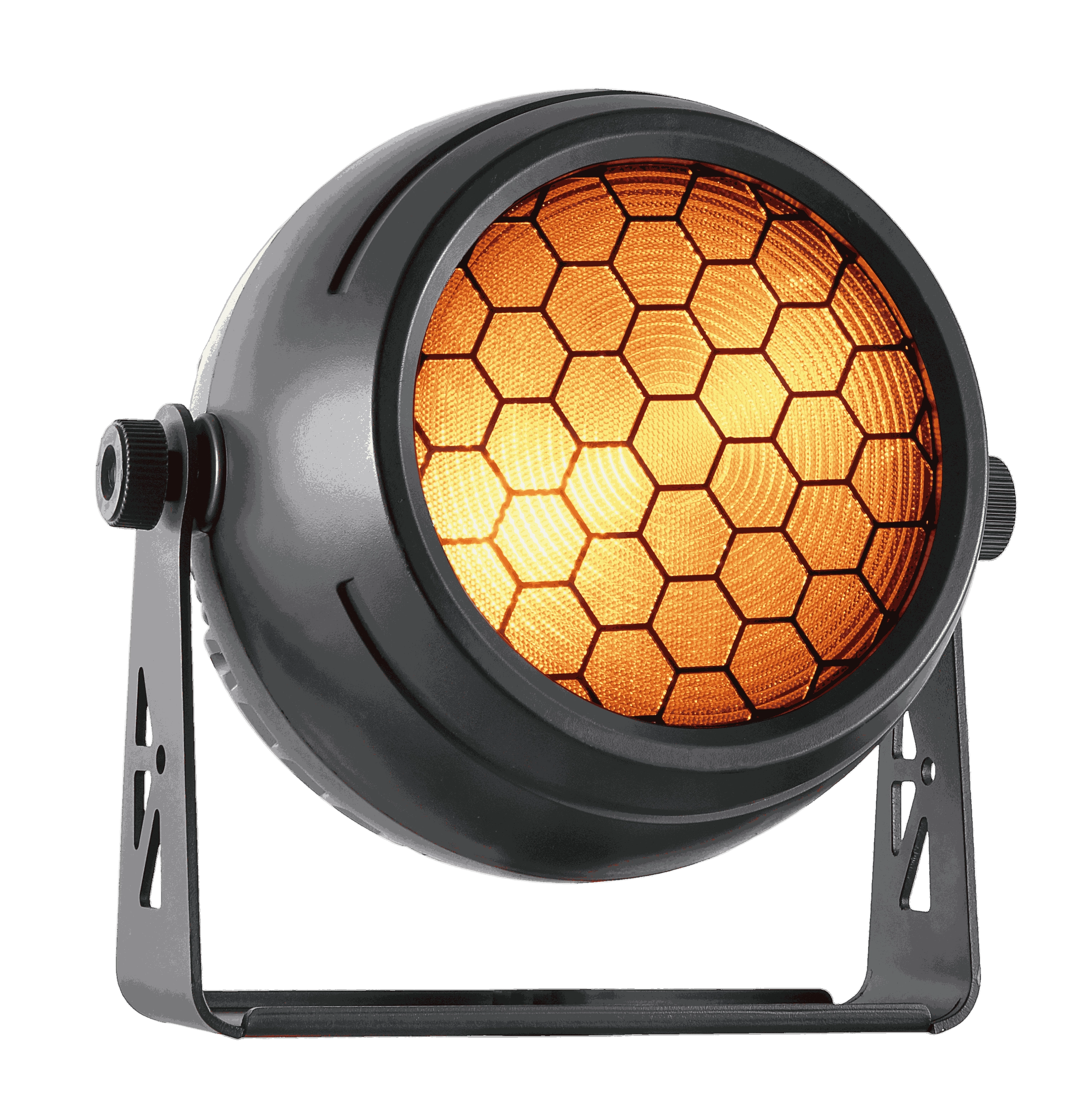
VELLO Studio Light TH 600 - High-performance studio light for photography and video. Flicker-free output, adjustable intensity, accurate color rendering, and robust design. Perfect for studios, shoots, streaming, and pro content creation.
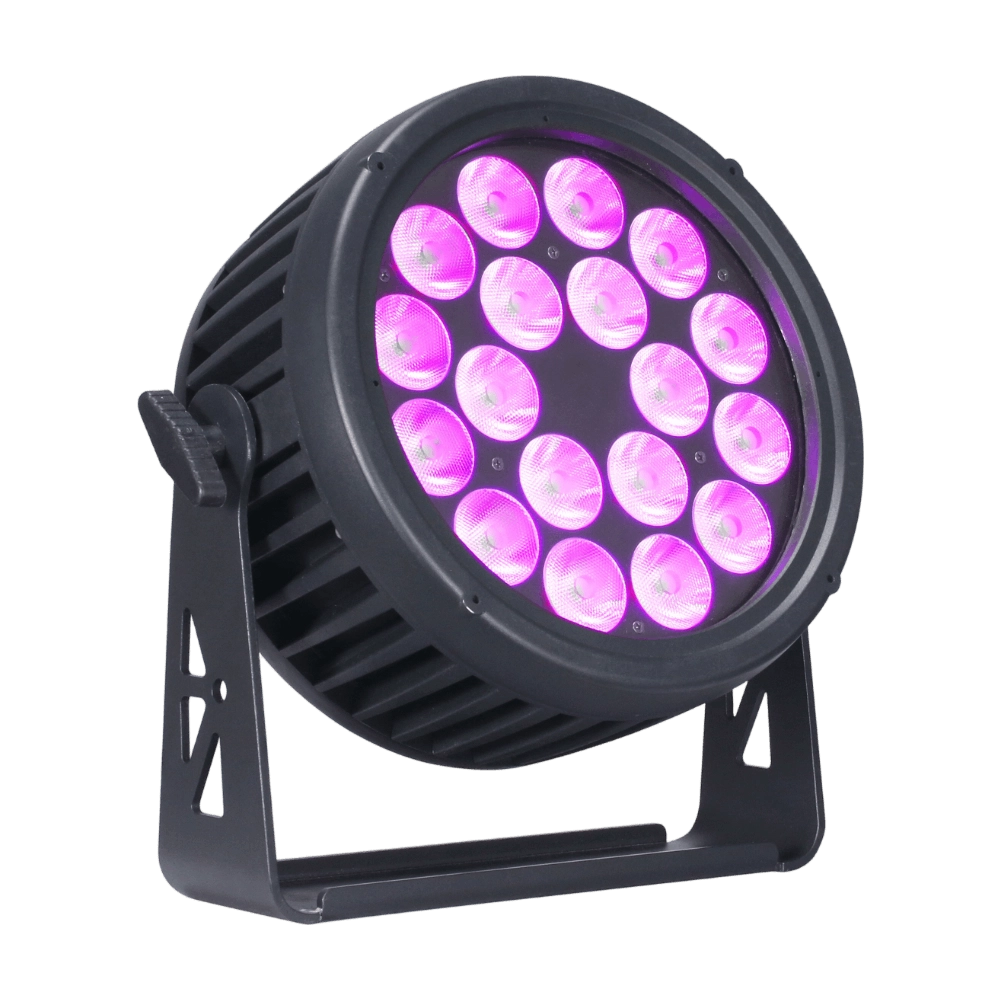
The LED Mac Par 18 offers 180W of output with 18 × 10W RGBW LEDs for brilliant, even color washes. Featuring a long 50,000-hour LED lifetime, flicker-free output, and 25°/45° lens options, it ensures flexibility in stage, event, and installation setups. Its rugged die-cast aluminum housing, IP65 rating, and DMX control modes make it a versatile wash solution.
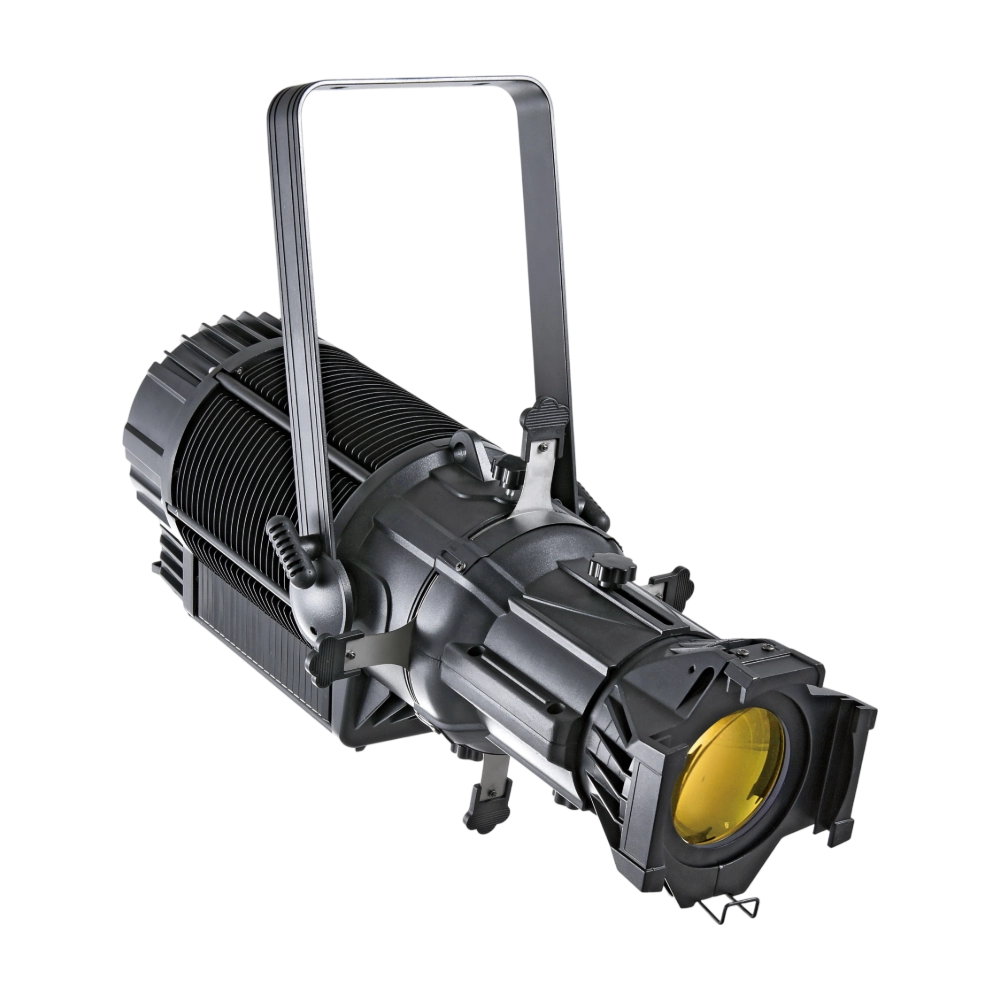
The LED Profile 300IP CTO is a 300W high-power profile light with outstanding brightness and precision. Equipped with a 300W LED source, it delivers a long lifetime of 20,000 hours and adjustable CCT from 3200K to 5600K. With multiple lens options (19°/25°/36°) and CRI ≥97, it ensures high color rendering for professional stage, studio, and theater applications. IP65-rated for indoor and outdoor use, it features smooth 0–100% dimming, flicker-free performance, and versatile DMX control for reliable operation in demanding environments.
◌ Let Us Support Your Project
Request a Custom Quote and Technical Support
Fill out the form below, and our sales team will contact you shortly with product details, pricing, and customer service options.
Rest assured that your privacy is important to us, and all information provided will be handled with the utmost confidentiality.
By clicking "Send your message," I agree to your processing my personal data.
To see how to withdraw your consent, how to control your personal data, and how we process it, please see our Privacy Policy and Terms of Use.
Over 20 Years of Innovation in Stage & Studio Lighting
© 2026 VELLO. All Rights Reserved. 粤ICP备20023734号
Join our socials
VELLO
Whatsapp: +8613902276704
Vello Lighting
VelloLights