





How are LED stage lights reshaping modern lighting design?
- 1) How do I calculate the number and wattage of LED fixtures needed to reach target lux on a 20m x 8m stage for live performance and occasional HD broadcast?
- 2) How can I be sure LED stage lights won’t flicker on camera (rolling shutter), and what specs or tests should I require?
- 3) For hybrid rigs (touring shows with outdoor festivals), how should I design DMX and power distribution for 100 LED fixtures to avoid voltage drop, DMX signal loss, and overloading circuits?
- 4) How do CRI, TLCI and color temperature specs compare for LED stage lights, and which should I prioritize when buying for theater, live events, and TV?
- 5) What is a realistic ROI and total cost of ownership (TCO) when replacing halogen/arc fixtures with LED stage lights on a touring rig?
- 6) For outdoor festival use, what maintenance plan and spare-parts inventory should I keep for 50 IP65-rated LED wash fixtures to ensure zero downtime during a 3-day event?
1) How do I calculate the number and wattage of LED fixtures needed to reach target lux on a 20m x 8m stage for live performance and occasional HD broadcast?
Begin with the target illuminance: for theater/live events, designers typically aim for 200–600 lux on stage; for HD broadcast you should target 750–1500 lux depending on camera requirements (see broadcast lighting guidelines). Use the lumen method to estimate fixtures required:
Required total lumens = desired lux × area (m²) ÷ (utilization factor × maintenance factor).
Example (20m × 8m = 160 m²): target 750 lux for HD capture, utilization factor (room + optics) = 0.6, maintenance factor (LED lumen depreciation + dirt) = 0.85.
Required lumens = 750 × 160 ÷ (0.6 × 0.85) ≈ 235,294 lumens.
If using professional LED wash fixtures that deliver 12,000 lumens/fixture (typical for a 400–600W class LED wash), you need ≈ 20 fixtures (235,294 ÷ 12,000 ≈ 19.6). If you choose higher-output moving head spots (e.g., 30,000 lumens / 800W equivalent), counts change accordingly.
Practical notes:
- Always cross-check with beam angle and hang position: narrow-beam fixtures on high trusses concentrate lux but reduce uniformity.
- For broadcast, prefer fixtures with high TLCI (>90) and CRI (>90) to minimize color correction in post.
- Account for console/rigging constraints and add 10–20% spare capacity for fill and special effects.
References: recommended lux levels and methods are consistent with industry practice and illuminance calculation methods (Illuminating Engineering Society guidance).
2) How can I be sure LED stage lights won’t flicker on camera (rolling shutter), and what specs or tests should I require?
Flicker arises mainly from PWM dimming and driver modulation. For modern cameras and high frame rates, choose fixtures that explicitly state “flicker-free” or provide PWM frequencies and/or linear dimming data.
Key specifications to require:
- PWM frequency: many broadcast-grade fixtures list PWM > 20 kHz (25 kHz common). Higher is better; >20–30 kHz avoids visible and camera-captured strobing for common frame rates.
- Flicker-free modes: some fixtures provide camera-friendly dimming curves and high-frequency driver modes for broadcast.
- TLCI/SSI/TM-30 data: ensure color metrics don’t change across dimming levels.
On-site test procedure (must do before purchase or at least before a major show):
- Record the fixture at the highest camera frame rates and shutter speeds intended (e.g., 60–240 fps) with the intended cameras.
- Cycle dimming across 0–100% and watch for banding or pulsing artifacts.
- If possible, use a photodiode + oscilloscope or a high-speed light meter to inspect waveform for ripple or low-frequency components.
If the manufacturer cannot provide PWM frequency or a flicker-free statement, treat this as a red flag for broadcast usage.
3) For hybrid rigs (touring shows with outdoor festivals), how should I design DMX and power distribution for 100 LED fixtures to avoid voltage drop, DMX signal loss, and overloading circuits?
Designing a reliable power and control plan requires addressing three things: total load, circuit distribution, and control universes.
Power planning example:
- Calculate total wattage: 100 fixtures × 200 W each = 20,000 W. At 230 VAC, current = 20,000 ÷ 230 ≈ 87 A.
- Divide across circuits: use multiple 32A (or 63A) distro lines. For instance, three 32A/230V circuits (≈ 22 kW total capacity if using continuous duty allowances) but confirm local code and breaker sizing; often you’ll provision four 32A circuits to keep loads below 80%.
- Consider inrush current: LED drivers can have high inrush; use inrush-limiting soft-start units or stagger power-up via remote relays/contactor control to avoid nuisance tripping.
Voltage drop and cable sizing:
- For long runs, use larger gauge cable. Voltage drop calculators are essential: keep drop <3% for mains runs to avoid driver issues.
- For low-voltage LED strips (5V/12V), never run long lengths without injecting power at intervals; use thicker conductors or local power taps.
DMX/control planning:
- DMX512 max length ~300 m without repeaters; use DMX line terminators and opto-splitters (DMX splitters) for robust distro.
- For large pixel counts or many fixtures, use Art-Net or sACN over Ethernet and network switches with QoS; each DMX universe supports 512 channels — map channels per fixture carefully (pixel fixtures may use many channels per meter).
- Use proper grounding and separate noisy power returns from control cabling runs to reduce interference.
Documentation and labeling (often overlooked): label power distro, breaker assignments, DMX universes, IP addresses for Art-Net/sACN, and maintain a single-line schematic for techs.
4) How do CRI, TLCI and color temperature specs compare for LED stage lights, and which should I prioritize when buying for theater, live events, and TV?
CRI (Color Rendering Index) and TLCI (Television Lighting Consistency Index) measure color fidelity but serve different audiences:
- CRI (Ra): older metric optimized for general white-light perception—values up to 100. For live theater and stage, CRI ≥ 90 is a good baseline.
- TLCI: developed for broadcast and post-production, predicts how cameras will reproduce colors under a light source—aim for TLCI ≥ 90 for broadcast work.
- TM-30 and SSI provide more advanced spectral fidelity analysis; TM-30 offers gamut and fidelity details useful for designers who need nuanced color control.
Color temperature (CCT) and tunability:
- For flexible rigs, choose tunable white LED fixtures covering ~2700K–6500K; this allows warm theatrical looks and neutral broadcast whites.
- RGBW/RGBA or multi-chip engines give wider gamut for saturated colors without compromising whites when properly calibrated.
Purchase guidance:
- Theater/live: prioritize CRI & TM-30, color mixing smoothness, and dimming behavior; CRI ≥ 90 and stable chromaticity across dimming are key.
- Broadcast/film: prioritize TLCI and documented flicker performance; TLCI ≥ 90 and manufacturer-provided spectral power distribution (SPD) data are critical.
- Hybrid rigs: choose fixtures with strong scores across CRI, TLCI and with published SPD data so you can verify performance in both use-cases.
5) What is a realistic ROI and total cost of ownership (TCO) when replacing halogen/arc fixtures with LED stage lights on a touring rig?
Compute ROI by accounting for energy savings, maintenance/lamp replacement, rig weight/transport savings, and initial capital cost. Real-world example (conservative):
Replace 50 × 1,000 W halogen fixtures (total 50 kW) with 50 × 250 W LED fixtures (total 12.5 kW):
- Energy saved: 37.5 kW × hours per year. If used 800 hours/year → 30,000 kWh/year saved. At $0.12/kWh → $3,600/year.
- Maintenance: halogen lamp life ~500–2,000 hours (lamp + color gel + maintenance); LEDs L70 often ≥ 50,000 hours. Saving on lamps, labor, and spare lamp inventory can be several thousand dollars/year depending on labor rates.
- Transport/rigging: LED fixtures are generally lighter; for touring, fewer trucks/crew hours produce indirect savings (fuel, labor, faster focus/setup).
- CapEx: LEDs cost more upfront; if incremental cost per fixture is $1,500 higher × 50 = $75,000. With $3,600 energy + say $3,000 maintenance savings = $6,600/year → simple payback ~11–12 years. Factor in intangible savings (crew time, downtime reduction, improved reliability) to shorten payback.
Smarter choices to improve ROI:
- Lease-to-own and rental revenue improvements (new fixtures can demand higher rental rates).
- Buy fixtures with replaceable LED modules/drivers and multi-year warranties to reduce long-term maintenance costs.
6) For outdoor festival use, what maintenance plan and spare-parts inventory should I keep for 50 IP65-rated LED wash fixtures to ensure zero downtime during a 3-day event?
Outdoor festivals require a proactive maintenance and spares plan focusing on connectivity, cooling, and ingress protection.
Recommended pre-event checklist:
- Inspect IP-rated seals, cable glands, and connectors; reseal or replace any with wear.
- Verify firmware and DMX/Art-Net settings on all fixtures; update and backup console profiles.
- Run a full power-up and burn-in test at venue temperatures to detect early-failure drivers or fans.
On-hand spare parts for 50 fixtures (minimum recommended):
- 5–8 spare driver modules (10–15% of total) — drivers are common failure points.
- 5–8 spare LED engine/modules if the fixture supports module swaps.
- 10 spare powerCON/Neutrik connectors and 10 spare DMX/etherCON connectors and mating cables.
- 4–6 spare fans (if fixtures use active cooling) and basic fan replacement tools.
- Consumables: extra gaskets, silica gel desiccant packs to refresh sealed housings during long storage.
- Spare rigging parts: clamps, safety bonds, quick-links, and a torque wrench for re-checking.
During-event routines:
- Daily visual inspection for moisture ingress and mounting security.
- Staggered power cycling to monitor inrush and avoid simultaneous startup that could trip upstream breakers.
- Designate a rapid-swap tech with pre-configured spare fixtures loaded and addressed so a failed unit can be swapped in minutes.
Concluding paragraph summarizing the advantages of LED stage lights:
LED stage lights deliver compelling advantages for modern stage lighting design: substantially lower energy consumption (often 60–80% savings vs. legacy tungsten), longer service life (L70 typically 25k–50k+ hours), lower maintenance and lamp-replacement costs, greater color flexibility with high CRI/TLCI options, and advanced features such as pixel mapping, networked control (Art‑Net/sACN), and high-frequency flicker-free dimming for broadcast. When properly specified—matching lumen output, color metrics, thermal management, power/distribution planning and spare-part provisioning—LED fixtures increase reliability, reduce operational costs, and expand creative possibilities for theater, touring, festivals and broadcast.
For a tailored equipment plan and a competitive quote, contact us at www.vellolight.com or info@vellolight.com.
Sources and further reading: U.S. Department of Energy LED resources (energy.gov), DMX512 and Art‑Net control best practices, and Lighting Facts/TLCI guidance from broadcast lighting authorities.
Major categories
What is the usual lead time?
Standard models are typically shipped within 7–15 working days after payment. Customized items may vary.
Do you offer samples?
Samples are available for certain models. Please confirm with our sales team for details.
Do you ship internationally?
Yes. We offer sea, air, and express delivery to many countries and regions worldwide.
Do your products support customization?
Yes. We offer OEM and ODM services tailored to project needs, including design, optics, and control compatibility.
What is the warranty period for your products?
Most products come with a standard 1–2 year warranty. Please refer to product details or contract terms for specifics.
You may also like
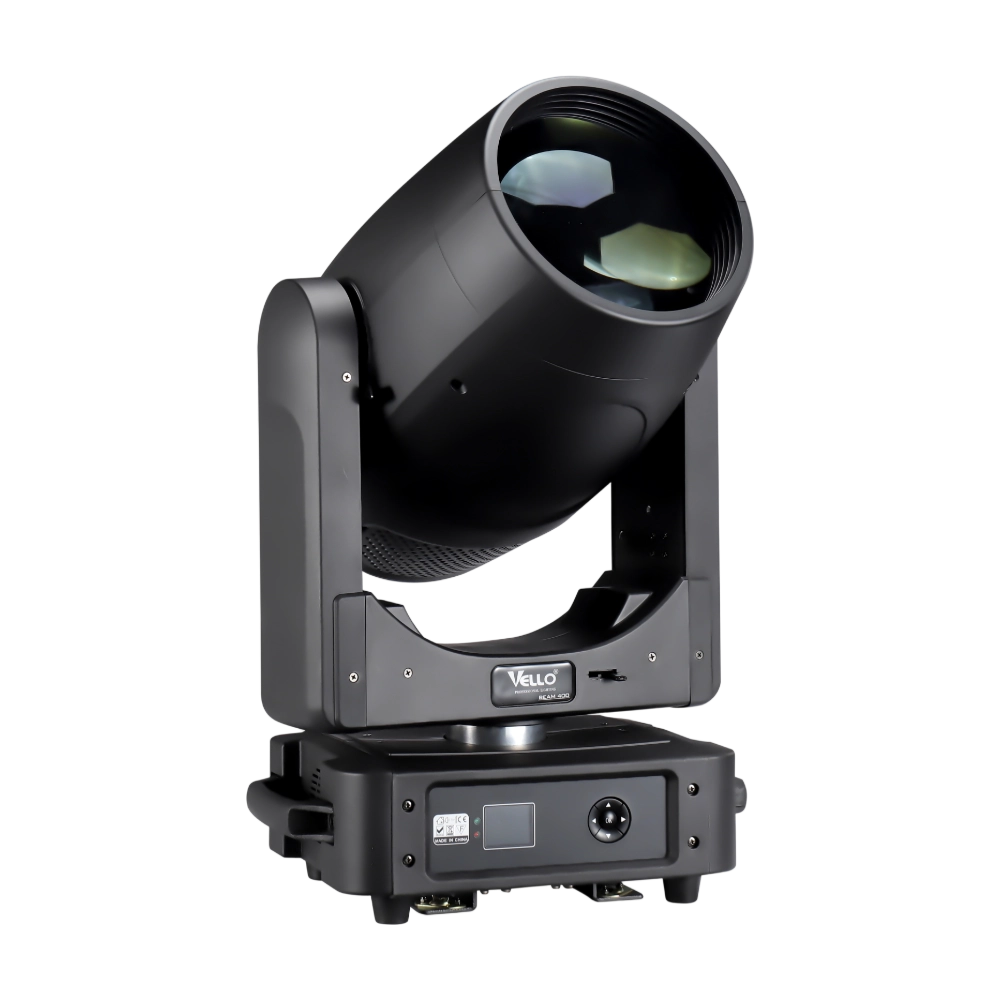
BEAM400 is a 500W professional moving head beam powered by an OSRAM SIRIUS 371W discharge bulb, delivering a super-bright 1.8° sharp beam with impressive punch. It features 12 fixed gobos + open, a 14-color wheel, and a 16-facet circular rotating prism with multiple-facet effects, enabling dynamic aerial visuals. With 540° pan / 270° tilt, 16-bit movement resolution, and linear frost and focus, BEAM400 ensures precise and versatile performance. Comparable to traditional 750W moving heads, it combines high efficiency, smooth dimming, and reliable operation—ideal for concerts, tours, and large-scale stage productions.
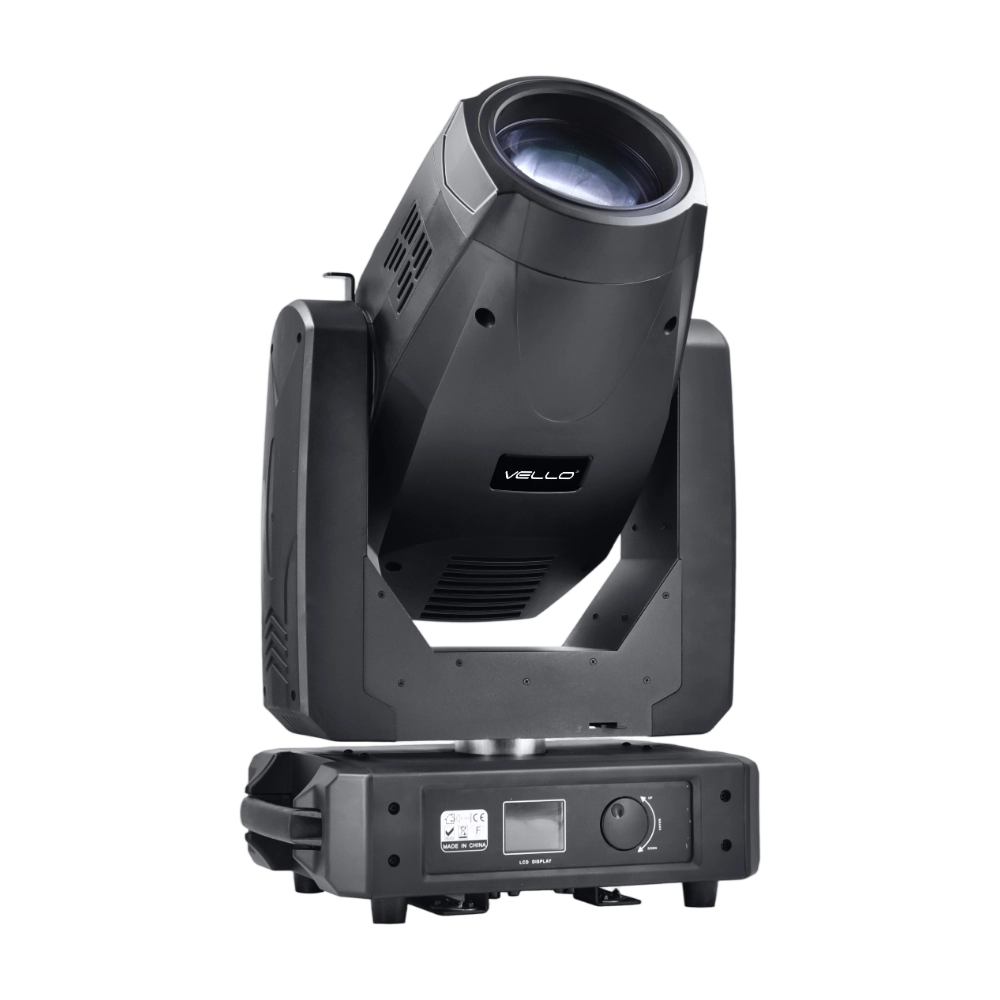
The BSW450 is a high-performance moving head fixture equipped with an original Osram 420W bulb, delivering exceptional brightness, precision, and versatility. Designed for professional stage applications, it seamlessly combines beam, spot, and wash functions in one compact unit, making it a powerful all-in-one lighting solution.
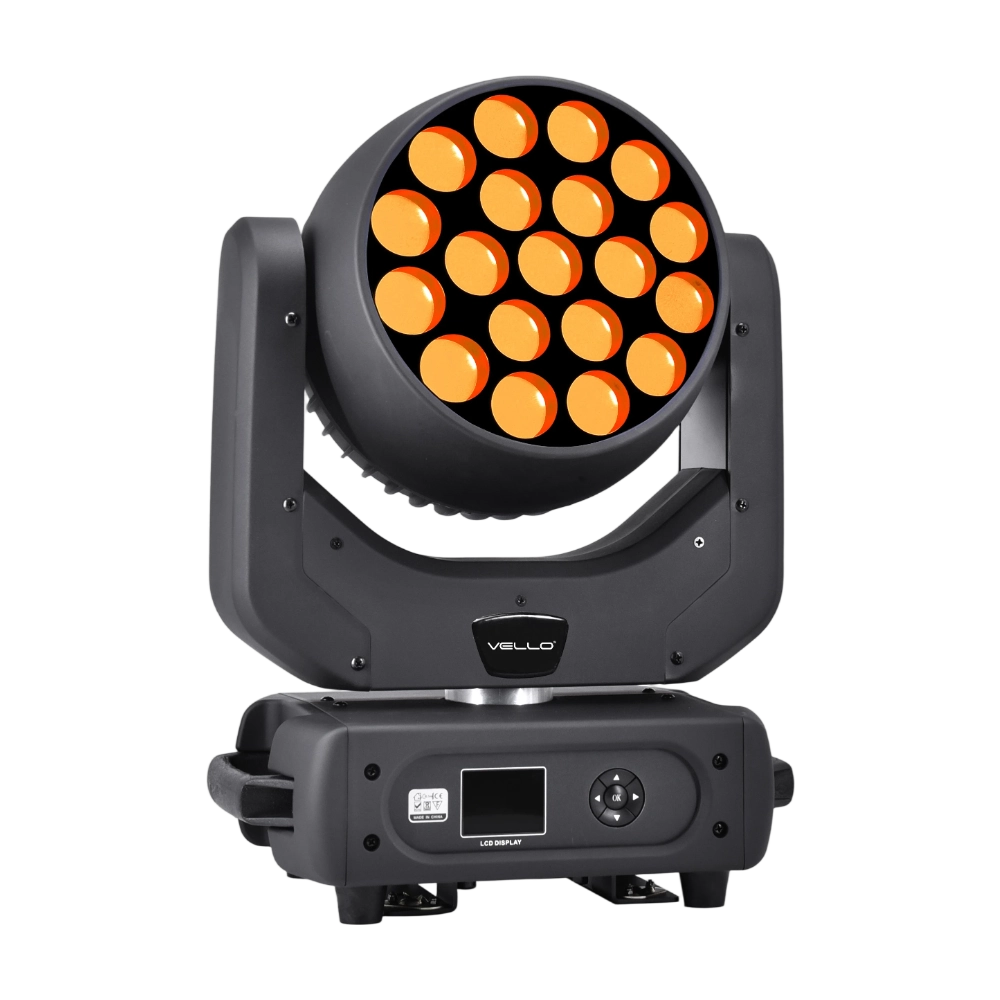
Max Wash X7 is a 750W super moving head wash fixture, equipped with 19 × 40W 7-in-1 RGB+A+C+L LEDs delivering rich colors, high brightness, and a super high CRI ≥95. With a wide 6.1°–50° electronic zoom and advanced 3-ring pixel control, it creates both powerful beams and smooth washes. The fixture supports CTO adjustment (3200K, 4200K, 5600K, 6800K) across four presets for versatile color temperature control. Featuring 540° pan / 310° tilt, high-speed motors, multiple DMX channel modes, and a durable heat-proof housing, Max Wash X-7 is designed for concerts, TV studios, and large productions demanding next-level wash performance with precision and creativity.
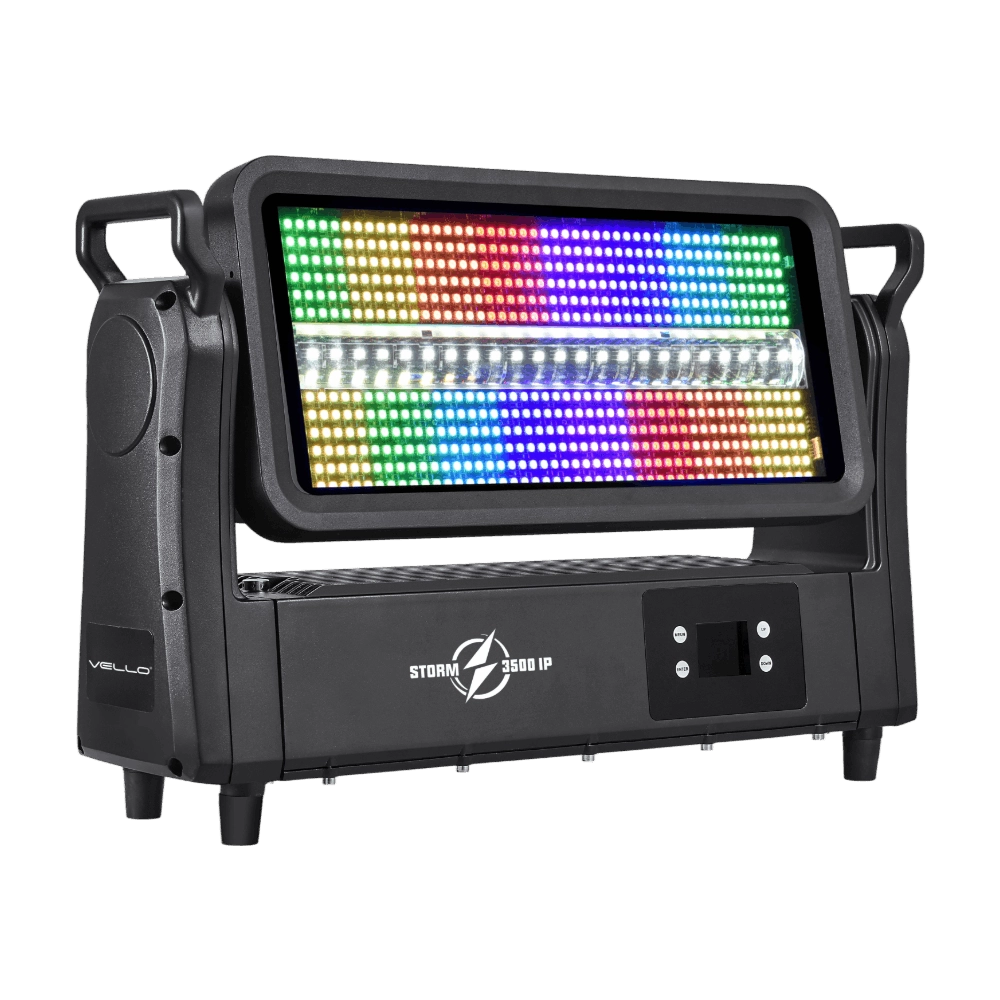
Storm 3500IP is a high-power 1200W outdoor-rated LED strobe and wash fixture, fitted with 576 pieces of 5050 RGB LEDs and 72 pieces of 12W cool white LEDs for brilliant, punchy effects with pixel-level control. Featuring IP65 protection, a wide 220° tilt, a strong RGBW strobe, DMX-controlled frost, and a 0–100% linear dimmer, it ensures versatile output from powerful to soft washes. With silent, flicker-free operation, multiple DMX channel modes, and robust die-cast aluminum housing, Storm 3500IP is built for demanding concerts, festivals, and large outdoor events.
◌ Let Us Support Your Project
Request a Custom Quote and Technical Support
Fill out the form below, and our sales team will contact you shortly with product details, pricing, and customer service options.
Rest assured that your privacy is important to us, and all information provided will be handled with the utmost confidentiality.
By clicking "Send your message," I agree to your processing my personal data.
To see how to withdraw your consent, how to control your personal data, and how we process it, please see our Privacy Policy and Terms of Use.
Over 20 Years of Innovation in Stage & Studio Lighting
© 2026 VELLO. All Rights Reserved. 粤ICP备20023734号
Join our socials
VELLO
Whatsapp: +8613902276704
Vello Lighting
VelloLights