





What is color temperature and how it affects LED stage lights?
- 1. How do I choose the right color temperature (CCT) for LED stage lights so skin tones look correct live and on camera?
- 2. Can RGB or RGBW color mixing reproduce accurate white at different color temperatures, or do I need dedicated tunable-white (CCT) LEDs?
- 3. How does color temperature affect perceived brightness and lux—how should I compare fixtures rated in lumens?
- 4. What minimum CRI/TLCI/TM-30 values should I require for LED stage lights for live concerts versus broadcast, and why are CRI numbers sometimes misleading?
- 5. How do different LED spectral power distributions (phosphor-converted vs multi-chip) change color rendering across CCTs, and what should I request from manufacturers?
- 6. How does color temperature interact with gels, gobos and effects when using LED moving head lights and wash fixtures—what limitations should I plan for?
Choosing LED stage lights requires more than comparing wattage and price. Color temperature and spectral characteristics drive how performers, sets, and cameras perceive color and brightness. Below are six common long-tail questions beginners and technical buyers still find poorly answered online, with actionable, data-based recommendations you can use when evaluating RGBW wash lights, moving head lights, and tunable white fixtures.
1. How do I choose the right color temperature (CCT) for LED stage lights so skin tones look correct live and on camera?
Why this matters: Live audiences and cameras perceive whites, skin tones, and saturation differently. Choosing the wrong CCT forces compromises—creatives may like a warm 3200K, while broadcast cameras prefer 5600K, causing extra post-production work or unnatural skin colors.
Practical guidance:
- Understand the common CCT targets: 2700–3200K (warm/tungsten), 3500–4200K (neutral), 5000–5600K (daylight). Theatre traditionally uses ~3200K; outdoor/daylight shoots use ~5600K.
- For mixed audiences (live + broadcast), pick tunable CCT fixtures (continuously tunable 2700–6500K) so you can set a compromise for the live look while adjusting camera white balance. Some rigs use warm front washes (3200–3800K) and slightly cooler key lights to preserve skin texture for cameras.
- Ask for photometric data: request the LM-79 report and IES files for the fixture. Verify lux at key distances and the spectral power distribution (SPD) so you know how the fixture renders skin tones at a given CCT.
- Use a color chart: on-site, set fixtures at the intended CCT and photograph a calibrated color chart (X-Rite) with your event cameras to confirm skin tone rendering and white balance performance before the show.
Recommendation: For touring acts or venues serving both live and filmed content, prioritize tunable white LED wash lights or hybrid RGBW fixtures with a dedicated white (warm/cool) channel. This gives live designers flexibility while allowing camera techs to lock precise white balance.
2. Can RGB or RGBW color mixing reproduce accurate white at different color temperatures, or do I need dedicated tunable-white (CCT) LEDs?
Why this matters: Many buyers assume RGB mixing gives a perfect white; in reality, additive RGB whites are compromise solutions and can produce metamerism, weird skin tones, and reduced color rendering compared to dedicated white LEDs.
Technical explanation:
- RGB mixing creates white by combining red, green, and blue primaries. The resulting SPD often lacks continuous spectral content in the green-yellow region, which is important for natural skin tones and color fidelity.
- RGBW adds a white LED chip (often cool white) to improve color mixing and brightness, but the white point may still be skewed and limited in CRI/TLCI compared to phosphor-converted tunable-white LEDs that provide smoother SPDs across CCTs.
- Best practice: For critical white reproduction (front wash, skin tones, broadcast), use fixtures with a dedicated tunable-white (dual-white) LED array or multichannel arrays (e.g., 2700K + 3200K + 5600K chips) that can produce stable, high-CRI whites across the CCT range.
Purchase tip: When evaluating RGBW versus tunable-white moving head lights or wash fixtures, ask for the SPD graphs at the target CCTs and for TLCI/CRI values at those CCTs. If your budget allows, select fixtures that combine high-quality RGBW for saturated colors and a full-spectrum tunable white for accurate skin tones.
3. How does color temperature affect perceived brightness and lux—how should I compare fixtures rated in lumens?
Why this matters: Manufacturers often quote lumens, but lumens are weighted to human photopic vision and depend on SPD. Two fixtures with the same lumen rating but different CCT/SPDs can produce different lux levels on stage and subjectively different brightness.
Key facts:
- Lux is the measured illuminance on a surface (lm/m²) at a specific distance and beam angle. Always compare lux at the working distance and beam angle you need. Ask for lux charts or IES files, not just nominal lumens.
- Higher CCT whites (cooler, more blue) can appear brighter at equal lumens because the human eye is more sensitive to certain spectral distributions—however this is SPD-dependent and not a reliable comparison metric by itself.
- Fixture efficacy (lm/W) varies: modern stage LEDs typically range from ~80 to >130 lm/W depending on LED engines and optical losses. But optics (beam angle, lens) determine how much of those lumens reach the subject.
Actionable checklist for buyers:
- Request LM-79 photometric reports and IES files so you can simulate lux at distance for your stage geometry in lighting software (e.g., Capture, WYSIWYG).
- Compare lux at the same CCT and beam angle rather than raw lumens. A fixture with a narrower beam will deliver higher lux on a subject even at the same lumen rating.
- For front-of-house and key lights, demand lux benchmarks at performer height (e.g., 1.5–2.5 m) and specify minimum lux levels for your production (e.g., 1000 lux for broadcast key lights, depending on camera needs).
4. What minimum CRI/TLCI/TM-30 values should I require for LED stage lights for live concerts versus broadcast, and why are CRI numbers sometimes misleading?
Why this matters: CRI (Ra) is commonly quoted but has limitations when evaluating LED sources for modern stage and broadcast work. Relying solely on CRI can lead to poor color reproduction under filming conditions.
Standards and recommendations:
- CRI (Ra): Historical and simple—good as a baseline. Aim for CRI ≥ 90 for high-quality live theatre and corporate events; CRI ≥ 95 when possible for color-critical applications.
- TLCI (Television Lighting Consistency Index): Developed by the EBU, TLCI predicts how well a light will be handled by a camera and color grading pipeline. For broadcast, aim for TLCI ≥ 90 to minimize camera correction and grading artifacts.
- TM-30: A newer IES method that gives more granular color fidelity (Rf) and gamut (Rg) data across 99 samples. Use TM-30 when available; prefer Rf close to 100 and Rg near 100 for natural rendering.
Why CRI alone is misleading:
- CRI averages errors across only 8 (or in extended CRI, 15) color samples, missing nuanced failures such as saturated reds or skin tones.
- LED phosphor mixes can yield a high CRI number but still be poor for camera reproduction due to spectral spikes and gaps—hence the advantage of TLCI and TM-30 for broadcast and film.
Buying rule: For concert touring where looks matter but camera is secondary, CRI ≥ 90 is a good standard. For broadcast, film, or events that will be live-streamed, specify TLCI ≥ 90 and request SPD/TM-30 data. If a vendor cannot provide LM-79/LM-80/TM-30/TLCI test data, treat that as a red flag.
5. How do different LED spectral power distributions (phosphor-converted vs multi-chip) change color rendering across CCTs, and what should I request from manufacturers?
Why this matters: Two fixtures with the same CCT and CRI can look different because their SPDs differ. These differences affect skin texture, saturation, and how gels or color filters interact with the light.
Key distinctions:
- Phosphor-converted white LEDs: Common in tunable-white fixtures; they create a broad SPD but can vary in the relative energy in red, green, and blue bands depending on phosphor formulation.
- Multi-chip designs (separate red, green, blue, amber, white chips): Offer wider color gamut and saturated colors but can produce color metamerism and inconsistent whites if not well-calibrated across temperatures.
What to request and test:
- Ask for SPD graphs at the CCTs you plan to use (e.g., 3200K, 4200K, 5600K). Inspect for gaps or spikes—smooth, continuous SPDs generally yield more natural skin tones.
- Request LM-79 and LM-80 reports and, if available, TM-30 outputs to evaluate Rf and Rg. LM-80/ TM-21 data will also let you estimate lumen maintenance (L70) over time; aim for L70≥50,000 hours for touring fixtures.
- For fixtures used with gels or colored gobos, test how the SPD interacts with common filters. Some LEDs clip reds and deep magentas, making color mixing with gels unpredictable.
Practical buyer tip: If you depend on accurate color (e.g., corporate events, theatre, broadcast), require SPD plots and independent photometric testing as part of your procurement checklist. That prevents surprises when fixtures are used in real-world color-critical scenarios.
6. How does color temperature interact with gels, gobos and effects when using LED moving head lights and wash fixtures—what limitations should I plan for?
Why this matters: Many production teams continue to use traditional color gels and gobos. LEDs behave differently than tungsten, so designers must understand limitations to avoid unexpected color shifts or washed-out gobos.
Practical interactions and constraints:
- Gels plus LED CCT: Applying traditional subtractive gels to a tunable-white LED will shift the SPD and apparent CCT. Because LEDs often lack continuous spectral content in some bands, gels can produce unexpected hues or reduce saturation.
- Gobos and contrast: LED moving head lights with multi-chip engines can show color fringing or less contrast on gobos when using saturated colors due to additive mixing. Phosphor-converted white engines typically render gobos with more consistent contrast across CCTs.
- Fixture modes: Some RGBW/multicolor moving heads provide separate white channel output for gobos/effects—use the dedicated white or 'filter' mode when you need crisp gobos or neutral whites under patterns.
Design tips:
- Test your exact fixture, gel and gobo combinations ahead of time. Small patch tests on stage with camera check will reveal metameric failures and contrast loss.
- Where image fidelity on gobos is critical, prefer fixtures with high-quality white engines or hybrid fixtures that combine RGBW color mixing with a high-CRI white channel.
- Plan for color presets and LUTs (look-up tables) in your console to correct predictable shifts when gels are used. Many modern consoles can store per-fixture color calibration profiles.
Bottom line: LEDs expand creative options but change how gels and gobos behave. Allocate time in tech rehearsals to audition fixture-and-filter combinations and demand supplier test data when color fidelity is mission-critical.
Final checklist for purchasing LED stage lights: ask suppliers for LM-79/LM-80 reports, SPD charts at the CCTs you will use, TLCI/TM-30 where appropriate, lux/IES files at your working distances, PWM/flicker specs (and driver frequency), DMX512/Art-Net control compatibility, beam angle options, IP rating for outdoor use, and L70 lifetime projection.
For technical buyers: prioritize tunable-white or hybrid RGBW fixtures with documented photometric testing and high TLCI for any application that will be filmed. For concert touring: balance CRI/TLCI with power efficiency, cooling design, and weight for rigging.
Contact us for custom spec sheets, IES simulations, or a formal quote tailored to your venue and production needs.
Advantages of LED stage lights: LED stage lights deliver higher energy efficiency, longer operational life (typical L70 ≥ 50,000 hours with quality thermal design), lower heat load on stage, rapid color and intensity control through DMX512/Art-Net, and compact moving head and wash options. Modern LED fixtures also offer tunable white, higher CRI/TLCI performance, IP-rated outdoor variants, and integrated wireless control—reducing maintenance and total cost of ownership while increasing creative flexibility.
For a detailed specification sheet or a quote, contact us at www.vellolight.com or email info@vellolight.com.
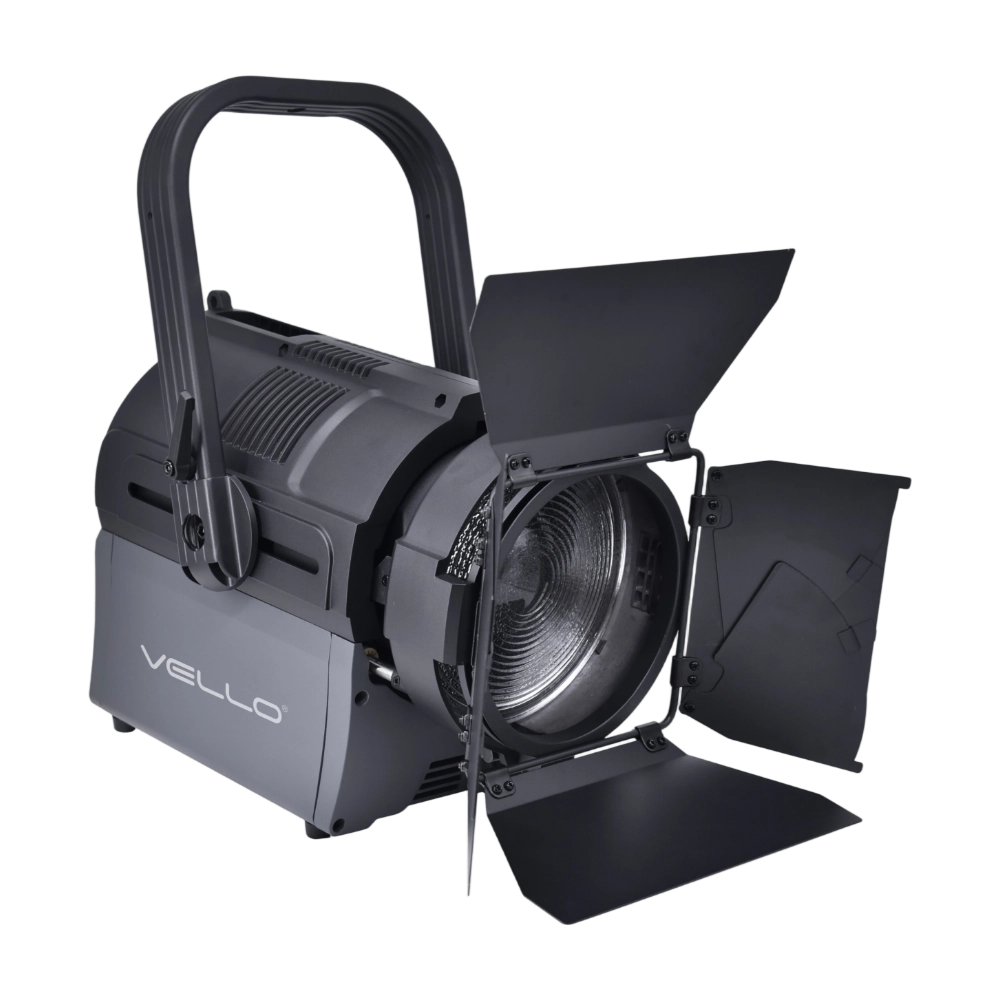
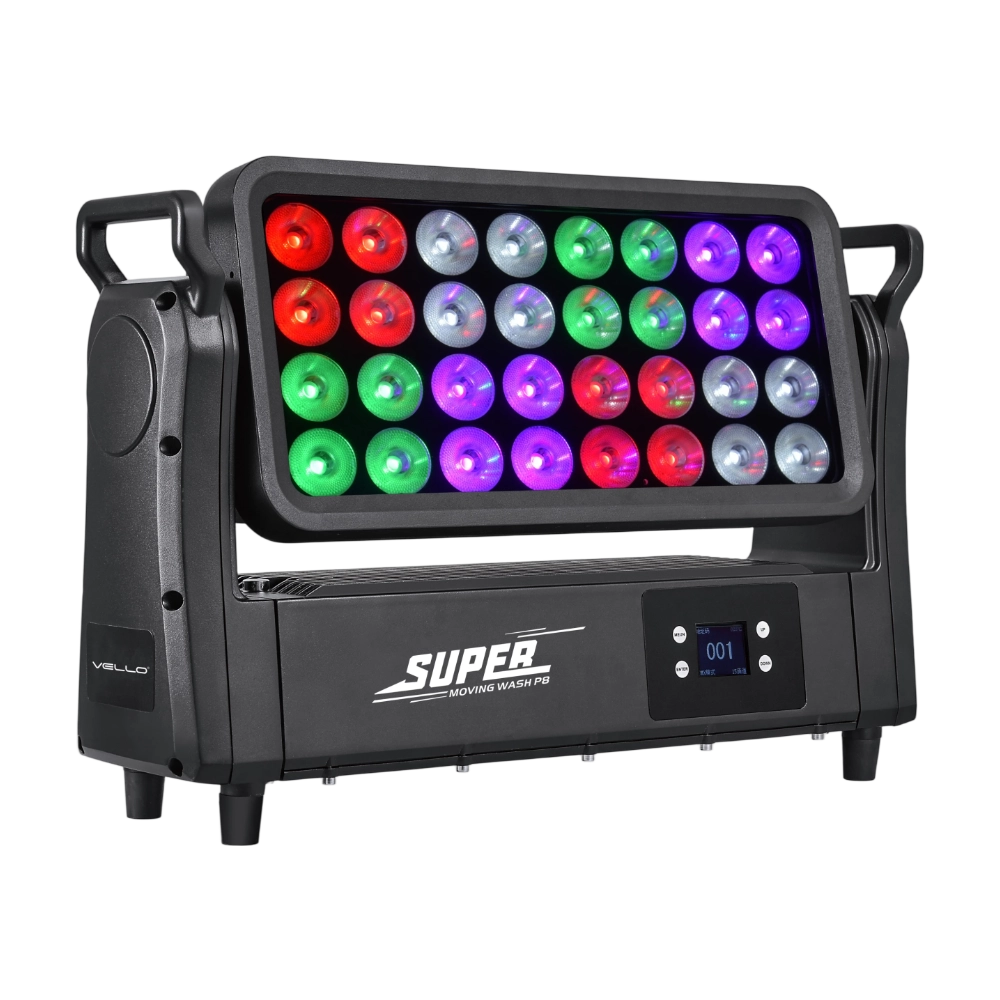
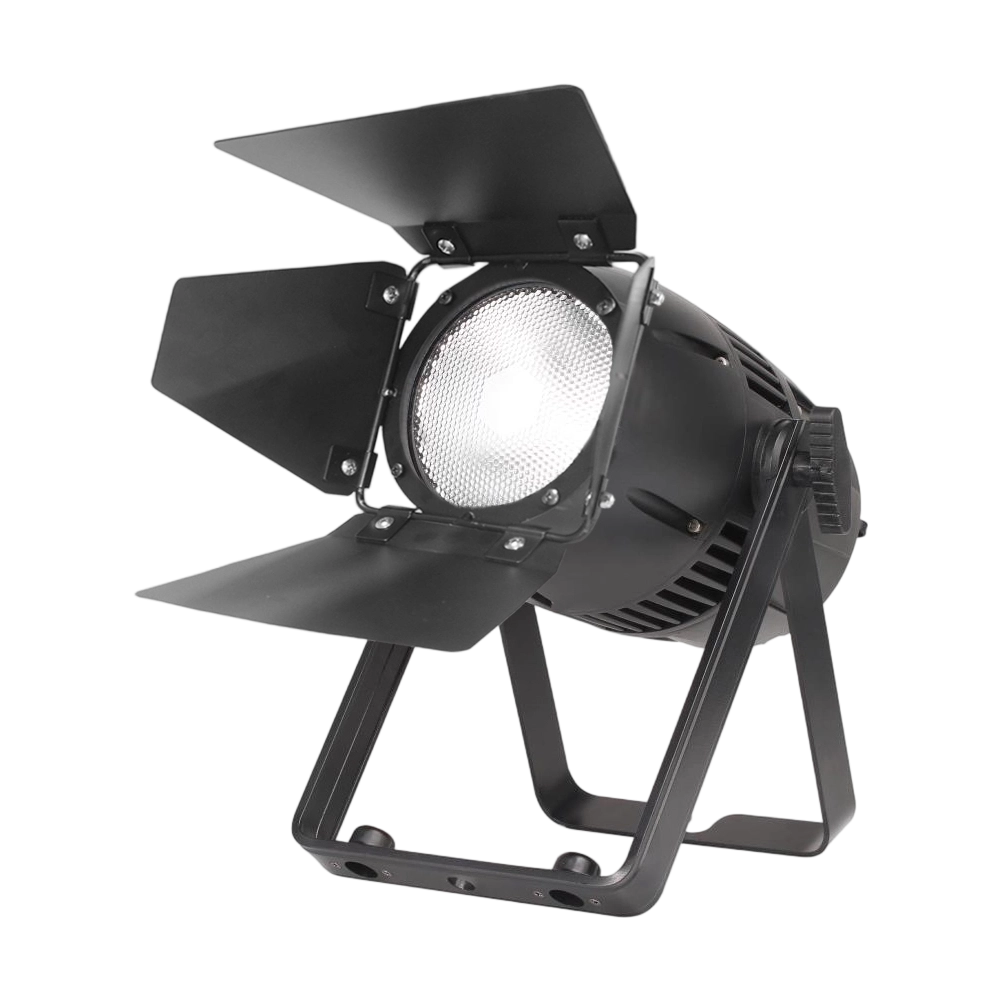
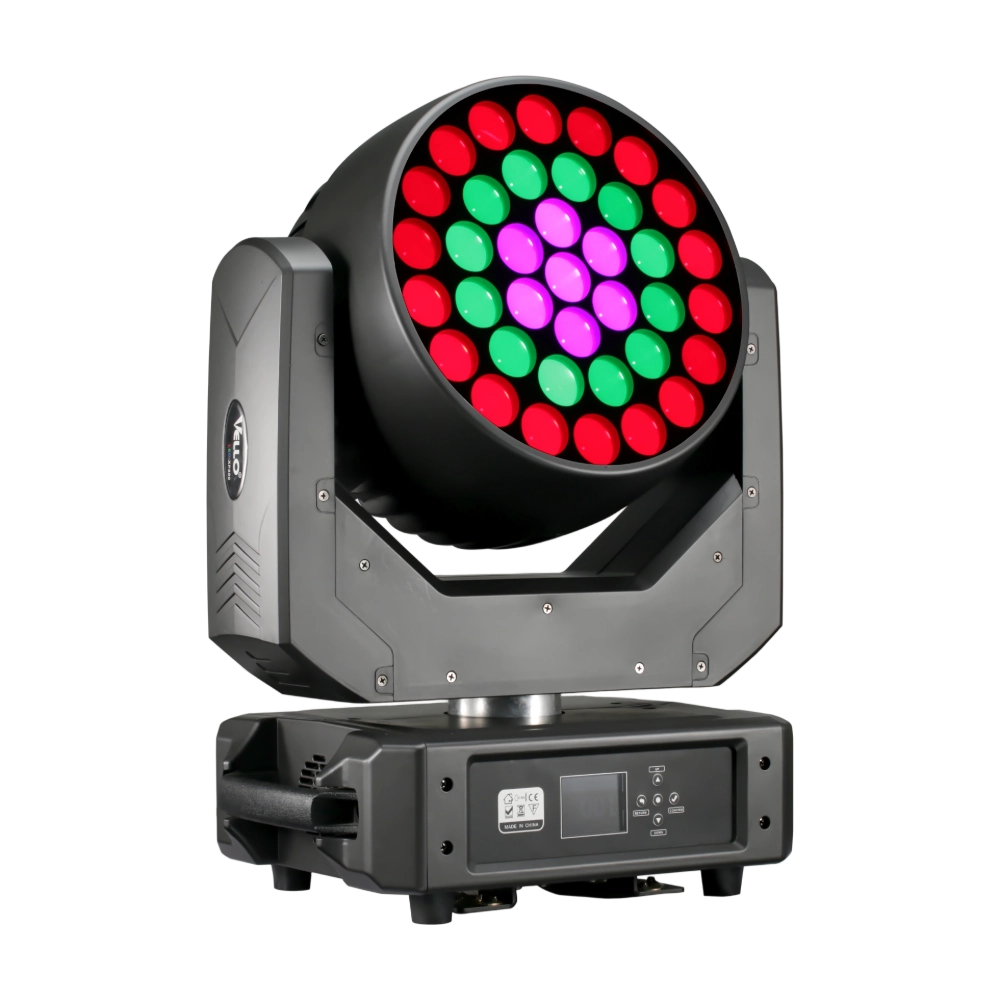
Major categories
Do you ship internationally?
Yes. We offer sea, air, and express delivery to many countries and regions worldwide.
Do you offer samples?
Samples are available for certain models. Please confirm with our sales team for details.
Do your products support customization?
Yes. We offer OEM and ODM services tailored to project needs, including design, optics, and control compatibility.
What is the usual lead time?
Standard models are typically shipped within 7–15 working days after payment. Customized items may vary.
What is the warranty period for your products?
Most products come with a standard 1–2 year warranty. Please refer to product details or contract terms for specifics.
You may also like
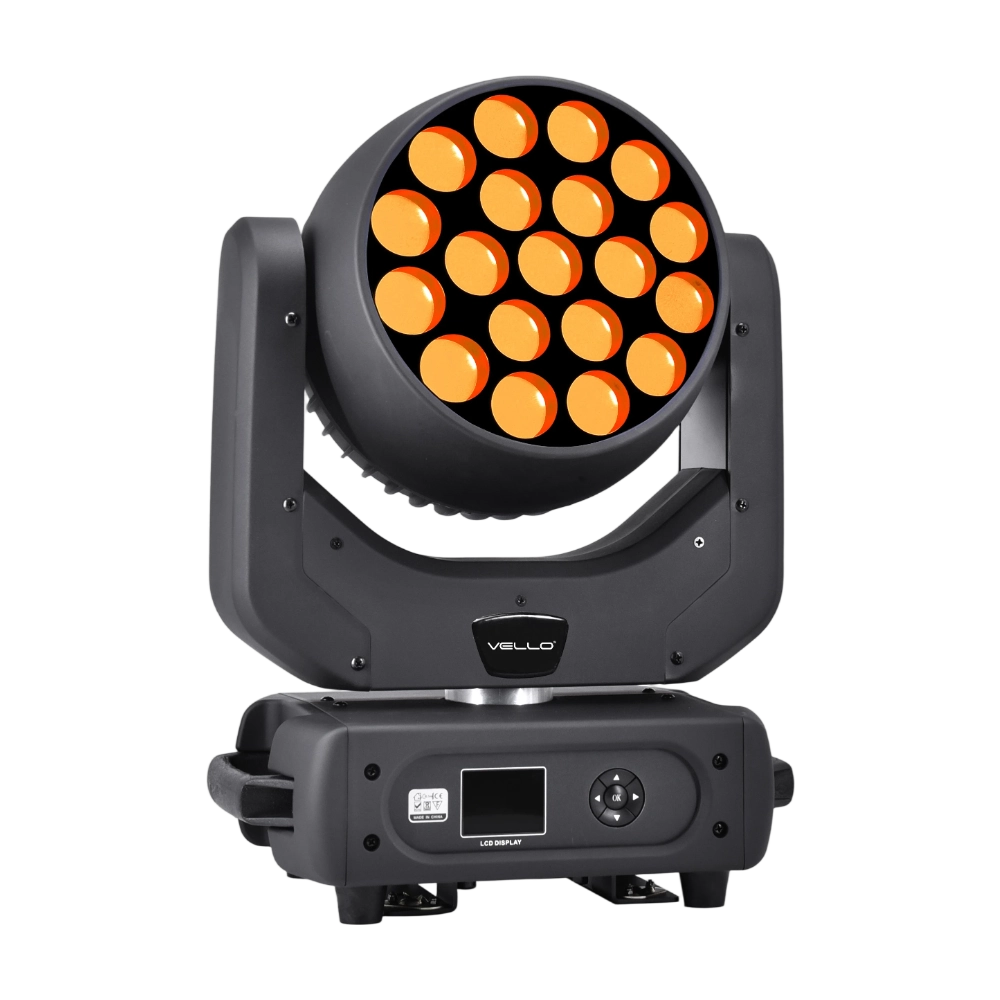
Top Wash P8 is a 1200W high-power IP65 LED wash light, equipped with 32 × 40W RGBW 4-in-1 LEDs for vibrant color mixing and powerful output. With 8 pixel sections (4 LEDs per group), selectable lens angles of 6° / 25° / 45°, and optional extra filters, it offers flexibility for both narrow beams and wide washes. The fixture supports strong RGBW strobe effects, smooth 0–100% linear dimming, and precise pixel control. Featuring a 220° tilt range, silent flicker-free performance, and multiple DMX modes, Top Wash P8 is built for large-scale concerts, outdoor events, and architectural lighting where high brightness and reliability are essential.
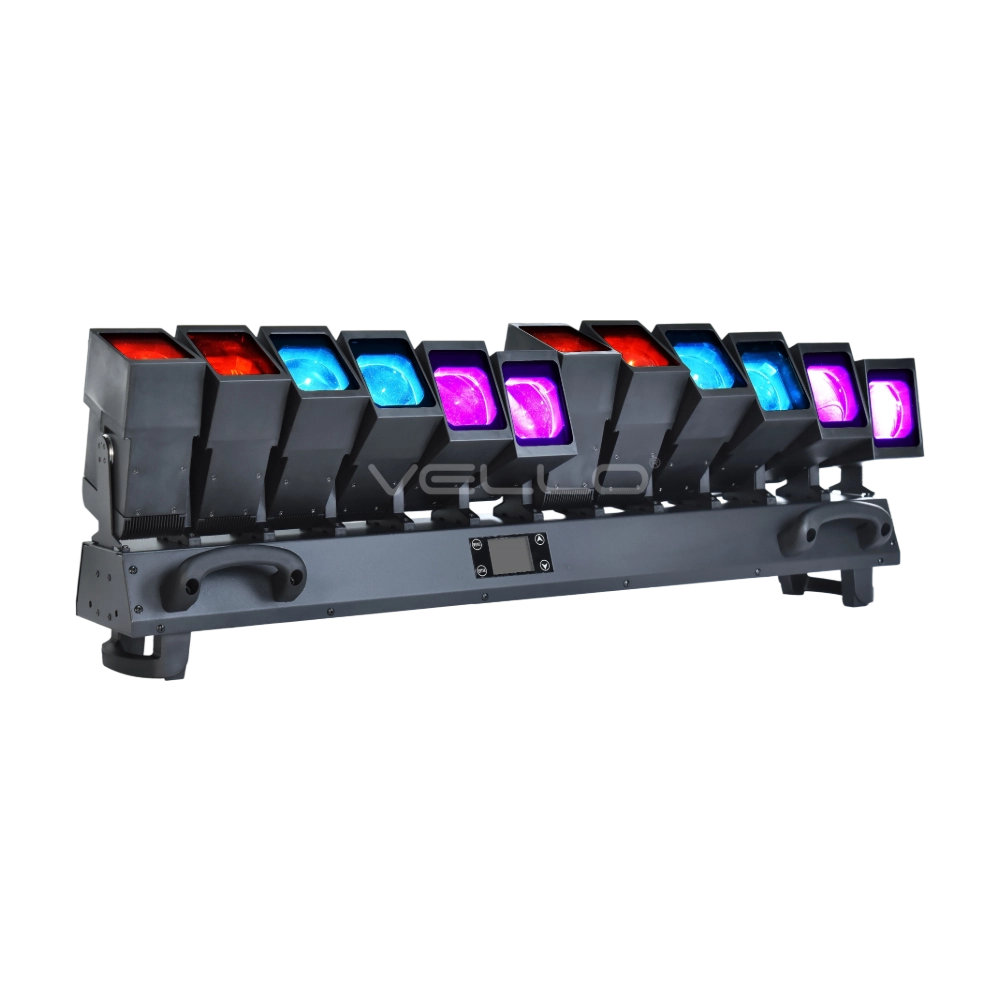
The LED Octopus S-12 is an advanced 800W moving bar fixture with 12 × 60W Osram RGBW LEDs, each controllable by pixel. Offering a 3.5°–36° zoom, 220° tilt movement, and precise dimming, it creates stunning dynamic effects. With multiple DMX modes (up to 179 channels) and auto-correction with a magnetic encoder, it ensures smooth operation. Designed for professional touring and installations, the S-12 delivers unmatched brightness, flexibility, and creative control.
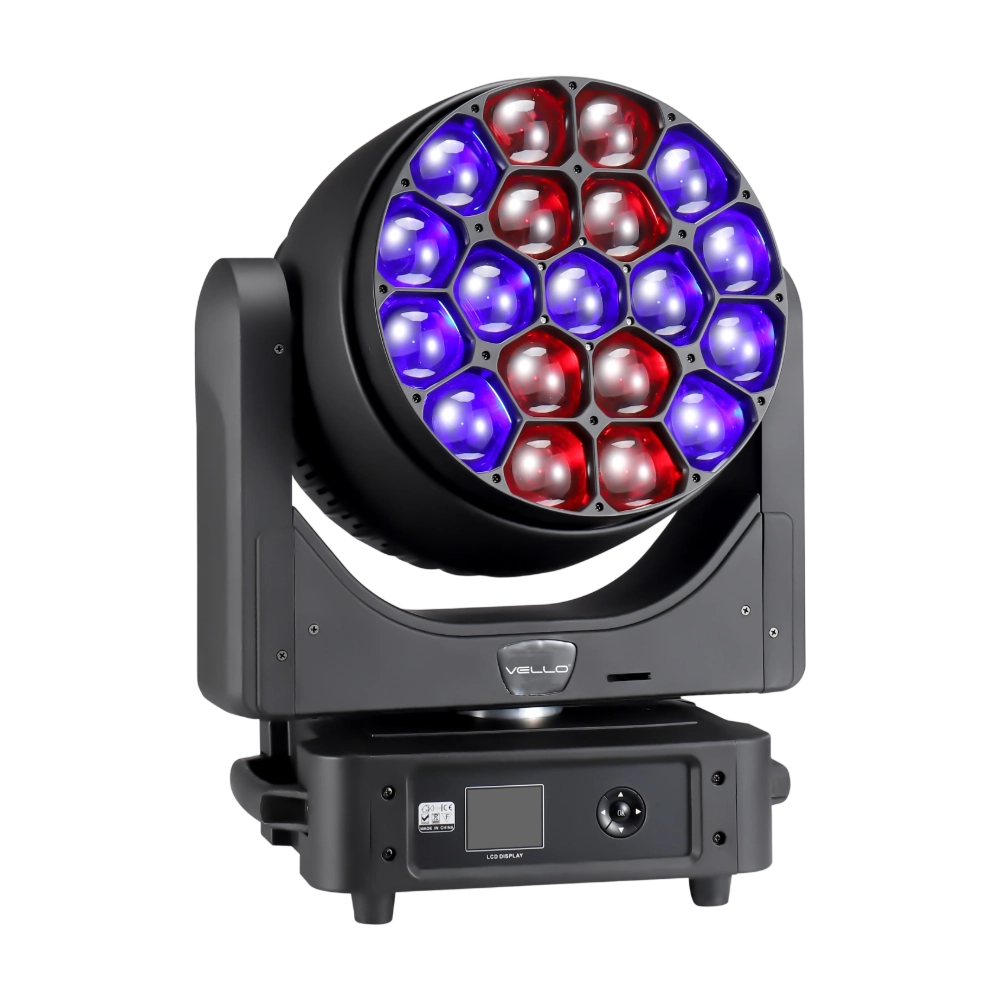
LED Bee Eyes K20 is a 750W high-output moving head wash powered by 19 × 40W Osram RGBW LEDs for intense brightness and rich color mixing. With a 4°–60° electronic zoom and wide CTO range (2700K–8000K), it seamlessly shifts from narrow beams to broad washes. Each LED can be controlled individually for advanced pixel mapping, while the rotating lens wheel creates striking dynamic effects. Featuring 540° pan / 270° tilt, multiple DMX channel modes, and robust construction, the K20 delivers exceptional flexibility and power—perfect for large concerts, stage shows, and high-impact visual productions.
Solar Par 200 RGBW is a 200W IP65-rated outdoor LED par, powered by a high-power 200W 4-in-1 COB LED for vibrant RGBW color mixing and smooth output. With optional 30° or 50° lens angles, flicker-free dimming, and multiple DMX channel modes, it offers versatile performance for stages, architectural lighting, and outdoor events. Built with a robust die-cast aluminum housing and equipped with Seetronic IP65 DMX and PowerCON in/out, Solar Par 200 delivers reliable, weather-resistant operation in any environment.
◌ Let Us Support Your Project
Request a Custom Quote and Technical Support
Fill out the form below, and our sales team will contact you shortly with product details, pricing, and customer service options.
Rest assured that your privacy is important to us, and all information provided will be handled with the utmost confidentiality.
By clicking "Send your message," I agree to your processing my personal data.
To see how to withdraw your consent, how to control your personal data, and how we process it, please see our Privacy Policy and Terms of Use.
Over 20 Years of Innovation in Stage & Studio Lighting
© 2026 VELLO. All Rights Reserved. 粤ICP备20023734号
Join our socials
VELLO
Whatsapp: +8613902276704
Vello Lighting
VelloLights