





What are beam angle and lumens and how to compare LED stage lights?
- 1) How do I compare two LED stage lights when one lists higher lumens but has a much wider beam angle?
- 2) What's the exact formula to predict lux on stage using lumens and beam angle, and how accurate is it in real life?
- 3) Why do two fixtures with the same LED wattage produce very different perceived punch on a truss?
- 4) How can I tell whether a manufacturer’s lumen spec is ‘total emitter lumens’, 'LED chip lumens', or 'delivered lumens'?
- 5) For a 10 m high truss and a band on stage, how do I choose beam angle and lumen output for key/front and wash lights?
- 6) How do I evaluate LED stage lights for camera work — what matters besides lumens and beam angle?
- Bonus: Practical buyer’s checklist for professional purchases
1) How do I compare two LED stage lights when one lists higher lumens but has a much wider beam angle?
Problem: Manufacturers often quote total lumens (the sum of light output across all directions). A higher lumen number on a wide-beam fixture does not necessarily give more on-stage punch than a lower-lumen narrow-beam fixture.
How to compare correctly: convert quoted lumens into useful metrics for stage use—luminous intensity (candela) and illuminance at the working distance (lux). The luminous intensity depends on the beam solid angle (steradian) produced by the optics. Use the standard relationship:
Solid angle Ω = 2π(1 - cos(θ/2))
Candela (cd) = lumens / Ω
Illuminance (lux) at distance r = cd / r^2
Example: Fixture A = 1,000 lm with 10° beam; Fixture B = 1,000 lm with 60° beam. For r = 10 m:
- 10° beam: Ω ≈ 0.0239 sr → cd ≈ 41,841 → lux @10m ≈ 418 lux
- 60° beam: Ω ≈ 0.8411 sr → cd ≈ 1,189 → lux @10m ≈ 11.9 lux
Conclusion: The narrow 10° fixture delivers ~35× higher on-axis lux at 10 m despite identical lumens. For stage punch and long throw, candela and lux at the target distance beat raw lumens.
2) What's the exact formula to predict lux on stage using lumens and beam angle, and how accurate is it in real life?
Formula recap (practical and accurate for on-axis calculations):
1) Convert beam angle θ to radians; θ/2 in radians = (θ/2) × π/180.
2) Ω = 2π(1 - cos(θ/2)).
3) Candela = Lumens / Ω.
4) Lux at distance r = Candela / r^2.
Notes on accuracy:
- This gives on-axis (center-beam) illuminance. Off-axis illuminance depends on beam profile (Gaussian-like, top-hat, etc.).
- Real fixtures have optical losses (glasses, fresnels, reflectors). Use measured IES/goniophotometer data for precise predictions.
- For large-area coverage (wash), compute average lux by integrating the beam footprint area: Beam radius at distance r ≈ r × tan(θ/2). Area ≈ π × radius^2. Then average lux ≈ lumens / area (approximate, ignoring non-uniformity).
Practical tip: request an IES (or LDT) file and a lux chart from the vendor; feed that into lighting software (WYSIWYG, Capture, Vectorworks) for accurate results.
3) Why do two fixtures with the same LED wattage produce very different perceived punch on a truss?
Wattage alone is a poor proxy for usable output. The differences come from:
- LED efficacy (lm/W) and binning — higher-efficiency chips produce more lumens per watt.
- Optical design — lens quality, reflector shape, and beam collimation determine how much light is concentrated into the beam angle.
- Thermal management — poor heat-sinking reduces LED forward current or causes lumen depreciation (thermal droop).
- Driver and current regulation — constant-current, precision drivers keep LEDs at rated output without flicker or current sag.
- Secondary optics and coatings — anti-reflective coatings and TIR optics increase coupling efficiency into the beam.
Buying checklist: compare measured candela/lux figures, ask for LM-79 test data for the complete fixture, and examine cooling design and L70 lumen maintenance specs (e.g., L70 @ 50,000 hrs).
4) How can I tell whether a manufacturer’s lumen spec is ‘total emitter lumens’, 'LED chip lumens', or 'delivered lumens'?
Manufacturers use inconsistent terminology. Ask for the following to verify real delivered output:
- LM-79 report — this is an industry-standard photometric test for complete fixtures that reports total lumens, spectral data, and efficacy.
- IES or LDT goniophotometer data — shows intensity distribution across angles and allows software to calculate lux at any point.
- Gamut and spectral power distribution (SPD) — for color rendering analysis and camera matching.
Red flags: quotes that only state LED chip package lumens (manufacturer chip datasheet) or “LED engine lumens” without fixture-level LM-79/IES data. Always ask for fixture-level photometry; when unavailable, treat lumen claims skeptically.
5) For a 10 m high truss and a band on stage, how do I choose beam angle and lumen output for key/front and wash lights?
Start by defining target lux levels (industry practice):
- General live music front light: 300–800 lux on performers (varies by venue size and camera requirements).
- Broadcast or camera-heavy productions: 800–2000 lux depending on cameras and shutter settings.
Procedure:
- Decide working distance (truss height). For 10 m, use r = 10 m for on-axis front light.
- Choose beam role: narrow spot for face/presence (5–15°), medium spot for sidelights (15–30°), wash for area coverage (30–70° or more).
- Use the candela/lux formula to size lumens needed. Example: to get 500 lux at 10 m with a 10° spot, required lumens ≈ lux × r^2 × Ω. Rearranged: lumens = lux × r^2 × Ω. With Ω ≈ 0.0239 sr for 10°, lumens ≈ 500 × 100 × 0.0239 ≈ 1,195 lm on-axis.
- Account for losses and non-ideal distribution: specify a safety factor of 1.2–1.5 (so specify ~1,500–1,800 lm per spot channel).
For washes: if you need 300 lux across a 6 m wide stage from 10 m high with a 45° beam, compute beam area or use IES data. Often designers choose more fixtures with wider beams to create even coverage rather than a few very powerful units.
6) How do I evaluate LED stage lights for camera work — what matters besides lumens and beam angle?
Key camera-focused metrics:
- Color rendering: CRI is useful but insufficient; prefer TLCI or spectral power distribution charts for broadcast use. Aim for TLCI ≥ 90 for TV/studio work.
- Flicker/PWM behavior: ask for PWM frequency and whether the fixture is rated flicker-free for camera use. Frequencies >10 kHz and constant-current drivers reduce camera-visible flicker; test on-camera at intended shutter speeds and frame rates.
- Color temperature control: tunable CCT (e.g., 2700–6500 K) and +/- green/magenta trims help white balance without gels.
- Spectral spikes and LED bins: full-spectrum LEDs or phosphor-mixed white often give better skin tones than narrow-peak emitters.
- DMX/Art-Net/RDM and wireless control: for complex camera cues, ensure smooth dimming curves (not stepped), low latency, and support for remote addressing/diagnostics.
Test recommendation: get a demo, record with your camera(s) at the highest shutter/fps combinations you will use, and inspect for banding/flicker and color fidelity across intensities. Also request TLCI/CRI numbers and SPD graphs.
Bonus: Practical buyer’s checklist for professional purchases
Before buying, request and verify the following (these are commonly missing or outdated online):
- LM-79 fixture test and IES files for the specific SKU.
- Goniophotometer lux plots at standard distances (5 m, 10 m, 20 m) or a CAD-friendly IES file.
- PWM/dimming frequency and dimming curve details (0–100% linearity).
- TLCI/CRI and SPD graphs for color-critical work.
- IP rating (IP20 indoor, IP65 or IP66 for outdoor fixtures) and operating temperature range.
- Lumen maintenance (L70) hours and warranty terms; ask for LM-80 LED chip data if needed.
- Control protocol support (DMX512, RDM, Art-Net, sACN, wireless CRMX) and physical mounting hardware specs (weight, center of gravity) for truss planning.
VelloLight technical tip: insist on measured photometric data (LM-79/IES) rather than relying on marketing lumens. Use the lux/candela conversions above to size fixtures for your venue and always validate on-site with a calibrated lux meter during load-in.
For a quote tailored to your venue and production, contact us at info@vellolight.com or visit www.vellolight.com.
Conclusion — advantages of LED stage lights when correctly specified
When you evaluate fixtures using candela/lux, beam angle, IES data, CRI/TLCI, and driver/flicker specs, LED stage lights offer major advantages: higher system efficacy (lm/W) and lower operating costs, color flexibility with tunable CCT and color mixing, longer service life with predictable lumen maintenance, smaller compact optics that enable tight beams and pixel mapping, and lower rigging weight for truss. Proper specification minimizes surprises on load-in and gives consistent visual and camera-ready results.
Contact us for a custom specification and quote: info@vellolight.com — VelloLight lighting engineers can supply LM-79/IES reports, sample lux plots, and on-site calculation support.
Major categories
Do you ship internationally?
Yes. We offer sea, air, and express delivery to many countries and regions worldwide.
Do you offer samples?
Samples are available for certain models. Please confirm with our sales team for details.
Do your products support customization?
Yes. We offer OEM and ODM services tailored to project needs, including design, optics, and control compatibility.
What is the usual lead time?
Standard models are typically shipped within 7–15 working days after payment. Customized items may vary.
What is the warranty period for your products?
Most products come with a standard 1–2 year warranty. Please refer to product details or contract terms for specifics.
You may also like
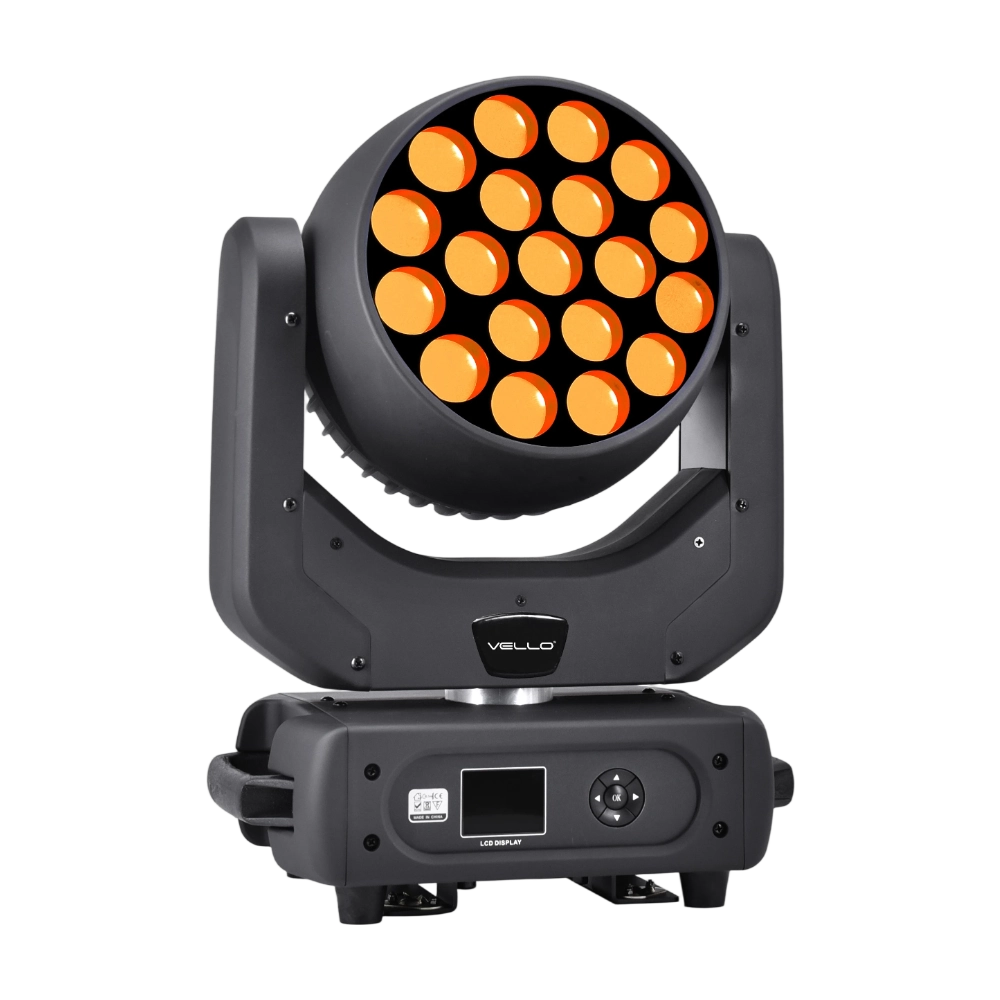
The BSW450 is a high-performance moving head fixture equipped with an original Osram 420W bulb, delivering exceptional brightness, precision, and versatility. Designed for professional stage applications, it seamlessly combines beam, spot, and wash functions in one compact unit, making it a powerful all-in-one lighting solution.
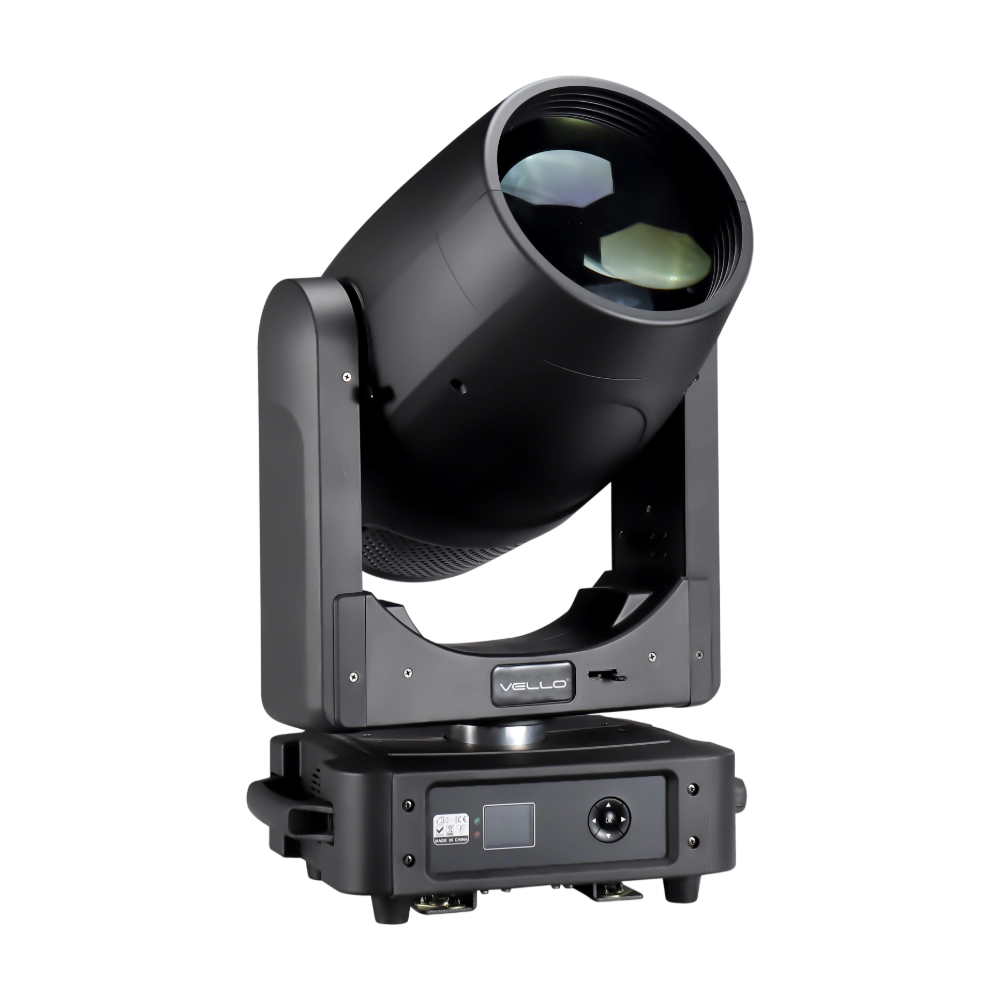
BSW600 is a 650W professional 3-in-1 moving head that combines beam, spot, and wash functions in a single fixture. Powered by a 550W Apotronics white LED engine, it delivers clear, pure colors and strong output with a wide 4°–42° zoom range. The fixture features 3 CMY wheels, 9 static metal gobos, 7 rotating gobos, and a 3-facet circular prism for dynamic effects. With 540° pan / 270° tilt, 16-bit precision movement, linear dimming, and automatic position correction, the BSW600 offers versatility and reliability. Compact yet powerful, it is ideal for concerts, theaters, and large-scale events where flexibility and high performance are essential.
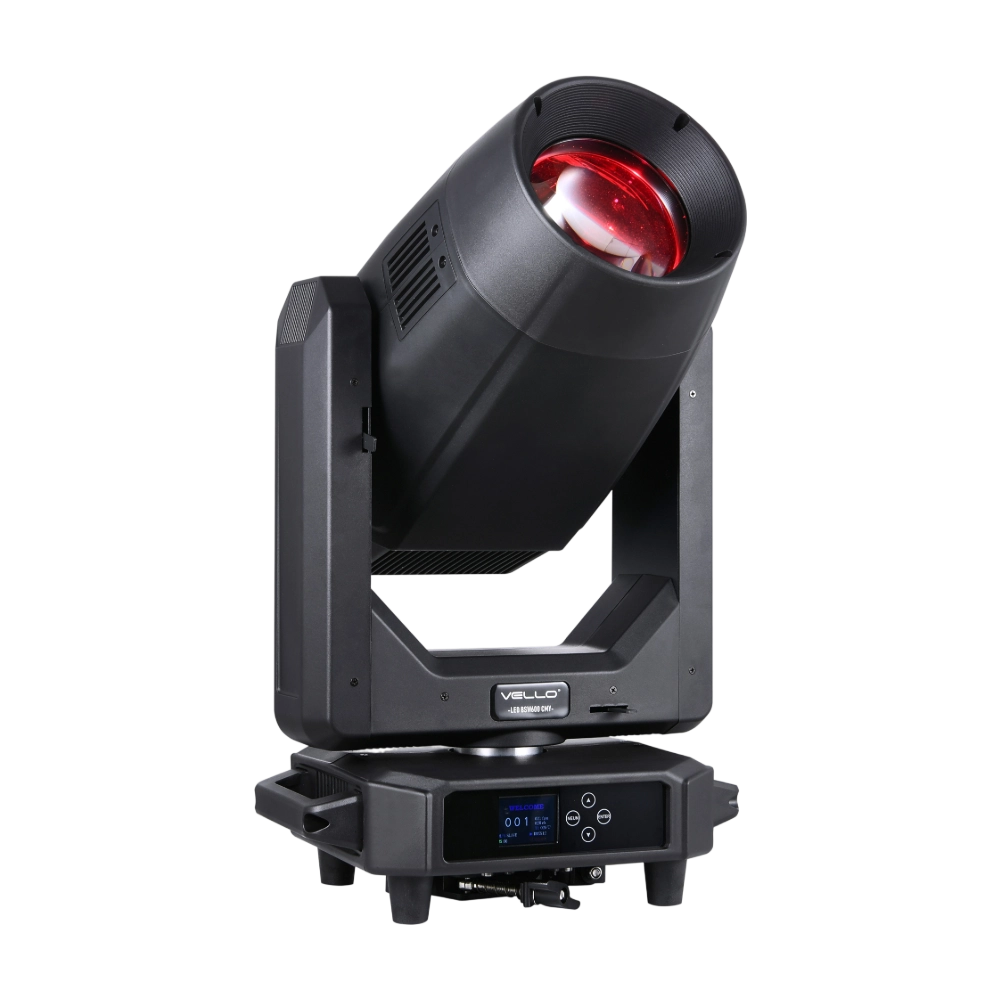
The LED Octopus S-12 is an advanced 800W moving bar fixture with 12 × 60W Osram RGBW LEDs, each controllable by pixel. Offering a 3.5°–36° zoom, 220° tilt movement, and precise dimming, it creates stunning dynamic effects. With multiple DMX modes (up to 179 channels) and auto-correction with a magnetic encoder, it ensures smooth operation. Designed for professional touring and installations, the S-12 delivers unmatched brightness, flexibility, and creative control.
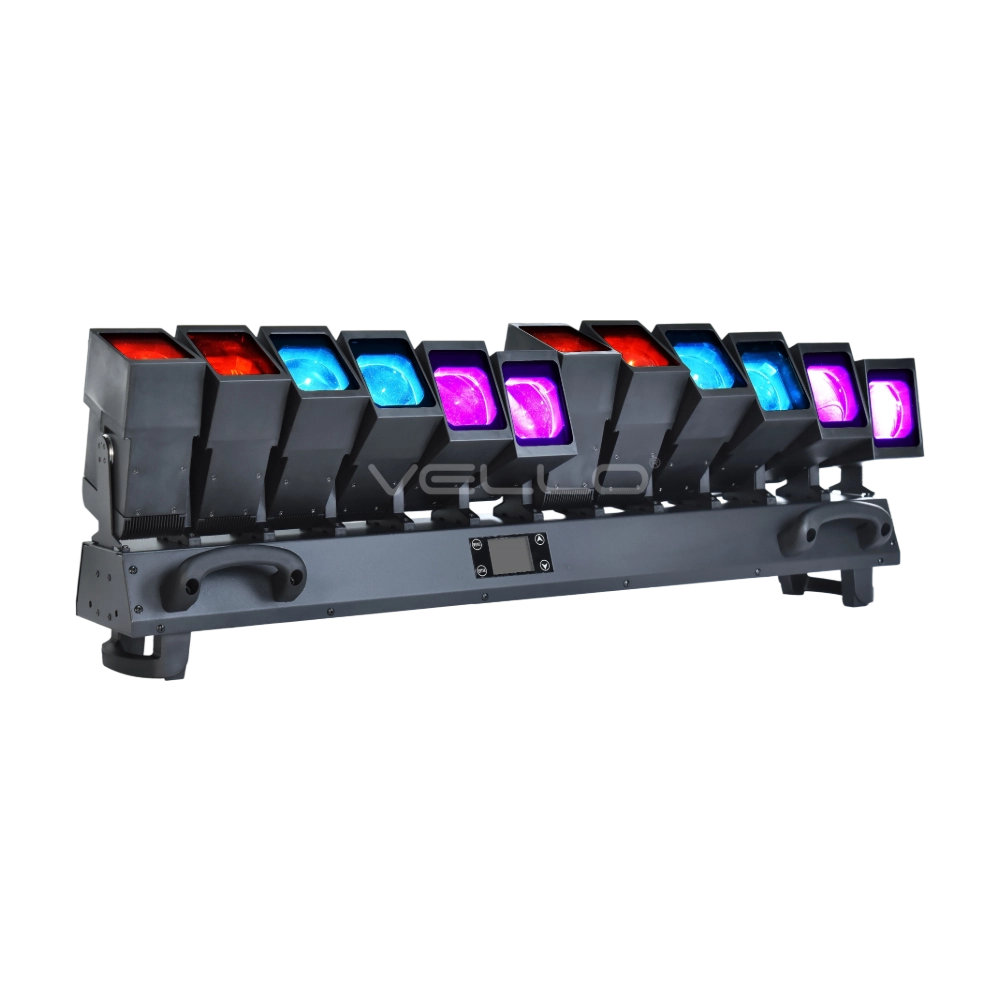
The LED XP800 is a 600W moving head wash fixture, equipped with 37 × 20W Osram RGBW LEDs for brilliant color mixing and high output. With a wide 6°–50° electronic zoom, it easily transitions from sharp beams to smooth washes. The fixture supports 3-ring pixel control and an adjustable CTO range (2800K–8500K) for versatile applications. Featuring 540° pan / 310° tilt, high-speed 3-phase motors, and multiple DMX modes (16/28 channels), XP800 delivers powerful, precise, and dynamic performance. Compact and durable, it is an excellent choice for stages, theaters, and large-scale events requiring high brightness and flexibility.
◌ Let Us Support Your Project
Request a Custom Quote and Technical Support
Fill out the form below, and our sales team will contact you shortly with product details, pricing, and customer service options.
Rest assured that your privacy is important to us, and all information provided will be handled with the utmost confidentiality.
By clicking "Send your message," I agree to your processing my personal data.
To see how to withdraw your consent, how to control your personal data, and how we process it, please see our Privacy Policy and Terms of Use.
Over 20 Years of Innovation in Stage & Studio Lighting
© 2026 VELLO. All Rights Reserved. 粤ICP备20023734号
Join our socials
VELLO
Whatsapp: +8613902276704
Vello Lighting
VelloLights