





Wireless DMX and Bluetooth Control for Stage Lights
- Modern Wireless Control Systems for Live Lighting
- Why wireless control matters for stage light installations
- Wireless DMX: How it works and when to choose it for stage light control
- Bluetooth control for stage light: advantages, limitations, and practical uses
- Wireless DMX vs Bluetooth — technical comparison for stage light deployments
- Best practices for deploying wireless stage lights and ensuring reliable performance
- Security, compliance and interference management for wireless stage light systems
- Cost, scalability and integrating wireless control into your stage lighting system
- Choosing the right wireless solution for your venue or production
- Vello Light Co., Ltd. — Capabilities, competitive strengths and stage light product overview
- Conclusion and recommended next steps for integrating wireless control with your stage light system
- FAQ — Common questions about Wireless DMX and Bluetooth control for stage lights
- References
Modern Wireless Control Systems for Live Lighting
The rapid adoption of wireless technologies has transformed how designers, technicians, and venues specify and operate stage light systems. Whether you’re installing a touring rig, outfitting a theater, or deploying architectural wash fixtures, understanding the practical differences between Wireless DMX and Bluetooth control is essential for reliability, safety, and creative flexibility. This article explains both technologies, compares performance and use cases, offers best practices for deployment, and helps you choose the right wireless stage lights for your project.
Why wireless control matters for stage light installations
Stage productions and fixed installations increasingly favor wireless stage lights to reduce cabling labor, shorten load-in times, and enable creative rigging where cable runs are infeasible. Wireless control can also lower tripping hazards, cut maintenance overhead on connectors, and simplify temporary setups for corporate events or pop-up venues. When selecting a wireless system, the main questions are: will the link deliver low, consistent latency? can it scale to the number of fixtures and universes you need? and how resilient is it to interference in crowded RF environments?
Wireless DMX: How it works and when to choose it for stage light control
Wireless DMX refers to systems that transport the DMX512 protocol over a wireless RF link so conventional lighting consoles and fixtures can operate without physical DMX cable. Professional Wireless DMX solutions (often branded as CRMX, W-DMX, or proprietary implementations) are purpose-built for live events and touring. They focus on minimal latency, robust synchronization across fixtures, and features like channel patch management and spread-spectrum modulation to resist interference.
When to choose Wireless DMX for your stage light setup:
- Large productions or touring shows where console-to-fixture reliability and low latency are essential.
- Outdoor stages and festivals where cable runs would be costly or hazardous.
- Installations that require long line-of-sight ranges or several DMX universes.
How Wireless DMX delivers on performance: modern professional systems use robust radio protocols, directional antennas, and spectrum management to provide high packet integrity, deterministic timing (often single-digit milliseconds), and the ability to transport multiple DMX universes. Many vendors support antenna diversity, retransmission strategies, and channel scanning to maintain link quality under challenging conditions.
Bluetooth control for stage light: advantages, limitations, and practical uses
Bluetooth-based control (including Bluetooth Low Energy and Bluetooth Mesh) is finding a place in lighting — especially for architectural, studio, small-theater, and consumer-facing stage light products. Bluetooth excels at device discovery, mobile app control, low-power operation, and simple two-way feedback (device status, battery level). It is attractive for quick setups and for markets where smartphone-based control and low cost matter.
Limitations for professional stage light use include range and scale (BLE typical range is tens of meters without repeaters), potential latency variability in busy RF environments, and the fact that many Bluetooth solutions are not designed to carry full DMX universes deterministically. Bluetooth Mesh improves scale and multi-node control, but it still differs fundamentally from dedicated Wireless DMX in timing guarantees and industry adoption for live productions.
Wireless DMX vs Bluetooth — technical comparison for stage light deployments
The following table summarizes key technical differences so you can match solution to use case. Data are representative ranges and performance characteristics; consult specific vendor specifications for exact performance.
| Characteristic | Wireless DMX (professional) | Bluetooth (BLE / Mesh) |
|---|---|---|
| Primary use case | Live events, touring, theaters — deterministic DMX transport for many fixtures | Small venues, architectural lighting, mobile app control, low-power fixtures |
| Typical range (LOS) | 300 m — 3000 m depending on hardware, antennas, and environment (directional antennas extend range) | 10 m — 200 m (Bluetooth 5 / BLE; real-world indoor ranges often much lower) |
| Latency | Usually < 5–10 ms (depending on hardware and number of universes) | Variable; BLE can be low but mesh routing adds hops — may be unsuitable for time-critical synchronized effects |
| Max universes supported | Multiple universes per system (vendor-dependent; designed to carry DMX512 data) | Limited by mesh topology and bandwidth — not designed for many full DMX universes |
| Interference resilience | High (spread spectrum, channel hopping, vendor features for congested RF) | Moderate — Bluetooth uses adaptive frequency hopping but can be affected by crowded 2.4 GHz environments |
| Typical cost | Higher per-node cost (professional-grade transmitters/receivers, antennas, licensing in some regions) | Lower per-node hardware cost; inexpensive controllers and mobile apps |
| Regulatory considerations | Often requires careful selection of channels and compliance with regional RF rules (FCC/CE) | Subject to same regional RF rules but generally consumer-oriented frequency allocations |
Sources: vendor technical documentation and Bluetooth SIG — see references for links and dates.
Best practices for deploying wireless stage lights and ensuring reliable performance
Whether you choose Wireless DMX or Bluetooth, following professional practices minimizes problems in live situations:
- Survey the site RF environment before the event. Use a spectrum analyzer or a handheld RF app to identify interfering sources (Wi‑Fi, cordless mics, broadcast). Prioritize clean channels or frequency bands for wireless DMX transmitters.
- Plan antenna placement and elevation. Line-of-sight and clear Fresnel zones improve link stability; elevate transmitters where possible and avoid metal obstructions that cause reflections.
- Use dedicated, quality hardware for mission-critical channels. For touring and large venues, invest in pro Wireless DMX transmitters/receivers with antenna diversity and external antenna options.
- Implement redundancy for key links. Where downtime is unacceptable, use redundant wireless paths or backup wired DMX runs where practical.
- Patch conservatively. Keep universes and channel assignments organized so that bandwidth use is predictable and manageable.
- Test at full load. Perform pre-show tests with the total number of fixtures and scenes to verify latency, sync, and frame integrity under live traffic conditions.
- Manage power and cable infrastructure for fixtures — wireless control reduces data cabling but does not remove the need for power distribution and proper grounding of stage light fixtures.
Security, compliance and interference management for wireless stage light systems
Security and regulatory compliance are often overlooked but crucial. Professional Wireless DMX systems frequently include encryption and device pairing to prevent unauthorized control. Bluetooth products commonly use the security mechanisms in the Bluetooth standard, but always verify how keys are exchanged and whether OTA updates are signed.
Regulatory aspects: wireless equipment must comply with local authorities (FCC in the USA, CE/ETSI in Europe). Improperly configured gear or unauthorized amplifiers can cause harmful interference and regulatory fines. For large or permanent installations, consult a frequency coordinator or RF specialist to ensure lawful operation.
Cost, scalability and integrating wireless control into your stage lighting system
Budgeting for wireless control should include hardware, antennas, spectrum analysis tools, and time for RF planning and testing. Wireless DMX systems carry a High Quality but scale well for large rigs where cabling costs and labor are significant. Bluetooth solutions are cost-effective for smaller systems and integration with mobile apps or IoT platforms, but they may increase labor if workarounds are needed for scale or deterministic timing.
Integration with lighting consoles: most modern consoles (ETC, MA, Avolites, ChamSys, etc.) can output DMX over an Ethernet network (Art-Net/sACN) that then feeds wireless DMX gateways. Verify compatibility between console protocols and wireless gateway devices. For Bluetooth-based control, confirm whether the fixture supports a bridge or gateway translating console DMX into the Bluetooth control protocol.
Choosing the right wireless solution for your venue or production
Match technology to requirements:
- Large venues, touring shows, and synchronized effects: choose professional Wireless DMX rated for multiple universes and long-range LOS operation.
- Small theaters, studios, and architectural lighting where mobile control and cost matter: Bluetooth-based products or BLE Mesh may be appropriate.
- Hybrid situations: use wired DMX for critical fixtures and wireless DMX for supplemental fixtures where cabling is impractical; consider Bluetooth for local app-based control of non-critical fixtures.
Consult manufacturers and request demonstration units. Real-world trials uncover issues that datasheets can’t reveal, such as multipath reflections in concrete venues or app stability on specific phones.
Vello Light Co., Ltd. — Capabilities, competitive strengths and stage light product overview
Vello Light Co., Ltd., established in 2003, is a comprehensive technology enterprise integrating R&D, manufacturing, and sales. Over the years, we have consistently adhered to the principles of quality first and sincere service. With the support and help of numerous customers both domestically and internationally, we have continued to grow and develop, gradually becoming a unique and outstanding team in our field.
In recent years, with the rapid development of the LED lighting market, Vello Light has gathered a large number of professional talents to provide comprehensive and systematic services, including product R&D, manufacturing, marketing, engineering installation, and product maintenance. Through the joint efforts of Vello people, we remain true to our original aspirations and persevere in innovation, leveraging our unique advantages to stand out in the fierce competition. Currently, our products are exported both domestically and internationally and have a strong brand reputation, especially in overseas markets. VELLO is our registered brand, specializing in moving headlights, LED wash lights, and theatrical lights. Our products are highly praised and loved by many customers for their professional technology, unique style, high-quality materials, and durability.
Vello’s competitive advantages for wireless stage light projects include:
- End-to-end vertical integration (R&D, manufacturing, QA) that reduces lead times and ensures consistent product quality for moving head stage lights, studio lights, LED effect lights, LED bar lights, LED par lights, and outdoor stage lighting.
- Experienced engineering team capable of integrating reliable wireless DMX modules and/or Bluetooth control into fixtures according to venue and regulatory requirements.
- Strong track record in export markets and a customer service network that supports installation, commissioning, and after-sales maintenance.
- A product portfolio designed for professional applications — durable materials, modular servicing, and options for external antennas or gateway devices when long-range Wireless DMX is required.
Vello’s vision is to become a world-leading stage lighting manufacturer. If your project requires fixtures with wireless DMX capabilities or Bluetooth app control, Vello can advise on product selection, customization, and installation to meet both creative and operational requirements.
Conclusion and recommended next steps for integrating wireless control with your stage light system
Wireless DMX and Bluetooth each have clear roles in modern stage lighting. Choose professional Wireless DMX for mission-critical, large-scale, and time-sensitive productions. Consider Bluetooth for smaller, app-driven setups, retrofit applications, and architectural lighting where cost and ease-of-use are priorities. In all cases, invest in RF site surveys, professional hardware, redundancy planning, and testing at full production load.
If you want hands-on guidance or product recommendations for wireless stage lights tailored to your venue, contact a proven manufacturer. Vello Light Co., Ltd. offers a complete portfolio and technical support for moving head stage lights, studio lights, LED effect lights, LED bar lights, LED par lights, and outdoor stage lighting. Reach out to discuss product configurations, demo units, and project-level RF planning.
Contact / View products: For product catalogs, technical datasheets, and project consultation, visit VELLO’s product pages or contact their sales and engineering team to arrange a quote and demonstration.
FAQ — Common questions about Wireless DMX and Bluetooth control for stage lights
Q1: Can I replace all wired DMX with wireless DMX for a large touring production?
A1: In many cases, yes — professional Wireless DMX systems are used successfully in touring rigs. However, it’s common to leave wired DMX for very critical fixtures or to provide redundant wired paths. Always perform RF surveys and full-load testing before the tour.
Q2: Is Bluetooth control secure enough for public events?
A2: Bluetooth security depends on implementation. BLE and Bluetooth Mesh include security features, but you should verify device pairing methods, use strong authentication when available, and avoid broadcasting unsecured control in crowded venues. For highly secure or sensitive productions, professional Wireless DMX with encryption and controlled pairing is often preferred.
Q3: How many fixtures can a single Wireless DMX transmitter support?
A3: It depends on the number of DMX universes and the transmitter’s capacity. A single DMX universe supports up to 512 channels — how many fixtures that covers depends on fixture channel count. Many wireless gateways support multiple universes; consult the vendor for supported configurations.
Q4: Do wireless stage lights increase latency or synchronization issues?
A4: Professionally designed Wireless DMX systems aim for very low and stable latency (<10 ms) and maintain synchronization across fixtures. Consumer or Bluetooth-based systems may show more variable latency. Proper hardware selection and RF planning mitigate most issues.
Q5: What regulatory approvals should I check before deploying wireless lighting gear?
A5: Verify FCC (USA), CE/ETSI (EU), and any local radio authority approvals for transmitters/receivers. Avoid modifying antenna power or using unapproved amplifiers. For permanent installations, consult local regulations and coordinate frequencies if necessary.
Q6: Can Vello customize fixtures to include Wireless DMX or Bluetooth modules?
A6: Yes. Vello’s R&D and manufacturing capabilities support customization of fixtures and integration of wireless modules. Contact Vello for requirements, lead times, and compliance testing.
References
- LumenRadio — CRMX Technology overview. https://www.lumenradio.com/technology/crmx/ (accessed 2025-12-03)
- Bluetooth SIG — Bluetooth Mesh. https://www.bluetooth.com/learn-about-bluetooth/what-is-bluetooth-technology/mesh/ (accessed 2025-12-03)
- Chauvet Professional — Wireless DMX vs Wi-Fi vs Bluetooth (knowledge base). https://www.chauvetprofessional.com/knowledgebase/ (accessed 2025-12-03)
- ETC (Electronic Theatre Controls) — Wireless DMX whitepapers and best practices. https://www.etcconnect.com/ (accessed 2025-12-03)
- Federal Communications Commission (FCC) — Radio Frequency Devices (Part 15). https://www.fcc.gov/engineering-technology/laboratory-division/general/equipment-authorization/part-15 (accessed 2025-12-03)
How to Choose Reliable Stage Lighting Suppliers and Manufacturers
Custom Branding and OEM Options for Moving Head Manufacturers
Energy Savings and ROI of LED Stage Lighting for Theaters
Retrofit vs New Custom LED Lighting for Theater Upgrades
Major categories
Do your products support customization?
Yes. We offer OEM and ODM services tailored to project needs, including design, optics, and control compatibility.
Do you ship internationally?
Yes. We offer sea, air, and express delivery to many countries and regions worldwide.
What is the warranty period for your products?
Most products come with a standard 1–2 year warranty. Please refer to product details or contract terms for specifics.
What is the usual lead time?
Standard models are typically shipped within 7–15 working days after payment. Customized items may vary.
Do you offer samples?
Samples are available for certain models. Please confirm with our sales team for details.
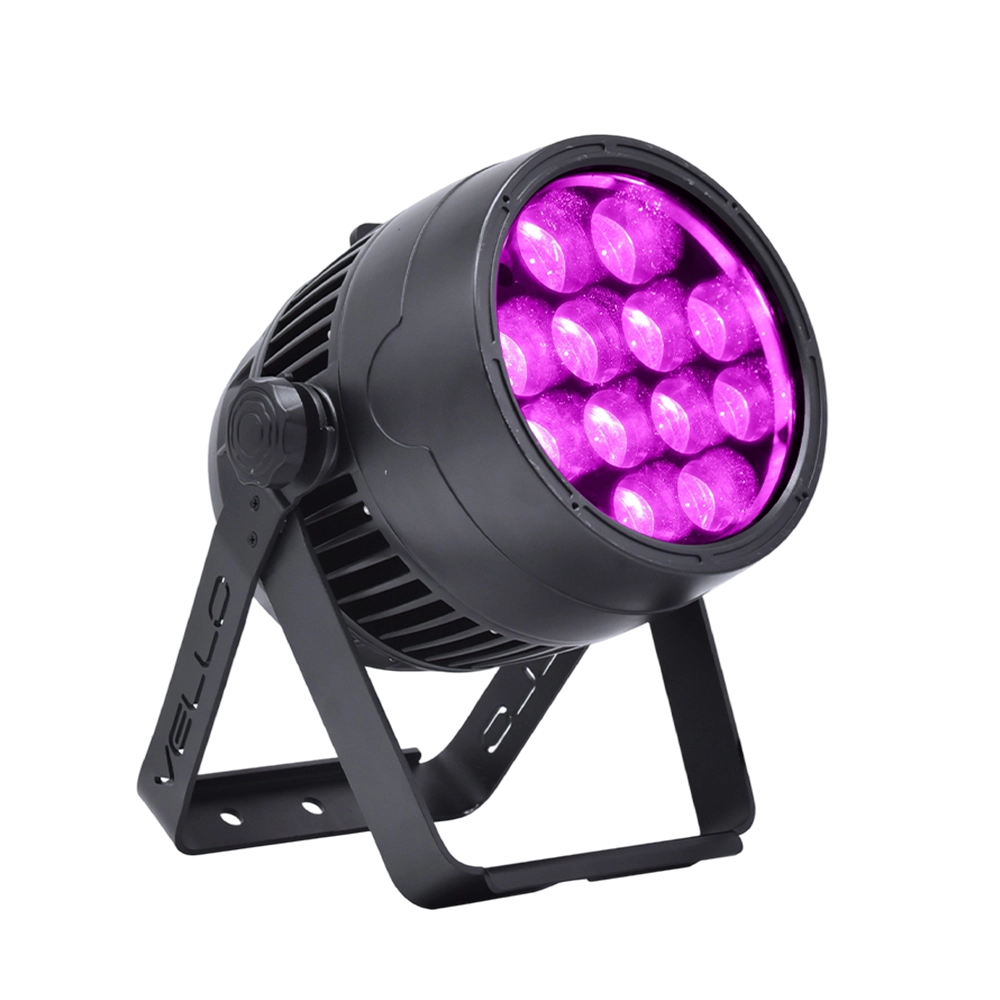
Stage LED Par Light LED ZOOMPAR 40
The Vello Zoom Par 40 IP is a powerful outdoor LED wash light equipped with 12x high-power 7-in-1 RGBACL LEDs. Designed for durability and rich color rendering, it features a wide motorized zoom (6°–50°), smooth dimming, and adjustable CTO presets (3200K–7500K), with 90+ CRI. With an IP66-rated die-cast aluminum body, it’s ideal for both indoor and outdoor applications, including stage lighting, architecture, live events, and installations.
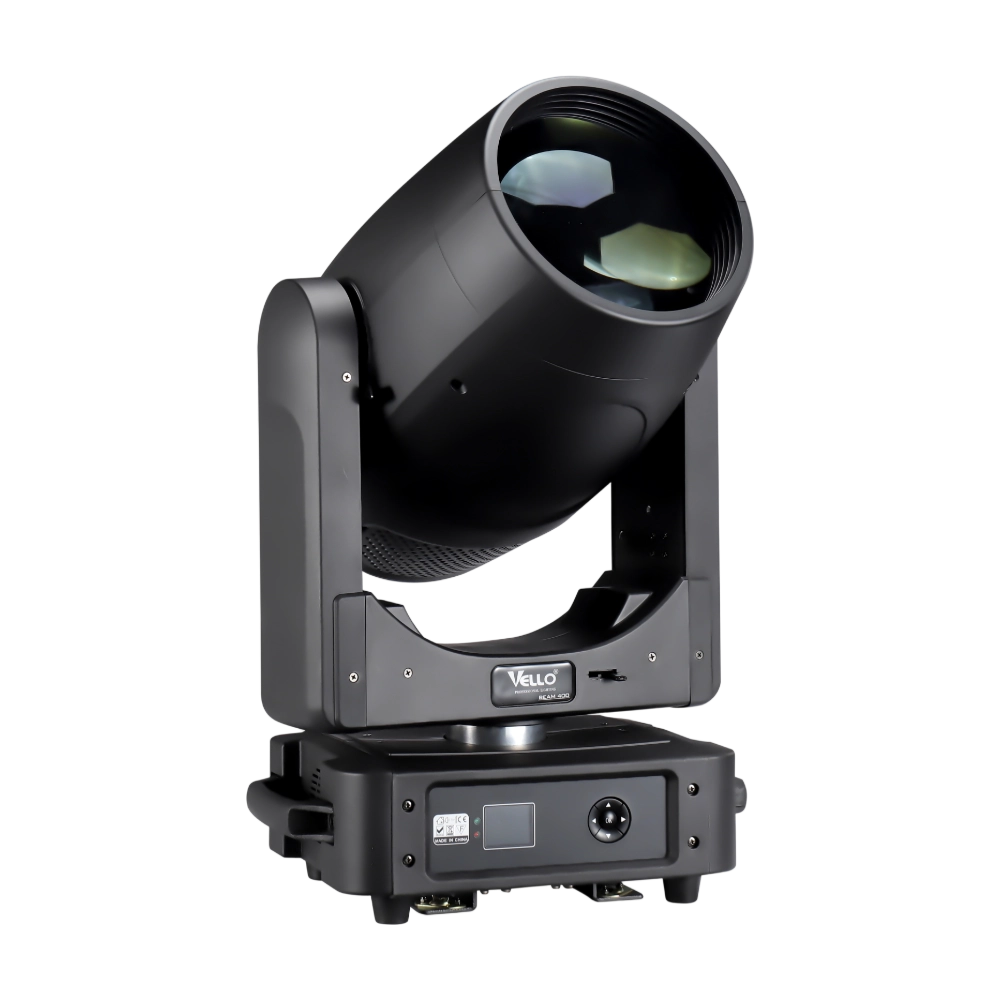
Moving Head Stage Light BEAM 400
BEAM400 is a 500W professional moving head beam powered by an OSRAM SIRIUS 371W discharge bulb, delivering a super-bright 1.8° sharp beam with impressive punch. It features 12 fixed gobos + open, a 14-color wheel, and a 16-facet circular rotating prism with multiple-facet effects, enabling dynamic aerial visuals. With 540° pan / 270° tilt, 16-bit movement resolution, and linear frost and focus, BEAM400 ensures precise and versatile performance. Comparable to traditional 750W moving heads, it combines high efficiency, smooth dimming, and reliable operation—ideal for concerts, tours, and large-scale stage productions.
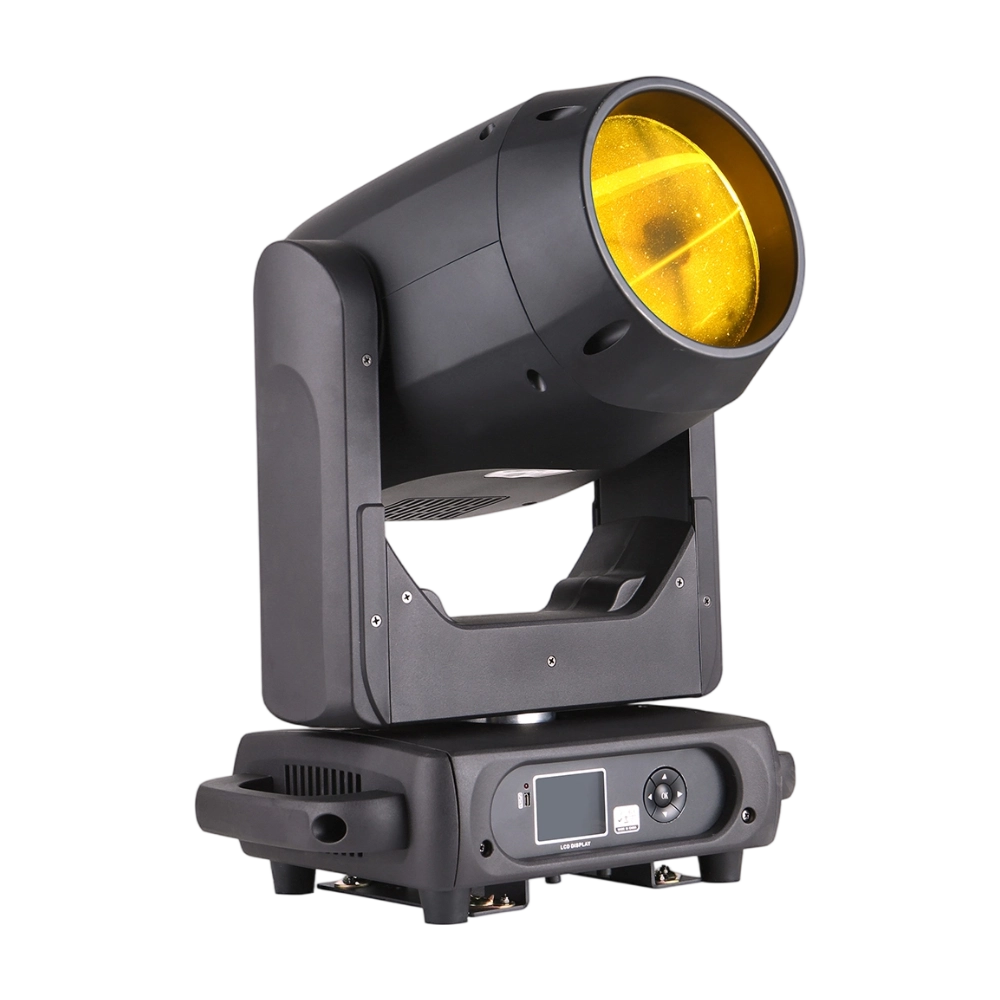
Moving Head Stage Light BEAM 360
BEAM360 is a 400W high-power moving head beam equipped with an OSRAM SIRIUS 311W discharge lamp, delivering a sharp 1.8° beam with super brightness. It features 14 colors + open, 12 fixed metal gobos + open, and dual prisms (8-facet circular + 8+16 multi-facet combination) for dynamic aerial effects. With 540° pan / 270° tilt, 16-bit movement, and linear frost and focus, BEAM360 ensures precision and versatility. Compact yet powerful, it rivals traditional 575W moving heads, making it ideal for concerts, clubs, and large-scale stage productions.
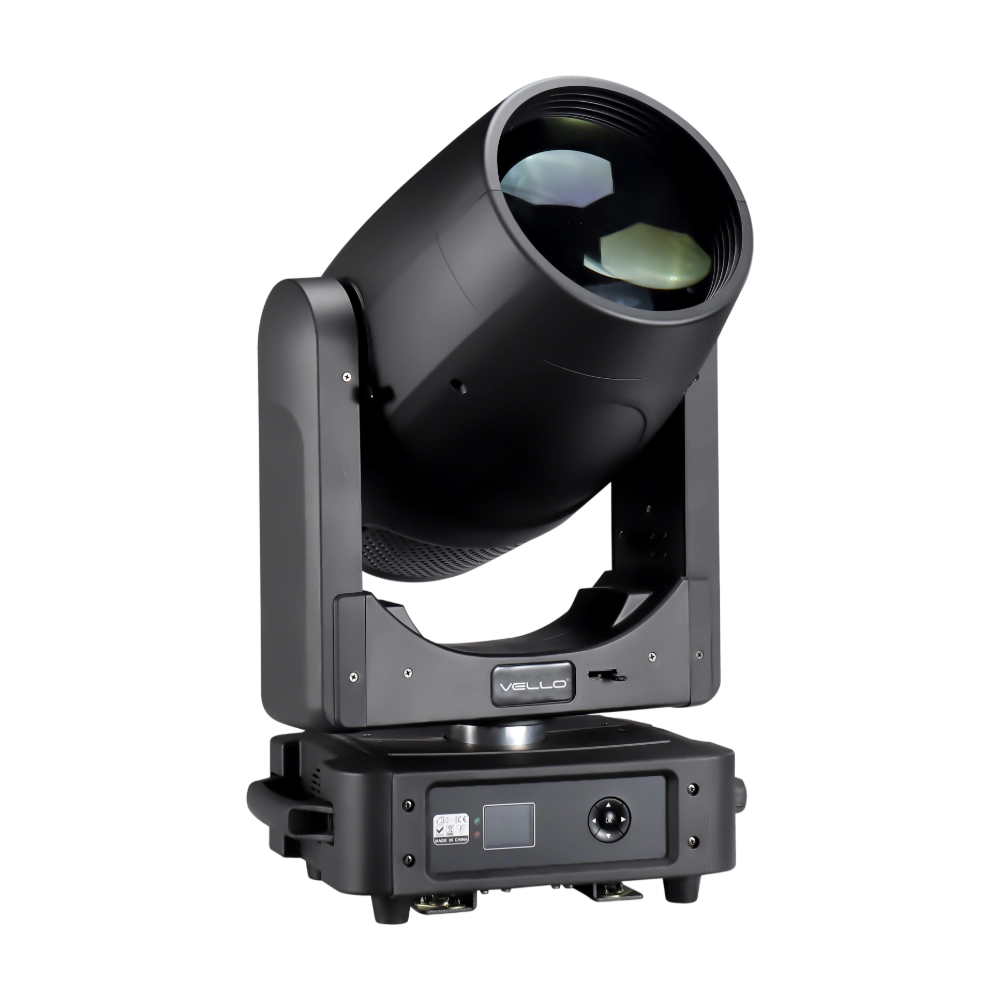
Moving Head Light BEAM 450
The BSW450 is a high-performance moving head fixture equipped with an original Osram 420W bulb, delivering exceptional brightness, precision, and versatility. Designed for professional stage applications, it seamlessly combines beam, spot, and wash functions in one compact unit, making it a powerful all-in-one lighting solution.
Over 20 Years of Innovation in Stage & Studio Lighting
© 2026 VELLO. All Rights Reserved. 粤ICP备20023734号
Join our socials
VELLO
Whatsapp: +8613902276704
Vello Lighting
VelloLights