





Wireless Control Options for Stage Lighting
- Modern Wireless Control for Live Events
- Why wireless control matters for light stage lighting
- Overview of common wireless control technologies
- Engineered Wireless DMX (W-DMX, CRMX) — the professional choice
- Art‑Net / sACN over Wi‑Fi — flexible but needs planning
- Bluetooth and low-power wireless
- Comparison: wireless options at a glance
- Sources and verification
- Practical deployment guidance — planning, testing, and redundancy
- Pre-show planning
- During installation
- Redundancy and failover strategies
- Troubleshooting common wireless lighting problems
- Intermittent control or dropped channels
- High/variable latency
- Security concerns
- Cost and procurement considerations for buyers and production managers
- How VELLO (Vello Light Co., Ltd.) supports wireless stage lighting deployments
- Decision matrix: which wireless option fits your project?
- FAQ — Wireless Control for Stage Lighting
- 1. Can wireless fully replace wired DMX for professional productions?
- 2. Is Art‑Net over Wi‑Fi reliable for concerts?
- 3. What latency should I expect from wireless DMX systems?
- 4. How many universes can I run wirelessly?
- 5. How do I secure wireless lighting networks?
- 6. Who should I contact for help choosing wireless fixtures and control gear?
- Contact and product inquiry
- References
Modern Wireless Control for Live Events
Why wireless control matters for light stage lighting
Wireless control for light stage lighting has moved from a convenience to a critical capability for many production environments. Touring concerts, theatrical productions, corporate events, and fixed installations benefit from reduced cable runs, faster rigging, improved aesthetics, and flexible layouts. However, adopting wireless brings tradeoffs: spectrum management, latency, channel capacity, and reliability. This article examines the major wireless control technologies, compares their real-world performance, and provides practical guidance for selecting and deploying a wireless strategy that fits your production requirements and commercial goals (e.g., buying or sourcing reliable wireless systems).
Overview of common wireless control technologies
There are several wireless control approaches used with stage lighting:
- Engineered wireless DMX (W-DMX / CRMX) — purpose-built DMX over licensed/unlicensed radio with robust error correction.
- Art‑Net or sACN over Wi‑Fi — general Ethernet-based lighting protocols transported over standard Wi‑Fi networks.
- Bluetooth/Bluetooth Mesh — low-power options for short-range and small-channel applications (increasingly used for fixtures and pixel control).
- Proprietary RF protocols and combined hybrid solutions — vendor-specific wireless links or combined wired/wireless topologies.
Engineered Wireless DMX (W-DMX, CRMX) — the professional choice
Engineered wireless DMX systems (marketed as W‑DMX by Wireless Solutions, CRMX by LumenRadio, and other vendor names) are specifically designed to replace DMX512 cable by transmitting real-time DMX universes over a robust radio layer. These systems focus on:
- Deterministic latency optimized for live lighting control.
- Automatic channel hopping, forward error correction (FEC), and retransmission strategies to survive interference.
- Simple bridging to wired DMX (transceivers, nodes) and support for multiple universes.
Typical performance claims from major vendors indicate latencies in the low single-digit milliseconds (2–6 ms) and ranges from 100–1000 meters depending on antennas and line-of-sight. In practice, a well-installed W‑DMX/CRMX link will give the reliability production crews expect because the protocol is engineered for moving lights and fast cues (sources: Wireless Solutions, LumenRadio).
Art‑Net / sACN over Wi‑Fi — flexible but needs planning
Art‑Net and sACN are Ethernet-based lighting protocols that can be carried over Wi‑Fi. The benefit is a unified IP-based infrastructure that can carry multiple universes and integrate with show control, media servers, and networked devices. However, using Wi‑Fi effectively for mission-critical lighting requires:
- Professional-grade access points (APs) with QoS, dedicated SSIDs, and controlled channel planning.
- Segmentation so lighting traffic is isolated from audience or public Wi‑Fi.
- Understanding of Wi‑Fi behaviors (retransmissions, roaming, and congestion) that can introduce variable latency.
When implemented correctly (enterprise APs, managed switches, and careful RF planning), Art‑Net/sACN over Wi‑Fi can be powerful — especially for distributed installations — but it typically requires more networking expertise than deploying engineered wireless DMX.
Bluetooth and low-power wireless
Bluetooth (including Bluetooth Mesh) and other low-power protocols are being used for specific lighting tasks: configuration, sensor networks, small fixture control, and LED pixel control. Advantages include low power use and easy smartphone integration. Drawbacks for high-channel, low-latency stage lighting include limited range, potential congestion in 2.4 GHz, and lower determinism than engineered solutions. Bluetooth Mesh is promising for IoT-style installations but not yet a drop-in replacement for fast-moving heads on a concert rig.
Comparison: wireless options at a glance
The table below summarizes key properties for major options. Sources in the references provide vendor specifications and standards guidance.
| Technology | Typical Latency | Typical Range (LOS) | Channel/Universe Capacity | Reliability / Interference Resilience | Best Use Cases |
|---|---|---|---|---|---|
| W‑DMX / CRMX (engineered) | 2–6 ms | 100–1000+ m (with antennas) | 1–8+ universes (vendor dependent) | High — FEC, hopping, retries | Concerts, touring, moving lights, outdoor festivals |
| Art‑Net / sACN over Wi‑Fi | Variable: 5–50+ ms depending on load | 50–200 m (APs + mesh) | Multiple universes (limited by bandwidth & setup) | Medium — depends on Wi‑Fi planning and congestion | Fixed installs, large distributed rigs, integrated IP systems |
| Bluetooth / Mesh | 10–100 ms (application dependent) | 10–100 m | Low — suitable for configuration, small pixel zones | Low–Medium — subject to 2.4 GHz congestion | Venue control, small-scale pixel/architectural lighting |
| Proprietary RF | Varies | Varies | Varies | Varies | OEM fixtures, integrated vendor ecosystems |
Sources and verification
Latency and range figures above are derived from vendor technical documentation and independent field reports (see references). When evaluating vendors, request real-world tests and latency measurements under load for your exact fixture mix and venue.
Practical deployment guidance — planning, testing, and redundancy
Pre-show planning
Successful wireless deployments start early: RF surveys, spectrum analysis, and clear objectives (how many universes, required latency, acceptable packet loss). For rented venues or outdoor events, check local regulations and existing RF sources (broadcasters, venue Wi‑Fi, intercoms). Document frequencies and preferred channels, and choose hardware that allows manual channel selection or automatic avoidance mechanisms.
During installation
Best practices:
- Place transmitters with good line of sight to receivers and minimize physical obstructions between them.
- Use directional antennas where useful and ensure antenna polarization matches on both ends.
- Isolate lighting networks on separate SSIDs or radios where using Wi‑Fi, and enable QoS (WMM) for prioritized traffic.
- Limit the number of competing radios in the same spectrum and avoid crowding all fixtures on a single RF channel.
Redundancy and failover strategies
Redundancy is critical for high-profile shows. Approaches include:
- Dual transmitters on different frequencies (some engineered systems support seamless failover).
- Local wired DMX drops or backup wired universes for critical fixtures.
- Hybrid models where moving fixtures use wireless but critical front‑of‑house fixtures remain cabled.
Troubleshooting common wireless lighting problems
Intermittent control or dropped channels
Common causes: RF interference, antenna misalignment, or too many universes on one band. Use a spectrum analyzer to identify interfering sources. Move the transmitter, adjust antenna orientation, or switch channels. For Wi‑Fi, separate the lighting VLAN and ensure low-latency QoS.
High/variable latency
Latency spikes often indicate congestion or retries. For Wi‑Fi, reduce background traffic, isolate lighting on dedicated radios, and tune retransmission settings if available. For engineered DMX, check firmware and ensure antennas and power levels are adequate.
Security concerns
Wireless control must be secured against accidental or malicious interference. For Wi‑Fi setups, use enterprise WPA2/WPA3, network segmentation, and strong passwords. Engineered DMX products may offer encryption and device addressing — prefer systems with proven encryption if security is a priority.
Cost and procurement considerations for buyers and production managers
Budgeting for wireless control should consider hardware cost, installation labor, RF planning, training, and potential rental fees for additional redundancy. Engineered wireless DMX hardware typically carries a High Quality over basic Wi‑Fi gear, but it often reduces labor and risk in live environments. When comparing suppliers, request:
- Test reports and latency measurements under representative loads.
- Warranty, support packages, and firmware update policies.
- Compatibility matrices for your fixtures (universes, RDM support, connectors).
How VELLO (Vello Light Co., Ltd.) supports wireless stage lighting deployments
Vello Light Co., Ltd., established in 2003, is a comprehensive technology enterprise integrating R&D, manufacturing, and sales. Over the years, Vello has consistently adhered to the principles of quality first and sincere service. With the support and help of numerous customers both domestically and internationally, Vello has continued to grow and develop, gradually becoming a unique and outstanding team in our field.
In recent years, with the rapid development of the LED lighting market, Vello Light has gathered many professional talents to provide comprehensive and systematic services, including product R&D, manufacturing, marketing, engineering installation, and product maintenance. Through joint efforts, Vello remains true to original aspirations and perseveres in innovation, leveraging unique advantages to stand out in fierce competition. Currently, Vello products are exported both domestically and internationally and have a strong brand reputation, especially in overseas markets. VELLO is a registered brand, specializing in moving head stage lights, studio lights, LED effect lights, LED Bar Lights, LED Par Light, and outdoor stage lighting. Products are praised for professional technology, unique style, high-quality materials, and durability.
VELLO’s competitive strengths for wireless control deployments:
- Product breadth: moving head stage lights, LED wash and par lights, LED bars and outdoor fixtures allow consistent integration across a rig.
- Engineering support: in-house R&D team can advise on DMX/RDM compatibility and firmware features for wireless use.
- Quality and reliability: manufacturing controls and material selection reduce field failures that complicate wireless setups.
- Export experience: knowledge of diverse regulatory environments and RF considerations in different markets.
Whether you need fixtures that pair well with engineered W‑DMX/CRMX systems or advice on Art‑Net over Wi‑Fi designs for fixed installations, VELLO can provide product options and technical consulting to match your show requirements. Their vision is to become a world-leading stage lighting manufacturer, and their product lines are designed to support modern wireless light stage lighting workflows.
Decision matrix: which wireless option fits your project?
Use this simple decision flow:
- If you run touring shows with moving heads and require minimal latency and maximum reliability → prioritize engineered W‑DMX/CRMX.
- If you have a fixed installation integrated with AV and show control, and you have network expertise → consider Art‑Net/sACN over dedicated Wi‑Fi segments.
- If you need smartphone-based control or low-power distributed fixtures → evaluate Bluetooth Mesh or low-power proprietary protocols.
- Always plan for redundancy: wired backup or dual transmitters.
FAQ — Wireless Control for Stage Lighting
1. Can wireless fully replace wired DMX for professional productions?
Yes — many professional productions rely on engineered wireless DMX for entire rigs. However, redundancy is key: most production teams keep critical fixtures on wired DMX or maintain fallback wired paths.
2. Is Art‑Net over Wi‑Fi reliable for concerts?
Art‑Net over Wi‑Fi can be reliable if the network is professionally designed (enterprise APs, dedicated SSIDs, QoS, RF planning). For high-speed moving lights and tight cues, purpose-built wireless DMX is often preferred unless you have strong network engineering resources.
3. What latency should I expect from wireless DMX systems?
Engineered wireless DMX vendors typically advertise latencies of 2–6 ms. Wi‑Fi and Bluetooth-based solutions may have higher and more variable latency depending on congestion and network conditions.
4. How many universes can I run wirelessly?
Capacity depends on the technology and bandwidth. Engineered wireless DMX systems commonly handle multiple universes (sometimes 4–8 or more depending on hardware). Art‑Net/sACN over Wi‑Fi can carry many universes in theory, but practical limits depend on AP throughput and network design.
5. How do I secure wireless lighting networks?
Use strong encryption (WPA2/WPA3 for Wi‑Fi), network segmentation (VLANs), device authentication, and, where available, vendor encryption features in engineered DMX products. Physical security and access control for transmitters and antenna locations are also important.
6. Who should I contact for help choosing wireless fixtures and control gear?
Contact your fixture supplier or a lighting integrator with experience in wireless deployments. VELLO offers technical consulting, product lines (moving head stage lights, LED wash/par, LED bar, outdoor stage lighting) and support for wireless-compatible setups — contact VELLO for product details and project assistance (see CTA below).
Contact and product inquiry
If you’re planning a wireless lighting deployment or need fixtures that work reliably in wireless topologies, contact Vello Light Co., Ltd. for product specifications, RF compatibility details, and project consulting. Explore VELLO’s range of moving head stage lights, studio lights, LED effect lights, LED Bar Lights, LED Par Lights, and outdoor stage lighting to find fixtures engineered for modern wireless control systems.
References
- Wireless Solutions (W‑DMX) — product pages and technical specs. https://wireless-solutions.se/ (accessed 2025-11-01)
- LumenRadio (CRMX) — technology overview and technical whitepapers. https://www.lumenradio.com/ (accessed 2025-11-02)
- DMX512 protocol overview — ESTA / Wikipedia summary. https://en.wikipedia.org/wiki/DMX512 (accessed 2025-10-15)
- Art‑Net protocol information — Artistic Licence. https://art-net.org.uk/ (accessed 2025-09-20)
- Wi‑Fi Alliance — Wi‑Fi for enterprise networks and guidelines. https://www.wi-fi.org/ (accessed 2025-06-12)
- Bluetooth SIG — Bluetooth and Bluetooth Mesh specifications. https://www.bluetooth.com/ (accessed 2025-07-08)
How to Create Dramatic Effects with Gobos and LEDs
Maintenance and Service Plans for Outdoor Stage Lighting
How to Program Stage Light Scenes and Lighting Cues
DMX Control for Stage LED Lights: Setup and Practical Tips
Major categories
Do you offer samples?
Samples are available for certain models. Please confirm with our sales team for details.
Do your products support customization?
Yes. We offer OEM and ODM services tailored to project needs, including design, optics, and control compatibility.
What is the usual lead time?
Standard models are typically shipped within 7–15 working days after payment. Customized items may vary.
Do you ship internationally?
Yes. We offer sea, air, and express delivery to many countries and regions worldwide.
What is the warranty period for your products?
Most products come with a standard 1–2 year warranty. Please refer to product details or contract terms for specifics.
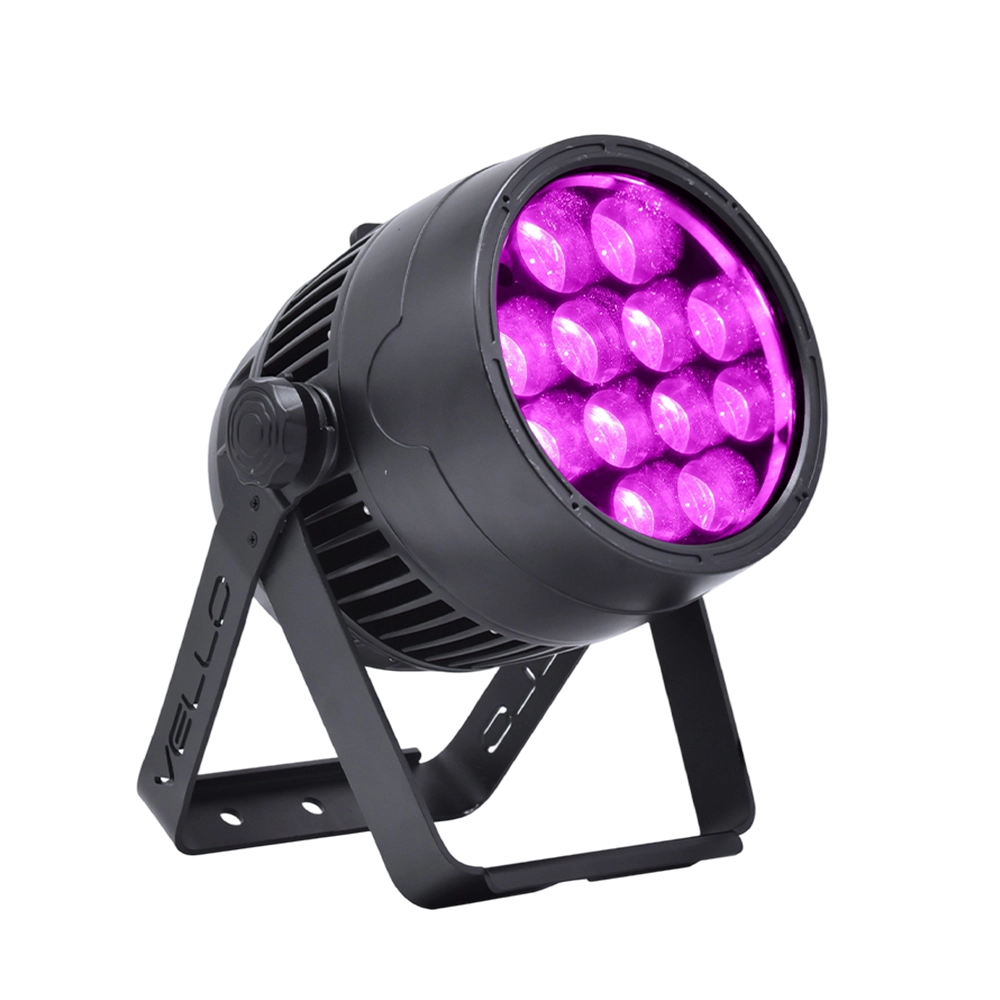
Stage LED Par Light LED ZOOMPAR 40
The Vello Zoom Par 40 IP is a powerful outdoor LED wash light equipped with 12x high-power 7-in-1 RGBACL LEDs. Designed for durability and rich color rendering, it features a wide motorized zoom (6°–50°), smooth dimming, and adjustable CTO presets (3200K–7500K), with 90+ CRI. With an IP66-rated die-cast aluminum body, it’s ideal for both indoor and outdoor applications, including stage lighting, architecture, live events, and installations.
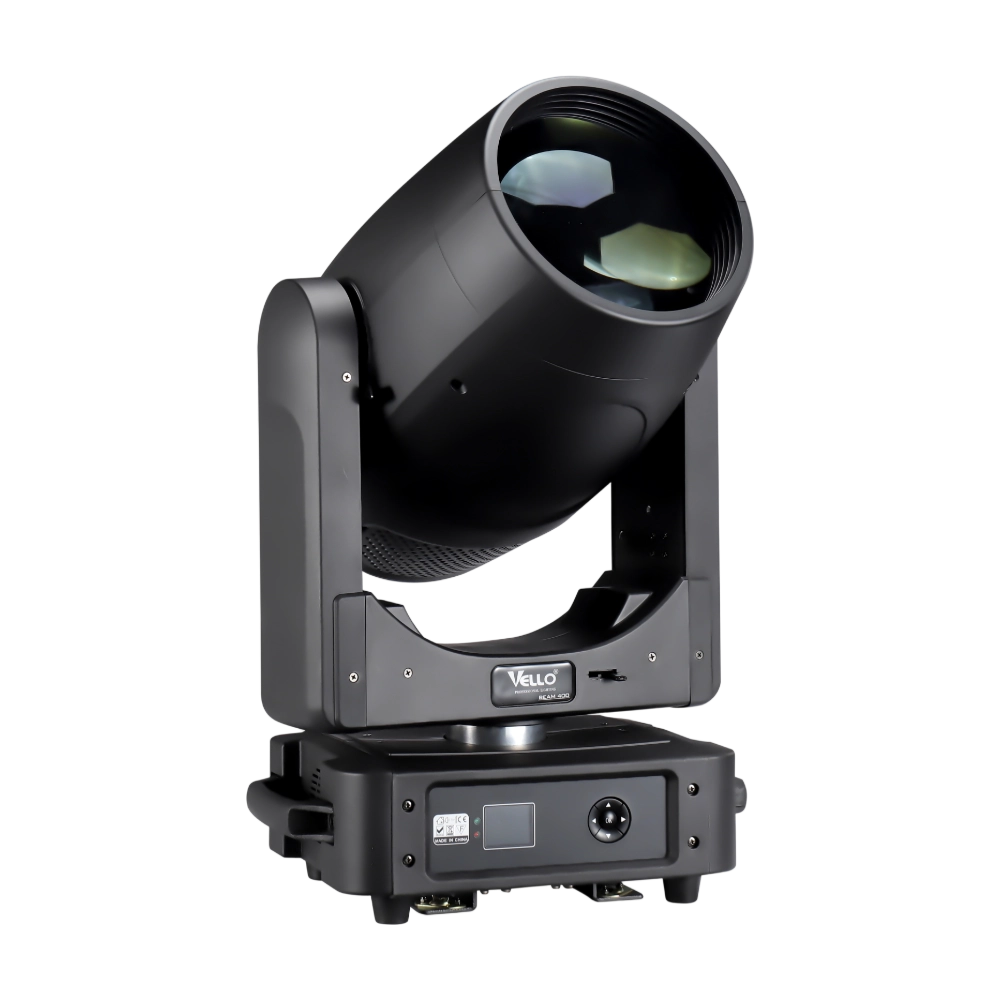
Moving Head Stage Light BEAM 400
BEAM400 is a 500W professional moving head beam powered by an OSRAM SIRIUS 371W discharge bulb, delivering a super-bright 1.8° sharp beam with impressive punch. It features 12 fixed gobos + open, a 14-color wheel, and a 16-facet circular rotating prism with multiple-facet effects, enabling dynamic aerial visuals. With 540° pan / 270° tilt, 16-bit movement resolution, and linear frost and focus, BEAM400 ensures precise and versatile performance. Comparable to traditional 750W moving heads, it combines high efficiency, smooth dimming, and reliable operation—ideal for concerts, tours, and large-scale stage productions.
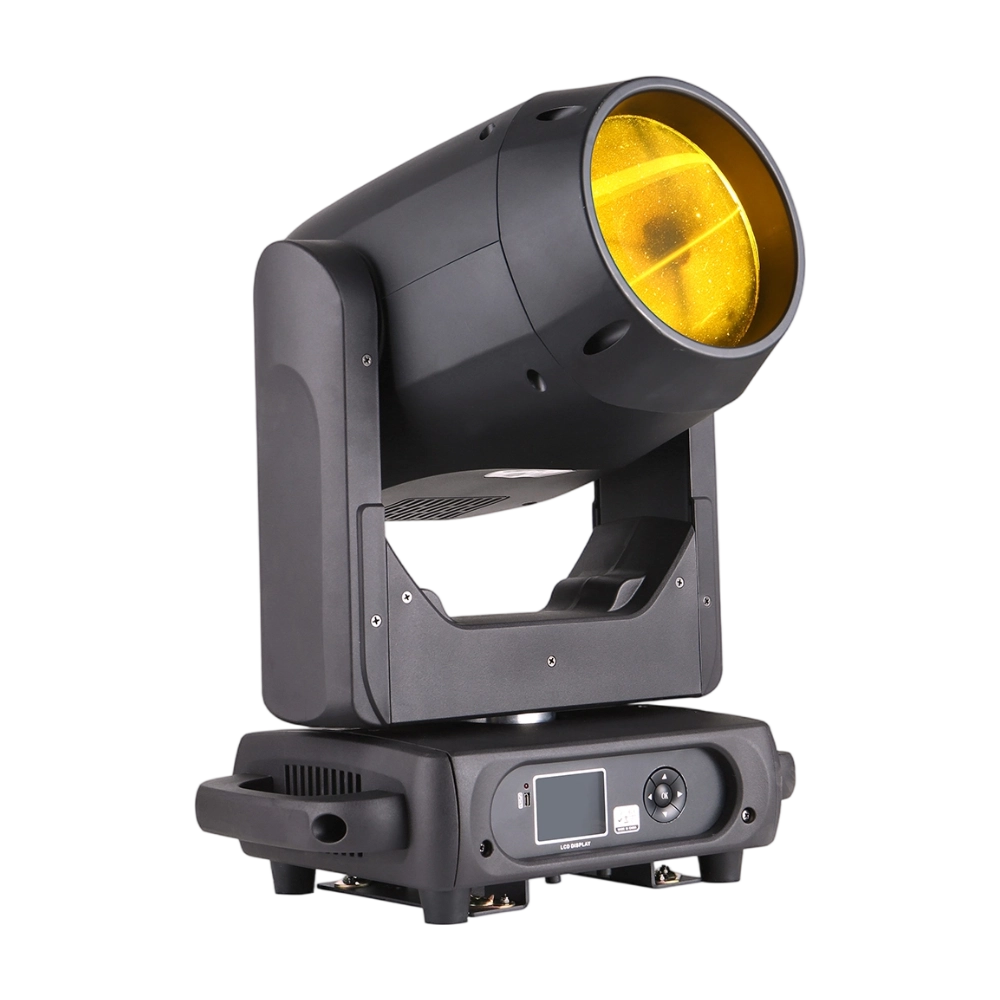
Moving Head Stage Light BEAM 360
BEAM360 is a 400W high-power moving head beam equipped with an OSRAM SIRIUS 311W discharge lamp, delivering a sharp 1.8° beam with super brightness. It features 14 colors + open, 12 fixed metal gobos + open, and dual prisms (8-facet circular + 8+16 multi-facet combination) for dynamic aerial effects. With 540° pan / 270° tilt, 16-bit movement, and linear frost and focus, BEAM360 ensures precision and versatility. Compact yet powerful, it rivals traditional 575W moving heads, making it ideal for concerts, clubs, and large-scale stage productions.
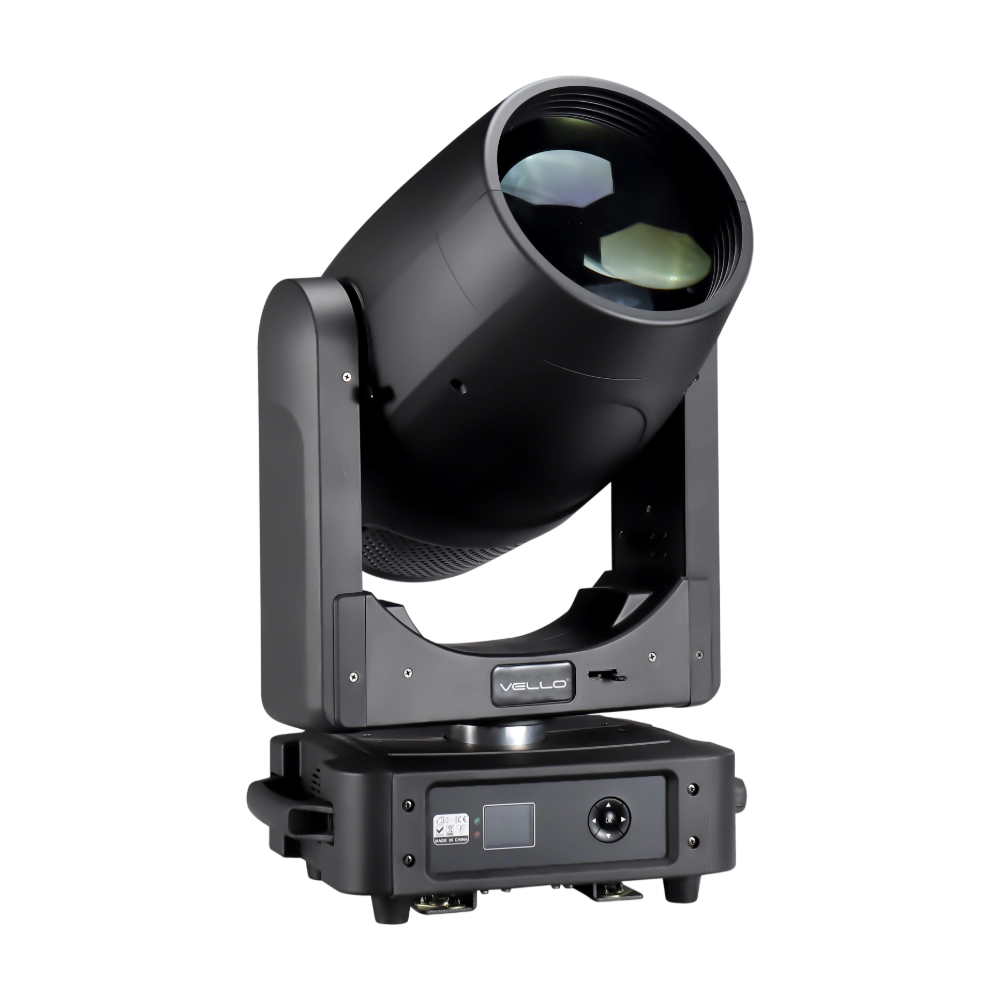
Moving Head Light BEAM 450
The BSW450 is a high-performance moving head fixture equipped with an original Osram 420W bulb, delivering exceptional brightness, precision, and versatility. Designed for professional stage applications, it seamlessly combines beam, spot, and wash functions in one compact unit, making it a powerful all-in-one lighting solution.
Over 20 Years of Innovation in Stage & Studio Lighting
© 2026 VELLO. All Rights Reserved. 粤ICP备20023734号
Join our socials
VELLO
Whatsapp: +8613902276704
Vello Lighting
VelloLights