





Wireless and Art-Net for Moving Head Lights
- Optimizing Control Protocols for Modern Stage Lighting
- Understanding moving head lights and their control requirements
- What is Art‑Net and why it matters for moving head lights
- Wireless control options: Wireless DMX, sACN over Wi‑Fi, and proprietary systems
- Comparing protocols and wireless options for moving head lights
- Network design best practices for wireless and Art‑Net moving head lights
- Troubleshooting common wireless and Art‑Net issues with moving head lights
- Selecting the right moving head lights and controllers for wireless & Art‑Net deployments
- Vello Light: capabilities and product fit for wireless & Art‑Net moving head lights
- Practical setup example: a small venue with 12 moving head lights
- Conclusion — balancing reliability, flexibility and cost for moving head lights
- FAQ
- 1. Can moving head lights receive DMX over Wi‑Fi using Art‑Net or sACN?
- 2. How many moving head lights can a single Art‑Net universe control?
- 3. Is Wireless DMX as reliable as cable for moving head lights?
- 4. Should I use Art‑Net or sACN for my moving head lights?
- 5. What are the most common network misconfigurations that break lighting control?
- Contact and product information
- References
Optimizing Control Protocols for Modern Stage Lighting
Understanding moving head lights and their control requirements
Moving head lights are intelligent luminaires used widely in concerts, theatre, TV studios, houses of worship and rental productions. These fixtures combine multi‑channel control for pan/tilt, color, gobo, zoom/focus, dimming and effects. Because a single moving head often requires 16–40+ DMX channels (or more with advanced pixel/matrix functions), modern deployments frequently use Ethernet‑based control (Art‑Net, sACN) and/or wireless links to manage many fixtures efficiently. When planning networks or purchasing moving head lights, it's essential to consider support for Art‑Net, sACN (E1.31), Wireless DMX, and RDM so you get predictable addressing, reliable timing, and convenient remote configuration.
What is Art‑Net and why it matters for moving head lights
Art‑Net is an open Ethernet protocol for transporting DMX512 data over IP networks, developed by Artistic Licence. It encapsulates DMX universes as UDP packets and is widely supported by consoles, media servers, and nodes. For moving head lights, Art‑Net provides:
- Transport of many DMX universes across a single Ethernet backbone (512 channels per universe)
- Low overhead and broad interoperability with lighting controllers and fixtures that have Ethernet or Art‑Net input
- Support for multicast/unicast delivery models so you can optimize network traffic depending on topology
Because moving heads often occupy multiple DMX channels, transmitting via Art‑Net simplifies distribution: a single Ethernet run can carry dozens of universes to remote DMX nodes or Art‑Net native fixtures without converting to separate DMX cables.
Wireless control options: Wireless DMX, sACN over Wi‑Fi, and proprietary systems
Wireless control is attractive for truss-mounted or temporary installations where cable runs are impractical. Common wireless options include:
- Wireless DMX (W‑DMX): Systems like LumenRadio’s CRMX transmit DMX512 frames over a proprietary RF link designed for lighting, prioritizing low latency and reliability.
- Art‑Net or sACN over Wi‑Fi: Using standard Wi‑Fi networks to carry Art‑Net or streaming ACN (sACN/E1.31) traffic. This enables direct use of Ethernet‑native fixtures but requires careful network design to avoid jitter and packet loss.
- Proprietary RF or mesh systems built into fixtures: Some fixtures include integrated RF receivers or mesh connectivity; verify manufacturer specs and range.
Each option has tradeoffs: Wireless DMX solutions purpose‑built for lighting typically offer deterministic timing and show‑grade robustness, whereas Wi‑Fi can be more flexible but demands rigorous network configuration.
Comparing protocols and wireless options for moving head lights
Choosing between Art‑Net, sACN and wireless DMX depends on scale, existing infrastructure, and tolerance for complexity. The table below summarizes typical performance and use cases.
| Protocol / System | Transport | Typical Latency | Scalability | Reliability in Live Shows | Best Use |
|---|---|---|---|---|---|
| Art‑Net | UDP/IP Ethernet | 1–10 ms (network dependent) | Very high (many universes) | High with proper network design (managed switches, IGMP) | Large venues, touring rigs, media servers to nodes |
| sACN (E1.31) | UDP/IP Ethernet | 1–10 ms (network dependent) | Very high (multicast management) | High with proper multicast handling | Theatres, broadcast, where standard E1.31 support required |
| Wireless DMX (W‑DMX / CRMX) | Proprietary RF (2.4–5.x GHz) | ~1–10 ms (typically stable) | Limited by RF channels and receivers per transmitter | Very high (engineered for lighting, robust error handling) | Truss‑mounted moving heads, temporary outdoor installs |
| Art‑Net over Wi‑Fi | Wi‑Fi (802.11) | Variable (can be >10 ms if congested) | High but depends on Wi‑Fi design | Moderate — requires managed Wi‑Fi and QoS | Small venues, installations where cable runs impossible |
Sources for technical characteristics include protocol specifications and vendor performance notes (see references).
Network design best practices for wireless and Art‑Net moving head lights
To get reliable show playback with moving head lights on Art‑Net or wireless links, follow these pragmatic design rules:
- Use a dedicated lighting network separate from general-purpose Wi‑Fi or house networks. This reduces interference and packet competition.
- Prefer managed gigabit switches with support for IGMP snooping to control multicast traffic (especially for sACN/Art‑Net multicast).
- Segment universes: map logical DMX universes to dedicated Art‑Net or sACN universe IDs and document them on a network diagram.
- Use fiber links for long runs between FOH and flown truss to avoid EMI and ground loops; terminate fiber into Art‑Net nodes near fixtures.
- For wireless DMX, site‑survey the RF environment. Choose frequencies and antenna placement to maximize line‑of‑sight when possible.
- Consider redundancy: run a secondary Art‑Net feed or backup wireless transmitter for mission‑critical fixtures. Use DMX merge or dual‑network controllers if supported.
- Apply QoS (DSCP) for Art‑Net/sACN packets on switches and wireless controllers to prioritize lighting traffic.
Troubleshooting common wireless and Art‑Net issues with moving head lights
Common problems and pragmatic fixes:
- Symptom: Random jitter or delayed responses — Check for multicast flooding, enable IGMP snooping, and verify switch CPU is not overloaded.
- Symptom: Dropouts on wireless links — Verify RF interference sources, lower transmitter density, reposition antennas, and confirm firmware on RF devices.
- Symptom: Two controllers fight for universes — Audit Art‑Net/sACN universe assignments and use unicast where appropriate; implement a naming and ownership convention.
- Symptom: Addressing errors after reboot — Use RDM for remote discovery and to lock address assignments, or document static IPs for Art‑Net nodes and fixtures.
- Symptom: Poor signal on long runs — Replace copper with fiber, or deploy additional Art‑Net nodes to shorten DMX cable runs.
Selecting the right moving head lights and controllers for wireless & Art‑Net deployments
When you plan to buy moving head lights or controllers for Art‑Net/wireless operation, look for these features:
- Native Art‑Net and/or sACN support (so fixtures can receive DMX over Ethernet without intermediary converters).
- Ethernet port with PoE (if available) and clear documentation of supported network modes (multicast/unicast).
- RDM support for remote addressing and diagnostics.
- Optional integrated wireless receiver or compatibility with mainstream Wireless DMX receivers (e.g., CRMX, W‑DMX).
- Firmware update path and vendor support; active development matters for security and reliability.
- Power and thermal ratings, IP rating if used outdoors, and weight/rigging data for truss installations.
Prioritize fixtures from vendors with clear technical documentation and responsive support to minimize integration time on tour or installation.
Vello Light: capabilities and product fit for wireless & Art‑Net moving head lights
Vello Light Co., Ltd., established in 2003, is a comprehensive technology enterprise integrating R&D, manufacturing, and sales. Over the years, we have consistently adhered to the principles of quality first and sincere service. With the support and help of numerous customers both domestically and internationally, we have continued to grow and develop, gradually becoming a unique and outstanding team in our field.
In recent years, with the rapid development of the LED lighting market, Vello Light has gathered a large number of professional talents to provide comprehensive and systematic services, including product R&D, manufacturing, marketing, engineering installation, and product maintenance. Through the joint efforts of Vello people, we remain true to our original aspirations and persevere in innovation, leveraging our unique advantages to stand out in the fierce competition. Currently, our products are exported both domestically and internationally and have a strong brand reputation, especially in overseas markets. VELLO is our registered brand, specializing in moving headlights, LED wash lights, and theatrical lights. Our products are highly praised and loved by many customers for their professional technology, unique style, high-quality materials, and durability.
Vello's product lineup covers moving head stage lights, studio lights, LED effect light, LED Bar Lights, LED Par Light, and outdoor stage lighting. For Art‑Net and wireless applications Vello fixtures typically offer:
- Reliable DMX channel mapping with support for common modes and RDM
- Ethernet/Art‑Net compatibility and clear user guides for network setup
- Robust mechanical design for touring and rigging
- After‑sales engineering support for integration and firmware updates
Vello’s focus on R&D and quality control makes it a competitive choice for rental houses and installed systems needing dependable moving head lights with modern networking features.
Practical setup example: a small venue with 12 moving head lights
Scenario: 12 moving head lights, each using a 16‑channel mode (common for basic fixtures). You want to control them over Art‑Net with a wireless DMX backup for flown fixtures.
- Total DMX channels = 12 fixtures × 16 channels = 192 channels → fits in 1 DMX universe (512 channels available)
- Recommendation: Use Art‑Net from console to a gigabit managed switch; run a fiber link to the flown truss where fixtures are. Terminate fiber to an Art‑Net to DMX node near the fixtures.
- For redundancy, place a wireless DMX transmitter and an additional Art‑Net node connected to a different switch port (or different switch) to allow quick switchover if a cable fails.
| Item | Specification / Recommendation |
|---|---|
| Number of universes | 1 universe sufficient for 12 × 16‑ch fixtures; plan for spare universes for house lights or effects |
| Switch type | Managed gigabit switch with IGMP snooping and VLAN capability |
| Link to truss | Single‑mode fiber or multimode depending on distance; terminate at Art‑Net node |
| Wireless backup | Dedicated Wireless DMX transmitter with receiver on each moving head (or integrated receiver) |
This approach gives a simple, resilient topology suitable for small theatres or clubs.
Conclusion — balancing reliability, flexibility and cost for moving head lights
For modern lighting systems, Art‑Net and sACN deliver scalable, Ethernet‑native transport for moving head lights, while purpose‑built Wireless DMX solutions provide predictable RF performance for flown or temporary installs. The right combination depends on show size, venue infrastructure and acceptable risk. Prioritize fixtures and controllers with native Ethernet support, RDM, and solid vendor documentation (like VELLO’s product lines) and design a dedicated lighting network with managed switches, fiber where needed, and RF site surveys for wireless links. With proper planning you can achieve high performance, low latency and resilient control for even the most demanding moving head deployments.
FAQ
1. Can moving head lights receive DMX over Wi‑Fi using Art‑Net or sACN?
Yes, if the fixture or an intermediary node supports Art‑Net or sACN over Ethernet and you bridge Ethernet to Wi‑Fi (or run Wi‑Fi to an Art‑Net node). However, Wi‑Fi networks need careful configuration (dedicated SSID, QoS, managed APs) to achieve show‑grade performance.
2. How many moving head lights can a single Art‑Net universe control?
One Art‑Net (or DMX) universe carries 512 channels. The number of moving heads depends on channel usage per fixture. For example, with 16 channels per fixture you can control up to 32 fixtures per universe (512/16 = 32).
3. Is Wireless DMX as reliable as cable for moving head lights?
High‑quality Wireless DMX systems engineered for lighting (e.g., LumenRadio CRMX) are highly reliable for live shows, but they require correct frequency planning, antenna placement, and a clean RF environment. For mission‑critical fixtures, many designers still prefer wired redundancy or dual networks.
4. Should I use Art‑Net or sACN for my moving head lights?
Both are valid. Art‑Net is widely supported and simple to implement. sACN (E1.31) is an ANSI/ESTA standard with better multicast behavior in some systems. Choose based on your console, node compatibility and whether you need the multicast/unicast models each provides.
5. What are the most common network misconfigurations that break lighting control?
Typical mistakes include running lighting control on the same network as Wi‑Fi traffic, not enabling IGMP snooping (causing multicast flooding), using unmanaged switches that cannot handle high multicast loads, and failing to assign unique Art‑Net/sACN universe IDs leading to conflicts.
Contact and product information
For consultation, custom solutions or to view VELLO moving head stage lights, studio lights, LED effect lights, LED Bar Lights, LED Par Lights and outdoor stage lighting, contact Vello Light Co., Ltd. Our technical team can help spec fixtures for wireless/Art‑Net deployments, perform network planning and recommend controllers or wireless systems that match your venue requirements. Visit our product pages or contact our sales engineers to get a tailored quote and support.
References
- Art‑Net (Wikipedia). Artistic Licence Art‑Net overview. https://en.wikipedia.org/wiki/ArtNet — accessed 2025‑12‑24
- DMX512 (Wikipedia). DMX512 and related E1 standards. https://en.wikipedia.org/wiki/DMX512 — accessed 2025‑12‑24
- sACN (E1.31) — Streaming Architecture for Control Networks (ESTA). https://tsp.esta.org/tsp/working_groups/CP/docs.php — accessed 2025‑12‑24
- LumenRadio CRMX Wireless DMX product information. https://www.lumenradio.com/crmx/ — accessed 2025‑12‑24
- Cisco — IGMP Snooping and Multicast Design Guidelines. https://www.cisco.com/c/en/us/td/docs/routers/access/800/819/software/3_3/routing/819/igmp.pdf — accessed 2025‑12‑24
- ESTA Standards and E1 Committee reference listings. https://tsp.esta.org/tsp/documents.php — accessed 2025‑12‑24
DMX and Control Protocols for LED Moving Head Light
DMX Basics: How to Control Your Stage Lights
Energy Efficient LED Stage Lighting: Save Power and Costs
How to Choose LED Fixtures for Concerts and Theatres
Major categories
What is the warranty period for your products?
Most products come with a standard 1–2 year warranty. Please refer to product details or contract terms for specifics.
Do you ship internationally?
Yes. We offer sea, air, and express delivery to many countries and regions worldwide.
What is the usual lead time?
Standard models are typically shipped within 7–15 working days after payment. Customized items may vary.
Do your products support customization?
Yes. We offer OEM and ODM services tailored to project needs, including design, optics, and control compatibility.
Do you offer samples?
Samples are available for certain models. Please confirm with our sales team for details.
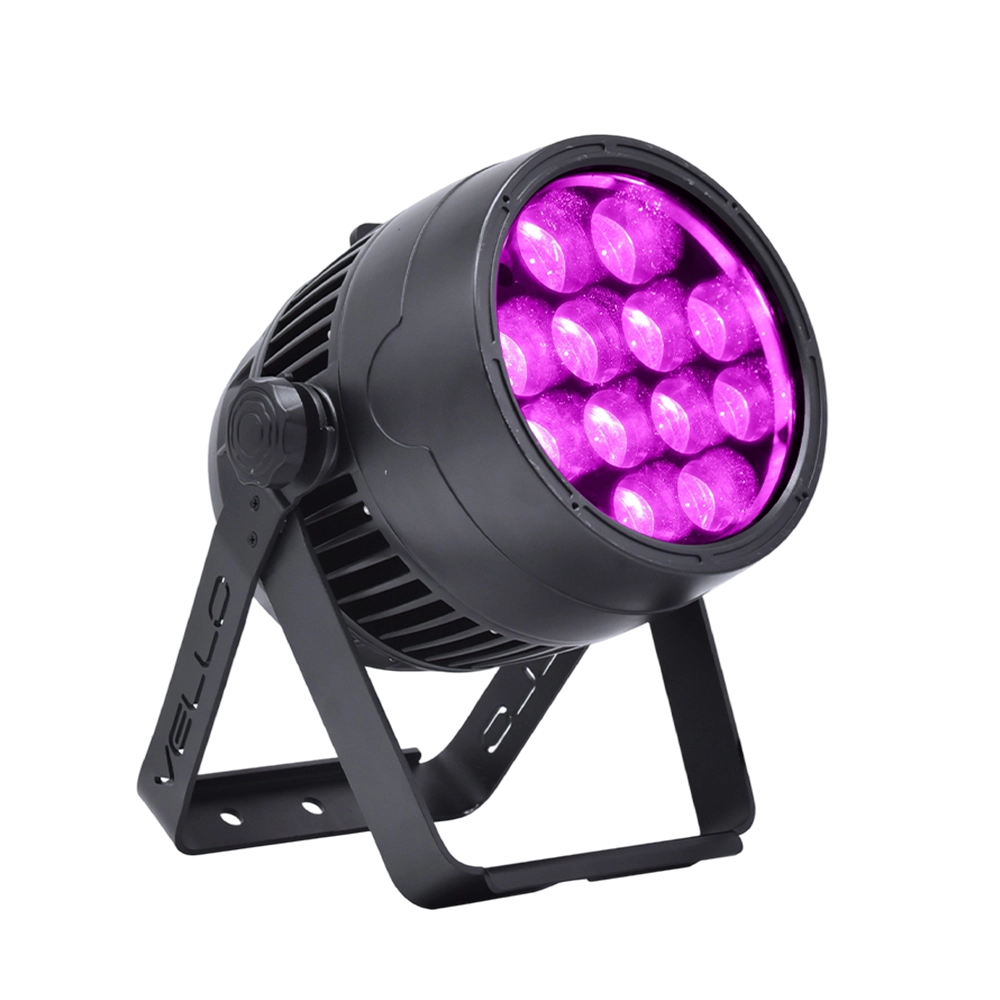
Stage LED Par Light LED ZOOMPAR 40
The Vello Zoom Par 40 IP is a powerful outdoor LED wash light equipped with 12x high-power 7-in-1 RGBACL LEDs. Designed for durability and rich color rendering, it features a wide motorized zoom (6°–50°), smooth dimming, and adjustable CTO presets (3200K–7500K), with 90+ CRI. With an IP66-rated die-cast aluminum body, it’s ideal for both indoor and outdoor applications, including stage lighting, architecture, live events, and installations.
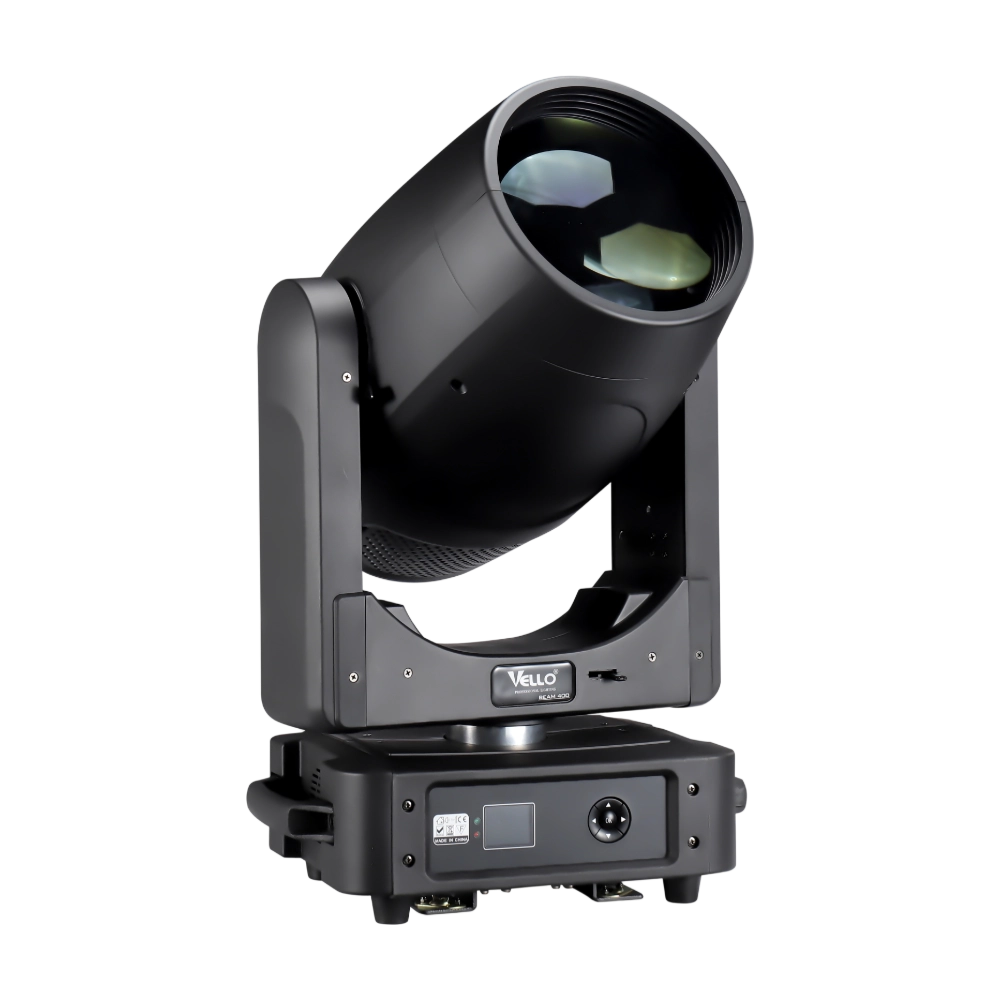
Moving Head Stage Light BEAM 400
BEAM400 is a 500W professional moving head beam powered by an OSRAM SIRIUS 371W discharge bulb, delivering a super-bright 1.8° sharp beam with impressive punch. It features 12 fixed gobos + open, a 14-color wheel, and a 16-facet circular rotating prism with multiple-facet effects, enabling dynamic aerial visuals. With 540° pan / 270° tilt, 16-bit movement resolution, and linear frost and focus, BEAM400 ensures precise and versatile performance. Comparable to traditional 750W moving heads, it combines high efficiency, smooth dimming, and reliable operation—ideal for concerts, tours, and large-scale stage productions.
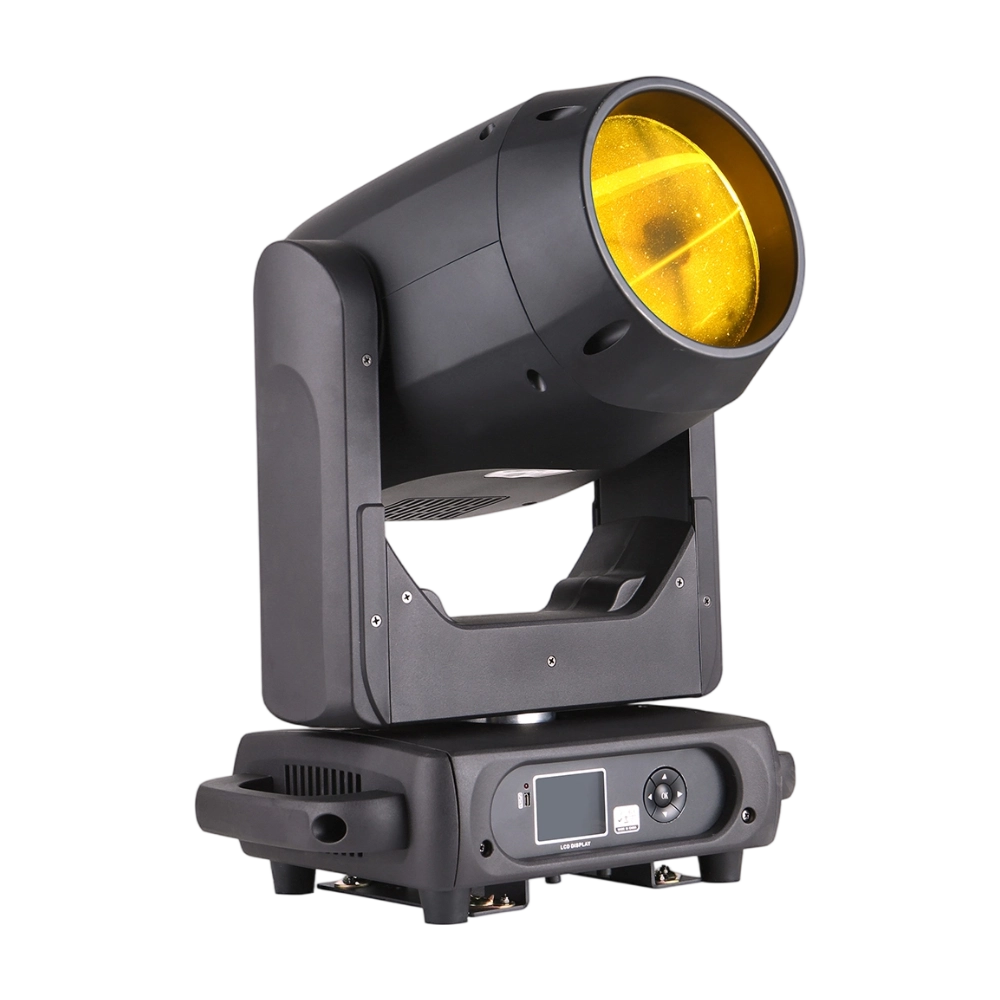
Moving Head Stage Light BEAM 360
BEAM360 is a 400W high-power moving head beam equipped with an OSRAM SIRIUS 311W discharge lamp, delivering a sharp 1.8° beam with super brightness. It features 14 colors + open, 12 fixed metal gobos + open, and dual prisms (8-facet circular + 8+16 multi-facet combination) for dynamic aerial effects. With 540° pan / 270° tilt, 16-bit movement, and linear frost and focus, BEAM360 ensures precision and versatility. Compact yet powerful, it rivals traditional 575W moving heads, making it ideal for concerts, clubs, and large-scale stage productions.
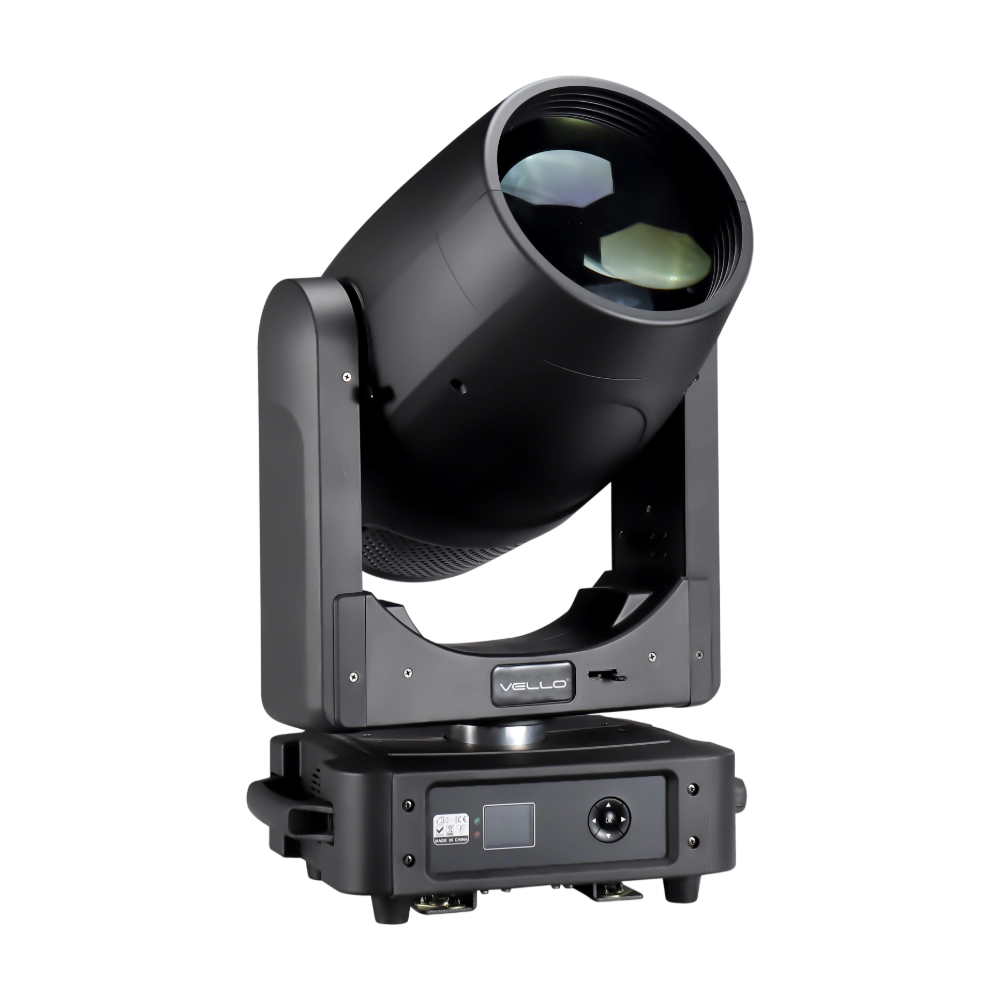
Moving Head Light BEAM 450
The BSW450 is a high-performance moving head fixture equipped with an original Osram 420W bulb, delivering exceptional brightness, precision, and versatility. Designed for professional stage applications, it seamlessly combines beam, spot, and wash functions in one compact unit, making it a powerful all-in-one lighting solution.
Over 20 Years of Innovation in Stage & Studio Lighting
© 2026 VELLO. All Rights Reserved. 粤ICP备20023734号
Join our socials
VELLO
Whatsapp: +8613902276704
Vello Lighting
VelloLights