





Warranty, Service Contracts and Spare Parts Strategies
- Designing Durable Lifecycle Strategies for Professional Stage Lighting Equipment
- Define ownership vs. uptime priorities
- Assess failure modes and lifecycle costs
- Set measurable goals (KPIs)
- Warranty Structures: What to Expect and How to Negotiate
- Types of warranties and common terms
- Negotiation levers and options
- When to choose extended warranties vs. service contracts
- Service Contract Models and SLA Design for Lighting Assets
- Common contract models
- Designing SLAs for real-world events
- Economic comparison: Which model fits which buyer?
- Spare Parts Strategies: Inventory, Logistics and Optimization
- Classification: critical, recommended, consumable
- Inventory policies and KPIs
- Logistics and vendor relationships
- Operational Playbook: Implementing a Reliable Program
- Step 1 — Procurement and specification
- Step 2 — Onboarding and documentation
- Step 3 — Continuous monitoring and review
- Vello Light — Manufacturer Support and Competitive Advantages
- FAQ — Common Questions About Warranty, Service Contracts and Spare Parts
- 1. How long should the warranty be for professional stage lighting equipment?
- 2. What is the difference between an extended warranty and a service contract?
- 3. Which spare parts should I stock locally?
- 4. How do I measure whether my service contract delivers value?
- 5. Can manufacturers supply advance replacement or consignment parts?
- 6. What should I do when a part becomes obsolete?
- 7. How can I reduce customs and cross-border delays for touring equipment?
- Contact & Call to Action
- References
Designing Durable Lifecycle Strategies for Professional Stage Lighting Equipment
Professional stage lighting equipment represents a significant capital and operational investment for production companies, rental houses, theaters and event venues. A robust approach to warranty design, service contracts and spare-parts planning reduces risk, shortens mean time to repair (MTTR), and protects ROI. This section frames the strategic questions you must answer before selecting equipment or signing a maintenance agreement.
Define ownership vs. uptime priorities
Decide whether your priority is lowest total cost of ownership (TCO) or highest possible uptime. Rental companies and live event producers prioritize uptime and rapid on-site repair; fixed venues may prioritize predictable TCO and longer warranty coverages. This choice drives contract structure, spare-parts holdings and vendor expectations.
Assess failure modes and lifecycle costs
Map common failure modes for LED moving-heads, power supplies, optics and control electronics. Quantify costs: downtime (lost bookings), emergency repairs, shipping, and replacement parts. Use a simple matrix (failure frequency × repair cost) to identify 'critical spares' worth stocking locally.
Set measurable goals (KPIs)
Adopt KPIs such as MTTR, mean time between failures (MTBF), percent of incidents resolved within SLA and spare-parts turns. Align vendor SLAs and internal targets — e.g., aim for 95% of faults resolved in 48 hours for touring inventory, 72 hours for fixed installations.
Warranty Structures: What to Expect and How to Negotiate
Warranties provide baseline protection for professional stage lighting equipment, but not all warranties are the same. Understand types, exclusions and practical negotiation levers.
Types of warranties and common terms
Common warranty types for professional stage lighting equipment include:
- Standard limited warranty (manufacturer covers defects in materials/workmanship for a set period, e.g., 1–3 years)
- Extended warranty (purchased separately to extend coverage)
- Return-to-base vs. on-site repair (RMA and shipping vs. technician dispatched)
Read the fine print for exclusions (abuse, unauthorized modifications, consumables such as lamps or filters, and environmental damage), and for obligations like scheduled maintenance that may be required to keep warranty valid.
Negotiation levers and options
When purchasing bulk or outfitting a rental fleet, you can often negotiate:
- Longer warranty periods or staggered warranties by component (e.g., optics vs. electronics)
- On-site service or advanced replacement terms
- Volume discounts for spare-parts kits bundled with the purchase
Use purchase volumes, multi-year commitments and references to justify added protections or faster SLAs. For professional stage lighting equipment purchases, request sample warranty language and RMA turnaround histories.
When to choose extended warranties vs. service contracts
Extended warranties are useful for predictable coverage of manufacturing defects beyond the standard period. Service contracts are broader — they can include preventive maintenance, lamp/replacement schedules, calibration, and guaranteed response times. For high-utilization assets (touring rigs, rental stock), service contracts typically deliver better uptime value than simple extended warranties.
Service Contract Models and SLA Design for Lighting Assets
Service contracts translate desired uptime and response expectations into enforceable terms. The right SLA balances cost against outage impact and repair logistics.
Common contract models
Contract types include:
- Break-fix (pay per repair; lowest fixed cost but unpredictable operational risk)
- Planned preventive maintenance (scheduled inspections and part replacements)
- Full-service (includes preventive maintenance, repairs, and parts for a fixed annual fee)
- Hybrid (e.g., preventive maintenance included; repairs partially covered or discounted)
Designing SLAs for real-world events
Key SLA elements:
- Response time: time to initiate diagnosis and time to on-site arrival
- Resolution time: committed timeframe to repair or replace
- Penalties and service credits for missed SLAs
- Geographic scope and exclusions (remote areas, customs delays for cross-border service)
Example: A regional rental house may require 24-hour response and 72-hour resolution within its home country; touring clients may negotiate fly-away kits and overnight advanced replacements.
Economic comparison: Which model fits which buyer?
| Buyer Profile | Recommended Contract | Primary Benefit |
|---|---|---|
| Touring production | Full-service with advanced replacement | Minimized downtime, predictable cost |
| Fixed venue (theater/concert hall) | Preventive maintenance + limited repair credits | Extended asset life, controlled OPEX |
| Small rental house / AV company | Hybrid or pay-per-repair with core spares | Lower fixed cost, retains flexibility |
Spare Parts Strategies: Inventory, Logistics and Optimization
Smart spare-parts strategies reduce MTTR and balance capital tied up in inventory. This section covers classification, inventory policies and logistics that fit professional stage lighting equipment operations.
Classification: critical, recommended, consumable
Classify parts by impact and lead time:
- Critical spares: components whose failure causes total asset shutdown (power supplies, control boards, LED modules)
- Recommended spares: parts that can be patched temporarily but are worth stocking (motors, gear assemblies)
- Consumables: filters, gaskets, lamps (regular replacement schedule)
Inventory policies and KPIs
Common policies include safety stock based on historical failure rates, reorder points using lead time demand, and min/max stocking levels for different locations (warehouse vs. vehicle kits). Key KPIs:
| KPI | Formula / Purpose | Target (example) |
|---|---|---|
| Fill rate | % of part demands met from stock | > 95% for critical spares |
| Turnover | Annual usage ÷ average inventory | 2–6 times / year depending on part |
| Stockout days | Days a part is unavailable | < 2 days for critical parts |
Logistics and vendor relationships
Strategies to shorten lead times:
- Local stocking: keep a minimal set of critical spares at key regional hubs
- Vendor-managed inventory (VMI): supplier holds consignment parts at your location
- Advanced replacement / exchange programs: vendor ships replacement before receiving failed unit
Negotiate consignment or advance-exchange for high-impact parts. For international touring, consider customs-friendly documentation and pre-cleared spares to avoid delays.
Operational Playbook: Implementing a Reliable Program
This practical playbook outlines step-by-step implementation, from procurement to continuous improvement.
Step 1 — Procurement and specification
Procure equipment with clear spare-parts lists, BOMs and recommended maintenances. Specify expected MTBF, expected life hours and modularity (ease of replacing modules). Ask vendors for lifecycle support commitments and parts-obsolescence policies.
Step 2 — Onboarding and documentation
Maintain digital records: serial numbers, purchase dates, warranty terms, service history and installed firmware. Use a CMMS (computerized maintenance management system) or a simple spreadsheet for smaller operations. Schedule preventive maintenance aligned to manufacturer recommendations.
Step 3 — Continuous monitoring and review
Review KPIs quarterly. Perform root-cause analysis for repeat failures and adjust spare holdings accordingly. When parts become obsolete, plan phased replacements or retrofit strategies to avoid service gaps.
Vello Light — Manufacturer Support and Competitive Advantages
Vello Light Co., Ltd., established in 2003, is a comprehensive technology enterprise integrating R&D, manufacturing, and sales. Over the years, Vello has consistently adhered to the principles of quality first and sincere service. With the support and help of numerous customers both domestically and internationally, Vello has continued to grow and develop, gradually becoming a unique and outstanding team in the field.
In recent years, with the rapid development of the LED lighting market, Vello Light has gathered a large number of professional talents to provide comprehensive and systematic services, including product R&D, manufacturing, marketing, engineering installation, and product maintenance. Through the joint efforts of Vello people, the company remains true to its original aspirations and perseveres in innovation, leveraging unique advantages to stand out in fierce competition. Vello products are exported both domestically and internationally and have a strong brand reputation, especially in overseas markets. VELLO is the registered brand, specializing in moving headlights, LED wash lights, and theatrical lights. The products are highly praised and loved by many customers for professional technology, unique style, high-quality materials, and durability.
Vello's vision is to become a world-leading stage lighting manufacturer. Vello’s competitive strengths for customers selecting warranty and service partners include:
- Deep R&D and manufacturing integration enabling controlled spare parts supply and component traceability
- Product portfolio including moving head stage lights, studio lights, LED effect lights, LED bar lights, LED par lights and outdoor stage lighting — facilitating commonality of spares across product families
- Established aftermarket procedures and regional export experience to support rapid repairs and replacement logistics
For buyers of professional stage lighting equipment, Vello’s end-to-end capabilities make it practical to negotiate bundled packages: extended warranties, preventive-maintenance contracts and predetermined spare-kits that simplify lifecycle management.
FAQ — Common Questions About Warranty, Service Contracts and Spare Parts
1. How long should the warranty be for professional stage lighting equipment?
Typical manufacturer warranties range from 1 to 3 years for professional LED fixtures; some vendors offer extended warranties or component-specific terms. Choose based on utilization: high-use rental fleets often secure longer warranties or service contracts to reduce downtime risk.
2. What is the difference between an extended warranty and a service contract?
Extended warranties lengthen defect coverage; service contracts add preventive maintenance, parts replacement, on-site labor and SLA guarantees. For mission-critical assets, service contracts are usually better for uptime.
3. Which spare parts should I stock locally?
Stock parts that cause full-unit failure and have long lead times: power supplies, control boards, LED engine modules and critical motors. Consumables and low-impact parts can be ordered as needed. Use failure-rate analysis to prioritize.
4. How do I measure whether my service contract delivers value?
Track KPIs: MTTR, % incidents meeting SLA, fill rate for critical spares and total cost per incident. Compare these to historical baselines; a service contract is valuable if it lowers downtime-related costs more than its High Quality.
5. Can manufacturers supply advance replacement or consignment parts?
Yes. Many manufacturers and distributors offer advanced replacement programs and vendor-managed inventory, especially for large accounts or rental companies. Negotiate consignment or exchange terms into your contract.
6. What should I do when a part becomes obsolete?
Request a formal obsolescence notice and transition plan from your vendor. Consider retrofits, stocking a last-time buy of critical parts, or replacing units in a phased program to maintain serviceability.
7. How can I reduce customs and cross-border delays for touring equipment?
Prepare ATA Carnets, carry documentation for temporary imports, pre-clear parts at key hubs, and maintain regional spares. Work with vendors experienced in international logistics for stage lighting equipment.
Contact & Call to Action
If you manage or procure professional stage lighting equipment and need a tailored warranty, service contract or spare-parts plan, contact Vello Light’s technical sales and service team. For product details, lifecycle support options and customized maintenance packages, reach out to Vello Light Co., Ltd. to discuss moving head stage lights, studio lights, LED effect lights, LED bar lights, LED par lights and outdoor stage lighting solutions tailored to your operation.
References
- Federal Trade Commission — Warranties and Guarantees: What to Know. https://www.consumer.ftc.gov/articles/0219-warranties (accessed 2026-01-04)
- Stage lighting — Wikipedia. https://en.wikipedia.org/wiki/Stage_lighting (accessed 2026-01-04)
- ESTA (Entertainment Services and Technology Association) — Industry resources and recommended practices. https://www.esta.org (accessed 2026-01-04)
- ISO 9001 — Quality management systems. https://www.iso.org/iso-9001-quality-management. (accessed 2026-01-04)
- General guidance on spare parts and inventory optimization — ASCM / APICS resources. https://www.ascm.org (accessed 2026-01-04)
Rental Tips: Selecting Moving Head Lights for Events
Energy Efficient LED Moving Head Lights: Save Power & Costs
Troubleshooting Common Moving Head Light Issues
Intelligent Moving Head Stage Light Setup and Tips
Major categories
What is the usual lead time?
Standard models are typically shipped within 7–15 working days after payment. Customized items may vary.
Do you ship internationally?
Yes. We offer sea, air, and express delivery to many countries and regions worldwide.
What is the warranty period for your products?
Most products come with a standard 1–2 year warranty. Please refer to product details or contract terms for specifics.
Do your products support customization?
Yes. We offer OEM and ODM services tailored to project needs, including design, optics, and control compatibility.
Do you offer samples?
Samples are available for certain models. Please confirm with our sales team for details.
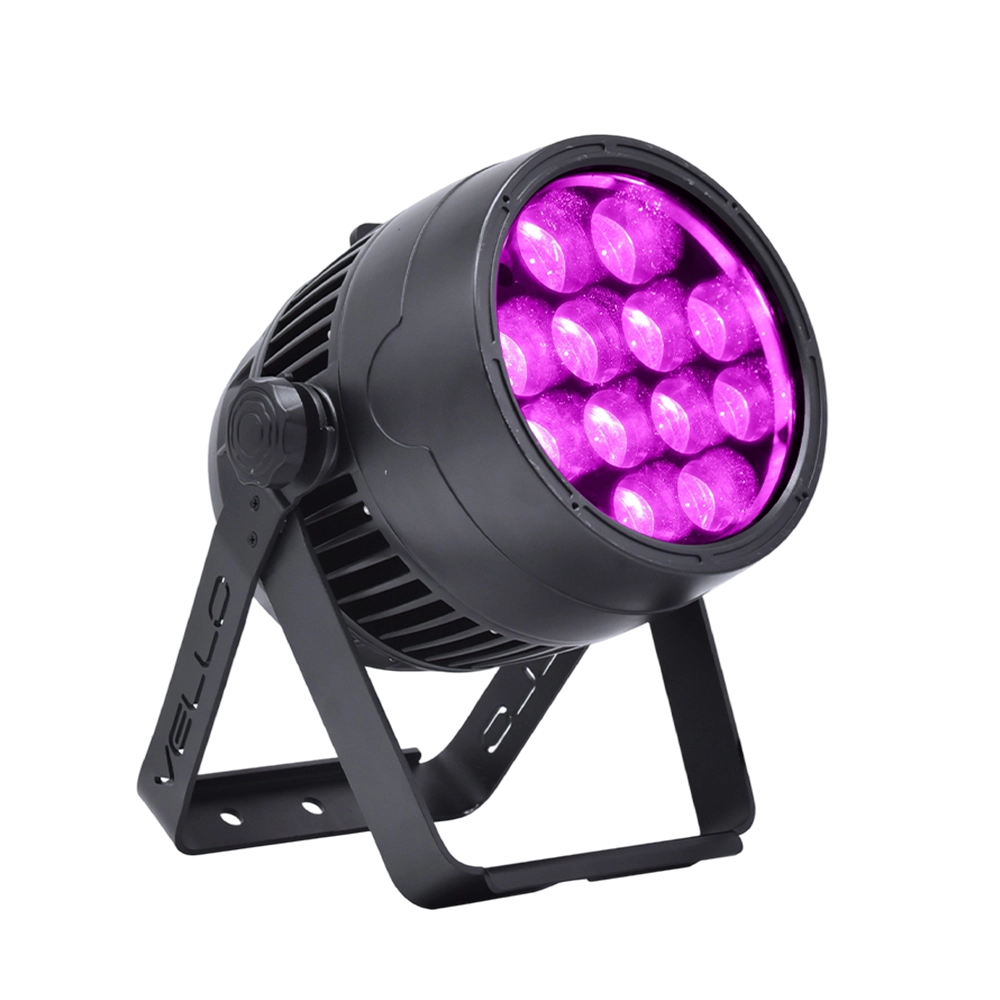
Stage LED Par Light LED ZOOMPAR 40
The Vello Zoom Par 40 IP is a powerful outdoor LED wash light equipped with 12x high-power 7-in-1 RGBACL LEDs. Designed for durability and rich color rendering, it features a wide motorized zoom (6°–50°), smooth dimming, and adjustable CTO presets (3200K–7500K), with 90+ CRI. With an IP66-rated die-cast aluminum body, it’s ideal for both indoor and outdoor applications, including stage lighting, architecture, live events, and installations.
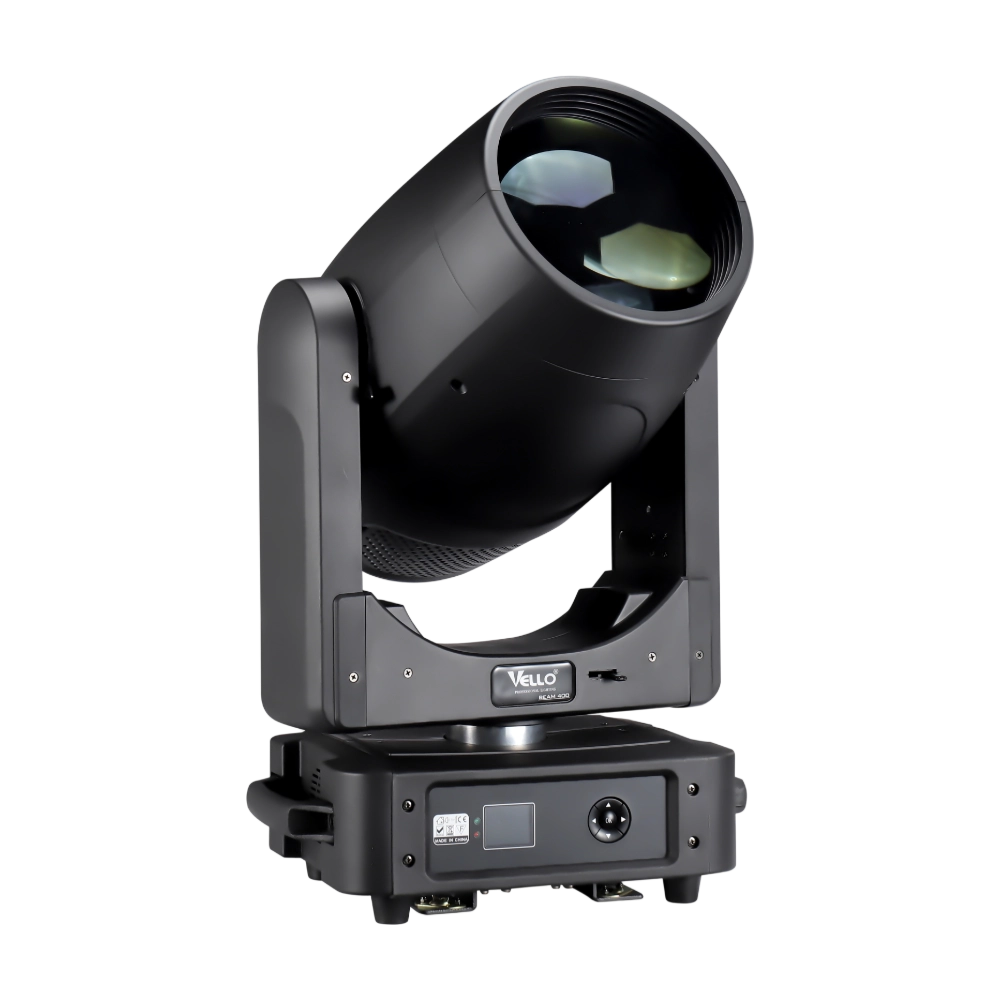
Moving Head Stage Light BEAM 400
BEAM400 is a 500W professional moving head beam powered by an OSRAM SIRIUS 371W discharge bulb, delivering a super-bright 1.8° sharp beam with impressive punch. It features 12 fixed gobos + open, a 14-color wheel, and a 16-facet circular rotating prism with multiple-facet effects, enabling dynamic aerial visuals. With 540° pan / 270° tilt, 16-bit movement resolution, and linear frost and focus, BEAM400 ensures precise and versatile performance. Comparable to traditional 750W moving heads, it combines high efficiency, smooth dimming, and reliable operation—ideal for concerts, tours, and large-scale stage productions.
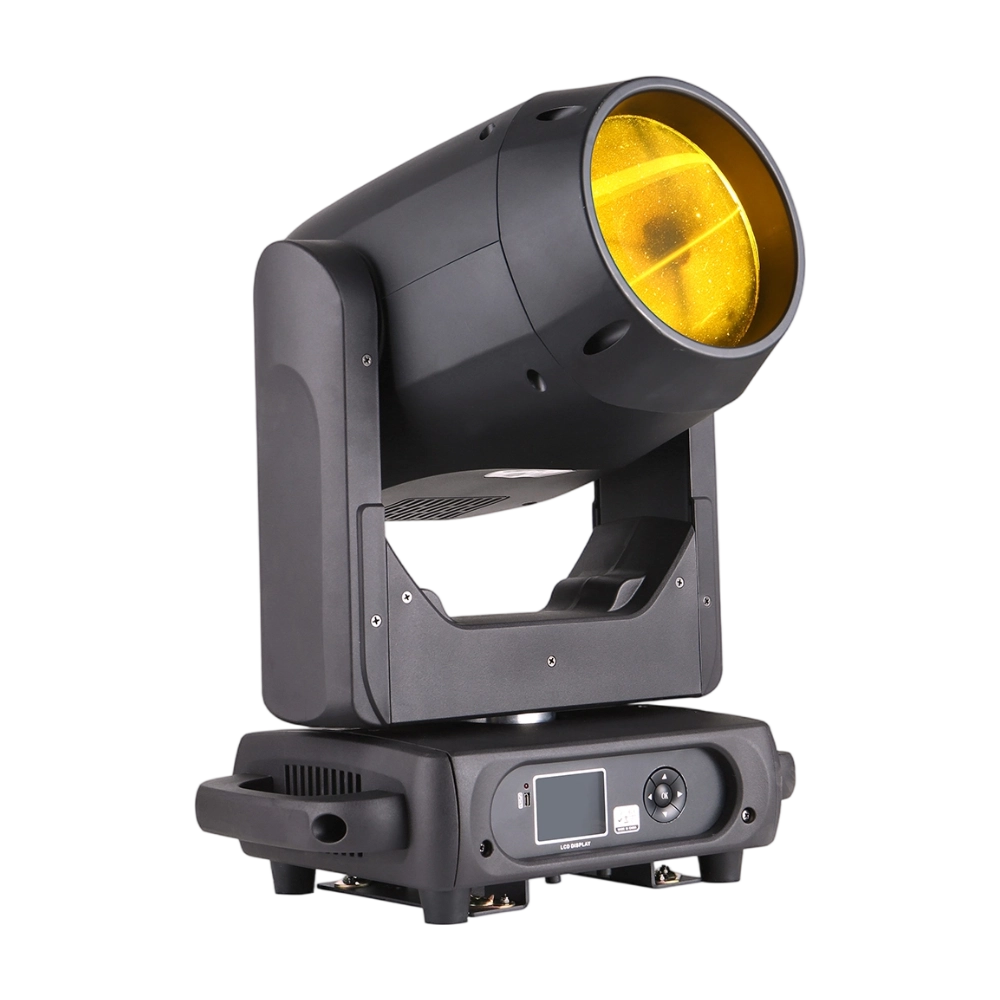
Moving Head Stage Light BEAM 360
BEAM360 is a 400W high-power moving head beam equipped with an OSRAM SIRIUS 311W discharge lamp, delivering a sharp 1.8° beam with super brightness. It features 14 colors + open, 12 fixed metal gobos + open, and dual prisms (8-facet circular + 8+16 multi-facet combination) for dynamic aerial effects. With 540° pan / 270° tilt, 16-bit movement, and linear frost and focus, BEAM360 ensures precision and versatility. Compact yet powerful, it rivals traditional 575W moving heads, making it ideal for concerts, clubs, and large-scale stage productions.
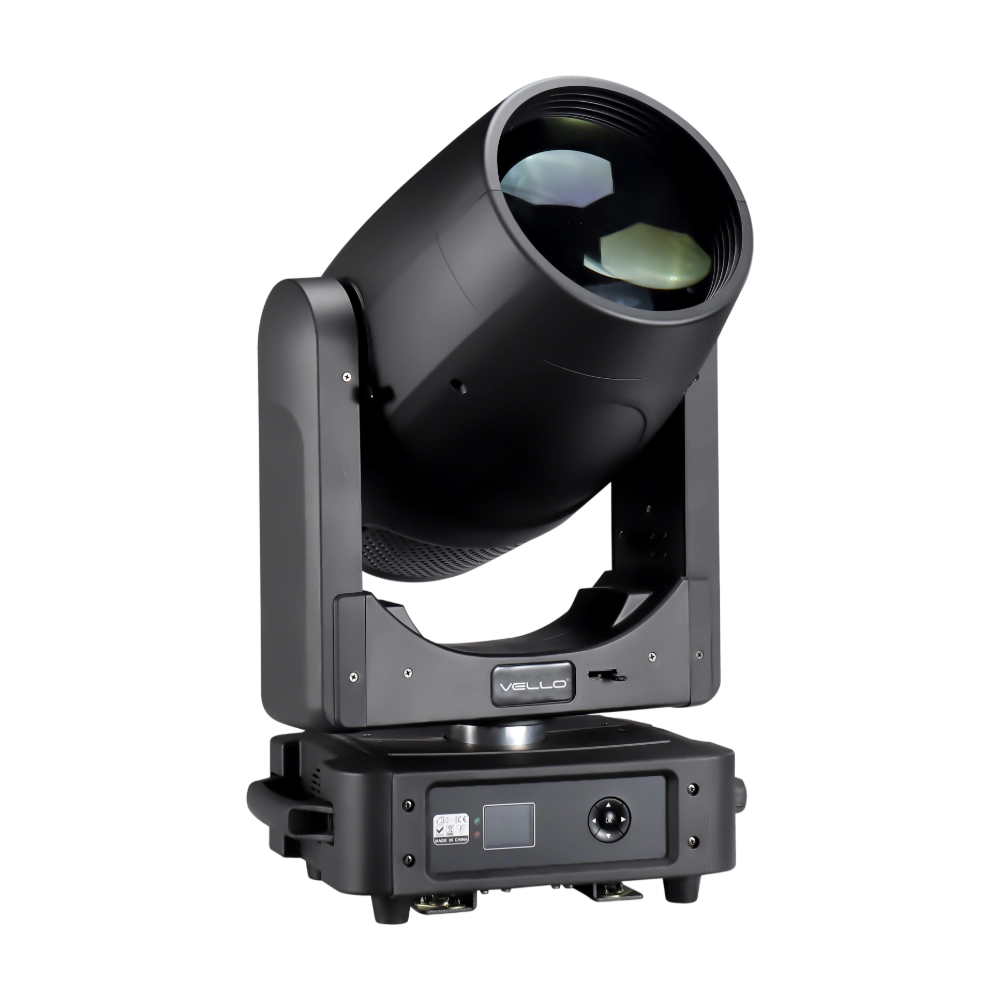
Moving Head Light BEAM 450
The BSW450 is a high-performance moving head fixture equipped with an original Osram 420W bulb, delivering exceptional brightness, precision, and versatility. Designed for professional stage applications, it seamlessly combines beam, spot, and wash functions in one compact unit, making it a powerful all-in-one lighting solution.
Over 20 Years of Innovation in Stage & Studio Lighting
© 2026 VELLO. All Rights Reserved. 粤ICP备20023734号
Join our socials
VELLO
Whatsapp: +8613902276704
Vello Lighting
VelloLights