




Ultimate B2B Buying Guide for LED Moving Head Light
- How to Choose the Right Moving Head Light for Your Business
- Understand application and user needs
- Match performance to venue size and design
- Technical Specifications and What They Mean
- Light source: LED engines and power
- Optics, beam control and effects
- Color system and color rendering
- Procurement, Total Cost of Ownership, and Compliance
- Budget vs. total cost of ownership (TCO)
- Certifications, safety and environmental standards
- Vendor Selection, Testing, and After-sales Support
- How to evaluate suppliers
- Testing protocols for acceptance
- Warranty, spare parts and service level agreements (SLAs)
- Comparisons: Types and Typical Specs
- Practical Procurement Checklist and Risk Mitigation
- Sample procurement timeline
- Risk mitigation tips
- Why VELLO (Vello Light Co., Ltd.) Is a Supplier to Consider
- Company profile and capabilities
- Products, services and competitive advantages
- Technical and service differentiators
- Decision Matrix and Shortlist Framework
- Example decision matrix (scores 1–5)
- Implementation and Operational Tips
- Installation best practices
- Maintenance schedules and spare parts planning
- FAQ
- 1. What is the difference between a moving head spot, wash and beam?
- 2. How do I size moving heads for my venue?
- 3. How important is CRI/TLCI for LED moving heads?
- 4. What warranty terms should I insist on?
- 5. Can I mix moving head models in a single show?
- 6. Are there power or dimming issues specific to LED moving heads?
- Next Steps & Contact / Product CTA
- References
How to Choose the Right Moving Head Light for Your Business
Understand application and user needs
Start by matching the product to the use case: touring rig, fixed installation (theatre, house of worship), club/rental package, or broadcast/studio. Each scenario prioritizes different attributes: touring requires ruggedness and fast pan/tilt, installation prefers quiet operation and long maintenance intervals, clubs prioritize punchy beams and effects, and studios emphasize color accuracy and flicker-free operation.
Match performance to venue size and design
Key metrics to map to venue size include beam angle, luminous flux (lumens), and throw distance. A rough guideline:
- Small venues (<100 seats or 200 m2): beam angles 15–40°; lumen output 10,000–20,000 lm may suffice.
- Medium venues (100–500 seats): beam angles 5–30° with 20,000–40,000 lm.
- Large venues and outdoor stages: narrow beam options (2–10°) and total luminous flux 40,000 lm+ or high PAR equivalent.
Always validate with photometric charts (IES files) from manufacturers and run basic illuminance calculations for your rig layout.
Technical Specifications and What They Mean
Light source: LED engines and power
LED moving heads typically use single high-power LEDs, multichip arrays, or COB modules. Important considerations:
- Rated LED life (typically 20,000–50,000 hours).
- Power consumption vs. output efficiency (lm/W). More efficient engines reduce fixture heat and power costs.
- Driver quality for flicker-free dimming and stable color at different intensities.
Optics, beam control and effects
Optical system dictates beam homogeneity and maximum throw. Consider:
- Zoom range (e.g., 3–30°): wider zoom flexibility increases versatility.
- Gobos and gobo wheels: metal vs glass gobos, interchangeable slots.
- Prism and frost capabilities: useful for wash vs spot transitions.
Color system and color rendering
Check whether the fixture uses RGB, RGBW(A), CMY, or CMY+CTO. For production and broadcast, CRI and TLCI values matter—higher values (CRI > 90, TLCI > 90) indicate better color fidelity. Also confirm color mixing smoothness and repeatability for multi-fixture color matching.
Procurement, Total Cost of Ownership, and Compliance
Budget vs. total cost of ownership (TCO)
Initial purchase price is only one component. Consider TCO over expected life (5–10 years) including:
- Energy costs (use lm/W to estimate consumption).
- Maintenance (routine cleaning, parts like fans and lenses, gobos).
- Spare parts and repairs; mean time between failures (MTBF).
- Resale value for rental fleets.
Certifications, safety and environmental standards
For B2B procurement, demand documentation for:
- CE, RoHS, and FCC (as applicable by market).
- IP rating for outdoor fixtures (e.g., IP65 for outdoor moving heads).
- EMC compliance and inrush current specifications to avoid power rack issues.
Vendor Selection, Testing, and After-sales Support
How to evaluate suppliers
Assess suppliers on multiple dimensions: manufacturing quality, R&D capability, channel support, warranty terms, spare-parts logistics, and references. Request:
- Sample fixtures for on-site testing.
- IES files and photometric reports.
- MTBF and failure rate statistics or third-party test results.
Testing protocols for acceptance
Create a consistent test plan for incoming fixtures. Recommended checklist:
- Power-up and basic functionality (pan/tilt, lamp on, built-in macros).
- Photometric test at specified zoom and power settings (lux readings at fixed distances).
- Color consistency tests across multiple units.
- Thermal and noise checks—operational dB in installed configuration.
Warranty, spare parts and service level agreements (SLAs)
Negotiate warranty length, response times, and whether warranty covers on-site labor. For rental and touring companies, next-business-day spare part availability and global service network are critical.
Comparisons: Types and Typical Specs
Below is a practical comparison table for common moving head categories to help you shortlist models.
| Type | Typical Use | Beam Angle | Lumen Range | Key Strength |
|---|---|---|---|---|
| Moving Head Spot | Theatre, TV, Concert | 3–30° (zoom) | 15,000–50,000 lm | Sharp focus, gobos, framing |
| Moving Head Wash | Stage wash, broadcasts | 10–60° | 8,000–30,000 lm | Even field, soft edges, high CRI options |
| Moving Head Beam | Clubs, large concerts | 1–5° | 20,000–60,000 lm | Very narrow, high-intensity beams |
| Hybrid / Multi-Effect | Flexible rentals, touring | 1–60° (variable) | 12,000–45,000 lm | Combines spot, wash, beam functions |
Practical Procurement Checklist and Risk Mitigation
Sample procurement timeline
A typical B2B procurement process for LED moving heads (single model batch):
- Week 1: Requirement definition and shortlisting (3–5 vendors).
- Week 2–3: Request samples and technical dossiers.
- Week 4: On-site testing and photometric verification.
- Week 5: Contract negotiation (warranty, spares, delivery terms).
- Week 6–12: Manufacturing lead time and QC batch inspection.
Risk mitigation tips
- Always validate IES files against actual lux measurements.
- Buy a small pilot lot before full fleet purchase for large installations.
- Include acceptance tests in the contract and define financial remedies for non-conformance.
Why VELLO (Vello Light Co., Ltd.) Is a Supplier to Consider
Company profile and capabilities
Vello Light Co., Ltd., established in 2003, is a comprehensive technology enterprise integrating R&D, manufacturing, and sales. Over the years, Vello has consistently adhered to the principles of quality first and sincere service. With the support and help of numerous customers both domestically and internationally, Vello has continued to grow and develop, gradually becoming a unique and outstanding team in the field.
Products, services and competitive advantages
In recent years, with the rapid development of the LED lighting market, Vello Light has gathered a large number of professional talents to provide comprehensive and systematic services, including product R&D, manufacturing, marketing, engineering installation, and product maintenance. Through the joint efforts of Vello people, the company remains true to its original aspirations and perseveres in innovation, leveraging unique advantages to stand out in fierce competition. Currently, Vello products are exported both domestically and internationally and enjoy a strong brand reputation, especially in overseas markets.
VELLO is a registered brand specializing in moving head stage lights, studio lights, LED effect lights, LED bar lights, LED par lights, and outdoor stage lighting. Vello products are highly praised by many customers for professional technology, unique style, high-quality materials, and durability. Their manufacturing experience (since 2003) and integrated R&D setup mean they can support product customization, efficient QC workflows, and reliable spare parts supply — key considerations for B2B buyers.
Technical and service differentiators
When comparing vendors, Vello’s strengths typically include:
- Established R&D team enabling tailored optical and color solutions.
- Ability to supply a wide range of stage lighting products (moving heads, washes, bars), simplifying procurement and logistics.
- Experience in export markets — familiarity with CE/FCC/RoHS compliance and international shipping practices.
For procurement teams seeking a partner that can provide product design input, on-time deliveries, and global aftermarket support, Vello is worth evaluating alongside international suppliers.
Decision Matrix and Shortlist Framework
Example decision matrix (scores 1–5)
| Criteria | Weight | Vendor A | Vendor B | VELLO |
|---|---|---|---|---|
| Product performance | 0.25 | 4 (1.00) | 5 (1.25) | 4 (1.00) |
| Warranty / Service | 0.20 | 3 (0.60) | 4 (0.80) | 4 (0.80) |
| Price / TCO | 0.20 | 4 (0.80) | 3 (0.60) | 4 (0.80) |
| Delivery & Logistics | 0.15 | 4 (0.60) | 3 (0.45) | 4 (0.60) |
| Certifications & Compliance | 0.20 | 4 (0.80) | 4 (0.80) | 5 (1.00) |
| Total Score | 3.80 | 3.90 | 4.20 | |
Note: This is an illustrative scoring model. Adjust weights and scores according to your organization’s priorities.
Implementation and Operational Tips
Installation best practices
- Chain or safety-cable every overhead fixture regardless of local code.
- Avoid clustering high inrush fixtures on the same circuit; stagger power-up to prevent tripping breakers.
- Allow sufficient airflow and adhere to manufacturer clearance recommendations to maximize LED life.
Maintenance schedules and spare parts planning
- Establish quarterly cleaning of lenses and fans for active touring equipment; semi-annual for fixed installs.
- Keep a minimal spare kit per 20 fixtures: 1–2 spare power supplies/drivers, spare fans, and common gobo/lens components.
- Track lamp hours (for fixtures with replaceable LED modules) and schedule preventive replacement before end-of-life thresholds.
FAQ
1. What is the difference between a moving head spot, wash and beam?
Spot fixtures have tighter optics and gobo/framing options for sharp images; wash fixtures prioritize even field illumination and high CRI for color fidelity; beam fixtures produce very narrow, intense beams for aerial effects and long-throw applications.
2. How do I size moving heads for my venue?
Use fixture photometrics (IES files) to simulate lux on target surfaces. As a rule of thumb, larger venues require narrower beam options and higher lumen outputs. Run a simple lux calculation using manufacturer IES files or ask vendors for lighting plots.
3. How important is CRI/TLCI for LED moving heads?
Very important for broadcast, studio, and theatre work—high CRI/TLCI (>90) ensures accurate color rendering, whereas for pure effects or club applications it may be less critical.
4. What warranty terms should I insist on?
At minimum, request a 2–3 year warranty on electronics and LED engine, with defined response times for replacement parts. For rental fleets, negotiate advanced replacement or next-business-day shipping clauses.
5. Can I mix moving head models in a single show?
Yes, but mixing models can complicate color matching and beam uniformity. Standardize where possible; if mixing is necessary, perform color calibration and photometric checks during pre-prod.
6. Are there power or dimming issues specific to LED moving heads?
LED drivers and dimming curves vary; ensure fixtures provide DMX-compatible, flicker-free dimming and confirm inrush current specs to avoid tripping circuits during simultaneous power-up.
Next Steps & Contact / Product CTA
If you are planning a procurement, start with a shortlisting and sample-testing phase: request IES files, sample units, and a written service level (warranty and spares) from shortlisted vendors. To view a range of reliable moving head options and discuss customized solutions, contact Vello Light Co., Ltd. for product catalogs and technical consultation.
Contact / View Products: For inquiries, sample requests or technical consultation, reach out to Vello Light’s sales and engineering team via their official channels. Ask for product datasheets, IES files, warranty documentation, and export compliance certificates when you contact them.
References
- Wikipedia — Moving head (lighting): https://en.wikipedia.org/wiki/Moving_head_(lighting) (accessed 2026-01-07)
- Grand View Research — LED Lighting Market Size, Share & Trends Analysis Report (summary): https://www.grandviewresearch.com/industry-analysis/led-lighting-market (accessed 2025-11-10)
- Illuminating Engineering Society (IES) — Lighting Standards and IES Files: https://www.ies.org/ (accessed 2025-10-15)
- International Electrotechnical Commission (IEC) — Standards for LED Lighting: https://www.iec.ch/ (accessed 2025-09-20)
- Vello Light Co., Ltd. — Company profile and products: (company-supplied text consolidated into this guide) (accessed 2026-01-07)
Data and recommendations in this guide rely on manufacturer technical specifications, industry-standard photometric practices, and market reports. For precise numeric design work please use manufacturer IES files and consult a lighting engineer for site-specific layouts.
How to Rig and Mount Moving Head Lights Safely
Best LED PAR Cans and Floodlights for Stage Use
Custom LED Stage Lights: Cost vs. Performance Analysis
How to Light a Concert: Stage Lighting Plan
Major categories
Do your products support customization?
Yes. We offer OEM and ODM services tailored to project needs, including design, optics, and control compatibility.
Do you offer samples?
Samples are available for certain models. Please confirm with our sales team for details.
What is the usual lead time?
Standard models are typically shipped within 7–15 working days after payment. Customized items may vary.
What is the warranty period for your products?
Most products come with a standard 1–2 year warranty. Please refer to product details or contract terms for specifics.
Do you ship internationally?
Yes. We offer sea, air, and express delivery to many countries and regions worldwide.
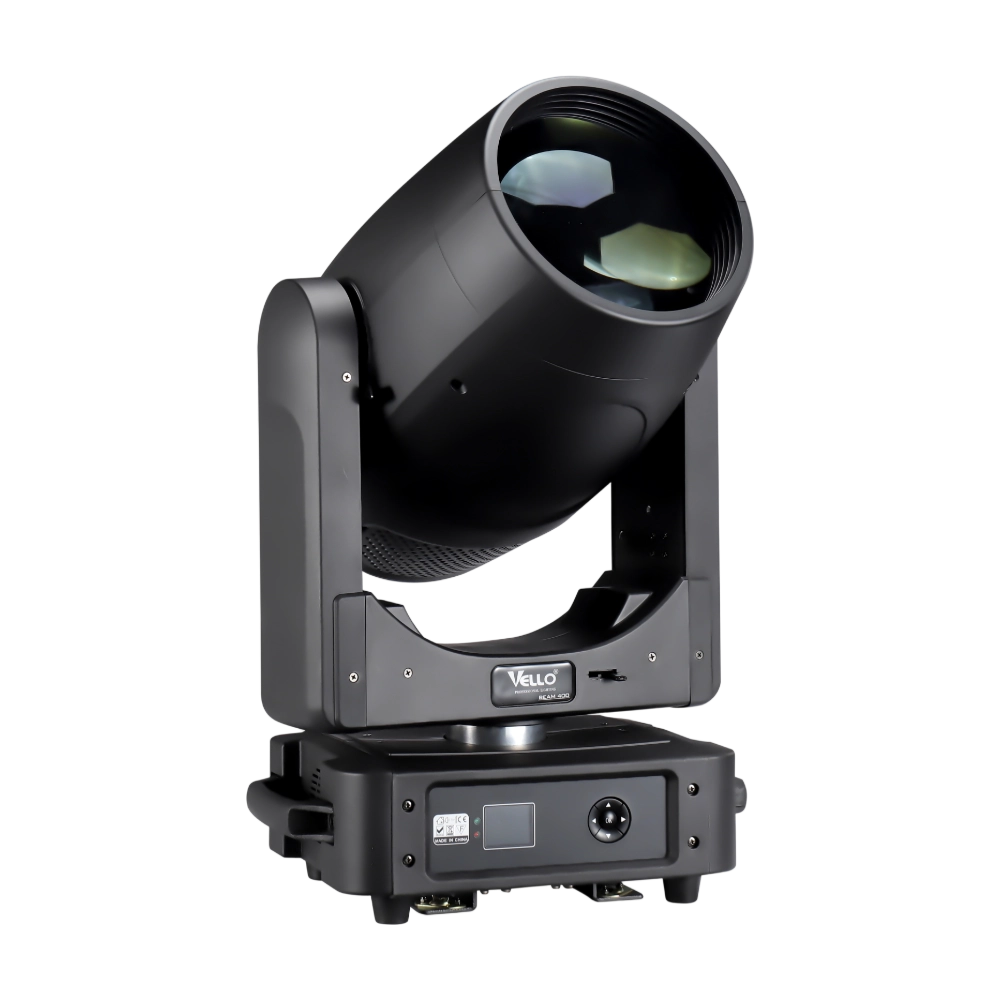
Moving Head Stage Light BEAM 400
BEAM400 is a 500W professional moving head beam powered by an OSRAM SIRIUS 371W discharge bulb, delivering a super-bright 1.8° sharp beam with impressive punch. It features 12 fixed gobos + open, a 14-color wheel, and a 16-facet circular rotating prism with multiple-facet effects, enabling dynamic aerial visuals. With 540° pan / 270° tilt, 16-bit movement resolution, and linear frost and focus, BEAM400 ensures precise and versatile performance. Comparable to traditional 750W moving heads, it combines high efficiency, smooth dimming, and reliable operation—ideal for concerts, tours, and large-scale stage productions.
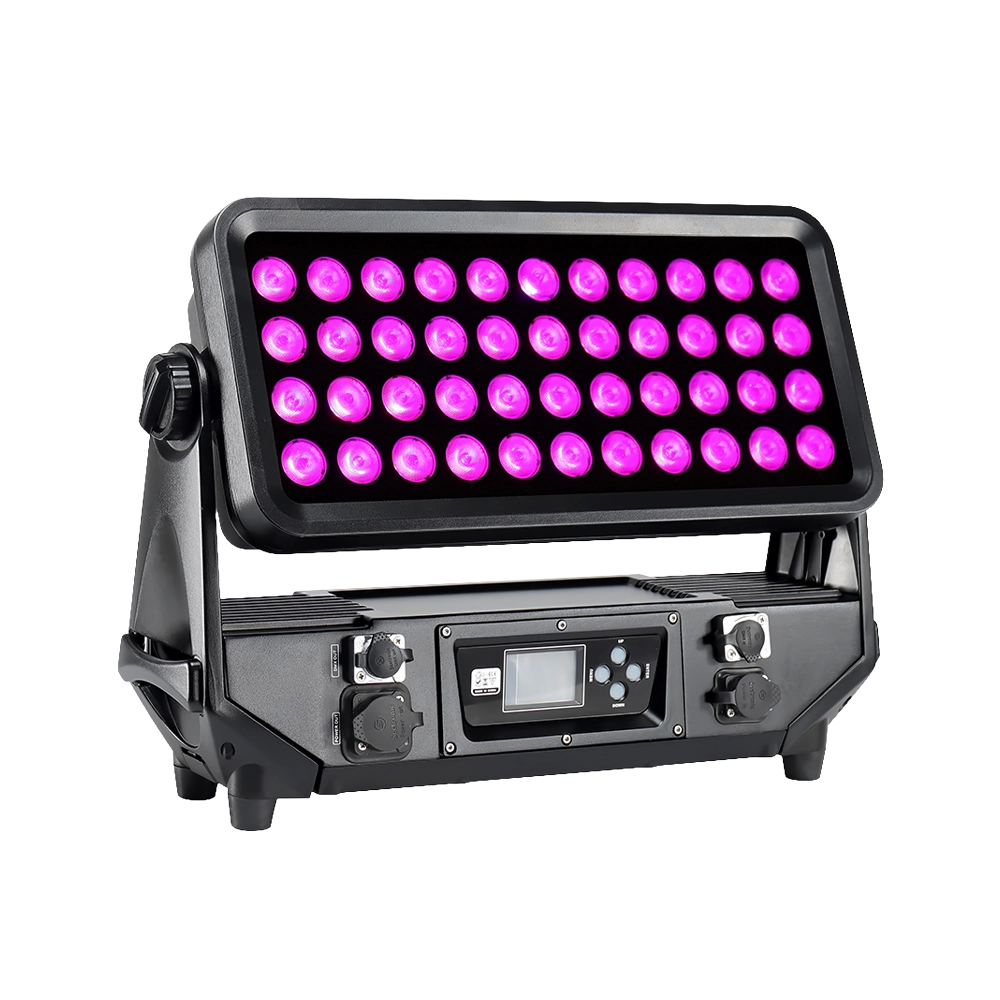
LED Light LED TOP P4
The Vello LED TOP P4 is a robust, high-output LED flood wash light designed for outdoor stages, architecture, and large-scale event lighting. Powered by 44x 15W RGBW LEDs from Cree, it delivers consistent brightness, smooth color mixing, and selectable beam angles of 20° or 40°. Built with a rugged IP65-rated die-cast aluminum housing, it withstands harsh weather conditions while offering smooth 0–100% dimming and flexible DMX control.
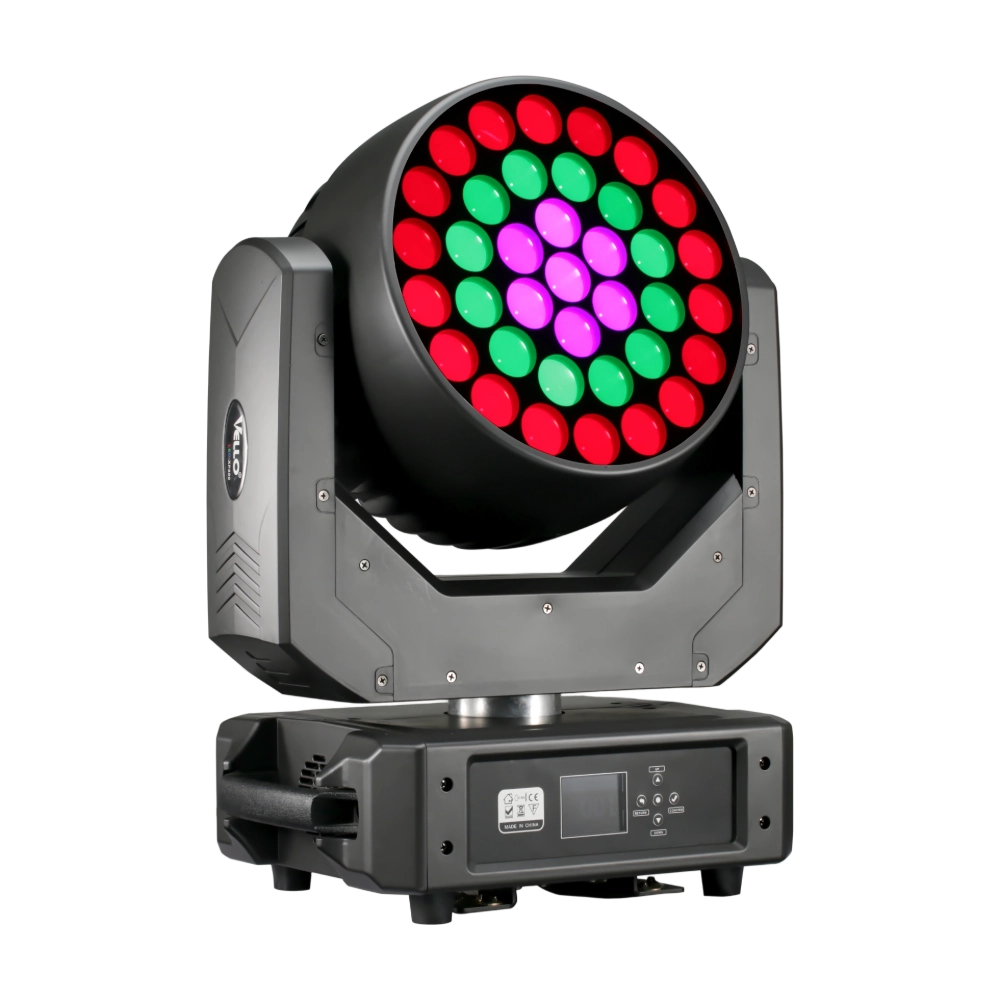
LED Moving Head Light XP800 (4in1)
The LED XP800 is a 600W moving head wash fixture, equipped with 37 × 20W Osram RGBW LEDs for brilliant color mixing and high output. With a wide 6°–50° electronic zoom, it easily transitions from sharp beams to smooth washes. The fixture supports 3-ring pixel control and an adjustable CTO range (2800K–8500K) for versatile applications. Featuring 540° pan / 310° tilt, high-speed 3-phase motors, and multiple DMX modes (16/28 channels), XP800 delivers powerful, precise, and dynamic performance. Compact and durable, it is an excellent choice for stages, theaters, and large-scale events requiring high brightness and flexibility.
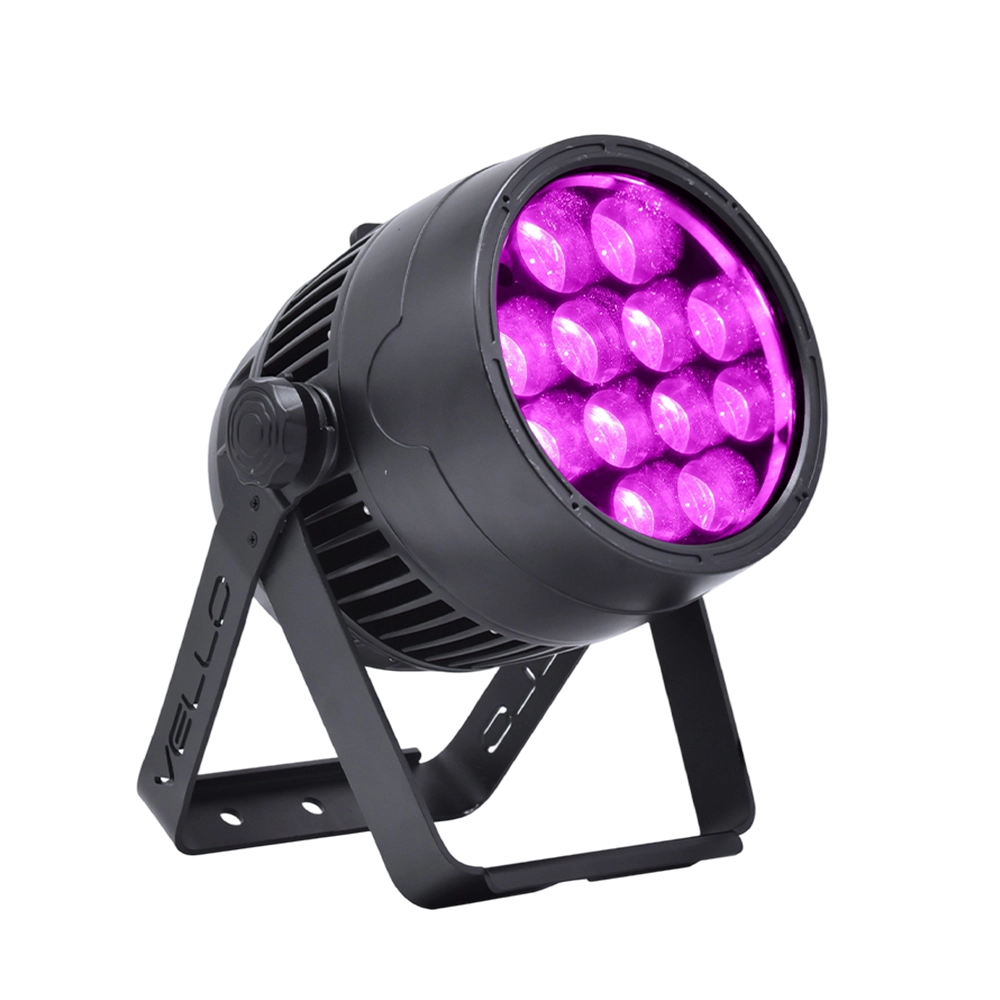
Stage LED Par Light LED ZOOMPAR 40
The Vello Zoom Par 40 IP is a powerful outdoor LED wash light equipped with 12x high-power 7-in-1 RGBACL LEDs. Designed for durability and rich color rendering, it features a wide motorized zoom (6°–50°), smooth dimming, and adjustable CTO presets (3200K–7500K), with 90+ CRI. With an IP66-rated die-cast aluminum body, it’s ideal for both indoor and outdoor applications, including stage lighting, architecture, live events, and installations.
Over 20 Years of Innovation in Stage & Studio Lighting
© 2026 VELLO. All Rights Reserved. 粤ICP备20023734号
Join our socials
VELLO
Whatsapp: +8613902276704
Vello Lighting
VelloLights