





Troubleshooting Common LED Stage Light Issues
- How to Diagnose and Fix Common Problems with LED Stage Lighting
- Understanding the anatomy of a stage light
- Power & electrical issues affecting stage light performance
- Control and DMX signal problems for stage light systems
- Color shift, inconsistent intensity and flicker in stage light fixtures
- Overheating and thermal management problems in stage light fixtures
- Mechanical failures: moving head stage light troubleshooting
- Ingress protection and outdoor stage light challenges
- Maintenance program and spare parts strategy for stage light fleets
- Quick reference — common issues, probable causes and fixes (at-a-glance)
- VELLO: company profile and why their stage light products stand out
- Practical workflow: step-by-step troubleshooting checklist for a failing stage light
- FAQ — Troubleshooting Common LED Stage Light Issues
- 1. Why does my LED stage light flicker on camera but looks fine to the eye?
- 2. How can I tell if a stage light driver is failing?
- 3. What's the best practice for preventing DMX signal issues across many stage lights?
- 4. How often should I perform maintenance on stage lights?
- 5. Can I repair an LED stage light myself?
- 6. My moving head lost its position calibration after shipping. What should I do?
- 7. Are LED stage lights waterproof for outdoor festivals?
- Contact & next steps
- References
How to Diagnose and Fix Common Problems with LED Stage Lighting
LED stage lights are the backbone of modern theatrical, concert, and event productions. While they offer high efficiency, flexible color control, and long lifespans, they also present specific technical failure modes that differ from traditional lamps. This guide covers practical troubleshooting steps and permanent fixes you can apply right away, with an emphasis on safety, repeatability, and reducing downtime for your stage light inventory.
Understanding the anatomy of a stage light
Before troubleshooting, it helps to understand the main subsystems of a modern LED stage light: LED engine (diodes + optics), LED driver/power supply, control electronics (microcontroller, DMX/RDM interfaces), thermal management (heatsink/fan), and mechanical systems (moving head motors, pan/tilt gears). Problems typically originate in one of these domains; diagnosing effectively means isolating which domain is failing.
Power & electrical issues affecting stage light performance
Symptoms: fixture won’t power on, intermittent shutdowns, blown fuses, buzzing or smell of overheating. These are among the most common and urgent failures.
Troubleshooting steps:
- Verify AC supply: measure voltage at the outlet; ensure correct phase and grounding. Use a reliable multimeter. Fluctuating mains is a common cause of repeated driver failures.
- Check power cable and connectors: look for wear, pin corrosion, or loose pins at IEC or powerCON connectors. Replace damaged cables before further testing.
- Inspect internal fuses and surge protectors: many fixtures use slow-blow fuses or polymer resettable fuses. Replace only with exact spec parts.
- Test the LED driver: measure DC output rails (following the manufacturer’s safety guidelines). If driver outputs are absent or unstable, driver replacement is usually required.
- Look for signs of electrical damage: charred PCB, bulging capacitors, or burnt traces indicate driver or board failure and usually require board-level repair or module replacement.
Preventive tips: install stage light surge protection and use voltage-stabilized circuits for valuable fixtures. For touring rigs, use in-line power conditioners.
Control and DMX signal problems for stage light systems
Symptoms: fixtures do not respond to DMX, respond intermittently, or behave erratically (unexpected movement or color changes).
Common causes and fixes:
- Addressing errors: confirm fixture DMX address and mode using the onboard menu. Many issues are simple address misconfigurations.
- Wiring and termination: DMX must be wired as a daisy-chain (XLR 5-pin recommended); use a 120 Ω terminator at the end of the line. Avoid split topologies without a proper splitter.
- Cable quality and length: DMX512 is sensitive to cable quality; use purpose-built DMX cable and keep runs within spec (<300 meters per segment). For long runs, use opto-isolators or DMX over ethernet solutions (Art-Net, sACN) with robust network design.
- Signal integrity: use DMX testers to verify data continuity. RDM-capable fixtures allow remote diagnostics in some setups.
- Ground loops and interference: separate power and data cable runs where possible and ensure proper grounding.
Reference protocol: the DMX512 standard defines signal and wiring expectations; consult ESTA/PLASA resources for detailed wiring guidelines.
Color shift, inconsistent intensity and flicker in stage light fixtures
Symptoms: color mix not matching other fixtures, visible flicker at low dim levels, uneven light across beam or wash.
Root causes and solutions:
- Driver PWM frequency and dimming methods: low PWM frequency can produce visible flicker on camera. Replace or reconfigure fixtures to use higher frequency drivers when camera capture is important.
- Age and binning of LEDs: LEDs shift color over time; mixing older and newer fixtures can produce mismatch. Use consistent LED binning or perform field tint correction via software when possible.
- Optics and diffuser issues: dusty or heat-damaged lenses can cause uneven output; clean and replace optics as needed.
- Thermal de-biasing: drivers and LEDs alter output as they heat; ensure proper warm-up and thermal management to stabilize color and intensity.
Overheating and thermal management problems in stage light fixtures
Symptoms: fixture reduces output, shuts down, or fails prematurely. Internal fans running constantly, or thermal protection engaging.
Diagnostics and fixes:
- Check ambient temperature rating and ensure fixtures are within their specified operating range (many fixtures rated -20°C to 40°C; confirm with manual).
- Inspect heatsink and airflow: remove dust, check fan function, and replace failing fans. Ensure vents are unobstructed, especially for wash fixtures and moving heads with internal air channels.
- Verify thermal sensors and firmware: some fixtures reduce output when sensors fail or are miscalibrated; update firmware and validate sensor readings if accessible.
- Derating strategy: in high ambient environments, derate output (lower maximum intensity) to extend life and prevent thermal trips.
Mechanical failures: moving head stage light troubleshooting
Symptoms: motors stutter, inaccurate positioning, grinding noises, or loss of limit calibration.
Typical causes and remedies:
- Limit and homing errors: perform calibration/homing per manufacturer instructions. Many moving heads require a calibration routine after transportation or gear replacement.
- Worn gears and belts: inspect for stripped teeth, cracked belts, or hardened grease. Replace worn mechanical parts and re-lubricate with the recommended grease.
- Motor driver faults: servo or stepper drivers can fail; swap with a known-good unit when available or test motor resistance to detect electrical faults.
- Physical obstructions and cabling: ensure internal cable bundles are correctly routed and connectors are secure to avoid pinched cables during pan/tilt movement.
Ingress protection and outdoor stage light challenges
Symptoms: intermittent failures after outdoor use, corrosion, moisture inside optics, or short circuits.
Best practices:
- Choose the right IP rating: IP65+ recommended for outdoor fixtures exposed directly to weather. Confirm gaskets and seals are intact before each outdoor use.
- Drying and condensation control: after exposure, dry fixtures in a warm, ventilated area. For touring gear, use silica gel packs and routine inspections.
- Connector protection: use waterproof connectors (e.g., powerCON TRUE1 TOP) and protect DMX connections with glanded enclosures or waterproof boots.
- Corrosion prevention: inspect aluminum housings and hinges; apply protective coatings where needed and replace corroded fasteners promptly.
Maintenance program and spare parts strategy for stage light fleets
Routine maintenance reduces unexpected failures. A practical program includes:
- Scheduled inspections: weekly visual checks, quarterly functional tests, and annual deep service (thermal paste replacement, fan bearing replacement, firmware updates).
- Burn-in and bench testing: new or returned fixtures should run through a burn-in cycle (4–24 hours) to catch early-life electronic failures.
- Spare parts inventory: maintain common spares—drivers, fans, fuses, connectors, lenses, moving parts. Track usage rates to optimize stocking levels.
- Documentation: keep serial-numbered service logs with symptoms, actions taken, and part replacements to identify recurring faults and possible design issues.
Quick reference — common issues, probable causes and fixes (at-a-glance)
| Symptom | Probable Cause | Quick Fix | Long-term Fix |
|---|---|---|---|
| Fixture won't power on | Bad power cable, blown fuse, failed driver | Replace cable/fuse, test outlet | Replace driver, use surge protection |
| DMX unresponsive | Addressing error, cable/termination issue | Check address, add terminator | Replace cable, use DMX splitter and testers |
| Flicker or banding on camera | Low PWM frequency or mains flicker | Change shutter speed, test fixture | Use high-frequency drivers or camera-friendly fixtures |
| Overheating and shutdown | Poor ventilation, fan failure | Clean vents, replace fans | Redesign mounting or derate output in hot locations |
VELLO: company profile and why their stage light products stand out
Vello Light Co., Ltd., established in 2003, is a comprehensive technology enterprise integrating R&D, manufacturing, and sales. Over the years, we have consistently adhered to the principles of quality first and sincere service. With the support and help of numerous customers both domestically and internationally, we have continued to grow and develop, gradually becoming a unique and outstanding team in our field.
In recent years, with the rapid development of the LED lighting market, Vello Light has gathered a large number of professional talents to provide comprehensive and systematic services, including product R&D, manufacturing, marketing, engineering installation, and product maintenance. Through the joint efforts of Vello people, we remain true to our original aspirations and persevere in innovation, leveraging our unique advantages to stand out in the fierce competition. Currently, our products are exported both domestically and internationally and have a strong brand reputation, especially in overseas markets. VELLO is our registered brand, specializing in moving headlights, LED wash lights, and theatrical lights. Our products are highly praised and loved by many customers for their professional technology, unique style, high-quality materials, and durability.
Our vision is to become a world-leading stage lighting manufacturer.
Why choose VELLO stage light products:
- Comprehensive R&D and manufacturing: integrated design and production ensure consistent quality control from LED binning to driver selection.
- Product range covers moving head stage lights, studio lights, LED effect light, LED Bar Lights, LED Par Light, and outdoor stage lighting — enabling spec consistency across rigs.
- Durability and serviceability: fixtures designed for easy field maintenance (accessible fans, modular drivers, replaceable optic modules).
- Export track record and international support: longstanding global customer base and aftermarket support ensure parts and expertise are available.
VELLO's technical strengths include careful thermal management design, use of high-quality LED bins, and modular components that simplify the repairs outlined earlier in this guide. For productions and rental houses that prioritize uptime, these design choices reduce unit MTTR (mean time to repair) and lifecycle cost.
Practical workflow: step-by-step troubleshooting checklist for a failing stage light
- Isolate the fixture: power it from a known-good outlet and disconnect DMX/ethernet.
- Perform a visual inspection: cables, vents, fans, connectors, signs of liquid ingress.
- Check basic power: fuse, cable continuity, and voltage at input.
- Reintroduce control: check addresses, replace terminator, or try a different DMX port.
- Run a functional test: full intensity, color cycle, pan/tilt movement, and thermal behavior.
- Document findings and take photos; if the issue is unresolved, escalate to bench testing and component-level diagnosis.
FAQ — Troubleshooting Common LED Stage Light Issues
1. Why does my LED stage light flicker on camera but looks fine to the eye?
Most likely cause is low PWM frequency in the fixture's driver interacting with the camera shutter. Use fixtures rated as flicker-free or higher PWM frequency drivers; alternatively, adjust camera shutter speed or use LED drivers designed for broadcast.
2. How can I tell if a stage light driver is failing?
Symptoms include inconsistent output, no DC output on measurement, visible capacitor bulging, smell of burning, or complete lack of power. Measure DC rails per manufacturer service manual; if outside tolerance or absent, replace the driver module.
3. What's the best practice for preventing DMX signal issues across many stage lights?
Use a properly terminated daisy-chain, high-quality DMX cable, keep power and data runs separate, and install DMX splitters for long runs or complex topologies. For large venues, use Art-Net/sACN with managed network hardware and redundancy.
4. How often should I perform maintenance on stage lights?
Weekly visual checks, quarterly functional tests, and an annual deep service are recommended for rental and high-usage fixtures. Touring gear may require service after each tour leg depending on conditions.
5. Can I repair an LED stage light myself?
Basic tasks like cable replacement, fan swaps, and firmware updates are commonly handled by trained technicians. Component-level electronics repair should be done by qualified repair centers to avoid safety and warranty issues.
6. My moving head lost its position calibration after shipping. What should I do?
Run the fixture's homing/calibration routine per the manual. If mechanical backlash or stripped gears are present, inspect and replace damaged parts and re-calibrate.
7. Are LED stage lights waterproof for outdoor festivals?
Only fixtures with appropriate IP ratings (IP65 or higher) are suitable for direct exposure. Even then, inspect gaskets and use protective measures for connectors. Consider housings for additional protection in harsh environments.
Contact & next steps
If you need professional diagnosis, replacement parts, or want to evaluate VELLO stage light products (moving head stage lights, studio lights, LED effect lights, LED Bar Lights, LED Par Light, outdoor stage lighting), contact Vello Light Co., Ltd. for product specifications, maintenance contracts, and OEM support. For urgent service, prepare the fixture model, serial number, symptom notes, and photos to accelerate support.
Explore VELLO products and request a quote or technical consultation to reduce downtime and optimize your lighting fleet.
References
- U.S. Department of Energy, Solid-State Lighting Program — LED Reliability and Lifetime. https://www.energy.gov/eere/ssl/solid-state-lighting (accessed 2025-11-30)
- ESTA (Entertainment Services and Technology Association) — DMX512 Standard and Best Practices. https://tsp.plasa.org/tsp/working_groups/dmx512/ (accessed 2025-11-30)
- Lighting Research Center (Rensselaer Polytechnic Institute) — LED Technical Notes. https://www.lrc.rpi.edu/programs/solidstate/ (accessed 2025-11-30)
- Signify (Philips) Application Notes — Thermal Management for LED fixtures. https://www.signify.com/global/products/systems-lighting (accessed 2025-11-30)
- PLASA/ETC - Practical Whitepapers on Stage Lighting Maintenance and Safety. https://plasa.org/resources/technical/ (accessed 2025-11-30)
DMX Basics: How to Control Your Stage Lights
Choosing Beam Angle and Throw for Moving Heads
Wireless and Art-Net for Moving Head Lights
Programming Tips for LED Stage Light Controllers
Major categories
Do you offer samples?
Samples are available for certain models. Please confirm with our sales team for details.
Do you ship internationally?
Yes. We offer sea, air, and express delivery to many countries and regions worldwide.
Do your products support customization?
Yes. We offer OEM and ODM services tailored to project needs, including design, optics, and control compatibility.
What is the warranty period for your products?
Most products come with a standard 1–2 year warranty. Please refer to product details or contract terms for specifics.
What is the usual lead time?
Standard models are typically shipped within 7–15 working days after payment. Customized items may vary.
Stage LED Par Light LED ZOOMPAR 40
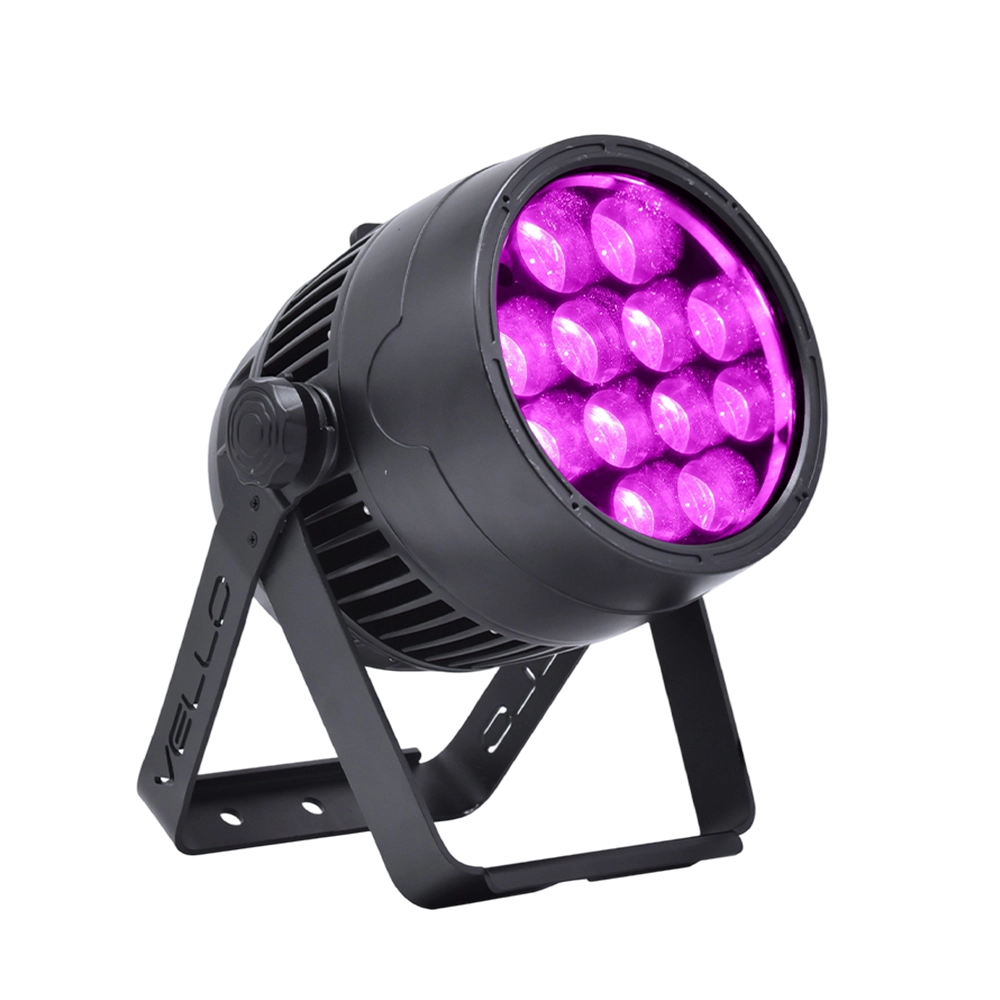
The Vello Zoom Par 40 IP is a powerful outdoor LED wash light equipped with 12x high-power 7-in-1 RGBACL LEDs. Designed for durability and rich color rendering, it features a wide motorized zoom (6°–50°), smooth dimming, and adjustable CTO presets (3200K–7500K), with 90+ CRI. With an IP66-rated die-cast aluminum body, it’s ideal for both indoor and outdoor applications, including stage lighting, architecture, live events, and installations.
Moving Head Stage Light BEAM 400
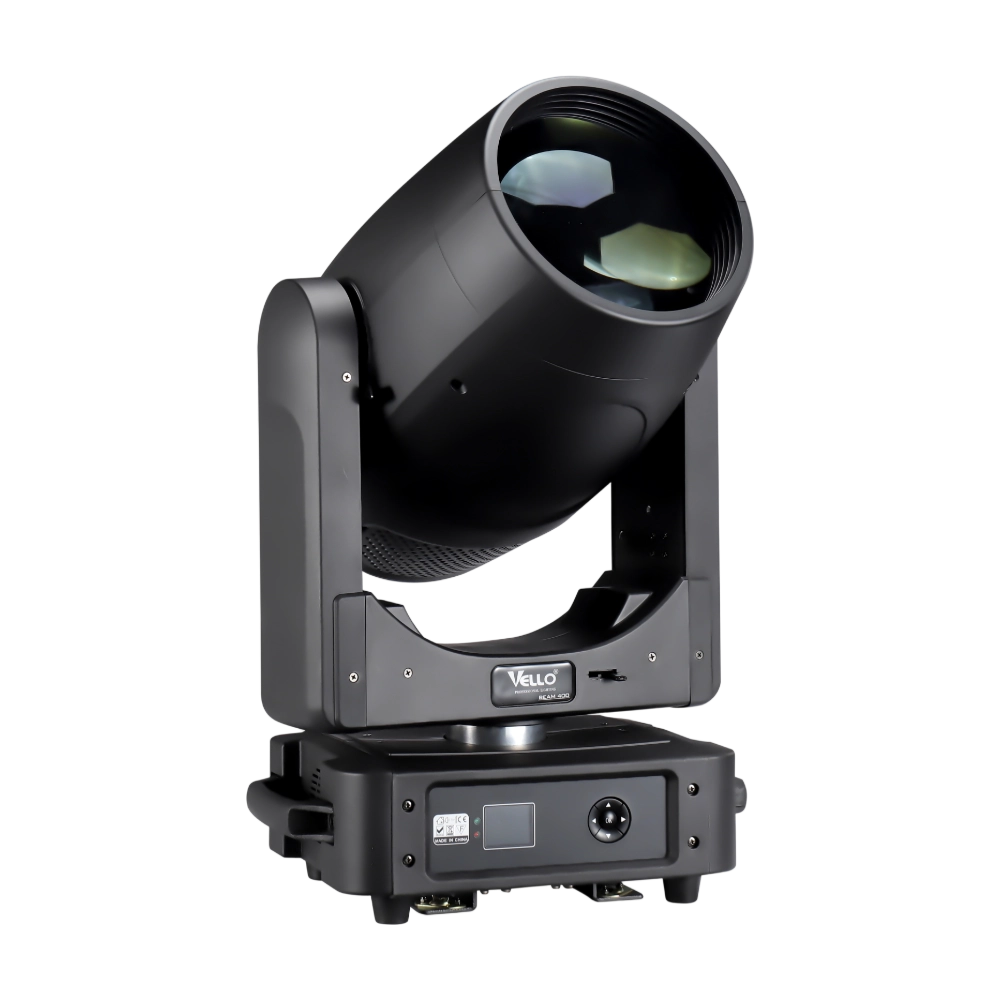
BEAM400 is a 500W professional moving head beam powered by an OSRAM SIRIUS 371W discharge bulb, delivering a super-bright 1.8° sharp beam with impressive punch. It features 12 fixed gobos + open, a 14-color wheel, and a 16-facet circular rotating prism with multiple-facet effects, enabling dynamic aerial visuals. With 540° pan / 270° tilt, 16-bit movement resolution, and linear frost and focus, BEAM400 ensures precise and versatile performance. Comparable to traditional 750W moving heads, it combines high efficiency, smooth dimming, and reliable operation—ideal for concerts, tours, and large-scale stage productions.
Moving Head Stage Light BEAM 360
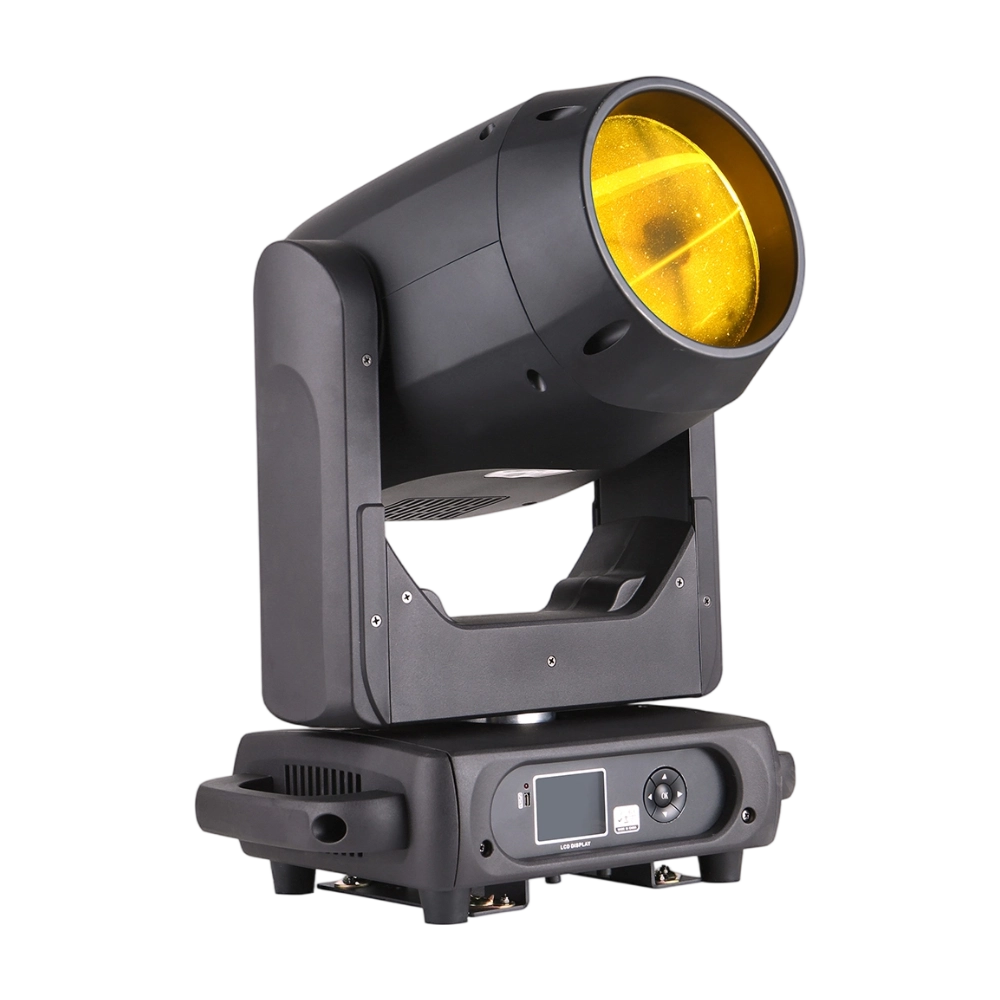
BEAM360 is a 400W high-power moving head beam equipped with an OSRAM SIRIUS 311W discharge lamp, delivering a sharp 1.8° beam with super brightness. It features 14 colors + open, 12 fixed metal gobos + open, and dual prisms (8-facet circular + 8+16 multi-facet combination) for dynamic aerial effects. With 540° pan / 270° tilt, 16-bit movement, and linear frost and focus, BEAM360 ensures precision and versatility. Compact yet powerful, it rivals traditional 575W moving heads, making it ideal for concerts, clubs, and large-scale stage productions.
Moving Head Light BEAM 450
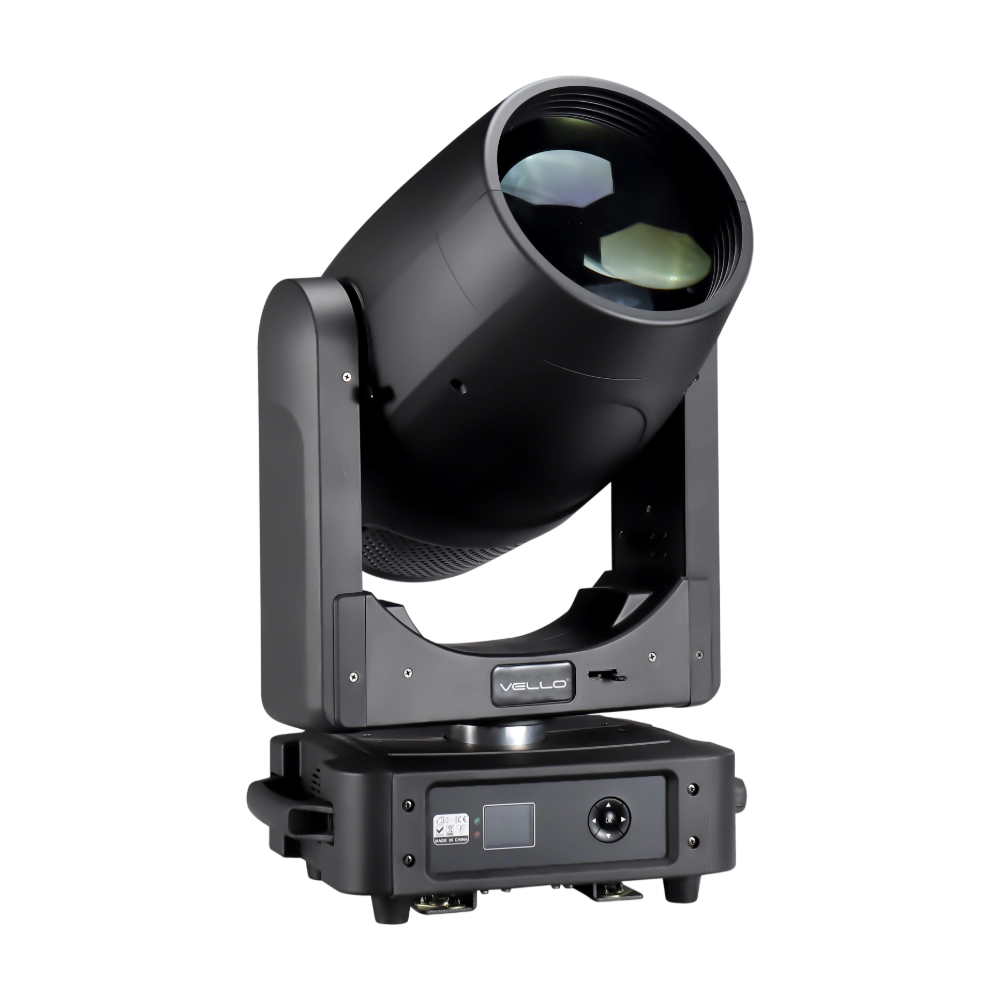
The BSW450 is a high-performance moving head fixture equipped with an original Osram 420W bulb, delivering exceptional brightness, precision, and versatility. Designed for professional stage applications, it seamlessly combines beam, spot, and wash functions in one compact unit, making it a powerful all-in-one lighting solution.
Over 20 Years of Innovation in Stage & Studio Lighting
© 2026 VELLO. All Rights Reserved. 粤ICP备20023734号
Join our socials
VELLO
Whatsapp: +8613902276704
Vello Lighting
VelloLights