




Top Features to Look for in Professional Moving Heads
- Understanding venue needs and performance categories
- Spot vs. Beam vs. Wash: choose by application
- Match luminous output and throw to venue size
- Light source and optical system
- LED engine type, power and color quality
- Zoom range, lenses, and beam shaping
- Effects, modularity, and control features
- Gobos, prisms, animation and pixel mapping
- Control protocols, presets, and remote management
- Mechanical performance, reliability and maintainability
- Pan/tilt resolution, range and movement dynamics
- Cooling, noise, and environmental ratings
- Serviceability and spare parts
- Operational economics and safety
- Power consumption, efficiency and total cost of ownership
- Mounting, rigging, certifications and safety
- Specification comparison: spot vs. wash vs. beam (typical professional ranges)
- Buying checklist and verification steps
- Request verifiable documentation
- Test for real-world performance
- Vello Light Co., Ltd. — capabilities, strengths and product focus
- Real-world procurement scenarios
- Touring & rental fleets
- Theatre, broadcast, and studio
- FAQ
- 1. What is the difference between a moving head and a conventional LED fixture?
- 2. How do I compare lumen specs between manufacturers?
- 3. Is CRI enough to judge color quality for camera work?
- 4. How important is IP rating for outdoor shows?
- 5. What maintenance should I plan for a moving head fleet?
- 6. Can moving heads be pixel-mapped?
- Contact and next steps
This article explains the top features professionals should evaluate when selecting a led moving head light for touring, theatre, houses of worship, broadcast studios, and fixed-install venues. It combines practical buying criteria, measurable specifications, and operational considerations—helping lighting designers, rental houses, technical directors, and procurement teams make confident, verifiable decisions supported by industry references and real-world performance indicators.
Understanding venue needs and performance categories
Spot vs. Beam vs. Wash: choose by application
Professional moving heads are broadly split into spot, beam, and wash categories, each optimized for different tasks. Spot fixtures prioritize gobo definition and framing; beam fixtures focus on narrow, long-throw shafts and aerial effects; wash fixtures deliver even field lighting and soft edges. Selecting the right type depends on throw distance, audience size, and the desired visual effect. For background reading on stage lighting roles, see the Stage lighting overview on Wikipedia (https://en.wikipedia.org/wiki/Stage_lighting).
Match luminous output and throw to venue size
Quantify lumen output, lux at distance, and beam angle to determine whether a fixture will cover the stage or venue. A small club may be served by 20,000–40,000 lumens distributed across wash fixtures; large arenas often require higher ANSI lumen engines and beam fixtures with narrow angles (0.5°–3°). When manufacturers provide lux charts or beam diagrams, verify values and ask for photometric files (IES) to run accurate calculations for your venue. The Illuminating Engineering Society (IES) provides standards and methods for photometric work (https://www.ies.org).
Light source and optical system
LED engine type, power and color quality
Modern led moving head light designs usually rely on high-power multichip LEDs, COB (chip-on-board) arrays, or phosphor-converted white LED engines. Key metrics to inspect:
- Rated luminous flux (ANSI lumens) and measured lux at distance.
- Color temperature options and gamut—fixtures offering selectable CCT (e.g., 2700K–6500K) and virtual gels provide flexibility.
- Color accuracy: CRI and TLCI. For broadcast and color-critical work, look for TLCI ≥ 90 and CRI ≥ 90 where possible. LED spectral quality affects skin tones and camera rendering; for background on LEDs, see Wikipedia (https://en.wikipedia.org/wiki/LED).
Zoom range, lenses, and beam shaping
Optical zoom determines the fixture's adaptability: a moving head with a 3.5°–40° zoom covers narrow-beam aerial effects and wide washes. Assess lens quality (glass vs. plastic), iris performance, and the presence of high-quality frost and diffusion. High-precision optics preserve gobo sharpness; cheaper optics blur gobos and degrade contrast.
Effects, modularity, and control features
Gobos, prisms, animation and pixel mapping
Look for multi-gobo wheels with interchangeable, rotatable gobos (glass gobos for sharpness). Prisms (3- to 8-facet, circular or linear) and animation wheels expand creative options. Advanced fixtures provide pixel mapping or per-LED control for intricate wash/pixel effects—valuable in concerts and broadcast where moving heads become moving video elements.
Control protocols, presets, and remote management
Essential control features include DMX512 compatibility, RDM for remote device management, Art-Net and sACN network protocols, and support for timecode/sync. For rental and touring, fixtures with RDM and remote firmware update capability reduce onsite troubleshooting. Where applicable, check manufacturer support for third-party lighting consoles and media servers.
Mechanical performance, reliability and maintainability
Pan/tilt resolution, range and movement dynamics
Professional led moving head light units should offer high-resolution pan/tilt (16-bit or higher) for smooth camera-friendly moves, fast repositioning for rapid cues, and mechanical end-stop design that prevents overtravel. Verify torque and gear quality for long-term accuracy—rental fleets especially demand robust motors and encoders.
Cooling, noise, and environmental ratings
Cooling design affects lumen maintenance and noise levels. For studio and broadcast work, low acoustic noise is critical—check dB ratings at typical operating modes. For outdoor or festival use, verify the IP rating (IP20 for indoor, IP65 for outdoor fixtures). Long-term reliability relies on efficient thermal management to reduce lumen depreciation (L70).
Serviceability and spare parts
Assess how easily the unit can be serviced: modular LED modules, replaceable fans, user-changeable gobos and prisms, and accessible control boards reduce downtime. Warranty terms and local service presence are important; for touring companies, global service networks minimize out-of-service periods.
Operational economics and safety
Power consumption, efficiency and total cost of ownership
LED engines reduce power draw compared to discharge lamps, but actual efficiency varies. Consider lumen-per-watt figures and input voltage flexibility. Total cost of ownership (TCO) includes purchase price, energy costs, lamp replacement (if applicable), maintenance and repair. For example, a 600W LED fixture vs. a 1200W discharge unit may show substantial lifecycle savings when factoring in energy and lamp costs.
Mounting, rigging, certifications and safety
Check that fixtures include standard mounting hardware (omega bracket, clamps) and have necessary safety certifications (CE, ETL/UL where applicable). Verify secondary safety attachments and maximum point load for truss mounting. Compliance documentation and lab test reports are often requested by venue owners and rental houses.
Specification comparison: spot vs. wash vs. beam (typical professional ranges)
| Feature | Spot | Wash | Beam |
|---|---|---|---|
| Typical beam angle | 3°–25° | 12°–55° | 0.5°–4° |
| Gobo capability | Multi-wheel, glass gobos | Limited/optional | Rare, if any |
| Lumen output (typical) | 30,000–60,000 lm | 20,000–50,000 lm | 40,000–90,000 lm (concentrated) |
| Primary use | Effects, profiling, tight framing | Stage and wash lighting | Aerial beams, long throw |
Sources: manufacturer photometric sheets and industry references such as PLASA (https://www.plasa.org), and general stage lighting standards (https://en.wikipedia.org/wiki/Stage_lighting).
Buying checklist and verification steps
Request verifiable documentation
Before purchase, request ANSI lumen measurements, IES files, spectral power distribution (SPD) data for color quality, noise datasheets, and detailed mechanical drawings. For large purchases, ask for sample units or onsite demo. Photometric verification and IES files allow you to model the lighting in design software and predict on-stage results accurately.
Test for real-world performance
During demos, test gobo sharpness, color mixing, dimming smoothness, movement latency, and heat/noise under different intensity levels. Where possible, test the fixture in the actual venue or a scaled environment at the expected throw distances and mounting heights.
Vello Light Co., Ltd. — capabilities, strengths and product focus
Vello Light Co., Ltd., established in 2003, is a comprehensive technology enterprise integrating R&D, manufacturing, and sales. Over the years, Vello has adhered to quality-first and sincere-service principles, growing into an experienced team recognized in both domestic and international markets. In recent years, the company has gathered professional talent to provide end-to-end services—including product development, manufacturing, marketing, engineering installation, and maintenance—focusing on innovation and quality to stand out in a competitive landscape.
VELLO is a registered brand specializing in moving head stage lights, studio lights, led effect light, Led Bar Lights, Led Par Light, and outdoor stage lighting. The company emphasizes professional technology, unique styling, robust materials and durability—attributes frequently cited by overseas customers. Vello's core competitive advantages include:
- In-house R&D and optical engineering teams enabling custom optics and gobo solutions.
- Integrated manufacturing that supports quality control and scalable production.
- Comprehensive after-sales service and international distribution channels.
Vello's product line is designed to meet the needs of rental companies, theatres, broadcast studios and fixed installations. For more information visit https://www.vellolight.com or contact their technical team at info@vellolight.com.
Real-world procurement scenarios
Touring & rental fleets
Touring environments demand rugged fixtures, fast setup, consistent color and quick serviceability. Features to prioritize: durable bearings, strong encoders, RDM and remote diagnostics, and global warranty coverage. Modular LED engines and swappable parts reduce road downtime.
Theatre, broadcast, and studio
Studios prioritize color rendering (TLCI/CRI), low noise, and smooth dimming curves. Moving heads for broadcast should provide full-spectrum SPDs and stable white-point control. For theatre, quick and silent moves combined with framing shutters and precise gobos are valuable.
FAQ
1. What is the difference between a moving head and a conventional LED fixture?
Moving heads incorporate motorized pan and tilt plus advanced optical/effects systems (gobos, prisms, zoom) allowing dynamic repositioning and complex cues. Conventional LED fixtures (pars, bars) are generally static and used for washes or uplighting.
2. How do I compare lumen specs between manufacturers?
Ask for ANSI lumen ratings and IES photometric files. Lumens alone can be deceptive—inspect beam angle and lux at a given distance. Use IES files in lighting design software for accurate comparisons.
3. Is CRI enough to judge color quality for camera work?
No. CRI is useful for general color rendering but TLCI (Television Lighting Consistency Index) is a better metric for broadcast/studio lighting. Look for TLCI ≥ 90 for high-end video work.
4. How important is IP rating for outdoor shows?
Very important. For exposed outdoor setups, choose IP65 or higher to protect against water and dust. Indoor fixtures usually have IP20 ratings. Always verify enclosure sealing and cable entry protections.
5. What maintenance should I plan for a moving head fleet?
Routine maintenance includes cleaning optics, replacing or cleaning fans and filters, checking bearings and gearboxes, testing motors/encoders, and firmware updates. Maintain an inventory of spare parts like gobos, fans and power supplies to minimize downtime.
6. Can moving heads be pixel-mapped?
Many modern led moving head light fixtures support pixel mapping and per-pixel control—useful for dynamic wash effects and LED-display-style animations. Confirm protocol support (Art-Net/sACN) and fixture pixel addressing capacity.
Contact and next steps
If you need help specifying the right led moving head light for your venue, rental fleet, or production, Vello Light offers product consultation, demos, and technical support. Visit https://www.vellolight.com or email info@vellolight.com to request datasheets, IES files, or sample demos. Vello's product portfolio includes moving head stage lights, studio lights, led effect lights, LED bar lights, LED par lights, and outdoor stage lighting—backed by in-house R&D and global service capability.
References and further reading: Stage lighting overview (Wikipedia), LED technology overview (Wikipedia), and industry resources from PLASA (PLASA), IES (IES).
LED Moving Head Light Specifications Buyers Need to Know
Certifications and Compliance for Outdoor LED Lighting
Safety, Rigging and Mounting for Stage LED Fixtures
Top 10 LED Moving Head Lights for Live Concerts and Tours
Major categories
Do you ship internationally?
Yes. We offer sea, air, and express delivery to many countries and regions worldwide.
What is the usual lead time?
Standard models are typically shipped within 7–15 working days after payment. Customized items may vary.
Do your products support customization?
Yes. We offer OEM and ODM services tailored to project needs, including design, optics, and control compatibility.
Do you offer samples?
Samples are available for certain models. Please confirm with our sales team for details.
What is the warranty period for your products?
Most products come with a standard 1–2 year warranty. Please refer to product details or contract terms for specifics.
Moving Head Stage Light BEAM 400
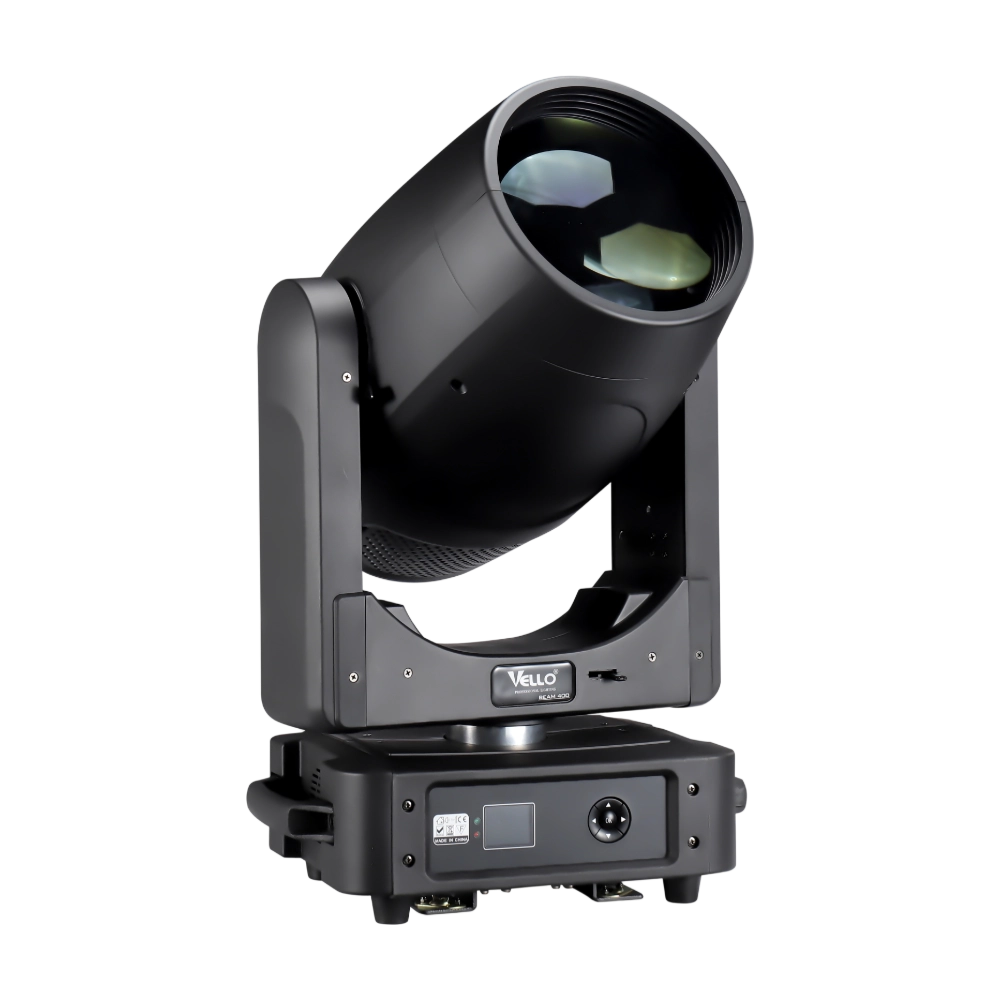
BEAM400 is a 500W professional moving head beam powered by an OSRAM SIRIUS 371W discharge bulb, delivering a super-bright 1.8° sharp beam with impressive punch. It features 12 fixed gobos + open, a 14-color wheel, and a 16-facet circular rotating prism with multiple-facet effects, enabling dynamic aerial visuals. With 540° pan / 270° tilt, 16-bit movement resolution, and linear frost and focus, BEAM400 ensures precise and versatile performance. Comparable to traditional 750W moving heads, it combines high efficiency, smooth dimming, and reliable operation—ideal for concerts, tours, and large-scale stage productions.
LED Light LED TOP P4
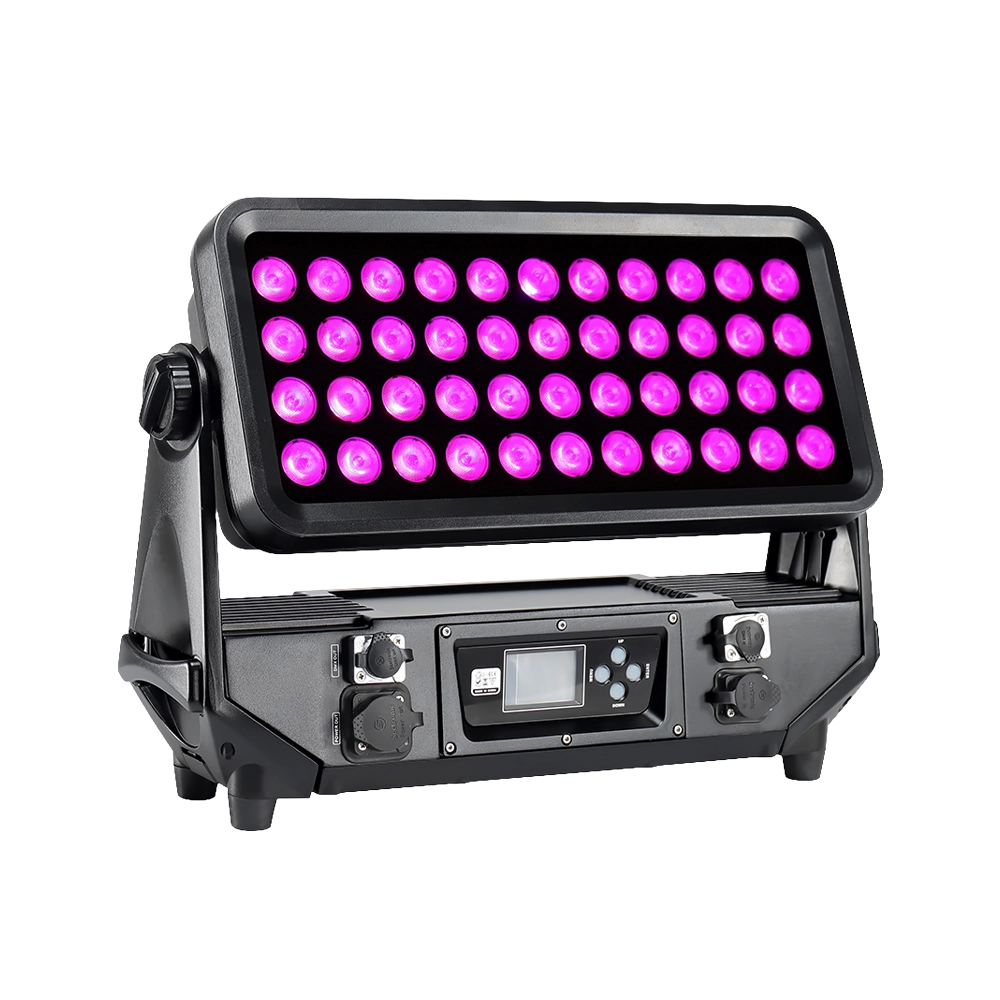
The Vello LED TOP P4 is a robust, high-output LED flood wash light designed for outdoor stages, architecture, and large-scale event lighting. Powered by 44x 15W RGBW LEDs from Cree, it delivers consistent brightness, smooth color mixing, and selectable beam angles of 20° or 40°. Built with a rugged IP65-rated die-cast aluminum housing, it withstands harsh weather conditions while offering smooth 0–100% dimming and flexible DMX control.
LED Moving Head Light XP800 (4in1)
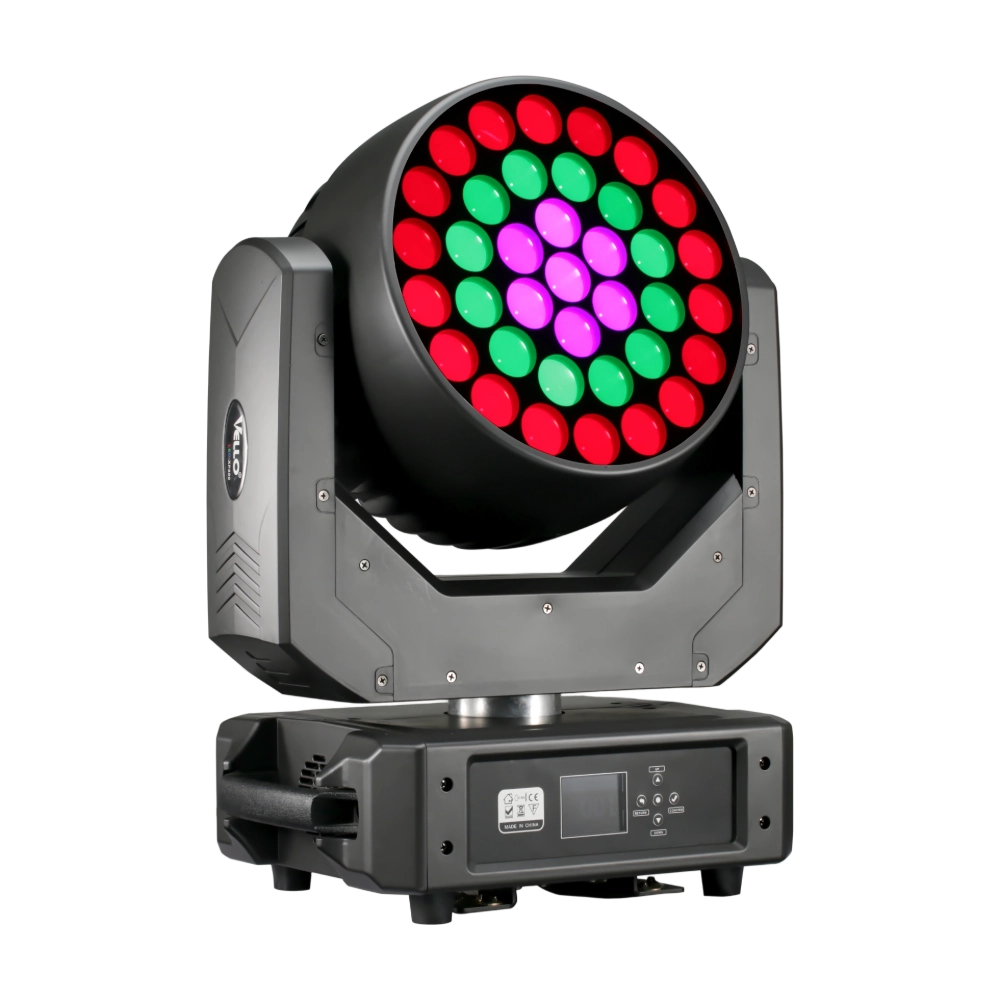
The LED XP800 is a 600W moving head wash fixture, equipped with 37 × 20W Osram RGBW LEDs for brilliant color mixing and high output. With a wide 6°–50° electronic zoom, it easily transitions from sharp beams to smooth washes. The fixture supports 3-ring pixel control and an adjustable CTO range (2800K–8500K) for versatile applications. Featuring 540° pan / 310° tilt, high-speed 3-phase motors, and multiple DMX modes (16/28 channels), XP800 delivers powerful, precise, and dynamic performance. Compact and durable, it is an excellent choice for stages, theaters, and large-scale events requiring high brightness and flexibility.
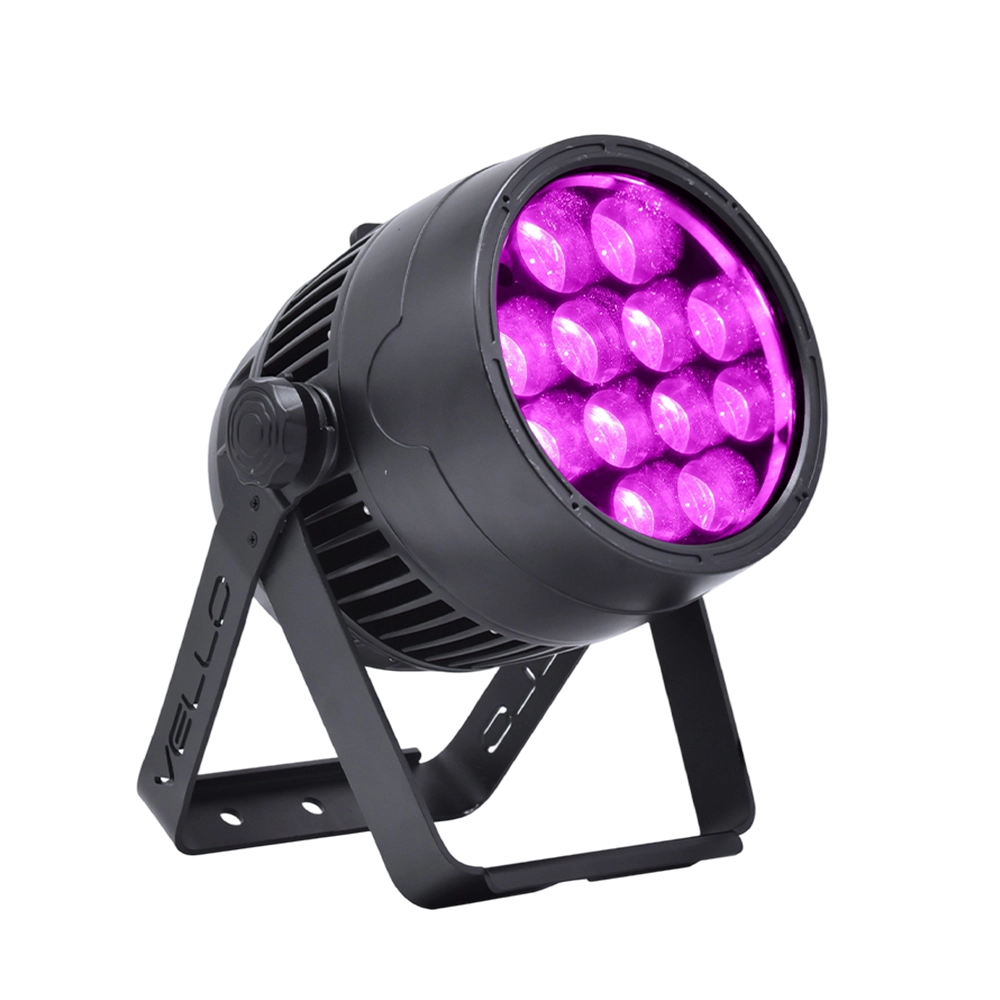
Stage LED Par Light LED ZOOMPAR 40
The Vello Zoom Par 40 IP is a powerful outdoor LED wash light equipped with 12x high-power 7-in-1 RGBACL LEDs. Designed for durability and rich color rendering, it features a wide motorized zoom (6°–50°), smooth dimming, and adjustable CTO presets (3200K–7500K), with 90+ CRI. With an IP66-rated die-cast aluminum body, it’s ideal for both indoor and outdoor applications, including stage lighting, architecture, live events, and installations.
Over 20 Years of Innovation in Stage & Studio Lighting
© 2026 VELLO. All Rights Reserved. 粤ICP备20023734号
Join our socials
VELLO
Whatsapp: +8613902276704
Vello Lighting
VelloLights