





Top Custom LED Lighting Features Buyers Want
- Understanding buyer priorities for lighting projects
- Who is buying custom LED lighting and why
- and procurement questions I hear most
- Technical features buyers prioritize
- Color performance: CRI, TM-30 and tunability
- Beam shaping and optics
- Control protocols and integration
- Operational features: durability, serviceability, and efficiency
- IP rating, build materials, and thermal design
- Maintenance, modularity and onsite repairability
- Energy consumption and ROI
- Design, user experience and procurement considerations
- Customization options buyers request
- Software, UI and firmware lifecycle
- Documentation, safety and compliance
- Evaluating manufacturers — why Vello Light stands out
- Company profile and track record
- Capabilities: from R&D to after-sales
- Why choose VELLO for custom projects
- Making the final selection: checklist I use on projects
- Procurement checklist
- On-site trial and acceptance testing
- Comparing suppliers: a simple scorecard
- FAQ
- 1. What does custom led lighting mean in practice?
- 2. How do I compare color fidelity claims between manufacturers?
- 3. Are LED fixtures always better than conventional lights?
- 4. What control protocols should I require?
- 5. How important is warranty and local support?
- 6. Can manufacturers produce custom optics or gobos?
- Next steps and how to contact VELLO
I’ve worked on hundreds of stage, studio, and architectural lighting projects, advising venues and production companies on custom led lighting choices that balance creative requirements, technical performance, and total cost of ownership. In this article I summarize the top features buyers want, explain why they matter, and show how to evaluate products and vendors so you can pick systems that perform consistently in real-world operations. Relevant standards and market data are referenced to help you verify claims and plan procurement.
Understanding buyer priorities for lighting projects
Who is buying custom LED lighting and why
Buyers range from touring production managers and theatre technical directors to corporate AV teams and houses of worship. Their objectives vary—color fidelity for broadcast and theatre, long-term operating cost for fixed installations, or ruggedness for touring rigs—but virtually all prioritize reliability, controllability, and predictable visual output. The shift from legacy fixtures to LED solutions is driven by energy efficiency, compactness, and advanced control possibilities, documented by energy agencies such as the U.S. Department of Energy (DOE: LEDs).
and procurement questions I hear most
When buyers search for custom led lighting they typically want answers to: Which fixtures deliver the color quality needed? How will control integration (DMX, Art-Net, sACN) work? What's the real-life lifespan and maintenance plan? How quickly can a supplier customize optics, mounting, and software? Answering these questions reduces risk and ensures project success.
Technical features buyers prioritize
Color performance: CRI, TM-30 and tunability
Color rendering is often the first technical spec I evaluate. Buyers used to incandescent or discharge lamps need assurance that LEDs reproduce skin tones and saturated colors naturally. While CRI (Ra) is common, I recommend also looking at TM-30 metrics for a fuller picture of fidelity and gamut. For film, broadcast, and high-end theatre work, fixtures with adjustable CCT and high fidelity LED engines are essential. For background and effect lighting, wide gamut RGB or RGBAW/PC (plus amber/white) engines give designers more creative latitude.
Beam shaping and optics
Custom lenses, zoom ranges, and beam control (frosters, barn doors, gobos) determine how well a fixture satisfies imaging and wash requirements. Buyers often underestimate the impact of optics on perceived brightness and color uniformity—two fixtures with the same LED engine can behave very differently on stage. I advise requesting photometric files (IES/IESNA or Eulumdat) and on-site photometric tests for critical installs.
Control protocols and integration
Modern custom led lighting must support established protocols such as DMX512/DMX512-A for compatibility; see background on DMX (Wikipedia: DMX512). Network protocols like Art-Net and sACN are ubiquitous for large systems. Additionally, buyers increasingly require fixture-level control via RDM for two-way configuration and status monitoring. I always verify that firmware updates and protocol support are maintained by the manufacturer.
Operational features: durability, serviceability, and efficiency
IP rating, build materials, and thermal design
For touring and outdoor events, IP-rated enclosures and robust mechanical design are non-negotiable. Thermal management drives LED longevity—poor heat sinking leads to color shift and lumen depreciation. Look for datasheets that document L70 or L80 lifespan metrics and test reports. When evaluating fixtures, I examine the materials used for housings, fasteners, and gobo wheels (if present) to assess long-term resilience.
Maintenance, modularity and onsite repairability
Buyers want lights they can repair quickly between shows. Modular designs—replaceable LED modules, swappable power supplies, and accessible PCBs—reduce downtime. Insist on clear spare-part policies and local support channels. For fixed installs, negotiate preventive maintenance schedules and clear warranty terms.
Energy consumption and ROI
Reduced power draw is a core selling point for LEDs. The Department of Energy and industry analyses document substantial savings when retrofitting with LED fixtures (DOE LEDs). Below I compare approximate operating numbers for comparable conventional vs LED stage fixtures to show typical ROI considerations.
| Metric | Conventional (e.g., 575W discharge) | Modern Custom LED Fixture |
|---|---|---|
| Typical power draw | 500–700 W | 150–300 W |
| Projected lamp life | 1,000–2,000 hours | 25,000–50,000 hours (L70/L80) |
| Maintenance (bulb replacement) | High | Low (modular parts) |
| Energy savings | Baseline | Up to 60%+ lower energy use |
Sources: U.S. Department of Energy energy-saver guidance and fixture manufacturer L70 specifications (DOE Energy Saver).
Design, user experience and procurement considerations
Customization options buyers request
Customization goes beyond paint and logos. Buyers commonly ask for modified mounting brackets, bespoke lenses, custom beam angles, unique gobos, and firmware adapted to a venue's control system. For broadcast and studio environments, I’ve worked with manufacturers to deliver precise white-point presets and factory-calibrated color profiles.
Software, UI and firmware lifecycle
Fixture control apps and firmware update streams are critical in the long term. A polished, well-documented UI that supports fixture grouping, multi-user control, and secure firmware upgrades is a major differentiator. Manufacturers that provide SDKs or APIs allow integration with venue automation systems and lighting consoles—vital for complex installations.
Documentation, safety and compliance
Buyers should request compliance documentation: CE, RoHS, UL/ETL (for North America), and relevant EMC reports. For safety around crowds and performers, confirm compliance with local codes. Industry references such as IEC and standards bodies provide background—see LED technology context on Wikipedia: LED and standards information via national certification agencies.
Evaluating manufacturers — why Vello Light stands out
Company profile and track record
When I assess suppliers for custom led lighting projects, I seek firms with established R&D, manufacturing capability, and an international service footprint. Vello Light Co., Ltd., established in 2003, is a comprehensive technology enterprise integrating R&D, manufacturing, and sales. Over the years, we have consistently adhered to the principles of quality first and sincere service. With the support and help of numerous customers both domestically and internationally, we have continued to grow and develop, gradually becoming a unique and outstanding team in our field.
Capabilities: from R&D to after-sales
In recent years, with the rapid development of the LED lighting market, Vello Light has gathered a large number of professional talents to provide comprehensive and systematic services, including product R&D, manufacturing, marketing, engineering installation, and product maintenance. Through the joint efforts of Vello people, we remain true to our original aspirations and persevere in innovation, leveraging our unique advantages to stand out in the fierce competition. Currently, our products are exported both domestically and internationally and have a strong brand reputation, especially in overseas markets. VELLO is our registered brand, specializing in moving headlights, LED wash lights, and theatrical lights. Our products are highly praised and loved by many customers for their professional technology, unique style, high-quality materials, and durability.
Why choose VELLO for custom projects
Based on my experience collaborating with manufacturers like VELLO, the differentiators that matter are: comprehensive in-house R&D so custom firmware and optics can be developed quickly; manufacturing scale that shortens lead times; documented test procedures for thermal and photometric performance; and an export-ready service network for spare parts and repairs. Vello's vision is to become a world-leading stage lighting manufacturer, and their listed product strengths align with what buyers prioritize: moving head stage lights, studio lights, led effect light, Led Bar Lights, Led Par Light, outdoor stage lighting. Visit their website at https://www.vellolight.com or contact them at info@vellolight.com for bespoke quotes and technical discussions.
Making the final selection: checklist I use on projects
Procurement checklist
- Request photometric files (IES/Eulumdat) and independent test reports.
- Verify control protocol compatibility (DMX/Art-Net/sACN) and RDM support.
- Insist on L70/L80 life data and thermal test documentation.
- Confirm IP rating and mechanical durability for the intended use case.
- Agree on spare parts, firmware update policy, and SLA for repairs.
On-site trial and acceptance testing
Never skip a site demo for large purchases. I require an on-site acceptance test that includes color consistency checks, stress testing the fixture at full power, and validating control responsiveness. Document the results and base payment milestones on passing those tests.
Comparing suppliers: a simple scorecard
| Criteria | Weight | Supplier A | Supplier B | VELLO (example) |
|---|---|---|---|---|
| Color & photometric performance | 25% | 8/10 | 7/10 | 9/10 |
| Control & firmware | 20% | 7/10 | 8/10 | 9/10 |
| Build quality & IP | 20% | 7/10 | 7/10 | 8/10 |
| Service & spare parts | 20% | 6/10 | 8/10 | 9/10 |
| Price & lead time | 15% | 8/10 | 9/10 | 8/10 |
Adjust weights to your priorities; for example, a touring company might weight durability higher than price.
FAQ
1. What does custom led lighting mean in practice?
Custom led lighting means tailoring fixtures or systems to meet project-specific requirements: optical modifications, firmware/configuration changes, bespoke mounting or housings, and integration into an existing control ecosystem. It can range from simple logo printing to full re-engineering of light engines.
2. How do I compare color fidelity claims between manufacturers?
Ask for TM-30 data and spectral power distribution (SPD) charts in addition to CRI. Request real-world comparisons on white paper or skin tones and, if possible, test samples in your venue. Third-party photometric testing adds confidence.
3. Are LED fixtures always better than conventional lights?
LEDs offer superior energy efficiency, longer life, and advanced control. However, certain theatrical effects or matching legacy fixtures might still favor conventional sources. Evaluate on a case-by-case basis, considering visual needs, heat, dimming behavior, and total cost of ownership.
4. What control protocols should I require?
At minimum: DMX512/DMX512-A for basic control, Art-Net or sACN for networked systems, and RDM for two-way device management. If you need timecode or show automation, ensure the fixtures integrate with your venue’s timeline and console systems.
5. How important is warranty and local support?
Very important. A clear warranty that covers LED engine performance (e.g., L70 for a given period), along with local spare-part availability and responsive technical support, minimizes downtime and lifecycle cost.
6. Can manufacturers produce custom optics or gobos?
Yes. Many vendors (including VELLO) offer customized optics, gobo wheels, and bespoke lens assemblies. Confirm lead times and tooling costs during procurement negotiations.
Next steps and how to contact VELLO
If you’re planning a retrofit, new build, or bespoke production, start with a requirements list: target lumen output, beam angles, control protocol, environmental protections, and service expectations. I recommend beginning with an on-site audit and a short list of fixtures for trial.
For custom led lighting projects, Vello Light Co., Ltd. can provide tailored solutions. Visit https://www.vellolight.com to view product lines and request a quote. Email technical inquiries to info@vellolight.com. I’ve found that beginning with a conversation about use case and performance targets results in the most predictable outcomes.
References and further reading: U.S. Department of Energy guidance on LED lighting (DOE), background on LEDs (Wikipedia: LED), and control protocol context (Wikipedia: DMX512).
How to Specify Custom LED Lighting for Concert Venues
Spotlight vs Wash Light: Choosing LED Fixtures
Logistics, Lead Times and Shipping for Stage Lighting Orders
LED Stage Lights Buying Guide: Types, Specs and Costs
Major categories
Do your products support customization?
Yes. We offer OEM and ODM services tailored to project needs, including design, optics, and control compatibility.
What is the warranty period for your products?
Most products come with a standard 1–2 year warranty. Please refer to product details or contract terms for specifics.
Do you ship internationally?
Yes. We offer sea, air, and express delivery to many countries and regions worldwide.
What is the usual lead time?
Standard models are typically shipped within 7–15 working days after payment. Customized items may vary.
Do you offer samples?
Samples are available for certain models. Please confirm with our sales team for details.
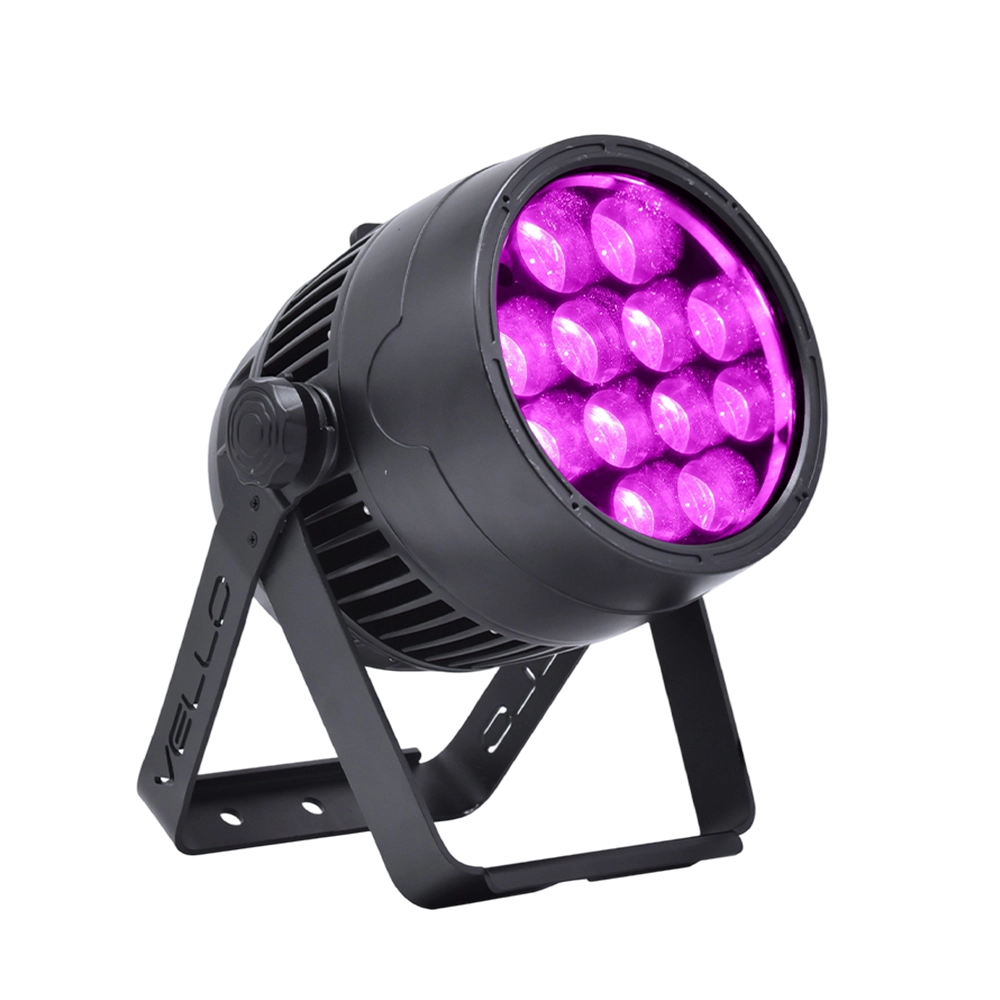
Stage LED Par Light LED ZOOMPAR 40
The Vello Zoom Par 40 IP is a powerful outdoor LED wash light equipped with 12x high-power 7-in-1 RGBACL LEDs. Designed for durability and rich color rendering, it features a wide motorized zoom (6°–50°), smooth dimming, and adjustable CTO presets (3200K–7500K), with 90+ CRI. With an IP66-rated die-cast aluminum body, it’s ideal for both indoor and outdoor applications, including stage lighting, architecture, live events, and installations.
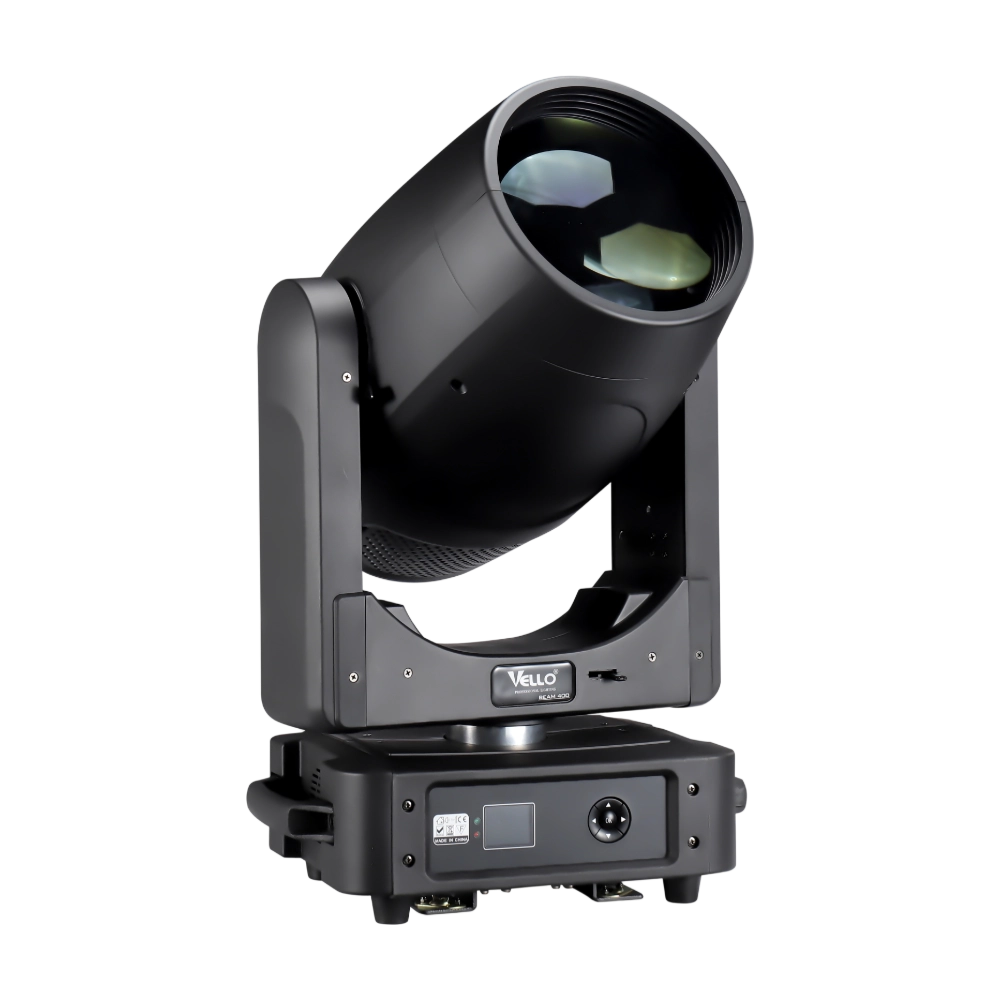
Moving Head Stage Light BEAM 400
BEAM400 is a 500W professional moving head beam powered by an OSRAM SIRIUS 371W discharge bulb, delivering a super-bright 1.8° sharp beam with impressive punch. It features 12 fixed gobos + open, a 14-color wheel, and a 16-facet circular rotating prism with multiple-facet effects, enabling dynamic aerial visuals. With 540° pan / 270° tilt, 16-bit movement resolution, and linear frost and focus, BEAM400 ensures precise and versatile performance. Comparable to traditional 750W moving heads, it combines high efficiency, smooth dimming, and reliable operation—ideal for concerts, tours, and large-scale stage productions.
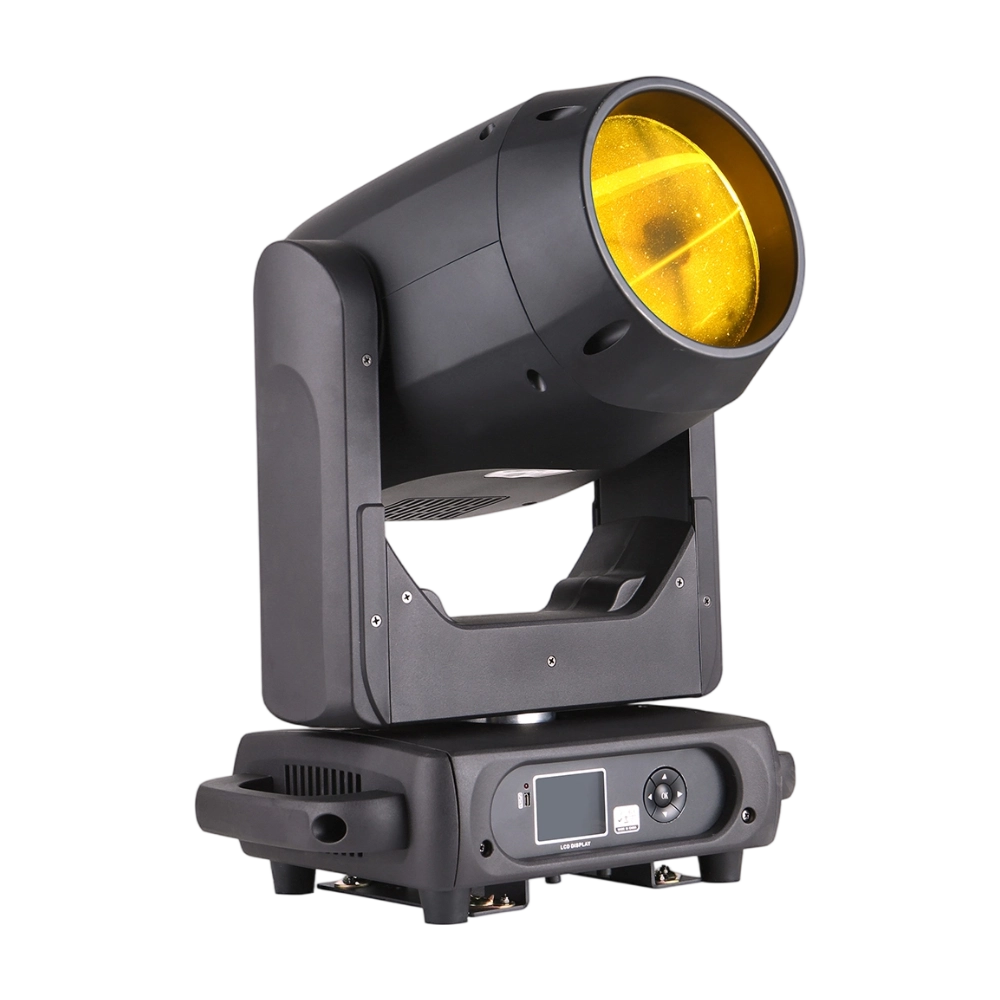
Moving Head Stage Light BEAM 360
BEAM360 is a 400W high-power moving head beam equipped with an OSRAM SIRIUS 311W discharge lamp, delivering a sharp 1.8° beam with super brightness. It features 14 colors + open, 12 fixed metal gobos + open, and dual prisms (8-facet circular + 8+16 multi-facet combination) for dynamic aerial effects. With 540° pan / 270° tilt, 16-bit movement, and linear frost and focus, BEAM360 ensures precision and versatility. Compact yet powerful, it rivals traditional 575W moving heads, making it ideal for concerts, clubs, and large-scale stage productions.
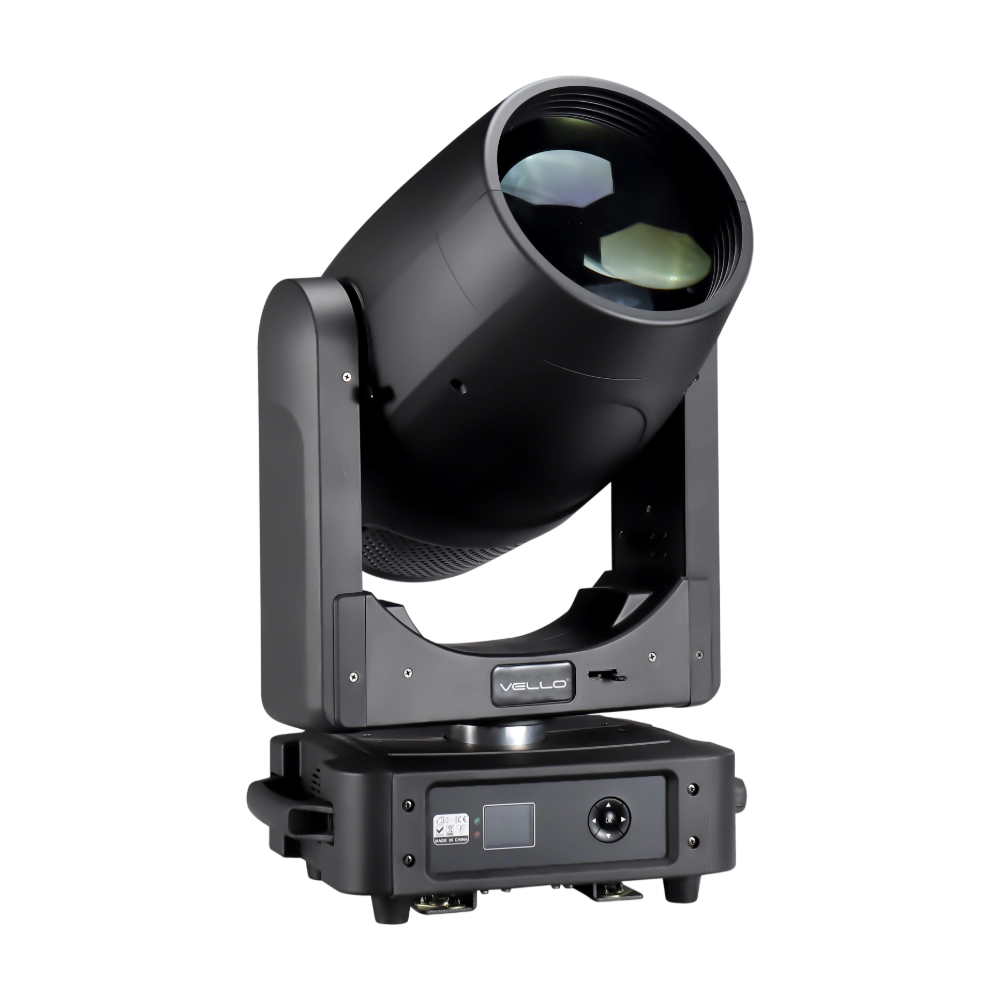
Moving Head Light BEAM 450
The BSW450 is a high-performance moving head fixture equipped with an original Osram 420W bulb, delivering exceptional brightness, precision, and versatility. Designed for professional stage applications, it seamlessly combines beam, spot, and wash functions in one compact unit, making it a powerful all-in-one lighting solution.
Over 20 Years of Innovation in Stage & Studio Lighting
© 2026 VELLO. All Rights Reserved. 粤ICP备20023734号
Join our socials
VELLO
Whatsapp: +8613902276704
Vello Lighting
VelloLights