




Top Custom LED Lighting Features for Touring Production
- Why Touring Needs Purpose-Built Lighting
- Operational realities that drive specs
- Standards and interoperability you can rely on
- Key Custom LED Lighting Features for Touring
- 1. Precision Color and High CRI/TM-30 Performance
- 2. Scalable Pixel Control & High-Resolution Effects
- 3. Reliability: Thermal Management and Mean Time Between Failures (MTBF)
- Control, Mechanics and Transport Considerations
- Mechanical durability and quick rigging
- Power architecture and efficiency
- Serviceability and modularity
- Comparing Core Feature Sets
- Advanced Features That Make a Touring Difference
- Networked Management and RDM Implementation
- Wireless and Redundancy Strategies
- Optical Flexibility: Lenses, Zoom, and Beam Control
- Practical Procurement Checklist
- What to ask manufacturers or reps
- Testing and burn-in procedures
- Logistics and flight-case compatibility
- Vello Light — How a Manufacturer Supports Touring Needs
- Case Example: Specifying a 90-Minute Arena Tour Rig
- Frequently Asked Questions (FAQ)
- 1. What is the most important specification for touring LED fixtures?
- 2. Do I need IP65-rated fixtures for a touring production?
- 3. How do I ensure color matching across different fixture types?
- 4. Can wireless protocols replace DMX wiring on tour?
- 5. What documentation should I get from the manufacturer?
- 6. How do I evaluate vendor claims about lumen output?
- Final Recommendations and Contact
In my experience working with touring productions and venues worldwide, custom led lighting is not just about brightness or fancy effects—it's about solving real logistical, control, and reliability problems on the road. This article summarizes the essential features you should demand when specifying custom LED lighting for touring: from pixel mapping and DMX/RDM control to IP ratings, cooling strategies, weight and truss load considerations, and lifecycle serviceability. I combine industry standards, operational lessons, and product-level comparisons so production managers, LDs, and rental houses can make informed procurement and specification decisions.
Why Touring Needs Purpose-Built Lighting
Operational realities that drive specs
Touring production faces tight turnarounds, varied rigging environments, and high utilization rates. That means fixtures must be durable, quick to configure, and forgiving when patched into unfamiliar systems. In practice, I prioritize units with robust power supplies (wide voltage range), redundant control options (wired DMX + wireless protocols), and modular parts that can be swapped backstage in minutes without specialized tools.
Standards and interoperability you can rely on
Control interoperability is critical. DMX512 (the de facto control protocol) and its extensions, plus RDM (Remote Device Management), are widely used to monitor, configure, and troubleshoot fixtures remotely. See the DMX512 overview for standard reference: https://en.wikipedia.org/wiki/DMX512. I always specify fixtures that fully support DMX512/RDM and document channel footprints for fast patching. For wireless backup, I evaluate latency and robustness—wireless should be a redundancy, not a primary reliance for mission-critical cues.
Key Custom LED Lighting Features for Touring
1. Precision Color and High CRI/TM-30 Performance
Color fidelity affects camera output (live broadcast) and artist appearance. High CRI (Color Rendering Index) and modern TM-30 metrics matter—LED engines with well-balanced spectral power distributions produce more natural skin tones and consistent color mixing. For touring, choose fixtures with CRI ≥ 90 or documented TM-30 scores when skin tone reproduction is critical. The U.S. Department of Energy provides technical background on LED performance metrics: https://www.energy.gov/eere/ssl/led-basics.
2. Scalable Pixel Control & High-Resolution Effects
Modern tours use pixel-mapped effects across battens, strips, moving heads, and LED screens. Custom LED lighting must support per-pixel control (Art-Net/sACN, pixel mapping protocols) with low refresh latency. When specifying, check maximum pixel density, refresh rates, and whether the fixture supports standard pixel protocols for easy integration into media servers and consoles.
3. Reliability: Thermal Management and Mean Time Between Failures (MTBF)
On tour, thermal runaway or failing drivers are costly. Fixtures designed with active thermal management (heat pipes, controlled fans) and conservative drive currents typically last longer. Look for published MTBF or component-level warranties. Fixture power supplies should have auto voltage detection (90–265 VAC) to handle global touring without transformers.
Control, Mechanics and Transport Considerations
Mechanical durability and quick rigging
Fixtures intended for touring should have reinforced yokes, captive fasteners, and standard rigging points. The ability to rotate clamps and fold into flight-friendly positions saves load-in/load-out time. I recommend units with integrated safety chain points and standardized bracket patterns to fit road cases and truss quickly.
Power architecture and efficiency
Efficient LEDs reduce generator load and stage cabling. Compare luminous efficacy (lm/W) and power factor; higher efficacy and active PFC (Power Factor Correction) reduce total power draw. The U.S. Department of Energy resources on LED efficiency are helpful when comparing fixtures: https://www.energy.gov/eere/ssl/led-basics. I prefer fixtures with measured consumption charts at different output levels so production can calculate generator and distro needs precisely.
Serviceability and modularity
Quick-swap modules for LED engines, drivers, optics, and fans minimize downtime. Touring-friendly designs allow replacement of common failure parts without removing the whole fixture from the rig. I advise rental houses to inventory spare modules and ensure on-call technical documentation (wiring diagrams, firmware update procedures, channel maps).
Comparing Core Feature Sets
Below is a practical comparison table I use when evaluating fixtures for tour spec sheets. Numeric examples are representative; always request manufacturer datasheets for exact values.
| Feature | Specification to Request | Why It Matters |
|---|---|---|
| Color Fidelity | CRI ≥ 90; TM-30 scores published | Better on-camera skin tones, consistent color matching across fixtures |
| Control Protocols | DMX512/RDM, Art-Net, sACN; pixel mapping support | Interoperable across consoles and media servers; remote device management |
| Ingress Protection | IP20 (indoor) or IP65 (outdoor-rated units) | Protects against dust/moisture during outdoor shows |
| Weight & Size | Published hanging weight; foldable yoke option | Truss load calculations, transportation space, and rigging speed |
| Thermal Design | Active cooling; published operating temp range | Prevents derating and premature LED/driver failure |
| Power | Nominal wattage; power factor; standby draw | Generator/distro planning and efficiency |
For control interoperability and protocol details, consult the DMX512 reference: https://en.wikipedia.org/wiki/DMX512. For LED fundamentals and efficiency baselines, see the U.S. DOE LED basics page: https://www.energy.gov/eere/ssl/led-basics.
Advanced Features That Make a Touring Difference
Networked Management and RDM Implementation
RDM (Remote Device Management) enables remote addressing, status monitoring, and firmware updates. On long tours, RDM can reduce on-site troubleshooting time dramatically. I always require fixtures that support RDM and provide clear vendor tooling for discovery and configuration. For large-scale deployments, Art-Net/sACN over robust Ethernet infrastructures simplifies pixel mapping and reduces cable runs.
Wireless and Redundancy Strategies
Wireless control can be useful for temporary setups, but it is not a substitute for wired redundancy. Where wireless is used, validate frequency management, latency specifications, and fallback options. In my touring rigs, wireless is reserved for secondary devices or where cable runs are impractical, and critical cues are duplicated across wired paths.
Optical Flexibility: Lenses, Zoom, and Beam Control
Custom LED lighting for touring should offer interchangeable lenses or zoom ranges to handle different venue sizes. Moving head stage lights with fast and accurate iris/zoom mechanisms are invaluable for cueing across diverse stages. Fixture optics that maintain high center-beam intensity avoid hot-spotting on distant stages.
Practical Procurement Checklist
What to ask manufacturers or reps
When evaluating quotes, ask for: complete DMX channel maps, native protocol support (Art-Net/sACN), MTBF or expected life hours for LEDs and drivers, thermal derating curves, ingress ratings, and a recommended spare-parts list. Request real-world photometric files (IES/LDT) for typical mounting heights and throw distances.
Testing and burn-in procedures
I recommend rack-testing and a 24–48 hour warm burn-in on any new fixture batch before a major tour. This process reveals early-life failures and gives you operational confidence. Document firmware versions and request access to beta firmware only under controlled conditions.
Logistics and flight-case compatibility
Ensure fixtures fit standard road cases or provide case dimensions. Weight distribution and ease of packing influence freight costs significantly. Confirm whether fixtures require external accessories (power supplies, 19 racks) that also need storage space and labeling for fast access.
Vello Light — How a Manufacturer Supports Touring Needs
Vello Light Co., Ltd., established in 2003, is a comprehensive technology enterprise integrating R&D, manufacturing, and sales. Over the years, we have consistently adhered to the principles of quality first and sincere service. With the support and help of numerous customers both domestically and internationally, we have continued to grow and develop, gradually becoming a unique and outstanding team in our field.
In recent years, with the rapid development of the LED lighting market, Vello Light has gathered a large number of professional talents to provide comprehensive and systematic services, including product R&D, manufacturing, marketing, engineering installation, and product maintenance. Through the joint efforts of Vello people, we remain true to our original aspirations and persevere in innovation, leveraging our unique advantages to stand out in the fierce competition. Currently, our products are exported both domestically and internationally and have a strong brand reputation, especially in overseas markets. VELLO is our registered brand, specializing in moving headlights, LED wash lights, and theatrical lights. Our products are highly praised and loved by many customers for their professional technology, unique style, high-quality materials, and durability.
Our vision is to become a world-leading stage lighting manufacturer. Vello’s touring-oriented product lines (moving head stage lights, studio lights, led effect light, Led Bar Lights, Led Par Light, outdoor stage lighting) emphasize the features I’ve outlined above: high CRI engines, DMX/RDM support, modular service parts, robust thermal design, and efficient power architectures. When I evaluate fixtures for a tour, a manufacturer with Vello’s documented production experience and export track record is a significant advantage. Learn more on our website: https://www.vellolight.com or contact the team at info@vellolight.com.
Case Example: Specifying a 90-Minute Arena Tour Rig
Below is an excerpted spec list I would supply for a mid-size arena tour relying primarily on custom LED lighting for key looks and video integration:
- Moving heads: 60x compact moving head (CMY + CTO, high CRI, 8°–40° zoom, DMX/RDM, 600 W max) with integrated pixel control.
- LED battens: 120x LED Bar Lights (individually addressable pixels, IP20 for indoor) for front-of-house and downstage accents.
- Wash fixtures: 40x LED wash lights (CRI ≥ 92, soft edges, smooth dimming curve) for front light and side fill.
- Outdoor lighting: IP65-rated outdoor stage lighting for open-air support shows (where applicable).
- Control: Main console via sACN/Art-Net, backup via DMX universe redundancy; RDM enabled for monitoring and addressing.
These choices balance effect capability, power draw, transport weight, and serviceability. For precise photometric planning, I request IES files and measured lux values at target throw distances to integrate with the lighting plot and show file previsualization tools.
Frequently Asked Questions (FAQ)
1. What is the most important specification for touring LED fixtures?
Reliability and serviceability top my list: robust thermal designs, modular replaceable components, and clear firmware/update pathways. Even the highest-output fixture is worthless if it fails mid-show and cannot be repaired quickly.
2. Do I need IP65-rated fixtures for a touring production?
Only if you expect outdoor or exposed-rig applications. IP65 is necessary for weather resistance; for indoor arena tours, IP20 is typically sufficient. Always confirm venue requirements before specifying outdoor-rated (heavier/costlier) fixtures.
3. How do I ensure color matching across different fixture types?
Specify fixtures with high CRI/TM-30 metrics and, when possible, same LED binning or calibrated color palettes. Request manufacturer-provided color calibration data and perform in-house calibration during pre-rig to ensure consistent skin tones and color mixes.
4. Can wireless protocols replace DMX wiring on tour?
No—wireless is a helpful supplement but should not replace wired DMX universes for critical cues. Use wireless only for redundancy or non-essential fixtures where cabling is impractical.
5. What documentation should I get from the manufacturer?
Ask for DMX channel maps, IES/LDT photometric files, power consumption charts, MTBF or warranty terms, spare parts lists, and firmware update procedures. Also request recommended burn-in and maintenance guidelines.
6. How do I evaluate vendor claims about lumen output?
Request measured photometric files and test reports. Manufacturer-quoted lumens may be theoretical; IES files measured at fixture level under operating conditions are more reliable for rig planning.
Final Recommendations and Contact
When specifying custom led lighting for touring production, prioritize interoperability (DMX/RDM, Art-Net/sACN), color fidelity (high CRI/TM-30), thermal and mechanical reliability, and modular serviceability. Use the procurement checklist above to standardize your RFPs and demand datasheets and IES files for accurate planning. If you’d like, I can review your lighting plot, inventory, and tour spec and provide a tailored fixture shortlist and cost-benefit analysis based on venue types, run lengths, and budget.
Contact VELLO and our technical team for product specifications, sample photometric files, or to discuss custom configurations: https://www.vellolight.com | Email: info@vellolight.com. Whether you need moving head stage lights, studio lights, led effect light, Led Bar Lights, Led Par Light, or outdoor stage lighting, we can help match product features to your touring needs.
Maintenance Checklist for Commercial LED Moving Head Light
How to Choose LED Stage Lights for Different Venues
Safety & Compliance Standards for LED Moving Head Light
Cost Breakdown: Total Cost of Ownership for Moving Heads
Major categories
Do you offer samples?
Samples are available for certain models. Please confirm with our sales team for details.
What is the warranty period for your products?
Most products come with a standard 1–2 year warranty. Please refer to product details or contract terms for specifics.
Do your products support customization?
Yes. We offer OEM and ODM services tailored to project needs, including design, optics, and control compatibility.
Do you ship internationally?
Yes. We offer sea, air, and express delivery to many countries and regions worldwide.
What is the usual lead time?
Standard models are typically shipped within 7–15 working days after payment. Customized items may vary.
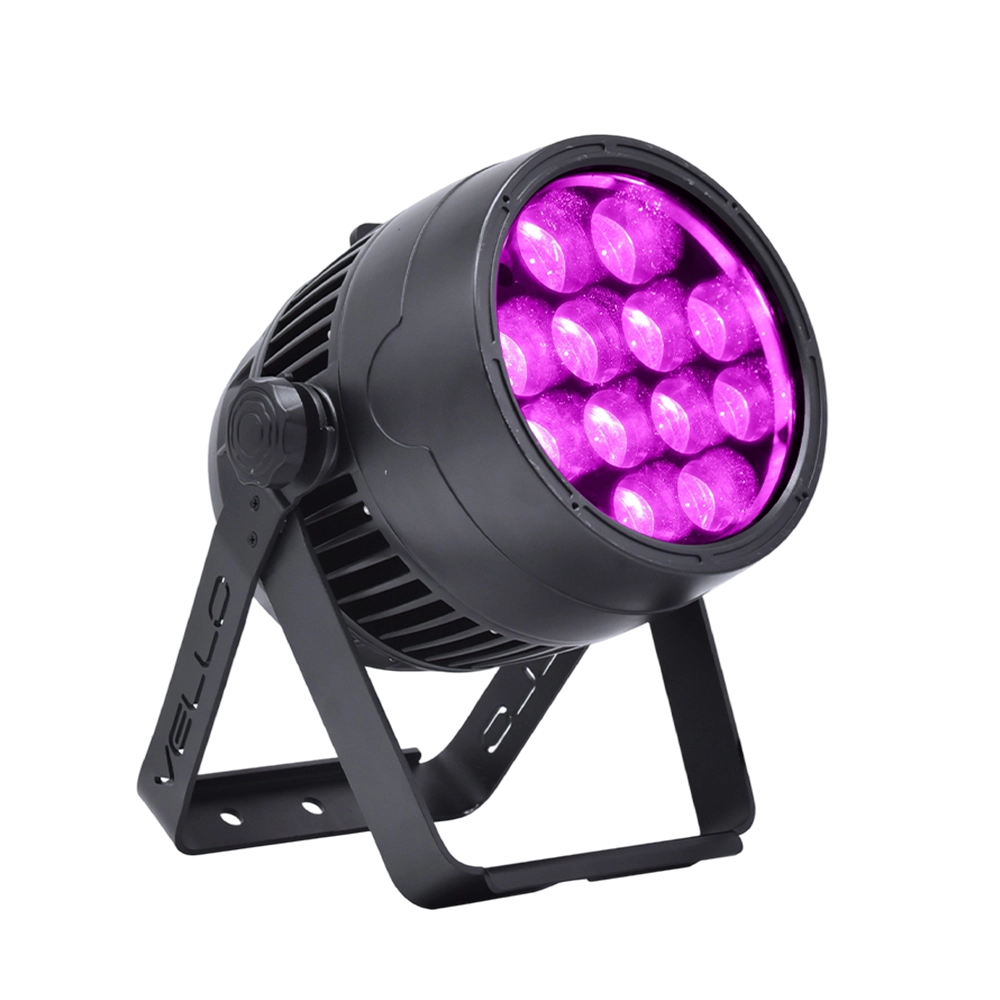
Stage LED Par Light LED ZOOMPAR 40
The Vello Zoom Par 40 IP is a powerful outdoor LED wash light equipped with 12x high-power 7-in-1 RGBACL LEDs. Designed for durability and rich color rendering, it features a wide motorized zoom (6°–50°), smooth dimming, and adjustable CTO presets (3200K–7500K), with 90+ CRI. With an IP66-rated die-cast aluminum body, it’s ideal for both indoor and outdoor applications, including stage lighting, architecture, live events, and installations.
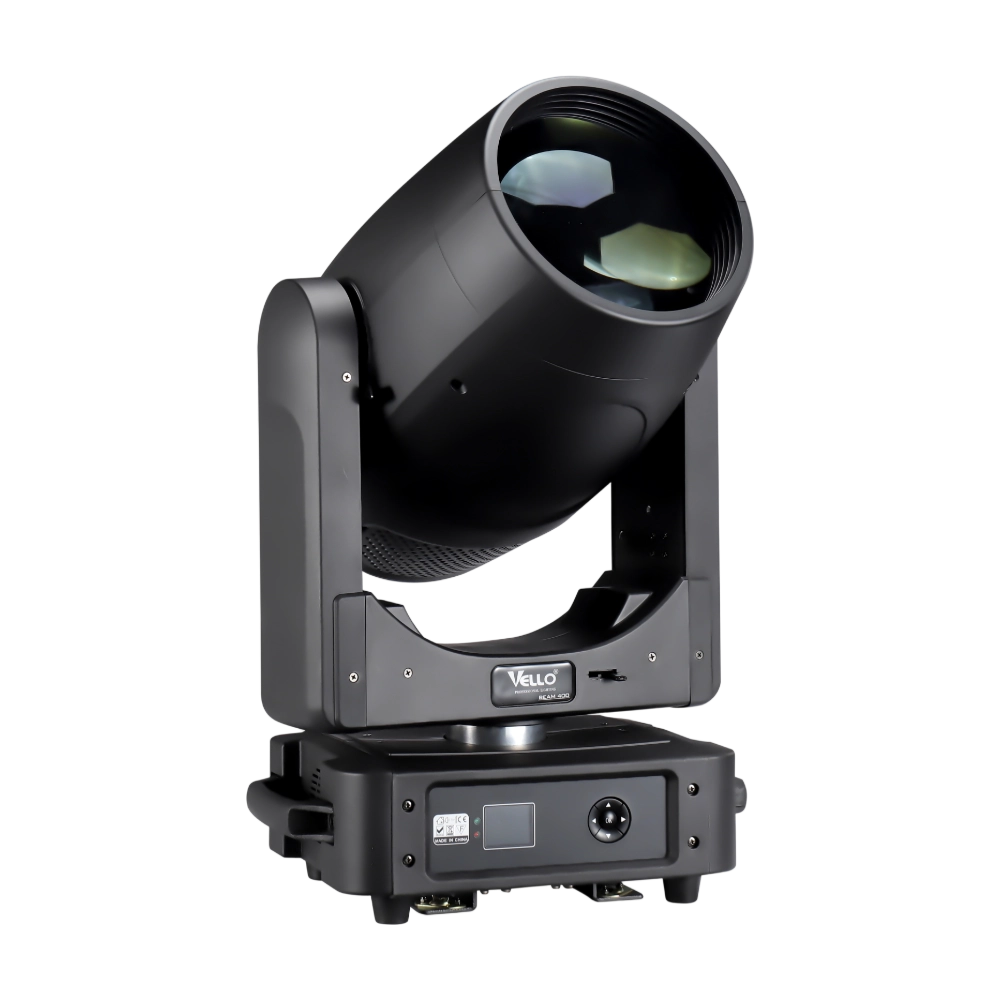
Moving Head Stage Light BEAM 400
BEAM400 is a 500W professional moving head beam powered by an OSRAM SIRIUS 371W discharge bulb, delivering a super-bright 1.8° sharp beam with impressive punch. It features 12 fixed gobos + open, a 14-color wheel, and a 16-facet circular rotating prism with multiple-facet effects, enabling dynamic aerial visuals. With 540° pan / 270° tilt, 16-bit movement resolution, and linear frost and focus, BEAM400 ensures precise and versatile performance. Comparable to traditional 750W moving heads, it combines high efficiency, smooth dimming, and reliable operation—ideal for concerts, tours, and large-scale stage productions.
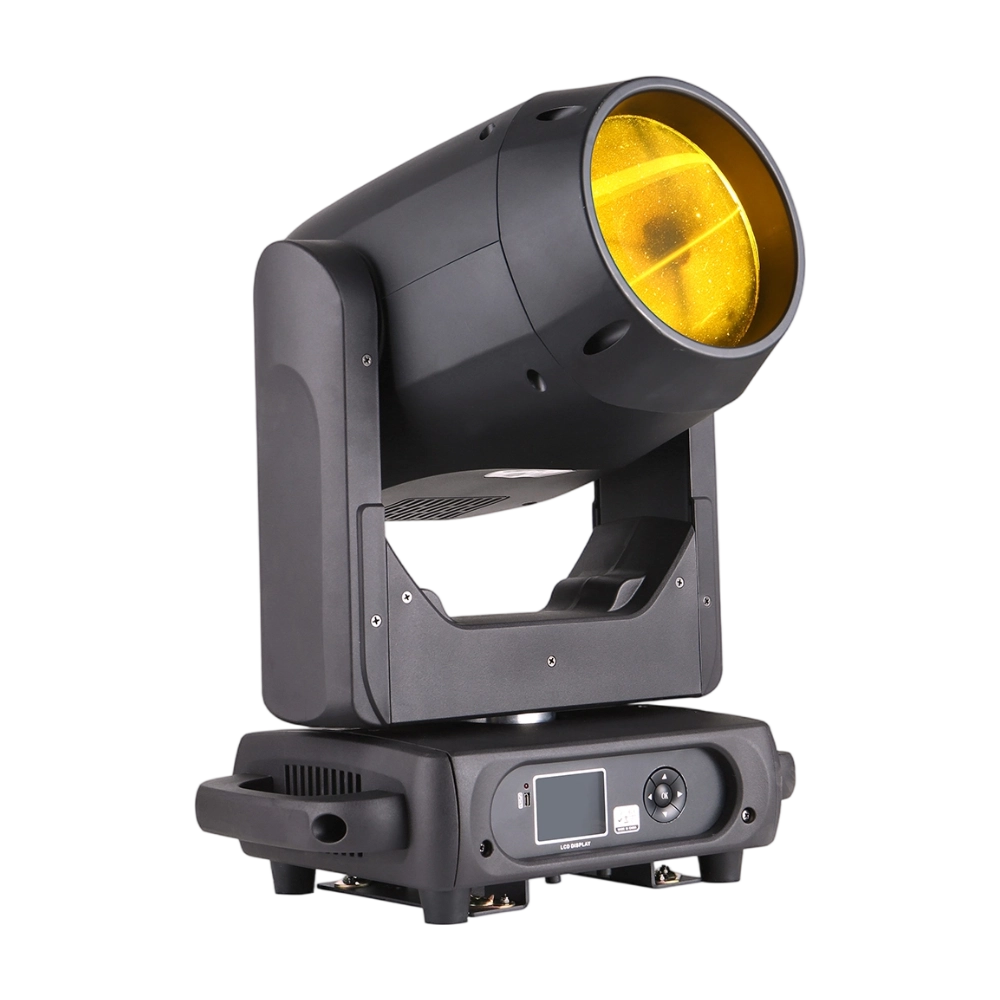
Moving Head Stage Light BEAM 360
BEAM360 is a 400W high-power moving head beam equipped with an OSRAM SIRIUS 311W discharge lamp, delivering a sharp 1.8° beam with super brightness. It features 14 colors + open, 12 fixed metal gobos + open, and dual prisms (8-facet circular + 8+16 multi-facet combination) for dynamic aerial effects. With 540° pan / 270° tilt, 16-bit movement, and linear frost and focus, BEAM360 ensures precision and versatility. Compact yet powerful, it rivals traditional 575W moving heads, making it ideal for concerts, clubs, and large-scale stage productions.
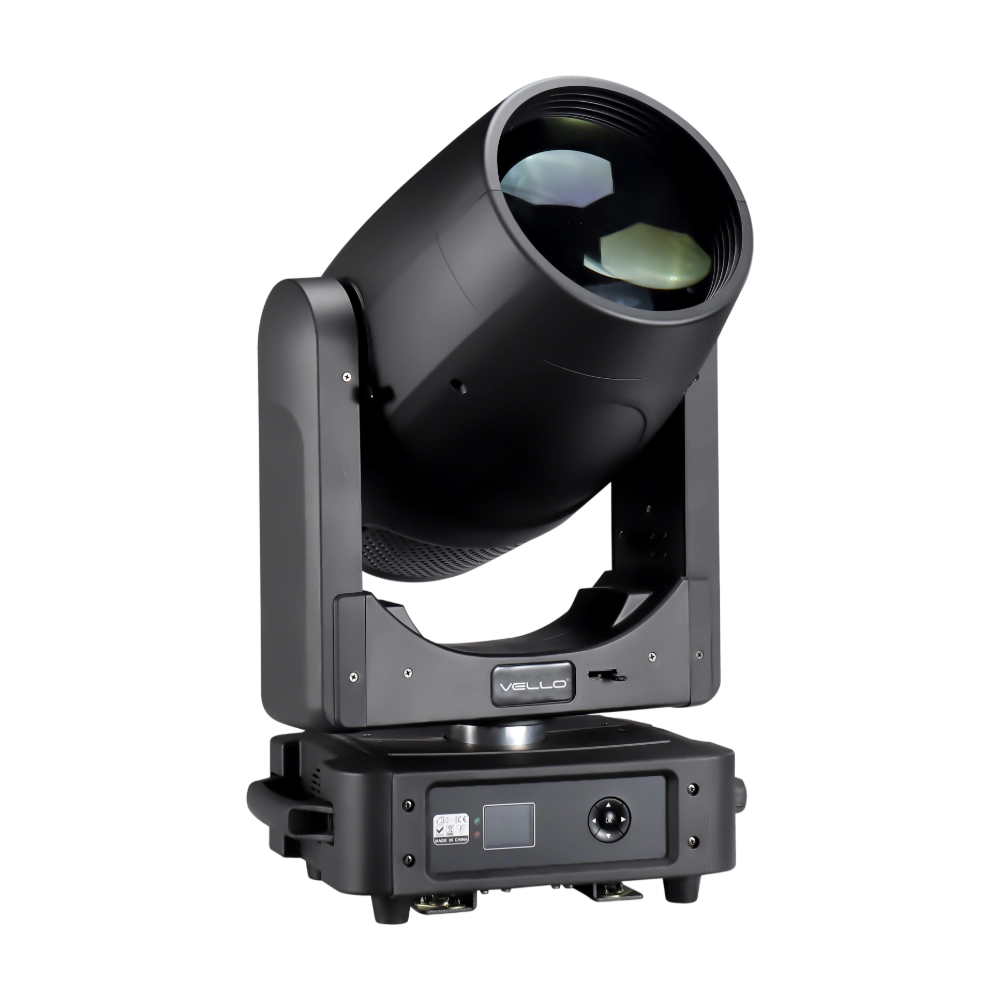
Moving Head Light BEAM 450
The BSW450 is a high-performance moving head fixture equipped with an original Osram 420W bulb, delivering exceptional brightness, precision, and versatility. Designed for professional stage applications, it seamlessly combines beam, spot, and wash functions in one compact unit, making it a powerful all-in-one lighting solution.
Over 20 Years of Innovation in Stage & Studio Lighting
© 2026 VELLO. All Rights Reserved. 粤ICP备20023734号
Join our socials
VELLO
Whatsapp: +8613902276704
Vello Lighting
VelloLights