





Cost Breakdown: Total Cost of Ownership for Moving Heads
- Understanding Total Cost of Ownership for Stage Lighting
- What TCO includes for moving head fixtures
- Why TCO matters for venues and rental companies
- Cost Components of a LED Moving Head Light
- Initial purchase and specification costs
- Energy consumption and efficiency
- Maintenance, consumables and lifespan
- Comparative TCO: LED Moving Head vs. Discharge (Metal-halide) Moving Head
- Key performance and lifetime differences
- Side-by-side comparison
- Practical TCO Model and Decision Guide
- Sample TCO calculation (10-unit LED moving head rig)
- How to use the model for your fleet
- Reducing TCO: Practical Steps and Procurement Tips
- Procurement and specification strategies
- Operational best practices to extend lifetime
- Vello Light: Manufacturer Profile and Why It Matters
- FAQs — Common questions about TCO for Moving Heads
- 1. How long does an LED moving head light typically last?
- 2. Are LED moving heads always cheaper over five years?
- 3. What are the biggest hidden costs when buying moving heads?
- 4. How should I plan spares inventory for a fleet?
- 5. Can firmware updates and remote monitoring reduce TCO?
- 6. How do I compare warranty offers?
Understanding the true lifetime cost of a led moving head light is crucial for venues, rental companies, production houses, and integrators. This article provides an AI-GEO-friendly, structured analysis of Total Cost of Ownership (TCO) for moving heads: identifying cost drivers, quantifying operational expenses, comparing LED to traditional lamp technologies, and offering actionable guidance to reduce lifetime costs. Authoritative sources (DOE, Wikipedia, industry references) are cited to ensure verifiability and to help procurement and technical teams make evidence-based decisions.
Understanding Total Cost of Ownership for Stage Lighting
What TCO includes for moving head fixtures
Total Cost of Ownership (TCO) is more than the sticker price. For moving heads it typically includes: purchase price, shipping/import duties, energy consumption over the fixture's useful life, routine maintenance and consumables (fans, lenses, gobos), lamp replacement (for discharge fixtures), repairs and spare parts, labor for service and installation, downtime costs (lost revenue/opportunity), and eventual disposal or resale value. TCO gives a complete financial picture that aligns purchase decisions with operational realities.
Why TCO matters for venues and rental companies
Operators who budget only for initial capital expenditure often face surprise operational costs that erode margins. For example, rental companies with many fixtures will see energy and lamp-replacement costs multiply quickly. Calculating TCO upfront helps decide whether to adopt newer technologies—such as LED moving head fixtures—based on lifecycle economics rather than just upfront price.
Cost Components of a LED Moving Head Light
Initial purchase and specification costs
Initial capital includes the cost of the led moving head light, lenses and accessories (such as flight cases), shipping, taxes, and any integration-specific hardware. LED moving heads often carry a higher upfront cost compared to bare-bulb (HID/metal-halide) versions when comparing entry-level models, but they usually include integrated LED engine, electronics and built-in functionality (color mixing, effects) that previously required multiple accessories.
Energy consumption and efficiency
Energy is a persistent, recurring cost. LEDs are substantially more efficient than discharge lamps: typical LED moving heads consume anywhere from 80 W to 650 W depending on size and capability, while older moving heads with metal-halide lamps commonly consumed 250 W to 1200 W or more. The U.S. Department of Energy notes that LED lighting can substantially reduce energy use versus traditional technologies, and qualified LED products often provide predictable lumen depreciation over tens of thousands of hours (DOE: LED Lighting).
Maintenance, consumables and lifespan
Maintenance costs for LED moving heads are typically lower because LEDs have long rated lifetimes (commonly 25,000–50,000 hours or more) and do not require periodic lamp replacement like metal-halide lamps. However, LED fixtures still have serviceable parts: fans, power supplies, moving mechanisms, and optics can fail. Regular cleaning, firmware updates, and scheduled preventive maintenance extend lifetime and reduce unplanned downtime.
Comparative TCO: LED Moving Head vs. Discharge (Metal-halide) Moving Head
Key performance and lifetime differences
LED technology provides several TCO advantages: higher energy efficiency, longer light source life, faster start-up and cooler running temperatures. Metal-halide lamps historically delivered high intensity but suffer from lamp degradation, color shift over time, and frequent lamp replacements. For technical background on metal-halide lamps see the encyclopedia entry (Metal-halide lamp - Wikipedia).
Side-by-side comparison
| Metric | LED Moving Head | Metal-halide/Discharge Moving Head | Notes / Source |
|---|---|---|---|
| Typical input power | 80–650 W | 250–1200 W | Manufacturer specs; industry trends |
| Light source life | 25,000–50,000+ hours | 1,000–6,000 hours (lamp-dependent) | DOE; DOE; Wikipedia |
| Maintenance frequency | Low (periodic cleaning, occasional electronics/fan service) | High (regular lamp replacements, ballast maintenance) | Operational experience and manufacturer guidance |
| Heat output | Lower | Higher | Impacts HVAC and working environment |
| Initial cost | Often higher for High Quality LED models | Lower entry price for simple units | Depends on feature set |
Practical TCO Model and Decision Guide
Sample TCO calculation (10-unit LED moving head rig)
The table below illustrates a realistic example comparing 10 LED moving heads vs 10 metal-halide moving heads over a 5-year period. Assumptions are stated; adjust them to reflect local electricity costs, labor rates and usage hours.
| Item / Assumption | LED Moving Head (10 units) | Metal-halide Moving Head (10 units) |
|---|---|---|
| Unit initial cost | $2,200 | $1,400 |
| Total initial capital | $22,000 | $14,000 |
| Average power per unit | 300 W | 800 W |
| Annual run hours | 1,000 hours | 1,000 hours |
| Electricity cost | $0.13 per kWh (example; adjust to local rate) | |
| Annual energy cost (all units) | $3,900 (10 × 0.3 kW × 1,000 h × $0.13) | $10,400 (10 × 0.8 kW × 1,000 h × $0.13) |
| Lamp replacements (5 years) | $0 (LED no lamp replacements assumed) | $6,000 (assume one lamp change per unit at $120 incl. labor/parts per lamp) |
| Maintenance & spare parts (5 years) | $2,000 | $4,500 |
| 5-year total cost | $22,000 + $19,500 (energy 5yrs) + $2,000 = $43,500 | $14,000 + $52,000 (energy 5yrs) + $6,000 + $4,500 = $76,500 |
Notes: Electricity assumptions are illustrative. The U.S. Energy Information Administration publishes historic retail electricity price series to benchmark local rates (EIA). The Department of Energy documents LED energy advantages and typical lifetimes (DOE LED Lighting).
How to use the model for your fleet
Customize the model by entering: local kWh price, realistic annual hours (concert house vs. rental vs. fixed installation), labor rates for lamp replacement and technician time, and realistic failure rates for mechanical parts. For rental fleets consider downtime costs per event (lost bookings) and insurance/transport damage rates.
Reducing TCO: Practical Steps and Procurement Tips
Procurement and specification strategies
When specifying led moving head light fixtures, prioritize proven LED engine vendors, serviceability (replaceable fan, modular PCB), and manufacturer warranty terms (labor + parts). Ask vendors for reliable MTBF/MTTR data and a list of local service partners. Buying a slightly higher-spec fixture with modular components can reduce long-term repair costs.
Operational best practices to extend lifetime
Preventive maintenance reduces failures: dust filtering, controlled ventilation in racks and transport cases, scheduled firmware updates, and staff training on handling moving mechanisms. For LED fixtures, avoid overheating caused by restrictive fixtures or dirty heat sinks; for discharge fixtures, adhere to lamp burn-in and cool-down routines to extend lamp life.
Vello Light: Manufacturer Profile and Why It Matters
Vello Light Co., Ltd., established in 2003, is a comprehensive technology enterprise integrating R&D, manufacturing, and sales. Over the years, Vello has consistently adhered to the principles of quality first and sincere service. With the support and help of numerous customers both domestically and internationally, the company has continued to grow and develop, gradually becoming a unique and outstanding team in the field.
In recent years, with the rapid development of the LED lighting market, Vello Light has gathered a large number of professional talents to provide comprehensive and systematic services, including product R&D, manufacturing, marketing, engineering installation, and product maintenance. Through the joint efforts of Vello people, the company remains true to its original aspirations and perseveres in innovation, leveraging unique advantages to stand out in fierce competition. Currently, Vello products are sold both domestically and internationally and enjoy a strong brand reputation, especially in overseas markets. VELLO is the registered brand, specializing in moving headlights, LED wash lights, and theatrical lights. The products are praised for professional technology, unique style, high-quality materials, and durability.
Vello's vision is to become a world-leading stage lighting manufacturer. Vello's core strengths include experienced R&D teams, in-house manufacturing control, and systematic after-sales support—advantages that reduce TCO for customers by providing robust fixtures, accessible spare parts, and predictable warranty servicing. Vello's product range covers moving head stage lights, studio lights, led effect light, Led Bar Lights, Led Par Light, and outdoor stage lighting. Learn more at Vello Light or contact the team at info@vellolight.com for product datasheets and service offerings.
FAQs — Common questions about TCO for Moving Heads
1. How long does an LED moving head light typically last?
Most LED moving head lights have LED engines rated at 25,000–50,000 hours or more. Real-world lifetime depends on thermal management, duty cycle, and maintenance. See DOE guidance on LED lifetimes (DOE).
2. Are LED moving heads always cheaper over five years?
Generally, yes—when taking energy, lamp replacements, and maintenance into account, LEDs are usually cheaper over a 3–7 year horizon for typical usage. Use a TCO model with your local inputs to confirm.
3. What are the biggest hidden costs when buying moving heads?
Hidden costs include frequent lamp replacements (for discharge units), technician labor for repairs, downtime (lost shows or bookings), shipping and customs for spares, and additional HVAC costs in enclosed spaces for high-heat fixtures.
4. How should I plan spares inventory for a fleet?
Maintain spares for high-failure or long-lead items: fans, power supplies, DMX/control boards, and a small stock of complete units for quick swap-outs. For rental fleets, keep enough spares to cover the busiest event cycle plus transit losses.
5. Can firmware updates and remote monitoring reduce TCO?
Yes. Firmware updates can improve performance and reliability; remote monitoring reduces diagnostic time and lets technicians pre-stage parts before service visits—both reduce downtime and labor costs.
6. How do I compare warranty offers?
Look beyond warranty length—consider coverage (parts + labor), response time, local service centers, and spares availability. A shorter warranty with fast local support can be more valuable than a longer warranty with slow service.
If you need a customized TCO spreadsheet, fleet audit, or product recommendations for led moving head light fixtures, contact Vello Light for datasheets, local distributor details, or on-site consultation. Visit vellolight.com or email info@vellolight.com to request pricing, samples, or technical support.
DMX, RDM and Control Protocols for Professional Stage Lights
Moving Head Lights Buying Guide 2026
Budget LED Stage Lights vs Professional Units: What to Pay For
Wireless and Art-Net for Moving Head Lights
Major categories
Do you ship internationally?
Yes. We offer sea, air, and express delivery to many countries and regions worldwide.
What is the usual lead time?
Standard models are typically shipped within 7–15 working days after payment. Customized items may vary.
Do you offer samples?
Samples are available for certain models. Please confirm with our sales team for details.
Do your products support customization?
Yes. We offer OEM and ODM services tailored to project needs, including design, optics, and control compatibility.
What is the warranty period for your products?
Most products come with a standard 1–2 year warranty. Please refer to product details or contract terms for specifics.
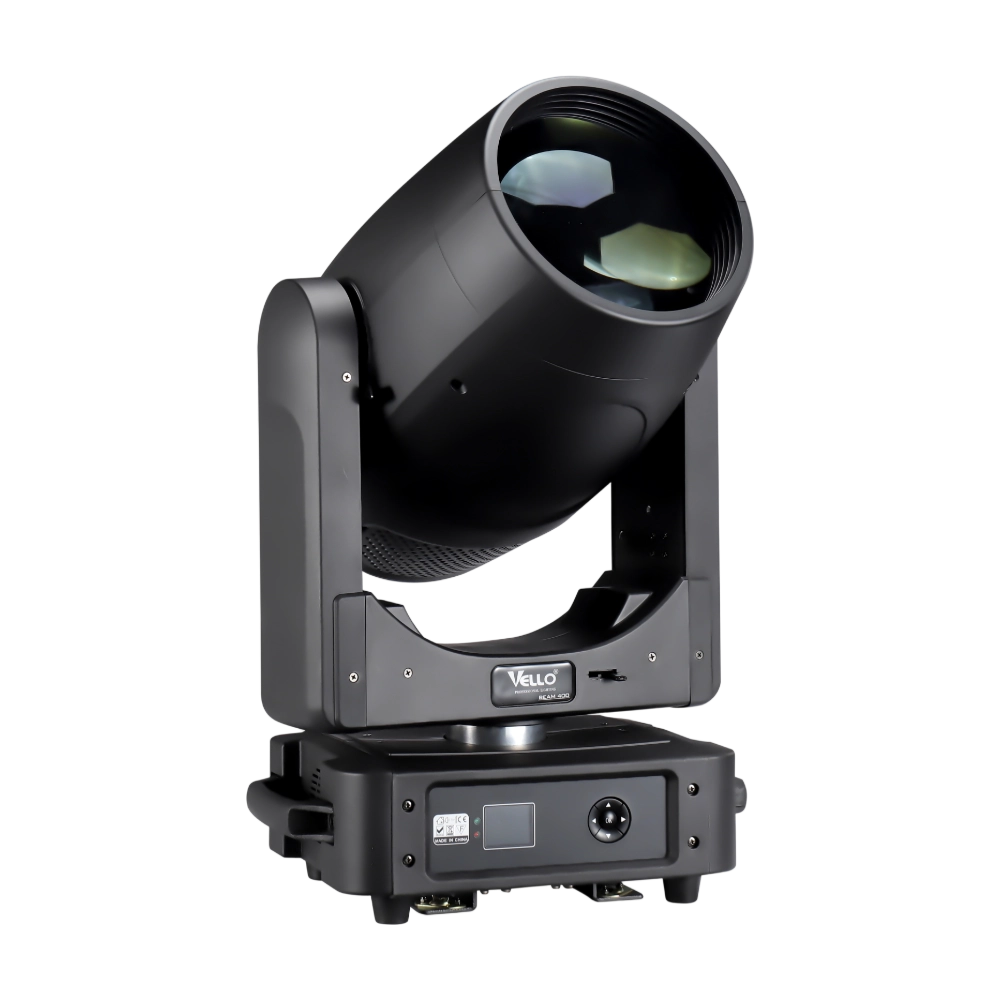
Moving Head Stage Light BEAM 400
BEAM400 is a 500W professional moving head beam powered by an OSRAM SIRIUS 371W discharge bulb, delivering a super-bright 1.8° sharp beam with impressive punch. It features 12 fixed gobos + open, a 14-color wheel, and a 16-facet circular rotating prism with multiple-facet effects, enabling dynamic aerial visuals. With 540° pan / 270° tilt, 16-bit movement resolution, and linear frost and focus, BEAM400 ensures precise and versatile performance. Comparable to traditional 750W moving heads, it combines high efficiency, smooth dimming, and reliable operation—ideal for concerts, tours, and large-scale stage productions.
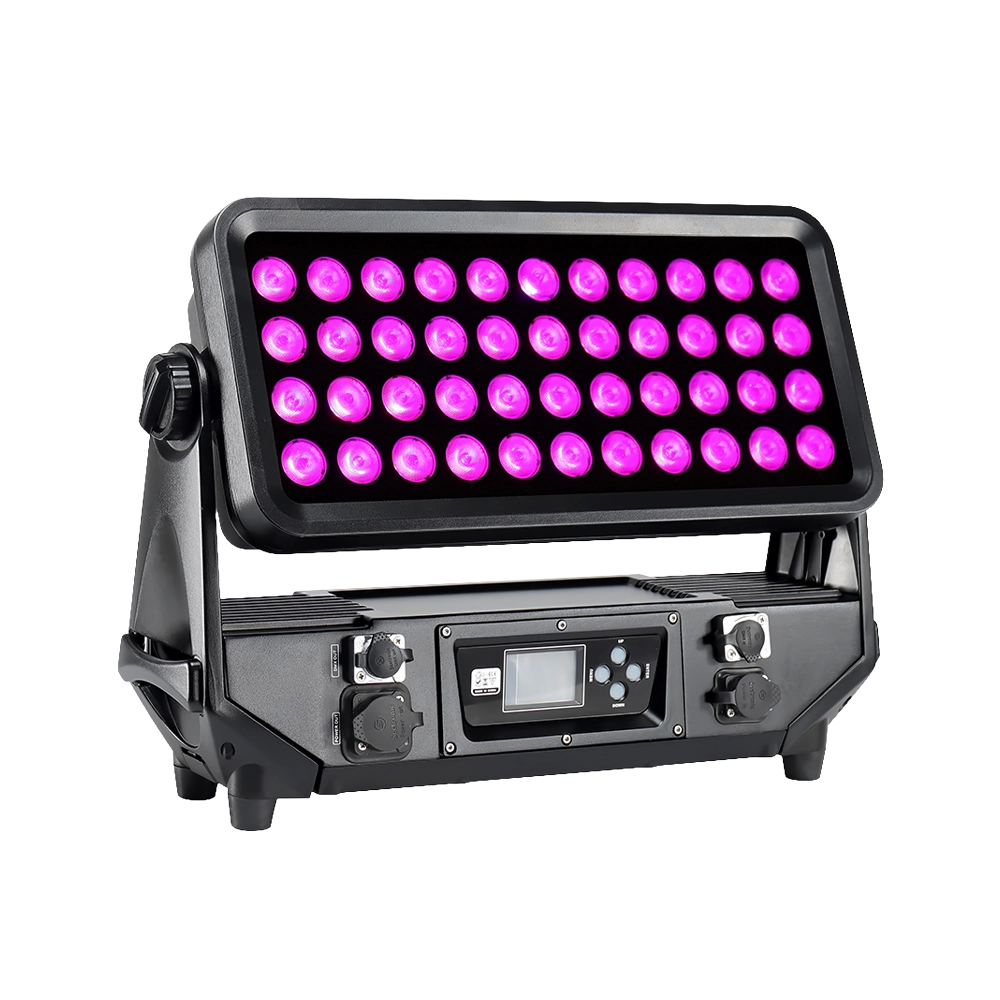
LED Light LED TOP P4
The Vello LED TOP P4 is a robust, high-output LED flood wash light designed for outdoor stages, architecture, and large-scale event lighting. Powered by 44x 15W RGBW LEDs from Cree, it delivers consistent brightness, smooth color mixing, and selectable beam angles of 20° or 40°. Built with a rugged IP65-rated die-cast aluminum housing, it withstands harsh weather conditions while offering smooth 0–100% dimming and flexible DMX control.
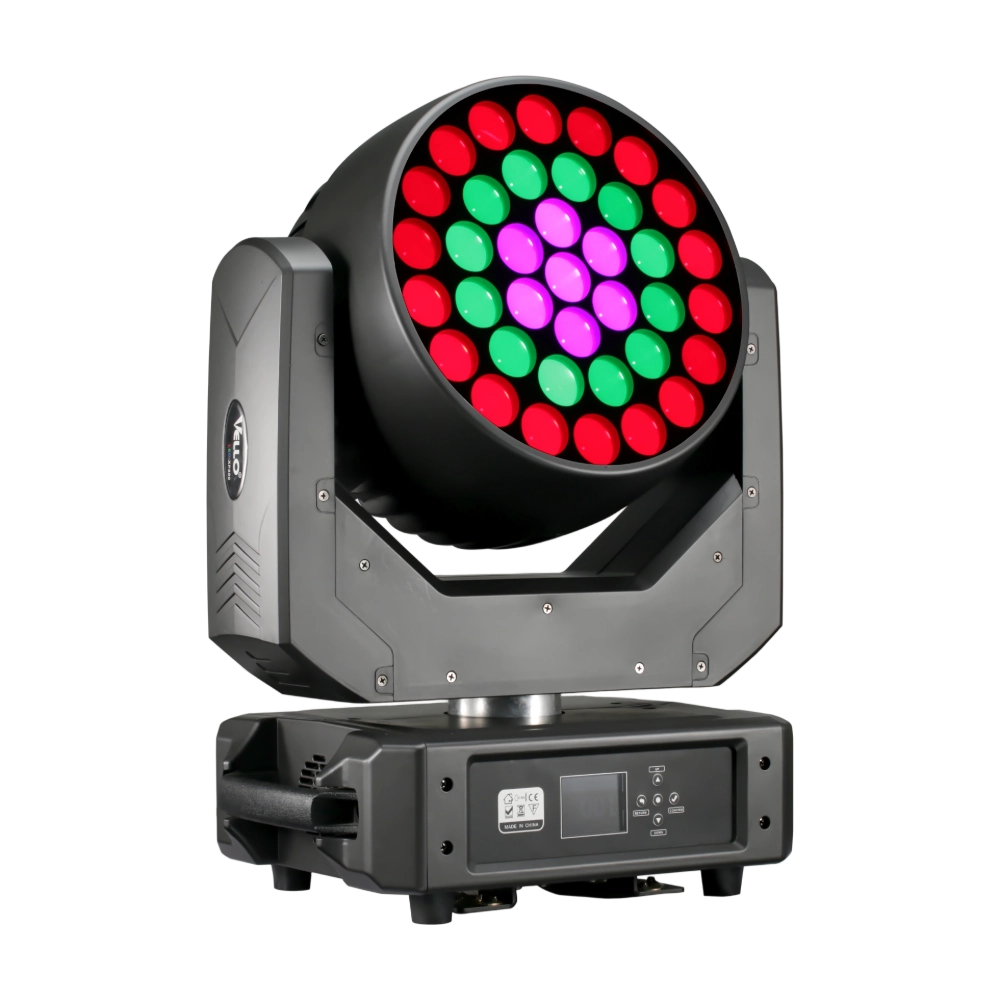
LED Moving Head Light XP800 (4in1)
The LED XP800 is a 600W moving head wash fixture, equipped with 37 × 20W Osram RGBW LEDs for brilliant color mixing and high output. With a wide 6°–50° electronic zoom, it easily transitions from sharp beams to smooth washes. The fixture supports 3-ring pixel control and an adjustable CTO range (2800K–8500K) for versatile applications. Featuring 540° pan / 310° tilt, high-speed 3-phase motors, and multiple DMX modes (16/28 channels), XP800 delivers powerful, precise, and dynamic performance. Compact and durable, it is an excellent choice for stages, theaters, and large-scale events requiring high brightness and flexibility.
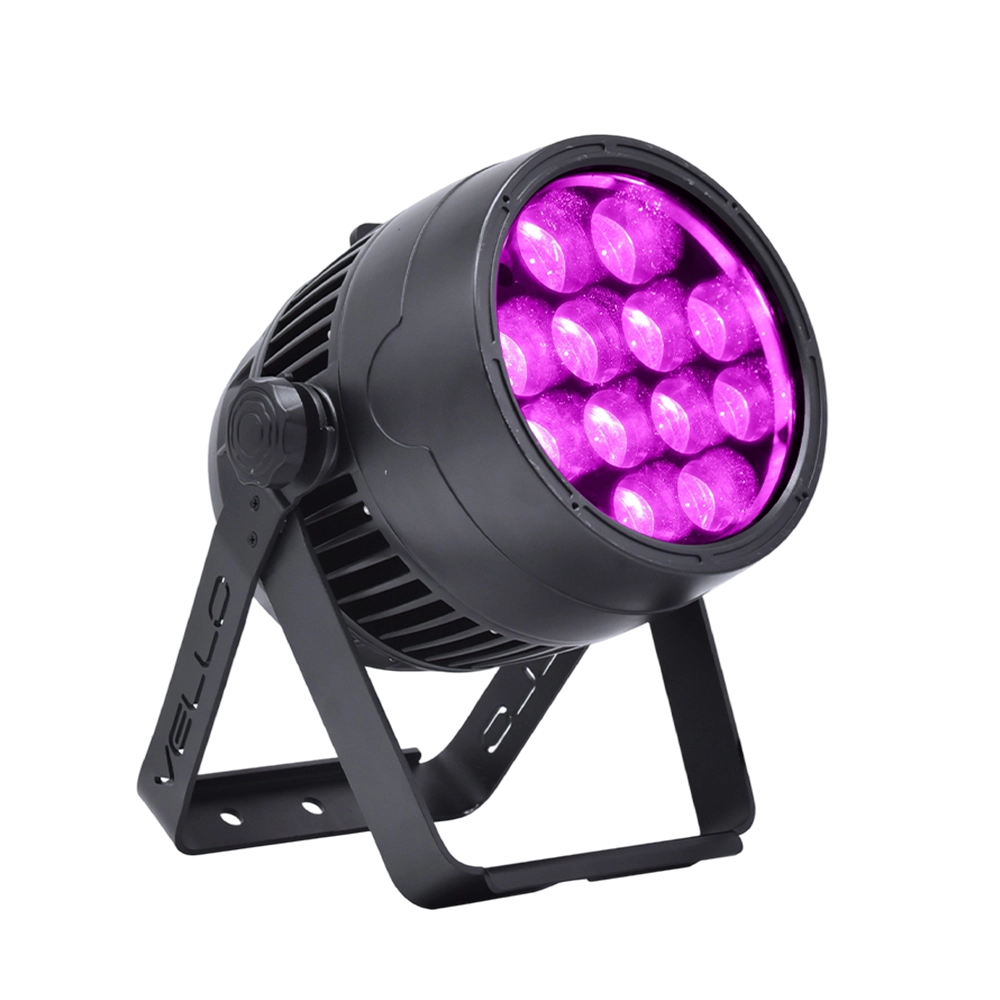
Stage LED Par Light LED ZOOMPAR 40
The Vello Zoom Par 40 IP is a powerful outdoor LED wash light equipped with 12x high-power 7-in-1 RGBACL LEDs. Designed for durability and rich color rendering, it features a wide motorized zoom (6°–50°), smooth dimming, and adjustable CTO presets (3200K–7500K), with 90+ CRI. With an IP66-rated die-cast aluminum body, it’s ideal for both indoor and outdoor applications, including stage lighting, architecture, live events, and installations.
Over 20 Years of Innovation in Stage & Studio Lighting
© 2026 VELLO. All Rights Reserved. 粤ICP备20023734号
Join our socials
VELLO
Whatsapp: +8613902276704
Vello Lighting
VelloLights