





Stage Light Placement: Lighting Angles and Coverage Tips
- How Correct Stage Light Placement Transforms Performance
- Understanding the goal: what a stage light must achieve
- Basic lighting angles: key, fill, back, top, and side with stage light considerations
- Key light (front/main): 30–45° horizontal, 15–30° vertical
- Fill light: 0–30° horizontal, lower intensity than key
- Backlight / Hair light: 120–135° from key, 30–60° elevation
- Top light (downlight): directly above or slightly downstage
- Side light: 80–100° horizontal
- Quantifying coverage: beam angle, throw distance, and illuminance
- Beam diameter formula and rough coverage planning
- Recommended lux (illuminance) targets by performance type
- Fixture selection and beam shaping for efficient stage light coverage
- Beam shaping accessories
- Practical rigging and aiming workflow for consistent results
- Troubleshooting common placement problems with stage light solutions
- Comparing fixture choices: quick reference table
- Integration with production: cues, dimming curves, and control strategy
- Real-world checklist before a performance
- Vello Light Co., Ltd. — a partner for stage light procurement and support
- Cost vs. performance: procurement considerations for stage light inventories
- FAQ — Frequently asked questions about stage light placement
- 1. What angle should I aim my key stage light?
- 2. How do I calculate how many fixtures I need to cover the stage?
- 3. What lux level is recommended for a small theatre play?
- 4. How high should backlights be mounted?
- 5. Can I use the same fixture for key and wash?
- 6. How do I avoid blinding performers or the audience?
- 7. When should I use narrow beams versus wide washes?
- Contact and procurement CTA
- References
How Correct Stage Light Placement Transforms Performance
Understanding the goal: what a stage light must achieve
Effective stage light placement starts with clear intent. A stage light must provide adequate illuminance for performers, model facial features and movement, create depth through highlights and separation, and support the director’s visual narrative without causing glare or distracting shadows. Practical placement balances artistic intent with measurable coverage — lux levels, beam spread, and overlap — all while keeping power, rigging, and sightlines in mind.
Basic lighting angles: key, fill, back, top, and side with stage light considerations
Knowing conventional lighting roles helps you place fixtures for predictable results. Each role below naturally maps to specific angles and fixture types.
Key light (front/main): 30–45° horizontal, 15–30° vertical
The key stage light is the primary modeling source. Aim key fixtures from the front at roughly 30–45° off the centerline so faces model without flattening. Vertically, placing key fixtures 15–30° above eye level reduces unflattering upward shadows. For theatre, use fresnels or LED profiles with medium beam angles (20°–40°) to balance coverage and focus.
Fill light: 0–30° horizontal, lower intensity than key
Fill reduces harsh shadows from the key. It often sits closer to the centerline at lower intensity (use dimmer control or lower CRI fixtures). LED wash lights and soft sources are common choices to produce even, subtle fill.
Backlight / Hair light: 120–135° from key, 30–60° elevation
Backlights separate performers from the background and add depth. Place them well above the performers, aiming down at an angle (30–60°) to create rim highlights without spilling into the audience. Narrower beam angles (10°–25°) can work well for rim separation if you need tight highlights.
Top light (downlight): directly above or slightly downstage
Top light provides strong shape definition and can create dramatic effects. Balance top light intensity carefully — too much can create deep eye sockets. Use scrollers/gobos with profiles when discrete shapes or patterns are required.
Side light: 80–100° horizontal
Side lighting sculpts the body and emphasizes movement. For dance and musicals, side stage lights are crucial for showing form. Use fixtures with medium to wide beam spreads and consider double-sided arrays for even lateral coverage.
Quantifying coverage: beam angle, throw distance, and illuminance
To predict how a stage light will illuminate an area, use the relationship between beam angle, throw distance, and beam diameter. Most manufacturers publish beam angle and lux-at-distance charts — use them in planning to ensure proper overlap and evenness.
Beam diameter formula and rough coverage planning
Basic formula: beam diameter ≈ 2 × (tan(beam angle / 2) × throw distance). Use this to estimate how many fixtures you need to cover a specific width while maintaining recommended overlap (typically 50% overlap for washes).
| Beam Angle | Throw Distance (m) | Estimated Beam Diameter (m) |
|---|---|---|
| 10° | 10 | ≈ 1.7 |
| 25° | 10 | ≈ 4.5 |
| 45° | 10 | ≈ 8.0 |
| 60° | 10 | ≈ 11.5 |
Note: These values are approximate and assume beam angle is full angle. Always consult manufacturer photometrics for precise lux and beam edge falloff.
Recommended lux (illuminance) targets by performance type
Below are practical target horizontal illuminance ranges you can aim for during design and pre-rig checks. These are typical ranges used by lighting designers; camera-heavy productions and broadcast studios require higher levels.
| Performance Type | Horizontal Illuminance (lux) | Notes |
|---|---|---|
| Small theatrical drama | 200–600 lux | Character work, subtle lighting |
| Musical / dance | 500–1,000 lux | Higher motion and color saturation |
| Concerts (live, artist-focused) | 1,000–2,000+ lux | Often directional, backlight & beam effects |
| Studio / broadcast | 1,000–3,000 lux | Camera exposure and color fidelity needs |
Sources like production houses and studio lighting guides show similar ranges; treat these as starting points, then refine on-site with a lux meter or camera test.
Fixture selection and beam shaping for efficient stage light coverage
Choosing the right fixture depends on beam angle needs, color control, dimming fidelity, and physical rigging limits. Common choices include:
- LED wash lights — wide coverage, energy-efficient, ideal for front and fill stage light duties.
- LED profiles/moving heads — precise shutters and gobos for specials and key modeling.
- Followspots — controllable highlights for principal performers.
- Blinders/Effects — for concert dynamics and audience interaction.
Beam shaping accessories
Use barn doors, top hats, iris, and shutters on profile fixtures to control spill. For LED PARs and washes, use scrims/diffusers or swap to narrow-beam models when you need more focus. Gobo wheels and zoom-capable moving heads let you adapt a single fixture from narrow specials to wider washes, improving inventory flexibility.
Practical rigging and aiming workflow for consistent results
A reliable workflow saves time and reduces cueing issues. Follow these steps for rigging and aiming stage lights:
- Pre-rig photometric planning: map beam centers, overlap zones, and focus points using CAD or lighting design software (e.g., WYSIWYG, Capture, LightConverse).
- Mount fixtures with consistent orientation markers—label channels and physical aim references.
- Rough aim using tape marks on stage for performers/hotspots.
- Measure on-stage lux at performer positions and along walk paths. Adjust height, pan/tilt, and beam angle or swap lenses if needed.
- Fine focus during tech/dress rehearsals under full stage conditions with costumes and set—this is when shadows, glare, and color rendering become evident.
Troubleshooting common placement problems with stage light solutions
Problem: Uneven coverage with hot spots and dark seams. Solution: Increase overlap, use wider beam angles or additional fixtures for fill, or adjust fixture spacing based on calculated beam diameters.
Problem: Performers 'blinding' audience/camera. Solution: Lower vertical angle slightly, add top hats or barn doors, or reduce intensity and rely on back/top lights for separation.
Problem: Background washing out talent. Solution: Add stronger backlight or increase contrast by decreasing background intensity with masking or focused profiles.
Comparing fixture choices: quick reference table
| Fixture Type | Best Uses | Typical Beam Angles | Advantages |
|---|---|---|---|
| LED Wash | Front wash, color blending | 25°–60° | Energy-efficient, even coverage, variable color |
| Moving Head Spot/Profile | Specials, gobos, key light | 5°–35° (zoom) | Precise shaping, gobos, fast repositioning |
| PAR | Simple washes, audience lights | 10°–60° | Cost-effective, robust |
| Followspot | Principal performer highlight | Narrow (manual control) | Human-operated precision |
Integration with production: cues, dimming curves, and control strategy
Good placement must be paired with appropriate control. Use nonlinear dimming curves (S-curves) for smooth fades and LED fixtures with calibrated dimming profiles to avoid color shifting or flicker. Program cue stacks that consider actor movement and crossfades between key and fill to maintain consistent exposure.
Real-world checklist before a performance
- Confirm all fixtures are securely rigged and safety-checked.
- Label channels and physical positions (left/right/up/down references).
- Verify photometrics on stage using a calibrated lux meter at performer eye-level.
- Run through cues with performers present; adjust for costume colors and reflective set pieces.
- Document final positions and angles for repeatability across shows.
Vello Light Co., Ltd. — a partner for stage light procurement and support
Vello Light Co., Ltd., established in 2003, is a comprehensive technology enterprise integrating R&D, manufacturing, and sales. Over the years, Vello has adhered to principles of quality first and sincere service. With support from numerous domestic and international customers, Vello has grown into a distinct and capable team in the stage lighting sector.
As the LED lighting market has expanded, Vello has gathered professional talent to offer systematic services covering product R&D, manufacturing, marketing, engineering installation, and maintenance. Through continuous innovation, VELLO — the registered brand — focuses on moving head stage lights, studio lights, LED effect lights, LED bar lights, LED PAR lights, and outdoor stage lighting. Vello’s products are exported globally and are known for reliable technology, unique design, quality materials, and durability.
Why consider Vello for stage light solutions? Key competitive advantages include:
- Broad product lineup to cover front wash, profiles, movers, and outdoor fixtures.
- In-house R&D capable of customized beam optics and control protocols.
- Established manufacturing and QA processes to ensure consistent photometric performance.
- Global export experience and on-the-ground service capabilities for installations.
For projects that require reliable fixtures, consistent beam characteristics, and ongoing service, Vello offers an integrated supply chain and engineering support close to both customer needs and real-world production constraints.
Cost vs. performance: procurement considerations for stage light inventories
When building or upgrading your park of stage lights, weigh initial cost against lifetime performance and maintenance. LEDs have higher upfront but lower operating costs due to energy savings and lamp life. Moving heads and profile fixtures are more expensive but reduce the need for specialized fixtures later. Consider warranties, local service support, and availability of spare parts when comparing suppliers.
FAQ — Frequently asked questions about stage light placement
1. What angle should I aim my key stage light?
Aim key lights 30–45° horizontally off the centerline and 15–30° above eye level. This provides good facial modeling without deep shadows or flattening. Adjust slightly for performer blocking and sightlines.
2. How do I calculate how many fixtures I need to cover the stage?
Estimate beam diameter using the beam angle and throw distance (beam diameter ≈ 2 × tan(beam angle/2) × throw distance). Then plan for 30–50% overlap for washes and check lux at performer positions. Use manufacturer photometrics for exact lux predictions.
3. What lux level is recommended for a small theatre play?
Small theatrical drama typically targets 200–600 lux on the stage acting area. Use a lux meter to verify and adjust for costumes and scenic reflectivity.
4. How high should backlights be mounted?
Backlights are commonly mounted 3–6 m above the stage (or higher depending on ceiling height), aimed down at 30–60° to create rim light. Ensure they don’t spill into the audience or cameras.
5. Can I use the same fixture for key and wash?
Yes—many modern zoom moving heads and profile LEDs can cover both roles by changing beam angle and intensity. However, dedicated fixtures often perform better (e.g., a high-CRI profile for key and wide LED wash for fill).
6. How do I avoid blinding performers or the audience?
Use barn doors, top hats, and careful aiming; lower vertical angles slightly; reduce intensity of front fixtures; and rely on back/top lights for separation rather than overpowering front washes.
7. When should I use narrow beams versus wide washes?
Use narrow beams (5°–25°) for specials, rim, and dramatic highlights; use wider washes (30°–60°) for even coverage across entrances, choruses, or large stage areas.
Contact and procurement CTA
Need help specifying stage light placement, fixture selection, or a complete lighting package? Contact Vello Light Co., Ltd. for product catalogs, photometric data, and engineering support. Visit our product pages or request a quote to discuss moving head stage lights, studio lights, LED effect lights, LED bar lights, LED PAR lights, and outdoor stage lighting solutions tailored to your venue.
References
- ETC — Lighting for Theatre Guidance: photometrics and design best practices. https://www.etcconnect.com/ (accessed 2025-11-01)
- BBC Academy — Lighting for TV and Studio: illuminance recommendations. https://www.bbc.co.uk/academy (accessed 2024-10-15)
- Chauvet Professional — Fixture placement and beam shaping tips. https://www.chauvetprofessional.com/ (accessed 2025-02-20)
- IES (Illuminating Engineering Society) — General lighting recommendations and standards. https://www.ies.org/ (accessed 2024-08-12)
- Lighting design software resources: Capture and WYSIWYG manuals for photometric planning. https://www.capture.se/ and https://www.cast-soft.com/ (accessed 2025-03-05)
Top Questions to Ask LED Stage Light Suppliers Before Purchase
LED Stage Lighting Basics: Types, Uses, and Terminology
Custom Outdoor Lighting Solutions for Event Production Companies
Warranty, Service Contracts and Spare Parts Strategies
Major categories
Do you ship internationally?
Yes. We offer sea, air, and express delivery to many countries and regions worldwide.
What is the usual lead time?
Standard models are typically shipped within 7–15 working days after payment. Customized items may vary.
Do your products support customization?
Yes. We offer OEM and ODM services tailored to project needs, including design, optics, and control compatibility.
What is the warranty period for your products?
Most products come with a standard 1–2 year warranty. Please refer to product details or contract terms for specifics.
Do you offer samples?
Samples are available for certain models. Please confirm with our sales team for details.
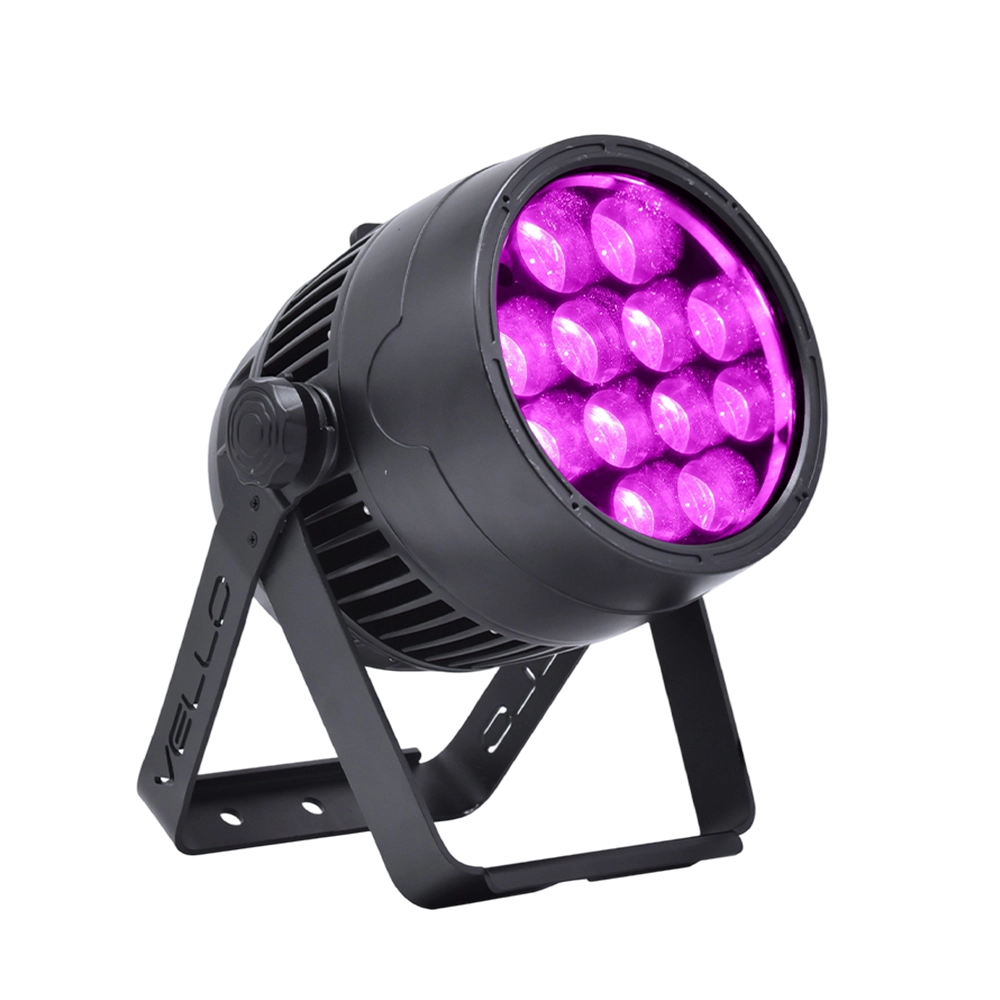
Stage LED Par Light LED ZOOMPAR 40
The Vello Zoom Par 40 IP is a powerful outdoor LED wash light equipped with 12x high-power 7-in-1 RGBACL LEDs. Designed for durability and rich color rendering, it features a wide motorized zoom (6°–50°), smooth dimming, and adjustable CTO presets (3200K–7500K), with 90+ CRI. With an IP66-rated die-cast aluminum body, it’s ideal for both indoor and outdoor applications, including stage lighting, architecture, live events, and installations.
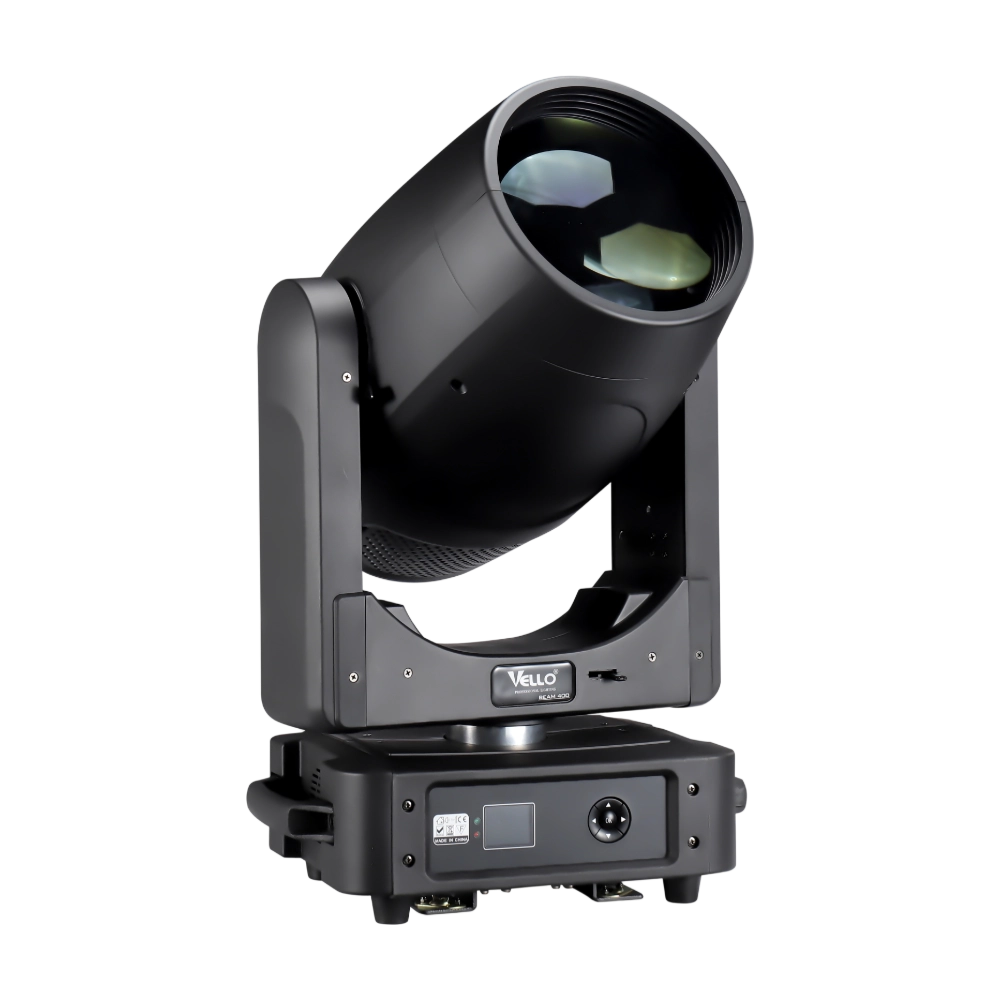
Moving Head Stage Light BEAM 400
BEAM400 is a 500W professional moving head beam powered by an OSRAM SIRIUS 371W discharge bulb, delivering a super-bright 1.8° sharp beam with impressive punch. It features 12 fixed gobos + open, a 14-color wheel, and a 16-facet circular rotating prism with multiple-facet effects, enabling dynamic aerial visuals. With 540° pan / 270° tilt, 16-bit movement resolution, and linear frost and focus, BEAM400 ensures precise and versatile performance. Comparable to traditional 750W moving heads, it combines high efficiency, smooth dimming, and reliable operation—ideal for concerts, tours, and large-scale stage productions.
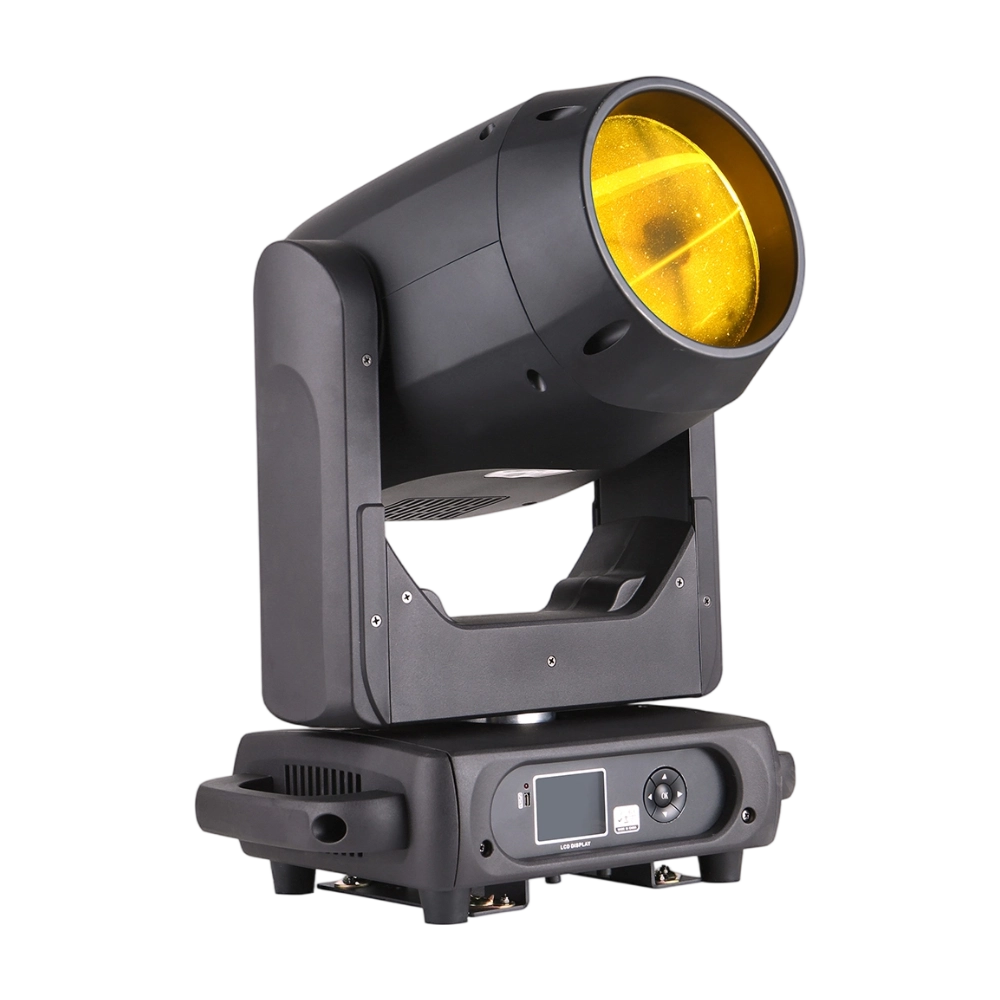
Moving Head Stage Light BEAM 360
BEAM360 is a 400W high-power moving head beam equipped with an OSRAM SIRIUS 311W discharge lamp, delivering a sharp 1.8° beam with super brightness. It features 14 colors + open, 12 fixed metal gobos + open, and dual prisms (8-facet circular + 8+16 multi-facet combination) for dynamic aerial effects. With 540° pan / 270° tilt, 16-bit movement, and linear frost and focus, BEAM360 ensures precision and versatility. Compact yet powerful, it rivals traditional 575W moving heads, making it ideal for concerts, clubs, and large-scale stage productions.
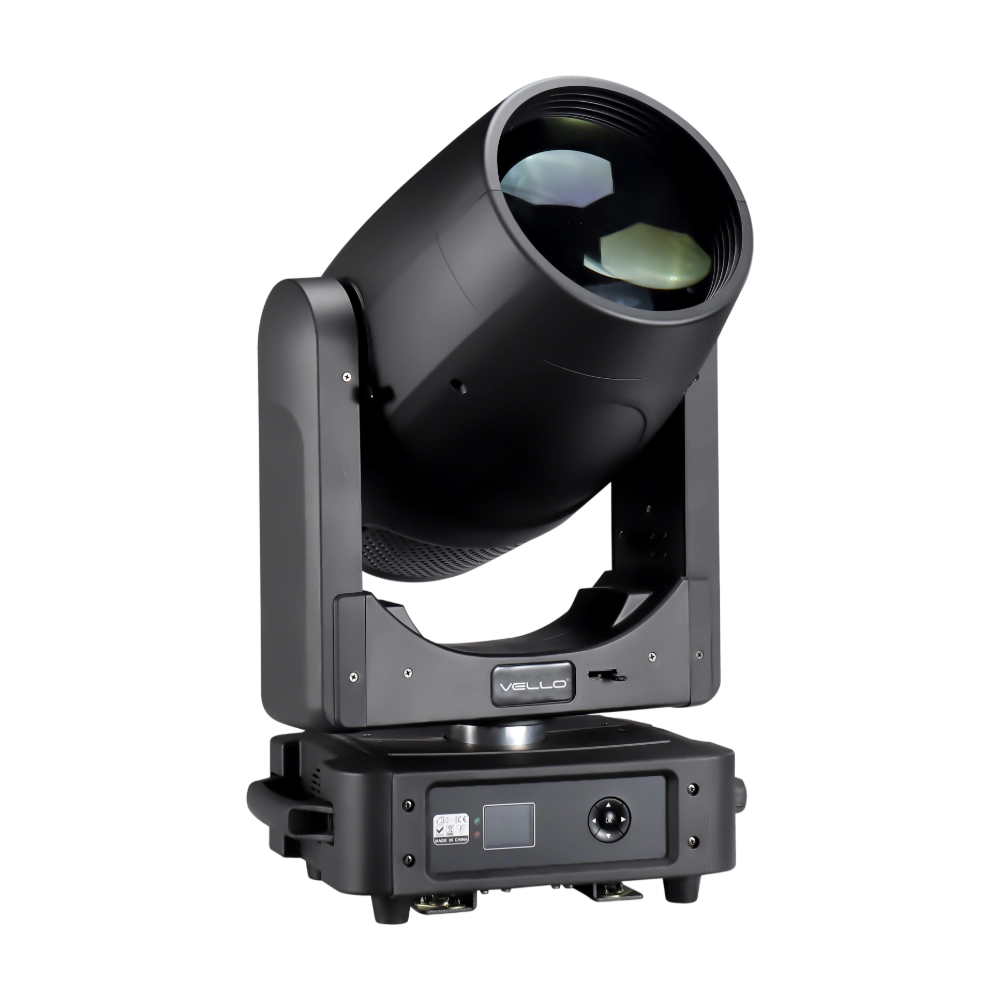
Moving Head Light BEAM 450
The BSW450 is a high-performance moving head fixture equipped with an original Osram 420W bulb, delivering exceptional brightness, precision, and versatility. Designed for professional stage applications, it seamlessly combines beam, spot, and wash functions in one compact unit, making it a powerful all-in-one lighting solution.
Over 20 Years of Innovation in Stage & Studio Lighting
© 2026 VELLO. All Rights Reserved. 粤ICP备20023734号
Join our socials
VELLO
Whatsapp: +8613902276704
Vello Lighting
VelloLights