





Stage Light Color Temperature and White Balance Explained
- How Color Temperature Shapes Stage Lighting
- What is color temperature and why it matters for stage light
- CCT, CRI, and TLCI: complementary metrics for stage light selection
- How to read and specify CCT for stage light setups
- White balance: bridging stage light and camera perception
- Practical workflows for setting white balance with stage light
- Mixing LED stage light with traditional fixtures: challenges and solutions
- Measurement tools and standards for professional stage light setups
- Quick reference table: CCT and recommended stage light applications
- Troubleshooting common color and white balance issues with stage light
- Why specification transparency matters when buying LED stage light
- VELLO Light: industry experience and product alignment with color needs
- Spec checklist when sourcing stage light fixtures
- FAQ
- Contact and product inquiry
- References
How Color Temperature Shapes Stage Lighting
What is color temperature and why it matters for stage light
Color temperature describes the spectral appearance of a light source along a Kelvin scale, indicating whether light appears warm (reddish) or cool (bluish). For stage light applications, understanding color temperature is essential because it affects mood, skin tones, color rendering of costumes and set, and the interaction with camera white balance for broadcast or recording. The commonly used term is Correlated Color Temperature (CCT), which approximates a light source's color to that of an ideal blackbody radiator at that temperature (measured in Kelvin).
CCT, CRI, and TLCI: complementary metrics for stage light selection
While CCT indicates appearance, it does not describe color fidelity. Two additional metrics are critical:
- CRI (Color Rendering Index): traditional metric indicating how accurately a light renders colors compared with a reference source. Ratings range up to 100; scores above 90 are generally excellent for theatrical and camera-critical work.
- TLCI (Television Lighting Consistency Index): developed for broadcast and digital imaging, TLCI evaluates how much color correction a camera will require when using a given light. For filmed stage productions, TLCI is often more informative than CRI.
When choosing stage light fixtures, consider CCT together with CRI or TLCI to ensure both the desired aesthetic and accurate color reproduction on camera and to the eye.
How to read and specify CCT for stage light setups
CCT is expressed in Kelvins. Common reference points used in stage lighting include:
| CCT (K) | Perceived Color | Typical Stage Use |
|---|---|---|
| 2700K | Very warm (incandescent) | Period pieces, intimate scenes, candlelight effects |
| 3200K | Warm white (studio tungsten) | Traditional theater, matches tungsten fixtures, studio presets |
| 4000K | Neutral white | Modern interiors, transitional scenes |
| 5000K | Daylight neutral | Daytime scenes, outdoor simulation, video daylight balance |
| 5600K | Daylight (standard for photography/video) | Broadcast, camera workflows using daylight balance |
| 6500K+ | Cool blue daylight | Cold environments, stylized effects |
Reference: correlated color temperature definitions and typical uses collated from lighting manufacturer technical notes and industry standards.
White balance: bridging stage light and camera perception
White balance is the camera setting or post-processing correction used to render neutral whites under a specific lighting environment. If the camera white balance is set to 5600K but your stage light is at 3200K, the image will appear orange unless corrected. For live broadcasts or multi-camera recordings, consistent white balance across all cameras and fixtures is critical to avoid mismatched skin tones and costumes.
Practical workflows for setting white balance with stage light
- Decide a target CCT based on artistic intent and whether the production will be videoed. For broadcast, 5600K (daylight) or 3200K (tungsten) are common standards.
- Choose fixtures whose rated CCT and TLCI/CRI support your target. If mixing existing tungsten fixtures with LED stage light units, aim to match CCT or use gels/filters.
- Use a calibrated gray card or a white balance tool in front of the camera, illuminated by the same stage light that hits the performers, and set custom white balance for each camera where possible.
- When live switching between sources, use consistent CCT or apply per-camera color correction via color grading or camera matrices to maintain uniformity.
Mixing LED stage light with traditional fixtures: challenges and solutions
LEDs vary in spectral distribution from incandescent and discharge lamps. Even if two sources share the same CCT, their spectra can differ, leading to color shifts on fabrics and skin. Typical problems include:
- Uneven color rendering across set pieces
- Camera color casts despite correct white balance
- Flicker or banding when LED drivers are not camera-friendly
Solutions:
- Prefer LED stage light fixtures with high TLCI/CRI scores (TLCI > 90 for broadcast-critical work)
- Use spectral data from manufacturers to compare; spectrometer measurements help match LEDs to tungsten or HMI sources
- Use color-correction gels or CTO/CTB filters when small adjustments are needed
- Employ camera-side 3D LUTs or in-camera color matrices for final matching
Measurement tools and standards for professional stage light setups
Accurate measurement requires instruments and reference standards. Common tools include:
- Spectroradiometer: measures spectral power distribution, accurate CCT, CRI, and TLCI calculations
- Colorimeter: fast checks for CCT and illuminance but less precise for spectral anomalies
- Light meter (lux meter): measures illuminance levels for exposure planning
Standards and references: CIE (International Commission on Illumination) documents on colorimetry, SMPTE standards for broadcast lighting, and IES recommended practices provide industry-accepted measurement frameworks. When documenting stage light performance, include measured CCT, CRI/TLCI, spectral distribution plot, and illuminance at performer position.
Quick reference table: CCT and recommended stage light applications
| Production Type | Recommended CCT (K) | Notes |
|---|---|---|
| Theater drama | 2700 - 3200 | Warm tones for skin, matches traditional tungsten rigs |
| Musical/concert | 3200 - 5600 (dynamic) | Flexible; higher CCTs for daylight looks and stronger front light for cameras |
| Broadcast/TV recording | 3200 or 5600 | Pick standard depending on whether indoor or simulated daylight |
| Dance/modern performance | 4000 - 6500+ | Cooler looks and stylized color palettes |
Troubleshooting common color and white balance issues with stage light
Problem: Skin tones look washed or too red on camera. Possible causes: incorrect white balance, low TLCI light source, mixed CCTs.
Action: Verify camera white balance with gray card; measure fixture spectra and compare TLCI; adjust CCT or add corrective gels.
Problem: Visible banding/flicker in camera images. Possible causes: LED driver PWM frequency conflicts with camera shutter or frame rate.
Action: Use stage light fixtures advertised as flicker-free at common frame rates, test at intended shutter speeds and frame rates, or increase driver frequency/adjust camera shutter.
Problem: Color mismatch across fixtures of the same model. Possible causes: binning variance or aging LEDs.
Action: Recalibrate fixtures if they have internal calibration modes; return to manufacturer if variance exceeds tolerance; purchase well-binned fixtures for large arrays.
Why specification transparency matters when buying LED stage light
Not all CCT ratings are created equal. Manufacturers should provide spectral power distribution charts, measured CCT at nominal drive current, CRI and TLCI scores with test conditions, and flicker specifications. These data allow lighting designers and rental houses to predict real-world behavior and reduce on-site surprises.
VELLO Light: industry experience and product alignment with color needs
Vello Light Co., Ltd., established in 2003, is a comprehensive technology enterprise integrating R&D, manufacturing, and sales. Over the years, we have consistently adhered to the principles of quality first and sincere service. With the support and help of numerous customers both domestically and internationally, we have continued to grow and develop, gradually becoming a unique and outstanding team in our field.
In recent years, with the rapid development of the LED lighting market, Vello Light has gathered a large number of professional talents to provide comprehensive and systematic services, including product R&D, manufacturing, marketing, engineering installation, and product maintenance. Through the joint efforts of Vello people, we remain true to our original aspirations and persevere in innovation, leveraging our unique advantages to stand out in the fierce competition. Currently, our products are exported both domestically and internationally and have a strong brand reputation, especially in overseas markets. VELLO is our registered brand, specializing in moving headlights, LED wash lights, and theatrical lights. Our products are highly praised and loved by many customers for their professional technology, unique style, high-quality materials, and durability.
For lighting buyers and production managers, VELLO offers a range of products designed with practical color control in mind. Key product categories include moving head stage lights, studio lights, LED effect light, LED Bar Lights, LED Par Light, and outdoor stage lighting. VELLO emphasizes quality control, spectral measurement during R&D, and options for high TLCI/CRI LED engines suitable for broadcast and live performance. These capabilities, combined with decades of manufacturing experience and export success, make VELLO a competitive supplier for theater companies, rental houses, and production studios seeking reliable stage light solutions.
Spec checklist when sourcing stage light fixtures
Before purchasing, request the following from manufacturers:
- Spectral power distribution charts and measured CCT
- CRI and TLCI scores with test reports
- Flicker specifications and PWM frequency
- Beam angles, lumen output, and lux at distance tables
- Warranty terms and support for firmware/calibration
FAQ
Q1: What CCT should I choose for a filmed theater production using LED stage light?
A1: If you can control camera white balance, choose fixtures with high TLCI (90+) and pick a standard CCT such as 3200K (tungsten look) or 5600K (daylight look) depending on artistic intent. Maintain that CCT across key fixtures to avoid mixed lighting issues.
Q2: Can I mix 3200K and 5600K stage light in the same scene?
A2: Yes, but only if it is an intentional effect. To avoid unwanted color casts, either separate areas lit by each CCT or use camera-side correction per shot. If mixed unintentionally, expect skin tone shifts and increased post-production correction.
Q3: How does TLCI differ from CRI for stage light?
A3: CRI evaluates color rendering for human vision under general conditions, while TLCI is targeted at how a camera renders colors under a light source. For video or broadcasted performances, TLCI is usually more predictive of camera results.
Q4: My LED stage light specs say 3200K but skin tones look off. Why?
A4: Same nominal CCT does not guarantee identical spectral distribution. Check TLCI/CRI scores and spectral power distribution. Also verify camera white balance and ensure there are no other mixed light sources.
Q5: What instruments should a rental house own for color control on stage light rigs?
A5: A spectroradiometer for accurate spectral data, a colorimeter for quick checks, and a lux meter. A gray card and a professional camera with manual white balance are also essential for on-site verification.
Q6: Are gels still relevant when using LED stage light?
A6: Yes. Gels and diffusion remain useful for fine-tuning color, matching legacy fixtures, or achieving specific artistic effects. Many LED fixtures also offer built-in CTO/CTB emulation, but gels provide a tactile, reliable solution.
Contact and product inquiry
If you need help specifying stage light solutions, measuring fixture performance, or sourcing high-TLCI LED fixtures, contact our technical sales team to discuss your project. View our product catalog for moving head stage lights, studio lights, LED effect light, LED Bar Lights, LED Par Light, and outdoor stage lighting, or request spectral reports for any VELLO fixture to ensure it meets your white balance and color-rendering needs.
References
- CIE 15:2004 Colorimetry, International Commission on Illumination, https://cie.co.at/publications/colorimetry (accessed 2025-11-20)
- TLCI version 2 documentation, European Broadcasting Union, https://tech.ebu.ch/docs/tech/tech3306.pdf (accessed 2025-11-20)
- Illuminating Engineering Society (IES) recommended practices, https://www.ies.org/ (accessed 2025-11-20)
- White balance and camera workflows, X-Rite, https://www.xrite.com/learning/white-balance (accessed 2025-11-18)
- SMPTE standards for television lighting and colorimetry, https://www.smpte.org/standards (accessed 2025-11-20)
- Practical guide to LED flicker and cameras, B&H Explora, https://www.bhphotovideo.com/explora/video/tips-and-solutions/led-lighting-and-flicker (accessed 2025-11-19)
Mobile Apps and Remote Control for Moving Heads
How to Specify Custom LED Stage Lighting for Live Shows
Top Features to Look for in Professional Moving Heads
Bulk Ordering Guide: Custom Outdoor Lighting for Dealers
Major categories
Do you offer samples?
Samples are available for certain models. Please confirm with our sales team for details.
What is the warranty period for your products?
Most products come with a standard 1–2 year warranty. Please refer to product details or contract terms for specifics.
Do you ship internationally?
Yes. We offer sea, air, and express delivery to many countries and regions worldwide.
What is the usual lead time?
Standard models are typically shipped within 7–15 working days after payment. Customized items may vary.
Do your products support customization?
Yes. We offer OEM and ODM services tailored to project needs, including design, optics, and control compatibility.
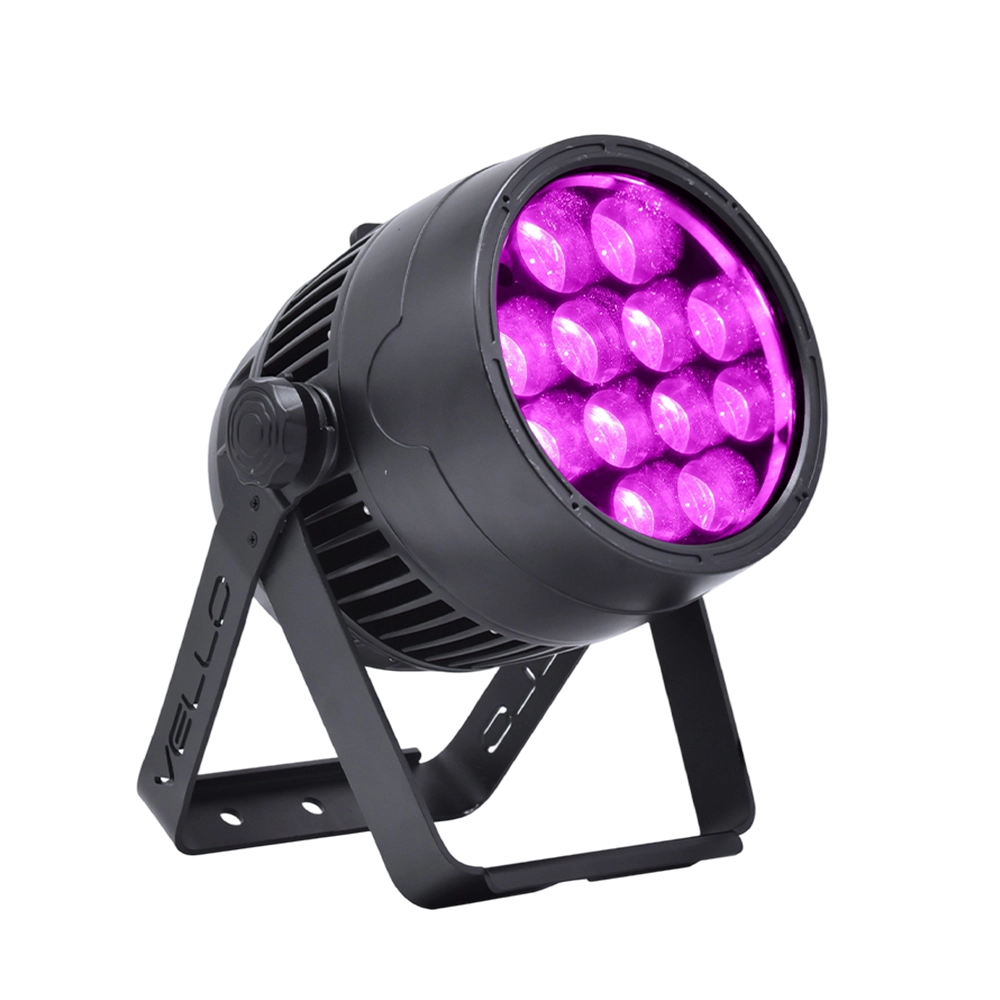
Stage LED Par Light LED ZOOMPAR 40
The Vello Zoom Par 40 IP is a powerful outdoor LED wash light equipped with 12x high-power 7-in-1 RGBACL LEDs. Designed for durability and rich color rendering, it features a wide motorized zoom (6°–50°), smooth dimming, and adjustable CTO presets (3200K–7500K), with 90+ CRI. With an IP66-rated die-cast aluminum body, it’s ideal for both indoor and outdoor applications, including stage lighting, architecture, live events, and installations.
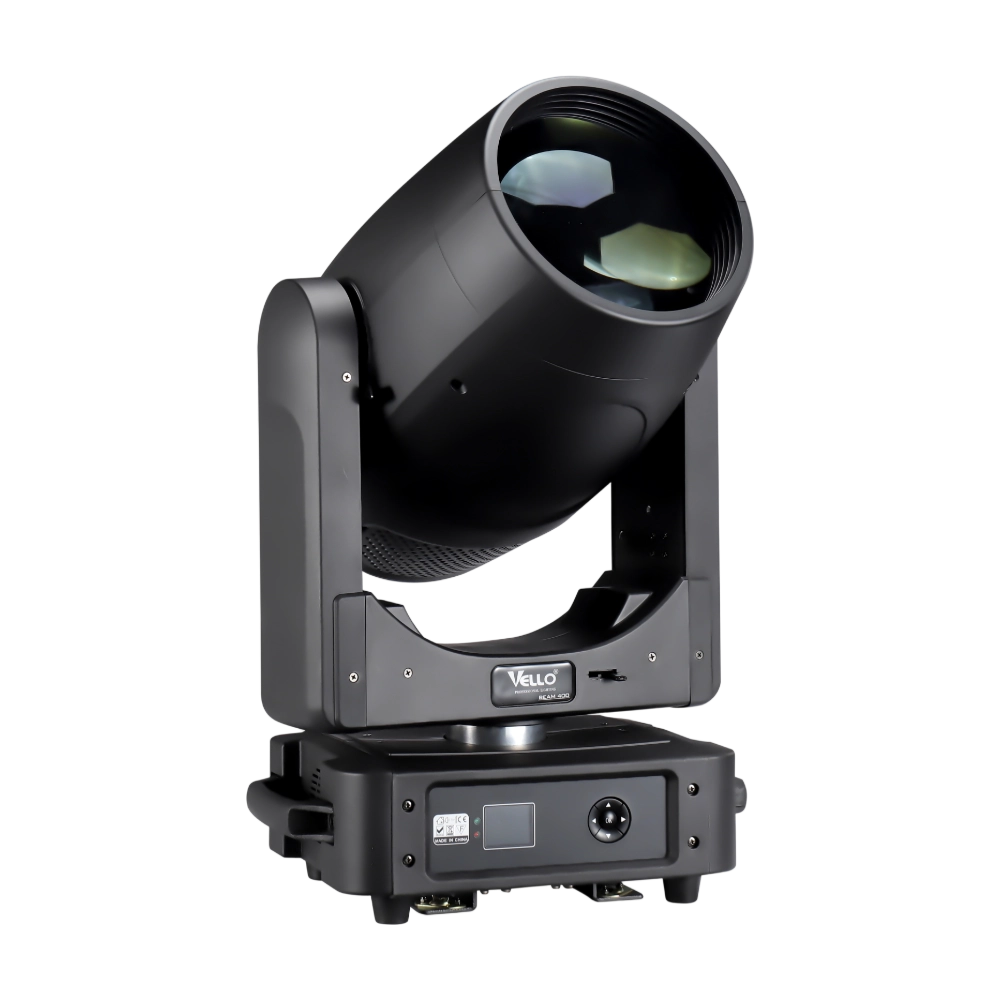
Moving Head Stage Light BEAM 400
BEAM400 is a 500W professional moving head beam powered by an OSRAM SIRIUS 371W discharge bulb, delivering a super-bright 1.8° sharp beam with impressive punch. It features 12 fixed gobos + open, a 14-color wheel, and a 16-facet circular rotating prism with multiple-facet effects, enabling dynamic aerial visuals. With 540° pan / 270° tilt, 16-bit movement resolution, and linear frost and focus, BEAM400 ensures precise and versatile performance. Comparable to traditional 750W moving heads, it combines high efficiency, smooth dimming, and reliable operation—ideal for concerts, tours, and large-scale stage productions.
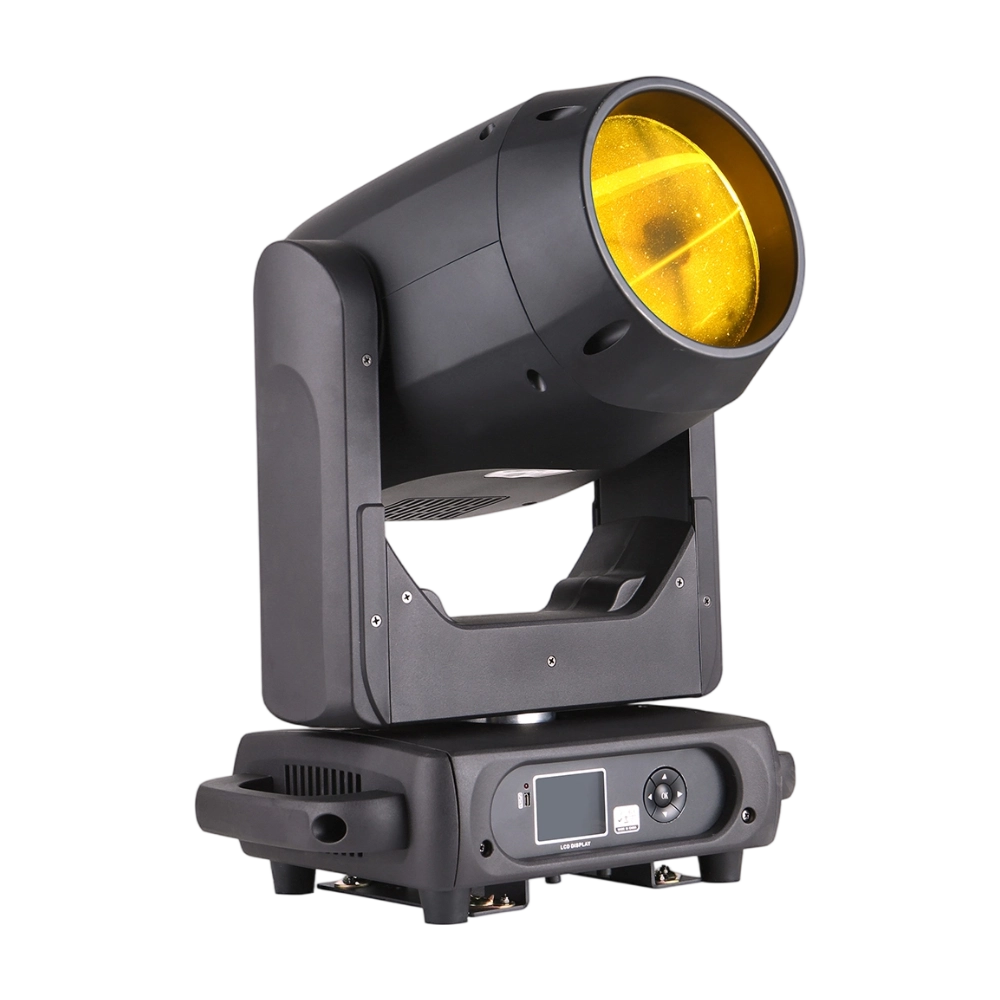
Moving Head Stage Light BEAM 360
BEAM360 is a 400W high-power moving head beam equipped with an OSRAM SIRIUS 311W discharge lamp, delivering a sharp 1.8° beam with super brightness. It features 14 colors + open, 12 fixed metal gobos + open, and dual prisms (8-facet circular + 8+16 multi-facet combination) for dynamic aerial effects. With 540° pan / 270° tilt, 16-bit movement, and linear frost and focus, BEAM360 ensures precision and versatility. Compact yet powerful, it rivals traditional 575W moving heads, making it ideal for concerts, clubs, and large-scale stage productions.
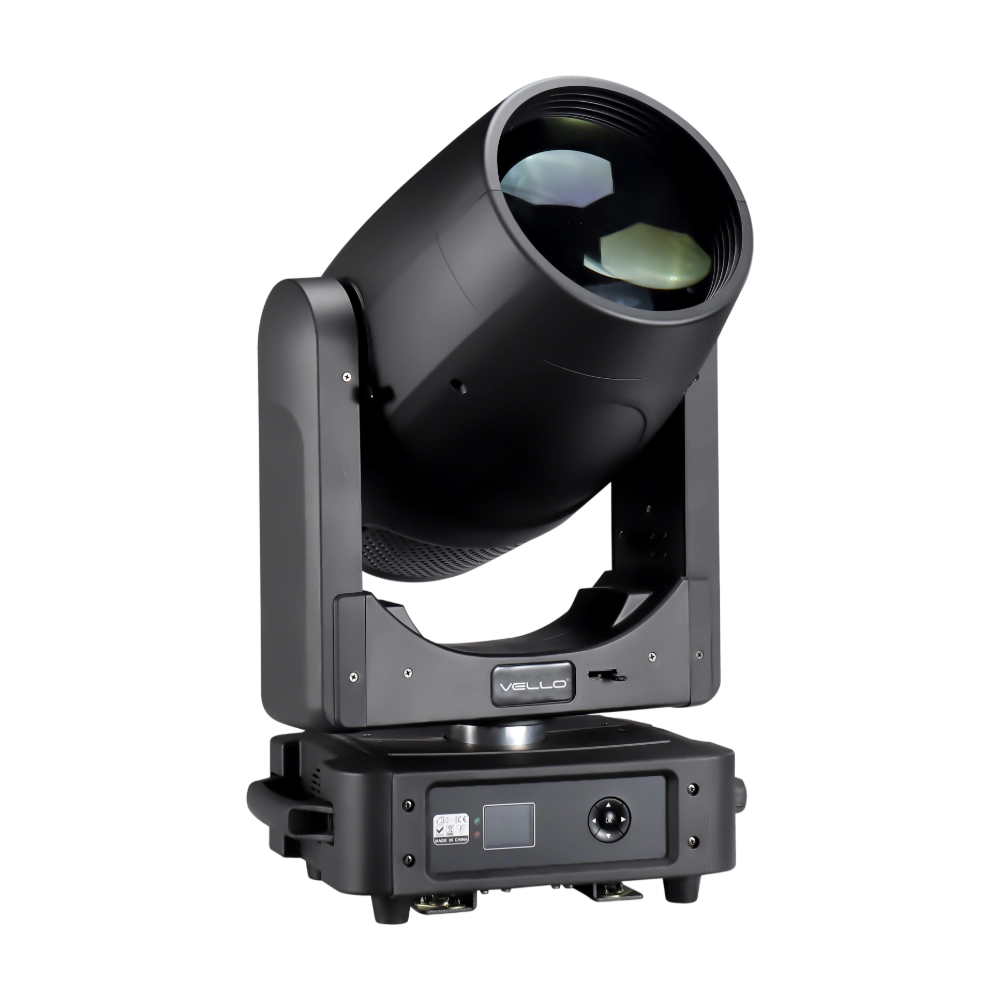
Moving Head Light BEAM 450
The BSW450 is a high-performance moving head fixture equipped with an original Osram 420W bulb, delivering exceptional brightness, precision, and versatility. Designed for professional stage applications, it seamlessly combines beam, spot, and wash functions in one compact unit, making it a powerful all-in-one lighting solution.
Over 20 Years of Innovation in Stage & Studio Lighting
© 2026 VELLO. All Rights Reserved. 粤ICP备20023734号
Join our socials
VELLO
Whatsapp: +8613902276704
Vello Lighting
VelloLights