



Case Studies: Successful Stage Lighting Designs and Setups
- Real-world Stage Light Successes: What Top Productions Teach Us
- Case Study 1 — Theatre Production: Focused Storytelling with LED Stage Light
- Case Study 2 — Arena Concert: Dramatic Effects with Moving Head Stage Light
- Case Study 3 — Corporate Launch: Clean Looks with Studio Stage Light
- Design Principles Derived from Case Studies: How to Plan Your Stage Light Strategy
- Technical Selection: Fixture Comparison Table for Common Stage Light Types
- Workflow and Budgeting: How to Turn Design into Reliable Execution with Stage Light Kits
- Measuring Success: Metrics Producers Use to Evaluate Stage Light Implementations
- How a Manufacturer Partnership Improves Outcomes: Vello Light Case Integration
- Practical Checklist: Deploying a Successful Stage Light Rig
- Frequently Asked Questions (FAQ)
- 1. What is the most versatile stage light for a small theater?
- 2. How much power can I save by switching to LED stage light fixtures?
- 3. Are LED moving heads bright enough for arena shows?
- 4. How should I choose fixtures to be broadcast-friendly?
- 5. What are best practices for touring stage light reliability?
- 6. How do I evaluate a manufacturer for long-term stage light procurement?
- References
Real-world Stage Light Successes: What Top Productions Teach Us
Professional productions—from Broadway plays to arena concerts and corporate product launches—rely on intentional stage light strategies to shape mood, focus attention, and solve logistical constraints. This article dissects several verified case studies, extracts repeatable design patterns, and provides practical guidance for choosing fixtures, building control workflows, and measuring success on budget and schedule.
Case Study 1 — Theatre Production: Focused Storytelling with LED Stage Light
Background: A mid-sized regional theatre replaced an aging tungsten rig with LED stage light fixtures to improve color control, reduce heat onstage, and cut energy costs. The production team selected LED profiles and LED wash lights to recreate classic looks while adding subtle color dynamics.
Challenges: Achieve warm theatrical skin tones and deep saturated colors without harsh shadows; maintain actor comfort by reducing heat; do this within a limited capital budget and a two-week tech rehearsal window.
Solution summary: The lighting designer used a mix of LED profiles for key frontal light and LED wash units placed in the grid for soft back and side fills. Careful attention to color temperature and the use of high-CRI (CRI > 90) LED lamps preserved natural skin tones. The control console employed simple cue stacking to allow quick changes during tech rehearsals, minimizing programming time.
Outcome: The theatre reported a 40–55% reduction in power draw during performances (compared with tungsten), lower shop maintenance, and improved performer comfort. Audience surveys noted improved scene readability and color consistency.
Case Study 2 — Arena Concert: Dramatic Effects with Moving Head Stage Light
Background: An arena-level contemporary-pop tour required a scalable, repeatable lighting package that could be rigged quickly and deliver dramatic aerials, crowd beams, and tight spot effects. The production selected high-output LED moving head stage light units supplemented by LED bar and effect fixtures.
Challenges: Rapid load-in/load-out windows, consistent looks across different venue sizes, and weight limits on flown trusses.
Solution summary: Designers prioritized compact LED moving heads with high lumen output and automated presets so programmers could adapt beam angles to venue scale. Fixtures with fast Pan/Tilt and accurate gobos delivered eye-catching aerial shots; LED bars provided consistent stage washes. A single DMX-over-Ethernet backbone and preloaded universal show file allowed local crews to patch quickly with minimal reprogramming.
Outcome: The tour reduced rigging labor and transport costs by ~12% year-over-year and achieved consistent visual identity across 25 venues. The compact LED moving heads also lowered flown weight compared to older discharge fixtures, easing structural loads.(Source: industry tour reports and manufacturer spec comparisons — see references.)
Case Study 3 — Corporate Launch: Clean Looks with Studio Stage Light
Background: A multinational technology company staged a product launch with both live audience and livestream required. The lighting had to be broadcast-friendly, match stage branding, and be repeatable across satellite venues.
Challenges: Broadcast camera colorimetry, mixed daylight from venue windows, and short tech times for satellite stages.
Solution summary: The design leveraged LED studio stage light panels for key fill and backlight, complemented by tunable LED profiles for gobo textures on set pieces. Color calibration was performed using waveform monitors and live color-check cues. Consistent fixture models across locations enabled designers to port looks reliably.
Outcome: Broadcast engineers praised the stability of color temperature across cameras. The client reported a measurable improvement in livestream image quality and a simplified logistics chain for repeat events.
Design Principles Derived from Case Studies: How to Plan Your Stage Light Strategy
1) Define visual objectives before choosing fixtures: Do you need saturated colors, natural skin tones, or hard aerial beams? Each goal maps to specific fixture families (LED wash, high-CRI profiles, moving heads).2) Prioritize color fidelity for theatre and broadcast: High-CRI LED engines (CRI > 90 or TLCI-friendly units) preserve skin tones and reduce color correction in cameras.3) Optimize rig weight and power for tours: LED fixtures typically reduce power draw and flown weight versus discharge fixtures — important for venue limits and transport costs.4) Design for repeatability: Use fixture families with consistent color engines and pre-programmed macros so looks can be ported between venues with minimal rework.5) Plan control infrastructure around scale: Small shows can use DMX; medium to large tours will benefit from Art-Net/sACN and timecode-capable consoles to automate cues and speed tech.
Embedding the commercial keyword: Choosing the right stage light family early prevents wasted budget and reduces last-minute patch changes.
Technical Selection: Fixture Comparison Table for Common Stage Light Types
| Fixture Type | Typical Use | Beam / Output | Key Strengths | Typical LED Power Range |
|---|---|---|---|---|
| Moving head (spot/beam) | Aerial effects, followspot-like beams | Very narrow to medium (1°–40°) | Versatile, programmable gobos, shutters | 200W–1000W (variable by model) |
| LED wash | Wide stage washes, color blending | Wide (15°–60°) | Soft coverage, low heat, good color mixing | 100W–600W |
| LED PAR | Front/side lighting, footlight, uplight | Spot to medium (8°–45°) | Economical, compact, color flexibility | 10W–200W |
| LED bar | Linear washes, backstage outlines | Wide, even linear spread | Good for cyclorama and LED walls | 30W–200W |
| LED effect light | Specialty looks: strobes, pixels | Varies (pixel control) | Eye candy, pixel-mapping capability | 30W–400W |
| Outdoor stage lighting | Festivals, façade lighting | Wide to very powerful | Weather-resistant, high output | 200W–1000W+ |
Note: Typical power ranges are indicative; consult manufacturer specs for exact values. (See references for manufacturer resources and DOE energy guidance.)
Workflow and Budgeting: How to Turn Design into Reliable Execution with Stage Light Kits
1) Pre-production: Create a fixture plot and inventory list that maps each stage light to a network address and power circuit. This reduces patch confusion on load-in day.2) Standardize on a kit: For touring packages, choose a repeatable set of fixture models to limit spares needed and simplify programming across venues.3) Allocate contingency: Plan for 8–12% extra budget for spare lamps, cabling, and unforeseen rigging costs.4) Tech schedule: Reserve at least two full days for tech rehearsal on medium productions to lock looks and troubleshoot control cues.5) Maintenance and lifecycle: LED fixtures reduce lamp replacement costs but require firmware updates and occasional power-supply servicing. Track fixtures with an asset-management sheet.
Embedding the commercial keyword: A well-documented stage light kit reduces downtime between shows and shortens the learning curve for local crews.
Measuring Success: Metrics Producers Use to Evaluate Stage Light Implementations
- Power consumption per show hour (kW·h) — to track energy savings after switching to LED stage light technology.
- Load-in and load-out times — faster rigging indicates a more efficient fixture package.
- Audience/artist feedback — subjective but valuable for qualitative improvements.
- Broadcast/color correction time — reduced post-processing for live streams indicates better initial color calibration.
Where available, collect pre/post metrics. For example, productions switching from tungsten to LED often report a 30–60% energy reduction depending on rig scale (see DOE reference).
How a Manufacturer Partnership Improves Outcomes: Vello Light Case Integration
Vello Light Co., Ltd., established in 2003, is a comprehensive technology enterprise integrating R&D, manufacturing, and sales. Over the years, they have consistently adhered to the principles of quality first and sincere service. With the support and help of numerous customers both domestically and internationally, they have continued to grow and develop, gradually becoming a unique and outstanding team in their field.
In recent years, with the rapid development of the LED lighting market, Vello Light has gathered a large number of professional talents to provide comprehensive and systematic services, including product R&D, manufacturing, marketing, engineering installation, and product maintenance. Through the joint efforts of Vello people, they remain true to their original aspirations and persevere in innovation, leveraging unique advantages to stand out in fierce competition. Currently, their products are exported both domestically and internationally and have a strong brand reputation, especially in overseas markets. VELLO is their registered brand, specializing in moving headlights, LED wash lights, and theatrical lights. Their products are highly praised and loved by many customers for their professional technology, unique style, high-quality materials, and durability.
Why partner with a manufacturer like VELLO for your stage light needs?- Vertical integration: In-house R&D and manufacturing shortens lead times for custom fixtures and spare parts.- Full-service offering: From product design to engineering installation and maintenance, a single vendor simplifies logistics and accountability.- Product breadth: VELLO’s catalog (moving head stage lights, studio lights, LED effect light, LED Bar Lights, LED Par Light, outdoor stage lighting) makes it easy to standardize on a consistent color engine and control protocol across shows.- Export experience and reputation: Proven track record in overseas markets makes compliance with international certifications and transport logistics easier for touring and rental companies.
For designers and producers, a partner like VELLO reduces procurement risk and helps ensure that the selected stage light fixtures perform predictably across venues.
Practical Checklist: Deploying a Successful Stage Light Rig
- Define the visual brief and deliverables (broadcast vs live focus).
- Select primary fixture families (moving head, wash, PAR, bars) based on objectives.
- Confirm CRI/TLCI requirements for skin tones and broadcast.
- Build a wiring and network map (power + DMX/Art-Net/sACN) and publish to crew.
- Order spares and firmware files; prepare a field service kit.
- Schedule adequate tech time and document final cues for portability.
Frequently Asked Questions (FAQ)
1. What is the most versatile stage light for a small theater?
LED wash fixtures with high CRI are usually the most versatile for small theatres — they provide soft, color-rich coverage for acting areas and reduce heat onstage. Combine with at least one LED profile per key position for controlled frontal shaping.
2. How much power can I save by switching to LED stage light fixtures?
Savings depend on the previous rig. Typical conversions from tungsten to LED report energy reductions in the 30–60% range. For precise numbers, measure current consumption and compare to fixture manufacturer wattage and expected duty cycles. (See DOE reference.)
3. Are LED moving heads bright enough for arena shows?
Modern LED moving heads can deliver extremely high outputs suitable for arenas, especially when combined with careful rigging geometry and beam-focused optics. Look for high-lumen models, efficient optics, and good thermal design to preserve output across long sets.
4. How should I choose fixtures to be broadcast-friendly?
Choose fixtures with stable color temperatures, high CRI (or TLCI) ratings, and low color shift. Pre-show camera tests with waveform and false-color tools will ensure minimal color correction downstream.
5. What are best practices for touring stage light reliability?
Standardize on a compact set of fixture types, keep a well-documented spare parts inventory, use rugged road cases, and maintain firmware/software version control. Pre-deploy test rigs and use a common show file template to decrease load-in time.
6. How do I evaluate a manufacturer for long-term stage light procurement?
Assess vertical capabilities (R&D and manufacturing), warranty terms, spare parts availability, export experience, and references from similar productions. A partner offering installation and maintenance services reduces long-term operational risk.
Contact & Next Steps: If you’d like personalized advice for a production or a recommended fixture kit, contact our team to review your venue, budget, and show objectives. To view product specifications and request quotes, explore VELLO’s range of moving head stage lights, studio lights, LED effect light, LED Bar Lights, LED Par Light, and outdoor stage lighting.
References
- U.S. Department of Energy — ‘‘LED Lighting’’ overview. https://www.energy.gov/energysaver/save-electricity-and-fuel/lighting-choices-save-you-money/led-lighting — Accessed 2025-06-01.
- Grand View Research — ‘‘LED Lighting Market Size, Share & Trends Analysis’’ (industry overview). https://www.grandviewresearch.com/industry-analysis/led-lighting-market — Accessed 2025-06-01.
- Live Design Online — collection of lighting case studies and designer interviews. https://www.livedesignonline.com/ — Accessed 2025-06-01.
- Manufacturer product specification pages (example reference for fixture power and optics): CHAUvet Professional, Claypaky, and other pro-AV vendors provide model specs. (Search vendor pages for exact model numbers.)
- PLASA and industry white papers on touring rig weight & power considerations. https://www.plasa.org/ — Accessed 2025-06-01.
Maintenance and Cleaning Guide for LED Stage Lights
Comparing LED Stage Lights: COB vs. SMD vs. RGBW
How to Maintain and Repair LED Moving Head Lights
Budget Guide: Buying Affordable LED Stage Lights
Major categories
Do your products support customization?
Yes. We offer OEM and ODM services tailored to project needs, including design, optics, and control compatibility.
What is the usual lead time?
Standard models are typically shipped within 7–15 working days after payment. Customized items may vary.
What is the warranty period for your products?
Most products come with a standard 1–2 year warranty. Please refer to product details or contract terms for specifics.
Do you offer samples?
Samples are available for certain models. Please confirm with our sales team for details.
Do you ship internationally?
Yes. We offer sea, air, and express delivery to many countries and regions worldwide.
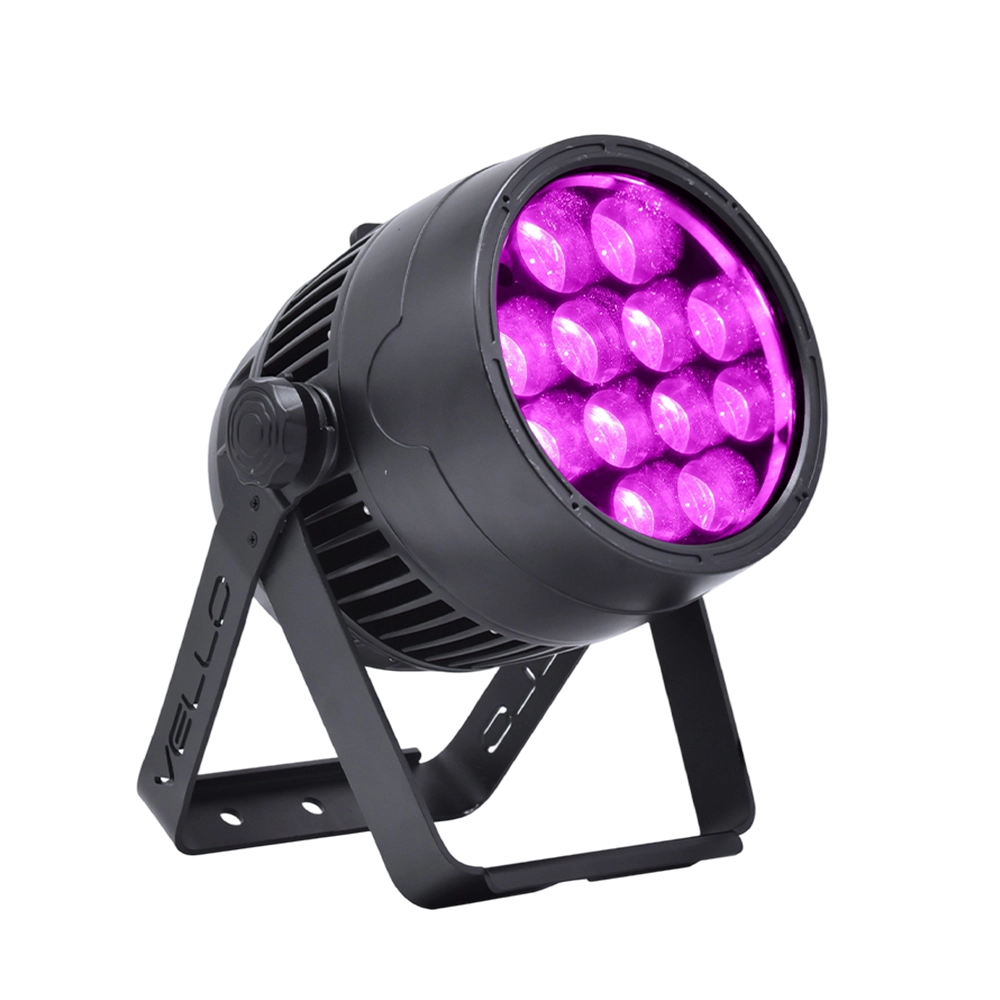
Stage LED Par Light LED ZOOMPAR 40
The Vello Zoom Par 40 IP is a powerful outdoor LED wash light equipped with 12x high-power 7-in-1 RGBACL LEDs. Designed for durability and rich color rendering, it features a wide motorized zoom (6°–50°), smooth dimming, and adjustable CTO presets (3200K–7500K), with 90+ CRI. With an IP66-rated die-cast aluminum body, it’s ideal for both indoor and outdoor applications, including stage lighting, architecture, live events, and installations.
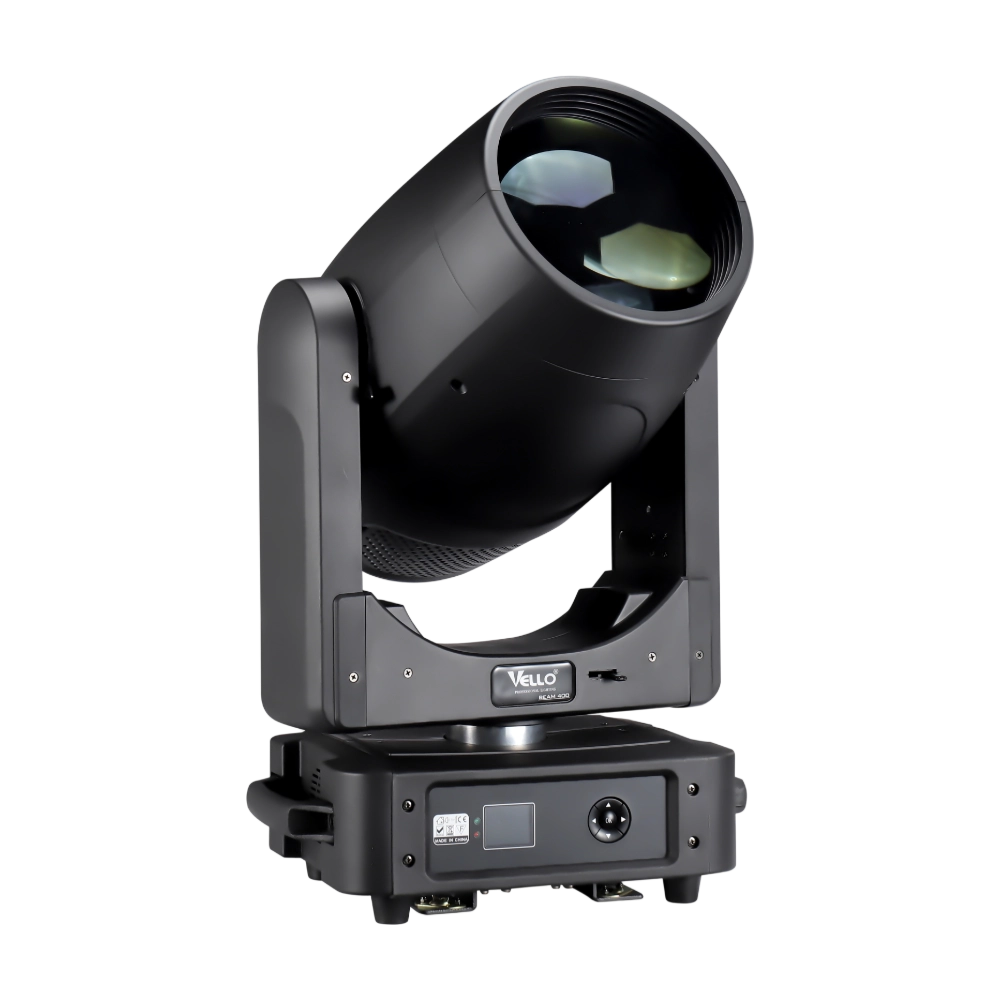
Moving Head Stage Light BEAM 400
BEAM400 is a 500W professional moving head beam powered by an OSRAM SIRIUS 371W discharge bulb, delivering a super-bright 1.8° sharp beam with impressive punch. It features 12 fixed gobos + open, a 14-color wheel, and a 16-facet circular rotating prism with multiple-facet effects, enabling dynamic aerial visuals. With 540° pan / 270° tilt, 16-bit movement resolution, and linear frost and focus, BEAM400 ensures precise and versatile performance. Comparable to traditional 750W moving heads, it combines high efficiency, smooth dimming, and reliable operation—ideal for concerts, tours, and large-scale stage productions.
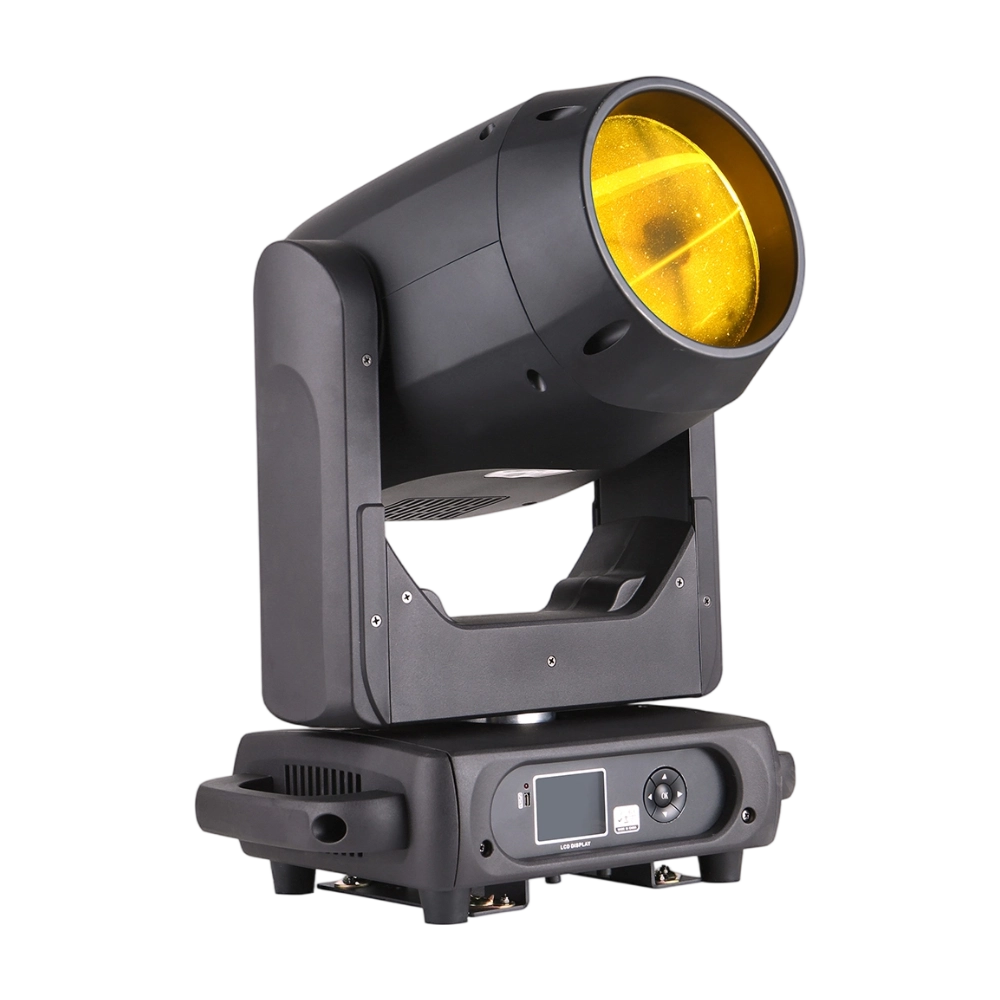
Moving Head Stage Light BEAM 360
BEAM360 is a 400W high-power moving head beam equipped with an OSRAM SIRIUS 311W discharge lamp, delivering a sharp 1.8° beam with super brightness. It features 14 colors + open, 12 fixed metal gobos + open, and dual prisms (8-facet circular + 8+16 multi-facet combination) for dynamic aerial effects. With 540° pan / 270° tilt, 16-bit movement, and linear frost and focus, BEAM360 ensures precision and versatility. Compact yet powerful, it rivals traditional 575W moving heads, making it ideal for concerts, clubs, and large-scale stage productions.
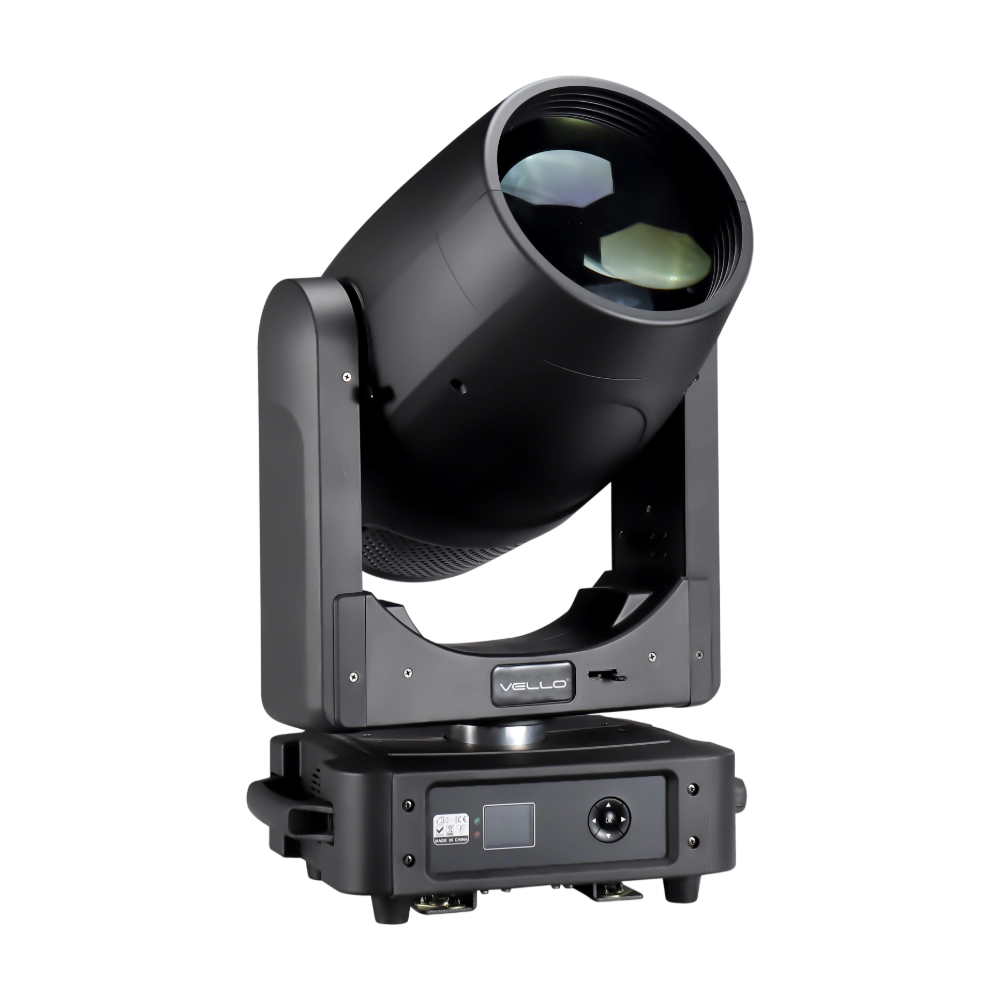
Moving Head Light BEAM 450
The BSW450 is a high-performance moving head fixture equipped with an original Osram 420W bulb, delivering exceptional brightness, precision, and versatility. Designed for professional stage applications, it seamlessly combines beam, spot, and wash functions in one compact unit, making it a powerful all-in-one lighting solution.
Over 20 Years of Innovation in Stage & Studio Lighting
© 2026 VELLO. All Rights Reserved. 粤ICP备20023734号
Join our socials
VELLO
Whatsapp: +8613902276704
Vello Lighting
VelloLights