





How to Specify Custom LED Stage Lighting for Live Shows
- Design Principles and Creative Briefing
- Define the creative intent and use cases
- Establish visual priorities: color fidelity, beam quality, and dimming
- Audience sightlines and mounting constraints
- Technical Specification Checklist for Custom LED Lighting
- Optics and photometric targets
- Color system, LEDs, andCRI/TLCI requirements
- Control protocols and addressing
- Selection and Integration: Fixtures, Control, and Power
- Fixture types and when to choose them
- Power distribution, flicker, and harmonics
- Networking, redundancy, and remote diagnostics
- Outdoor Rating, Reliability, Procurement and Commissioning
- Environmental protection and IP ratings
- Serviceability, spares, and lifecycle expectations
- Procurement, testing, and on-site commissioning
- Why supplier selection matters — Vello Light example and capabilities
- About Vello Light and how we evaluate partners
- Competitive advantages and quality assurance
- How VELLO’s product range fits typical specifications
- Standards, references and resources
- Control standards
- LED lifetime and energy efficiency
- Testing and certification
- FAQ — Common questions when specifying custom LED stage lighting
- 1. How do I choose between RGB, RGBW, and multi-chip LED engines?
- 2. What should I specify to avoid camera flicker?
- 3. How many spare fixtures and parts should I plan for touring?
- 4. Do I need RDM and remote diagnostics?
- 5. What IP rating do I need for outdoor concerts?
- 6. How important are photometric files and what format should I request?
- Contact, sourcing and next steps
As an experienced lighting consultant and writer specializing in custom led lighting for live shows, I have specified systems for theaters, touring productions, houses of worship, and corporate events. This article gives a practical, standards-aware roadmap you can use to translate creative intent into technical specifications: optics and beam shaping, pixel control, power and infrastructure, outdoor rating, and on-site commissioning. I include verifiable references to industry standards (DMX512, sACN), LED lifetime guidance, and best practices for performance, reliability, and maintenance.
Design Principles and Creative Briefing
Define the creative intent and use cases
Start by documenting what you need the custom led lighting system to achieve. Ask: Is the system for a fixed theater, a traveling tour, a festival outdoor stage, broadcast/streaming, or a multi-purpose venue? Artist intent (tight beams for aerial performers, soft washes for a choir, pixel mapping for visual effects) directly determines fixture types, pixel density, and control complexity.
Establish visual priorities: color fidelity, beam quality, and dimming
Color fidelity (CRI/TLCI), color temperature range, and smooth dimming are critical for shows and broadcast. For live shows I usually require: TLCI > 90 for camera work, continuous color mixing (RGBW/RGBWA/FFC) if skin tones matter, and 16-bit dimming across fixtures for flicker-free fades. These requirements will determine whether you specify bi-directional protocols, high-bit-depth drivers, and fixtures with broadcast modes.
Audience sightlines and mounting constraints
Map sightlines early. For front-of-house and balcony positions you may accept narrower beams; for audience-area washes you usually need wider optics. Also document rigging points (safe working loads), available weight per truss, and access for maintenance. These constraints shape the custom led lighting selection—lighter moving heads reduce rigging demands on tours, while fixed installs can favor heavier, higher-output fixtures.
Technical Specification Checklist for Custom LED Lighting
Optics and photometric targets
Specify beam angle(s), beam profile (soft edge, hard edge), and luminous flux or lux at distance. Where possible request photometric files (IES/IESNA LM-63 or Eulumdat) from manufacturers so you can simulate throws in lighting design software. For example, a 15° moving head and a 40° wash have very different placement and power needs.
Color system, LEDs, andCRI/TLCI requirements
Insist on transparent spectral specs. For broadcast or high-fidelity work, request manufacturer TLCI/TM-30 data, not just RGB graphs. Modern fixtures offer RGBW, RGBWA, or multi-chip engines (including amber and lime) to improve color rendition; choose based on the palette your designers need.
Control protocols and addressing
DMX512 remains the baseline control protocol for lighting; for complex pixel mapping you’ll likely require Ethernet-based distribution such as Art-Net or sACN (Streaming ACN). Include support for RDM (Remote Device Management) if you want remote addressing and diagnostics. See DMX512 documentation: https://en.wikipedia.org/wiki/DMX512 and sACN: https://en.wikipedia.org/wiki/Streaming_ACN.
Selection and Integration: Fixtures, Control, and Power
Fixture types and when to choose them
Below is a practical comparison of common fixture classes I specify when building custom led lighting packages for live shows.
| Fixture Type | Typical Use | Typical Output / Power | Notes |
|---|---|---|---|
| Moving Head (Spot) | Sharp beams, gobos, aerials | 10,000–40,000 lm / 250–1200 W | High precision pan/tilt; choose if gobos & framing needed |
| Moving Wash | Colored washes with soft edges | 3,000–20,000 lm / 100–800 W | Good for stage washes; softer optics |
| LED Par / Flood | Static washes, footlights | 1,000–8,000 lm / 30–300 W | Cost-effective; choose high-CRI variants for talent |
| LED Bars / Pixel Tubes | Line effects, pixel mapping | Varies by length; 50–400 W per bar | Specify pixel pitch for desired resolution |
| LED Fresnel / Ellipsoidal | Soft washes (Fresnel) or hard spots (ERS) | 1,000–10,000 lm / 50–600 W | Useful when classic theatrical looks are required |
Note: These ranges are industry-typical; always request specific manufacturer photometrics. For general LED background on lifetimes and behavior see the LED https://en.wikipedia.org/wiki/Light-emitting_diode.
Power distribution, flicker, and harmonics
Power planning is often underestimated. Specify inrush current ratings, PFC (power factor correction), and THD (total harmonic distortion) limits for fixtures to avoid tripping breakers or causing supply instability. For broadcast/frequency-sensitive work, confirm PWM frequencies and recommend high-frequency drivers to avoid camera flicker. Where possible require manufacturer-supplied flicker test reports or operating modes optimized for frame rates used in broadcast.
Networking, redundancy, and remote diagnostics
For touring and critical installs include redundant control paths (dual Ethernet or dual DMX via different routes). Require RDM for remote device configuration and failure diagnostics. If your venue supports centralized management, ask for SNMP or manufacturer-specific APIs for system monitoring.
Outdoor Rating, Reliability, Procurement and Commissioning
Environmental protection and IP ratings
Specify IP rating for outdoor fixtures: IP65 or higher is typical for outdoor stage lighting (dust-tight and water-jet resistant). For permanent exterior installs consider higher corrosion resistance—ask for salt-spray test reports if fixtures are used near coasts. See the IP Code description: https://en.wikipedia.org/wiki/IP_Code.
Serviceability, spares, and lifecycle expectations
Include requirements for modular service parts (replaceable LED engines, drivers, lenses). Specify expected L70 lifetime (common benchmark is 50,000 hours for many LED engines) and request lifetime and degradation reports from the manufacturer. This minimizes downtime on tours and reduces total cost of ownership.
Procurement, testing, and on-site commissioning
When procuring custom led lighting, structure the contract into phases: design & approval, prototype delivery & photometric testing, production, FAT (factory acceptance test), and SAT (site acceptance test). For each production batch request sample verification—check color consistency (Delta E), beam symmetry, and control interoperability.
I require the following minimum tests before shipment: photometric verification (IES files), color consistency reports, driver flicker measurements at common frame rates (24/25/30/50/60 fps), and ingress protection test certificates for outdoor units.
Why supplier selection matters — Vello Light example and capabilities
About Vello Light and how we evaluate partners
Vello Light Co., Ltd., established in 2003, is a comprehensive technology enterprise integrating R&D, manufacturing, and sales. Over the years, Vello has adhered to quality-first and sincere service principles. They provide integrated services including product R&D, manufacturing, marketing, engineering installation, and product maintenance. With a focus on professional technology, high-quality materials, and durability, VELLO has built a strong reputation, especially in overseas markets. Their registered brand VELLO specializes in moving headlights, LED wash lights, theatrical lights, studio lights, LED effect lights, LED bar lights, LED par lights, and outdoor stage lighting. Website: https://www.vellolight.com. For inquiries: info@vellolight.com.
Competitive advantages and quality assurance
When I assess a manufacturer for custom led lighting, I look for these capabilities: in-house R&D, ISO-aligned quality management (e.g., ISO 9001), transparent photometrics, field-service network, and a history of export compliance. Vello Light’s model—R&D plus manufacturing and a focus on export markets—matches these criteria. For general information on ISO 9001 quality systems see: https://www.iso.org/iso-9001-quality-management..
How VELLO’s product range fits typical specifications
If your project needs touring-grade moving heads, high-CRI studio lights, or IP65-rated outdoor wash units, VELLO’s portfolio covers these categories. Their focus on durable materials and evolving LED engines means they can supply fixtures that meet the photometric and operational criteria I outlined earlier—important for reliable field performance and reduced maintenance.
Standards, references and resources
Control standards
DMX512 and sACN are industry standards for lighting control. DMX512 is the most common for fixtures (DMX512); sACN/Art-Net are used for Ethernet-based distribution (sACN). RDM adds remote device management capabilities.
LED lifetime and energy efficiency
For energy and lifetime baseline guidance see the U.S. Department of Energy’s solid-state lighting resources: https://www.energy.gov/eere/ssl/solid-state-lighting. These resources explain L70 lifetime definitions and efficiency expectations; use them when negotiating lifetime warranties and maintenance schedules with suppliers.
Testing and certification
Ask for CE/EMC reports, IEC compliance where applicable, and specific test certificates for IP ratings and driver safety. For rental or touring equipment, mechanical safety certification and SWL (safe working load) documentation for clamps and yokes are mandatory.
FAQ — Common questions when specifying custom LED stage lighting
1. How do I choose between RGB, RGBW, and multi-chip LED engines?
Choose based on color fidelity needs. RGB is fine for saturated color effects. RGBW adds a white emitter for cleaner pastels and better skin tones. Multi-chip engines (RGBWA, RGBLA, etc.) improve gamut and rendition—use them for broadcast or high-fidelity theatrical work.
2. What should I specify to avoid camera flicker?
Ask for high-frequency drivers and explicit flicker measurements at the frame rates you use. Require manufacturer reports for PWM frequency and ask for a broadcast mode if available. Your spec should demand documented flicker testing at 24/25/30/50/60 fps.
3. How many spare fixtures and parts should I plan for touring?
A common recommendation: 5–10% spare fixtures of each type, and critical spare parts (drivers, LED modules, power supplies) equal to 2–3% of inventory or at least one full spare per 15–30 fixtures depending on tour length and access to repair facilities.
4. Do I need RDM and remote diagnostics?
Yes for larger systems. RDM enables remote addressing, status checks, and fault isolation—valuable for fast turnarounds in touring environments and for minimizing downtime in fixed installs.
5. What IP rating do I need for outdoor concerts?
For temporary outdoor events IP65 is a practical minimum (dust tight and protection from water jets). For semi-permanent outdoor installs or coastal locations consider IP66/67 and corrosion-resistant materials. Request ingress testing reports from the supplier.
6. How important are photometric files and what format should I request?
Very important. Request IES (IESNA LM-63) or Eulumdat photometric files to simulate fixtures in design software. These files let you predict lux levels, beam spreads, and uniformity before purchase.
Contact, sourcing and next steps
If you need help turning creative intent into a technical specification or want to evaluate fixture options for a live show, I recommend starting with a site survey and a one-page creative brief. For product sourcing, testing, and production volumes, Vello Light (VELLO) offers a comprehensive range of moving head stage lights, studio lights, LED effect lights, LED bar lights, LED par lights, and outdoor stage lighting. Learn more at vellolight.com or contact their sales team at info@vellolight.com to discuss custom led lighting packages, prototype testing, and production lead times.
If you’d like, I can review your design brief and produce a concise specification checklist or a vendor RFP template tailored to your project—reply with your venue type, audience size, and the primary creative goals.
Top 10 LED Stage Lights for Concerts and Theaters
Custom LED Lighting Manufacturing: Materials and Quality Tips
How to Create Dramatic Effects with Gobos and LEDs
Top Moving Head Lights for Concerts and Tours
Major categories
What is the warranty period for your products?
Most products come with a standard 1–2 year warranty. Please refer to product details or contract terms for specifics.
Do you ship internationally?
Yes. We offer sea, air, and express delivery to many countries and regions worldwide.
Do your products support customization?
Yes. We offer OEM and ODM services tailored to project needs, including design, optics, and control compatibility.
What is the usual lead time?
Standard models are typically shipped within 7–15 working days after payment. Customized items may vary.
Do you offer samples?
Samples are available for certain models. Please confirm with our sales team for details.
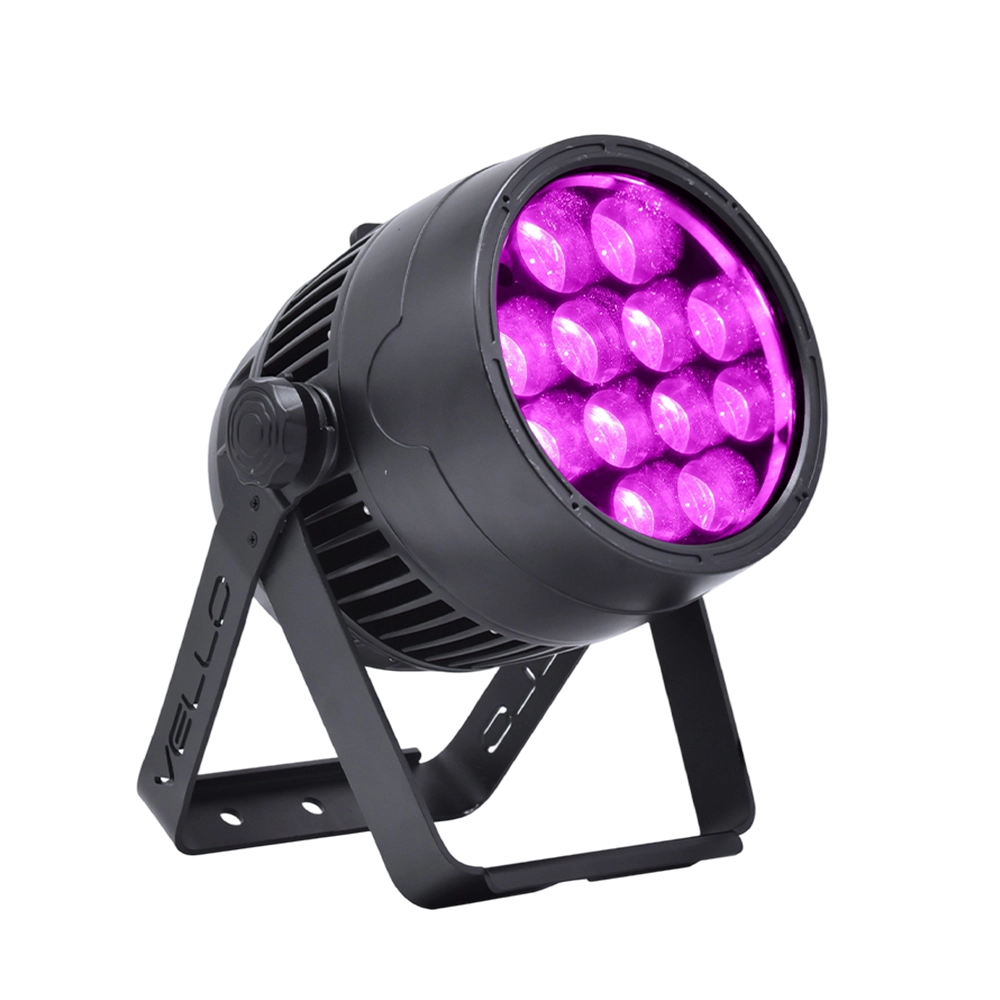
Stage LED Par Light LED ZOOMPAR 40
The Vello Zoom Par 40 IP is a powerful outdoor LED wash light equipped with 12x high-power 7-in-1 RGBACL LEDs. Designed for durability and rich color rendering, it features a wide motorized zoom (6°–50°), smooth dimming, and adjustable CTO presets (3200K–7500K), with 90+ CRI. With an IP66-rated die-cast aluminum body, it’s ideal for both indoor and outdoor applications, including stage lighting, architecture, live events, and installations.
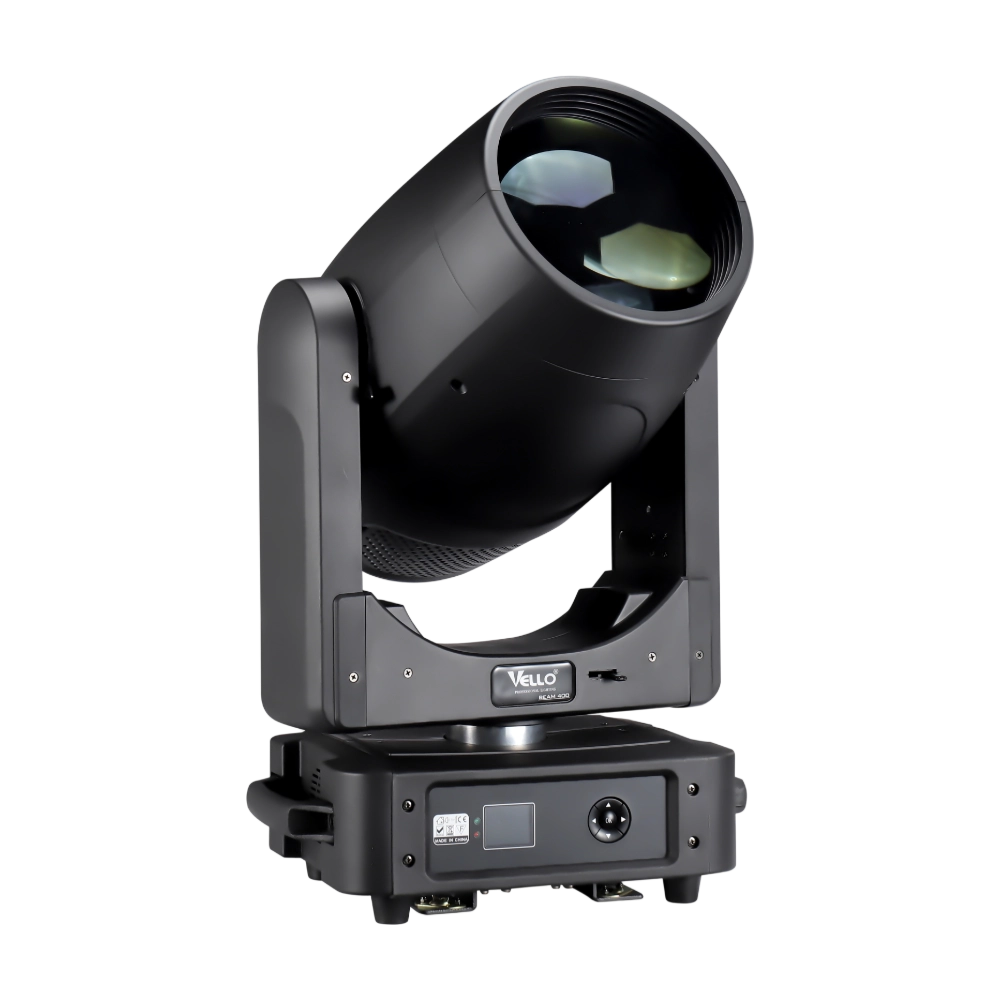
Moving Head Stage Light BEAM 400
BEAM400 is a 500W professional moving head beam powered by an OSRAM SIRIUS 371W discharge bulb, delivering a super-bright 1.8° sharp beam with impressive punch. It features 12 fixed gobos + open, a 14-color wheel, and a 16-facet circular rotating prism with multiple-facet effects, enabling dynamic aerial visuals. With 540° pan / 270° tilt, 16-bit movement resolution, and linear frost and focus, BEAM400 ensures precise and versatile performance. Comparable to traditional 750W moving heads, it combines high efficiency, smooth dimming, and reliable operation—ideal for concerts, tours, and large-scale stage productions.
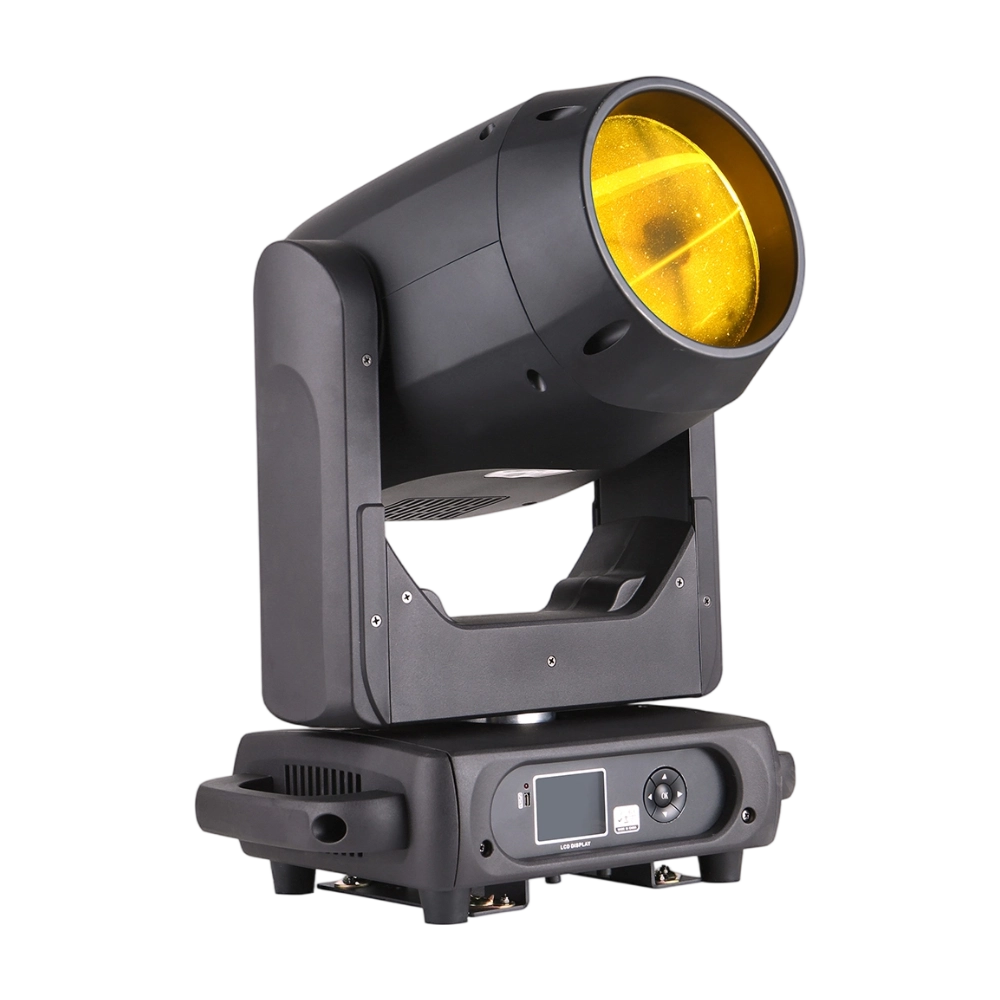
Moving Head Stage Light BEAM 360
BEAM360 is a 400W high-power moving head beam equipped with an OSRAM SIRIUS 311W discharge lamp, delivering a sharp 1.8° beam with super brightness. It features 14 colors + open, 12 fixed metal gobos + open, and dual prisms (8-facet circular + 8+16 multi-facet combination) for dynamic aerial effects. With 540° pan / 270° tilt, 16-bit movement, and linear frost and focus, BEAM360 ensures precision and versatility. Compact yet powerful, it rivals traditional 575W moving heads, making it ideal for concerts, clubs, and large-scale stage productions.
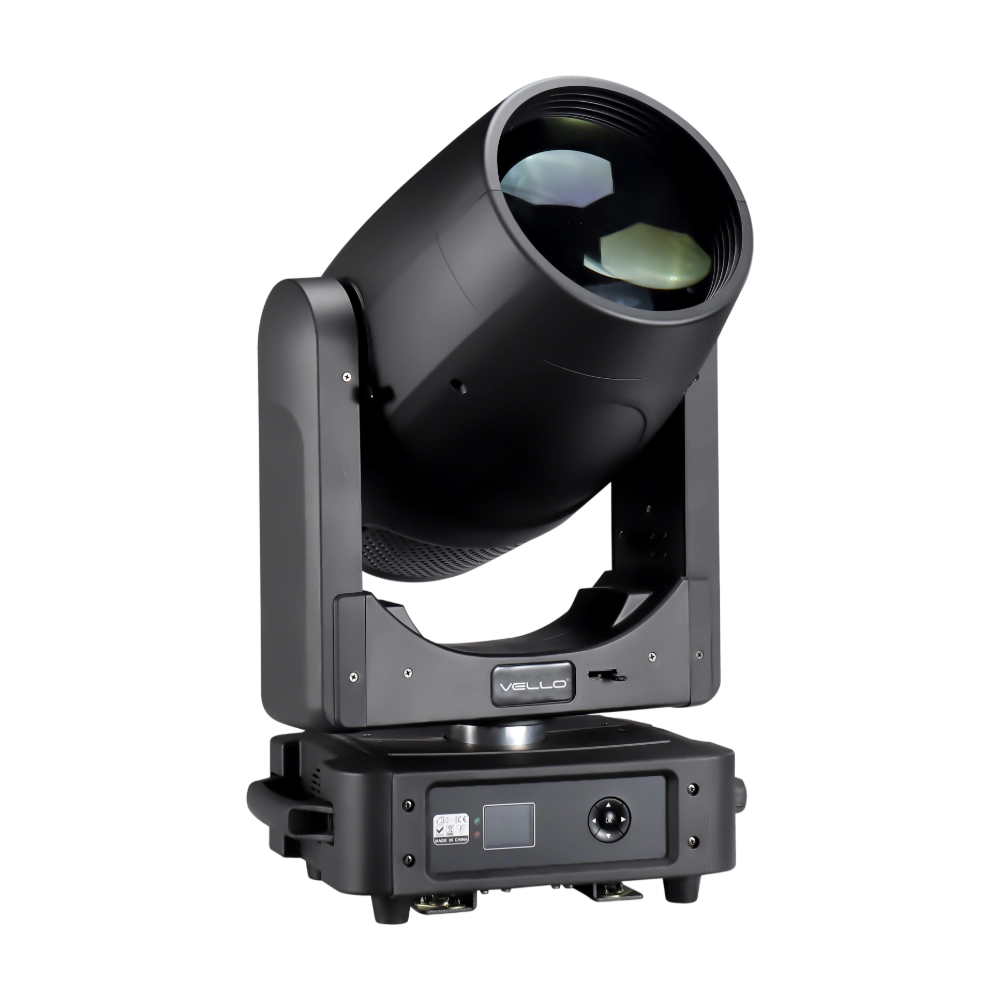
Moving Head Light BEAM 450
The BSW450 is a high-performance moving head fixture equipped with an original Osram 420W bulb, delivering exceptional brightness, precision, and versatility. Designed for professional stage applications, it seamlessly combines beam, spot, and wash functions in one compact unit, making it a powerful all-in-one lighting solution.
Over 20 Years of Innovation in Stage & Studio Lighting
© 2026 VELLO. All Rights Reserved. 粤ICP备20023734号
Join our socials
VELLO
Whatsapp: +8613902276704
Vello Lighting
VelloLights