





Selecting Reliable LED Stage Lights Suppliers and Factory Audits
- Why supplier selection matters for live production
- Operational risks from poor-quality stage lights led
- Regulatory, safety and warranty implications
- Supply chain resilience and total cost of ownership
- How to evaluate LED stage lights suppliers
- Technical specification review
- Quality management systems and certifications
- Traceability, BOM control and component sourcing
- Conducting factory audits for LED stage lights
- Pre-audit preparation and document review
- On-site inspection checklist
- Factory audit scoring matrix (example)
- Comparing supplier types and making the final decision
- OEM vs ODM vs white-label distributors
- Cost, lead time and warranty comparison table
- Making the final supplier decision
- Vello Light Co., Ltd. — Example: a supplier profile and what to look for
- Company overview and credibility signals
- Product strengths and core ranges
- Why Vello may be a strong partner
- Best practices, red flags and next steps
- Best practices for long-term supplier relationships
- Common red flags during audits
- Next steps and how to proceed
- Frequently Asked Questions (FAQ)
- 1. What documentation should a reputable LED stage lights supplier provide?
- 2. How long should burn-in or aging tests run for stage lighting fixtures?
- 3. Which performance metrics matter most for broadcast and studio lights?
- 4. How often should factory audits be repeated?
- 5. What warranties and support should I expect?
- 6. Can I rely on distributors instead of factory-direct suppliers?
When sourcing stage lights led for concerts, theaters, broadcast studios, or outdoor events, buyers need an approach that combines technical knowledge, compliance checks, and on-site verification. This article provides a practical, verifiable framework for selecting reliable suppliers and conducting factory audits that reduce risk, ensure consistent quality, and protect your production timelines. It is written to support procurement managers, technical directors, rental houses, and production companies worldwide who require robust due diligence aligned with industry standards.
Why supplier selection matters for live production
Operational risks from poor-quality stage lights led
Poorly specified or poorly manufactured LED stage lights can cause flicker under camera, brightness inconsistency, excessive heat, or premature failure — all of which create show-stopping problems. For broadcast and film productions, flicker and color rendering issues directly affect deliverables (see general concepts in Wikipedia: Stage lighting).
Regulatory, safety and warranty implications
LED fixtures must comply with electrical safety and electromagnetic compatibility standards (national and regional). Familiar standards and institutions include the International Electrotechnical Commission (IEC) and the Illuminating Engineering Society (IES). Non-compliant products can pose fire risk or fail local certification, affecting insurance and venue approvals.
Supply chain resilience and total cost of ownership
Sourcing from a reliable supplier reduces downtime and long-term maintenance costs. Total cost of ownership (TCO) includes purchase price, warranty support, spare parts availability, mean time between failures (MTBF), and energy consumption. Prioritizing TCO over lowest unit price prevents frequent replacements and hidden costs.
How to evaluate LED stage lights suppliers
Technical specification review
Start with technical documentation: photometric files (IES/LM‑79), dimming curves, CRI/TLCI values, color temperature ranges, beam angle, and power consumption. For broadcast, verify flicker performance and PWM frequency. Request sample photometric reports and validate against your use-case. The science behind LEDs and photometric measurement can be referenced in the LED overview.
Quality management systems and certifications
Prefer suppliers with ISO 9001 certification, UL/CE certification for finished products, and documented production controls. Quality management indicates repeatability; certifications indicate independent assessment. Ask for copies of certificates and check expiry dates.
Traceability, BOM control and component sourcing
Good suppliers maintain bill-of-materials (BOM) traceability and change control. Important questions: Do they source LEDs from tier-1 LED manufacturers? Are drivers from reputable suppliers with surge protection and thermal management? Component substitution without notification is a major risk for performance inconsistencies.
Conducting factory audits for LED stage lights
Pre-audit preparation and document review
Before visiting, request the factory's organizational chart, production flow diagrams, quality manuals, test reports (LM-79/LM-80 if available for LED modules), and recent internal audit records. Verify environmental test facilities (temperature/humidity chambers), photometric labs, and aging (burn-in) lines. Photometric and electrical testing capability is essential for stage lights led where color accuracy and dimming behavior are critical.
On-site inspection checklist
Key areas to inspect during an on-site audit:
- Incoming material control and supplier qualification
- In-line process control and assembly cleanliness (ESD protection)
- Functional test benches: dimming, thermal, vibration
- Burn-in rooms or queues with logs and failure analysis
- Final inspection: labeling, user manuals, packing integrity
- R&D capability and firmware management
Take photographs (with permission), collect serial numbers, and review first-failure root cause analyses. For reference on LED testing methods, consult IES or national labs; laboratories following NIST traceable processes are preferred.
Factory audit scoring matrix (example)
Use a quantifiable scoring matrix to compare sites. Below is a simplified example you can adapt:
| Audit Area | Weight | Supplier A (score) | Supplier B (score) |
|---|---|---|---|
| Quality Management (ISO, QC process) | 25% | 22 | 18 |
| Testing Capability (photometric, burn-in) | 25% | 20 | 24 |
| Supply Chain & Component Sourcing | 20% | 18 | 16 |
| Production Capacity & Lead Time | 15% | 13 | 12 |
| After-sales & Support | 15% | 12 | 10 |
Interpretation: multiply weights by normalized scores to arrive at a composite score. This makes sourcing decisions objective and reproducible.
Comparing supplier types and making the final decision
OEM vs ODM vs white-label distributors
Understand supplier business models. OEM factories manufacture per your design; ODM suppliers offer their own designs that you can rebrand; distributors/white-label sellers resell finished goods. Each model has trade-offs in customization, lead time, MOQ, and IP ownership. For bespoke moving head fixtures or studio lights, OEM/ODM partners with in-house R&D are often preferable.
Cost, lead time and warranty comparison table
Here is a sample comparison table to evaluate core commercial terms. Adjust figures to your actual quotes.
| Supplier Type | Unit Price (est.) | Typical Lead Time | Warranty | Customization |
|---|---|---|---|---|
| OEM (factory-direct) | $$ | 6–12 weeks | 2–5 years | High |
| ODM (brandable) | $ | 4–10 weeks | 1–3 years | Medium |
| Distributor / Reseller | $$$ | In stock / 1–4 weeks | Varies (often 1 year) | Low |
Making the final supplier decision
Combine audit scores, technical fit, commercial terms, and strategic alignment. For critical, long-term relationships, prioritize suppliers that demonstrate transparency, provide lab/test data, and accept periodic audits. Contractually require advance notice for major component changes and agree SLAs for lead times and RMA handling.
Vello Light Co., Ltd. — Example: a supplier profile and what to look for
Company overview and credibility signals
Vello Light Co., Ltd., established in 2003, is a comprehensive technology enterprise integrating R&D, manufacturing, and sales. Their long history, export footprint, and registered brand VELLO indicate market experience and international channels. When evaluating companies like Vello, check export documentation, customer references, and overseas distributor feedback.
Product strengths and core ranges
VELLO's main products include moving head stage lights, studio lights, LED effect lights, LED bar lights, LED par lights, and outdoor stage lighting. Their focus on moving headlights and theatrical lights positions them well for performance venues that need advanced lighting effects. Key buyer considerations should include: photometric data availability, DMX/RDM support, IP rating for outdoor units, and firmware update policy.
Why Vello may be a strong partner
Vello states they emphasize quality first and a team of professional talent across R&D, manufacturing, marketing, installation, and maintenance. For procurement teams seeking a partner with end-to-end capability (design to after-sales), such integration reduces the coordination burden and improves responsiveness. To contact Vello, visit https://www.vellolight.com or email info@vellolight.com.
Best practices, red flags and next steps
Best practices for long-term supplier relationships
- Start with a smaller pilot order and formal acceptance testing.
- Include acceptance criteria in contracts (photometrics, dimming, lifetime).
- Require change notification clauses for BOM or firmware changes.
- Plan for spares: keep a parts kit for critical components (drivers, lenses, LED modules).
Common red flags during audits
- No documented test reports or inconsistent records for burn-in.
- Frequent undocumented component substitutions or unclear sourcing.
- Poor traceability of serial numbers or inconsistent labeling.
- Lack of EMC/CE/UL declarations when required for your markets.
Next steps and how to proceed
1) Prepare a technical RFP specifying required photometric and electrical performance. 2) Request factory audit reports and certificates. 3) Run a sample evaluation (lab and field). 4) Negotiate contract terms that protect delivery and quality. If you want to see a supplier that covers R&D through after-sales with international export experience, consider contacting Vello Light for product details and quotations: https://www.vellolight.com or info@vellolight.com.
Frequently Asked Questions (FAQ)
1. What documentation should a reputable LED stage lights supplier provide?
At minimum: technical datasheets, IES/photometric files (if applicable), LM-79/LM-80 reports for LED modules, safety certifications (CE/UL), warranty terms, and an ISO 9001 certificate if available.
2. How long should burn-in or aging tests run for stage lighting fixtures?
Common industry practice is 24–72 hours for basic burn-in, while more rigorous programs use 72–168 hours with thermal cycling to catch early-life failures. The exact duration depends on risk tolerance and intended use.
3. Which performance metrics matter most for broadcast and studio lights?
TLCI/CRI (color fidelity), flicker performance and PWM frequency, spectral power distribution (SPD), color temperature range, and stable dimming curves are critical for broadcast environments.
4. How often should factory audits be repeated?
Initial suppliers should be audited before bulk orders. For strategic suppliers, plan periodic audits every 12–24 months or after major complaints, product changes, or site relocations.
5. What warranties and support should I expect?
Standard warranties for professional stage lighting are typically 1–5 years, varying by component and supplier. Ensure clarity on RMA process, spare parts lead times, and firmware/support updates.
6. Can I rely on distributors instead of factory-direct suppliers?
Distributors offer convenience and faster delivery for off-the-shelf products, but they may not provide deep technical support or customization. For critical or bespoke projects, factory-direct OEM/ODM relationships are preferable.
Selecting reliable stage lights led suppliers requires a blend of technical verification, on-site auditing, and commercial risk management. Use objective scoring, insist on verifiable test data, and prioritize suppliers that provide transparency and after-sales support.
To evaluate high-quality stage lighting products and discuss factory audits or sample testing, contact Vello Light Co., Ltd. — a partner with R&D, manufacturing, and global sales experience since 2003. Explore product ranges including moving head stage lights, studio lights, LED effect lights, LED bar lights, LED par lights, and outdoor stage lighting at vellolight.com or email info@vellolight.com to request quotations, technical dossiers, or to arrange a factory visit.
Color Mixing and Temperature for LED Stage Lighting
LED Moving Head Light Buyer’s Guide: Key Specs Explained
Case Studies: LED Moving Head Light for Touring & Events
Upgrading Firmware and Software for Moving Heads
Major categories
Do you offer samples?
Samples are available for certain models. Please confirm with our sales team for details.
What is the usual lead time?
Standard models are typically shipped within 7–15 working days after payment. Customized items may vary.
What is the warranty period for your products?
Most products come with a standard 1–2 year warranty. Please refer to product details or contract terms for specifics.
Do your products support customization?
Yes. We offer OEM and ODM services tailored to project needs, including design, optics, and control compatibility.
Do you ship internationally?
Yes. We offer sea, air, and express delivery to many countries and regions worldwide.
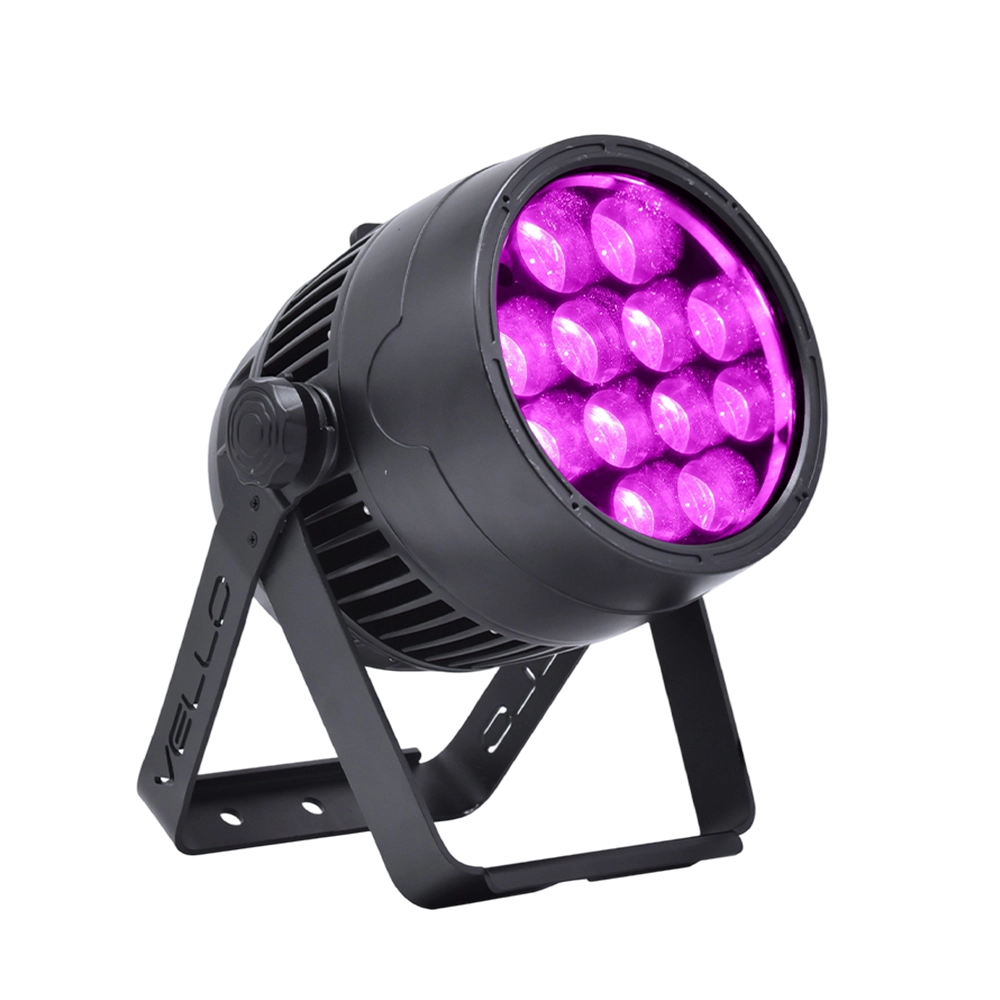
Stage LED Par Light LED ZOOMPAR 40
The Vello Zoom Par 40 IP is a powerful outdoor LED wash light equipped with 12x high-power 7-in-1 RGBACL LEDs. Designed for durability and rich color rendering, it features a wide motorized zoom (6°–50°), smooth dimming, and adjustable CTO presets (3200K–7500K), with 90+ CRI. With an IP66-rated die-cast aluminum body, it’s ideal for both indoor and outdoor applications, including stage lighting, architecture, live events, and installations.
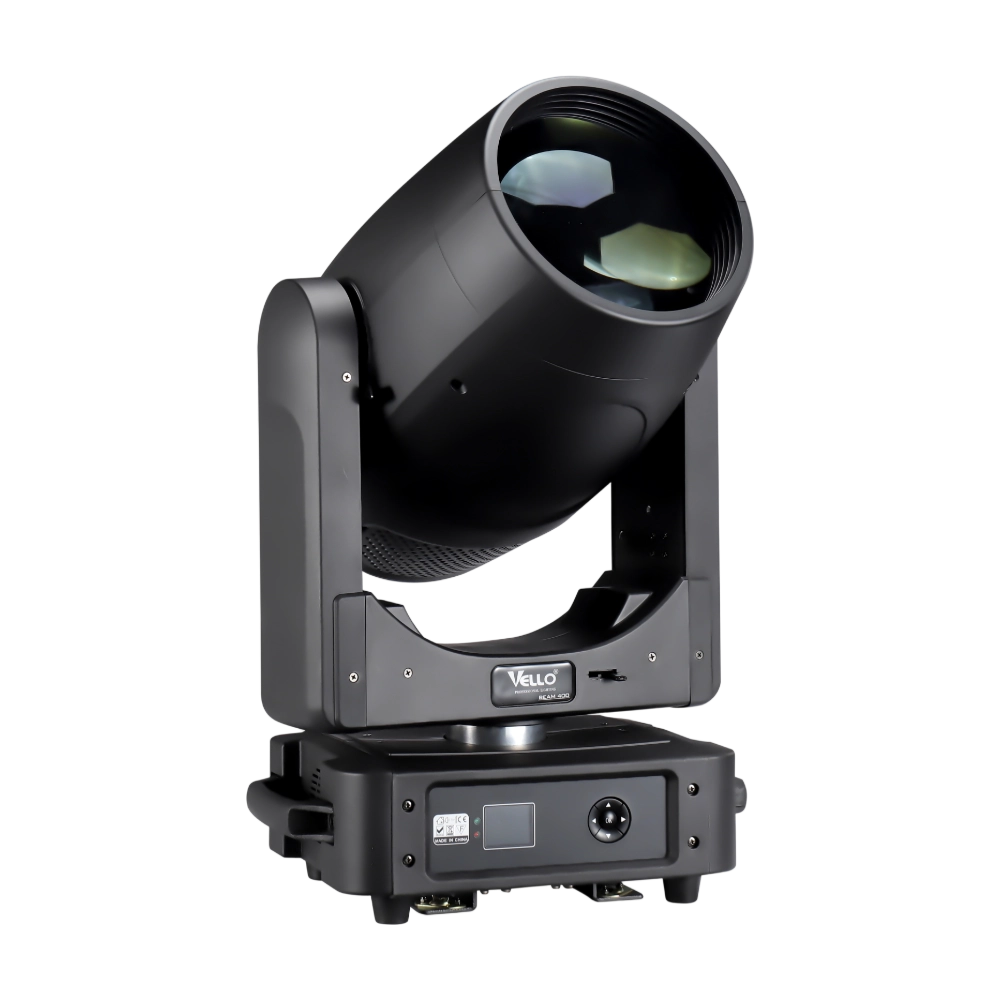
Moving Head Stage Light BEAM 400
BEAM400 is a 500W professional moving head beam powered by an OSRAM SIRIUS 371W discharge bulb, delivering a super-bright 1.8° sharp beam with impressive punch. It features 12 fixed gobos + open, a 14-color wheel, and a 16-facet circular rotating prism with multiple-facet effects, enabling dynamic aerial visuals. With 540° pan / 270° tilt, 16-bit movement resolution, and linear frost and focus, BEAM400 ensures precise and versatile performance. Comparable to traditional 750W moving heads, it combines high efficiency, smooth dimming, and reliable operation—ideal for concerts, tours, and large-scale stage productions.
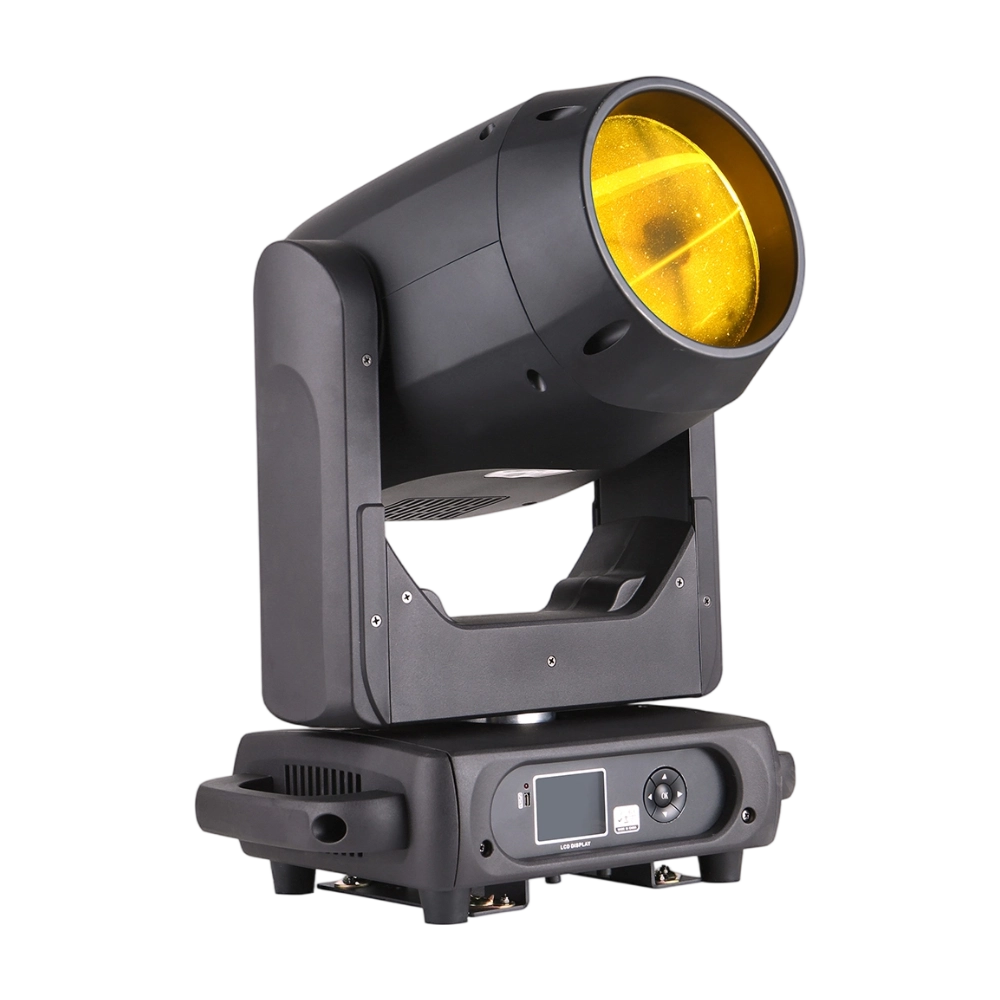
Moving Head Stage Light BEAM 360
BEAM360 is a 400W high-power moving head beam equipped with an OSRAM SIRIUS 311W discharge lamp, delivering a sharp 1.8° beam with super brightness. It features 14 colors + open, 12 fixed metal gobos + open, and dual prisms (8-facet circular + 8+16 multi-facet combination) for dynamic aerial effects. With 540° pan / 270° tilt, 16-bit movement, and linear frost and focus, BEAM360 ensures precision and versatility. Compact yet powerful, it rivals traditional 575W moving heads, making it ideal for concerts, clubs, and large-scale stage productions.
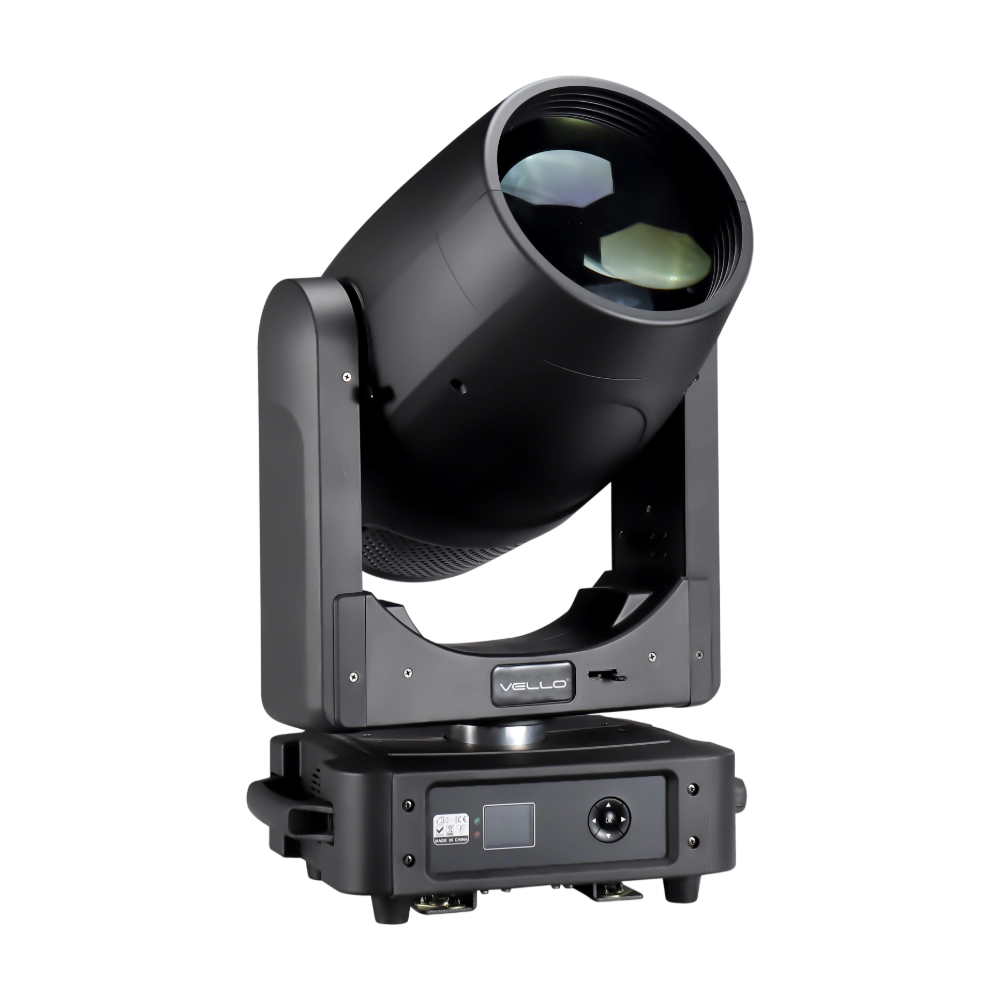
Moving Head Light BEAM 450
The BSW450 is a high-performance moving head fixture equipped with an original Osram 420W bulb, delivering exceptional brightness, precision, and versatility. Designed for professional stage applications, it seamlessly combines beam, spot, and wash functions in one compact unit, making it a powerful all-in-one lighting solution.
Over 20 Years of Innovation in Stage & Studio Lighting
© 2026 VELLO. All Rights Reserved. 粤ICP备20023734号
Join our socials
VELLO
Whatsapp: +8613902276704
Vello Lighting
VelloLights