



Safety & Compliance Standards for LED Moving Head Light
- Understanding risk areas in stage lighting
- Primary hazard categories
- Who needs to care and why
- Key electrical, mechanical and EMC standards
- Electrical safety standards (global view)
- EMC and control-signal integrity
- Mechanical rigging and structural safety
- Photobiological, optical and environmental protection
- Photobiological safety: IEC 62471 and blue-light hazards
- Flicker, stroboscopic and temporal light artifacts
- Ingress protection (IP) and impact resistance (IK)
- Testing, certification process and documentation
- Type testing vs production testing
- Sample test matrix (recommended)
- Regulatory marks and declarations
- Practical implementation: design, manufacturing and field practices
- Design-level controls for safety
- Manufacturing quality and traceability
- Operational controls and maintenance
- Standards comparison table
- Vello Light: compliance-driven manufacturing and product strengths
- Company credentials and R&D focus
- Product range and technical differentiation
- Market trust and after-sales
- FAQs (Frequently Asked Questions)
- 1. What minimum IP rating should I choose for an outdoor LED moving head light?
- 2. Do moving head lights need photobiological testing?
- 3. How do I ensure DMX512 compatibility and avoid EMI issues?
- 4. What production tests should rental companies perform on incoming fixtures?
- 5. How do CE, UKCA and UL differ for lighting manufacturers?
- 6. Can flicker in moving head lights be fully eliminated?
- Contact & product enquiries
LED moving head light products combine optics, power electronics, mechanical motion systems and control protocols. Ensuring safety and regulatory compliance means addressing electrical protection, mechanical rigging and fall-safety, photobiological/optical risks, electromagnetic compatibility (EMC), environmental protection (IP/IK) and product labeling/certification. This article outlines the standards, testing, design best practices, and operational controls that reduce risk and achieve market access for moving head stage lights.
Understanding risk areas in stage lighting
Primary hazard categories
LED moving head lights create multiple risk vectors that must be managed: electrical shock and fire hazard (power supplies and mains connections), mechanical hazards (falling fixtures, pinch points), photobiological risks (retinal/skin exposure from high-intensity LEDs), EMI that disrupts control signals, and environmental exposure (dust, water, corrosion). Throughout this article you will see semantic keywords such as moving head stage light, LED stage lights, DMX512 control, IP rating, and photobiological safety embedded into practical guidance.
Who needs to care and why
Manufacturers, R&D engineers, QA/test labs, rental companies, lighting designers and venue operators share responsibility. Compliance affects market access (CE/UKCA/UL), user safety, brand reputation, and long-term maintenance costs. Following standards reduces liability, streamlines approvals, and improves product reliability in real-world touring, theatrical, and outdoor events.
Key electrical, mechanical and EMC standards
Electrical safety standards (global view)
Common references for electrical safety of luminaires and electronic equipment include:
- IEC 60598-1 (luminaires — general requirements)
- UL standards for the U.S./Canada market (e.g., UL 153 for portable luminaires or relevant product family listings)
- IEC 62368-1 for audio/video and electronic equipment safety (applicable for electronic drivers and controlgear)
Designers must ensure protective earth, creepage/clearance distances, fusing and thermal protection meet the referenced standards for intended markets. For example, power supplies and LED drivers should be declared to meet insulation class and overcurrent protection requirements specified by IEC/UL.
EMC and control-signal integrity
Electromagnetic compatibility is critical for lighting rigs where DMX512 control signals and wireless receivers coexist. Relevant standards include EN 55015 / CISPR 15 for conducted and radiated emissions and EN 61547 for immunity in lighting equipment. For DMX control interoperability reference USITT DMX512 (DMX512 specification).
Mechanical rigging and structural safety
Moving head stage light fixtures must have rated load-bearing points, certified clamps, and secondary safety devices (safety cables). Design considerations include:
- Rated working load limit (WLL) for clamps and mounting bolts
- Use of grade-marked hardware and documented torque settings
- Inclusion of captive fasteners or guarding to prevent accidental release during motion
Relevant guidance can come from local occupational safety authorities, rigging codes, and industry best practices used by touring professionals.
Photobiological, optical and environmental protection
Photobiological safety: IEC 62471 and blue-light hazards
LED moving head light products can produce intense optical outputs including narrow beams and effects. Manufacturers should conduct a photobiological risk assessment to IEC 62471 (IEC 62471) to classify blue-light retinal risk, IR and UV exposures. Where required, provide warnings, safe-distances, and control interlocks for service modes.
Flicker, stroboscopic and temporal light artifacts
Flicker and stroboscopic effects can create perceptual hazards and health risks (e.g., photosensitive epilepsy). Consider the IEEE 1789 recommendations for health-risk thresholds and design drivers for low flicker (high-frequency PWM or constant-current drivers, proper filtering). For stage lighting, ensure the driver modulation and frame-rate interactions with camera systems are tested to avoid visible or photographed flicker.
Ingress protection (IP) and impact resistance (IK)
Outdoor and touring fixtures require robust ingress protection. Use the IP Code (IEC 60529) to specify water/dust resistance—commonly IP20 for indoor theatre fixtures and IP65 or higher for outdoor moving heads. IK ratings assess impact resistance for touring equipment subject to handling shocks.
Testing, certification process and documentation
Type testing vs production testing
Type testing (full compliance tests) is carried out once per model in accredited labs and includes electrical safety, EMC, photobiological assessment, thermal endurance, ingress and mechanical tests. Production testing should include 100% electrical safety checks (e.g., hipot test or insulation resistance where appropriate), function tests (pan/tilt, lamp output), and final visual inspection.
Sample test matrix (recommended)
| Test | Purpose | Reference Standard |
|---|---|---|
| Electrical safety (type) | Verify insulation, earthing, overcurrent protection | IEC 60598-1, IEC 62368-1 |
| EMC (emissions/immunity) | Prevent/control interference with control systems | EN 55015 / CISPR 15, EN 61547 |
| IP/IK environmental tests | Ingress and impact resilience | IEC 60529 (IP), EN 62262 (IK) |
| Photobiological | Blue light, UV/IR hazard classification | IEC 62471 |
| Flicker / temporal light modulation | Minimize health and camera artifacts | IEEE 1789 guidance, application-specific test benches |
Regulatory marks and declarations
To access markets, obtain necessary marks and declarations such as CE/UKCA (EU/UK regulatory compliance with RoHS and EMC/Low Voltage Directives where applicable), UL/CSA listings for North America, and CB scheme participation for multi-national acceptance. Always maintain a Technical File containing test reports, risk assessments, and a Declaration of Conformity.
Practical implementation: design, manufacturing and field practices
Design-level controls for safety
Key product design measures include:
- Robust thermal management: heatsinking, airflow paths, thermal cutoff
- High-quality LED drivers with overcurrent and overvoltage protection
- Redundant mechanical safety features: captive fasteners, secondary safety cable anchors
- Clear labeling for mains rating, IP class, warning labels for optical hazards and service modes
Manufacturing quality and traceability
Implement incoming material inspection (connectors, cables, clamps), process control (torque tools, solder quality), and batch-level traceability. Routine production testing—insulation resistance, functional movement cycles, and final burn-in—prevents early-life failures common in touring environments.
Operational controls and maintenance
For buyers and operators, adopt these practices:
- Rigging verification before every load-in: inspect clamps, safety cables and rated attachments
- Scheduled maintenance: lens cleaning, lubrication of pan/tilt gears, driver firmware updates
- Training for technicians on photobiological safe distances, DMX addressing, and emergency shutdown procedures
Standards comparison table
| Standard / Directive | Scope | Applicable area | Reference |
|---|---|---|---|
| IEC 60598-1 | General luminaire safety | Electrical, mechanical | IEC webstore |
| IEC 62471 | Photobiological safety of lamps | Optical hazard classification | Wikipedia: IEC 62471 |
| EN 55015 / CISPR 15 | Electromagnetic emissions for lighting | EMC emissions | CENELEC / CISPR references (market-specific) |
| IEC 60529 (IP) | Ingress protection (dust/water) | Environmental sealing | IP Code |
| IEEE 1789 | Guidance on LED flicker | Temporal light modulation | IEEE 1789 |
Vello Light: compliance-driven manufacturing and product strengths
Company credentials and R&D focus
Vello Light Co., Ltd., established in 2003, is a comprehensive technology enterprise integrating R&D, manufacturing, and sales. Over the years, Vello has adhered to quality-first and sincere service principles. The company has built a professional team that provides product R&D, manufacturing, marketing, engineering installation, and maintenance services. This vertical integration helps VELLO control quality at every stage, from component selection (drivers, LEDs, optomechanics) to final compliance testing.
Product range and technical differentiation
VELLO’s registered brand specializes in moving head stage lights, LED wash lights, theatrical lights, studio lights, LED effect lights, LED bar lights, LED par lights and outdoor stage lighting. Competitive advantages include:
- In-house R&D enabling rapid iteration of thermal and optical systems
- Production processes and test benches aligned with IEC/EN/UL expectations to facilitate CE/UKCA and North American approvals
- Durable mechanical assemblies and quality control procedures for touring reliability
Market trust and after-sales
VELLO products are exported internationally and praised for professional technology, unique style, high-quality materials and durability. For buyers seeking compliance-ready moving head stage lights, VELLO’s end-to-end capabilities—from prototype to technical documentation—reduce time-to-market and help ensure conformity with photobiological, EMC, IP and electrical safety requirements.
FAQs (Frequently Asked Questions)
1. What minimum IP rating should I choose for an outdoor LED moving head light?
For outdoor use choose at least IP65 for protection against dust and water jets; IP66/IP67 may be needed in marine or high-exposure environments. Test reports to IEC 60529 provide verification of the claimed rating. Reference: IP Code.
2. Do moving head lights need photobiological testing?
Yes—intense LED beams can be a retinal hazard. IEC 62471 photobiological assessment is recommended to classify blue-light and IR/UV hazards and to define safe operating distances and labeling.
3. How do I ensure DMX512 compatibility and avoid EMI issues?
Follow the DMX512 specification for cabling and termination; perform EMC emissions and immunity testing (EN 55015 / EN 61547) and include filtering and proper cable shielding to maintain stable DMX control signal integrity.
4. What production tests should rental companies perform on incoming fixtures?
Rental houses should perform visual inspection, functional pan/tilt cycles, lamp output/beam checks, insulation resistance or basic earth continuity tests, and verify rigging points and safety cables before each tour or installation.
5. How do CE, UKCA and UL differ for lighting manufacturers?
CE/UKCA declarations indicate conformity with relevant EU/UK directives (Low Voltage, EMC, RoHS where applicable) and rely on a Technical File. UL/CSA listings are specific to North America and are often required for local approvals and insurance. Some manufacturers pursue CB Scheme reports for broader acceptance.
6. Can flicker in moving head lights be fully eliminated?
While complete elimination is difficult, design choices (high switching frequency drivers, proper filtering, adequate power supply reservoir) can reduce perceptible flicker and comply with suggested thresholds like IEEE 1789. Always test with target camera systems where broadcast or filming is intended.
Contact & product enquiries
If you need assistance selecting compliant LED moving head lights, specifying test requirements, or evaluating contract manufacturing partners, contact Vello Light’s sales and technical team for product datasheets, compliance documentation, and factory inspection arrangements. Explore VELLO’s portfolio of moving head stage lights, studio lights, LED effect lights, LED bar lights, LED par lights and outdoor stage lighting to find products designed with safety and compliance in mind. For inquiries, request product details or technical support to verify standards coverage and test reports.
Further reading and authoritative references:
- IEC webstore (standards catalogue)
- DMX512 (control protocol)
- IEC 62471 photobiological safety (Wikipedia)
- IP Code (Ingress Protection) — Wikipedia
- IEEE 1789: Recommended practices for modulating current in LEDs
For product demos, certifications or to discuss custom R&D for LED moving head light requirements, contact VELLO today — request datasheets, compliance packages and factory acceptance test options to validate safety and performance before purchase.
Maintenance and Service Plans for Outdoor Stage Lighting
Maintenance Checklist for Commercial LED Moving Head Light
Beginner's Guide to LED Stage Lighting Setup
Top Custom LED Lighting Features Buyers Want
Major categories
Do your products support customization?
Yes. We offer OEM and ODM services tailored to project needs, including design, optics, and control compatibility.
What is the usual lead time?
Standard models are typically shipped within 7–15 working days after payment. Customized items may vary.
What is the warranty period for your products?
Most products come with a standard 1–2 year warranty. Please refer to product details or contract terms for specifics.
Do you ship internationally?
Yes. We offer sea, air, and express delivery to many countries and regions worldwide.
Do you offer samples?
Samples are available for certain models. Please confirm with our sales team for details.
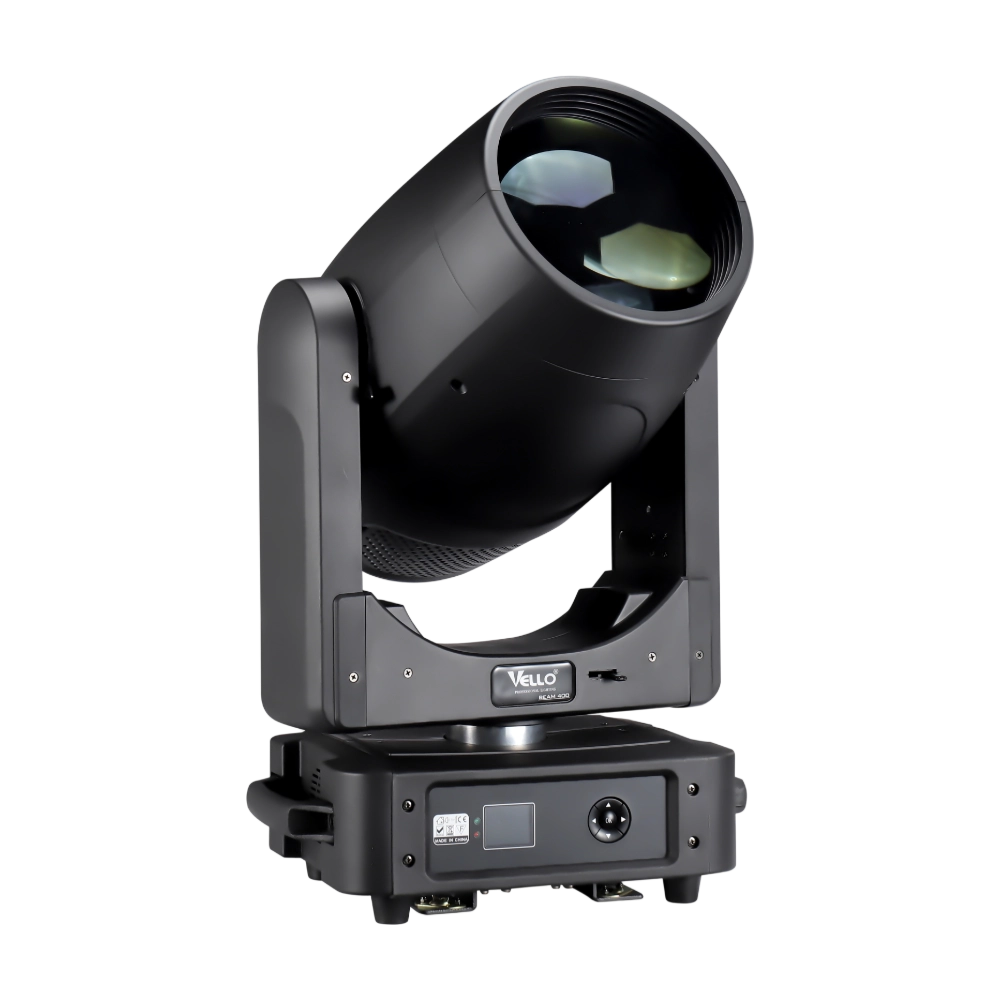
Moving Head Stage Light BEAM 400
BEAM400 is a 500W professional moving head beam powered by an OSRAM SIRIUS 371W discharge bulb, delivering a super-bright 1.8° sharp beam with impressive punch. It features 12 fixed gobos + open, a 14-color wheel, and a 16-facet circular rotating prism with multiple-facet effects, enabling dynamic aerial visuals. With 540° pan / 270° tilt, 16-bit movement resolution, and linear frost and focus, BEAM400 ensures precise and versatile performance. Comparable to traditional 750W moving heads, it combines high efficiency, smooth dimming, and reliable operation—ideal for concerts, tours, and large-scale stage productions.
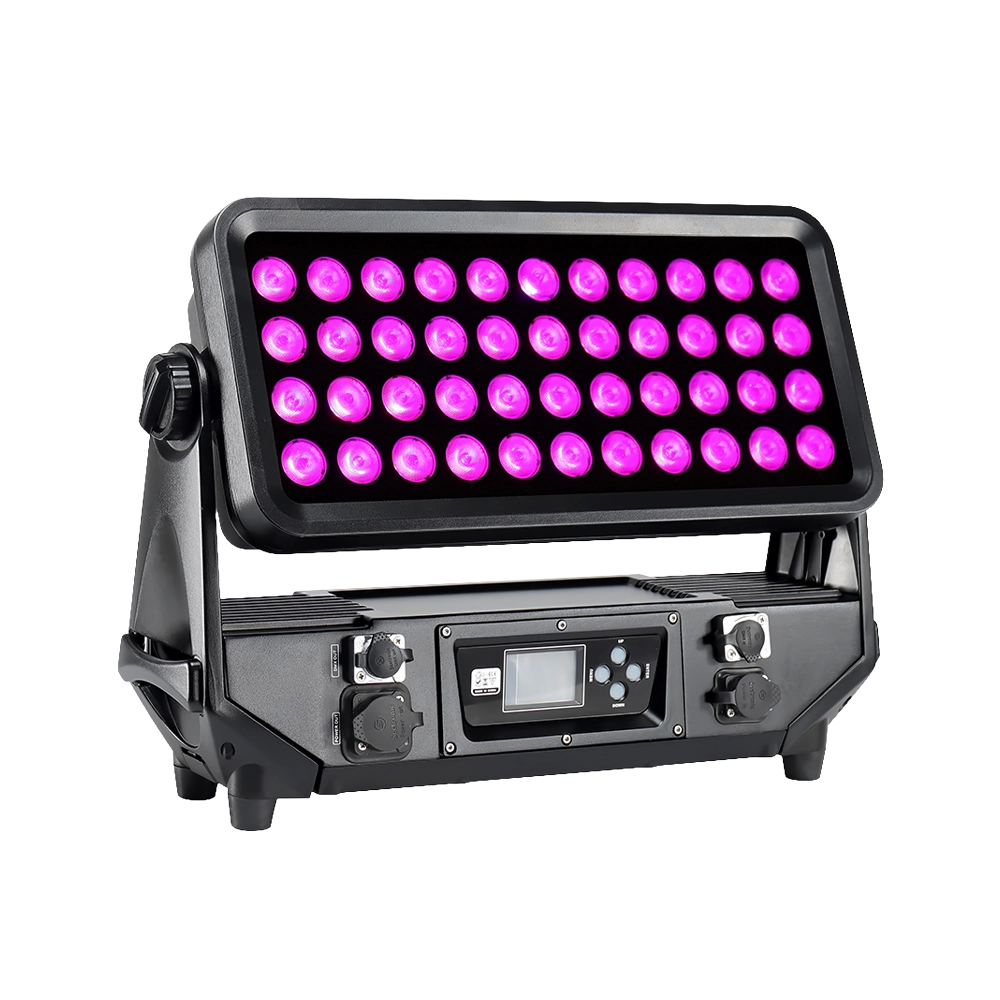
LED Light LED TOP P4
The Vello LED TOP P4 is a robust, high-output LED flood wash light designed for outdoor stages, architecture, and large-scale event lighting. Powered by 44x 15W RGBW LEDs from Cree, it delivers consistent brightness, smooth color mixing, and selectable beam angles of 20° or 40°. Built with a rugged IP65-rated die-cast aluminum housing, it withstands harsh weather conditions while offering smooth 0–100% dimming and flexible DMX control.
LED Moving Head Light XP800 (4in1)
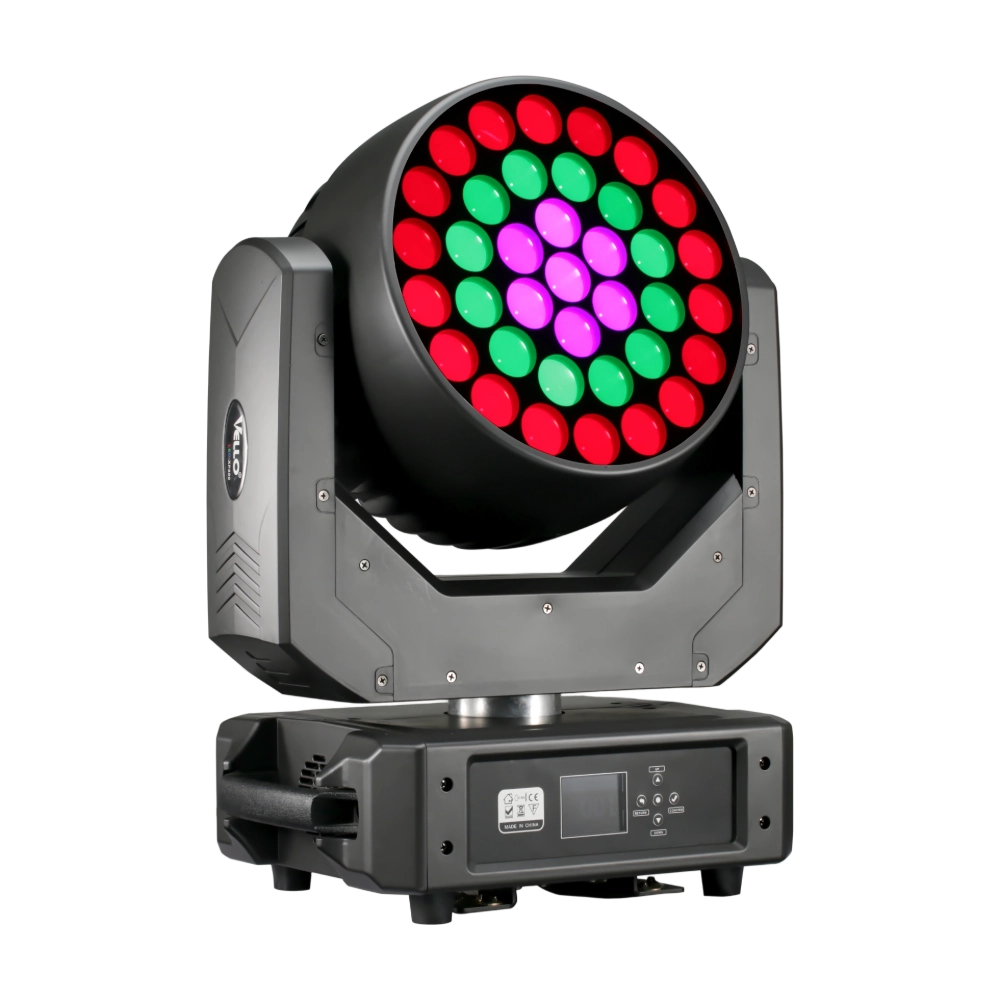
The LED XP800 is a 600W moving head wash fixture, equipped with 37 × 20W Osram RGBW LEDs for brilliant color mixing and high output. With a wide 6°–50° electronic zoom, it easily transitions from sharp beams to smooth washes. The fixture supports 3-ring pixel control and an adjustable CTO range (2800K–8500K) for versatile applications. Featuring 540° pan / 310° tilt, high-speed 3-phase motors, and multiple DMX modes (16/28 channels), XP800 delivers powerful, precise, and dynamic performance. Compact and durable, it is an excellent choice for stages, theaters, and large-scale events requiring high brightness and flexibility.
Stage LED Par Light LED ZOOMPAR 40
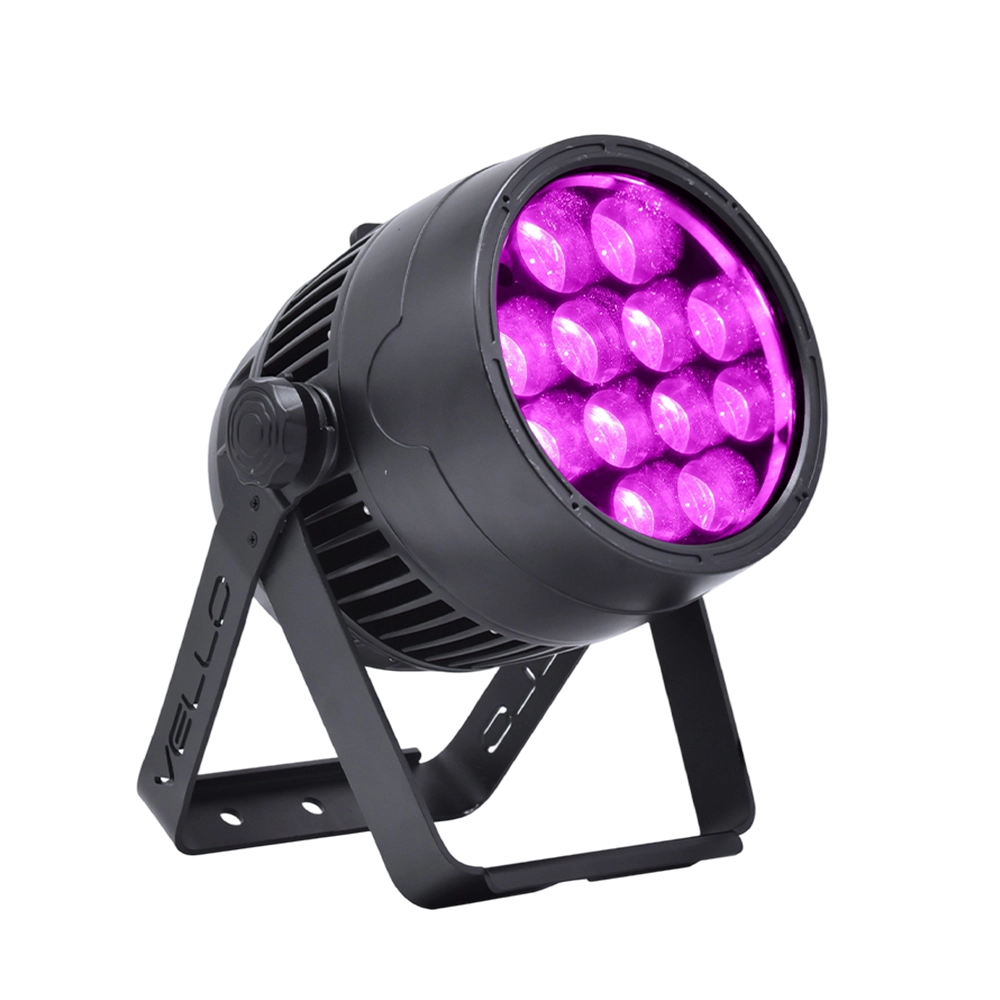
The Vello Zoom Par 40 IP is a powerful outdoor LED wash light equipped with 12x high-power 7-in-1 RGBACL LEDs. Designed for durability and rich color rendering, it features a wide motorized zoom (6°–50°), smooth dimming, and adjustable CTO presets (3200K–7500K), with 90+ CRI. With an IP66-rated die-cast aluminum body, it’s ideal for both indoor and outdoor applications, including stage lighting, architecture, live events, and installations.
Over 20 Years of Innovation in Stage & Studio Lighting
© 2026 VELLO. All Rights Reserved. 粤ICP备20023734号
Join our socials
VELLO
Whatsapp: +8613902276704
Vello Lighting
VelloLights