





How to Rig and Mount Moving Head Lights Safely
- Rigging Fundamentals for Stage Lighting
- Why rigging protocol matters for moving head lights
- Key safety principles embedded in every rig
- Pre-installation Checklist for moving head lights
- Selecting truss, hardware, and hoists for moving head lights
- Load calculations and suspension points for moving head lights
- Notes on software and tools
- Electrical and cable management for moving head lights
- Safe mounting, aiming and locking moving head lights
- Working at height, fall protection and personnel requirements for moving head lights
- Routine maintenance, testing, and documentation for moving head lights
- Vello Light — technical capability and product relevance to moving head lights
- Frequently Asked Questions (FAQ)
- 1. What safety factor should I use when rigging moving head lights?
- 2. Do moving head lights need a secondary safety cable?
- 3. How often should I inspect rigging hardware and moving head lights?
- 4. Can I use a generic clamp for any moving head light?
- 5. Who is responsible if a mounted moving head light fails?
- 6. How do I account for dynamic forces from moving head lights during programming?
- Contact and Product Inquiry
- References
Rigging Fundamentals for Stage Lighting
Why rigging protocol matters for moving head lights
Moving head lights are among the most versatile and mechanically complex fixtures used in modern productions. They combine motors, optics, and electronics in a mobile package that typically weighs between 5 kg and 40 kg depending on model. Improper rigging or mounting can lead to dropped loads, electrical hazards, or fixture damage — risks that endanger personnel, audience members, and production continuity. This article focuses on best practices for rigging and mounting moving head lights safely, from initial load calculations through maintenance and documentation.
Key safety principles embedded in every rig
Every safe installation of moving head lights relies on several immutable principles: use certified hardware, respect rated capacities (WLL and SWL), apply appropriate safety factors, manage dynamic forces caused by pan/tilt movement, maintain accessible inspection records, and ensure personnel training and fall protection. Practical compliance with these principles reduces both acute accidents and long-term equipment failures.
Pre-installation Checklist for moving head lights
Before you touch a clamp or hoist, complete a formal pre-installation checklist that includes venue structural verification, fixture inventory, lighting plot review, and personnel assignments. Embedding the keyword 'moving head lights' in this checklist ensures focus on the fixture class and its specific requirements.
- Confirm structural capacity of suspension points (consult structural engineer if uncertain).
- Verify fixture weights from manufacturer datasheets and note centre-of-gravity if provided.
- List hardware (clamps, shackles, slings, motors) with their WLL and certification tags.
- Assign qualified riggers and a designated responsible person (Rigger-in-Charge).
- Plan access, fall protection, and rescue methods for work at height.
- Coordinate electrical distribution and DMX/networks for moving head lights to avoid overloads.
Selecting truss, hardware, and hoists for moving head lights
Choosing the right truss, clamps, and hoists is central to safe mounting. Always use components certified for entertainment rigging and keep manufacturer load tables on hand. The following table summarizes common hardware choices and recommended planning guidance.
| Hardware Type | Typical Use | Notes / Industry Guidance |
|---|---|---|
| Truss (aluminum, triangular) | Primary suspension beam for moving head lights | Follow manufacturer load tables; consider point loads and distributed loads. Verify span deflection limits. |
| Couplers & Clamps (C-clamp, O-clamp) | Fixture attachment to truss | Use clamps rated for truss diameter and fixture WLL. Torque properly and use safety cables. |
| Chain Hoists / Electric Motors | Raise/lower truss or individual bars | Use certified motors with load monitoring; adhere to recommended safety factor (see references). |
| Shackles, Slings, Shackles | Connecting hardware and rigging hardware | Ensure correct size, pin type and WLL; inspect for deformation and corrosion. |
| Secondary safety (safety cables) | Back-up restraint for each moving head light | Use steel safety cables or rated straps; rated to at least the fixture weight and secured independently of the primary clamp. |
Industry bodies such as PLASA/ESTA and ETCP publish more detailed rigging standards and certification paths; consult those resources when designing complex rigs.
Load calculations and suspension points for moving head lights
Correct load calculation is non-negotiable. Simplified steps for a reliable calculation:
- Sum the static weights of all moving head lights, clamps, cables, and any cable managers on the bar or truss span.
- Apply a dynamic multiplier to account for motion-induced forces. A conservative multiplier commonly used in the industry is 1.25 (25% dynamic allowance), though specific systems and motion profiles can require higher values.
- Apply an engineering safety factor based on hardware recommendations and local regulation. Typical entertainment rigging practice uses safety factors in the range of 5:1 to 8:1 for slings and chain hoists — consult the hardware manufacturer and venue policy.
- Ensure each suspension point and the truss segment has a WLL greater than the calculated design load divided by the number of points supporting that load.
Example calculation (practical):
Six moving head lights, manufacturer weight = 25 kg each. Accessories and cabling per fixture = 2 kg.
- Total static load = (25 + 2) × 6 = 162 kg
- Apply dynamic multiplier 1.25 → 162 × 1.25 = 202.5 kg
- Choose a safety factor 8:1 for overhead suspension hardware → Required WLL = 202.5 × 8 = 1,620 kg
In this example the entire system of hoists, shackles, truss and anchor points must collectively demonstrate WLL ≥ 1,620 kg. If the rig uses two hoist points, each must be rated accordingly and load distribution must be assessed (ideally each ≥ 810 kg factoring for unequal load sharing and dynamic effects).
Notes on software and tools
Use validated rigging calculation tools or structural engineering input for complex systems, long spans, or variable loads. Keep calculation files and sign-offs in the venue record.
Electrical and cable management for moving head lights
Moving head lights demand careful electrical planning: power draw (inrush + running), circuit balancing, and control/data cabling. Poor cable management can create trip hazards, strain relief failures, and connector damage.
- Record the inrush and running current for each moving head light from the datasheet. Plan circuits so that continuous current does not exceed 80% of circuit capacity.
- Use DMX/RDM or network infrastructure designed for real-time control; avoid daisy-chaining excessively long runs without line boosters where recommended.
- Provide strain relief at the fixture and at junction points to prevent connector failure during motion.
- Separate power and data feeds to reduce interference and facilitate troubleshooting.
Safe mounting, aiming and locking moving head lights
Mounting is more than clicking a clamp in place. It includes torqueing, secondary safety, power/data connection, physical aiming, and commissioning tests.
- Mount each moving head light with a certified clamp sized for the truss tube and fixture bracket. Torque to manufacturer-specified values and record torque readings when practical.
- Attach a secondary safety cable independent of the primary clamp; route it so that a clamp failure will not let the fixture swing into people or other equipment.
- Check the fixture’s mounting bracket and locking mechanisms. Use the fixture’s pan/tilt lock if present during transport or long periods of inactivity, but do not rely on mechanical locks for primary safety while live — the clamp is primary, safety cable is secondary.
- Power up fixtures one at a time to test movement range, end-stops, and current draw. Verify that moving head lights do not exceed the envelope that would cause collision with other fixtures or set elements.
- Document final aiming and record DMX addresses and network configuration for future maintenance and troubleshooting.
Working at height, fall protection and personnel requirements for moving head lights
Personnel safety is paramount during rigging. Ensure all staff are trained for work-at-height procedures and that a fall-protection plan is in place.
- Only riggers with appropriate training and certification (e.g., ETCP or recognised national equivalent) should perform overhead rigging.
- Use harnesses, lanyards, and anchor points rated for personnel fall arrest. Practice rescue plans for suspended workers.
- Apply permit-to-work systems for complex installs and lockout/tagout for electrical work.
- Maintain communication protocols (headsets, radios) during hoisting to coordinate motor movement and ground signals.
Routine maintenance, testing, and documentation for moving head lights
Routine inspection and maintenance preserve equipment life and reduce failure risk. Create a maintenance schedule that includes pre-show checks, periodic detailed inspections, and an archival log.
- Pre-show: Visual inspection of clamps, safety cables, and fixture mounting; function test of pan/tilt; check for audible irregularities in motors.
- Monthly/Quarterly: Inspect shackles, slings, and chain for wear; check truss for cracks or deformation; validate hoist braking and load limiting systems.
- Annually: Full inspection by a qualified rigging engineer or certified body. Re-certify hoists and major hardware per manufacturer guidance.
- Document every inspection and maintenance action. Keep certificates for hardware and test records attached to the show or venue file.
Vello Light — technical capability and product relevance to moving head lights
Vello Light Co., Ltd., established in 2003, is a comprehensive technology enterprise integrating R&D, manufacturing, and sales. Over the years, Vello Light has consistently adhered to the principles of quality first and sincere service. With the support and help of numerous customers both domestically and internationally, we have continued to grow and develop, gradually becoming a unique and outstanding team in our field.
In recent years, with the rapid development of the LED lighting market, Vello Light has gathered a large number of professional talents to provide comprehensive and systematic services, including product R&D, manufacturing, marketing, engineering installation, and product maintenance. Through the joint efforts of Vello people, we remain true to our original aspirations and persevere in innovation, leveraging our unique advantages to stand out in the fierce competition. Currently, our products are exported both domestically and internationally and have a strong brand reputation, especially in overseas markets. VELLO is our registered brand, specializing in moving headlights, LED wash lights, and theatrical lights. Our products are highly praised and loved by many customers for their professional technology, unique style, high-quality materials, and durability.
Vello’s vision is to become a world-leading stage lighting manufacturer. Their product range (moving head stage lights, studio lights, LED effect light, LED bar lights, LED par light, and outdoor stage lighting) and emphasis on quality control and after-sales service make them a competitive partner for producers and rigging teams seeking reliable fixtures. When selecting moving head lights for any rig, consider fixtures from established manufacturers like VELLO for documented weight data, service support, and global spare-part availability — all of which simplify safe rigging processes.
Frequently Asked Questions (FAQ)
1. What safety factor should I use when rigging moving head lights?
Safety factors vary by hardware and jurisdiction; commonly entertainment rigging uses factors between 5:1 and 8:1. Use manufacturer recommendations and venue policy; for critical overhead applications many professionals choose 8:1 as a conservative baseline.
2. Do moving head lights need a secondary safety cable?
Yes. Every overhead-mounted moving head light should have a secondary safety attachment independent of the primary clamp. The secondary should be rated to at least the fixture weight and routed so it would catch the fixture if the primary clamp failed.
3. How often should I inspect rigging hardware and moving head lights?
Perform pre-show inspections every day; detailed inspections monthly or quarterly depending on usage; and full annual inspections and recertification by qualified personnel. Keep records of every inspection.
4. Can I use a generic clamp for any moving head light?
No. Use clamps rated for the truss diameter and for the specific load. Ensure the clamp’s WLL and certification match the installation requirements and that it is tightened to manufacturer torque specifications.
5. Who is responsible if a mounted moving head light fails?
Responsibility is shared: the rigging supervisor/manager is responsible for ensuring certified personnel and correct hardware are used; manufacturers are responsible for providing accurate specifications; venue owners are responsible for structural capacity. Liability often depends on documented compliance with standards and inspection records.
6. How do I account for dynamic forces from moving head lights during programming?
Include a dynamic multiplier (commonly 1.25) in load calculations and verify that fixture movement envelopes do not create collisions. For aggressive motion profiles or synchronized movement of many fixtures, consult an engineer or increase safety margins.
Contact and Product Inquiry
If you need assistance specifying moving head lights, rigging hardware, or installation services, contact Vello Light’s technical team or your preferred rigging engineer. For product details, spare parts, or engineered rigging support, request Vello’s fixture datasheets and installation guides to ensure accurate load calculations and safer installations.
References
- OSHA — Rigging in Construction (eTools). https://www.osha.gov/etools/construction/rigging. Accessed 2025-12-24.
- PLASA Technical Standards Program (TSP) — Rigging guidance and technical notes. https://tsp.plasa.org/. Accessed 2025-12-24.
- ETCP (Entertainment Technician Certification Program) — Certification and best practices. https://etcp.plasa.org/. Accessed 2025-12-24.
- Health and Safety Executive (HSE) — Working at Height. https://www.hse.gov.uk/work-at-height/index.htm. Accessed 2025-12-24.
- Illuminating Engineering Society (IES) — Lighting standards and guidelines. https://www.ies.org/. Accessed 2025-12-24.
- Manufacturer datasheets and product manuals — consult specific moving head lights datasheets (example: VELLO product documentation upon request) for exact weights and electrical specifications. Accessed 2025-12-24.
For more detailed rigging plans or to request datasheets for VELLO moving head stage lights and associated products, please contact Vello Light Co., Ltd. or your local distributor.
Pixel Mapping and LED Stage Light Effects for Shows
Customization Options for LED Moving Head Light
How to Choose the Best LED Moving Head Light for Your Venue
Energy-Saving Tips for LED Stage Lighting
Major categories
Do you offer samples?
Samples are available for certain models. Please confirm with our sales team for details.
What is the warranty period for your products?
Most products come with a standard 1–2 year warranty. Please refer to product details or contract terms for specifics.
What is the usual lead time?
Standard models are typically shipped within 7–15 working days after payment. Customized items may vary.
Do your products support customization?
Yes. We offer OEM and ODM services tailored to project needs, including design, optics, and control compatibility.
Do you ship internationally?
Yes. We offer sea, air, and express delivery to many countries and regions worldwide.
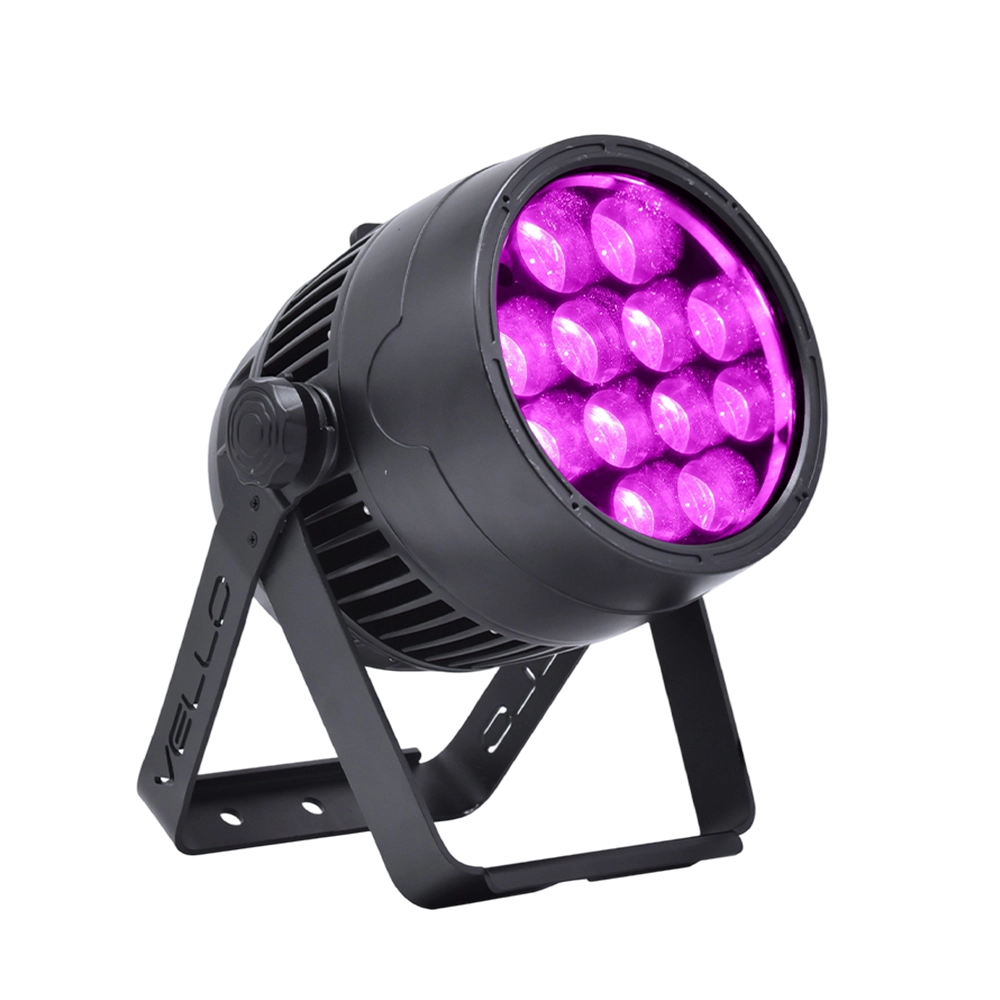
Stage LED Par Light LED ZOOMPAR 40
The Vello Zoom Par 40 IP is a powerful outdoor LED wash light equipped with 12x high-power 7-in-1 RGBACL LEDs. Designed for durability and rich color rendering, it features a wide motorized zoom (6°–50°), smooth dimming, and adjustable CTO presets (3200K–7500K), with 90+ CRI. With an IP66-rated die-cast aluminum body, it’s ideal for both indoor and outdoor applications, including stage lighting, architecture, live events, and installations.
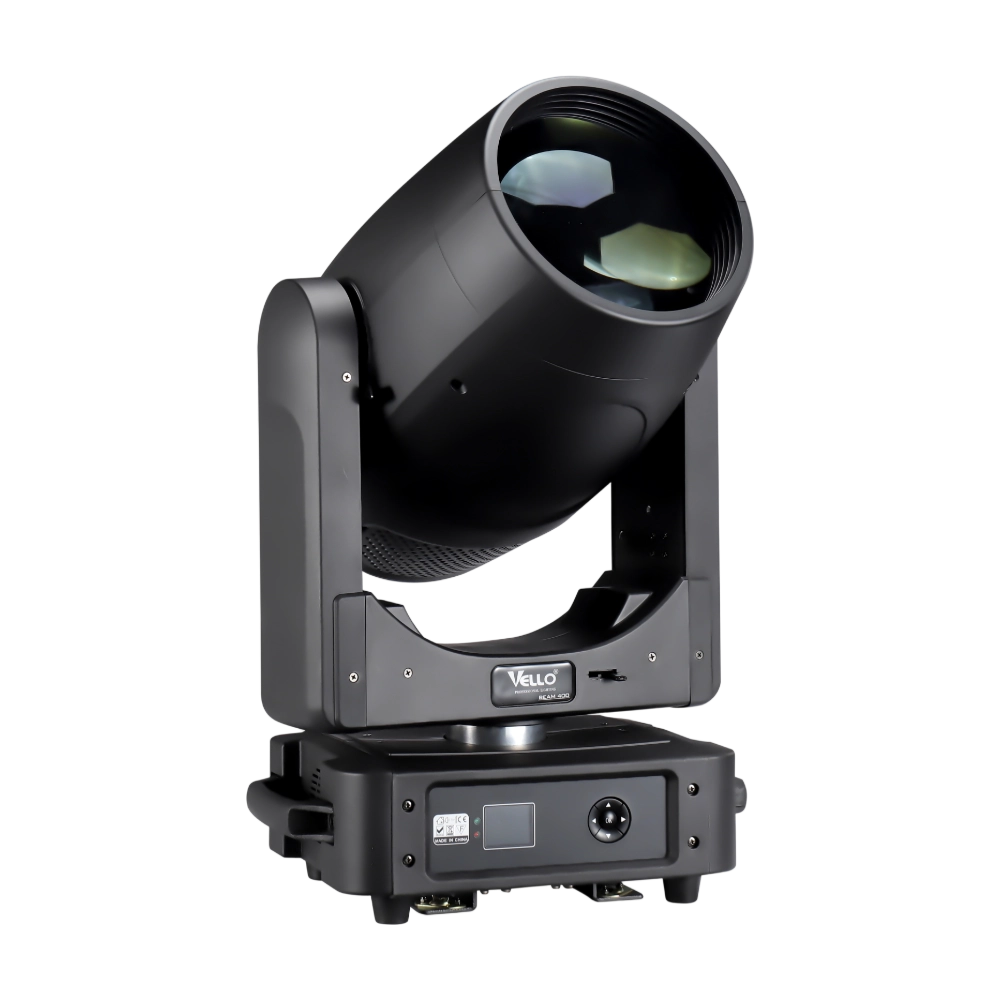
Moving Head Stage Light BEAM 400
BEAM400 is a 500W professional moving head beam powered by an OSRAM SIRIUS 371W discharge bulb, delivering a super-bright 1.8° sharp beam with impressive punch. It features 12 fixed gobos + open, a 14-color wheel, and a 16-facet circular rotating prism with multiple-facet effects, enabling dynamic aerial visuals. With 540° pan / 270° tilt, 16-bit movement resolution, and linear frost and focus, BEAM400 ensures precise and versatile performance. Comparable to traditional 750W moving heads, it combines high efficiency, smooth dimming, and reliable operation—ideal for concerts, tours, and large-scale stage productions.
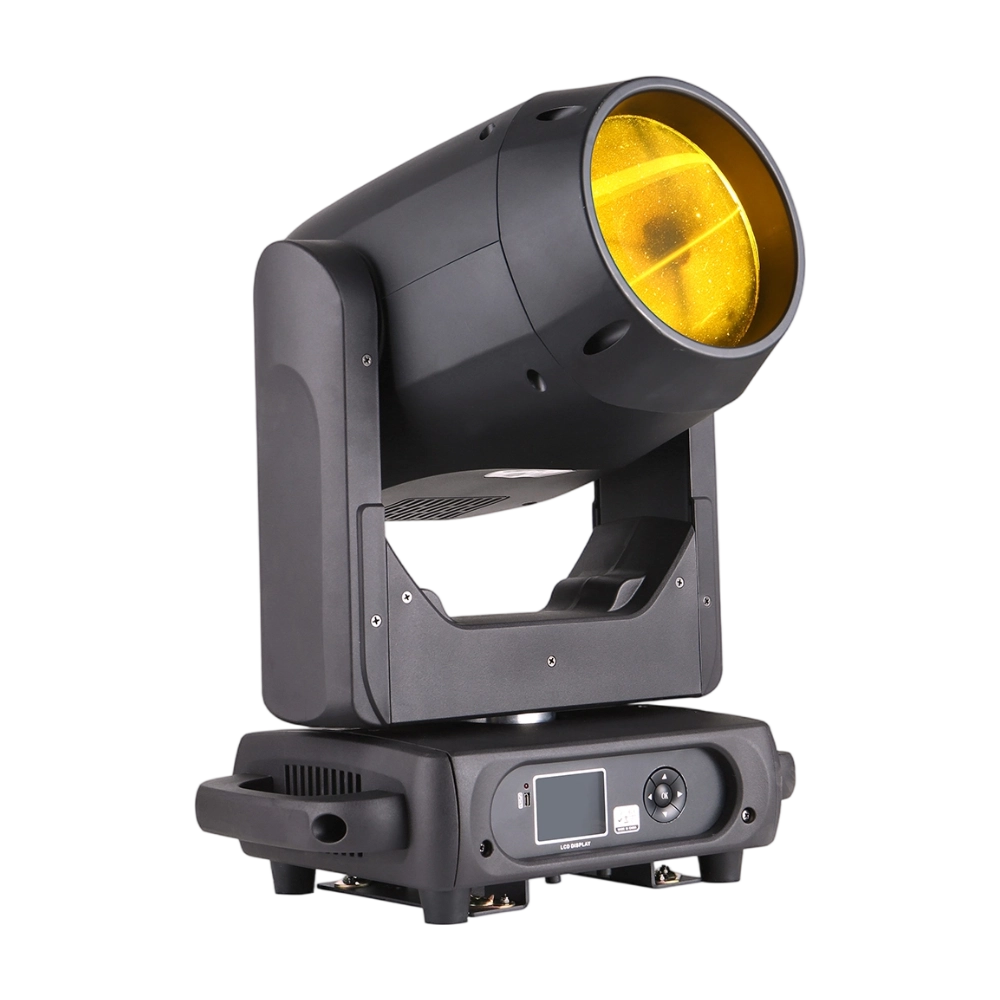
Moving Head Stage Light BEAM 360
BEAM360 is a 400W high-power moving head beam equipped with an OSRAM SIRIUS 311W discharge lamp, delivering a sharp 1.8° beam with super brightness. It features 14 colors + open, 12 fixed metal gobos + open, and dual prisms (8-facet circular + 8+16 multi-facet combination) for dynamic aerial effects. With 540° pan / 270° tilt, 16-bit movement, and linear frost and focus, BEAM360 ensures precision and versatility. Compact yet powerful, it rivals traditional 575W moving heads, making it ideal for concerts, clubs, and large-scale stage productions.
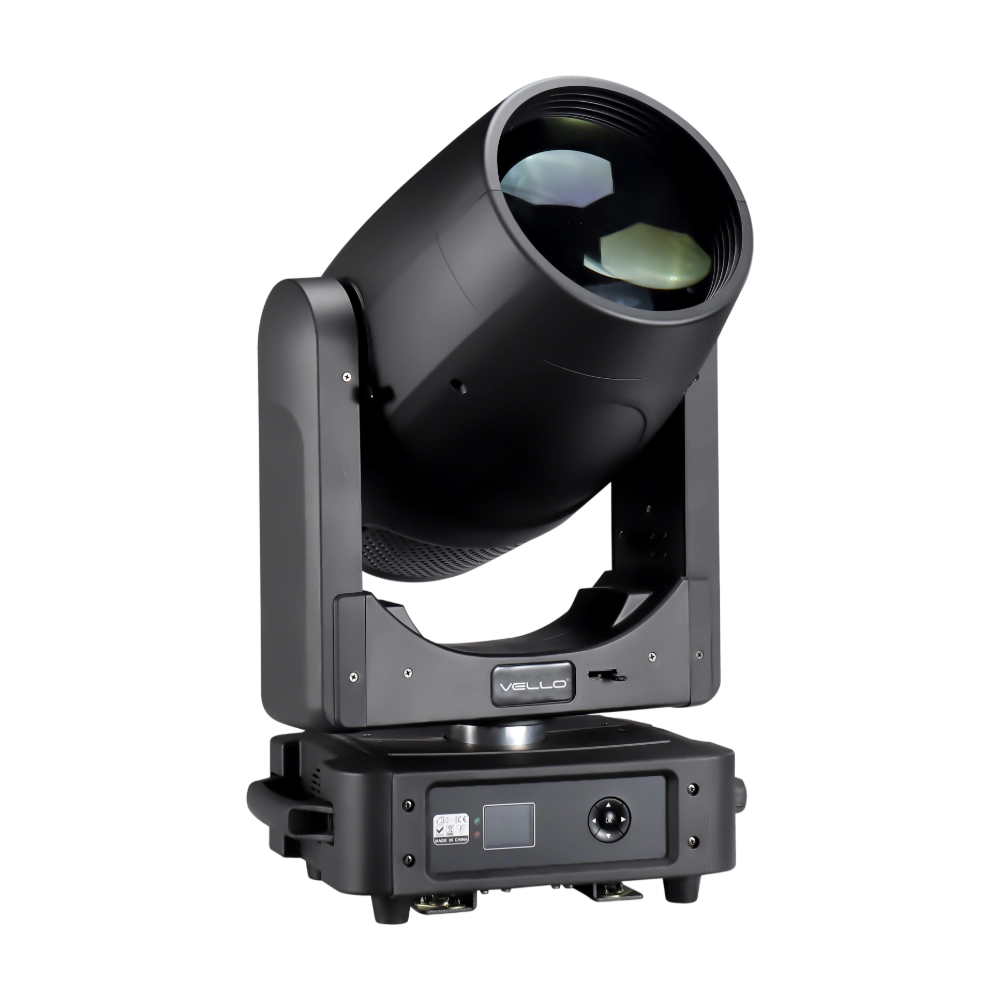
Moving Head Light BEAM 450
The BSW450 is a high-performance moving head fixture equipped with an original Osram 420W bulb, delivering exceptional brightness, precision, and versatility. Designed for professional stage applications, it seamlessly combines beam, spot, and wash functions in one compact unit, making it a powerful all-in-one lighting solution.
Over 20 Years of Innovation in Stage & Studio Lighting
© 2026 VELLO. All Rights Reserved. 粤ICP备20023734号
Join our socials
VELLO
Whatsapp: +8613902276704
Vello Lighting
VelloLights