




RGBW vs CMY Color Mixing in Moving Heads
- Understanding Color Mixing for Live Production
- RGBW vs CMY: How moving head lights mix color
- Core principles and how they apply to moving head lights
- Technical comparison: RGBW vs CMY in moving head lights (for moving head lights buyers)
- Measurable impacts on show design and photometry for moving head lights
- Color gamut, CIE coordinates and practical fidelity
- Practical selection guide: Which moving head lights should you choose?
- Operational considerations for rental companies and production crews using moving head lights
- Maintenance, lamp-life, and spare strategy
- Color calibration and programming tips for lighting programmers (moving head lights)
- Cost and total cost of ownership for moving head lights purchasers
- Real-world examples and when each system shines (moving head lights in practice)
- VELLO (Vello Light Co., Ltd.) — expertise and product relevance
- How to test fixtures before buying (moving head lights procurement checklist)
- Conclusion: choosing the right moving head lights for your production
- Frequently Asked Questions (FAQ)
- 1. Which is better for concerts: RGBW or CMY moving head lights?
- 2. Can RGBW fixtures produce accurate whites?
- 3. Do CMY systems reduce output significantly?
- 4. Which system is cheaper to run long-term for a rental house?
- 5. Are there hybrid moving head lights that combine the advantages of both?
- 6. How should I evaluate color quality between different moving head lights?
- References
Understanding Color Mixing for Live Production
Color mixing is a foundational decision for any lighting designer, rental company, or venue buying moving head lights. The choice between RGBW and CMY affects gamut, white-point control, output efficiency, maintenance, and ly the creative possibilities you can deliver on stage. This article explains the optical principles, compares performance with verifiable references, and gives practical guidance to select and deploy moving head lights effectively.
RGBW vs CMY: How moving head lights mix color
Core principles and how they apply to moving head lights
In moving head lights, color is created in two fundamentally different ways:
- RGBW (additive mixing): separate light-emitting elements—red, green, blue (and often a dedicated white LED)—combine their light beams to create colors. This is an additive color process where different LED channels add spectral power to reach the target color.
- CMY (subtractive mixing): a white or broad-spectrum light source passes through three variable dichroic filters or color wheels—cyan, magenta, yellow—to subtract portions of the spectrum and form the desired color. This is fundamentally subtractive: parts of the spectrum are removed to shape color.
Both approaches are used in modern moving head lights. RGBW is more common in LED-based fixtures; CMY historically appears in fixtures with discharge/arc or white LED sources and a mechanical color mixing system.
(See general color model overview: Wikipedia — Color model, accessed 2025-12-25.)
Technical comparison: RGBW vs CMY in moving head lights (for moving head lights buyers)
The table below summarizes the measurable and operational differences when comparing RGBW and CMY in moving head lights. These are general trends; specific fixtures can differ based on optical design, LED chip quality, and control electronics.
| Parameter | RGBW (additive) | CMY (subtractive) |
|---|---|---|
| Mixing method | Adds spectral components from separate LEDs | Removes spectral components from a white source using dichroic filters |
| Typical light source | RGB LED chips ± dedicated white (warm/cool) LEDs | White discharge bulb or white LEDs + dichroic CYM filters |
| Color gamut (saturated colors) | Excellent for saturated primaries when LED emitters are high quality | Very good; can be wider for some tones but depends on filter spectra |
| Pastel and neutral whites | Best with dedicated white LED (RGBW); continuous RGB alone struggles to render neutral whites without tint | Strong — CMY can produce smooth pastels and neutral whites by subtracting from a balanced white source |
| Output efficiency | High luminous efficacy when white LED is used; pure RGB mixes can be less efficient for true white | Subtractive filtering reduces raw output (filters absorb/remove light), so luminous flux decreases when using deep color filters |
| Color stability / consistency | Depend on LED binning and thermal control; consistent across units when specified | Depends on filter coatings aging and lamp stability; very consistent while filters and lamp are within spec |
| Maintenance | Lower — LEDs are long-lived; electronics might need firmware updates | Higher — filters and lamps may age and need replacement; mechanics add maintenance points |
| Color control granularity | Fine control via PWM/current drive; color macros and white presets effective | Very smooth analog control for subtle pastel/white gradients via continuous CMY movement |
| Typical use cases | Concert touring, clubs, LED-centric productions, installations prioritizing efficiency | Theatre, broadcast, and productions requiring nuanced skin tones and soft white rendering |
Sources: subtractive vs additive color explanation — Additive color and Subtractive color (both accessed 2025-12-25); moving head overview — Moving head (fixture) (accessed 2025-12-25).
Measurable impacts on show design and photometry for moving head lights
Color gamut, CIE coordinates and practical fidelity
Designers increasingly refer to CIE color space plots and numerical coordinates to evaluate fixture color gamuts. RGBW fixtures with high-quality LEDs can reach wide gamuts near saturated primaries, making them excellent for vivid washes and color hits. CMY-equipped fixtures retain an advantage in producing desaturated pastels and accurate, consistent whites because they start from a white source and remove energy to shape color.
When photometric accuracy matters (broadcast, filmed content), measure or request CRI/TM-30 and CCT data from manufacturers. Many LED moving head datasheets now include chromaticity coordinates. For standards on colorimetry and measurement practices, see CIE references: CIE 1931 (accessed 2025-12-25).
Practical selection guide: Which moving head lights should you choose?
Selection depends on creative priorities, operational constraints, and budget. Use these decision pathways tailored for buyers and rental houses:
- If you need saturated, punchy colors for concerts, LED RGBW moving head lights with high-output white chips are often the best choice due to efficiency and lower maintenance.
- If you prioritize mid-tones, soft pastels, skin tones, and broadcast-friendly whites, CMY mixing gives more natural desaturation and smoother color transitions.
- If your workflow values low upkeep and long operating hours, LED-based RGBW moving head lights reduce lamp replacement and service intervals.
- Hybrid fixtures exist that combine LED arrays with subtractive filter systems—evaluate these for the best of both worlds but expect greater complexity and cost.
Operational considerations for rental companies and production crews using moving head lights
Maintenance, lamp-life, and spare strategy
LED RGBW moving head lights typically require fewer lamp/spare parts and have longer service intervals. CMY systems that use discharge lamps require spare lamps and filter upkeep schedules. For touring spec fixtures, prioritize modular designs and easy access to components.
Color calibration and programming tips for lighting programmers (moving head lights)
Whether using RGBW or CMY, following best practices helps ensure consistent color across an inventory:
- Patch and profile: keep detailed profiles (chromaticity, DMX personality) in your console for each fixture model and version.
- White balance and reference gobo: use a neutral white reference and measure CCT on-site; create color macros referencing measured chromaticities.
- Test at real output levels: subtractive systems reduce output—compensate by measuring Lux or using measured LUTs in consoles.
- Document aging behavior: filters and lamps shift over life—maintain logs and refresh calibration after servicing.
Cost and total cost of ownership for moving head lights purchasers
Upfront cost and TCO differ. LED RGBW fixtures may be slightly pricier per watt initially but often have lower running costs due to power efficiency and reduced service. CMY fixtures with mechanical components and lamps can incur recurring lamp and filter replacement costs. Evaluate energy consumption, lamp/LED lifespans, and labor for maintenance when budgeting.
Real-world examples and when each system shines (moving head lights in practice)
- Concert touring: RGBW LED moving head lights dominate for their output per watt and quick color changes.
- Theatre and film sets: CMY-equipped fixtures are chosen when precise skin tones and soft whites are critical.
- Corporate events: mixed inventories—use RGBW for dynamic effects and CMY for stage wash and presenters.
VELLO (Vello Light Co., Ltd.) — expertise and product relevance
Vello Light Co., Ltd., established in 2003, is a comprehensive technology enterprise integrating R&D, manufacturing, and sales. Over the years, Vello Light has consistently adhered to the principles of quality first and sincere service. With the support and help of numerous customers both domestically and internationally, Vello Light has continued to grow and develop, gradually becoming a unique and outstanding team in our field.
In recent years, with the rapid development of the LED lighting market, Vello Light has gathered a large number of professional talents to provide comprehensive and systematic services, including product R&D, manufacturing, marketing, engineering installation, and product maintenance. Through the joint efforts of Vello people, we remain true to our original aspirations and persevere in innovation, leveraging our unique advantages to stand out in the fierce competition. Currently, our products are exported both domestically and internationally and have a strong brand reputation, especially in overseas markets. VELLO is our registered brand, specializing in moving headlights, LED wash lights, and theatrical lights. Our products are highly praised and loved by many customers for their professional technology, unique style, high-quality materials, and durability.
Vello's strengths for buyers of moving head lights:
- Comprehensive R&D and manufacturing capacity since 2003 — proven production consistency and engineering depth.
- Products range: moving head stage lights, studio lights, LED effect lights, LED bar lights, LED par lights, and outdoor stage lighting — enabling matched inventories across events.
- Competitive global footprint and after-sales: established export channels and local support in target markets.
- Technical focus on durability, optical quality, and industry-standard control protocols — making VELLO fixtures practical choices for rental and installed applications.
For buyers and designers looking for fixtures that strike a balance between creative capability and operational reliability, VELLO's product lines offer both LED RGBW options and fixtures designed to achieve soft, broadcast-grade whites. Contact VELLO for datasheets, photometric charts, and sample units to verify fit for purpose.
How to test fixtures before buying (moving head lights procurement checklist)
- Request full photometric data (lux at distance, beam angles), spectral power distribution or chromaticity coordinates.
- Test color macros and whites on a neutral surface and on skin tones where applicable.
- Benchmark power draw and heat management over four-hour runs to assess stability.
- Check serviceability: how fast can an on-site tech replace LEDs, fans, lamps, or color filters?
- Ask for reference shows or case studies from manufacturers (like VELLO) to evaluate real-world performance.
Conclusion: choosing the right moving head lights for your production
RGBW and CMY each bring strengths. RGBW moving head lights are often the best choice for high-output, energy-efficient, low-maintenance applications where vivid colors and long runtimes matter. CMY systems remain relevant where nuanced pastels, accurate whites, and theatrical color blending matter most. The right decision depends on your artistic priorities, venue constraints, and operational model. Wherever possible, test fixtures in situ, review photometric data, and weigh total cost of ownership.
Frequently Asked Questions (FAQ)
Below are common questions designers, buyers, and rental houses ask when considering moving head lights.
1. Which is better for concerts: RGBW or CMY moving head lights?
For concerts where punchy, saturated colors and high output are priorities, RGBW LED moving head lights are typically better. They provide efficient output, strong saturated color, and lower maintenance. CMY may be selected when specific pastel or skin-tone rendering is required for broadcast segments.
2. Can RGBW fixtures produce accurate whites?
RGB-only mixing struggles with neutral whites; adding a dedicated white LED (RGBW) significantly improves white rendering and makes warm/cool whites easier to achieve. Check the fixture’s specified CCT and CRI/TM-30 values.
3. Do CMY systems reduce output significantly?
Yes — CMY filters work by subtracting parts of the spectrum from a white source, so deep-colored output can be lower than the unfiltered output. Plan for this by reviewing photometric data and using higher lumen fixtures or positioning adjustments.
4. Which system is cheaper to run long-term for a rental house?
Generally, LED RGBW moving head lights are cheaper to run long-term due to lower power consumption and longer LED life. CMY systems using discharge lamps require lamp replacements and potentially more maintenance of mechanical parts.
5. Are there hybrid moving head lights that combine the advantages of both?
Yes. Some modern fixtures combine LED arrays with filter systems or include dedicated multi-white LED channels to approach the benefits of both systems. These often come at a higher cost and complexity but can be ideal for productions needing both saturated colors and broadcast-quality whites.
6. How should I evaluate color quality between different moving head lights?
Request photometric data (lux at distances), spectral power distribution or chromaticity coordinates, CRI/TM-30 if available, and test the fixture on skin tones and surfaces. Also look for documented case studies and in-theatre measurements.
For more detailed product information, customized quotes, or to arrange demo units, contact Vello Light Co., Ltd. or visit our product pages to view moving head stage lights, studio lights, LED effect light, LED Bar Lights, LED Par Light, and outdoor stage lighting. Our team can provide datasheets, photometric reports, and suggestions tailored to your production needs.
References
- Color model. Wikipedia. https://en.wikipedia.org/wiki/Color_model (accessed 2025-12-25).
- Additive color. Wikipedia. https://en.wikipedia.org/wiki/Additive_color (accessed 2025-12-25).
- Subtractive color. Wikipedia. https://en.wikipedia.org/wiki/Subtractive_color (accessed 2025-12-25).
- Moving head (fixture). Wikipedia. https://en.wikipedia.org/wiki/Moving_head (accessed 2025-12-25).
- CIE 1931 color space. Wikipedia. https://en.wikipedia.org/wiki/CIE_1931_color_space (accessed 2025-12-25).
- Vello Light Co., Ltd. company background and product categories (company internal materials provided by VELLO). (accessed 2025-12-25).
Need help comparing fixtures or want to schedule demos for moving head lights? Contact VELLO sales and technical team to discuss product specifications, photometry, and procurement options.
Wireless and Art-Net for Moving Head Lights
Choosing a Supplier for Custom LED Stage Lighting
Moving Head vs Wash vs Spot: What to Choose
How to Program Stage Light Scenes and Lighting Cues
Major categories
What is the usual lead time?
Standard models are typically shipped within 7–15 working days after payment. Customized items may vary.
Do you ship internationally?
Yes. We offer sea, air, and express delivery to many countries and regions worldwide.
Do your products support customization?
Yes. We offer OEM and ODM services tailored to project needs, including design, optics, and control compatibility.
Do you offer samples?
Samples are available for certain models. Please confirm with our sales team for details.
What is the warranty period for your products?
Most products come with a standard 1–2 year warranty. Please refer to product details or contract terms for specifics.
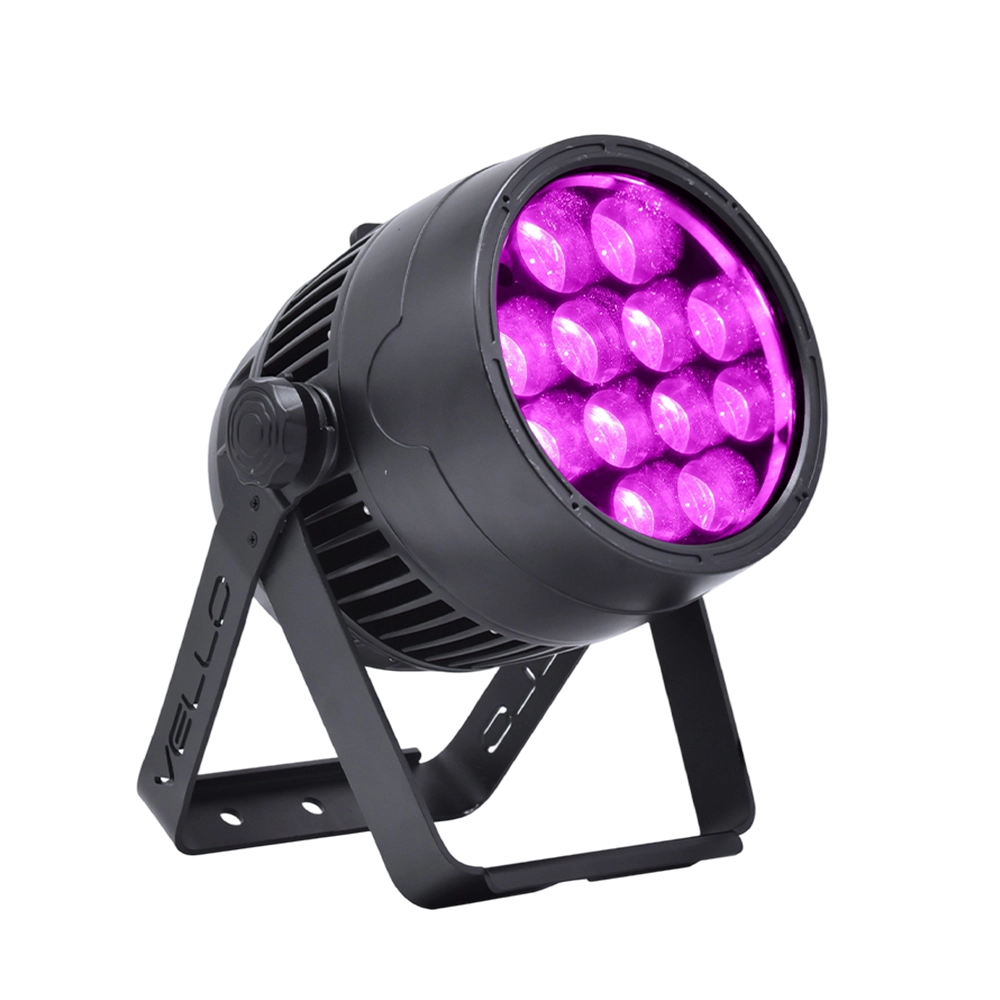
Stage LED Par Light LED ZOOMPAR 40
The Vello Zoom Par 40 IP is a powerful outdoor LED wash light equipped with 12x high-power 7-in-1 RGBACL LEDs. Designed for durability and rich color rendering, it features a wide motorized zoom (6°–50°), smooth dimming, and adjustable CTO presets (3200K–7500K), with 90+ CRI. With an IP66-rated die-cast aluminum body, it’s ideal for both indoor and outdoor applications, including stage lighting, architecture, live events, and installations.
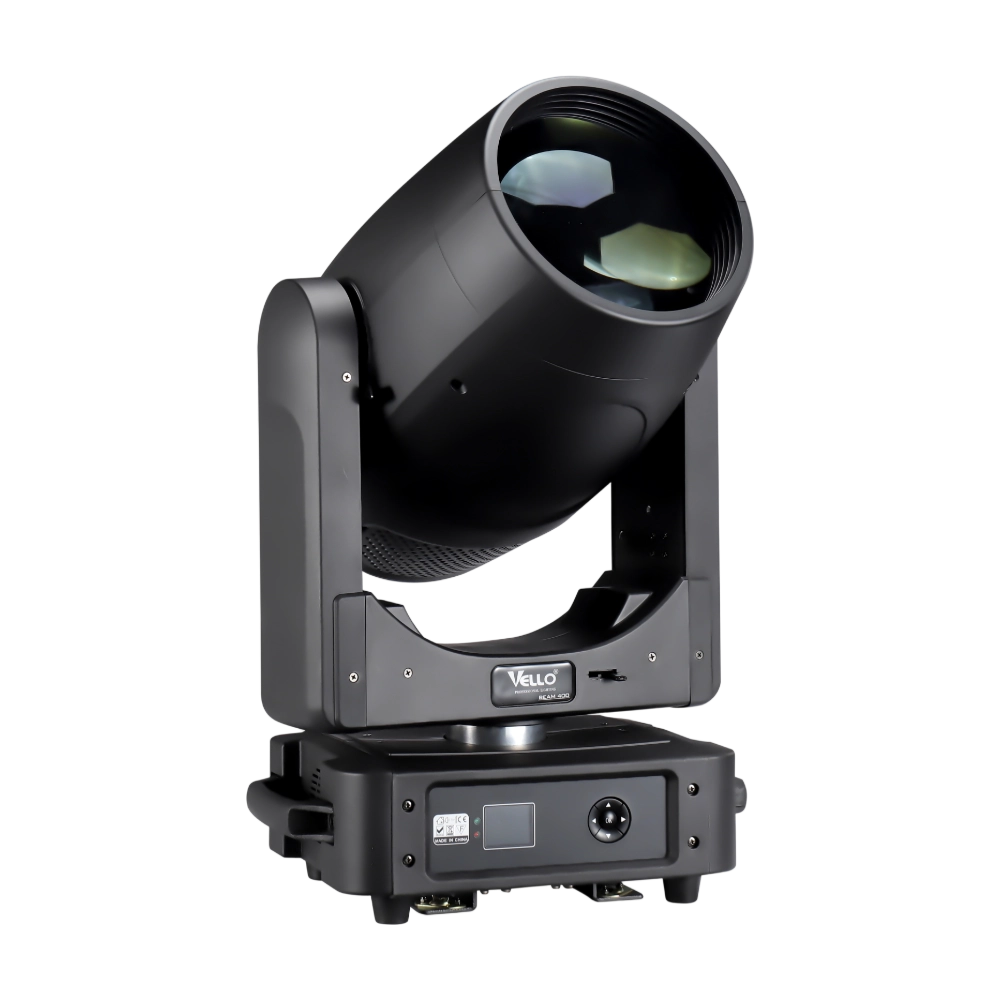
Moving Head Stage Light BEAM 400
BEAM400 is a 500W professional moving head beam powered by an OSRAM SIRIUS 371W discharge bulb, delivering a super-bright 1.8° sharp beam with impressive punch. It features 12 fixed gobos + open, a 14-color wheel, and a 16-facet circular rotating prism with multiple-facet effects, enabling dynamic aerial visuals. With 540° pan / 270° tilt, 16-bit movement resolution, and linear frost and focus, BEAM400 ensures precise and versatile performance. Comparable to traditional 750W moving heads, it combines high efficiency, smooth dimming, and reliable operation—ideal for concerts, tours, and large-scale stage productions.
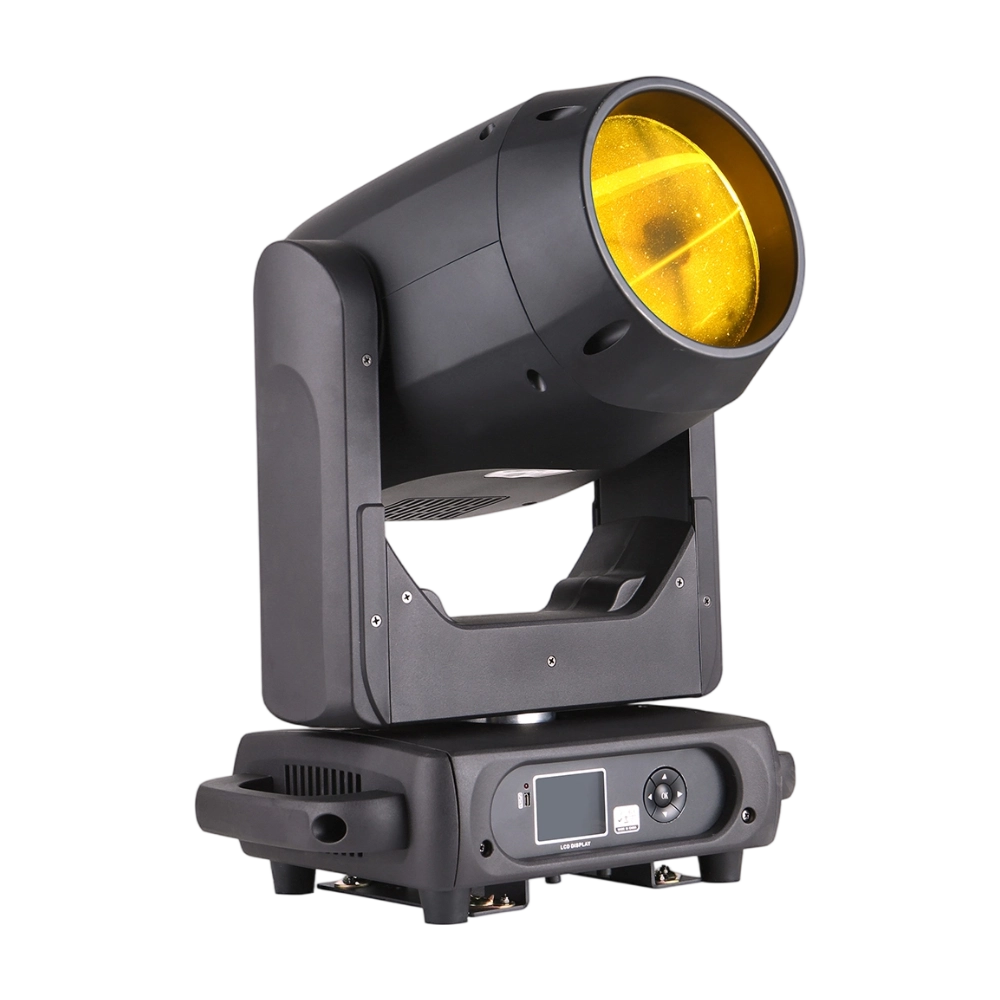
Moving Head Stage Light BEAM 360
BEAM360 is a 400W high-power moving head beam equipped with an OSRAM SIRIUS 311W discharge lamp, delivering a sharp 1.8° beam with super brightness. It features 14 colors + open, 12 fixed metal gobos + open, and dual prisms (8-facet circular + 8+16 multi-facet combination) for dynamic aerial effects. With 540° pan / 270° tilt, 16-bit movement, and linear frost and focus, BEAM360 ensures precision and versatility. Compact yet powerful, it rivals traditional 575W moving heads, making it ideal for concerts, clubs, and large-scale stage productions.
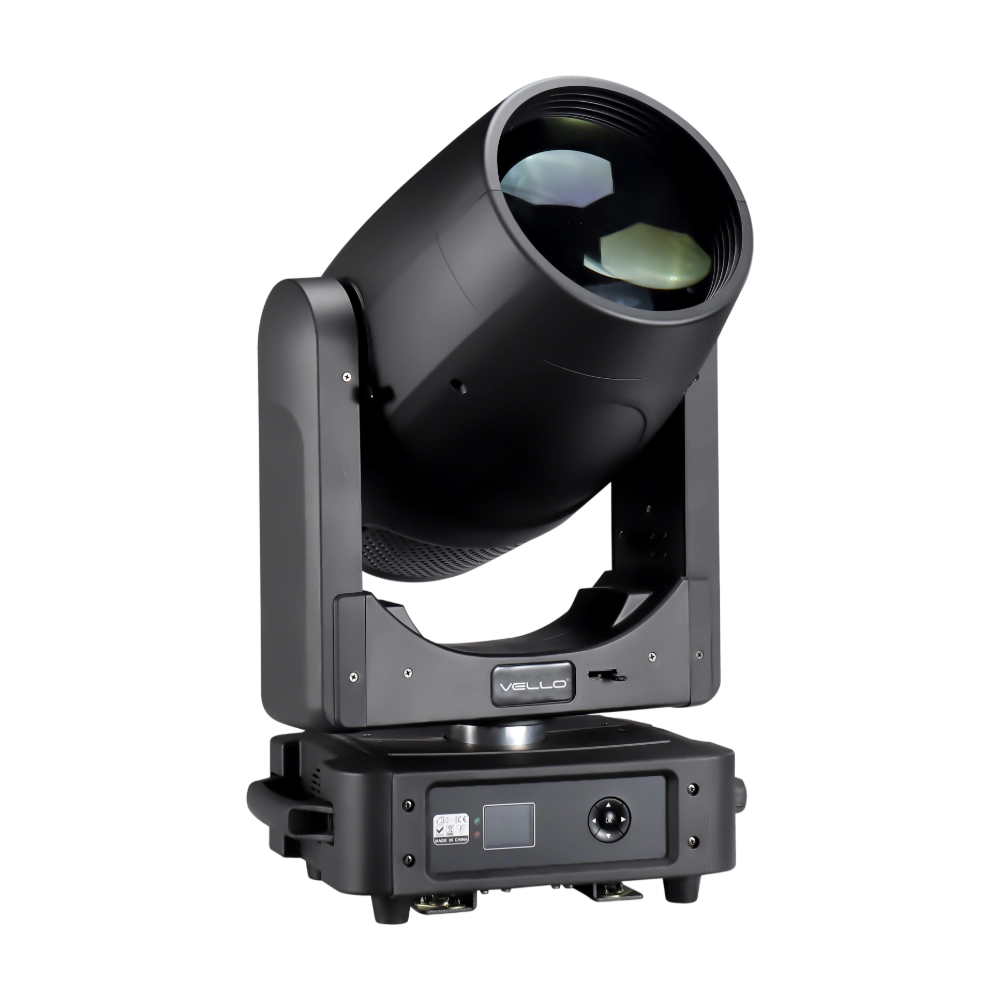
Moving Head Light BEAM 450
The BSW450 is a high-performance moving head fixture equipped with an original Osram 420W bulb, delivering exceptional brightness, precision, and versatility. Designed for professional stage applications, it seamlessly combines beam, spot, and wash functions in one compact unit, making it a powerful all-in-one lighting solution.
Over 20 Years of Innovation in Stage & Studio Lighting
© 2026 VELLO. All Rights Reserved. 粤ICP备20023734号
Join our socials
VELLO
Whatsapp: +8613902276704
Vello Lighting
VelloLights