





Pixel Mapping and LED Stage Light Effects for Shows
- How LED Pixel Mapping Elevates Live Performances
- What is pixel mapping and why it matters for your stage light design
- Core benefits for live productions
- Key components of a pixel-mapped stage light system
- 1) Fixtures and pixel capability
- 2) Control hardware: media servers, pixel controllers, and consoles
- 3) Network and protocols
- Control protocols compared: DMX512, Art-Net, sACN
- Design principles for effective pixel-mapped stage light effects
- Resolution and pixel density
- Color and calibration
- Timing, frame rate, and motion blur
- Troubleshooting common pixel mapping issues
- Flicker and visual artifacts
- Channel mapping mistakes
- Network congestion and packet loss
- Fixture selection: matching stage light hardware to show needs
- Practical workflow: from pre-pro to strike
- Cost considerations and budgeting for pixel-mapped stage light systems
- Vello Light: practical partnership for professional stage lighting
- Buying checklist: choosing the right stage light and pixel system
- Conclusion
- FAQ
- 1. What is the difference between pixel mapping and conventional DMX control?
- 2. Which protocol is best for large-scale pixel mapping: Art-Net or sACN?
- 3. Can I use regular moving head stage lights for pixel mapping?
- 4. How do I prevent flicker when using LEDs in pixel-mapped shows?
- 5. What are the minimum network requirements for a pixel mapping rig?
- 6. How should I plan for outdoor pixel-mapped stage light installations?
- Contact & product inquiry
- References
How LED Pixel Mapping Elevates Live Performances
What is pixel mapping and why it matters for your stage light design
Pixel mapping is the process of assigning individual LED elements on fixtures (pixels) to pixels in a media timeline or content source, enabling complex, synchronized visual effects across stage light fixtures, LED bars, strips, and panels. Unlike traditional stage light control where fixtures react as whole units, pixel mapping treats each LED as a controllable addressable element. This enables high-resolution chases, video-like animations, text, and tightly synchronized effects that are especially impactful for concerts, theater, corporate events, and broadcast studios.
Core benefits for live productions
- Creative flexibility: create video-style content across heterogeneous fixtures (moving heads, bars, pars, pixel strips).
- Synchronization: match lighting with video playback, audio beats, or show automation.
- Cost-effectiveness: simulate expensive LED panels by combining addressable fixtures.
- Audience engagement: higher dynamic range and motion deliver stronger emotional impact.
Key components of a pixel-mapped stage light system
1) Fixtures and pixel capability
Not all LED stage lights are equally suitable. Look for:
- True pixel addressability (individual LEDs or grouped pixels with unique DMX channels or network addresses).
- Consistent color calibration across fixtures (CRI, white point consistency).
- Sufficient luminous output (brightness) and beam characteristics for your venue size.
2) Control hardware: media servers, pixel controllers, and consoles
Pixel mapping workflows generally use one or more of the following:
- Media servers (e.g., Resolume, Green Hippo) for timeline-based content and video mapping.
- Pixel controllers (Art-Net/sACN nodes, LED processors) to convert networked data into fixture-level DMX signals.
- Lighting consoles with pixel mapping features (e.g., grandMA, ETC consoles) for live control and cueing.
3) Network and protocols
Modern pixel mapping commonly uses Ethernet-based protocols (Art-Net, sACN) over Cat5e/Cat6 and then converts to DMX at the node nearest the fixtures. Reliable network architecture and proper termination are essential for show stability.
Control protocols compared: DMX512, Art-Net, sACN
Choosing the right protocol influences scalability, latency, and complexity. The table below summarizes practical differences.
| Protocol | Transport | Max universes (typical) | Pros | Cons |
|---|---|---|---|---|
| DMX512 | Serial (RS-485) | 1 per cable (512 channels) | Simple, deterministic, universal for fixtures | Limited channels, cable runs, and difficult for large pixel counts |
| Art-Net | UDP over Ethernet | Thousands (practically limited by network) | Widely supported by consoles and media servers; flexible | Depends on network design; possible broadcast traffic issues if misconfigured |
| sACN (E1.31) | UDP over Ethernet | Similar to Art-Net | Better for managed networks and large-scale deployments | Implementation differences exist across vendors |
Sources: Art-Net official documentation; ESTA E1.31 specification (see references).
Design principles for effective pixel-mapped stage light effects
Resolution and pixel density
Consider the viewing distance and the physical spacing of LEDs (pixel pitch). Tight pixel pitch is required when the audience is close; larger pitch is acceptable for long-throw fixtures or distant audience areas. Think of your fixture array as a display: perceived image quality scales with pixel density and viewing distance.
Color and calibration
To avoid visible color shifts across fixtures, perform LUT-based or manual calibration. Many media servers and advanced consoles allow per-fixture color correction and ICC-like profiles to harmonize output.
Timing, frame rate, and motion blur
For audio-visual synchronization, ensure your media server and network can deliver consistent frame rates. LED refresh and receiving device latency can introduce micro-delays—test your entire chain (media server → network node → fixture) before show day.
Troubleshooting common pixel mapping issues
Flicker and visual artifacts
Causes: incompatible LED refresh rates, incorrect frame rate on the media server, or poor power supply quality. Fixes: match frame rates, enable frame-synchronization features in your controller, ensure stable powering (no undervoltage), and use high-quality wiring.
Channel mapping mistakes
When pixels appear scrambled, re-check the addressing map in your media server and the node configuration. Use short test patterns and document each universe and start address thoroughly.
Network congestion and packet loss
Use a dedicated lighting network, avoid mixing with general-purpose IT traffic, and prefer managed switches where possible. For Art-Net in large deployments, use unicast where supported to reduce broadcast load.
Fixture selection: matching stage light hardware to show needs
Below is a practical comparison of common fixture types used in pixel-mapped shows.
| Fixture Type | Best for | Strengths | Limitations |
|---|---|---|---|
| Moving head (pixel-capable) | Dynamic beams, aerial effects | High brightness, zoomable beams, sharp gobo definition | Costly; heavier rigging |
| LED bar / pixel strip | Wall washing, linear effects | Flexible, lightweight, good linear mapping | Limited throw compared to moving heads |
| PAR / wash (with pixels) | Broad washes with mapped zones | Good color blending, cost-effective | Lower spatial resolution |
| LED video panels | High-res imagery | True pixel-per-pixel video | Higher cost; heavier infrastructure |
Practical workflow: from pre-pro to strike
- Pre-production: define the visual language, map content to fixture layout in CAD or plotting software, and calculate power and rigging loads.
- Testing: assemble a small array and run the same video/timecode/audio you’ll use in show to validate timing and look.
- On-site calibration: align color, verify addresses, and tune brightness for stage sightlines.
- Rehearsal: run full cues and record any timing offsets. Use timecode where possible for repeatability.
- Post-show: document network maps, fixture IDs, and lessons learned for future tours or venues.
Cost considerations and budgeting for pixel-mapped stage light systems
Major cost drivers include fixtures, pixel controllers/media servers, professional installation, and qualified operators. Factor in cabling (DMX/Ethernet/power), rigging hardware, and contingencies (spares and maintenance). For a medium concert rig the split often looks like: fixtures 40–60%, control & servers 10–20%, infrastructure (cables, nodes) 10–15%, labor 10–20%.
Vello Light: practical partnership for professional stage lighting
Vello Light Co., Ltd., established in 2003, is a comprehensive technology enterprise integrating R&D, manufacturing, and sales. Over the years, we have consistently adhered to the principles of quality first and sincere service. With the support and help of numerous customers both domestically and internationally, we have continued to grow and develop, gradually becoming a unique and outstanding team in our field.
In recent years, with the rapid development of the LED lighting market, Vello Light has gathered a large number of professional talents to provide comprehensive and systematic services, including product R&D, manufacturing, marketing, engineering installation, and product maintenance. Through the joint efforts of Vello people, we remain true to our original aspirations and persevere in innovation, leveraging our unique advantages to stand out in the fierce competition. Currently, our products are exported both domestically and internationally and have a strong brand reputation, especially in overseas markets. VELLO is our registered brand, specializing in moving headlights, LED wash lights, and theatrical lights. Our products are highly praised and loved by many customers for their professional technology, unique style, high-quality materials, and durability.
Vello’s product lines—moving head stage lights, studio lights, LED effect lights, LED Bar Lights, LED Par Lights, and outdoor stage lighting—are designed with touring and rental companies in mind: robust housings, efficient optics, and reliable pixel-control compatibility (Art-Net/sACN/DMX). Key competitive strengths include:
- Integrated R&D and manufacturing for tight quality control and faster customization.
- Solutions-oriented support from planning through installation and maintenance.
- Export experience and compliance with international standards—important for touring shows.
- Product durability and material quality to withstand frequent rigging and transport.
For designers and production managers seeking a partner that combines product variety (from moving heads to LED bars) with technical support for pixel mapping projects, VELLO offers a compelling, cost-effective alternative to purely white-label imports.
Buying checklist: choosing the right stage light and pixel system
- Define the desired visual resolution and audience viewing distance.
- Confirm fixture pixel-addressability and color performance.
- Plan network topology (dedicated lighting VLAN, managed switches recommended).
- Budget for spare fixtures, nodes, and patch cables.
- Ensure compatible protocols between your media server and fixtures (Art-Net vs sACN choices).
- Request photometric data and IP ratings for outdoor shows.
Conclusion
Pixel mapping transforms stage light design from static fixtures into a dynamic, video-capable medium. With careful planning—choosing suitable fixtures, robust control protocols, thorough calibration, and reliable vendors such as Vello Light—production teams can deliver immersive and repeatable shows. Prioritize testing, network design, and operator training to minimize risk on show day.
FAQ
1. What is the difference between pixel mapping and conventional DMX control?
Conventional DMX treats fixtures as whole units (one set of channels per fixture). Pixel mapping treats individual LEDs or small groups as individually addressable pixels so you can create imagery and high-resolution animation across multiple fixtures.
2. Which protocol is best for large-scale pixel mapping: Art-Net or sACN?
Both are widely used. Art-Net is broadly supported and easy to set up for medium installations; sACN (E1.31) can be preferable for managed networks and large deployments. The best choice depends on your console, media server, and network architecture.
3. Can I use regular moving head stage lights for pixel mapping?
Some moving heads offer pixel-mapping modes (multi-segment LED rings or pixel chips). Verify the specific fixture's pixel control capabilities and how they map channels (segmented pixels vs individually addressable LEDs).
4. How do I prevent flicker when using LEDs in pixel-mapped shows?
Match frame rates between the media server and fixture refresh, use quality power supplies, ensure correct grounding, and enable frame-synchronization features on controllers when available.
5. What are the minimum network requirements for a pixel mapping rig?
Use at least Gigabit Ethernet switches for medium to large setups, dedicated lighting VLANs to separate traffic, and managed switches where possible. Keep Art-Net broadcast domains limited and use unicast for heavy traffic if supported.
6. How should I plan for outdoor pixel-mapped stage light installations?
Choose fixtures with suitable IP ratings, factor in weatherproofed power and DMX/Art-Net nodes, and calculate heat dissipation and thermal management for high-output LEDs. Also confirm local safety and grounding codes.
Contact & product inquiry
If you’d like help specifying pixel-mapped stage light systems or to explore VELLO product options (moving head stage lights, studio lights, LED effect light, LED Bar Lights, LED Par Light, outdoor stage lighting), contact Vello Light’s sales and technical team for product datasheets, photometrics, and integration support. For tailored solutions and quotes, request a consultation today.
References
- Art-Net Protocol Specification — Art-Net Official, https://art-net.org/ (accessed 2025-11-15)
- ANSI E1.31 (sACN) specification — ESTA, https://tsp.esta.org/tsp/documents/published_docs.php (accessed 2025-11-15)
- Lighting Control Best Practices — ETC Knowledge Base, https://support.etcconnect.com/ (accessed 2025-10-20)
- LED Lighting Market Trends — PLASA/Industry Reports (market overview), https://www.plasa.org/ (accessed 2025-09-10)
- Resolume (Media Server) Documentation — https://resolume.com/ (accessed 2025-08-30)
Custom LED Lighting Manufacturing: Materials and Quality Tips
How to Choose Stage Lights for Wedding and Corporate Events
Gobos and Effects: Using Moving Head Lights
Stage Lighting Basics: Beginner's Guide to LED Fixtures
Major categories
What is the warranty period for your products?
Most products come with a standard 1–2 year warranty. Please refer to product details or contract terms for specifics.
Do your products support customization?
Yes. We offer OEM and ODM services tailored to project needs, including design, optics, and control compatibility.
Do you ship internationally?
Yes. We offer sea, air, and express delivery to many countries and regions worldwide.
Do you offer samples?
Samples are available for certain models. Please confirm with our sales team for details.
What is the usual lead time?
Standard models are typically shipped within 7–15 working days after payment. Customized items may vary.
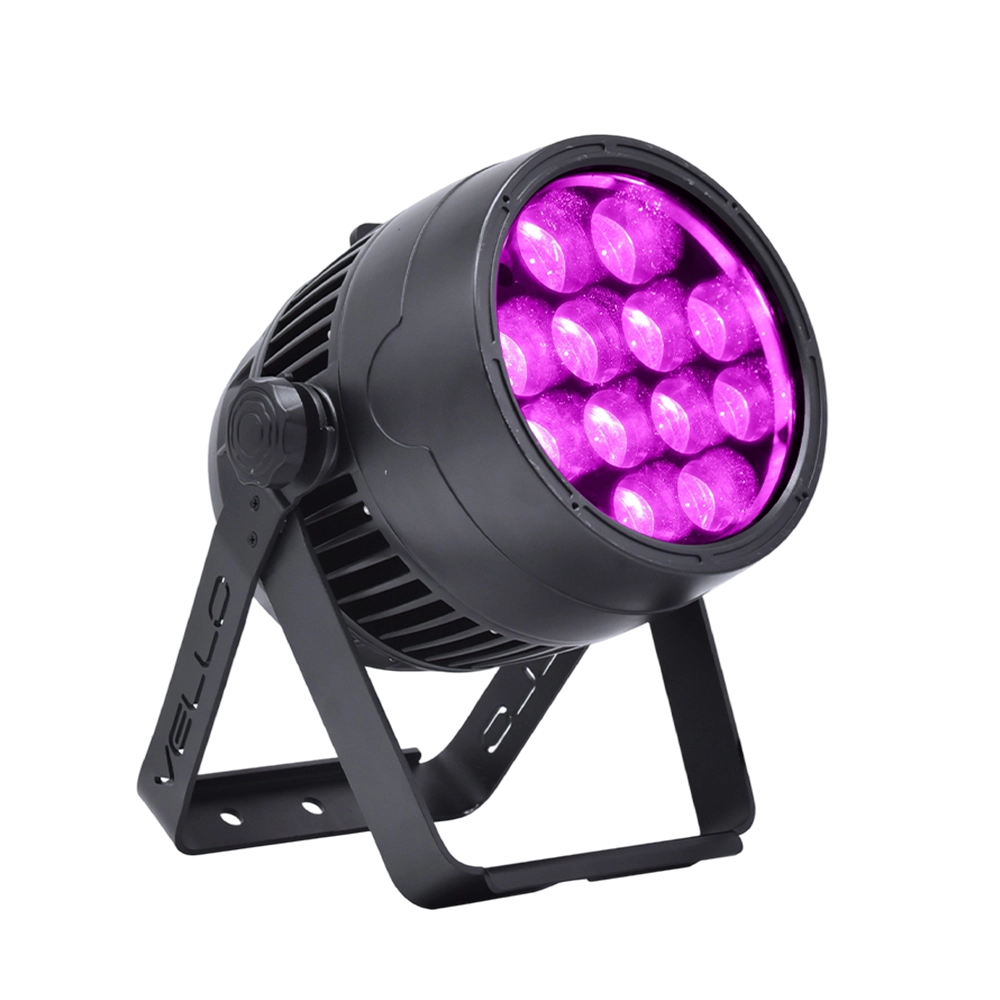
Stage LED Par Light LED ZOOMPAR 40
The Vello Zoom Par 40 IP is a powerful outdoor LED wash light equipped with 12x high-power 7-in-1 RGBACL LEDs. Designed for durability and rich color rendering, it features a wide motorized zoom (6°–50°), smooth dimming, and adjustable CTO presets (3200K–7500K), with 90+ CRI. With an IP66-rated die-cast aluminum body, it’s ideal for both indoor and outdoor applications, including stage lighting, architecture, live events, and installations.
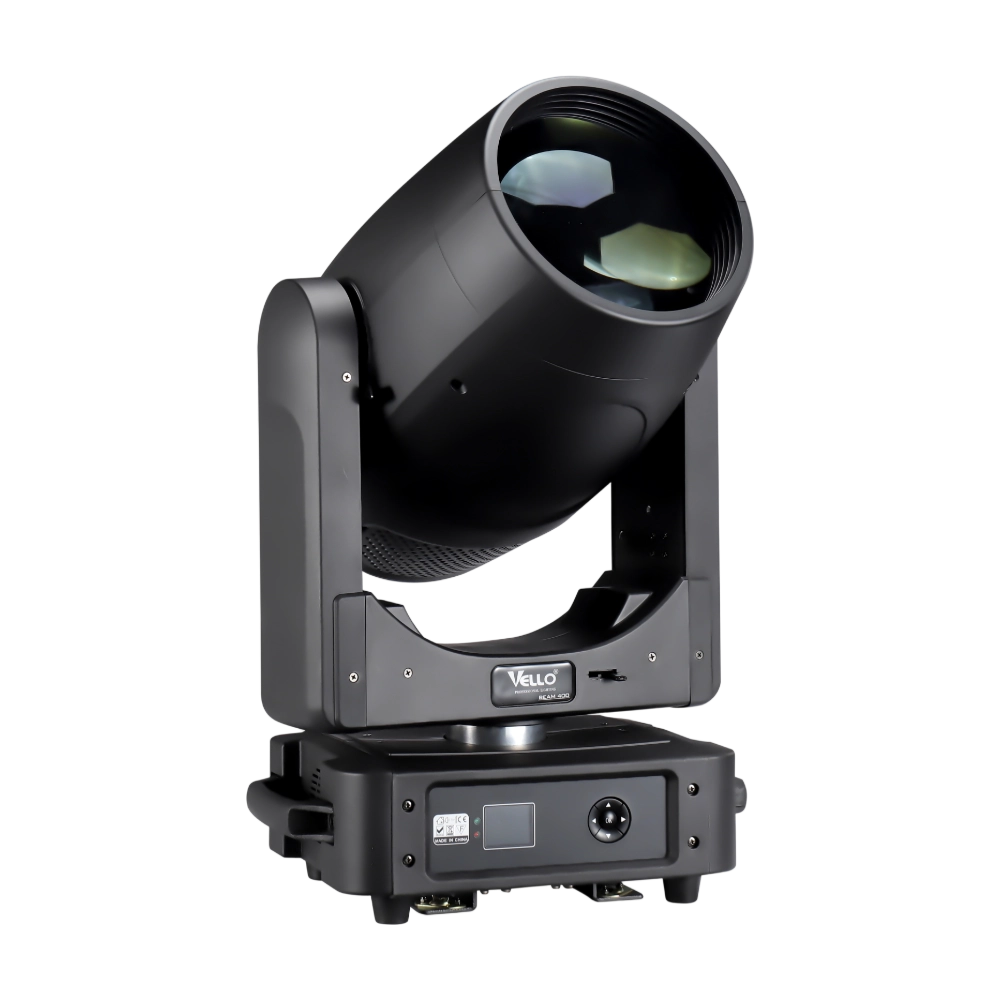
Moving Head Stage Light BEAM 400
BEAM400 is a 500W professional moving head beam powered by an OSRAM SIRIUS 371W discharge bulb, delivering a super-bright 1.8° sharp beam with impressive punch. It features 12 fixed gobos + open, a 14-color wheel, and a 16-facet circular rotating prism with multiple-facet effects, enabling dynamic aerial visuals. With 540° pan / 270° tilt, 16-bit movement resolution, and linear frost and focus, BEAM400 ensures precise and versatile performance. Comparable to traditional 750W moving heads, it combines high efficiency, smooth dimming, and reliable operation—ideal for concerts, tours, and large-scale stage productions.
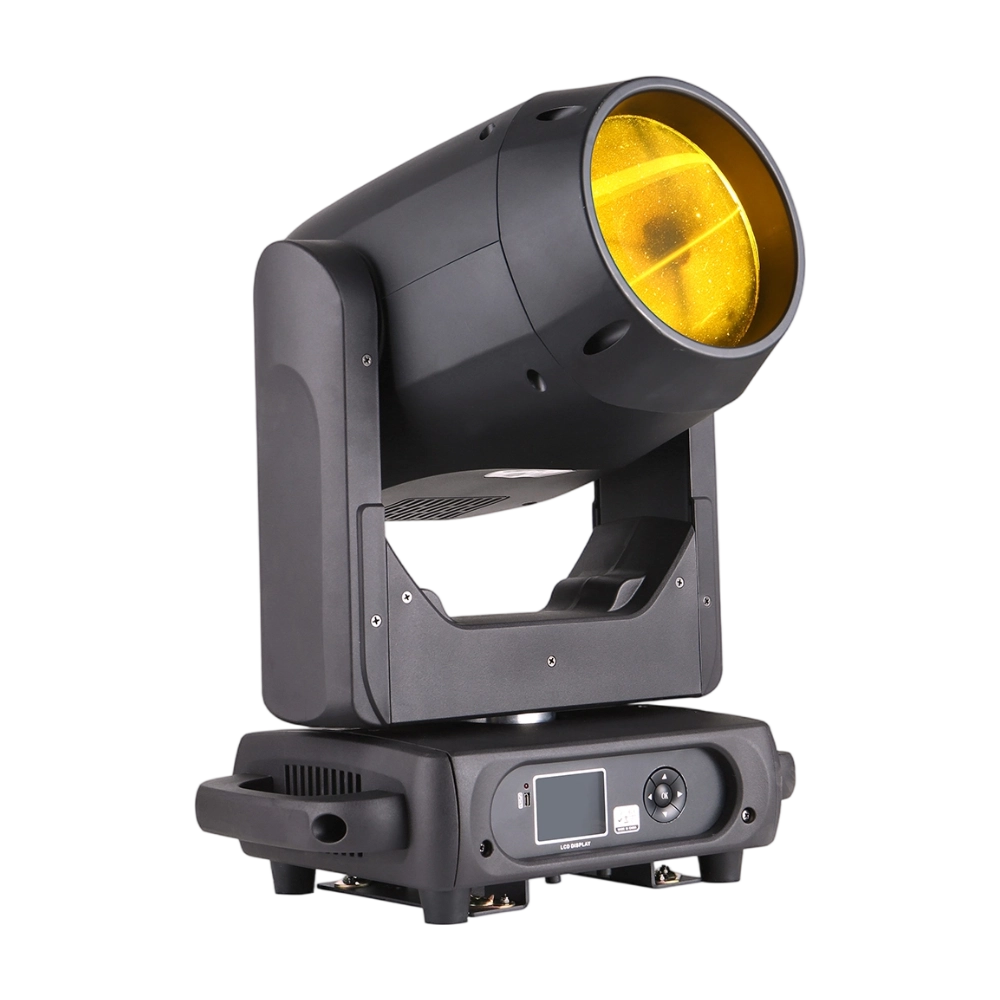
Moving Head Stage Light BEAM 360
BEAM360 is a 400W high-power moving head beam equipped with an OSRAM SIRIUS 311W discharge lamp, delivering a sharp 1.8° beam with super brightness. It features 14 colors + open, 12 fixed metal gobos + open, and dual prisms (8-facet circular + 8+16 multi-facet combination) for dynamic aerial effects. With 540° pan / 270° tilt, 16-bit movement, and linear frost and focus, BEAM360 ensures precision and versatility. Compact yet powerful, it rivals traditional 575W moving heads, making it ideal for concerts, clubs, and large-scale stage productions.
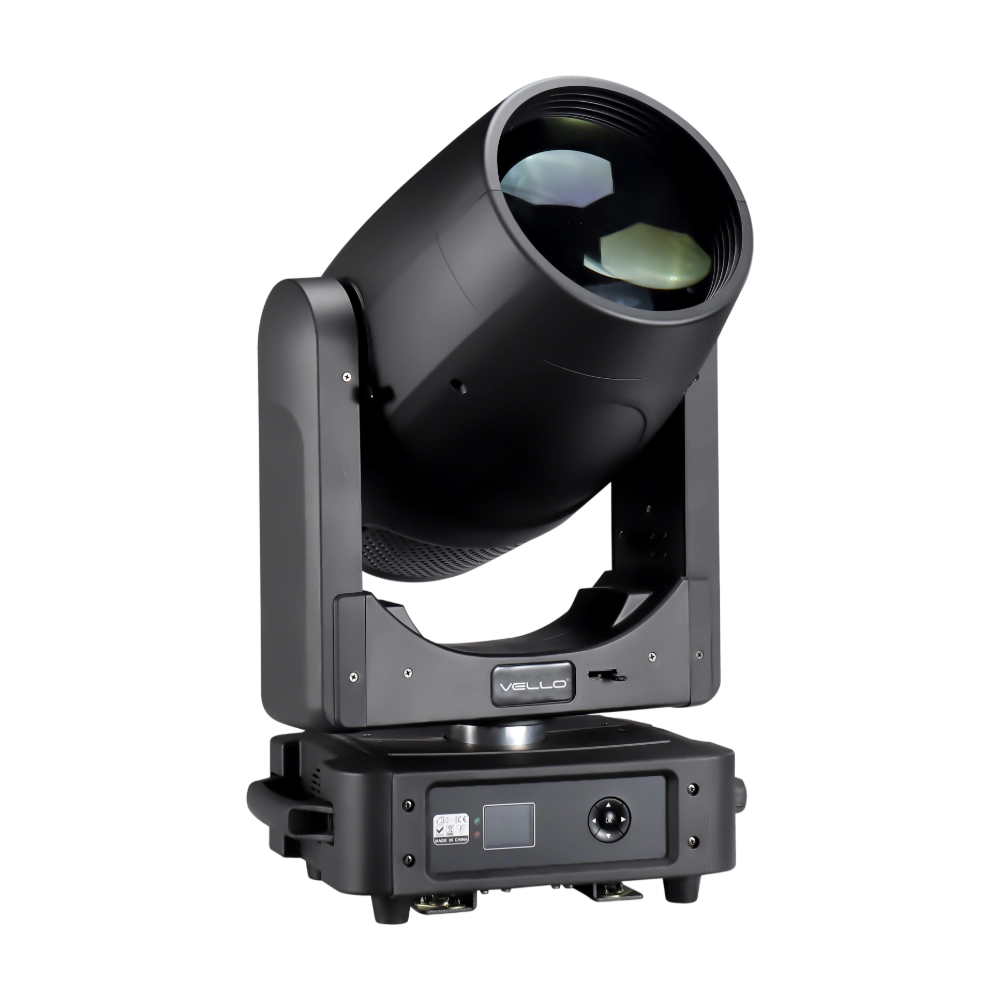
Moving Head Light BEAM 450
The BSW450 is a high-performance moving head fixture equipped with an original Osram 420W bulb, delivering exceptional brightness, precision, and versatility. Designed for professional stage applications, it seamlessly combines beam, spot, and wash functions in one compact unit, making it a powerful all-in-one lighting solution.
Over 20 Years of Innovation in Stage & Studio Lighting
© 2026 VELLO. All Rights Reserved. 粤ICP备20023734号
Join our socials
VELLO
Whatsapp: +8613902276704
Vello Lighting
VelloLights