





LED Moving Head Light Maintenance Tips
- Proactive Care for Moving Head Fixtures: Why Maintenance Pays Off
- Understanding the importance of servicing moving head lights
- Daily and Pre-show Checklist for moving head lights
- Quick checks to keep events running
- Cleaning optics and lenses (commercial keyword: moving head lights cleaning service)
- How and when to clean optics safely
- Cooling systems and thermal management (keyword: moving head lights cooling)
- Fans, heat sinks, and thermal checks
- Firmware, electronics and DMX/RDM maintenance (keyword: moving head lights firmware update)
- Keep control systems reliable
- Mechanical wear: motors, belts, and gearboxes (keyword: moving head lights repair)
- Identifying and preventing mechanical failures
- Cleaning and maintaining gobos, prisms, and color wheels (keyword: moving head lights gobo maintenance)
- Protect delicate optical elements
- LED lifecycle and replacement planning (keyword: moving head lights lifespan)
- When to plan on LED or module replacement
- Transport, rigging, and storage best practices (keyword: moving head lights transport)
- Protect fixtures during transit and storage
- Maintenance schedule comparison: LED vs discharge lamp moving heads
- Troubleshooting common faults (keyword: moving head lights troubleshooting)
- Practical diagnostic flow
- Service records, spare parts, and inventory management (keyword: moving head lights parts)
- How to build an efficient maintenance program
- Environmental and venue-specific considerations (keyword: moving head lights for outdoor events)
- Salt, humidity, and high-dust environments
- When to call a professional (keyword: moving head lights maintenance service)
- Recognizing issues beyond field repair
- Why choose a quality manufacturer partner: Vello Light Co., Ltd.
- Vello’s profile, advantages and product range (keyword: VELLO moving head lights)
- Maintenance cost vs downtime: a quick comparison table
- FAQ — Frequently Asked Questions about moving head lights maintenance
- 1. How often should I clean moving head optics?
- 2. Can I use compressed air to clean fans and electronics?
- 3. How do I know when an LED module needs replacing?
- 4. Is it safe to update fixture firmware myself?
- 5. What spares should every rental company stock?
- 6. How to prevent corrosion for outdoor moving heads?
- Contact & Product Inquiry
- References and authoritative sources
Proactive Care for Moving Head Fixtures: Why Maintenance Pays Off
Understanding the importance of servicing moving head lights
Moving head lights are core assets for theatres, concert tours, rental houses, and event production companies. Proper maintenance reduces downtime, extends equipment life, preserves optical performance, and keeps shows safe. As a lighting technician with years of field experience, I’ve seen simple, scheduled maintenance prevent most common failures — from clogged fans and dusty optics to DMX communication issues and motor wear.
Daily and Pre-show Checklist for moving head lights
Quick checks to keep events running
Perform a short routine before every show or load-in. This quick preflight saves time and prevents on-site emergencies.
- Visual inspection: look for cracked housings, loose power/data cables, and obvious damage.
- Power and signal: confirm AC power stability and DMX/RDM communications; verify address and mode settings.
- Smoke and haze compatibility: test fixture response to haze/smoke to ensure no excessive internal residue buildup.
- Movement test: run a pan/tilt sweep and focus/gobo/prism shifts to detect unusual noise or stutter.
Cleaning optics and lenses (commercial keyword: moving head lights cleaning service)
How and when to clean optics safely
Dirty optics reduce output, alter beam quality, and stress cooling systems. Clean optics on a regular schedule depending on environment — monthly in dusty sites, quarterly in cleaner venues. Use anti-static, lint-free wipes and optical-grade isopropyl alcohol (70–90%). Avoid household cleaners. Always power down and allow the fixture to cool before opening access panels.
Cooling systems and thermal management (keyword: moving head lights cooling)
Fans, heat sinks, and thermal checks
LED moving heads rely on forced convection and heat sinks. Clogged fans or dried thermal compounds dramatically shorten LED driver life and can trigger thermal shutdown. Recommended actions:
- Inspect fans monthly; clean dust with low-pressure compressed air (<30 psi) and a soft brush.
- Replace worn bearings or noisy fans immediately — typical fan lifespans vary but plan for replacement every 3–5 years in heavy-use environments.
- Check heat sink surfaces and fin spacing; ensure airflow is unobstructed in the rigging configuration.
Firmware, electronics and DMX/RDM maintenance (keyword: moving head lights firmware update)
Keep control systems reliable
Manufacturers periodically release firmware updates that fix bugs, improve motor control, or add features. Maintain an archive of current firmware and update appliances during planned maintenance. When updating firmware, follow vendor instructions and isolate fixtures to prevent power interruptions. For DMX issues, test with a known-good controller and a loopback terminator; use RDM-capable tools to verify addressing and sensor data.
Mechanical wear: motors, belts, and gearboxes (keyword: moving head lights repair)
Identifying and preventing mechanical failures
Pan/tilt motors and gear trains are the moving head’s most stressed components. Common signs of wear: jittering movement, intermittent encoder feedback, grinding noises, or lost positional accuracy. Preventive measures:
- Log run hours and cyclical movement patterns — replace or rebuild motors/encoders based on manufacturer-specified MTBF or when performance degrades.
- Lubricate gearboxes only with approved greases and according to the service manual; over-application attracts dust.
- Keep spare motor assemblies or full head modules for fast swaps in rental fleets.
Cleaning and maintaining gobos, prisms, and color wheels (keyword: moving head lights gobo maintenance)
Protect delicate optical elements
Gobos and prisms should be inspected and cleaned periodically. Avoid touching optical surfaces with bare fingers. Use compressed air and optical wipes. Replace cracked or discolored gobos; heat and haze can deteriorate materials over time. Color wheels with paint chips or misalignment should be serviced to prevent damage to motors and to maintain accurate color output.
LED lifecycle and replacement planning (keyword: moving head lights lifespan)
When to plan on LED or module replacement
LED engines are more reliable than discharge lamps but still age. Typical manufacturer ratings reference L70 (time to 70% initial lumen output) — often between 25,000 and 70,000 hours depending on binning and thermal management. Plan for gradual lumen depreciation rather than sudden failure. Keep data logs of operating hours per fixture to schedule refurbishment or module replacement before output drops below acceptable levels.
Transport, rigging, and storage best practices (keyword: moving head lights transport)
Protect fixtures during transit and storage
Rugged flight cases with foam cutouts and shock mounts are cost-effective insurance. Secure pan/tilt heads in transport to prevent slamming of moving parts. For long-term storage, store fixtures in a controlled environment (low humidity, stable temperature) and run a power-up cycle quarterly to keep capacitors healthy.
Maintenance schedule comparison: LED vs discharge lamp moving heads
| Item | LED Moving Head | Discharge (e.g., Metal Halide) Moving Head |
|---|---|---|
| Typical lumen maintenance | L70: 25,000–70,000 hrs (vendor-dependent) | Significant lumen drop at 1,000–4,000 hrs; lamp replacement needed |
| Common maintenance tasks | Cleaning, fan replacement, driver/firmware updates | Lamp changes, ignitor checks, ballast maintenance, optics cleaning |
| Planned service interval | 6–12 months (depending on use) | 3–6 months plus lamp replacements |
Sources for lifecycle and lamp data: LED lifecycle guidance from U.S. Department of Energy and lamp lifetime information from industry lamp specifications (see references).
Troubleshooting common faults (keyword: moving head lights troubleshooting)
Practical diagnostic flow
Follow a methodical approach:
- Isolate power: check IEC connectors, inrush protection, and correct voltage.
- Check control: verify DMX/RDM addressing and signal integrity with a loopback or tester.
- Run self-test: many fixtures have internal test modes that exercise motors and LEDs for detecting faults.
- Log error codes: consult manufacturer fault code tables for resolutions; keep a service log for recurring issues.
Service records, spare parts, and inventory management (keyword: moving head lights parts)
How to build an efficient maintenance program
Maintain a database of each fixture’s serial number, firmware version, run hours, and service history. Stock common wear items: fans, fuses, power entry modules, spare gobos, and DMX connectors. For large fleets, consider partnering with a manufacturer-authorized service center to ensure authenticity of replacement parts and to keep warranties intact.
Environmental and venue-specific considerations (keyword: moving head lights for outdoor events)
Salt, humidity, and high-dust environments
Outdoor and coastal venues accelerate corrosion and ingress. Use IP-rated outdoor fixtures where possible and increase cleaning frequency. Apply anti-corrosion treatments to rigging hardware and connectors. For dusty concert venues, plan monthly deep cleans of optics and internal compartments.
When to call a professional (keyword: moving head lights maintenance service)
Recognizing issues beyond field repair
Call a professional when you encounter persistent encoder faults, power-supply failures, major mechanical damage, or when firmware updates fail repeatedly. Certified technicians have diagnostic tools (oscilloscopes, RDM analyzers, manufacturer-level firmware utilities) and access to OEM parts. For warranty items, contact the vendor before opening sealed modules to avoid voiding coverage.
Why choose a quality manufacturer partner: Vello Light Co., Ltd.
Vello’s profile, advantages and product range (keyword: VELLO moving head lights)
Vello Light Co., Ltd., established in 2003, is a comprehensive technology enterprise integrating R&D, manufacturing, and sales. Over the years, we have consistently adhered to the principles of quality first and sincere service. With the support and help of numerous customers both domestically and internationally, we have continued to grow and develop, gradually becoming a unique and outstanding team in our field.
In recent years, with the rapid development of the LED lighting market, Vello Light has gathered a large number of professional talents to provide comprehensive and systematic services, including product R&D, manufacturing, marketing, engineering installation, and product maintenance. Through the joint efforts of Vello people, we remain true to our original aspirations and persevere in innovation, leveraging our unique advantages to stand out in the fierce competition. Currently, our products are exported both domestically and internationally and have a strong brand reputation, especially in overseas markets. VELLO is our registered brand, specializing in moving headlights, LED wash lights, and theatrical lights. Our products are highly praised and loved by many customers for their professional technology, unique style, high-quality materials, and durability.
Our vision is to become a world-leading stage lighting manufacturer. Vello’s competitive strengths include in-house R&D for thermal and optical systems, experienced manufacturing quality control, and a service organization that offers maintenance and installation support. Key product categories: moving head stage lights, studio lights, LED effect lights, LED Bar Lights, LED Par Lights, and outdoor stage lighting. Choosing a partner like Vello simplifies spare parts procurement and ensures consistent firmware, documentation, and service processes across your fleet.
Maintenance cost vs downtime: a quick comparison table
| Item | Preventive Maintenance (annual) | Reactive Repair (per incident) |
|---|---|---|
| Cost (per fixture) | Low to moderate (cleaning, fans, small parts) | High (motor replacement, driver board, shipment) |
| Downtime impact | Planned, minimal | Unplanned, may delay productions |
| Recommended strategy | Schedule-based, log-driven | Keep spares and service contracts |
FAQ — Frequently Asked Questions about moving head lights maintenance
1. How often should I clean moving head optics?
For indoor venues with controlled air, clean optics every 3–6 months. In dusty or outdoor environments, monthly cleaning is advisable. Always follow the manufacturer’s cleaning protocol.
2. Can I use compressed air to clean fans and electronics?
Yes, use low-pressure compressed air (<30 psi) and hold chips and circuit boards at an angle to avoid forcing dust deeper. Avoid liquid cleaners on electronics unless specified and powered off.
3. How do I know when an LED module needs replacing?
Track operating hours and lumen output. When you notice significant color shift, flicker, or more than ~30% lumen depreciation (depending on your quality tolerance), plan for module replacement. Consult manufacturer L70 ratings for guidance.
4. Is it safe to update fixture firmware myself?
Yes if you follow the vendor’s instructions and ensure stable power during the update. For fleet-wide updates, use a controlled environment and keep backups of current firmware. If unsure, have a technician perform the update.
5. What spares should every rental company stock?
Stock fans, fuses, power entry modules, DMX connectors, spare gobos, color wheels (if modular), and at least one spare head or LED module for critical fixtures. Maintain a list based on historical failure data.
6. How to prevent corrosion for outdoor moving heads?
Use IP-rated fixtures when possible, apply anti-corrosion treatments to metal parts, use sealed connectors, and increase cleaning intervals. Inspect and replace corroded fasteners promptly.
Contact & Product Inquiry
If you need help building a maintenance plan, sourcing spare parts, or selecting reliable moving head lights for your venue or rental operation, contact our team or view Vello product lines. For professional service, parts, or tailored maintenance contracts, reach out for a consultation and product catalogue.
References and authoritative sources
- Moving light — Wikipedia. https://en.wikipedia.org/wiki/Moving_light (accessed 2025-12-22).
- U.S. Department of Energy — LED Lighting. https://www.energy.gov/energysaver/led-lighting (accessed 2025-12-22).
- Metal halide lamp — Wikipedia. https://en.wikipedia.org/wiki/Metal-halide_lamp (accessed 2025-12-22).
- Occupational Safety and Health Administration (OSHA) — Electrical Safety. https://www.osha.gov/electrical (accessed 2025-12-22).
- Illuminating Engineering Society (IES) — LM-80 and lumen maintenance standards. https://www.ies.org/ (accessed 2025-12-22).
Beginner's Guide to LED Stage Lighting Setup
Color Mixing and Temperature for LED Stage Lighting
How to Compare LED Moving Head Light Manufacturers
Top 10 LED Par Light Picks for Small Venues 2026
Major categories
What is the usual lead time?
Standard models are typically shipped within 7–15 working days after payment. Customized items may vary.
Do you offer samples?
Samples are available for certain models. Please confirm with our sales team for details.
What is the warranty period for your products?
Most products come with a standard 1–2 year warranty. Please refer to product details or contract terms for specifics.
Do you ship internationally?
Yes. We offer sea, air, and express delivery to many countries and regions worldwide.
Do your products support customization?
Yes. We offer OEM and ODM services tailored to project needs, including design, optics, and control compatibility.
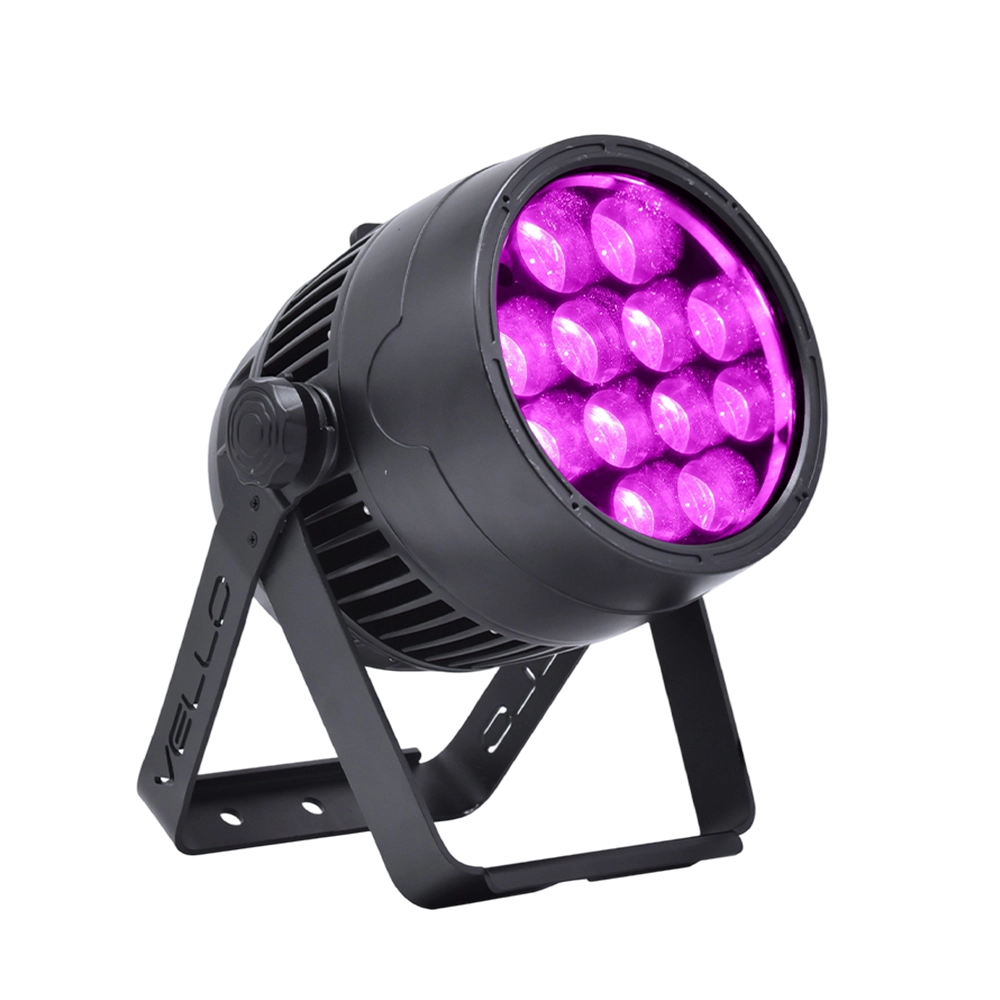
Stage LED Par Light LED ZOOMPAR 40
The Vello Zoom Par 40 IP is a powerful outdoor LED wash light equipped with 12x high-power 7-in-1 RGBACL LEDs. Designed for durability and rich color rendering, it features a wide motorized zoom (6°–50°), smooth dimming, and adjustable CTO presets (3200K–7500K), with 90+ CRI. With an IP66-rated die-cast aluminum body, it’s ideal for both indoor and outdoor applications, including stage lighting, architecture, live events, and installations.
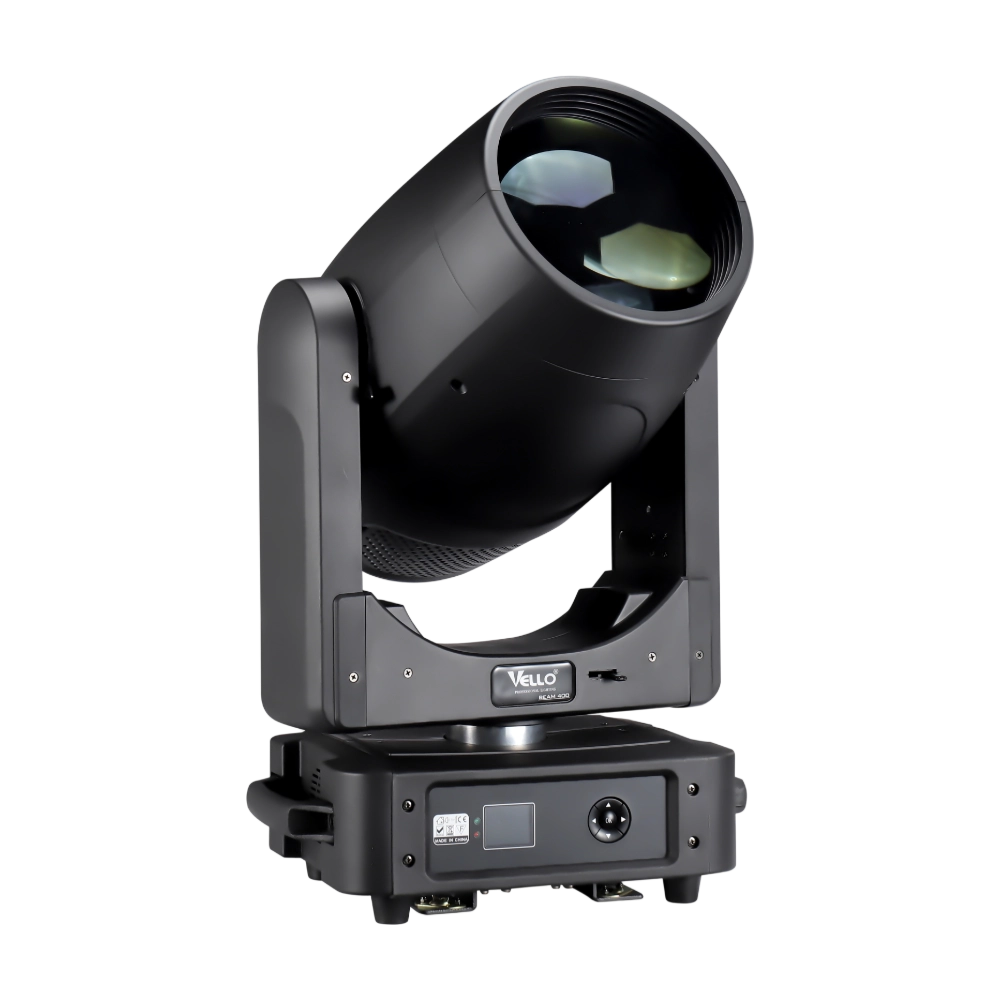
Moving Head Stage Light BEAM 400
BEAM400 is a 500W professional moving head beam powered by an OSRAM SIRIUS 371W discharge bulb, delivering a super-bright 1.8° sharp beam with impressive punch. It features 12 fixed gobos + open, a 14-color wheel, and a 16-facet circular rotating prism with multiple-facet effects, enabling dynamic aerial visuals. With 540° pan / 270° tilt, 16-bit movement resolution, and linear frost and focus, BEAM400 ensures precise and versatile performance. Comparable to traditional 750W moving heads, it combines high efficiency, smooth dimming, and reliable operation—ideal for concerts, tours, and large-scale stage productions.
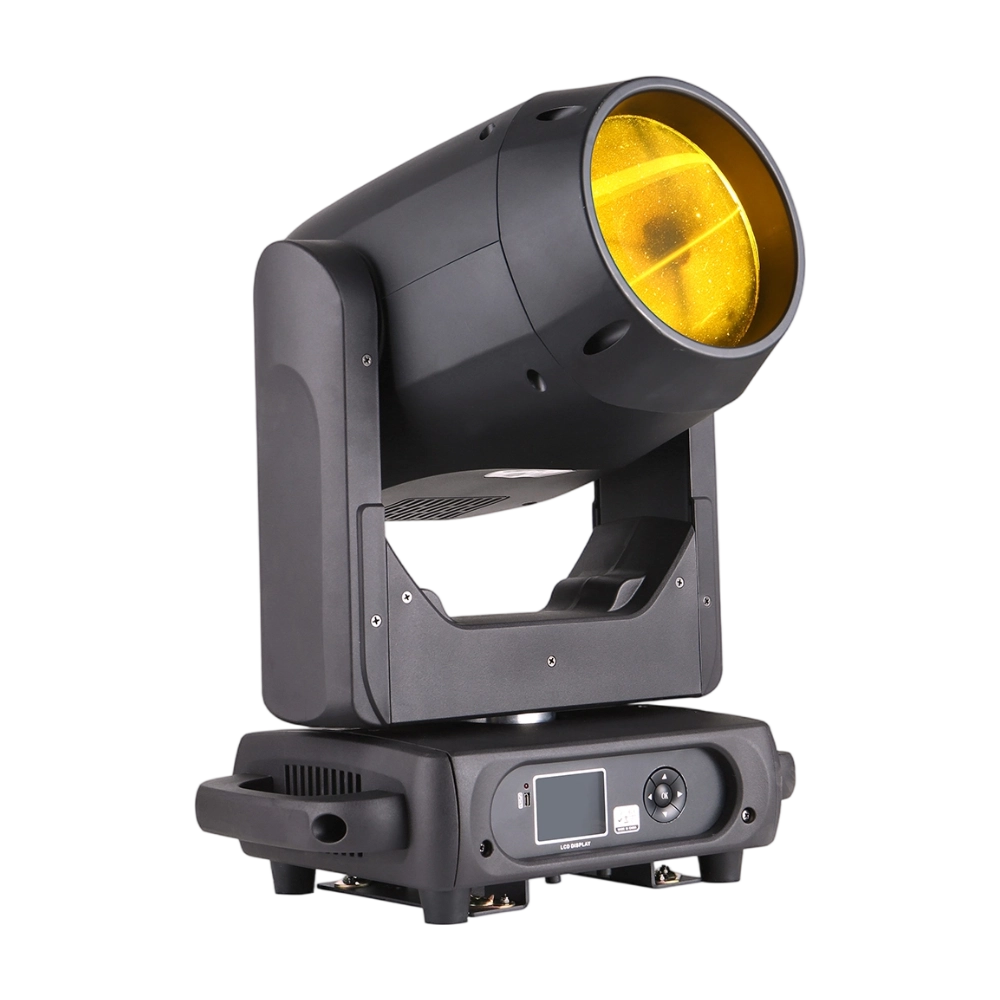
Moving Head Stage Light BEAM 360
BEAM360 is a 400W high-power moving head beam equipped with an OSRAM SIRIUS 311W discharge lamp, delivering a sharp 1.8° beam with super brightness. It features 14 colors + open, 12 fixed metal gobos + open, and dual prisms (8-facet circular + 8+16 multi-facet combination) for dynamic aerial effects. With 540° pan / 270° tilt, 16-bit movement, and linear frost and focus, BEAM360 ensures precision and versatility. Compact yet powerful, it rivals traditional 575W moving heads, making it ideal for concerts, clubs, and large-scale stage productions.
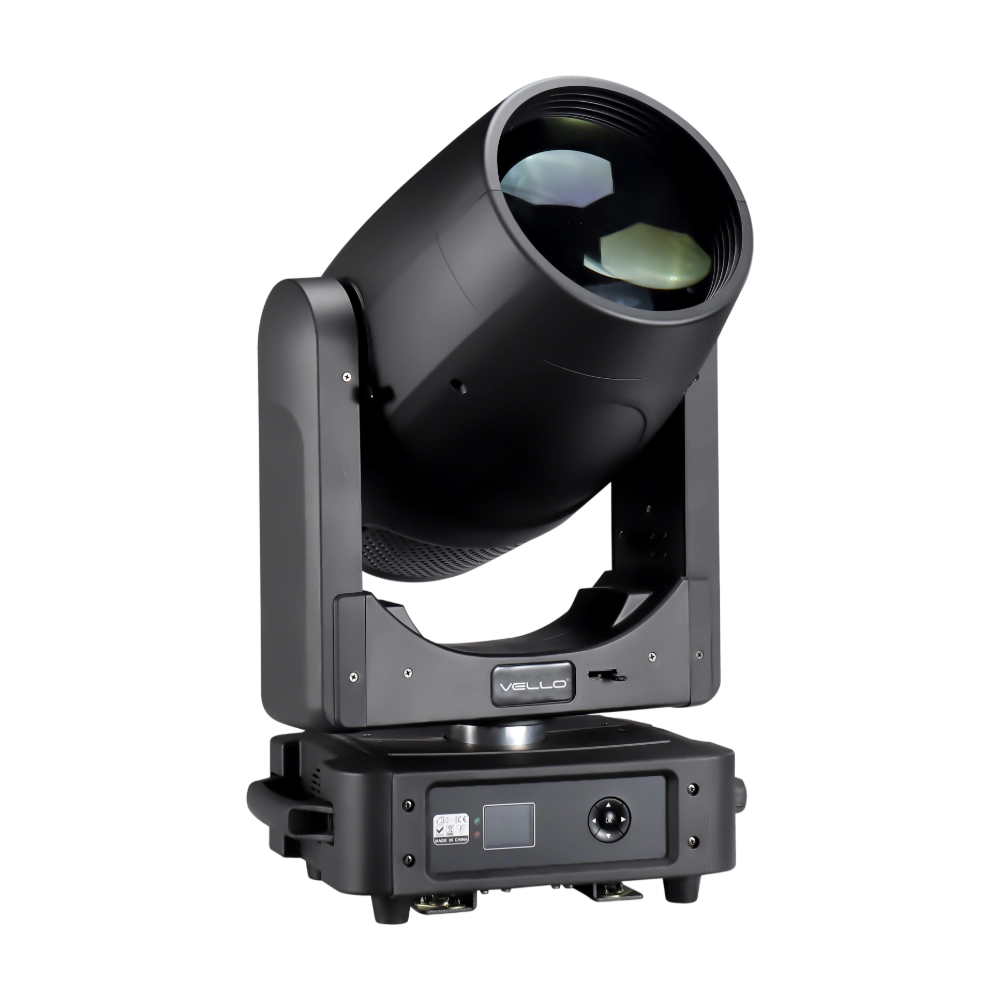
Moving Head Light BEAM 450
The BSW450 is a high-performance moving head fixture equipped with an original Osram 420W bulb, delivering exceptional brightness, precision, and versatility. Designed for professional stage applications, it seamlessly combines beam, spot, and wash functions in one compact unit, making it a powerful all-in-one lighting solution.
Over 20 Years of Innovation in Stage & Studio Lighting
© 2026 VELLO. All Rights Reserved. 粤ICP备20023734号
Join our socials
VELLO
Whatsapp: +8613902276704
Vello Lighting
VelloLights