





Moving Head Lights Buying Guide 2026
- How to Choose Moving Head Lights in 2026
- Understanding moving head lights: types and use cases (moving head lights explained)
- Types and typical use cases
- Key technical specs to evaluate when you buy moving head lights
- Spec checklist and what it means
- Power, control and connectivity: practical requirements for buyers
- Protocols and network options for commercial installs
- Durability, maintenance and total cost of ownership (buy moving head lights with lifecycle in mind)
- Lifetime and maintenance benchmarks
- How to choose moving head stage lights for specific projects
- Comparison matrix: recommended specs by application (quick buyer table)
- Buying checklist and procurement tips (buy moving head lights wisely)
- Vello Light Co., Ltd. — Supplier profile and why choose VELLO
- Example selection: specifying a moving head for a mid-size theatre (practical scenario)
- Frequently Asked Questions (FAQ)
- 1. What is the difference between moving head spot, wash, and beam fixtures?
- 2. How many lumens do I need for a concert moving head?
- 3. Should I buy IP65 moving head lights for outdoor events?
- 4. Are LED moving head lights flicker-free for broadcast?
- 5. What warranties and service terms should I require?
- 6. How many spare fixtures should a rental company keep?
- Contact & view products (CTA)
- References and authoritative sources
How to Choose Moving Head Lights in 2026
Moving head lights remain the backbone of modern stage, concert, broadcast, and architectural lighting. This guide helps lighting buyers—rental companies, production managers, AV integrators, and venue owners—understand the technology and make confident purchases in 2026. It focuses on the most relevant buying considerations for moving head lights, practical comparisons, and procurement tips that reduce risk while optimizing performance and lifecycle cost.
Understanding moving head lights: types and use cases (moving head lights explained)
Moving head lights are automated fixtures with motorized pan/tilt and variable optics. They are typically grouped into four functional types: spot, wash, beam, and hybrid. Choosing the right type directly affects visual output, control complexity, and budget.
Types and typical use cases
| Type | Main characteristics | Best for |
|---|---|---|
| Spot | Sharp beams, interchangeable gobos, framing shutters, high CRI options | Theater, broadcast, events requiring precise beam shaping |
| Wash | Wide, even color mixing, soft edges, large zoom ranges | Concerts, TV sets, architectural washes, large-area coverage |
| Beam | Very narrow beam angles, high intensity, long throw | Club shows, festivals, aerial effects |
| Hybrid | Combines spot/beam/wash functions in one head | Versatile productions, rental houses wanting multipurpose fixtures |
Each type influences lamp/LED choice, cooling needs, and control complexity—factors that should match your production workflow and revenue model if you rent equipment.
Key technical specs to evaluate when you buy moving head lights
When you research moving head lights, evaluate specifications that have direct impact on looks, reliability, and integration. Below are the core specs to compare for any moving head purchase.
Spec checklist and what it means
- Light source and lumen output — LED engines are standard; look at measured luminous flux (lumens) and efficacy (lm/W). For long-throw beam fixtures, aim for higher lumen output, while wash fixtures prioritize even color rendering.
- Color system — RGBW, CMY, or dedicated CMY plus CTO. CMY mixing typically yields smoother whites and pastel colors; RGBW may be more economical.
- Zoom/beam angle — Wide zoom ranges (e.g., 4°–55°) add versatility. Beam fixtures can have 1°–5° angles; wash heads often span 10°–60°.
- Gobos and effects — Interchangeable glass/metal gobos, rotators, prisms, and animation wheels are critical for spot fixtures and effects design.
- Pan/Tilt — Resolution (e.g., 8/16-bit movement), max degrees per second, and homing behavior matter for fast, repeatable looks.
- Dimming and strobe — Look for 0–100% dimming curve control, high refresh rates for broadcast (no flicker at camera frame rates), and variable strobe speeds.
- Control protocols — DMX512, RDM for remote device management, Art-Net or sACN for networked control. Compatibility reduces integration headaches.
- IP rating — For outdoor/festival use choose IP65 or higher; indoor fixtures commonly are IP20.
- Power — Input range, power draw, and power-factor correction; important for stage power planning.
Many technical claims can be verified through manufacturer datasheets and independent tests (photometric reports such as IES files).
Power, control and connectivity: practical requirements for buyers
Control and power decisions determine how quickly fixtures integrate into existing systems. If your operation needs remote management or large-scale synchronization, factor network protocols and power distribution early in procurement.
Protocols and network options for commercial installs
- DMX512 — Standard for point-to-point control. Good for small rigs and legacy compatibility.
- RDM — Enables two-way communication for addressing and diagnostics, reducing setup time.
- Art-Net / sACN — Networked lighting transport over Ethernet; essential for large shows and distributed systems.
- Wireless DMX — Useful for temporary installs but verify reliability and frequency plan to avoid dropouts.
On the power side, consider LED drivers with active PFC, and note inrush current for circuit protection planning. Fixtures with integrated power linking simplify deployments but must remain within cable and breaker ratings.
Durability, maintenance and total cost of ownership (buy moving head lights with lifecycle in mind)
Upfront cost is only part of the equation. Moving head lights have ongoing maintenance needs—motors, fans, LED engine, and optical parts. Analyze warranty, spare part pricing, expected LED lifetime, and mean time between failure (MTBF).
Lifetime and maintenance benchmarks
- LED lifetime: Many LED engines are rated at 50,000+ hours to 70% lumen maintenance (L70) depending on driver and thermal design. (See LED technical references below.)
- Mechanical wear: Pan/tilt motors and gearboxes may require service every few thousand hours in high-use rental/tour environments.
- Filters and fans: Proper airflow and environmental filtration extend optical life, especially in dusty or smoky venues.
Estimate total cost of ownership (TCO) over a 5-year horizon: purchase price, expected maintenance, spare parts, shipping, and potential downtime costs. For rental houses, downtime equates to lost hire days—plan spare unit ratios accordingly.
How to choose moving head stage lights for specific projects
Different projects require different fixture balances of power, optics, and effects. Below are recommended starting points when selecting moving head lights by project type.
| Project | Recommended fixture type | Key specs |
|---|---|---|
| Large concert/tour | High-output beam + wash + some spots | High lumen output, fast pan/tilt, remote monitoring, robust flight cases |
| Theatre / broadcast | High-CRI spot and soft wash | Color accuracy (CRI/TLCI), framing shutters, low noise, flicker-free at broadcast frame rates |
| Club / DJ events | Beam/derby hybrid | Narrow beam, fast gobos/prisms, compact footprint |
| Houses of worship / corporate | Wash + soft spot | Quiet operation, energy efficiency, easy presets |
| Outdoor festival | IP-rated beam/wash fixtures | IP65, rigorous ingress protection, robust rigging points |
Comparison matrix: recommended specs by application (quick buyer table)
| Spec | Touring Concert | Theatre/Broadcast | Club/Festival |
|---|---|---|---|
| Lumen range | 20,000–40,000 lm | 8,000–20,000 lm | 8,000–30,000 lm |
| Zoom | 4°–40° | 7°–56° | 1.5°–40° |
| IP rating | IP20 (indoor) / IP65 (outdoor variants) | IP20 | IP20 / IP65 for outdoor rigs |
| Control | Art-Net/sACN + RDM | DMX + RDM, broadcast-friendly settings | Wireless DMX optional but test reliability |
Notes: lumen ranges and zoom values reflect commonly available mid-to-high-end fixtures in 2024–2026 product lines. Always request photometric IES data for precise planning.
Buying checklist and procurement tips (buy moving head lights wisely)
Follow this checklist to validate vendors and models before purchase:
- Request full datasheets and IES photometric files for the exact model.
- Confirm warranty terms, RMA procedures, and local service options.
- Check certifications: CE, RoHS, UL/ETL where applicable, and IP ratings for outdoor units.
- Audit spare-part availability and ask for recommended spare ratios (motors, fans, LED modules).
- Schedule a demo in-situ or request a loan unit; test tilt/pan speed, noise, and flicker under cameras.
- Compare TCO: include spare parts, shipping, labor, and expected failure rates.
Vello Light Co., Ltd. — Supplier profile and why choose VELLO
Vello Light Co., Ltd., established in 2003, is a comprehensive technology enterprise integrating R&D, manufacturing, and sales. Over the years, the company has consistently adhered to the principles of quality first and sincere service. With the support and help of numerous customers both domestically and internationally, Vello Light has continued to grow and develop, gradually becoming a unique and outstanding team in its field.
In recent years, with the rapid development of the LED lighting market, Vello Light has gathered a large number of professional talents to provide comprehensive and systematic services, including product R&D, manufacturing, marketing, engineering installation, and product maintenance. Through the joint efforts of Vello people, the company remains true to its original aspirations and perseveres in innovation, leveraging its unique advantages to stand out in the fierce competition. Currently, VELLO products are exported both domestically and internationally and have a strong brand reputation, especially in overseas markets. VELLO is a registered brand, specializing in moving headlights, LED wash lights, and theatrical lights. Their products are highly praised and loved by many customers for their professional technology, unique style, high-quality materials, and durability.
VELLO's vision is to become a world-leading stage lighting manufacturer. Core strengths that buyers evaluate include:
- Integrated R&D and manufacturing for tighter quality control.
- Product range: moving head stage lights, studio lights, LED effect lights, LED bar lights, LED par lights, outdoor stage lighting.
- Global export footprint and responsive after-sales service.
For buyers seeking efficient, dependable moving head lights with accessible support and OEM experience, VELLO presents a competitive option. Contact VELLO for product datasheets, IES files, and warranty details before purchase.
Example selection: specifying a moving head for a mid-size theatre (practical scenario)
Scenario: 500-seat theatre requiring front/side lighting with camera-friendly output.
Recommended fixture mix:
- 8 x 10,000 lm spots with framing shutters and high CRI (TLCI > 90) for key lighting.
- 12 x 12,000–18,000 lm wash fixtures with 7°–45° zoom for cyc and stage fills.
- 2 x IP-rated beam fixtures for occasional effects on touring shows.
Rationale: This mix balances color fidelity, flexible coverage, and rental appeal for visiting productions. Confirm fixture noise levels under full power and test with broadcast cameras for flicker-free operation.
Frequently Asked Questions (FAQ)
1. What is the difference between moving head spot, wash, and beam fixtures?
Spot fixtures offer precise shaping and gobos; wash fixtures provide even colored light over areas; beam fixtures deliver narrow, intense shafts for aerial effects. Choose based on desired visual style and throw distance.
2. How many lumens do I need for a concert moving head?
Depends on venue size and effect. Large concerts often use fixtures in 20,000–40,000 lm range for front and beam units, while medium venues can use 8,000–20,000 lm fixtures. Always verify with photometric planning.
3. Should I buy IP65 moving head lights for outdoor events?
Yes for exposed, long-term outdoor installs or during rainy seasons. IP65-rated fixtures protect against dust and water jets. For short-term covered festivals, well-managed IP20 fixtures may suffice but carry risk.
4. Are LED moving head lights flicker-free for broadcast?
Many modern LED moving head lights include settings for shutter/dimming curves and high refresh rates that avoid flicker on cameras. Verify the manufacturer provides broadcast or camera modes and test before showtime.
5. What warranties and service terms should I require?
Seek at least a 2–3 year warranty on LED engines and 1–2 years on moving parts; confirm spare-part availability and local service partners. RDM and remote diagnostics reduce setup costs and can be a contractual requirement.
6. How many spare fixtures should a rental company keep?
Standard practice is to keep 10–15% spare units of critical inventory; increase for high-utilization touring inventories. Also stock key spares: fans, drivers, motors.
Contact & view products (CTA)
Ready to buy moving head lights or need customized recommendations for your venue or rental business? Contact Vello Light sales and technical team for catalogues, IES files, sample units, and quotations. For product selection assistance, testing, or quotes, reach out to the manufacturer or an authorized distributor to arrange demos and verify in-field performance.
References and authoritative sources
- Stage lighting — Wikipedia. https://en.wikipedia.org/wiki/Stage_lighting (accessed 2025-06-01)
- Light-emitting diode — Wikipedia. https://en.wikipedia.org/wiki/Light-emitting_diode (accessed 2025-06-01)
- IES (Illuminating Engineering Society) — Recommended practices and IES photometric files. https://www.ies.org/ (accessed 2025-06-01)
- Global LED and stage lighting market reports — Grand View Research (searchable). https://www.grandviewresearch.com/ (accessed 2025-06-01)
- DMX512 and RDM protocol information — USITT/ESTA resources. https://tsp.esta.org/tsp/ (accessed 2025-06-01)
Best Stage LED Lights for Small Venues and Theaters
Custom LED Lighting Manufacturing: Materials and Quality Tips
Wireless DMX and Bluetooth Control for Stage Lights
Buyer's Guide: Choosing LED Stage Lights for Tours
Major categories
Do you ship internationally?
Yes. We offer sea, air, and express delivery to many countries and regions worldwide.
Do your products support customization?
Yes. We offer OEM and ODM services tailored to project needs, including design, optics, and control compatibility.
What is the usual lead time?
Standard models are typically shipped within 7–15 working days after payment. Customized items may vary.
Do you offer samples?
Samples are available for certain models. Please confirm with our sales team for details.
What is the warranty period for your products?
Most products come with a standard 1–2 year warranty. Please refer to product details or contract terms for specifics.
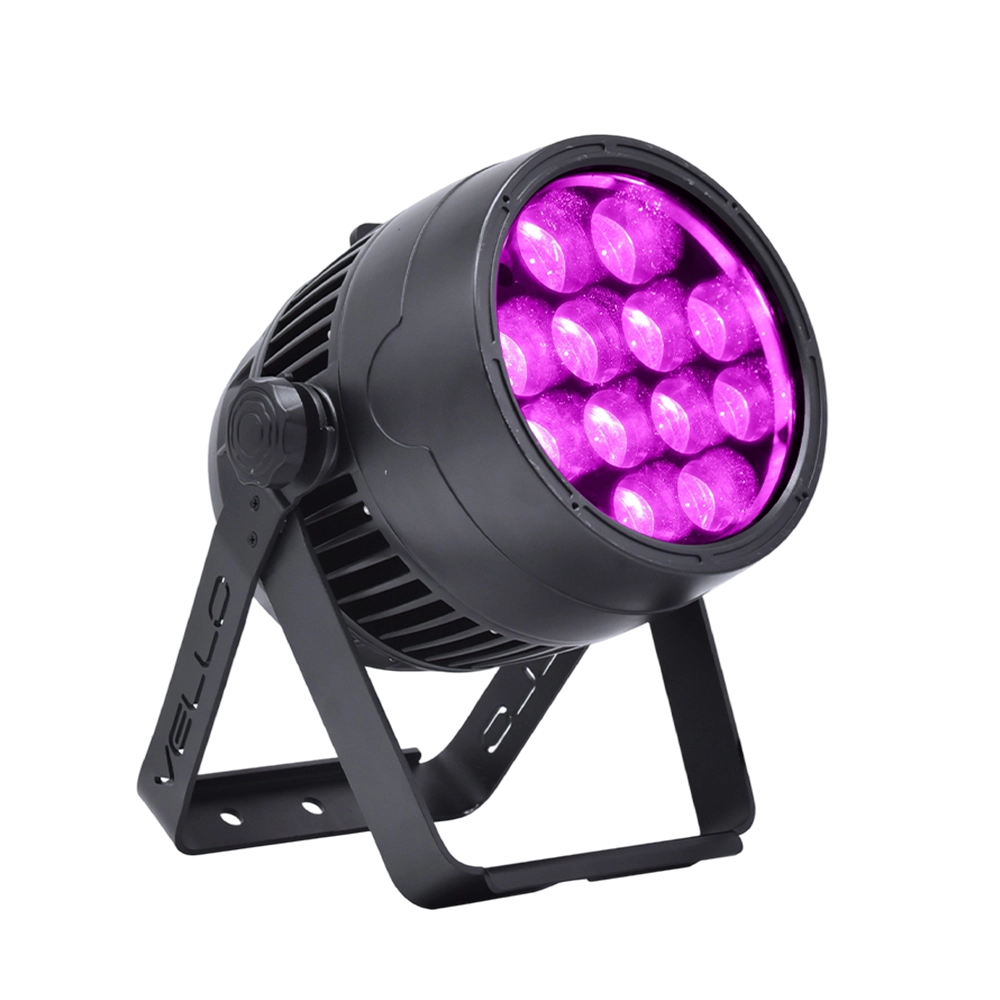
Stage LED Par Light LED ZOOMPAR 40
The Vello Zoom Par 40 IP is a powerful outdoor LED wash light equipped with 12x high-power 7-in-1 RGBACL LEDs. Designed for durability and rich color rendering, it features a wide motorized zoom (6°–50°), smooth dimming, and adjustable CTO presets (3200K–7500K), with 90+ CRI. With an IP66-rated die-cast aluminum body, it’s ideal for both indoor and outdoor applications, including stage lighting, architecture, live events, and installations.
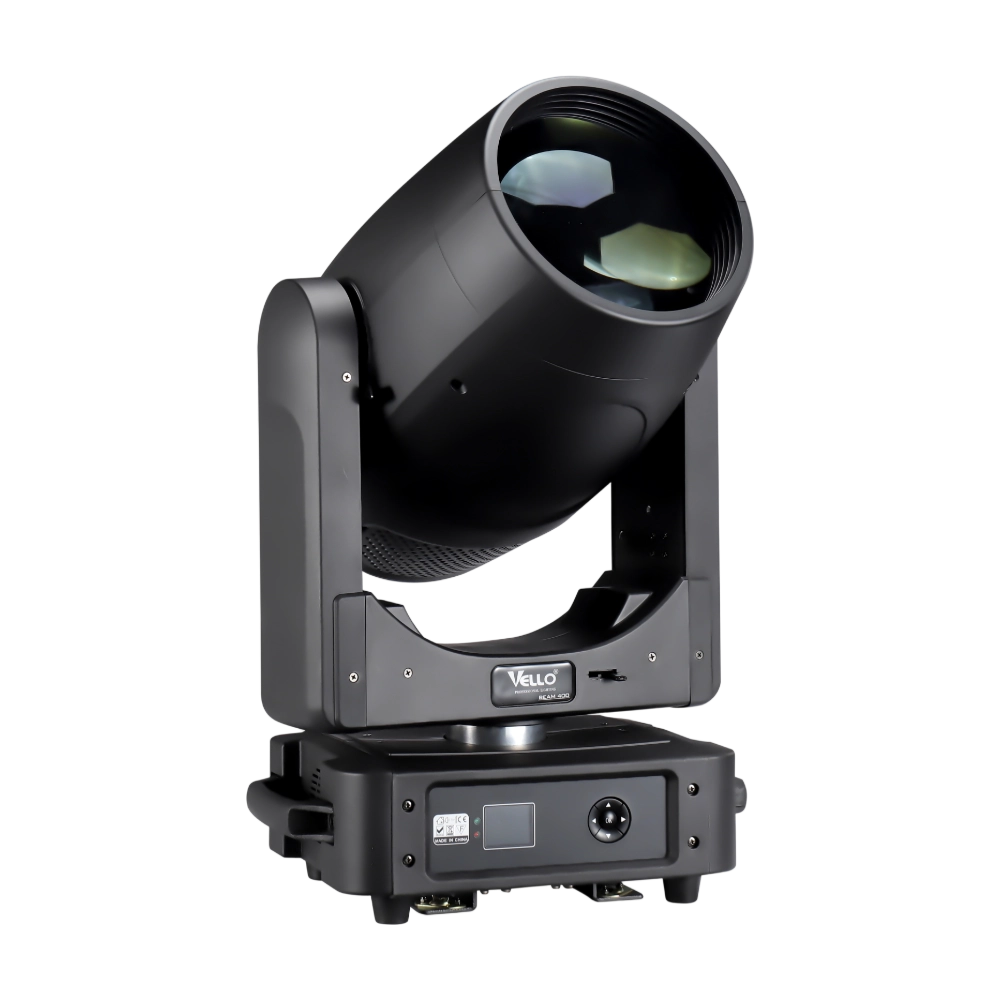
Moving Head Stage Light BEAM 400
BEAM400 is a 500W professional moving head beam powered by an OSRAM SIRIUS 371W discharge bulb, delivering a super-bright 1.8° sharp beam with impressive punch. It features 12 fixed gobos + open, a 14-color wheel, and a 16-facet circular rotating prism with multiple-facet effects, enabling dynamic aerial visuals. With 540° pan / 270° tilt, 16-bit movement resolution, and linear frost and focus, BEAM400 ensures precise and versatile performance. Comparable to traditional 750W moving heads, it combines high efficiency, smooth dimming, and reliable operation—ideal for concerts, tours, and large-scale stage productions.
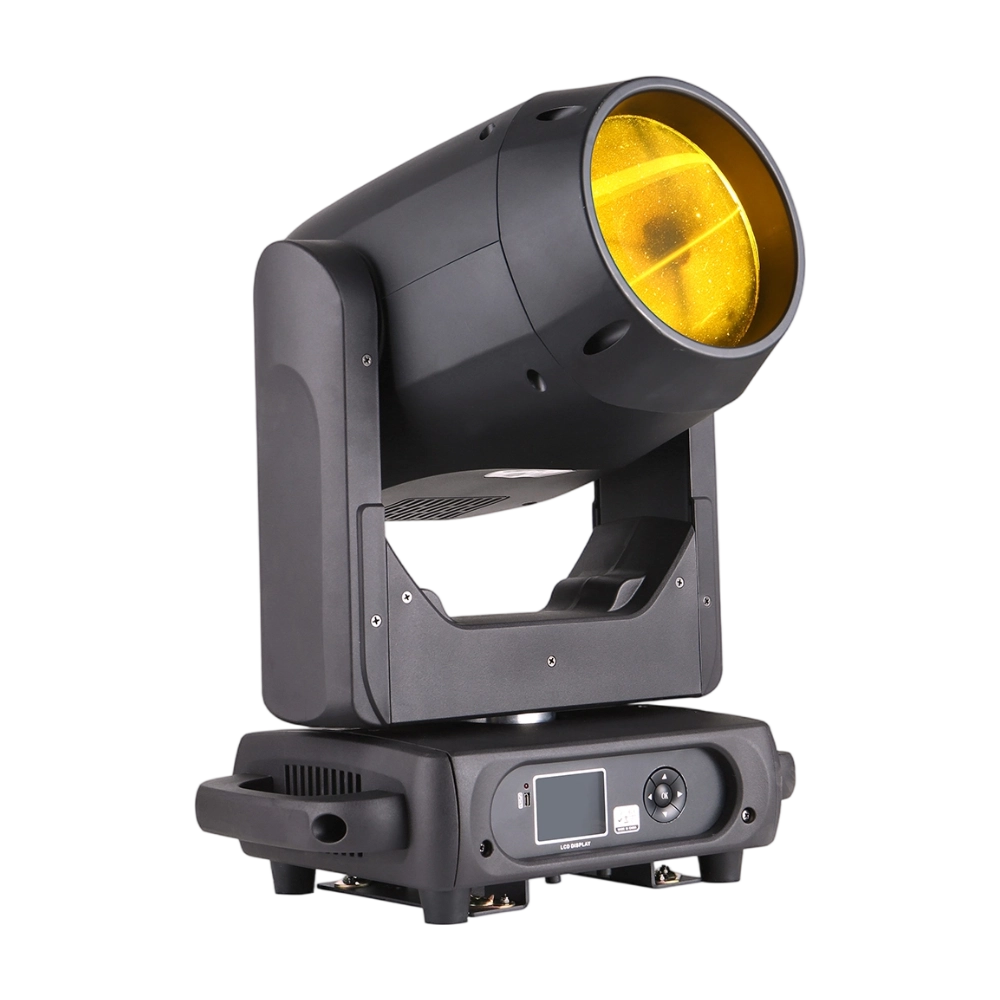
Moving Head Stage Light BEAM 360
BEAM360 is a 400W high-power moving head beam equipped with an OSRAM SIRIUS 311W discharge lamp, delivering a sharp 1.8° beam with super brightness. It features 14 colors + open, 12 fixed metal gobos + open, and dual prisms (8-facet circular + 8+16 multi-facet combination) for dynamic aerial effects. With 540° pan / 270° tilt, 16-bit movement, and linear frost and focus, BEAM360 ensures precision and versatility. Compact yet powerful, it rivals traditional 575W moving heads, making it ideal for concerts, clubs, and large-scale stage productions.
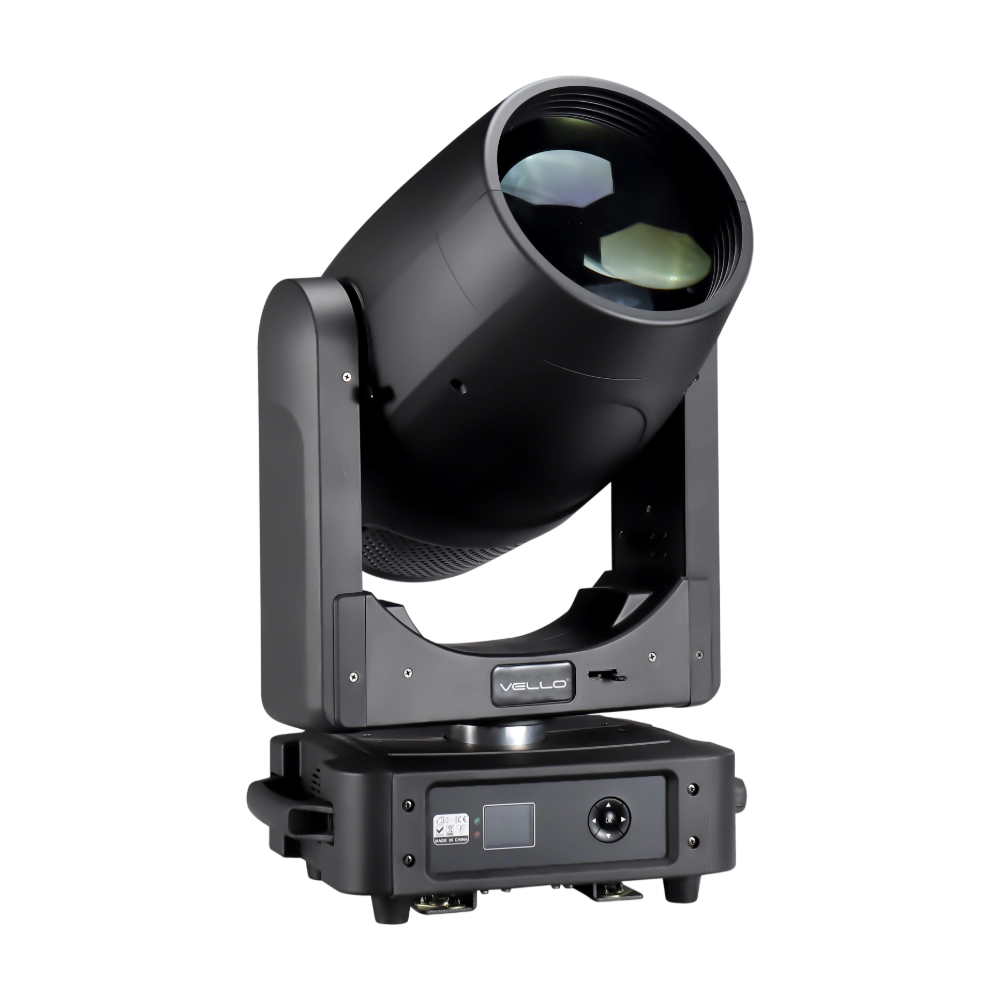
Moving Head Light BEAM 450
The BSW450 is a high-performance moving head fixture equipped with an original Osram 420W bulb, delivering exceptional brightness, precision, and versatility. Designed for professional stage applications, it seamlessly combines beam, spot, and wash functions in one compact unit, making it a powerful all-in-one lighting solution.
Over 20 Years of Innovation in Stage & Studio Lighting
© 2026 VELLO. All Rights Reserved. 粤ICP备20023734号
Join our socials
VELLO
Whatsapp: +8613902276704
Vello Lighting
VelloLights