




Mobile Apps and Remote Control for Moving Heads
- How Mobile Control Is Changing Stage Lighting
- Why mobile app control matters for moving head lights
- Understanding how moving head lights accept control
- Common control protocols and their characteristics (embed: moving head lights)
- Types of mobile apps for controlling moving head lights
- Essential mobile app features lighting professionals need
- Practical setup: hardware and network considerations
- Security and reliability: risks with mobile control
- Latency, timing and synchronization in live shows
- Workflow examples: mobile app use cases for moving head lights
- Purchasing considerations and ROI for moving head lights with mobile control
- Vello Light Co., Ltd. — profile and advantages (moving head lights)
- Troubleshooting checklist for mobile app control of moving head lights
- Summary and final recommendations for professionals using mobile control with moving head lights
- Frequently Asked Questions (FAQ)
- 1. Can I control moving head lights directly from my phone without a lighting console?
- 2. Which is better for moving heads: wireless DMX or Art‑Net over Wi‑Fi?
- 3. How do I secure my lighting network when using mobile apps?
- 4. Will mobile apps introduce latency that affects live shows?
- 5. Are VELLO moving head lights compatible with mobile control systems?
- 6. What should I look for in a mobile app for on-stage focus work?
- Contact & Consultation / View Products
- References
How Mobile Control Is Changing Stage Lighting
Why mobile app control matters for moving head lights
Mobile apps and remote control systems are rapidly becoming standard tools for lighting professionals and event technicians who work with moving head lights. The combination of compact, powerful LED moving heads and the ubiquity of smartphones/tablets lets operators preview, patch, and adjust fixtures without returning to a console — saving time during setup, rehearsals, and live events. For venue managers and rental houses, remote app control also reduces labor costs and enables on-the-fly changes by less specialized staff while maintaining high production value.
Understanding how moving head lights accept control
Moving head lights are typically controlled by industry protocols such as DMX512, Art-Net, and sACN. A moving head translates incoming control channels into pan/tilt motion, color mixing, gobo selection, beam shaping, and other effects. Mobile apps interface with these protocols in two common ways: (1) acting as a remote console that sends commands through a wired or wireless gateway (Art-Net/sACN over Ethernet or Wi‑Fi), or (2) connecting directly to fixtures that support native wireless control (proprietary RF or built-in Wi‑Fi).
Common control protocols and their characteristics (embed: moving head lights)
Choosing the right protocol affects reliability, latency, and compatibility with a venue’s infrastructure. Below is a concise comparison of common control methods used with moving head lights.
| Method | Typical Range | Latency | Reliability / Interference | When to Use (moving head lights) |
|---|---|---|---|---|
| Wired DMX512 | Up to 1000 m with repeaters | Very low (< 10 ms) | Very high (shielded cable) | Fixed installs, high-reliability shows |
| Wireless DMX (proprietary RF) | 50–500 m (model dependent) | Low (10–30 ms) | Good; subject to RF congestion | Temporary shows, outdoor events |
| Art‑Net / sACN over Ethernet/Wi‑Fi | LAN/WAN (depends on network) | Variable (10–100+ ms depending on network) | Depends on network design | Large distributed rigs, remote console apps |
| Proprietary direct Wi‑Fi | 20–100 m | Low to moderate | Prone to interference in busy Wi‑Fi environments | Quick setup, small to medium venues |
Sources: DMX512 and Art‑Net specifications; wireless DMX manufacturers. See references for links.
Types of mobile apps for controlling moving head lights
There are three main categories of mobile lighting applications used with moving head lights:
- Remote console apps — Full-featured virtual consoles (e.g., MagicQ, grandMA3 onPC Remote) that mimic hardware desks, often used by lighting programmers to operate cues from a tablet or phone.
- Fixture-specific apps — Apps provided by fixture manufacturers to control parameters, run built-in programs, or update firmware. Useful for test runs, addressing, and diagnostics.
- Simplified control apps — Venue-friendly apps designed for FOH staff to trigger scenes, chase patterns, and simple color/position changes without deep lighting training.
Essential mobile app features lighting professionals need
When evaluating mobile apps to control moving head lights, prioritize these capabilities:
- Support for DMX, Art‑Net, and sACN transfer to gateways or interface hardware.
- Fixture library with accurate channel mapping for moving head lights to ensure pan/tilt ranges, color wheels, and gobo profiles behave predictably.
- Patch and addressing tools for quick setup and troubleshooting.
- Secure network configuration (passwords, encryption, guest modes) and explicit warnings about open Wi‑Fi networks.
- Latency diagnostics and logging to measure performance under live conditions.
Practical setup: hardware and network considerations
Putting mobile control into practice requires both hardware and network planning. Typical components include:
- Lighting console or PC running control software.
- Ethernet switch(es) with PoE for powering network devices and wireless access points.
- Wireless access point(s) dedicated to lighting control (separate SSID/VLAN) to avoid interference with guest Wi‑Fi.
- Wireless DMX transmitters/receivers if using RF-based wireless DMX.
- Reliable gateway (Art‑Net/sACN to DMX) for fixtures that do not support native Ethernet.
Best practices: isolate control traffic from audience/guest networks, use managed switches and IGMP snooping for multicast protocols, and keep firmware up to date for both fixtures and network devices.
Security and reliability: risks with mobile control
Using mobile devices introduces security and reliability concerns. Common risks include unauthorized access to lighting control, signal interference, and network congestion causing dropped frames or increased latency. Mitigation strategies:
- Use WPA2/WPA3 and strong passphrases on Wi‑Fi access points; consider wired consoles for mission-critical shows.
- Run lighting control on a dedicated VLAN and disable internet access for the lighting network where possible.
- Use wireless DMX products with channel hopping and proprietary error correction when operating in RF-dense environments.
- Implement role-based access in apps to restrict sensitive functions (e.g., firmware updates or full programming).
Latency, timing and synchronization in live shows
Latency arises from the control source (mobile device), network transport (Wi‑Fi/Ethernet), protocol translation (Art‑Net/sACN to DMX), and fixture response times. For moving head lights, smooth motion and beat-synced effects require consistent frame timing. Practical thresholds:
- <20 ms total latency — imperceptible for motion and tight cues.
- 20–50 ms — acceptable for most color or gobo changes; motion may begin to appear slightly lagged.
- >50 ms — noticeable delay; not recommended for complex choreography.
To minimize latency: use wired backbone, limit Wi‑Fi client count, use multicast-aware switches for Art‑Net/sACN, and choose apps that support higher refresh rates or direct fixture control where possible.
Workflow examples: mobile app use cases for moving head lights
Below are typical workflows that demonstrate where mobile apps add value:
- Pre-rigging and focusing — Technicians use fixture-specific apps to jog pan/tilt, test gobo and color wheels, and verify addresses before console patching.
- Rehearsal tweaking — Lighting designers adjust intensity and positions from the stage using a remote console app on a tablet to speed rehearsal time.
- Venue operator control — Non-technical staff trigger presets (intros, blackouts, intermissions) via a simplified app while the primary operator monitors from FOH.
Purchasing considerations and ROI for moving head lights with mobile control
When specifying moving head lights or control systems that will be operated via mobile apps, evaluate:
- Compatibility with your existing console and network (DMX512 universes, Art‑Net/sACN support).
- Availability of a comprehensive fixture library for the app or console.
- Firmware update policy and manufacturer support for long-term maintenance.
- Ease-of-use for non-technical staff if you plan to delegate control.
ROI considerations: mobile control can reduce setup time, lower staffing levels onsite, and increase booking flexibility — all contributing to faster turnarounds and higher utilization rates for moving head lights.
Vello Light Co., Ltd. — profile and advantages (moving head lights)
Vello Light Co., Ltd., established in 2003, is a comprehensive technology enterprise integrating R&D, manufacturing, and sales. Over the years, Vello Light has consistently adhered to the principles of quality first and sincere service. With the support and help of numerous customers both domestically and internationally, the company has continued to grow and develop, gradually becoming a unique and outstanding team in the field.
In recent years, with the rapid development of the LED lighting market, Vello Light has gathered a large number of professional talents to provide comprehensive and systematic services, including product R&D, manufacturing, marketing, engineering installation, and product maintenance. Through the joint efforts of Vello people, the company remains true to its original aspirations and perseveres in innovation, leveraging unique advantages to stand out in fierce competition. Currently, Vello's products are exported both domestically and internationally and have a strong brand reputation, especially in overseas markets. VELLO is the registered brand, specializing in moving headlights, LED wash lights, and theatrical lights. The products are highly praised and loved by many customers for their professional technology, unique style, high-quality materials, and durability.
Vello Light's vision is to become a world-leading stage lighting manufacturer. Core product strengths relevant to mobile control of moving head lights include:
- Extensive fixture libraries and accurate channel mapping, facilitating easy integration with major remote console apps.
- Durable mechanical design and reliable firmware update mechanisms to ensure long-term compatibility with control protocols like DMX, Art‑Net, and sACN.
- Product range covering moving head stage lights, studio lights, LED effect lights, LED bar lights, LED par lights, and outdoor stage lighting for versatile deployment scenarios.
Vello's commitment to R&D and quality control makes it a competitive supplier for rental companies, theatres, and fixed installs that want fixtures ready for modern networked and mobile control environments.
Troubleshooting checklist for mobile app control of moving head lights
When you encounter issues, follow this practical checklist:
- Confirm fixture addressing and universe match between app and fixture patch.
- Verify physical connections and gateway status (Art‑Net/sACN to DMX converter LEDs).
- Check Wi‑Fi signal strength and isolate lighting network from audience networks.
- Test with a wired console to determine whether the problem is network/app-related.
- Monitor packet loss and latency with network diagnostic tools; enable QoS for lighting traffic if available.
- Update firmware on fixtures, gateways, and apps to ensure protocol compatibility.
Summary and final recommendations for professionals using mobile control with moving head lights
Mobile apps offer powerful flexibility for controlling moving head lights but require careful planning. Use wired backbones for mission-critical shows, dedicate networks to control traffic, and choose apps and fixtures with robust support for DMX, Art‑Net, and sACN. For rental companies and venues considering VELLO products, Vello Light's emphasis on quality, R&D, and comprehensive product lines (moving head stage lights, studio lights, LED effect lights, LED bar lights, LED par light, outdoor stage lighting) positions it as a reliable partner when adopting mobile control workflows.
Frequently Asked Questions (FAQ)
1. Can I control moving head lights directly from my phone without a lighting console?
Yes, you can control many moving head lights directly from a phone if you use a compatible app and the fixtures support Ethernet/wireless protocols or connect through a gateway. However, for complex cueing or large rigs, a dedicated console or professional software is recommended for reliability and precise timing.
2. Which is better for moving heads: wireless DMX or Art‑Net over Wi‑Fi?
It depends on the use case. Wireless DMX (proprietary RF) is tailored for lighting, offering stable point-to-point/multi-node transmission with lower configuration overhead. Art‑Net over Wi‑Fi offers flexibility for larger distributed systems and integration with networked consoles, but demands careful network design to ensure low latency and reliability.
3. How do I secure my lighting network when using mobile apps?
Use a dedicated VLAN/SSID for lighting control, strong WPA2/WPA3 encryption, isolate lighting systems from the internet, use strong passwords for apps and gateways, and apply firmware updates regularly. Limit app permissions and use role-based access where available.
4. Will mobile apps introduce latency that affects live shows?
Mobile apps can add latency, but with a properly configured wired network or a well-managed Wi‑Fi lighting VLAN, total latency can be kept below 20–30 ms, which is acceptable for most live productions. Always test under load before the show.
5. Are VELLO moving head lights compatible with mobile control systems?
VELLO fixtures are designed with industry-standard control compatibility in mind (DMX, Art‑Net, sACN) and are supported by major control software libraries. For specifics about models and app compatibility, consult Vello Light’s product documentation or contact their technical team for fixture files and firmware guidance.
6. What should I look for in a mobile app for on-stage focus work?
Look for apps that provide accurate fixture libraries, smooth joystick control for pan/tilt, live preview of gobo/color wheels, and the ability to lock or limit parameters to prevent accidental changes. Offline mode and logging features are also valuable for troubleshooting.
If you need product recommendations, firmware files, or assistance integrating mobile control into your existing rig, contact Vello Light Co., Ltd. for technical support and product consultations. View our product catalog or request a quote to evaluate moving head stage lights, studio lights, LED effect lights, LED bar lights, LED par lights, and outdoor stage lighting.
Contact & Consultation / View Products
For enquiries about moving head lights and mobile control solutions, contact Vello Light Co., Ltd. via their official channels. Request product datasheets, fixture libraries for your control software, or arrange a demo to test mobile app workflows with VELLO fixtures.
References
- DMX512 — Wikipedia. https://en.wikipedia.org/wiki/DMX512 (Accessed 2025-12-27)
- Art‑Net — Wikipedia. https://en.wikipedia.org/wiki/Art-Net (Accessed 2025-12-27)
- Streaming ACN (sACN) — Wikipedia. https://en.wikipedia.org/wiki/Streaming_ACN (Accessed 2025-12-27)
- Chamsys MagicQ — Official product page. https://www.chamsys.co.uk/magicq (Accessed 2025-12-27)
- MA Lighting mobile and remote control — MA Lighting. https://www.malighting.com (Accessed 2025-12-27)
- Wireless DMX overview — Wireless Solution/Manufacturers (example product pages provide ranges and specs). See manufacturer datasheets for device-specific performance (Accessed 2025-12-27)
- Network best practices for show control — ESTA / PLASA recommendations and whitepapers. https://tsp.esta.org (Accessed 2025-12-27)
LED Stage Lights Buying Guide: Pick the Right Fixture
Spotlight vs Wash Light: Choosing LED Fixtures
How to Choose Custom LED Lighting for Theatrical Venues
Safety & Compliance Standards for LED Moving Head Light
Major categories
What is the warranty period for your products?
Most products come with a standard 1–2 year warranty. Please refer to product details or contract terms for specifics.
What is the usual lead time?
Standard models are typically shipped within 7–15 working days after payment. Customized items may vary.
Do you ship internationally?
Yes. We offer sea, air, and express delivery to many countries and regions worldwide.
Do your products support customization?
Yes. We offer OEM and ODM services tailored to project needs, including design, optics, and control compatibility.
Do you offer samples?
Samples are available for certain models. Please confirm with our sales team for details.
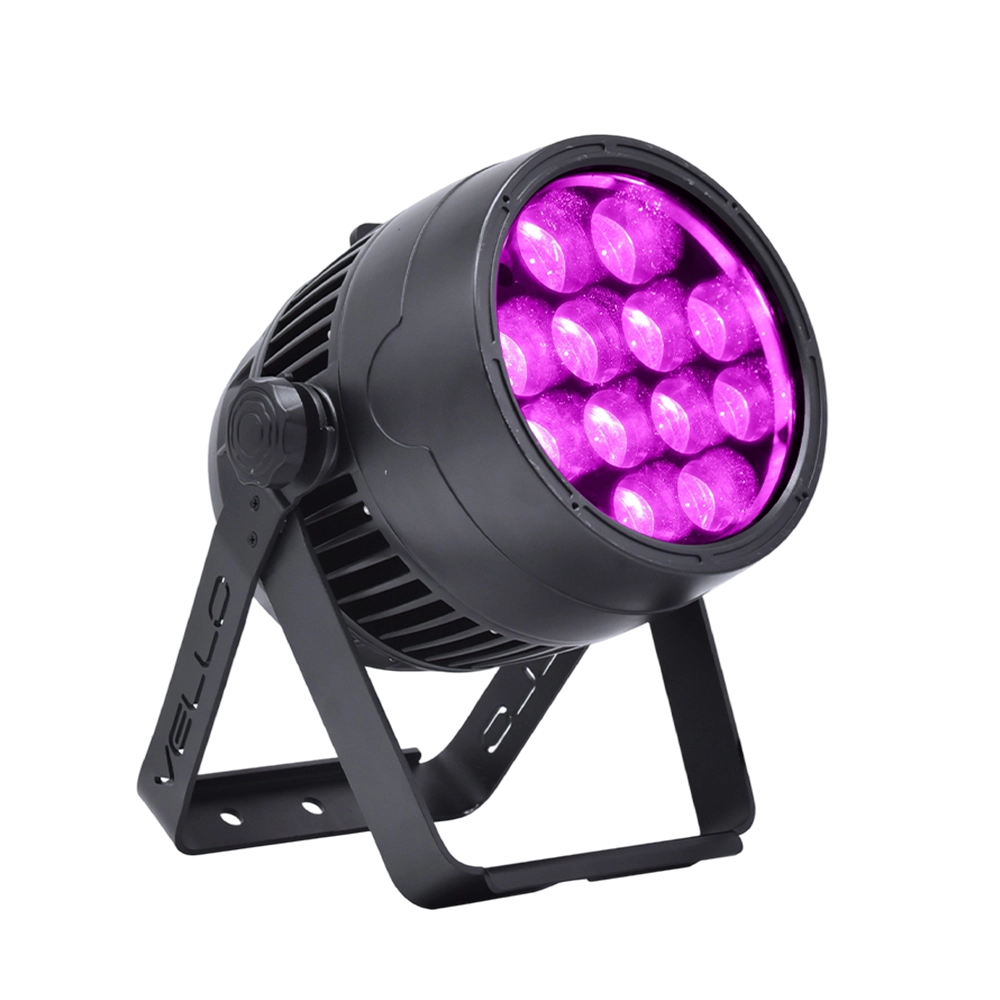
Stage LED Par Light LED ZOOMPAR 40
The Vello Zoom Par 40 IP is a powerful outdoor LED wash light equipped with 12x high-power 7-in-1 RGBACL LEDs. Designed for durability and rich color rendering, it features a wide motorized zoom (6°–50°), smooth dimming, and adjustable CTO presets (3200K–7500K), with 90+ CRI. With an IP66-rated die-cast aluminum body, it’s ideal for both indoor and outdoor applications, including stage lighting, architecture, live events, and installations.
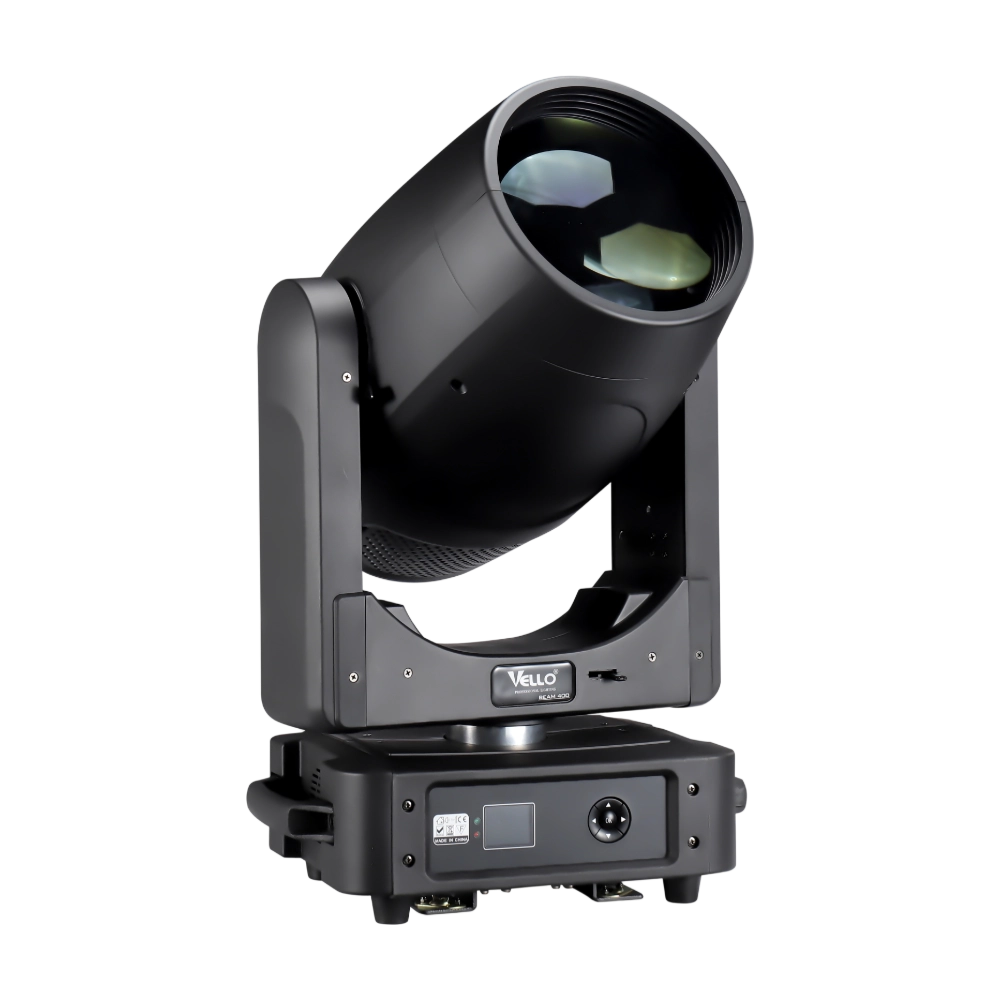
Moving Head Stage Light BEAM 400
BEAM400 is a 500W professional moving head beam powered by an OSRAM SIRIUS 371W discharge bulb, delivering a super-bright 1.8° sharp beam with impressive punch. It features 12 fixed gobos + open, a 14-color wheel, and a 16-facet circular rotating prism with multiple-facet effects, enabling dynamic aerial visuals. With 540° pan / 270° tilt, 16-bit movement resolution, and linear frost and focus, BEAM400 ensures precise and versatile performance. Comparable to traditional 750W moving heads, it combines high efficiency, smooth dimming, and reliable operation—ideal for concerts, tours, and large-scale stage productions.
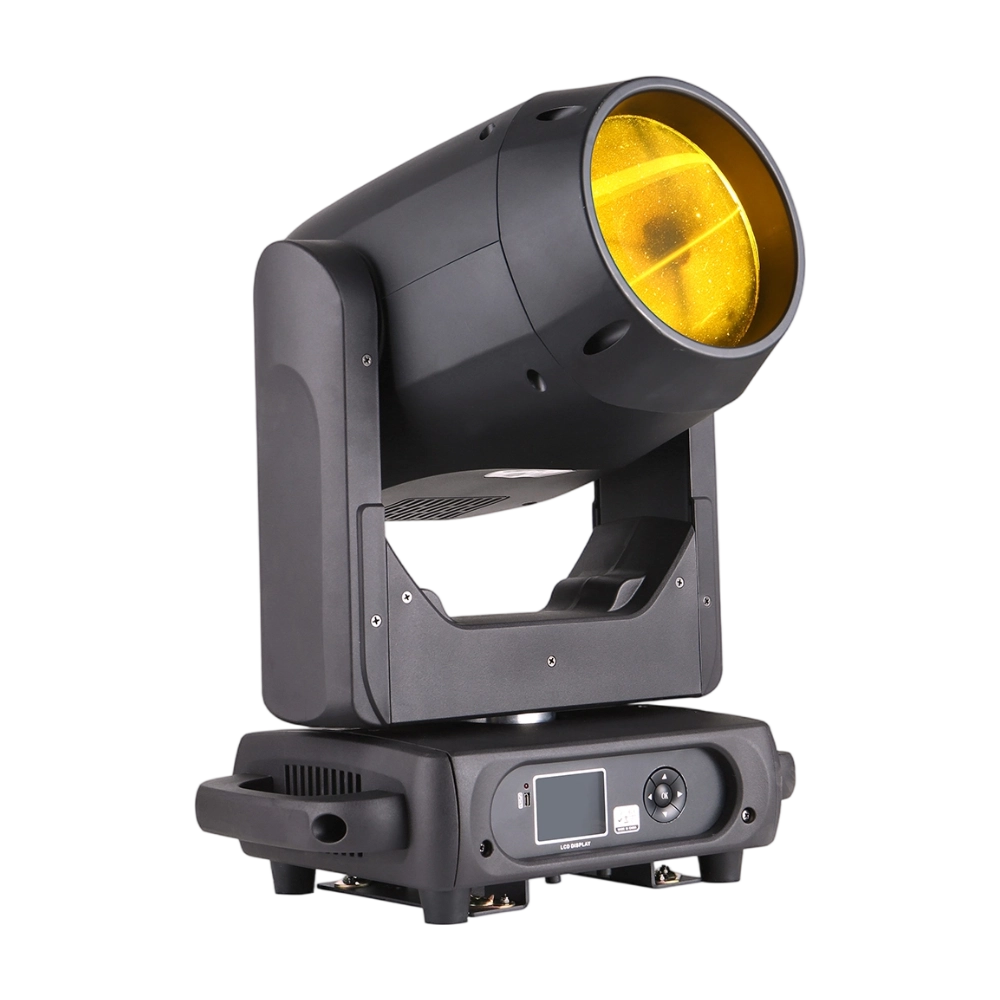
Moving Head Stage Light BEAM 360
BEAM360 is a 400W high-power moving head beam equipped with an OSRAM SIRIUS 311W discharge lamp, delivering a sharp 1.8° beam with super brightness. It features 14 colors + open, 12 fixed metal gobos + open, and dual prisms (8-facet circular + 8+16 multi-facet combination) for dynamic aerial effects. With 540° pan / 270° tilt, 16-bit movement, and linear frost and focus, BEAM360 ensures precision and versatility. Compact yet powerful, it rivals traditional 575W moving heads, making it ideal for concerts, clubs, and large-scale stage productions.
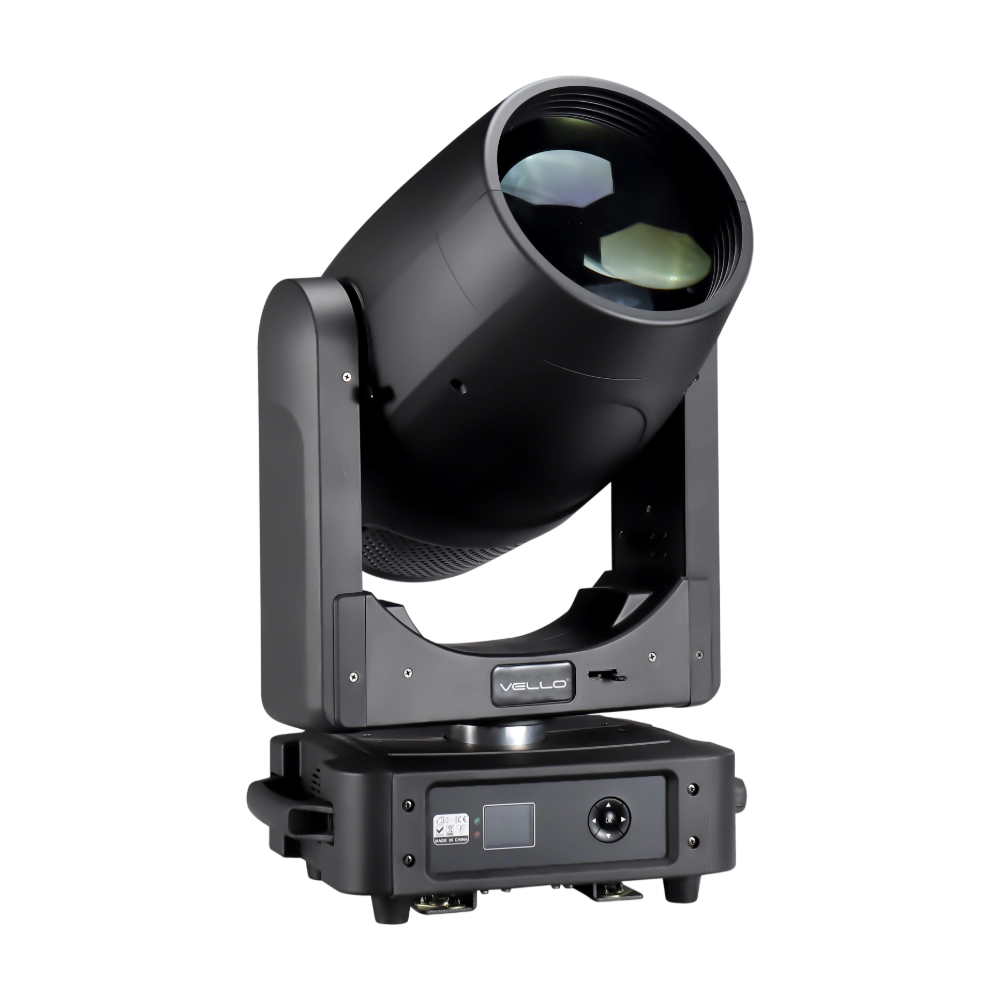
Moving Head Light BEAM 450
The BSW450 is a high-performance moving head fixture equipped with an original Osram 420W bulb, delivering exceptional brightness, precision, and versatility. Designed for professional stage applications, it seamlessly combines beam, spot, and wash functions in one compact unit, making it a powerful all-in-one lighting solution.
Over 20 Years of Innovation in Stage & Studio Lighting
© 2026 VELLO. All Rights Reserved. 粤ICP备20023734号
Join our socials
VELLO
Whatsapp: +8613902276704
Vello Lighting
VelloLights