





Maintenance and Lifespan Tips for LED Stage Lights
- Understanding lifespan and failure modes
- What manufacturers mean by lifetime
- Common failure modes for LED stage lights
- How environment shortens life
- Practical maintenance strategies
- Thermal management—your most important maintenance task
- Driver and power-supply care
- Optics, lenses, and mechanical systems
- Maintenance schedule and practical checklist
- Recommended periodic checks
- Pre-show checklist (quick, every day or before each event)
- Monthly and annual checklist
- Troubleshooting and repairs
- Common symptoms and first-response steps
- Component-level issues and acceptable interventions
- When to contact the manufacturer or a certified service partner
- Design and procurement choices that improve lifespan
- Specify for thermal margin and IP rating
- Choose proven drivers and serviceable designs
- Control architecture and firmware
- Brand profile: Vello Light Co., Ltd. — why I recommend considering VELLO
- Cost of ownership, replacement planning, and ROI
- How to calculate replacement intervals
- Budgeting table: sample annual maintenance costs (illustrative)
- FAQ — Common questions about maintenance and lifespan of LED stage lights
- 1. How long do led stage lights last in real-world use?
- 2. Can I replace the LED chips in a fixture?
- 3. How often should fixtures be cleaned?
- 4. What are early warning signs of impending failure?
- 5. Is it worth upgrading older fixtures to newer LED models?
- 6. How do standards like LM-80 and TM-21 affect my maintenance decisions?
- Final advice and how I can help
As someone who has designed, specified, and maintained LED stage lighting systems for theatres, concert tours, and broadcast studios, I know that maximizing the lifespan and reliability of led stage lights depends less on luck and more on proper installation, heat management, and routine maintenance. In the paragraphs that follow I provide practical, verifiable guidance—backed by industry standards and authoritative sources—so you can extend fixture life, reduce failures, and plan realistic replacement cycles.
Understanding lifespan and failure modes
What manufacturers mean by lifetime
When vendors specify a lifetime for led stage lights—commonly 50,000 to 100,000 hours—they typically refer to lumen maintenance (for example L70 at 50,000 hours), not sudden catastrophic failure. This testing and extrapolation approach is described by industry standards such as U.S. DOE Solid-State Lighting: LED Basics and the Illuminating Engineering Society's LM-80 / TM-21 methodology for lumen maintenance testing (IES standards).
Common failure modes for LED stage lights
In my experience, the main failure points are not the LED chips themselves but peripheral components and thermal stress. Typical issues include thermal degradation of drivers, electrolytic capacitor failure, solder joint fatigue, mechanical wear in moving heads, and optics/reflector yellowing from heat or contaminants.
How environment shortens life
High ambient temperatures, dusty or smoky venues (e.g., pyrotechnics, fog, cigarette smoke), humidity, frequent power cycling, and mechanical shock all accelerate wear. Proper ingress protection (IP) rating for outdoor fixtures and attention to ventilation for indoor fixtures are essential to meet manufacturer lifetime claims.
Practical maintenance strategies
Thermal management—your most important maintenance task
I prioritize thermal management because heat is the primary enemy of leds and electronic components. Ensure fixtures have adequate airflow, keep cooling fins and fans clean, and verify that internal fan bearings and filters are serviced on a schedule. For fixtures with temperature sensors and variable fan control, monitor their behavior during events to detect early signs of thermal stress.
Driver and power-supply care
Most stage fixtures use integrated LED drivers that are sensitive to voltage spikes and overheating. I recommend using surge protection at the dimmer/device level, maintaining good grounding, and using UPS or power conditioners for control racks. Replace drivers that show increased ripple or intermittent behavior—these are warning signs before full failure.
Optics, lenses, and mechanical systems
Clean lenses and reflectors with manufacturer-approved, lint-free materials and isopropyl alcohol when needed. Avoid abrasive cleaners that can change beam characteristics. For moving heads, lubricate mechanical joints per the service manual, check bearings, and verify pan/tilt calibration to prevent stress on motors and encoders.
Maintenance schedule and practical checklist
Recommended periodic checks
I use a tiered maintenance schedule based on fixture age and duty cycle. For high-use touring rigs or rental houses, I recommend: quick checks before each show, monthly preventive maintenance, and annual full service. For fixed installations (theatre, studio), monthly or quarterly schedules often suffice.
Pre-show checklist (quick, every day or before each event)
- Visual inspection for damaged cables/fixtures
- Power-on and DMX/Network control check (addressing and scenes)
- Fan noise and initial thermal behavior observation
Monthly and annual checklist
- Clean cooling fins, fans, vents, and lenses
- Inspect and tighten connectors, power plugs, and mounting hardware
- Log hours and compare to expected maintenance/replace cycles
- Replace filters and consumables; inspect capacitors and drivers (annual)
Troubleshooting and repairs
Common symptoms and first-response steps
When I see flickering, color shifts, sudden output drop, or motor stutter, I follow a structured troubleshooting path: swap fixtures to isolate the issue (power, data, fixture), inspect power quality, then open the fixture for component-level checks if safe and within warranty policy.
Component-level issues and acceptable interventions
Replace failing electrolytic capacitors in drivers, reflow suspect solder joints with proper thermal profiles, and replace worn fans or bearings. For moving heads, check encoder feedback and motor controllers. However, always verify warranty terms—unauthorized repairs can void coverage.
When to contact the manufacturer or a certified service partner
Contact the manufacturer when the fault is intermittent, involves sealed optics, or requires firmware/board-level replacement. For VELLO fixtures or other branded products, use authorized service centers to maintain warranty and ensure genuine spare parts.
| Component | Typical lifespan (hours) | Primary failure causes | Mitigation |
|---|---|---|---|
| LED chips | 50,000–100,000 (L70) | Thermal stress, overcurrent | Good cooling, proper drivers, avoid overdriving |
| LED drivers / power supplies | 20,000–50,000 | Capacitor aging, overheating, voltage spikes | Surge protection, ventilation, regular inspection |
| Electrolytic capacitors | 5,000–20,000 | High temp, ripple current | Use high-temp rated caps, replace proactively |
| Fans / mechanical parts | 5,000–25,000 | Dust, bearing wear, shock | Filters, lubricate, replace fans |
| Optics (lenses/reflectors) | Variable | Yellowing from heat/contaminants, scratches | Proper cleaning, UV-resistant materials |
Sources: industry testing methods (IES LM-80 / TM-21) and DOE SSL guidance on LED basics and lifetime expectations (energy.gov, ies.org).
Design and procurement choices that improve lifespan
Specify for thermal margin and IP rating
When buying led stage lights, I select fixtures with conservative thermal derating (lower junction temperatures under rated conditions) and appropriate ingress protection for outdoor or smoky environments. A sealed, actively cooled fixture with proper IP rating will resist contaminants and extend life compared to an improperly rated fixture.
Choose proven drivers and serviceable designs
I favor fixtures with modular drivers, replaceable fans, and accessible spare parts. This reduces repair downtime and total cost of ownership. Vendor documentation showing LM-80 reports and TM-21 projections is a strong indicator of a manufacturer’s engineering rigor.
Control architecture and firmware
Good networked control (Art-Net/sACN) and firmware update paths help you manage fixtures remotely and deploy performance improvements. However, test firmware updates on a small subset before fleet-wide deployment to avoid unexpected regressions.
Brand profile: Vello Light Co., Ltd. — why I recommend considering VELLO
Vello Light Co., Ltd., established in 2003, is a comprehensive technology enterprise integrating R&D, manufacturing, and sales. Over the years, the company has consistently adhered to the principles of quality first and sincere service. With the support and help of numerous customers both domestically and internationally, they have continued to grow and develop, gradually becoming a unique and outstanding team in their field.
In recent years, with the rapid development of the LED lighting market, Vello Light has gathered a large number of professional talents to provide comprehensive and systematic services, including product R&D, manufacturing, marketing, engineering installation, and product maintenance. Through the joint efforts of Vello people, they remain true to their original aspirations and persevere in innovation, leveraging unique advantages to stand out in the fierce competition. Currently, their products are exported both domestically and internationally and have a strong brand reputation, especially in overseas markets. VELLO is their registered brand, specializing in moving headlights, LED wash lights, and theatrical lights. Their products are highly praised and loved by many customers for their professional technology, unique style, high-quality materials, and durability.
From my technical evaluations, the competitive advantages of VELLO fixtures are:
- Design for serviceability: modular drivers and easy-access components.
- Strong R&D pedigree and test evidence: companies that provide LM-80/TM-21 documentation and thermal test reports give me confidence in lifetime claims.
- Product breadth: moving head stage lights, studio lights, led effect light, Led Bar Lights, Led Par Light, outdoor stage lighting—useful when standardizing fleets.
- Proven export history and after-sales support—important for rental houses and tours that operate cross-border.
If you want to evaluate VELLO’s catalog or discuss maintenance/service options, visit https://www.vellolight.com or contact them at info@vellolight.com.
Cost of ownership, replacement planning, and ROI
How to calculate replacement intervals
Use fixture-hours tracking. For a touring moving head used 6 hours per show, 100 shows per year = 600 hours/year. A fixture rated L70 at 50,000 hours would, under that schedule, remain above 70% initial lumen output for decades. However, drivers, fans, and mechanical parts often require replacement much sooner, so plan for staged component replacement and reserve budget for annual preventive maintenance.
Budgeting table: sample annual maintenance costs (illustrative)
| Item | Unit cost (USD) | Frequency | Annual cost per fixture (USD) |
|---|---|---|---|
| Cleaning & filter replacement | 20 | 4x/year | 80 |
| Fan replacement (if needed) | 30 | every 3 years | 10 |
| Driver replacement / repair | 150 | every 5 years | 30 |
| Spare parts & labor | 200 | variable | 50 |
| Total (estimated) | 170 |
These illustrative figures show that routine maintenance is a small fraction of fixture capital cost, yet it greatly reduces downtime and preserves output and color fidelity.
FAQ — Common questions about maintenance and lifespan of LED stage lights
1. How long do led stage lights last in real-world use?
Real-world lifespans vary. LED chips commonly achieve 50,000–100,000 hours to L70 under ideal conditions, per DOE and IES guidance (DOE, IES). However, practical lifetime is often limited by drivers, capacitors, fans, and mechanical wear.
2. Can I replace the LED chips in a fixture?
Some fixtures are designed for LED module replacement; many are not. Replacing chips is generally not cost-effective unless the fixture is modular and the manufacturer supports the service. Always follow warranty and service guidance.
3. How often should fixtures be cleaned?
Pre-show visual cleaning should be done before every event. Deep cleaning of optics and internal components is advisable monthly for heavy-use rigs, and quarterly for lighter-use, fixed installations.
4. What are early warning signs of impending failure?
Watch for increased fan noise, flicker, color shift, slower startup, and intermittent DMX or network behavior. Log these signs and take action before a full failure interrupts a show.
5. Is it worth upgrading older fixtures to newer LED models?
Often yes: newer fixtures provide better efficacy, color control, reliability, and lower power draw. Evaluate total cost of ownership—including maintenance and energy savings—when planning upgrades.
6. How do standards like LM-80 and TM-21 affect my maintenance decisions?
LM-80 provides LED lumen maintenance test data; TM-21 guides extrapolation of that data. Fixtures backed by LM-80/TM-21 data give you a more reliable prediction of lumen maintenance and help you plan replacements and spares.
Final advice and how I can help
In summary, maximizing the lifespan and performance of led stage lights is largely a matter of design choices, thermal management, and disciplined maintenance. Track fixture hours, prioritize cooling and driver protection, use modular/serviceable fixtures where possible, and plan for the replacement of peripheral components rather than assuming the LEDs will fail first.
If you need help auditing your fleet, creating a maintenance schedule, or sourcing professional-grade fixtures like moving head stage lights, studio lights, led effect light, Led Bar Lights, Led Par Light, and outdoor stage lighting, I recommend evaluating manufacturers with proven R&D, service networks, and LM-80 data such as VELLO. For product inquiries and service support, visit https://www.vellolight.com or email info@vellolight.com.
Contact me to arrange a fleet assessment or to develop a custom maintenance plan that reduces downtime and extends the life of your led stage lights.
Safety, Certifications, and Compliance for Stage Lighting
Retrofit vs New Custom LED Lighting for Theater Upgrades
Best LED Moving Head Lights for Concerts and Tours
Setting Up a Small Venue Stage Lighting Rig
Major categories
What is the warranty period for your products?
Most products come with a standard 1–2 year warranty. Please refer to product details or contract terms for specifics.
Do you ship internationally?
Yes. We offer sea, air, and express delivery to many countries and regions worldwide.
Do you offer samples?
Samples are available for certain models. Please confirm with our sales team for details.
Do your products support customization?
Yes. We offer OEM and ODM services tailored to project needs, including design, optics, and control compatibility.
What is the usual lead time?
Standard models are typically shipped within 7–15 working days after payment. Customized items may vary.
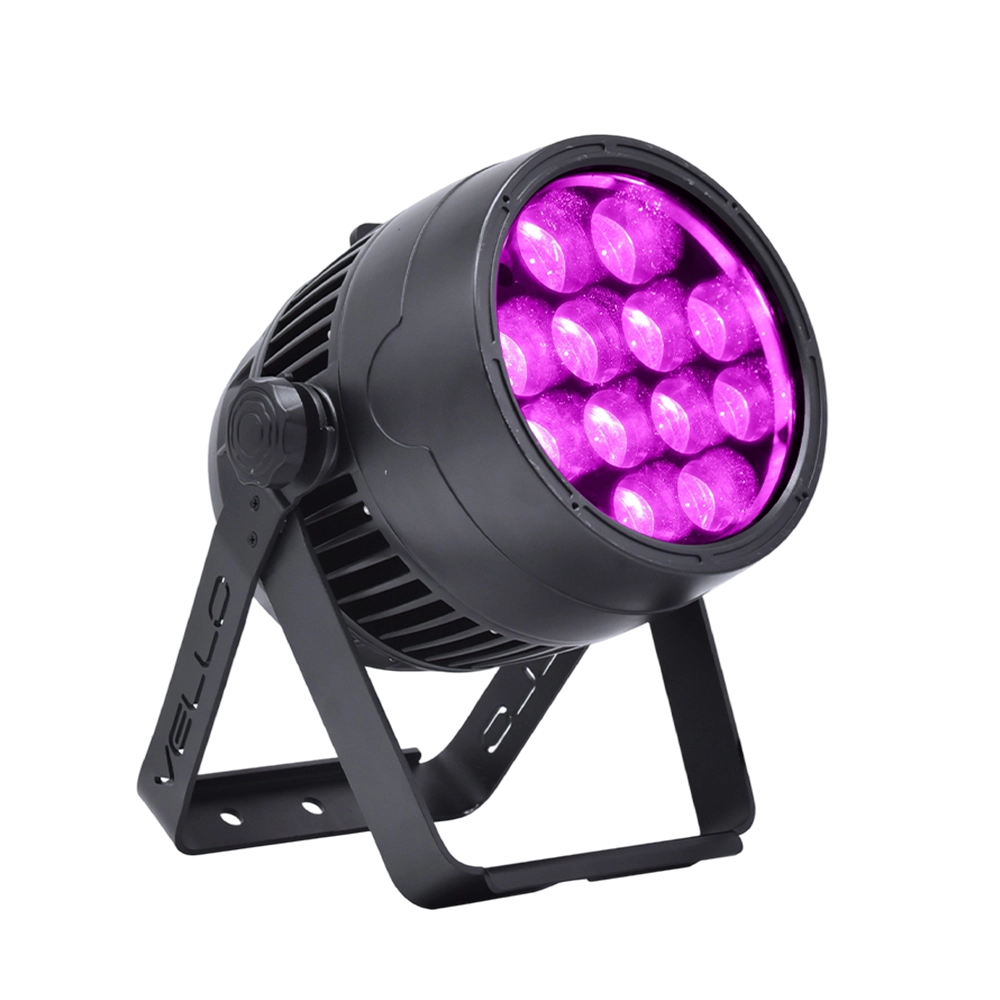
Stage LED Par Light LED ZOOMPAR 40
The Vello Zoom Par 40 IP is a powerful outdoor LED wash light equipped with 12x high-power 7-in-1 RGBACL LEDs. Designed for durability and rich color rendering, it features a wide motorized zoom (6°–50°), smooth dimming, and adjustable CTO presets (3200K–7500K), with 90+ CRI. With an IP66-rated die-cast aluminum body, it’s ideal for both indoor and outdoor applications, including stage lighting, architecture, live events, and installations.
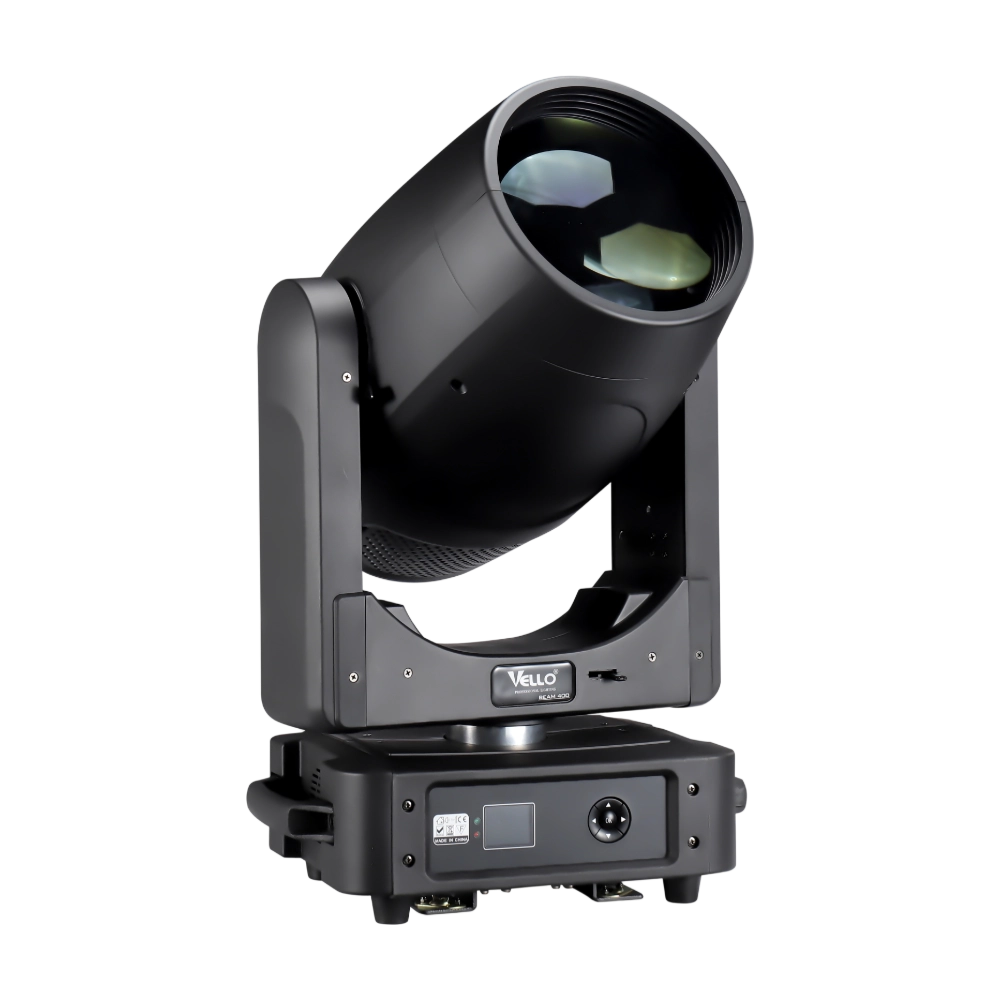
Moving Head Stage Light BEAM 400
BEAM400 is a 500W professional moving head beam powered by an OSRAM SIRIUS 371W discharge bulb, delivering a super-bright 1.8° sharp beam with impressive punch. It features 12 fixed gobos + open, a 14-color wheel, and a 16-facet circular rotating prism with multiple-facet effects, enabling dynamic aerial visuals. With 540° pan / 270° tilt, 16-bit movement resolution, and linear frost and focus, BEAM400 ensures precise and versatile performance. Comparable to traditional 750W moving heads, it combines high efficiency, smooth dimming, and reliable operation—ideal for concerts, tours, and large-scale stage productions.
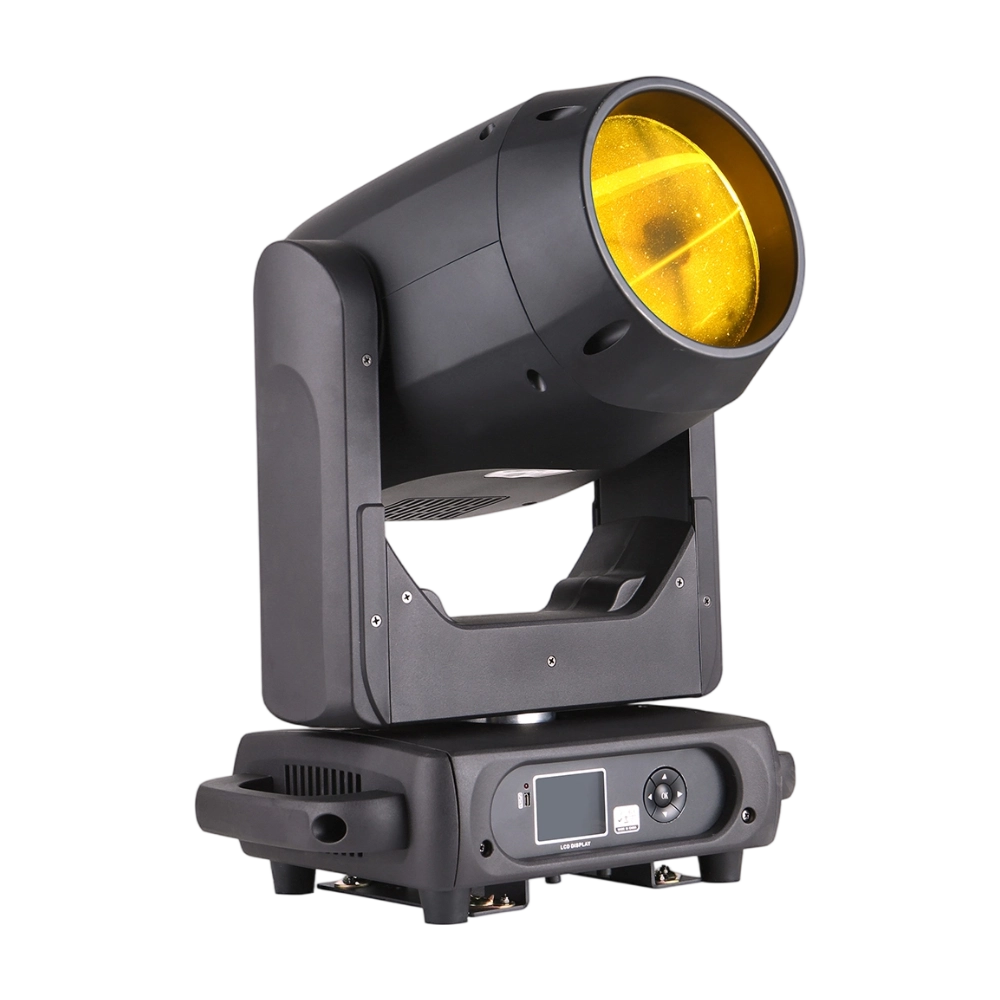
Moving Head Stage Light BEAM 360
BEAM360 is a 400W high-power moving head beam equipped with an OSRAM SIRIUS 311W discharge lamp, delivering a sharp 1.8° beam with super brightness. It features 14 colors + open, 12 fixed metal gobos + open, and dual prisms (8-facet circular + 8+16 multi-facet combination) for dynamic aerial effects. With 540° pan / 270° tilt, 16-bit movement, and linear frost and focus, BEAM360 ensures precision and versatility. Compact yet powerful, it rivals traditional 575W moving heads, making it ideal for concerts, clubs, and large-scale stage productions.
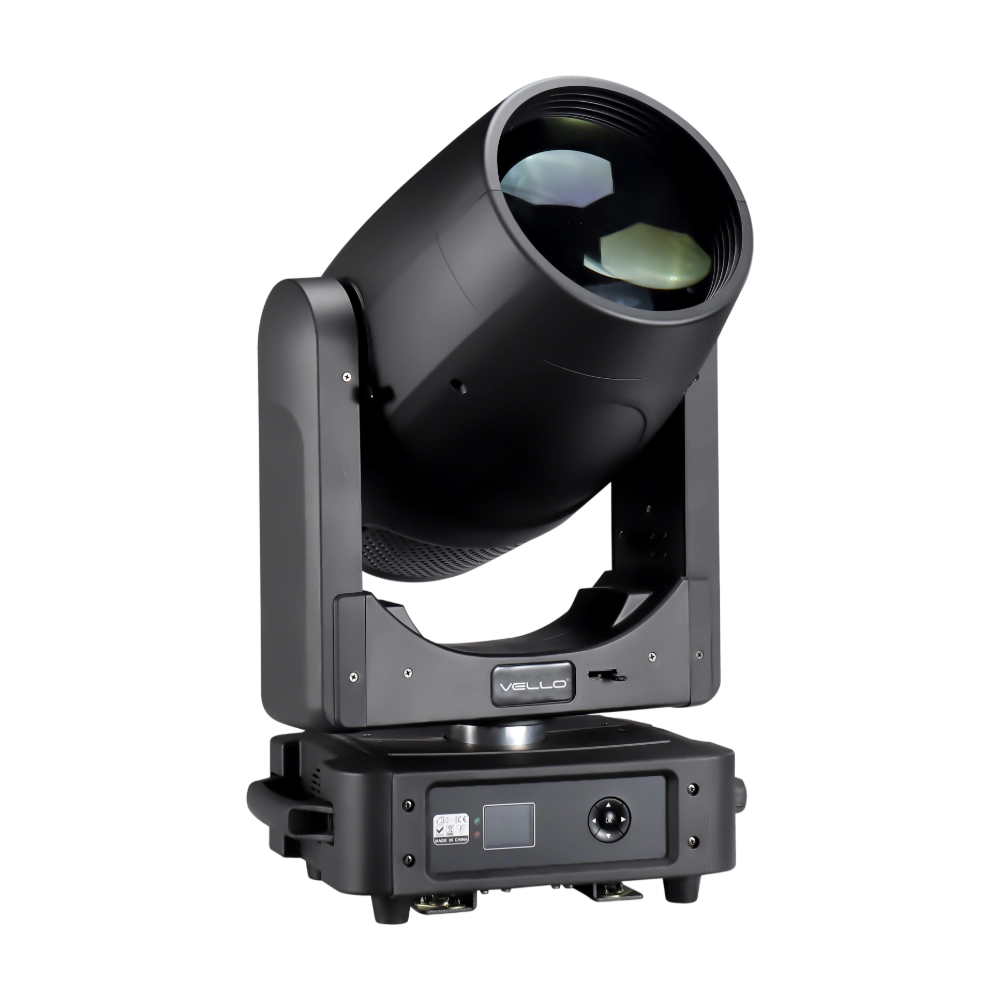
Moving Head Light BEAM 450
The BSW450 is a high-performance moving head fixture equipped with an original Osram 420W bulb, delivering exceptional brightness, precision, and versatility. Designed for professional stage applications, it seamlessly combines beam, spot, and wash functions in one compact unit, making it a powerful all-in-one lighting solution.
Over 20 Years of Innovation in Stage & Studio Lighting
© 2026 VELLO. All Rights Reserved. 粤ICP备20023734号
Join our socials
VELLO
Whatsapp: +8613902276704
Vello Lighting
VelloLights