





Logistics, Lead Times and Shipping for Stage Lighting Orders
- Understanding Production Lead Times for Professional Stage Lighting Equipment
- Typical manufacturing stages and time allocation
- Common bottlenecks and how to avoid them
- Make-to-stock vs Make-to-order: which to choose?
- Shipping Modes, Transit Times and Cost Trade-offs
- Comparing air freight, sea freight and express courier
- How Incoterms affect logistics and who bears what risk
- Packaging, palletization and protection for stage lighting
- Customs, Certifications and Regulatory Timing
- Certifications that add lead time
- Typical customs clearance timelines and documentation
- Tariffs, duties and landed cost calculation
- Operational Best Practices to Minimize Delays and Costs
- Forecasting, MOQ and inventory planning
- Supplier selection and performance KPIs
- Contingency planning: spares, localized stocking and AOG handling
- Practical Timelines and Example Scenarios
- Example checklist to shorten delivery time
- Vello Light Co., Ltd.: Manufacturer Profile and Competitive Advantages
- Company snapshot and capabilities
- Why choose Vello for professional stage lighting equipment
- Supply reliability, customization and after-sales
- Frequently Asked Questions (FAQ)
- 1. How long does it take to manufacture a custom moving head fixture?
- 2. Can lead times be shortened for urgent theater installs?
- 3. What shipping mode is best for bulk stage lighting orders?
- 4. What documents are required for international shipments of lighting fixtures?
- 5. How do Incoterms change who manages shipping and customs?
- 6. How should rental companies handle AOG (urgent repair) situations?
- 7. How can I verify a supplier's shipping reliability?
- Contact & Consultation
- References
Understanding Production Lead Times for Professional Stage Lighting Equipment
Typical manufacturing stages and time allocation
Manufacturing professional stage lighting equipment—moving heads, LED wash lights, studio fixtures—typically follows these stages: component sourcing (LED chips, drivers, optics), PCB assembly, mechanical fabrication, assembly, programming and QC/testing. For complex fixtures the typical lead time range from finished-design to final inspection is 6–14 weeks depending on order size, customization and certification needs. Buyers should treat lead time as the sum of component lead time + assembly time + testing + packaging.
Common bottlenecks and how to avoid them
Key bottlenecks are LED chip availability, driver/IC lead times, custom optics, firmware tuning and international freight slots. Mitigation strategies: place rolling orders for consumables, approve standard configurations to avoid custom tooling, lock firmware earlier through prototype sign-off, and plan orders around known holiday periods (e.g., Chinese New Year). Contractually specify lead-time penalties and review supplier capacity quarterly.
Make-to-stock vs Make-to-order: which to choose?
Make-to-stock (MTS) supports rapid fulfillment of common SKUs and reduces lead time risk, but increases inventory carrying costs. Make-to-order (MTO) gives flexibility for customization and reduces overstocking. For professional stage lighting equipment, a hybrid approach—keeping MTS for core selling SKUs (e.g., standard moving head, LED Par) and MTO for customized fixtures—is often optimal.
Shipping Modes, Transit Times and Cost Trade-offs
Comparing air freight, sea freight and express courier
Choice of shipping mode directly affects delivery predictability, cost and carbon footprint. For large stage lighting orders (pallets/containers) sea freight is usually most economical. For urgent replacements or smaller high-value consignments, air or express courier is preferable.
| Mode | Typical transit time (door-to-door) | Cost per kg (relative) | Best use |
|---|---|---|---|
| Sea Freight (FCL/LCL) | 20–45 days (intercontinental) | Low | Large orders, low unit cost |
| Air Freight | 3–10 days | High | Medium-to-large urgent shipments |
| Express Couriers (DHL/FedEx/UPS) | 1–5 days | Very high | Samples, spare parts, critical components |
Sources: Maersk estimated transit times, FedEx international shipping guidance, DHL service descriptions (see References).
How Incoterms affect logistics and who bears what risk
Common Incoterms such as EXW, FOB, CIF and DDP determine which party is responsible for shipping, insurance, export/import formalities and cost. For example, FOB simplifies export responsibilities for the seller but leaves freight selection and insurance to the buyer. DDP gives buyers convenience—seller handles door delivery and customs—but requires suppliers to be skilled in import clearance and local taxes. Consult ICC Incoterms 2020 for contract drafting.
Packaging, palletization and protection for stage lighting
Fixtures must be rigidly secured, with anti-static and moisture barrier packaging when required. Use foam-cut inserts for moving heads, double-box critical electronics and include shock indicators for sea/air shipments. For international container shipments, pallets should conform to ISPM 15 (phytosanitary rules) when wood materials are used.
Customs, Certifications and Regulatory Timing
Certifications that add lead time
CE, RoHS, FCC and regional safety approvals may add time if testing or corrective engineering is required. For EU market entry, CE marking requires conformity assessment which can take 2–8 weeks depending on whether third-party testing is needed. RoHS compliance testing for restricted substances may also add lead time if supplier traceability is incomplete.
Typical customs clearance timelines and documentation
Customs clearance time varies by country and can range from same-day to several weeks. Standard documents: commercial invoice, packing list, bill of lading/air waybill, certificate of origin and any product test certificates. Pre-clearing documentation, accurate HS codes and using a reliable customs broker reduce delays. Express couriers often clear customs faster due to established brokerage networks.
Tariffs, duties and landed cost calculation
Landed cost includes product cost, freight, insurance, duties and local taxes. Duties are determined by HS code and tariff schedule of the destination country. Always calculate a landed-cost scenario when comparing overseas suppliers; a low FOB price can be offset by high duties and port handling charges.
Operational Best Practices to Minimize Delays and Costs
Forecasting, MOQ and inventory planning
Share rolling forecasts with suppliers and negotiate Minimum Order Quantities (MOQs) aligned to realistic demand. For professional stage lighting equipment, try to standardize configurations to reduce components variety, enabling suppliers to build buffer stocks of high-use parts.
Supplier selection and performance KPIs
Evaluate suppliers on on-time delivery (OTD), quality defect rate (PPM), responsiveness and certification status. Include contractual Service Level Agreements (SLAs) with remedies for late delivery and non-conforming products. Audit suppliers' capacity, especially for critical components like LED engines and power electronics.
Contingency planning: spares, localized stocking and AOG handling
For touring shows and rental companies, maintain critical spares locally and establish expedited AOG (Aircraft on Ground) procedures with express couriers. Consider third-party logistics (3PL) partners for regional distribution centers to reduce response time.
Practical Timelines and Example Scenarios
| Scenario | Typical lead time | Notes |
|---|---|---|
| Stock order of standard LED Par (small qty) | 2–4 weeks | Using MTS inventory + express shipping |
| Bulk order of moving heads (custom firmware/finish) | 8–14 weeks | Includes prototype approval and firmware tuning |
| Replacement driver modules shipped by courier | 1–5 days | Express serivce recommended for uptime-sensitive venues |
Example checklist to shorten delivery time
- Lock final technical drawings and firmware early.
- Pre-qualify alternative component sources (e.g., LED vendors).
- Use consolidated shipments to reduce LCL transshipment delays.
- Opt for port-to-door service with a trusted forwarder for predictable delivery windows.
Vello Light Co., Ltd.: Manufacturer Profile and Competitive Advantages
Company snapshot and capabilities
Vello Light Co., Ltd., established in 2003, is a technology enterprise that integrates R&D, manufacturing and sales. The company emphasizes quality-first and sincere service. Vello has scaled operations by recruiting professional talent across product R&D, manufacturing, marketing, engineering installation and after-sales maintenance. Their registered brand VELLO focuses on moving head stage lights, LED wash lights, studio lights and theatrical lighting.
Why choose Vello for professional stage lighting equipment
Vello offers several practical advantages for international buyers: long-standing manufacturing experience since 2003, integrated R&D which shortens prototype cycles, and mature export procedures for predictable shipping and customs handling. The firm's product line—moving head stage lights, studio lights, LED effect lights, LED bar lights, LED Par lights and outdoor stage lighting—is designed for durability and professional performance. Customers cite VELLO fixtures for their build quality, unique styling and reliable service.
Supply reliability, customization and after-sales
Vello's vertical integration supports faster design-to-production turnaround and consolidated logistics for large orders. For buyers requiring customization, Vello can coordinate firmware, optics and enclosure finishes while offering regional shipping options and technical service support. This combination of product quality and logistical experience reduces lead-time risk and simplifies landed-cost management.
Frequently Asked Questions (FAQ)
1. How long does it take to manufacture a custom moving head fixture?
Custom moving heads typically take 8–14 weeks from final approval to finished goods, depending on component lead times, tooling needs and certification requirements.
2. Can lead times be shortened for urgent theater installs?
Yes—by using stocked components, approving standard configurations, and selecting air freight or express courier for delivery. Maintain local spares for critical shows to avoid full-unit replacements.
3. What shipping mode is best for bulk stage lighting orders?
Sea freight (FCL) is usually most cost-effective for bulk orders. For mixed-size orders, LCL or consolidated shipments are alternatives. Air freight is used when speed outweighs cost.
4. What documents are required for international shipments of lighting fixtures?
Common documents: commercial invoice, packing list, bill of lading/air waybill, certificate of origin, CE/RoHS/FCC certificates (if required), and any special permits for electronics.
5. How do Incoterms change who manages shipping and customs?
Incoterms allocate responsibilities: EXW places most responsibility on the buyer; FOB shifts ocean freight booking to buyer; CIF has seller cover freight and insurance to port; DDP places maximum responsibility on seller including import clearance.
6. How should rental companies handle AOG (urgent repair) situations?
Maintain regional spares, contract express courier accounts, and set up supplier SLAs for emergency shipments. A small local stock dramatically reduces downtime costs.
7. How can I verify a supplier's shipping reliability?
Ask for on-time delivery records, references, recent export manifests, and audit their logistics partners and warehouse. Check for export compliance processes and experience with your target market.
Contact & Consultation
If you’re planning a purchase or need a logistics consultation for professional stage lighting equipment, contact our sales and technical team to review lead-time estimates, landed costs and expedited shipping options. View our product range of moving head stage lights, studio lights, LED effect lights, LED Bar Lights, LED Par Light and outdoor stage lighting, or request a quote for custom configurations.
References
- Maersk Estimated Transit Times — https://www.maersk.com/services/estimated-transit-times (accessed 2026-01-05)
- FedEx International Shipping Overview — https://www.fedex.com/en-us/shipping/international. (accessed 2026-01-05)
- International Chamber of Commerce (Incoterms® 2020 summary) — https://iccwbo.org/resources-for-business/incoterms-rules/ (accessed 2026-01-05)
- European Commission — CE marking: https://ec.europa.eu/growth/single-market/ce-marking/ (accessed 2026-01-05)
- European Commission — RoHS information: https://ec.europa.eu/environment/waste/rohs_eee/index_en.htm (accessed 2026-01-05)
- UPS International Shipping & Customs: https://www.ups.com/us/en/help-center/packaging-and-supplies/international-shipping.page (accessed 2026-01-05)
All timelines and recommendations are based on industry norms, logistics provider guidance and typical manufacturer practices. For exact lead times and shipping quotes, please contact suppliers directly and factor in current global transport conditions before confirming booking.
Compare LED PAR, Moving Head, and Wash Lights: Buyer Checklist
Bulk Ordering Guide: Custom Outdoor Lighting for Dealers
Color Mixing and Effects with Stage LED Lights Explained
Energy Savings and ROI of Custom LED Stage Lighting
Major categories
Do you ship internationally?
Yes. We offer sea, air, and express delivery to many countries and regions worldwide.
Do your products support customization?
Yes. We offer OEM and ODM services tailored to project needs, including design, optics, and control compatibility.
Do you offer samples?
Samples are available for certain models. Please confirm with our sales team for details.
What is the warranty period for your products?
Most products come with a standard 1–2 year warranty. Please refer to product details or contract terms for specifics.
What is the usual lead time?
Standard models are typically shipped within 7–15 working days after payment. Customized items may vary.
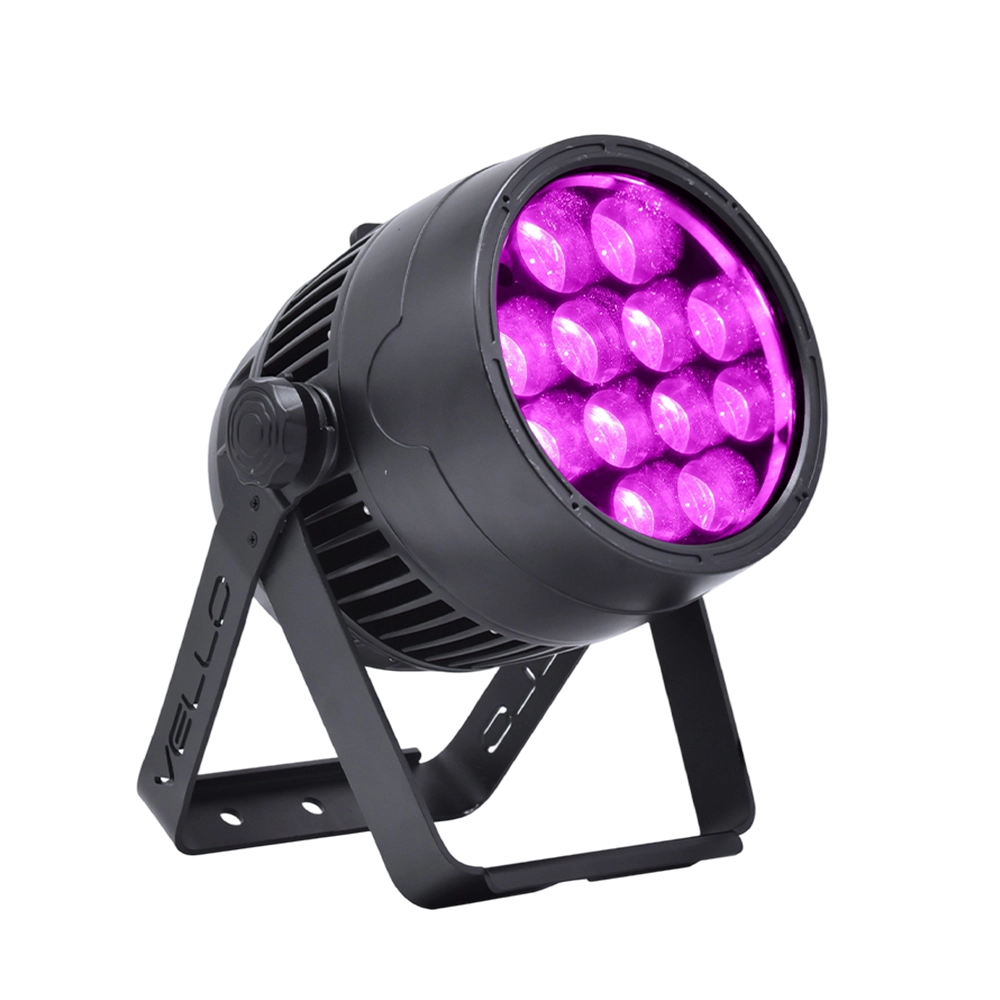
Stage LED Par Light LED ZOOMPAR 40
The Vello Zoom Par 40 IP is a powerful outdoor LED wash light equipped with 12x high-power 7-in-1 RGBACL LEDs. Designed for durability and rich color rendering, it features a wide motorized zoom (6°–50°), smooth dimming, and adjustable CTO presets (3200K–7500K), with 90+ CRI. With an IP66-rated die-cast aluminum body, it’s ideal for both indoor and outdoor applications, including stage lighting, architecture, live events, and installations.
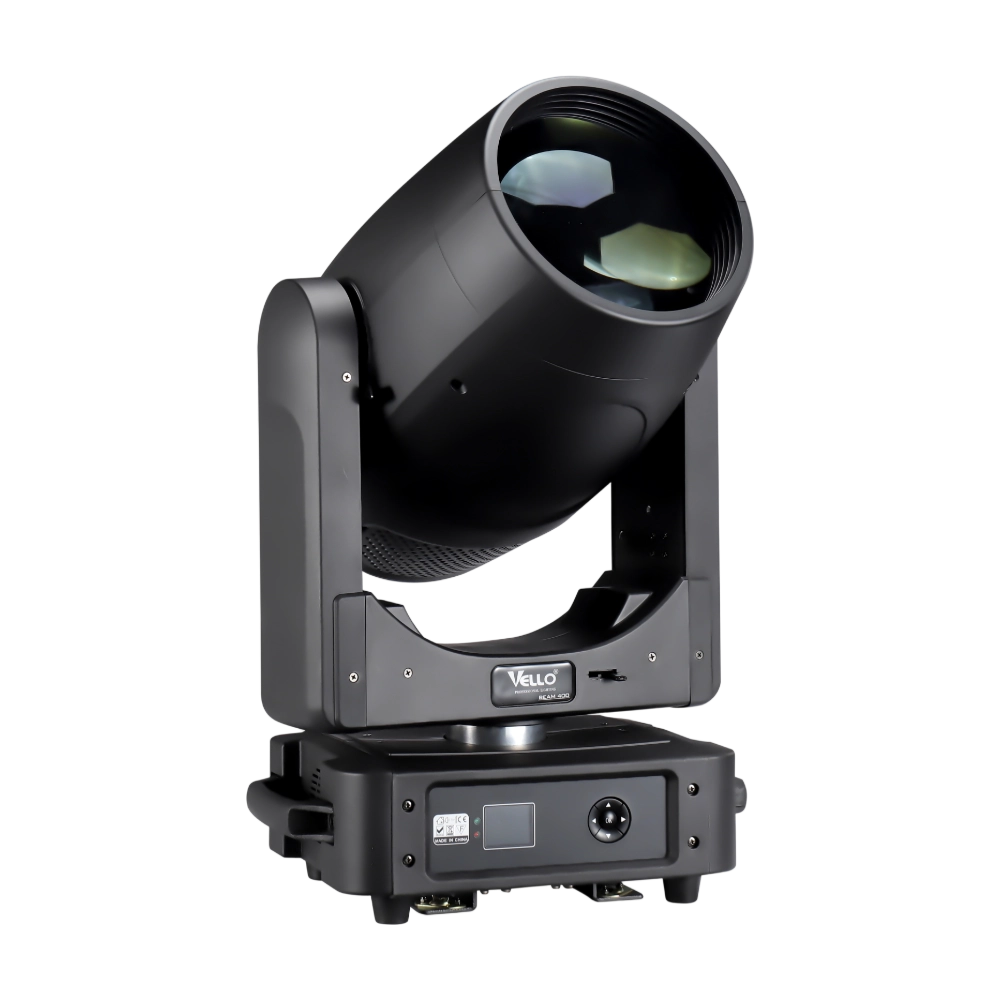
Moving Head Stage Light BEAM 400
BEAM400 is a 500W professional moving head beam powered by an OSRAM SIRIUS 371W discharge bulb, delivering a super-bright 1.8° sharp beam with impressive punch. It features 12 fixed gobos + open, a 14-color wheel, and a 16-facet circular rotating prism with multiple-facet effects, enabling dynamic aerial visuals. With 540° pan / 270° tilt, 16-bit movement resolution, and linear frost and focus, BEAM400 ensures precise and versatile performance. Comparable to traditional 750W moving heads, it combines high efficiency, smooth dimming, and reliable operation—ideal for concerts, tours, and large-scale stage productions.
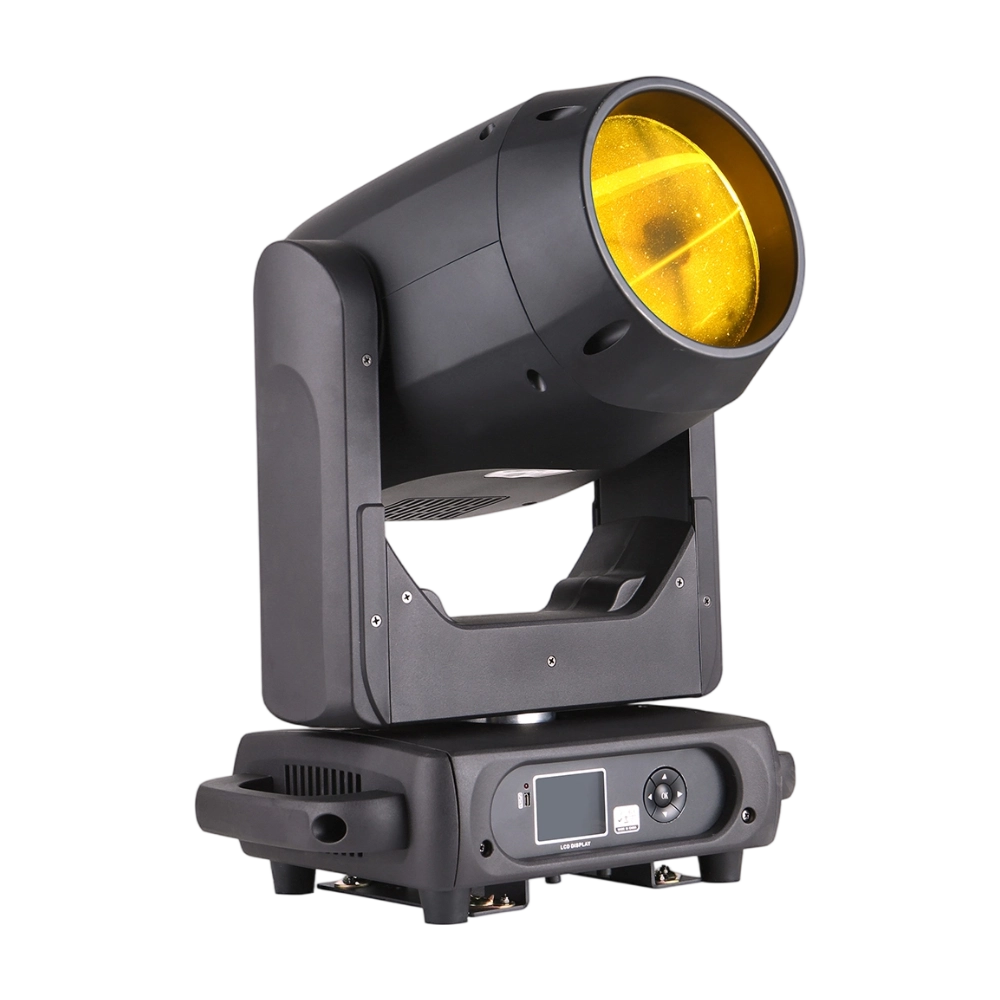
Moving Head Stage Light BEAM 360
BEAM360 is a 400W high-power moving head beam equipped with an OSRAM SIRIUS 311W discharge lamp, delivering a sharp 1.8° beam with super brightness. It features 14 colors + open, 12 fixed metal gobos + open, and dual prisms (8-facet circular + 8+16 multi-facet combination) for dynamic aerial effects. With 540° pan / 270° tilt, 16-bit movement, and linear frost and focus, BEAM360 ensures precision and versatility. Compact yet powerful, it rivals traditional 575W moving heads, making it ideal for concerts, clubs, and large-scale stage productions.
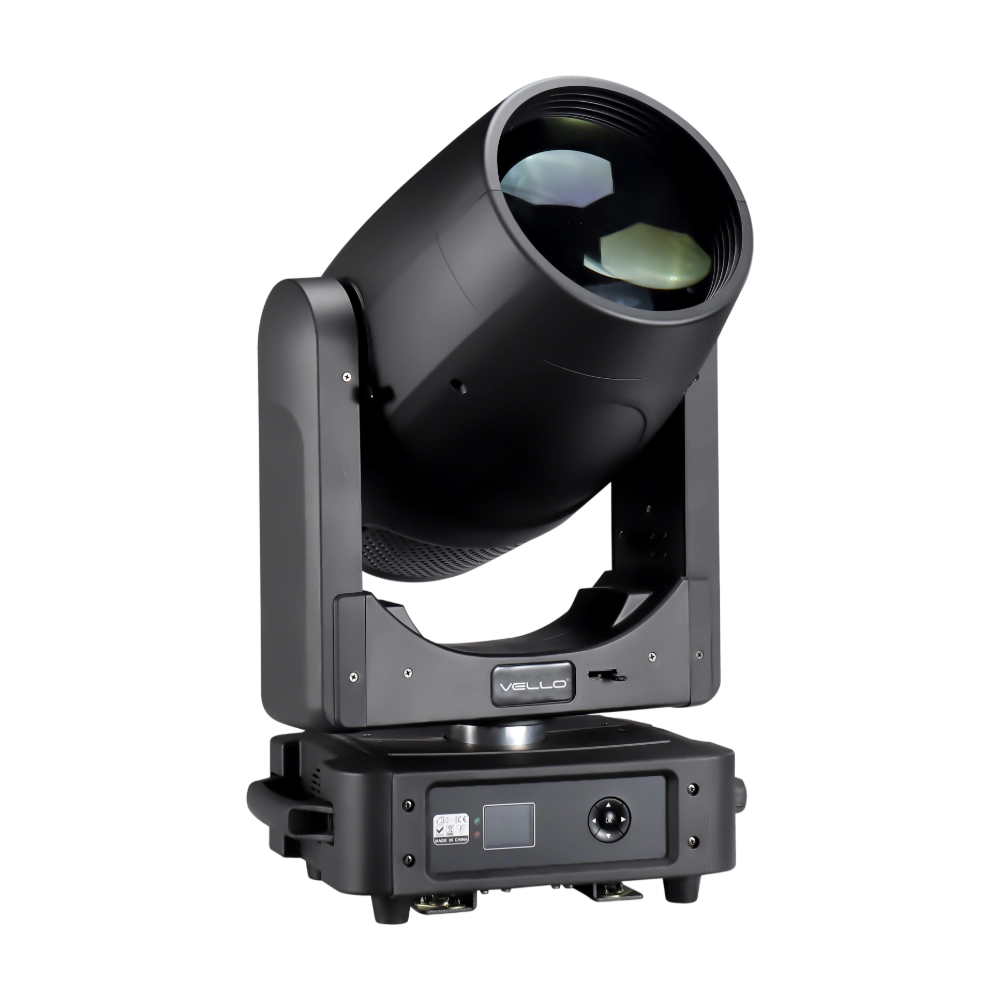
Moving Head Light BEAM 450
The BSW450 is a high-performance moving head fixture equipped with an original Osram 420W bulb, delivering exceptional brightness, precision, and versatility. Designed for professional stage applications, it seamlessly combines beam, spot, and wash functions in one compact unit, making it a powerful all-in-one lighting solution.
Over 20 Years of Innovation in Stage & Studio Lighting
© 2026 VELLO. All Rights Reserved. 粤ICP备20023734号
Join our socials
VELLO
Whatsapp: +8613902276704
Vello Lighting
VelloLights