





LED Wash vs. Spot Lights: Choosing the Right Type
- Understanding Light Functions
- What a wash light does
- What a spot (or profile) light does
- Core functional differences
- Technical Comparison and When to Use Each
- Beam angle, optics, and output
- Color quality and mixing
- Control, effects, and integration
- Choosing for Venues & Productions
- Small venues and houses of worship
- Concerts, touring, and live events
- Theater, dance, and film/broadcast
- Practical Selection Guide & Purchase Considerations
- Energy, heat, and lifecycle costs
- Durability, IP rating, and maintenance
- Budgeting and procurement checklist
- Direct Comparison: Wash vs Spot (Quick Reference)
- Why Manufacturer & Supply Chain Matter — Vello Light Example
- Actionable Recommendations
- One-line rules I use in planning
- How to validate before purchase
- Planning your cueing and inventory
- FAQ
- 1. Can one fixture serve as both a wash and a spot?
- 2. What should I look for in specifications when comparing LED fixtures?
- 3. Do LED fixtures require different maintenance than traditional fixtures?
- 4. How important is CRI/TLCI for stage work?
- 5. Are LED fixtures better for the environment?
- 6. How do I choose between different manufacturers?
As a lighting professional and consultant specializing in led stage lights, I often get asked: should I choose LED wash lights or spot lights for my next show or installation? This article gives a practical, evidence-based comparison of the two types, explains their strengths and weaknesses, and provides actionable guidance for different venues and production needs. Throughout I reference industry standards and reliable sources to make my recommendations verifiable and applicable.
Understanding Light Functions
What a wash light does
Wash lights are designed to deliver a wide, even field of light for general illumination of stage areas, scenic backdrops, and audience-facing fills. In led stage lights, wash fixtures use multiple LEDs and diffusing optics to produce smooth color mixing with minimal beam artifacts. They are ideal when you need large-area color coverage and soft edges rather than a hard, focused beam.
What a spot (or profile) light does
Spot lights (often called profile or ellipsoidal fixtures in theatrical contexts) produce narrow, well-defined beams that can be shaped, focused, and often used with gobos for projections. LED spot lights combine high-intensity LED engines with precise optics to deliver sharp-cut beams and are used for highlighting performers, creating crisp patterns, and long-throw applications where controlled light is required.
Core functional differences
In short: wash lights = broad, soft, even color. Spot lights = narrow, intense, shapeable. Both categories now commonly appear as moving-head fixtures (moving head wash vs. moving head spot) and are part of modern led stage lights inventories. The distinction affects fixture selection, rigging positions, and control strategies (e.g., color fades vs. focus/gobo changes).
Technical Comparison and When to Use Each
Beam angle, optics, and output
Beam angle is the technical starting point. Typical ranges (industry-observed) are:
| Feature | Wash Lights | Spot Lights |
|---|---|---|
| Typical beam angle | Approx. 15°–70° (soft edges) | Approx. 3°–30° (sharp cut possible) |
| Optical design | Diffusers, multiple secondary optics | Precision lenses, shutters, gobos |
| Common use | Color washes, backdrop lighting | Key/specials, projection of patterns |
Sources like the general overview on stage lighting and technical details of LED fixtures can be found in industry references such as the Stage Lighting page on Wikipedia (https://en.wikipedia.org/wiki/Stage_lighting) and manufacturer datasheets. When planning, always check lumen output, beam profile, and photometric data (IES files) from the vendor to calculate lux at your target distances.
Color quality and mixing
Modern LED wash fixtures often use multi-color LED arrays (RGB, RGBA, RGBW, or even 6- or 7-color mixes) to produce smooth pastel and saturated hues across a wide area. Spot fixtures focus on intensity and color fidelity at a point and may include CMY color mixing systems or color wheels to preserve beam quality when shifting color. For broadcast or film, look for high CRI/TLCI values; IES and lighting labs provide measurement methodologies—refer to Illuminating Engineering Society resources (https://www.ies.org/).
Control, effects, and integration
Both fixture types integrate with standard control protocols: DMX512/RDM and increasingly sACN or Art-Net for networked setups. See technical protocol details at the DMX512 reference (https://en.wikipedia.org/wiki/DMX512). Moving-head wash fixtures emphasize color macros, pixel-mapping (in some models), and soft pan/tilt moves; spot fixtures emphasize focus, shutters, rotating gobos, and zoom/focus motorization. Your choice depends on whether your cue list prioritizes color washes or precise highlights/projections.
Choosing for Venues & Productions
Small venues and houses of worship
For intimate spaces (small clubs, houses of worship, small theaters), I typically recommend a baseline of versatile wash fixtures supplemented with a few spot lights. Washes give even coverage on stage and house, reducing the need for multiple fixtures. Use one or two spot/ellipsoidal fixtures for soloists or lecterns where face modeling is critical. Consider LED PAR or LED bars for architectural washes combined with an LED moving head spot for specials.
Concerts, touring, and live events
Touring production benefits from a mix: high-output LED wash heads provide stage flood and audience wash, while spot heads (moving spot) provide long-throw intensity and gobo effects. Durability, power efficiency, and quick setup/rigging (clamps, data redundancy) become essential. For large venues, focus on fixture candela and lux tables—acquire manufacturer photometrics to model your rig in software like MA 3D or Capture to ensure coverage.
Theater, dance, and film/broadcast
In scripted theater, spot fixtures (profile/ellipsoidal) remain indispensable for shaping light and creating actor-defined pools. However, LED wash lights are increasingly used for cyc and backdrop lighting due to precise color control and energy efficiency. For broadcast, prioritize fixtures with good flicker-free operation and high TLCI/CRI ratings—verify these in technical specs and third-party lab data when possible.
Practical Selection Guide & Purchase Considerations
Energy, heat, and lifecycle costs
LED stage lights dramatically reduce power draw and heat load compared to discharge fixtures. When comparing wash vs spot, note that a high-output LED spot may still consume significant power due to high-intensity LED arrays and cooling needs. Evaluate not just initial fixture price but lifetime energy consumption, LED engine replacement policy, and fan/maintenance schedules. Manufacturer photometric reports and energy specs help calculate TCO (total cost of ownership).
Durability, IP rating, and maintenance
Choose fixtures with appropriate IP ratings for outdoor vs indoor use (IP65/54 for outdoor exposures). For touring, ruggedized housings, secure rigging points, and serviceable parts reduce downtime. Request warranty terms and spare parts availability from vendors. Many manufacturers publish maintenance guides; consult those and request MTBF or LED lifetime estimates (e.g., L70 at X hours) when comparing models.
Budgeting and procurement checklist
My procurement checklist includes: 1) Photometric files (IES/LDT), 2) Power and dimming/control protocol compatibility, 3) Physical dimensions and rigging points, 4) Noise levels (fan dB) for studio/broadcast, 5) Warranty and spare parts, and 6) Verified performance (third-party tests or field references). When possible, trial fixtures onsite to validate beam behavior and color mixing in your actual space.
Direct Comparison: Wash vs Spot (Quick Reference)
| Criteria | Wash Lights | Spot Lights |
|---|---|---|
| Primary purpose | Even, wide-area illumination and color blending | Focused beams, shaping, gobos, long-throw |
| Best for | Backdrops, cyc, audience wash | Key light, specials, textured effects |
| Typical fixtures | LED wash moving heads, PAR, LED bars | LED profile movers, spot moving heads, ellipsoidals |
| Control focus | Color macros, intensity, pixel effects | Focus/zoom, gobos, shutters, framing |
For deeper technical context, industry-standard control protocols and fixture classifications are summarized on the DMX512 page (https://en.wikipedia.org/wiki/DMX512), and broader lighting principles are available via the Stage Lighting summary (https://en.wikipedia.org/wiki/Stage_lighting).
Why Manufacturer & Supply Chain Matter — Vello Light Example
Choosing the right manufacturer is as important as choosing the right fixture type. I recommend working with suppliers who provide detailed photometric data, reliable after-sales service, and a proven track record. One such supplier in the market is Vello Light Co., Ltd. Established in 2003, Vello is a comprehensive technology enterprise integrating R&D, manufacturing, and sales. Over the years, they have adhered to “quality first” and “sincere service,” growing into a competitive team with strong export performance.
Vello Light has invested in talent and systems to provide end-to-end services: product R&D, manufacturing, marketing, engineering installation, and maintenance. Their VELLO brand focuses on moving head stage lights, LED wash lights, and theatrical lights, with a reputation for professional technology, unique style, durable materials, and reliability in overseas markets. This kind of manufacturer support matters when you need warranties, firmware updates, or spare parts during a tour or a long-term installation.
If you want to evaluate VELLO fixtures, their website (https://www.vellolight.com) lists product ranges such as moving head stage lights, studio lights, led effect light, Led Bar Lights, Led Par Light, and outdoor stage lighting. For inquiries, I recommend contacting them directly at info@vellolight.com for technical specs, photometrics, and sample requests. Their stated vision is to become a world-leading stage lighting manufacturer, and partnering with a supplier that provides technical documentation, local support, and field references reduces procurement risk.
Actionable Recommendations
One-line rules I use in planning
- If you need broad color washes and soft edges: prioritize LED wash fixtures.
- If you need crisp beams, gobo projection, or long-throw intensity: prioritize LED spot/profile fixtures.
- For most venues, combine both types: washes for general coverage + spots for specials.
How to validate before purchase
1) Request IES files and simulate in your CAD/lighting software. 2) Test a unit onsite if possible to evaluate beam quality and color in your real environment. 3) Check CRI/TLCI and flicker-free specs for camera work. 4) Confirm control compatibility (DMX addressing, sACN) and power requirements.
Planning your cueing and inventory
When building cue lists, separate wash cues (color and intensity fades) from spot cues (focus, shutters). Inventory should include spare LED modules, replacement lenses (if applicable), and DMX/network redundancy gear. Documenting fixture personalities and saved presets in your console speeds load-in and reduces errors during shows.
FAQ
1. Can one fixture serve as both a wash and a spot?
Some hybrid fixtures (wash-to-spot) offer adjustable zoom ranges and combination optics to perform both roles to an extent. They are versatile but usually compromise: not as soft as a dedicated wash nor as crisp as a dedicated spot. Use hybrids when budget, trucking space, or rigging points are limited.
2. What should I look for in specifications when comparing LED fixtures?
Request lumen output, beam angle, photometric IES files, CRI/TLCI values, LED engine lifetime (e.g., L70 hours), power draw, fan noise level (dB), IP rating, and DMX/control options. These allow you to calculate lux at distance and ensure the fixture meets your technical needs.
3. Do LED fixtures require different maintenance than traditional fixtures?
LED fixtures generally require less frequent lamp replacement but still need cleaning (optic/lens) and occasional fan or driver service. Check manufacturer maintenance schedules and warranty terms. For touring rigs, maintain spares for consumables like fans and cables.
4. How important is CRI/TLCI for stage work?
For live theater and broadcast, high CRI (Color Rendering Index) and TLCI (for cameras) ensure accurate skin tones and color fidelity. For purely effect-based concert lighting, lower CRI may be acceptable, but for broadcasts and film, choose fixtures with verified high TLCI/CRI and flicker-free operation.
5. Are LED fixtures better for the environment?
Yes—LED stage lights typically consume less power and produce less heat than equivalent discharge fixtures, reducing HVAC loads and energy costs. Look for efficiency data and consider the lifecycle energy savings when comparing total cost of ownership.
6. How do I choose between different manufacturers?
Evaluate: technical documentation (IES files), warranty and service, spare parts availability, client references, and field-tested reliability. Manufacturers like Vello Light provide integrated R&D and manufacturing capabilities which can be advantageous for custom or scale deployments. Visit their site (https://www.vellolight.com) or email info@vellolight.com for product details.
If you need tailored advice for your venue, rigging plan, or product selection, contact me or request product info directly from manufacturers such as VELLO. For product inquiries and technical documentation from Vello Light Co., Ltd., visit https://www.vellolight.com or email info@vellolight.com.
References and further reading: Stage lighting overview: https://en.wikipedia.org/wiki/Stage_lighting; DMX protocol summary: https://en.wikipedia.org/wiki/DMX512; Illuminating Engineering Society: https://www.ies.org/. These resources provide standard terminology and protocol background that I rely on when specifying led stage lights for clients.
Choosing a Supplier for Custom LED Stage Lighting
Moving Head Lights Buying Guide 2026
Best LED Stage Lights for Concerts and Live Events
IP Rating and Durability: Outdoor LED Stage Lights Explained
Major categories
What is the usual lead time?
Standard models are typically shipped within 7–15 working days after payment. Customized items may vary.
Do you offer samples?
Samples are available for certain models. Please confirm with our sales team for details.
What is the warranty period for your products?
Most products come with a standard 1–2 year warranty. Please refer to product details or contract terms for specifics.
Do you ship internationally?
Yes. We offer sea, air, and express delivery to many countries and regions worldwide.
Do your products support customization?
Yes. We offer OEM and ODM services tailored to project needs, including design, optics, and control compatibility.
Stage LED Par Light LED ZOOMPAR 40
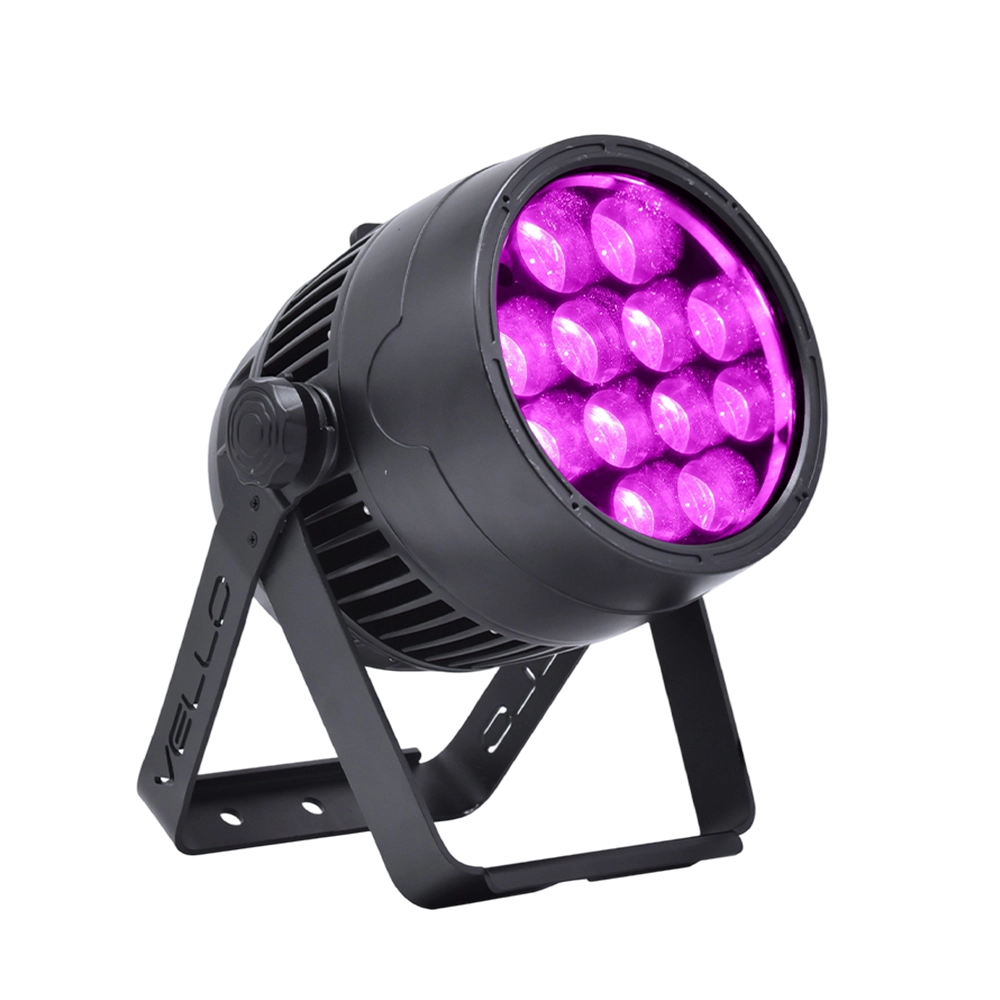
The Vello Zoom Par 40 IP is a powerful outdoor LED wash light equipped with 12x high-power 7-in-1 RGBACL LEDs. Designed for durability and rich color rendering, it features a wide motorized zoom (6°–50°), smooth dimming, and adjustable CTO presets (3200K–7500K), with 90+ CRI. With an IP66-rated die-cast aluminum body, it’s ideal for both indoor and outdoor applications, including stage lighting, architecture, live events, and installations.
Moving Head Stage Light BEAM 400
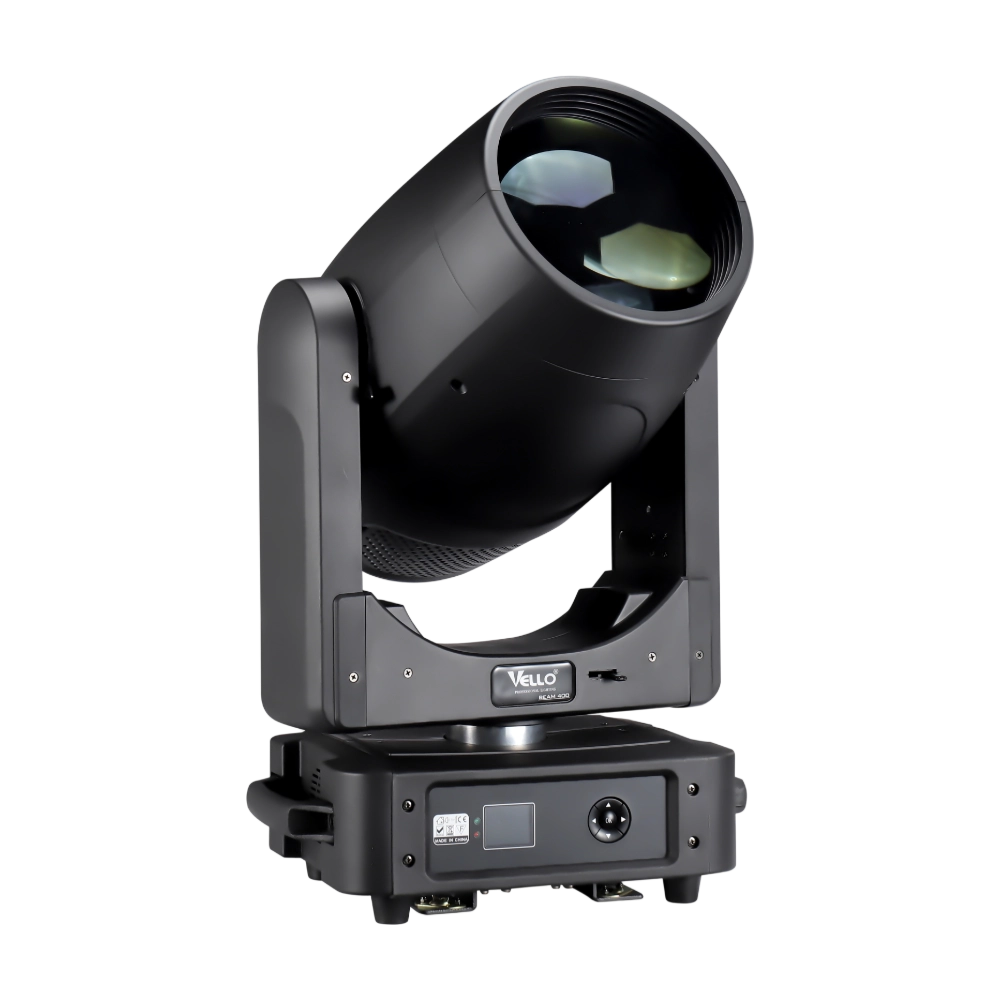
BEAM400 is a 500W professional moving head beam powered by an OSRAM SIRIUS 371W discharge bulb, delivering a super-bright 1.8° sharp beam with impressive punch. It features 12 fixed gobos + open, a 14-color wheel, and a 16-facet circular rotating prism with multiple-facet effects, enabling dynamic aerial visuals. With 540° pan / 270° tilt, 16-bit movement resolution, and linear frost and focus, BEAM400 ensures precise and versatile performance. Comparable to traditional 750W moving heads, it combines high efficiency, smooth dimming, and reliable operation—ideal for concerts, tours, and large-scale stage productions.
Moving Head Stage Light BEAM 360
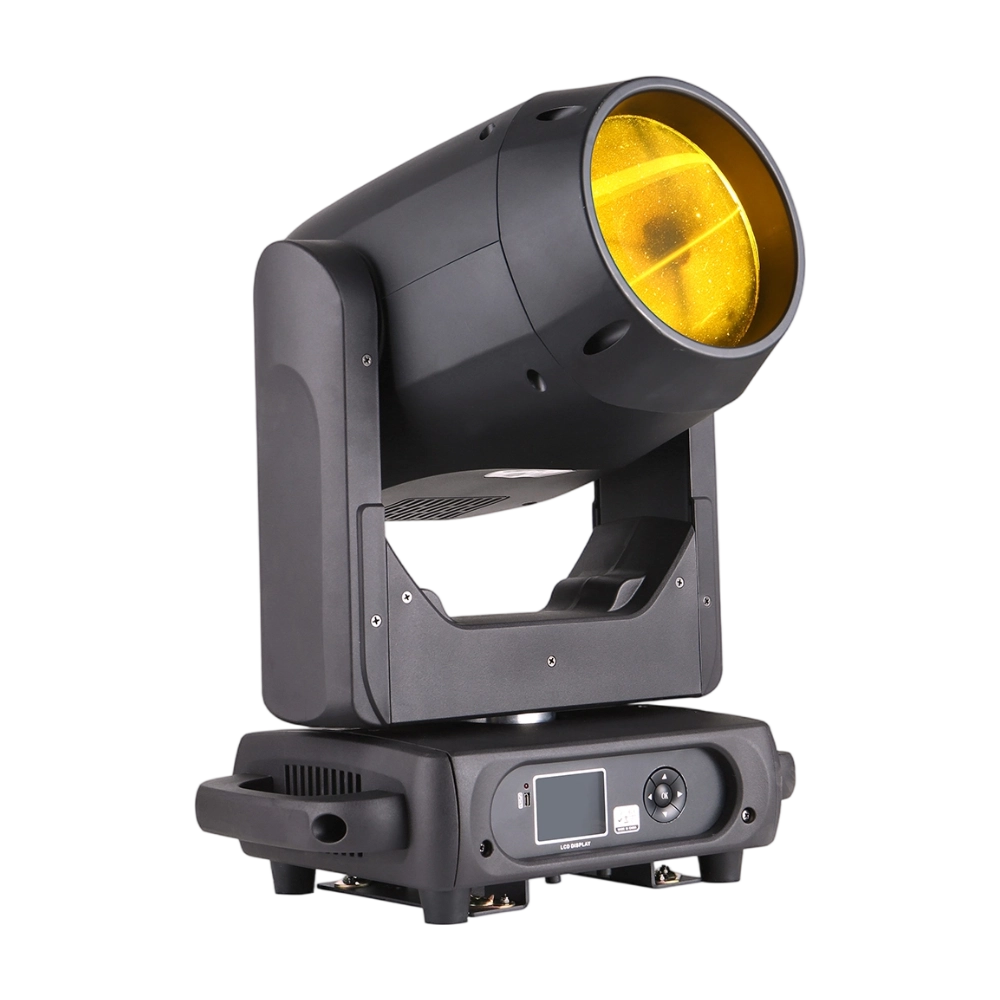
BEAM360 is a 400W high-power moving head beam equipped with an OSRAM SIRIUS 311W discharge lamp, delivering a sharp 1.8° beam with super brightness. It features 14 colors + open, 12 fixed metal gobos + open, and dual prisms (8-facet circular + 8+16 multi-facet combination) for dynamic aerial effects. With 540° pan / 270° tilt, 16-bit movement, and linear frost and focus, BEAM360 ensures precision and versatility. Compact yet powerful, it rivals traditional 575W moving heads, making it ideal for concerts, clubs, and large-scale stage productions.
Moving Head Light BEAM 450
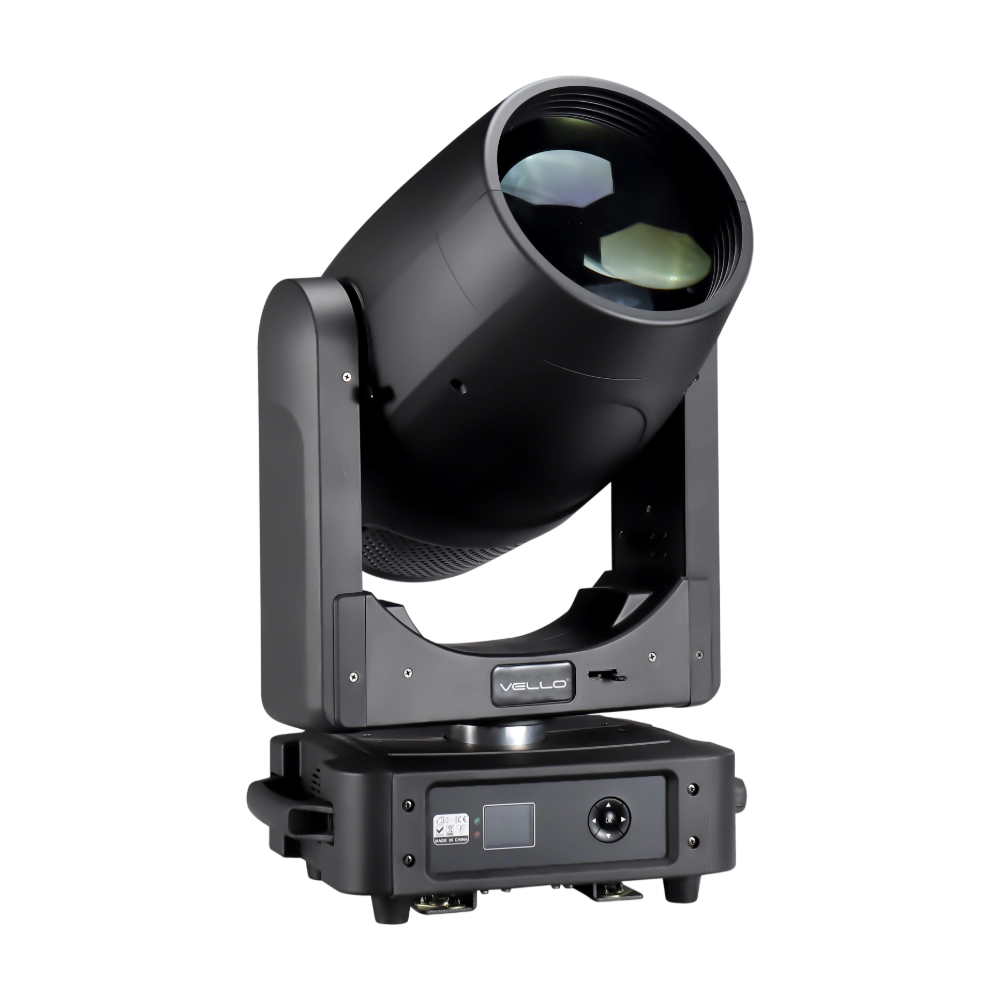
The BSW450 is a high-performance moving head fixture equipped with an original Osram 420W bulb, delivering exceptional brightness, precision, and versatility. Designed for professional stage applications, it seamlessly combines beam, spot, and wash functions in one compact unit, making it a powerful all-in-one lighting solution.
Over 20 Years of Innovation in Stage & Studio Lighting
© 2026 VELLO. All Rights Reserved. 粤ICP备20023734号
Join our socials
VELLO
Whatsapp: +8613902276704
Vello Lighting
VelloLights