





LED Stage Lights vs Traditional Lights: Pros and Cons
- Why Choosing the Right Stage Light Matters
- Introduction to stage light selection
- What counts as a traditional stage light and what are LED stage lights
- Energy efficiency and operating cost for stage light systems
- Light quality: color rendering, color temperature, beam control and artistic needs
- Performance and control: DMX, moving head features and latency
- Durability, maintenance and total cost of ownership (TCO)
- Heat management, safety and venue infrastructure
- Environmental impact and hazardous materials
- When traditional fixtures still make sense for stage light applications
- Head-to-head summary table: LED vs traditional stage light
- Vello Light Co., Ltd. perspective: manufacturer strengths and product focus
- How to choose the right stage light for your use case
- Conclusion: practical recommendations for buyers of stage light equipment
- FAQ
- Contact and product information
- References
Why Choosing the Right Stage Light Matters
Introduction to stage light selection
Choosing the right stage light affects artistic outcome, operating budgets, crew safety, and audience experience. Whether you are a rental house, theatre technical director, touring production manager, or house of worship AV lead, understanding the tradeoffs between LED stage lights and traditional fixtures is essential to make decisions that balance initial investment, performance requirements, and lifecycle costs.
What counts as a traditional stage light and what are LED stage lights
Traditional stage light typically refers to incandescent, halogen, and discharge lamp based fixtures including ellipsoidals, fresnels, followspots, and moving lights using tungsten-halogen or high-intensity discharge (HID) lamps. LED stage lights use arrays of light-emitting diodes as the source, often with integrated electronics for color mixing, dimming and control. Both types are used in theatrical, concert and broadcast contexts, but they behave differently in power consumption, color rendering, heat, and maintenance.
Energy efficiency and operating cost for stage light systems
Energy consumption is a major driver for venue operating budgets. LEDs typically use significantly less power for comparable luminous output. For a practical comparison, the table below summarizes typical ranges for common fixture classes used as stage light. Data are representative averages from industry sources and government guidance.
| Fixture type | Typical source | Typical power draw | Typical lifetime (hours) | Typical efficacy (lm/W) | Heat to stage |
|---|---|---|---|---|---|
| Par / LED wash | LED array | 30–300 W | 25,000–50,000 h | 80–140 lm/W | Low |
| Par / traditional | Tungsten-halogen | 300–1000 W | 750–2,000 h | 10–20 lm/W | High |
| Moving head | LED moving head | 150–1,000 W | 25,000–50,000 h | 60–120 lm/W | Moderate |
| Moving head | HID discharge | 600–2,000 W | 1,000–4,000 h (lamp dependent) | 30–90 lm/W | High |
Sources used for these ranges include government solid state lighting guidance and manufacturers technical data. Typical LED efficacy is higher and lifetime substantially longer, which reduces electricity and maintenance costs over the product lifecycle.
Light quality: color rendering, color temperature, beam control and artistic needs
Color rendering index (CRI) and tunability matter for onstage skin tones, costume and set appearance. Modern LED fixtures commonly achieve CRI values in the mid 80s to low 90s, with some professional LEDs exceeding CRI 95. Discharge and tungsten lamps have long been favored for their smooth spectral distribution; tungsten-halogen produces a warm continuous spectrum that is often described as pleasing for skin tones.
Key points for stage light quality:
- LEDs offer instant color mixing via RGB, RGBA, or RGBW, enabling dynamic looks without physical gels.
- Some LED fixtures use phosphor-converted white emitters to improve CRI and spectral balance.
- Traditional lamps with CMY or physical color scrollers can still be preferred when an exact continuous spectrum or certain diffusion qualities are required.
- For film or high-speed cameras, LED fixtures must be specified for flicker-free operation; not all LEDs are camera-friendly at high frame rates.
Performance and control: DMX, moving head features and latency
Modern LED stage light fixtures integrate advanced control capabilities: DMX/RDM, Art-Net, sACN, pixel mapping and onboard effects. Many moving head stage lights using LED sources can match or exceed the feature set of traditional moving heads, with advantages like faster start up and lower power draw. However, in the highest-output applications, discharge lamp moving heads have historically offered extreme intensity and long throw that some large-scale touring productions still prefer.
Durability, maintenance and total cost of ownership (TCO)
Initial purchase price for LED fixtures is often higher than for comparable traditional fixtures, but maintenance and power savings usually offset that difference. Example scenario below uses conservative assumptions to illustrate lifecycle cost for a commonly used wash fixture acting as a stage light.
| Item | LED wash | Tungsten wash |
|---|---|---|
| Initial purchase | $600 | $150 |
| Power draw | 100 W | 700 W |
| Lifetime (hours) | 35,000 h | 1,200 h (bulb replacement) |
| Average use per year | 1,000 h | |
| Electricity cost (assumed) | $0.12 / kWh | |
| 10-year electricity cost | $120 | $840 |
| Maintenance & bulbs over 10 years | $50 (filters, minor service) | $700 (bulbs and labor) |
| Total 10-year cost | $770 | $1,890 |
These example numbers show LED fixtures frequently achieving lower TCO in venues with moderate to heavy usage. Savings are driven by lower power and lower replacement labor for lamps. Real results depend on local electricity rates, usage patterns, and fixture selection.
Heat management, safety and venue infrastructure
LED stage lights typically emit less radiant heat toward the stage and audience. That reduces cooling load for indoor venues, increases performer comfort, and lowers risk of accidental burns when attaching or adjusting fixtures. Traditional tungsten fixtures produce high radiant heat and may require more robust rigging decisions, ventilation and safety measures. Also plan for power distribution: large touring rigs with many high-wattage discharge fixtures may need heavier power infrastructure compared to LED-dominant rigs.
Environmental impact and hazardous materials
LEDs contain no mercury and have lower energy consumption, which reduces lifecycle carbon emissions. Some traditional discharge sources, such as certain fluorescent and HID lamps, contain mercury and require special disposal. Choosing LED stage lights can help venues meet sustainability targets and reduce hazardous waste handling requirements.
When traditional fixtures still make sense for stage light applications
There are scenarios where traditional lights remain relevant:
- Very specific artistic demands for continuous tungsten spectrum or authentic warm bloom that some designers prefer.
- Gigantic outdoor stadiums or special effects where the highest instantaneous output is required and existing HID moving heads deliver the throw needed.
- When budget prevents immediate capital replacement and existing fixtures are still functional for short-term needs.
Head-to-head summary table: LED vs traditional stage light
| Aspect | LED stage light | Traditional stage light |
|---|---|---|
| Initial cost | Higher for equivalent features | Lower for basic fixtures |
| Operating cost | Much lower (power and maintenance) | Higher (frequent bulb replacement, higher power) |
| Color control | Excellent, instant tuning, pixel mapping | Good with gels and scrollers, slower changes |
| Output for long throw | Good to excellent, improving rapidly | Excellent at very long throw with some HID fixtures |
| Heat and stage comfort | Lower heat load | High heat load |
| Maintenance | Low (long life LEDs, fewer replacements) | High (lamp changes, alignment, heat-related wear) |
| Environmental | Generally better (no mercury, lower energy) | Contains mercury in some lamp types, higher energy use |
Vello Light Co., Ltd. perspective: manufacturer strengths and product focus
Vello Light Co., Ltd., established in 2003, is a comprehensive technology enterprise integrating R&D, manufacturing, and sales. Over the years, the company has consistently adhered to principles of quality first and sincere service. With strong domestic and international customer support, Vello has grown into an experienced team specializing in stage light solutions.
In recent years, with rapid development of the LED lighting market, Vello Light has recruited professional talent across product R&D, manufacturing, marketing, engineering installation, and product maintenance. Vello perseveres in innovation and leverages its strengths to compete globally. The registered brand VELLO focuses on moving head stage lights, LED wash and studio lights, LED effect lights, LED bar lights, LED par lights, and outdoor stage lighting. VELLO products are praised for solid engineering, unique design, quality materials and durability.
Why consider Vello as a stage light partner:
- Established manufacturing and R&D pedigree since 2003, which supports product consistency and warranty handling.
- Comprehensive product range covering tour-ready moving head stage lights and studio-grade LED fixtures.
- Export experience and overseas reputation, useful for international productions and rental houses.
- Practical balance of cost, technology and after-sales service for venues transitioning from traditional lights to LED systems.
How to choose the right stage light for your use case
Decision steps for buyers:
- Define artistic priorities: color quality, dimming smoothness, or high-intensity long throw.
- Audit venue power and rigging constraints to determine allowable fixture wattage and distribution.
- Estimate annual hours of use to model total cost of ownership including electricity and maintenance.
- Test fixtures on-camera and on-stage, especially if broadcast or high-speed filming is expected.
- Prioritize vendor support, warranty and local service, especially for touring or rental operations.
Conclusion: practical recommendations for buyers of stage light equipment
For most modern venues and touring productions, LED stage lights are the recommended default due to lower operating costs, reduced heat, improved control flexibility and environmental advantages. Traditional fixtures remain valid where specific spectral qualities or extreme output are required, or where budget constraints make immediate replacement impractical.
When selecting fixtures, evaluate the entire lifecycle cost and test for color rendering and camera compatibility. Partner with an experienced manufacturer or supplier like Vello Light Co., Ltd. when you need a balance between cost, performance and reliable after-sales service.
FAQ
Q1: Are LED stage lights better than traditional lights for all applications?
A1: Not universally. LEDs are superior in energy efficiency, maintenance and control. Traditional lamps may still be preferred for certain high-intensity long-throw needs or specific spectral qualities. Evaluate based on required light output, visual characteristics and budget.
Q2: How much energy can I expect to save by switching stage light fixtures to LED?
A2: Savings vary, but LEDs commonly use 60 to 90 percent less energy than equivalent tungsten fixtures. Real savings depend on fixture type and usage hours. Use fixture power ratings and local kWh rates to calculate site-specific savings.
Q3: Do LED stage lights flicker on camera?
A3: Some LED fixtures can flicker under certain camera frame rates if the driver or PWM frequency is not appropriate. Choose professional fixtures specified as flicker-free for broadcast and test on your camera system before purchase.
Q4: How long do LED stage lights last compared to traditional lamps?
A4: Typical LEDs last 25,000 to 50,000 hours depending on design and cooling. Tungsten and many discharge lamps often last from hundreds to a few thousand hours, requiring frequent replacements.
Q5: Are LED fixtures more expensive to buy initially?
A5: Yes, initial purchase price for LED fixtures is often higher, but total cost of ownership is frequently lower due to energy and maintenance savings.
Q6: Can Vello provide support for large projects or bespoke stage light configurations?
A6: Yes. Vello Light Co., Ltd. offers R&D, manufacturing, engineering installation and after-sales maintenance, and can support both domestic and international project requirements.
Contact and product information
If you are evaluating stage light upgrades or planning a new installation, contact Vello Light Co., Ltd. to discuss moving head stage lights, studio lights, LED effect light, LED bar lights, LED par light, and outdoor stage lighting options. For project quotes or technical consultation, request a product datasheet and test samples to ensure fixtures meet your performance and camera requirements.
References
- U.S. Department of Energy, Solid-State Lighting Program overview, accessed 2025-11-29, https://www.energy.gov/eere/ssl/solid-state-lighting
- ENERGY STAR, Learn About LEDs, accessed 2025-11-29, https://www.energystar.gov/products/lighting_fans/light_bulbs/learn_more
- Lighting Research Center, Solid-State Lighting Program, accessed 2025-11-29, https://www.lrc.rpi.edu/programs/solidstate
- Electronic Theatre Controls (ETC), LED knowledge articles and fixture guidance, accessed 2025-11-29, https://www.etcconnect.com
- U.S. Environmental Protection Agency, Information on mercury in lamps and proper disposal, accessed 2025-11-29, https://www.epa.gov/mercury
- Grand View Research, Stage Lighting Market Report overview, accessed 2025-11-29, https://www.grandviewresearch.com/industry-analysis/stage-lighting-market
Retrofit vs New Custom LED Lighting for Theater Upgrades
Lighting Plot Basics: Planning Your Stage Lighting Setup
How to Choose Stage LED Lights: Complete Buying Guide
Energy Savings and ROI of Custom LED Stage Lighting
Major categories
Do you ship internationally?
Yes. We offer sea, air, and express delivery to many countries and regions worldwide.
Do your products support customization?
Yes. We offer OEM and ODM services tailored to project needs, including design, optics, and control compatibility.
What is the usual lead time?
Standard models are typically shipped within 7–15 working days after payment. Customized items may vary.
What is the warranty period for your products?
Most products come with a standard 1–2 year warranty. Please refer to product details or contract terms for specifics.
Do you offer samples?
Samples are available for certain models. Please confirm with our sales team for details.
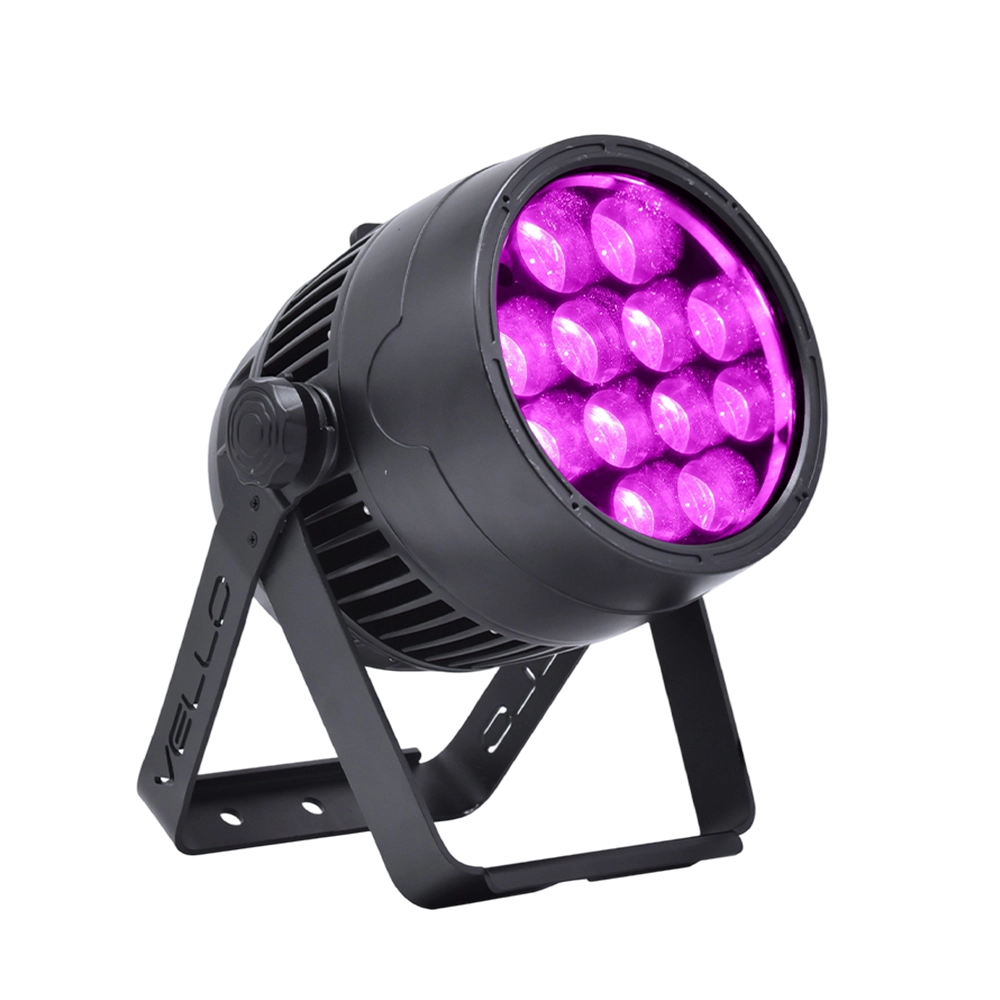
Stage LED Par Light LED ZOOMPAR 40
The Vello Zoom Par 40 IP is a powerful outdoor LED wash light equipped with 12x high-power 7-in-1 RGBACL LEDs. Designed for durability and rich color rendering, it features a wide motorized zoom (6°–50°), smooth dimming, and adjustable CTO presets (3200K–7500K), with 90+ CRI. With an IP66-rated die-cast aluminum body, it’s ideal for both indoor and outdoor applications, including stage lighting, architecture, live events, and installations.
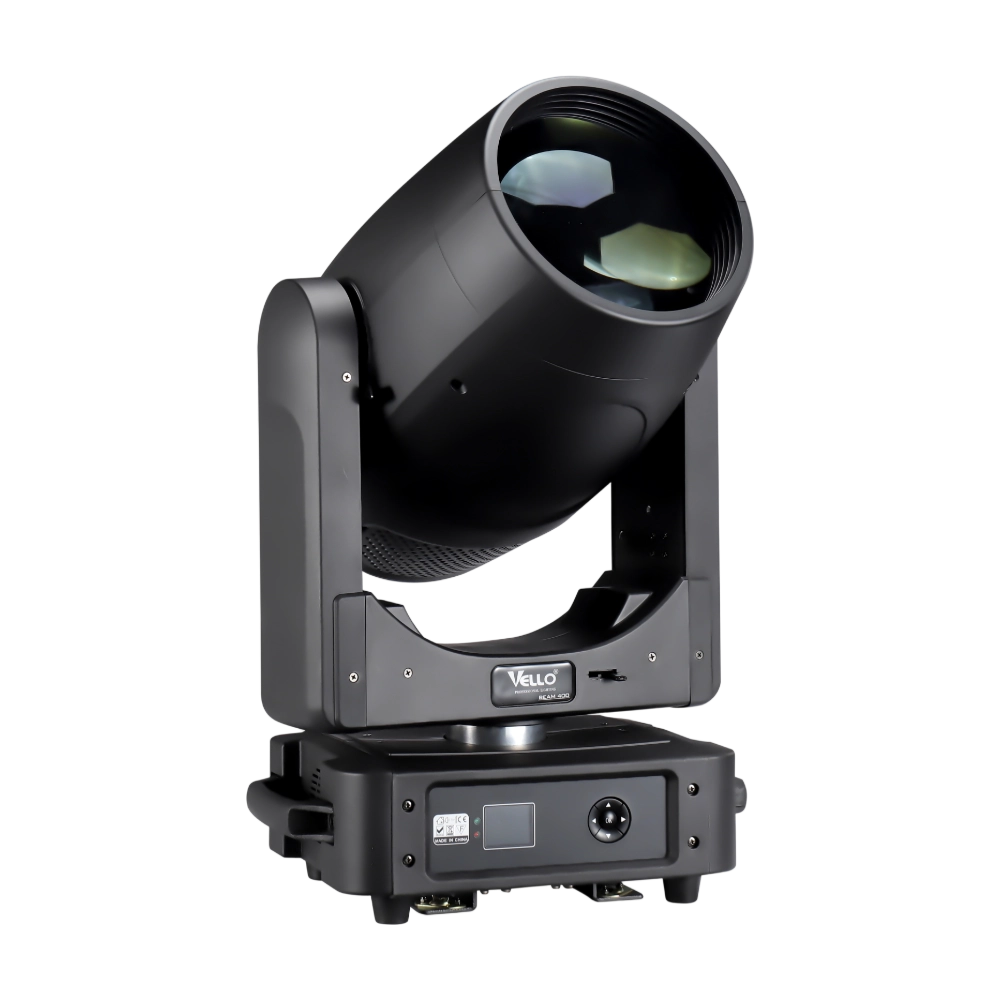
Moving Head Stage Light BEAM 400
BEAM400 is a 500W professional moving head beam powered by an OSRAM SIRIUS 371W discharge bulb, delivering a super-bright 1.8° sharp beam with impressive punch. It features 12 fixed gobos + open, a 14-color wheel, and a 16-facet circular rotating prism with multiple-facet effects, enabling dynamic aerial visuals. With 540° pan / 270° tilt, 16-bit movement resolution, and linear frost and focus, BEAM400 ensures precise and versatile performance. Comparable to traditional 750W moving heads, it combines high efficiency, smooth dimming, and reliable operation—ideal for concerts, tours, and large-scale stage productions.
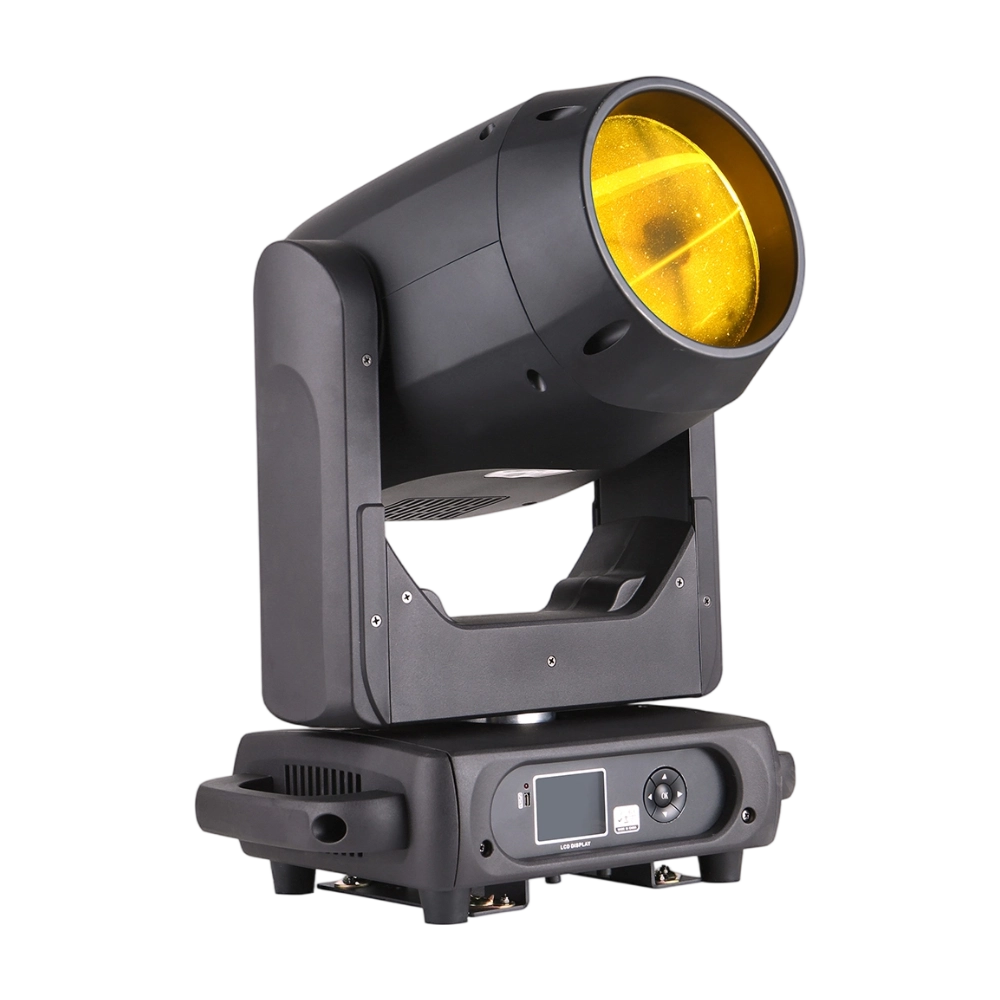
Moving Head Stage Light BEAM 360
BEAM360 is a 400W high-power moving head beam equipped with an OSRAM SIRIUS 311W discharge lamp, delivering a sharp 1.8° beam with super brightness. It features 14 colors + open, 12 fixed metal gobos + open, and dual prisms (8-facet circular + 8+16 multi-facet combination) for dynamic aerial effects. With 540° pan / 270° tilt, 16-bit movement, and linear frost and focus, BEAM360 ensures precision and versatility. Compact yet powerful, it rivals traditional 575W moving heads, making it ideal for concerts, clubs, and large-scale stage productions.
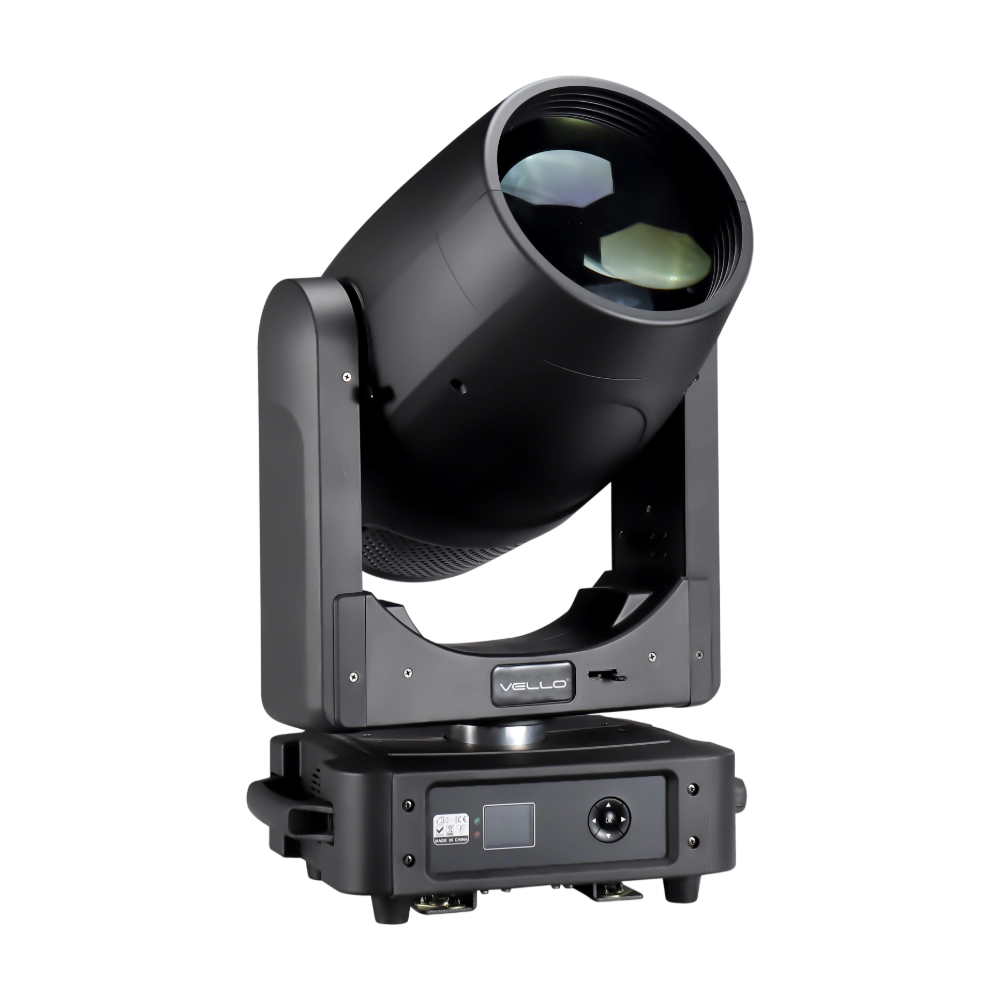
Moving Head Light BEAM 450
The BSW450 is a high-performance moving head fixture equipped with an original Osram 420W bulb, delivering exceptional brightness, precision, and versatility. Designed for professional stage applications, it seamlessly combines beam, spot, and wash functions in one compact unit, making it a powerful all-in-one lighting solution.
Over 20 Years of Innovation in Stage & Studio Lighting
© 2026 VELLO. All Rights Reserved. 粤ICP备20023734号
Join our socials
VELLO
Whatsapp: +8613902276704
Vello Lighting
VelloLights