





LED Stage Lights for Rental Companies: Buyer Checklist
- Why rental companies should prioritize LED stage lights
- Cost of ownership versus upfront cost
- Durability, reliability and rental-specific stressors
- Marketability and client expectations
- Technical checklist: What to evaluate when buying LED stage lights
- Light quality: CRI, TLCI, and color stability
- Output, optics, and beam control
- Control and integration: DMX, RDM, Art-Net, sACN
- Operational checklist: Power, rigging, and serviceability
- Power consumption, power factor, and inrush current
- Mechanical build, rigging points, and IP rating
- Serviceability: modules, connectors, and spare parts strategy
- Buying strategy and vendor selection
- Trial, demo and field testing
- Warranty, repairs, and spares
- ROI example and simple cost comparison
- Fixture-type comparison and selection table
- Vendor evaluation checklist
- Technical documentation and test data
- Service network and spare parts availability
- References and real-world installations
- About Vello Light — supplier profile and why I recommend considering them
- Common pitfalls and how to avoid them
- Overlooking transport and storage wear
- Underestimating control complexity
- Incomplete spare parts planning
- FAQ
- 1. How many LED fixtures should a small rental company buy to start?
- 2. How important is CRI/TLCI for live events?
- 3. Do I need IP65 fixtures if most of my work is indoors?
- 4. How should I calculate ROI for LED purchases?
- 5. What tests should I require before final purchase?
- 6. Is RDM necessary for rental fixtures?
- Contact and next steps
In the competitive rental market, choosing the right LED stage lights is about more than price — it’s about uptime, versatility, serviceability, and predictable total cost of ownership. I wrote this guide to help rental companies evaluate fixtures from a technical, operational, and commercial perspective so you can minimize downtime, maximize rental revenue, and deliver consistent results to clients. I reference industry best practices and standards where applicable to make recommendations verifiable and actionable.
Why rental companies should prioritize LED stage lights
Cost of ownership versus upfront cost
I always start by separating purchase price from lifecycle cost. LEDs typically require higher initial investment than legacy discharge fixtures but deliver significant savings in power consumption, lamp replacement, and cooling. The U.S. Department of Energy documents large energy and maintenance savings from LED adoption in general lighting; rental houses see the same benefits in reduced generator loads and fewer service interventions (DOE Solid-State Lighting).
Durability, reliability and rental-specific stressors
Rental fixtures endure frequent transport, patching, and patching errors. I recommend rigging-rated housings, shock-mounted electronics, and IP ratings appropriate to outdoor/indoor use. Look for vendor test data (LM-80 for LED longevity and relevant ingress protection ratings). Referencing photometric and thermal test results helps predict real-world lifetime.
Marketability and client expectations
Clients expect broad color ranges, accurate white balance, and smooth beam control for events. Fixtures that support high CRI/TLCI, calibrated color presets, and fine dimming curves are easier to rent and command higher fees. This is not just a technical preference — better output and color accuracy let you serve corporate, concert, and theatrical markets with the same inventory.
Technical checklist: What to evaluate when buying LED stage lights
Light quality: CRI, TLCI, and color stability
For rental companies, I insist on published CRI and TLCI figures from the manufacturer plus spectral power distribution (SPD) charts when possible. Higher CRI (typically 90+) and TLCI near 100 indicate better rendering for camera and stage. Also verify whether the manufacturer provides LM-79/LM-80 test data or equivalent photometric reports; these support claims about lumen maintenance and color shift over time. The Illuminating Engineering Society (IES) and test methods are recognized references for evaluating photometric data (IES Standards).
Output, optics, and beam control
Consider the fixture’s usable lux at typical working distances, not just wattage. Beam angle flexibility (zoom, interchangeable lenses, or beam shaping) increases rental value because you can cover more use-cases with fewer fixtures. Check for sharpness, edge control (for gobos), and whether the optics transmit color cleanly without fringing or spectral anomalies.
Control and integration: DMX, RDM, Art-Net, sACN
Control compatibility is essential. I require DMX-512 compatibility at a minimum, and increasingly expect RDM (Remote Device Management) for remote addressing and diagnostics. Network protocols like Art-Net and sACN simplify large-system integrations. Verify channel counts and fixture personalities; some moving lights offer reduced-channel modes for simpler setups, which is useful in rental inventory management. For protocol background see DMX512 details (DMX512 - Wikipedia).
Operational checklist: Power, rigging, and serviceability
Power consumption, power factor, and inrush current
Measure real operating wattage, peak inrush, and power factor. LED fixtures with poor power factor or high inrush can trip breakers in real-world rigs. I recommend fixtures with active power factor correction (PFC) and published inrush figures. Where possible, get verified measurements under typical operating modes (full white, full color, strobe).
Mechanical build, rigging points, and IP rating
Look for reinforced rigging points, M10 or equivalent eyebolts, and clear rigging load ratings. Outdoor shows demand IP65 or higher for fixtures expected to be exposed; many indoor fixtures are only IP20. The IEC/EN standards for luminaires address safety and ingress protection — use these as a baseline when comparing specs.
Serviceability: modules, connectors, and spare parts strategy
I prefer fixtures with modular designs — replaceable LED engines, driver modules, and standardized mechanical parts. Ask vendors for a clearly documented spare-parts list and turn-around times. RDM and local diagnostic displays help technicians troubleshoot on the fly. For rental companies, the ability to swap a defective module in-field is a major uptime benefit.
Buying strategy and vendor selection
Trial, demo and field testing
Never buy sight-unseen for large inventory orders. I run a minimum 7–14 day in-house trial on candidate fixtures, including transport, rigging, DMX integration, and stress tests (continuous power cycles, temperature extremes). Insist vendors support extended demo periods and provide temporary support during evaluation. Field data beats datasheets.
Warranty, repairs, and spares
Negotiate robust warranty terms that match rental usage patterns (higher wear). Clarify turnaround times for replacements and whether the vendor has local service partners. Request a spare-parts kit for core consumables (power supplies, fans, LED modules, control boards) and a clear parts price list.
ROI example and simple cost comparison
Below I present a simplified, conservative ROI comparison for LED fixtures vs older discharge fixtures for a rental house. The assumptions are illustrative but based on common industry performance: LEDs reduce power draw and lamp replacement costs significantly. Energy cost assumptions follow conservative commercial rates. For general LED efficiency and lifecycle guidance see DOE resources (DOE: Solid-State Lighting).
| Metric | LED Fixture (per unit) | Discharge Fixture (per unit) | Notes / Source |
|---|---|---|---|
| Typical Input Power | 300 W | 1000 W | Typical modern LED moving head vs 1kW discharge moving heads |
| Annual Energy Use (500 hrs rental/year) | 150 kWh | 500 kWh | Simple multiplication: power × hours |
| Energy Cost @ $0.15/kWh | $22.50 | $75.00 | Utilities vary by region |
| Annual Lamp / Maintenance | $20 (minor parts) | $150 (lamp + service) | LEDs have longer life, fewer lamp changes |
| Estimated Annual Operating Cost | $42.50 | $225.00 | Energy + maintenance (illustrative) |
These simplified numbers show that even with higher upfront cost, LEDs can pay back through lower energy and maintenance costs, especially if fixtures are frequently rented. Use your local energy tariffs and your rental hours to build a precise model for your business.
Fixture-type comparison and selection table
Different fixture types solve different rental needs. Below is a compact comparison across common LED stage fixture categories. The values are typical ranges across the market and should be validated against specific models during procurement.
| Fixture Type | Typical Power (W) | Common Uses | Advantages | Considerations |
|---|---|---|---|---|
| Moving Head Spot | 200–700 | Concerts, corporate shows, theatrical specials | Gobos, framing, high output | Higher cost, complex control |
| LED Wash | 50–600 | Stage washes, TV, theatre | Smooth field, high CRI options | Beam control limited vs spot |
| LED Par / Can | 10–200 | Uplighting, audience washes, low budget | Simple, robust, inexpensive | Lower flux, simpler optics |
| LED Bar / Linear | 30–400 | Stage edges, cyclorama, backlight | Even linear washes, pixel mapping | Mounting/rigging considerations |
| Outdoor IP65 Fixtures | 50–1000+ | Festivals, outdoor stages | Weatherproof, robust | Higher weight and cost |
For technical background on moving head concepts and categories, see the overview on Stage Lighting (Stage lighting - Wikipedia) and Moving Head fixtures (Moving head - Wikipedia).
Vendor evaluation checklist
Technical documentation and test data
Request LM-79 (photometric) and LM-80 (LED lumen maintenance) reports, full electrical specifications including inrush and power factor, mechanical drawings, and an accessory/spare parts list. Vendors who provide test data are easier to trust and integrate.
Service network and spare parts availability
Ask whether the vendor operates regional service centers or works with local partners. For rental operations, rapid turnaround on repairs minimizes revenue loss. Confirm shipping times for key spares and average repair lead times in your market.
References and real-world installations
Request rental-house references and case studies. A vendor’s success in similar rental or touring environments is a stronger indicator than flashy marketing material.
About Vello Light — supplier profile and why I recommend considering them
Vello Light Co., Ltd., established in 2003, is a comprehensive technology enterprise integrating R&D, manufacturing, and sales. Over the years, the company has consistently adhered to the principles of quality first and sincere service. With the support and help of numerous customers both domestically and internationally, Vello Light has continued to grow and develop, gradually becoming a unique and outstanding team in the field.
In recent years, with the rapid development of the LED lighting market, Vello Light has gathered a large number of professional talents to provide comprehensive and systematic services, including product R&D, manufacturing, marketing, engineering installation, and product maintenance. Through the joint efforts of Vello people, they remain true to their original aspirations and persevere in innovation, leveraging unique advantages to stand out in fierce competition. Currently, their products are exported both domestically and internationally and have a strong brand reputation, especially in overseas markets. VELLO is the registered brand, specializing in moving headlights, LED wash lights, theatrical lights, and more. Their products are praised for professional technology, unique style, high-quality materials, and durability.
Vello’s core competitive advantages include:
- End-to-end capability: R&D, manufacturing and after-sales support enabling consistent product improvements and fast service.
- Range of rental-aware products: moving head stage lights, studio lights, LED effect lights, LED bar lights, LED par lights, and outdoor stage lighting.
- Proven export track record and brand recognition in overseas markets.
- Commitment to quality and an established supply chain for spare parts and maintenance.
If you are evaluating suppliers, Vello Light is worth consideration because they combine product breadth with manufacturing control, which can be valuable for rental houses that need consistent quality, predictable spares availability, and supplier responsiveness. For more details, visit vellolight.com or contact them at info@vellolight.com.
Common pitfalls and how to avoid them
Overlooking transport and storage wear
Fixtures that look great in the showroom may fail quickly after repeated transport. I insist on shock-mounted components, replaceable feet/cases, and protective flight cases as part of the procurement plan.
Underestimating control complexity
Many rental houses buy fixtures with extensive control features but don't have staff trained to program them, causing long setup times and client dissatisfaction. Balance feature richness with your team’s capability or budget for training and simplified fixture personalities.
Incomplete spare parts planning
Failure to stock critical spares (drivers, LED modules, power supplies) leads to extended downtime. Build a spare-parts list from day one and confirm lead times with vendors.
FAQ
1. How many LED fixtures should a small rental company buy to start?
Start with a balanced kit: a few moving heads (2–6), several LED washes (6–12), a set of pars (12–24), and a handful of bars or strobes depending on your market. The exact mix depends on your typical job profiles (corporate AV vs. live music vs. theatre).
2. How important is CRI/TLCI for live events?
Very important for camera work and theatrical color accuracy. For concert lighting, saturated colors are often more important, but for corporate and broadcast clients, CRI 90+/TLCI near 100 is strongly preferred.
3. Do I need IP65 fixtures if most of my work is indoors?
Not necessarily. IP20 fixtures are common for indoor use. However, if you occasionally serve outdoor events or festivals, investing in some IP65-rated outdoor fixtures will expand your market and prevent weather-related failures.
4. How should I calculate ROI for LED purchases?
Calculate total cost of ownership: purchase price + expected maintenance + energy costs over expected lifetime. Compare to legacy alternatives and model expected rental revenue per fixture. Use conservative estimates for rental hours and local energy tariffs — the DOE solid-state lighting resources are a helpful baseline (DOE: SSL).
5. What tests should I require before final purchase?
Require a demo period in your workflow, LM-79/LM-80 photometric reports, published inrush and power factor data, and references from other rental companies. Confirm spare parts pricing and warranty terms in writing.
6. Is RDM necessary for rental fixtures?
RDM is not strictly necessary but is extremely useful — it speeds addressing, diagnostics, and reduces truck rolls. I recommend RDM-capable fixtures for medium and large rental inventories.
Contact and next steps
If you’d like help building a procurement specification tailored to your rental business or want assistance evaluating fixtures side-by-side, I offer consulting and vendor-vetting services. For product inquiries and sourcing, you can explore Vello Light’s range at vellolight.com or email their sales team at info@vellolight.com. If you prefer, reply to this article with details about your rental inventory, budgets, and the events you most commonly service — I’ll outline a suggested starter kit and a testing plan.
References and further reading: DOE Solid-State Lighting (energy.gov/eere/ssl), Stage lighting overview (Wikipedia), DMX512 overview (Wikipedia DMX512), IES Standards (ies.org).
DMX and Wireless Control: Integrating Stage Lights LED Systems
Energy-Efficient Stage LED Lights: Specs, Costs and Savings
LED Stage Lights Buying Guide for Event Production Companies
OEM Custom LED Fixtures: Manufacturing & MOQ Guide
Major categories
Do you offer samples?
Samples are available for certain models. Please confirm with our sales team for details.
Do your products support customization?
Yes. We offer OEM and ODM services tailored to project needs, including design, optics, and control compatibility.
What is the usual lead time?
Standard models are typically shipped within 7–15 working days after payment. Customized items may vary.
Do you ship internationally?
Yes. We offer sea, air, and express delivery to many countries and regions worldwide.
What is the warranty period for your products?
Most products come with a standard 1–2 year warranty. Please refer to product details or contract terms for specifics.
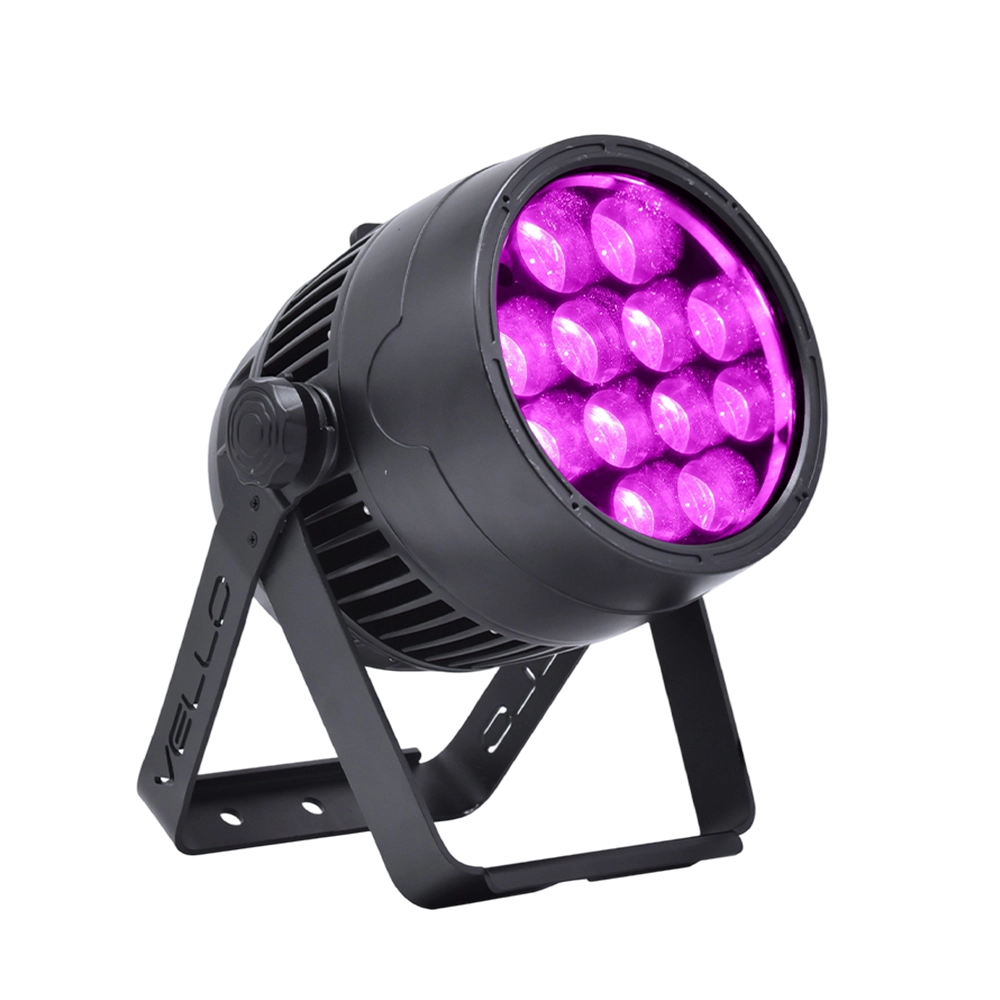
Stage LED Par Light LED ZOOMPAR 40
The Vello Zoom Par 40 IP is a powerful outdoor LED wash light equipped with 12x high-power 7-in-1 RGBACL LEDs. Designed for durability and rich color rendering, it features a wide motorized zoom (6°–50°), smooth dimming, and adjustable CTO presets (3200K–7500K), with 90+ CRI. With an IP66-rated die-cast aluminum body, it’s ideal for both indoor and outdoor applications, including stage lighting, architecture, live events, and installations.
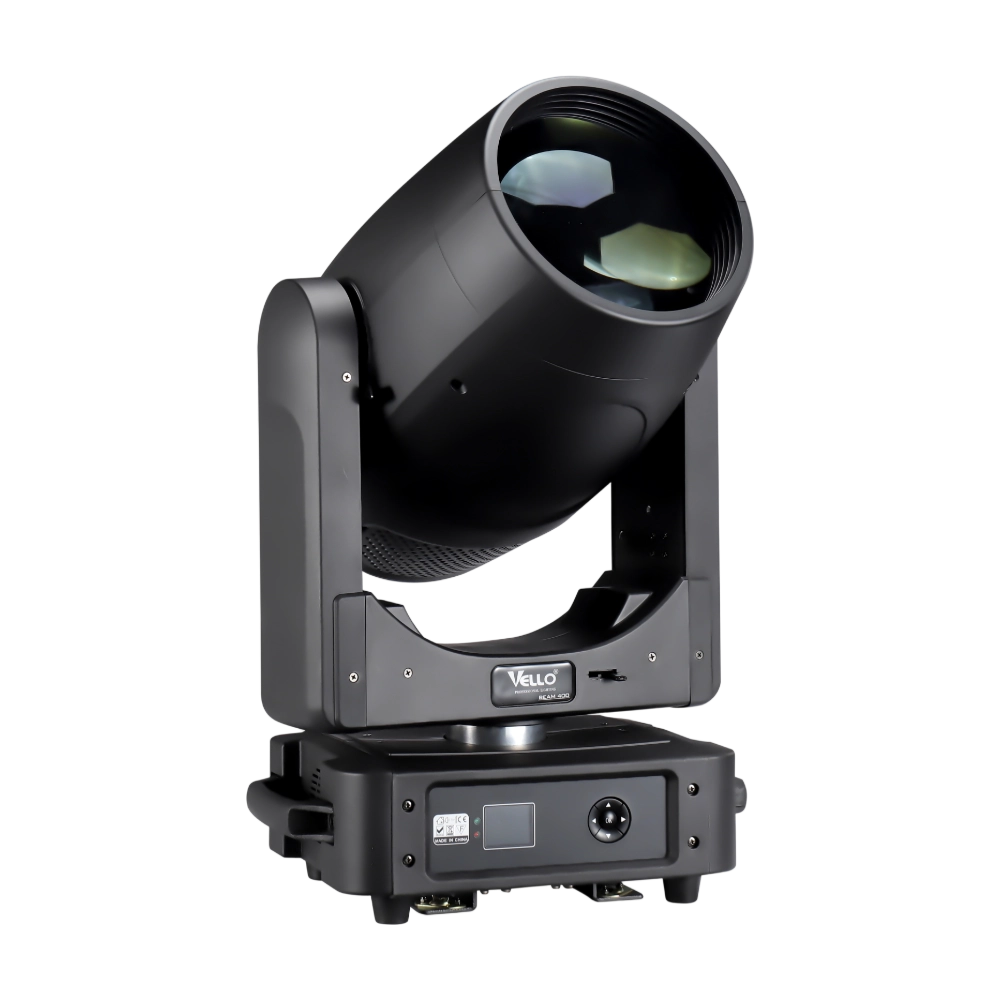
Moving Head Stage Light BEAM 400
BEAM400 is a 500W professional moving head beam powered by an OSRAM SIRIUS 371W discharge bulb, delivering a super-bright 1.8° sharp beam with impressive punch. It features 12 fixed gobos + open, a 14-color wheel, and a 16-facet circular rotating prism with multiple-facet effects, enabling dynamic aerial visuals. With 540° pan / 270° tilt, 16-bit movement resolution, and linear frost and focus, BEAM400 ensures precise and versatile performance. Comparable to traditional 750W moving heads, it combines high efficiency, smooth dimming, and reliable operation—ideal for concerts, tours, and large-scale stage productions.
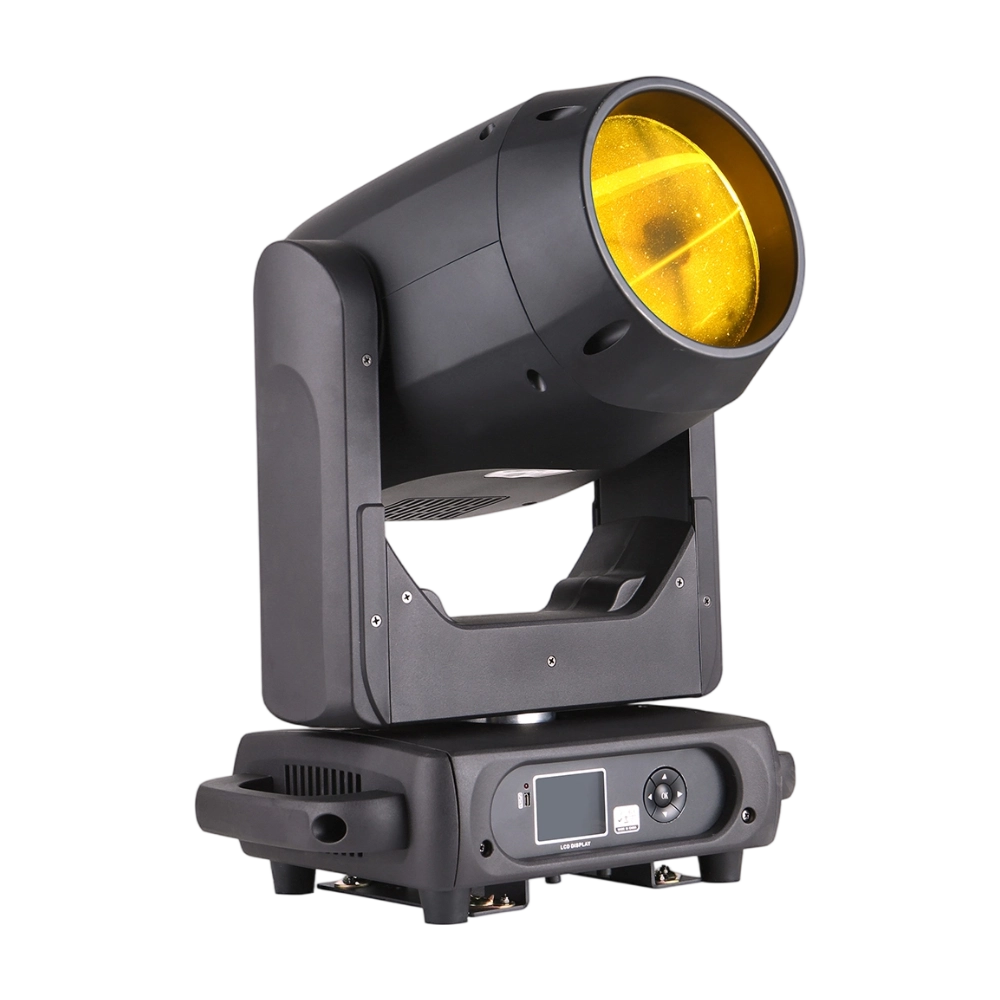
Moving Head Stage Light BEAM 360
BEAM360 is a 400W high-power moving head beam equipped with an OSRAM SIRIUS 311W discharge lamp, delivering a sharp 1.8° beam with super brightness. It features 14 colors + open, 12 fixed metal gobos + open, and dual prisms (8-facet circular + 8+16 multi-facet combination) for dynamic aerial effects. With 540° pan / 270° tilt, 16-bit movement, and linear frost and focus, BEAM360 ensures precision and versatility. Compact yet powerful, it rivals traditional 575W moving heads, making it ideal for concerts, clubs, and large-scale stage productions.
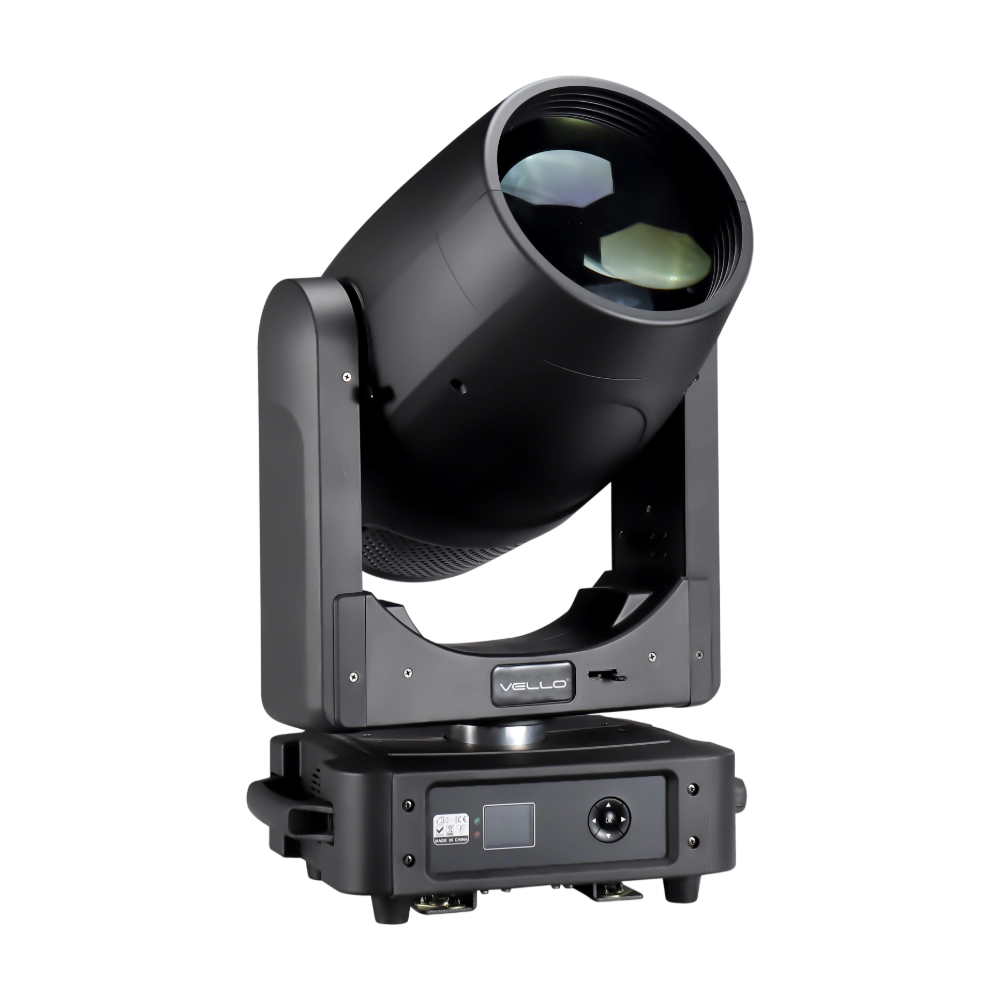
Moving Head Light BEAM 450
The BSW450 is a high-performance moving head fixture equipped with an original Osram 420W bulb, delivering exceptional brightness, precision, and versatility. Designed for professional stage applications, it seamlessly combines beam, spot, and wash functions in one compact unit, making it a powerful all-in-one lighting solution.
Over 20 Years of Innovation in Stage & Studio Lighting
© 2026 VELLO. All Rights Reserved. 粤ICP备20023734号
Join our socials
VELLO
Whatsapp: +8613902276704
Vello Lighting
VelloLights