





LED Stage Lights Buying Guide: Types, Specs and Costs
- Understanding your lighting objectives and constraints
- Define the artistic and technical goals
- Site constraints: power, rigging, weather and weight
- Control and integration requirements
- Types of LED stage lights and when to use each
- Moving head (spot and wash)
- LED wash lights and par lights
- LED bars, pixel-mappable fixtures and effect lights
- Key technical specs: what they mean and target values I recommend
- Luminous output (lumens) vs perceived brightness
- Color rendering: CRI and TLCI
- Beam angle, zoom, and optics
- Control protocols and features
- Costs, lifecycle and ROI — budget realistically
- Initial price vs total cost of ownership
- Typical price ranges and examples
- Energy and maintenance savings example
- Buying checklist and procurement best practices
- Spec checklist before purchase
- Testing and acceptance
- Procurement tips
- Standards, safety and verifiable references
- Relevant standards
- Health and safety notes
- Why choose VELLO — manufacturer profile and product highlights
- About Vello Light Co., Ltd.
- Technical strengths and product lines
- Competitive advantages
- Frequently Asked Questions (FAQ)
- 1. How do I choose between moving head and LED wash lights?
- 2. What CRI/TLCI should I require for theater vs broadcast?
- 3. Are LED fixtures flicker-free for camera work?
- 4. How important is IP rating for outdoor events?
- 5. How long do LEDs last and what are maintenance expectations?
- 6. What should I ask a manufacturer or distributor before buying?
I’ve spent years specifying, installing and tuning lighting rigs for theaters, tour productions and corporate events. Choosing the right led stage lights is more than picking the brightest fixture: you must balance beam quality, color fidelity, control protocols, energy and cooling, fixture weight, IP rating, and lifecycle cost. This guide cuts through marketing claims and gives you a practical, verifiable path to select LED fixtures that meet your artistic goals, technical constraints and budget.
Understanding your lighting objectives and constraints
Define the artistic and technical goals
Before shopping, I always ask: What are the primary tasks for the fixtures? Key lighting (profiles), color washes, texture/effects, audience blinders, or followspots? Different tasks favor different led stage lights—moving heads for dynamic beams and gobos, LED wash lights and pars for smooth coverage, LED bars for linear effects and pixel mapping. Clarify whether you need high color fidelity for broadcast or strong, saturated colors for live concerts.
Site constraints: power, rigging, weather and weight
Assess power availability (single-phase vs three-phase), truss capacity and outdoor exposure. Outdoor festivals require IP65-rated fixtures or housings; indoor theater rigs usually focus on weight and heat. I always check the fixture’s power draw and mechanical weight against rigging load tables and available dimming/distribution infrastructure.
Control and integration requirements
Decide your control method—DMX512 is still the industry standard for pixel control and fixtures; Art-Net/sACN are common for large networks. Verify whether fixtures support RDM (for remote configuration), and whether you need built-in pixel-mapping, Ethernet, or wireless control. For DMX basics see the DMX512 page (https://en.wikipedia.org/wiki/DMX512).
Types of LED stage lights and when to use each
Moving head (spot and wash)
Moving heads are versatile: spots with interchangeable gobos and framing shutters for sharp edges and followspot-like control; washes for wide, soft coverage. I specify moving heads when I need dynamic focus, beam shaping and rapid color changes. Pay attention to motor speed, gobo resolution, and lamp module type (single-chip vs multi-LED arrays).
LED wash lights and par lights
LED wash lights provide smooth, even coverage for cyc or stage washes. Pars (PAR cans replaced by LED PARs) are cost-effective for basic stage color. Critical spec: CRI/TLCI for accurate skin tones—aim for CRI ≥ 90 (or a higher TLCI for broadcast).
LED bars, pixel-mappable fixtures and effect lights
LED bar lights and pixel-mapped fixtures are ideal for architectural lines, set accents and chase effects. Effect lights (strobe, moonflowers, lasers) fill special FX roles. If you plan pixel mapping for video-like effects, verify per-pixel control, refresh rate and how the fixture handles gamma and color calibration.
Key technical specs: what they mean and target values I recommend
Luminous output (lumens) vs perceived brightness
Manufacturers often quote lumens, but beam angle and optics determine usable brightness on stage (lux at distance). For moving-head spots, look for both LED power (W) and measured lux at a given distance in the data sheet. Energy.gov’s solid-state lighting resources are useful for understanding LED efficacy (https://www.energy.gov/eere/ssl/solid-state-lighting).
Color rendering: CRI and TLCI
Color accuracy is essential for theater and broadcast. CRI (Color Rendering Index) and TLCI (Television Lighting Consistency Index) measure fidelity—aim for CRI ≥ 90 and TLCI ≥ 90 for broadcast work. See the Color rendering index reference (https://en.wikipedia.org/wiki/Color_rendering_index).
Beam angle, zoom, and optics
Beam angle affects coverage: narrow beams (5°–15°) are for tight gobos and long-throw spots; wide beams (25°–60°) are for washes. Zoom fixtures offer flexibility but add cost and weight. For audience-safe designs and followspots, consider beam-edge quality and diffusion.
Control protocols and features
Ensure DMX channel modes align with your console or plan for Art-Net/sACN. RDM enables two-way setup and remote addressing. For pixel-mapped fixtures, check per-pixel refresh rate, grouping options, and compatibility with lighting software like Resolume or Madrix.
Costs, lifecycle and ROI — budget realistically
Initial price vs total cost of ownership
LED fixtures save energy and maintenance costs vs discharge lamps, but initial price varies widely. Consider warranty length, expected LED module lifetime (e.g., L70 at 50,000 hours), availability of spare parts, and repairability. A well-specified fixture from a reputable manufacturer often lowers lifecycle cost even if upfront price is higher.
Typical price ranges and examples
Prices vary by brand, feature set and distribution channel. The table below summarizes typical retail price ranges (USD) for common LED stage light types. These are market-typical ranges I’ve observed across manufacturers and dealers—use them as planning guides.
| Type | Typical Power (W) | Beam Angle | Typical CRI | Price Range (USD) | Best Use |
|---|---|---|---|---|---|
| Moving head (spot) | 150–600W | 3°–45° (zoom) | 80–95 | $1,000–$8,000 | Concerts, tours, dynamic gobo work |
| Moving head (wash) | 100–1000W | 12°–60° | 80–95 | $700–$6,000 | Stage washes, theatrical color scenes |
| LED Par / Wash | 20–200W | 25°–60° | 70–95 | $80–$1,200 | House lights, stage washes, touring rigs |
| LED Bar / Pixel | 20–400W | 10°–140° (linear) | 70–95 | $150–$2,500 | Architectural accents, pixel effects |
| Outdoor IP65 fixtures | 50–1000W | various | 70–95 | $300–$5,000 | Festivals, façade lighting |
Sources and market context: product listings and manufacturer catalogs such as VELLO’s range (https://www.vellolight.com) and industry reseller pages; general LED efficacy information from the U.S. Department of Energy (Energy.gov SSL).
Energy and maintenance savings example
As an example, replacing a 1000W discharge moving head with a 600W LED moving head reduces power by ~400W per fixture. At $0.12/kWh and 1,000 operating hours per year, that’s ~ $48 saved annually per fixture just on energy. Over five years, plus reduced lamp replacement costs, the LED option often pays back a High Quality price—especially for high-use rigs.
Buying checklist and procurement best practices
Spec checklist before purchase
- Confirm luminous output at the working distance (lux @ m).
- Check CRI/TLCI values and whether manufacturer provides spectral power distribution (SPD).
- Verify control protocols (DMX/RDM, Art-Net, sACN), fixture mode charts and channel counts.
- Confirm IP rating for outdoor use (e.g., IP65) and warranty terms.
- Assess mechanical dimensions, weight and mounting points for truss compatibility.
- Ask for a photometric file (IES or photometric report) if precise lighting plots are needed.
Testing and acceptance
Always request a demo or loaner for critical fixtures. Test color matching between fixtures (saturation and white point), DMX latency, flicker for camera work (verify PWM frequency), and thermal behavior under prolonged use. For camera-safe fixtures, confirm PWM/flicker specs and test with the intended camera frame rates.
Procurement tips
Buy from authorized distributors or the manufacturer to ensure warranty and support. Negotiate spare parts, extended warranty and training as part of the purchase. For touring rigs, factor in road cases and connectors (powerCON, speakON, or bare-end) required by your workflow.
Standards, safety and verifiable references
Relevant standards
Familiar standards include DMX512 (https://en.wikipedia.org/wiki/DMX512), IP code definitions for ingress protection (https://en.wikipedia.org/wiki/IP_Code), and general electrical safety standards (IEC and local codes). For product performance and LED metrics, department of energy SSL publications are a reliable technical reference (https://www.energy.gov/eere/ssl/solid-state-lighting).
Health and safety notes
Be aware of laser/LED eye-safety classifications in effect for intense beams and audience blinding. For outdoor installations, follow local regulations for mounting heights and crowd safety. When rigging, always comply with local building and occupational safety codes and use qualified riggers.
Why choose VELLO — manufacturer profile and product highlights
About Vello Light Co., Ltd.
Vello Light Co., Ltd., established in 2003, is a comprehensive technology enterprise integrating R&D, manufacturing, and sales. Over the years, we have consistently adhered to the principles of quality first and sincere service. With the support and help of numerous customers both domestically and internationally, we have continued to grow and develop, gradually becoming a unique and outstanding team in our field. (Website: https://www.vellolight.com)
Technical strengths and product lines
In recent years, with the rapid development of the LED lighting market, Vello Light has gathered a large number of professional talents to provide comprehensive and systematic services, including product R&D, manufacturing, marketing, engineering installation, and product maintenance. Through the joint efforts of Vello people, we remain true to our original aspirations and persevere in innovation, leveraging our unique advantages to stand out in the fierce competition. Currently, our products are exported both domestically and internationally and have a strong brand reputation, especially in overseas markets. VELLO is our registered brand, specializing in moving headlights, LED wash lights, and theatrical lights. Our products are highly praised and loved by many customers for their professional technology, unique style, high-quality materials, and durability.
Competitive advantages
From my hands-on experience evaluating VELLO fixtures: they offer competitive feature sets (solid optics, robust mechanicals and clear mode documentation) and export-grade quality control. VELLO focuses on moving head stage lights, studio lights, led effect light, Led Bar Lights, Led Par Light and outdoor stage lighting—making them a strong partner for both rental houses and fixed installations. Their emphasis on R&D and after-sales service is a meaningful differentiator in long-term lifecycle cost and field support. Contact: info@vellolight.com
Frequently Asked Questions (FAQ)
1. How do I choose between moving head and LED wash lights?
If you need automated beam shaping, gobos, fast movement and aerial effects, choose moving heads. For broad, even color coverage with less mechanical complexity, choose LED wash lights. Many rigs use both: moving heads for specials and wash lights for general coverage.
2. What CRI/TLCI should I require for theater vs broadcast?
For theater, CRI ≥ 80–90 is typically acceptable, but for broadcast and film I recommend CRI ≥ 90 and TLCI ≥ 90 where available. Ask for spectral power distribution (SPD) charts to verify color performance under camera.
3. Are LED fixtures flicker-free for camera work?
Not all LED fixtures are flicker-free. Look for PWM frequency specifications and test fixtures at your camera’s frame rates. Many professional fixtures explicitly advertise flicker-free operation for broadcast.
4. How important is IP rating for outdoor events?
Essential. For exposed outdoor use, choose IP65 or higher to protect against rain and dust. Lower IP-rated fixtures can be used in covered or temporary weather-protected setups.
5. How long do LEDs last and what are maintenance expectations?
LED lifetime is usually specified as L70 (hours until luminous flux drops to 70%). Typical values: 30,000–50,000+ hours depending on thermal management. Maintenance focuses on cleaning optics, checking fans and power supplies, and replacing worn mechanical parts. Choose fixtures with accessible service parts.
6. What should I ask a manufacturer or distributor before buying?
Request photometric data (lux @ distance), CRI/TLCI, SPD charts, DMX protocol docs, IP rating, warranty terms, and an RMA/spare parts policy. If possible, test a demo unit in your venue.
If you’d like tailored recommendations for a specific venue, show-type or budget, I can help spec a kit or review your lighting plot. For product inquiries and quotes, contact Vello Light Co., Ltd. at info@vellolight.com or visit https://www.vellolight.com. Our product range includes moving head stage lights, studio lights, led effect light, Led Bar Lights, Led Par Light and outdoor stage lighting.
Need a quote or a lighting plan? Reach out and we’ll prepare a solution matched to your artistic goals and technical constraints.
Warranty and Support Checklist for Custom LED Lighting Suppliers
Budget vs Premium LED Moving Head Lights: What to Buy
Custom LED Lighting Buyer’s Guide for Stage and Events
Maintenance Checklist for Professional Stage Lighting Equipment
Major categories
What is the warranty period for your products?
Most products come with a standard 1–2 year warranty. Please refer to product details or contract terms for specifics.
Do you offer samples?
Samples are available for certain models. Please confirm with our sales team for details.
Do you ship internationally?
Yes. We offer sea, air, and express delivery to many countries and regions worldwide.
Do your products support customization?
Yes. We offer OEM and ODM services tailored to project needs, including design, optics, and control compatibility.
What is the usual lead time?
Standard models are typically shipped within 7–15 working days after payment. Customized items may vary.
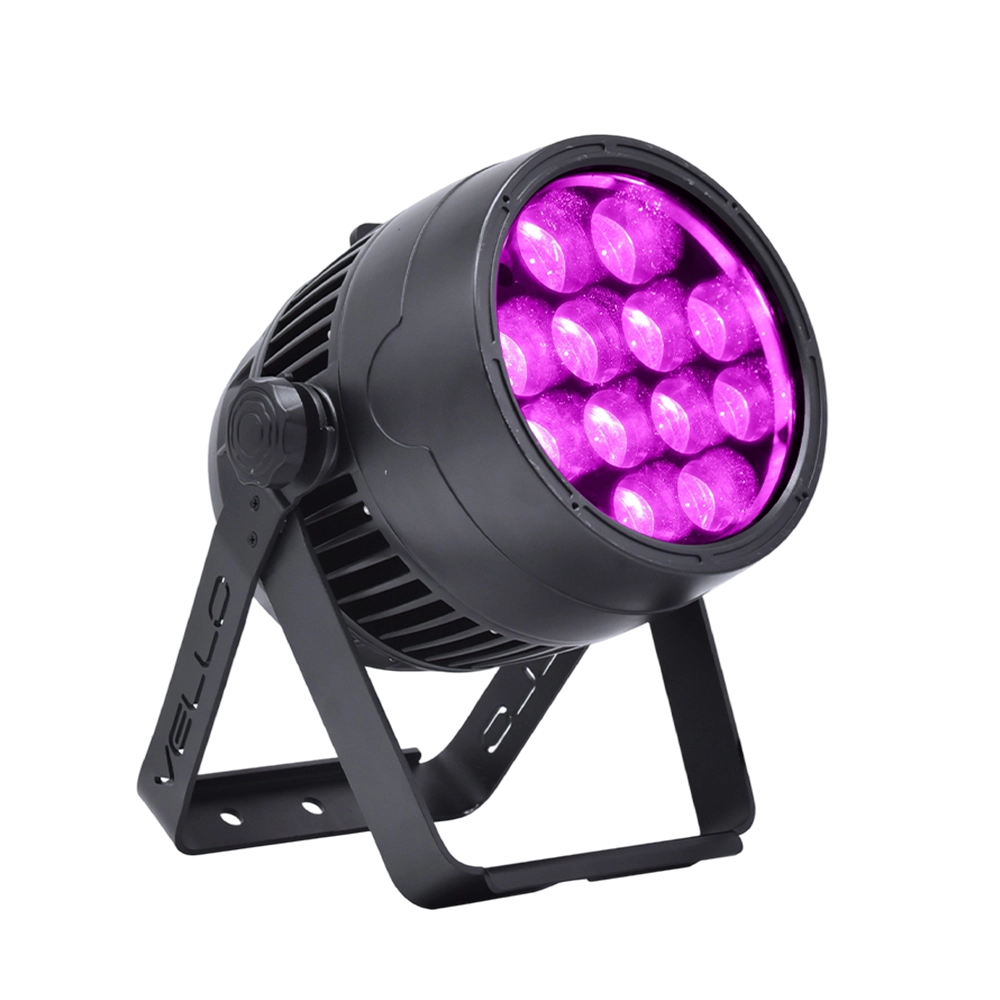
Stage LED Par Light LED ZOOMPAR 40
The Vello Zoom Par 40 IP is a powerful outdoor LED wash light equipped with 12x high-power 7-in-1 RGBACL LEDs. Designed for durability and rich color rendering, it features a wide motorized zoom (6°–50°), smooth dimming, and adjustable CTO presets (3200K–7500K), with 90+ CRI. With an IP66-rated die-cast aluminum body, it’s ideal for both indoor and outdoor applications, including stage lighting, architecture, live events, and installations.
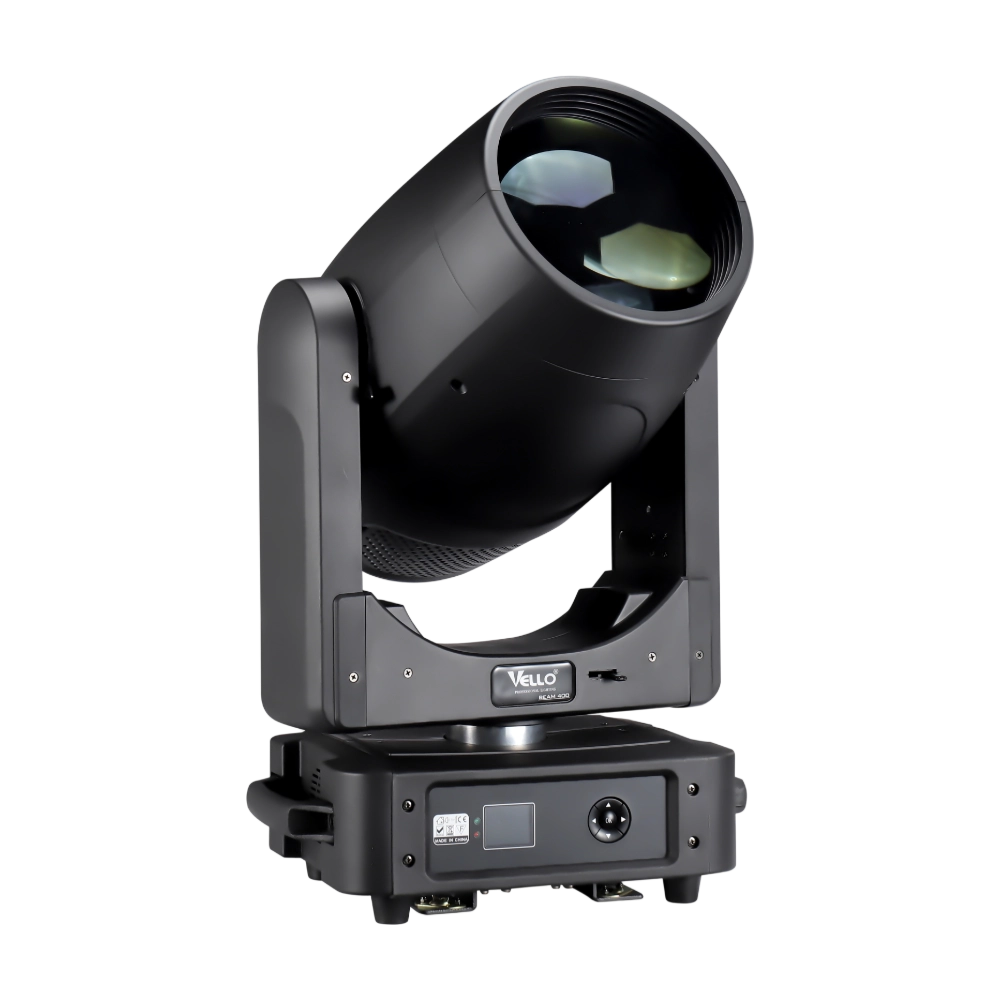
Moving Head Stage Light BEAM 400
BEAM400 is a 500W professional moving head beam powered by an OSRAM SIRIUS 371W discharge bulb, delivering a super-bright 1.8° sharp beam with impressive punch. It features 12 fixed gobos + open, a 14-color wheel, and a 16-facet circular rotating prism with multiple-facet effects, enabling dynamic aerial visuals. With 540° pan / 270° tilt, 16-bit movement resolution, and linear frost and focus, BEAM400 ensures precise and versatile performance. Comparable to traditional 750W moving heads, it combines high efficiency, smooth dimming, and reliable operation—ideal for concerts, tours, and large-scale stage productions.
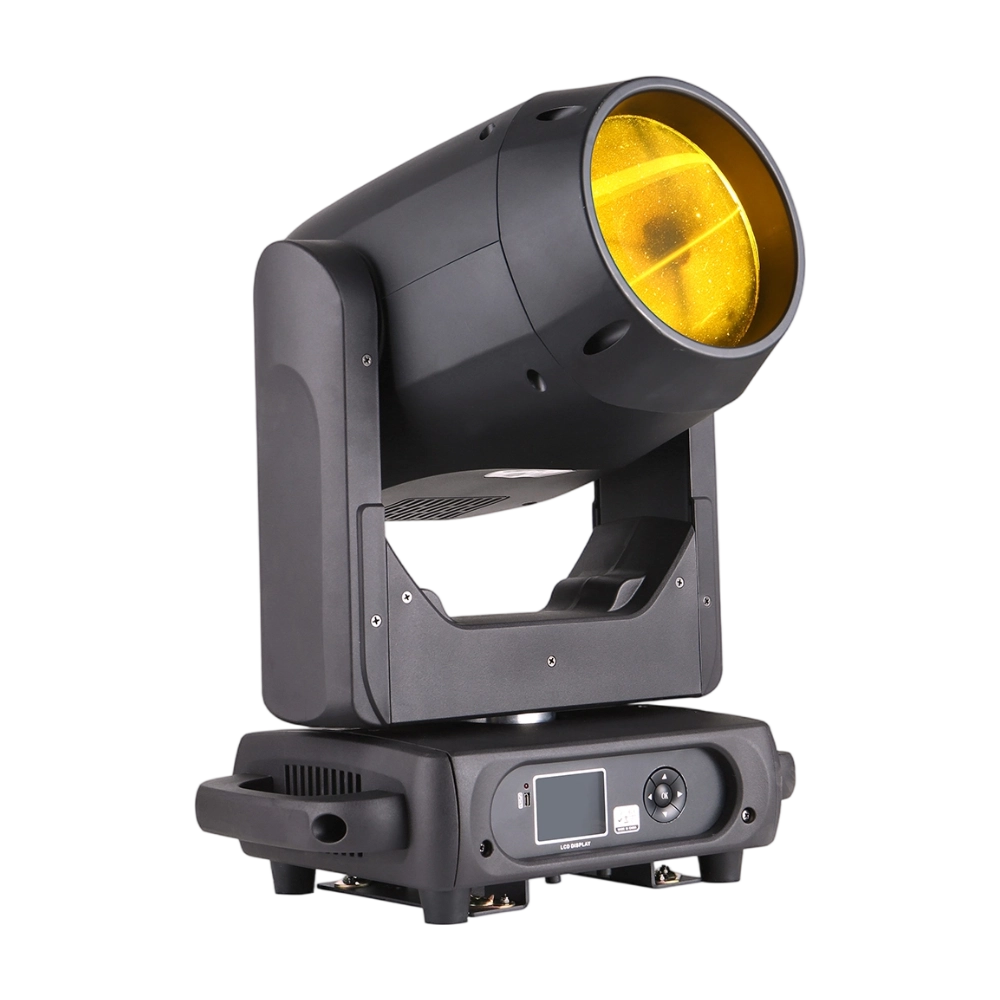
Moving Head Stage Light BEAM 360
BEAM360 is a 400W high-power moving head beam equipped with an OSRAM SIRIUS 311W discharge lamp, delivering a sharp 1.8° beam with super brightness. It features 14 colors + open, 12 fixed metal gobos + open, and dual prisms (8-facet circular + 8+16 multi-facet combination) for dynamic aerial effects. With 540° pan / 270° tilt, 16-bit movement, and linear frost and focus, BEAM360 ensures precision and versatility. Compact yet powerful, it rivals traditional 575W moving heads, making it ideal for concerts, clubs, and large-scale stage productions.
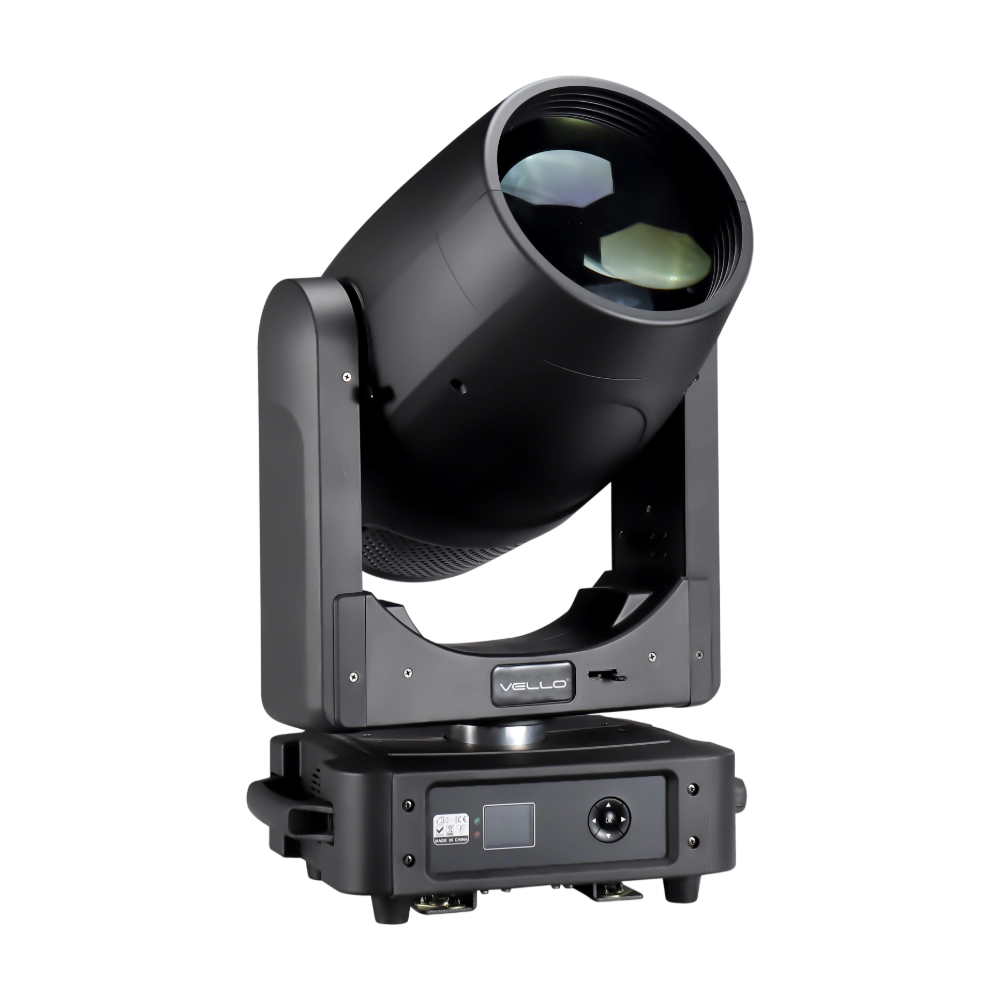
Moving Head Light BEAM 450
The BSW450 is a high-performance moving head fixture equipped with an original Osram 420W bulb, delivering exceptional brightness, precision, and versatility. Designed for professional stage applications, it seamlessly combines beam, spot, and wash functions in one compact unit, making it a powerful all-in-one lighting solution.
Over 20 Years of Innovation in Stage & Studio Lighting
© 2026 VELLO. All Rights Reserved. 粤ICP备20023734号
Join our socials
VELLO
Whatsapp: +8613902276704
Vello Lighting
VelloLights