





LED Stage Lights Buying Guide: Pick the Right Fixture
- Understanding performance needs before you buy
- Define the creative and technical brief
- Quantify the venue and photometric needs
- Match photometrics to fixture specifications
- Fixture families and how to choose
- Moving heads: beam vs. wash vs. hybrid
- LED wash lights and pars
- Effect lights, bars, and pixels
- Controls, connectivity and integration
- DMX, Art-Net, sACN and pixel mapping
- Flicker, PWM and camera safety
- Power and infrastructure
- Budgeting, maintenance and supplier selection
- Cost vs. lifetime and total cost of ownership
- Reliability, service and parts availability
- Environmental and outdoor considerations
- Side-by-side fixture comparison
- How I evaluate suppliers — checklist for procurement
- Technical documentation and testing
- Warranty, service network and spare parts
- References and field trials
- About Vello Light — a practical vendor option
- Final checklist before purchase
- FAQ — Frequently Asked Questions
- 1. What is the difference between LED moving head wash and spot fixtures?
- 2. How many lumens do I need for a small theater stage?
- 3. Are LED stage lights suitable for broadcast and film?
- 4. What maintenance do LED fixtures require?
- 5. How do I choose between DMX, Art-Net and sACN?
- 6. Should I prioritize CRI or saturation for concert fixtures?
- Contact & next steps
LED Stage Lights Buying Guide: Pick the Right Fixture
Choosing the right led stage lights requires balancing artistic goals, technical requirements, and operational constraints. In this guide I summarize the key performance indicators — lumen output, beam angle, color rendering (CRI), pixel/control capability, and thermal management — and show how to translate them into fixture choices for concerts, theaters, houses of worship, TV studios, and live events. Wherever relevant I cite authoritative sources to help you verify claims and make evidence-based purchases.
Understanding performance needs before you buy
Define the creative and technical brief
I always start by asking: What is the show’s visual language? Do you need tight spots for facial highlights, soft washes for scenic color, pixel-mapped effects for dynamic looks, or rugged outdoor fixtures? These creative answers map directly to fixture families: profile/spot moving heads, LED wash lights, LED pars, moving effect beams, LED bars, and outdoor IP-rated wash or beam fixtures. Knowing this up front avoids buying versatile but economically mismatched fixtures.
Quantify the venue and photometric needs
Measure or estimate stage size and viewing distances. For example, a 10 m wide performance area needs far more light (and/or narrower beam fixtures) than a 4 m wide stage. I recommend using lux targets: 300–500 lux for general stage wash in small theaters, 700–1500 lux for broadcast/studio work (to meet camera exposure and color spec), and variable higher peaks for concerts. For background reading on lighting fundamentals and units, see the Stage lighting overview on Wikipedia and technical guidance from the Illuminating Engineering Society (IES).
Match photometrics to fixture specifications
Compare manufacturer photometric charts (candela, lux at distance, beam angle) rather than relying only on lumen numbers. LEDs distribute light differently from traditional discharge lamps; beam angle and optics determine usable output on stage. When possible, request photometric reports (IES or LDT files) from suppliers and run a simple calculation: lux = candela / distance^2 (with appropriate conversion). This approach is more reliable than comparing raw lumens across different fixture types.
Fixture families and how to choose
Moving heads: beam vs. wash vs. hybrid
Moving head fixtures dominate modern productions because of their versatility. There are three broad categories:
- Moving head beam/spot: very narrow beams (1°–6°), sharp gobos, high intensity — ideal for arena concerts and effects.
- Moving head wash: wider optics (15°–60°), soft edges, excellent color mixing — ideal for stage wash and color fills.
- Hybrid/profile: combine zooming optics, gobos and wash elements for flexible rigs.
- Integrated R&D and manufacturing capability for responsive product customization.
- Industry experience since 2003 with an emphasis on quality and service.
- Strong export track record and overseas market presence.
- Focus product lines: moving head stage lights, studio lights, LED effect lights, LED bar lights, LED PAR lights, and outdoor stage lighting.
- Confirm photometric compatibility: lux targets, beam angles, IES files.
- Verify color metrics (CRI/TLCI) for camera environments.
- Check control compatibility (DMX, Art-Net/sACN) and RDM support.
- Validate power requirements and thermal management needs.
- Evaluate warranty, spare parts availability, and service network.
- Run a field test where possible; demo units reveal real-world behavior.
When choosing moving heads I check: max LED power, zoom range, gobo library, CMY/CTO or RGBAL color mixing, refresh rate (for camera use), and tilt/pan speed. For broadcast work, request flicker-free operation and high PWM frequencies; for concerts, look for long-throw beam intensity.
LED wash lights and pars
LED wash fixtures (including LED Par lights) are cost-effective for general illumination. Key metrics are CRI/TLCI (color accuracy), color uniformity across zoom, and the number of LED emitters (RGB vs. RGBW vs. RGBAL) which affects saturation and pastel reproduction. For studio or film, aim for TLCI ≥ 90 or CRI ≥ 90; for live music, CRI 70–85 is often acceptable if the colors pop.
Effect lights, bars, and pixels
For texture and motion I use LED bars, pixel-mappable battens, and dedicated effect fixtures. These are selected based on pixel density (pixels per meter), control protocol (DMX vs. Art-Net/sACN), and IP rating when used outdoors. For architectural backdrops or cyclorama washes, high-density LED bars with even diffusion are preferable to avoid visible LED points on camera.
Controls, connectivity and integration
DMX, Art-Net, sACN and pixel mapping
DMX512 remains the baseline control protocol for moving heads and wash lights; for pixel mapping and networked control, Art-Net or sACN are standard. If you plan high-resolution LED pixel arrays, confirm the fixture’s method of pixel addressing and whether it supports RDM for remote setup. For technical background on DMX512, see DMX512 on Wikipedia.
Flicker, PWM and camera safety
Camera work demands attention to flicker. Low-cost LED fixtures may use low-frequency PWM that shows banding on video. Ask suppliers for PWM frequency specs or flicker-free guarantees (typically several kHz or specialized LED drivers). For broadcast, manufacturers often publish flicker-free or camera-mode specs; insist on these for studio or livestreamed events.
Power and infrastructure
Understand electrical loads and power distribution. LED fixtures are more efficient than discharge lamps, but a touring rig with dozens of moving heads can still draw significant current. Calculate total wattage, add a safety margin (15–25%), and design distro accordingly. For reliable guidance on LED efficiency and benefits, the U.S. Department of Energy’s Solid-State Lighting program is an authoritative resource: DOE SSL.
Budgeting, maintenance and supplier selection
Cost vs. lifetime and total cost of ownership
Upfront fixture price is only part of the equation. Consider expected LED life (often 30,000–50,000 hours), warranty, spare parts availability, and ease of service. A higher quality moving head with robust bearings and sealed optics can cost more initially but reduce downtime and maintenance labor over the long term.
Reliability, service and parts availability
I prioritize suppliers who provide comprehensive R&D documentation, local service partners, and transparent spare parts lists. This becomes critical for touring companies and rental houses where quick turnarounds are non-negotiable. Industry standardization (RDM, DMX compatibility) also reduces integration headaches.
Environmental and outdoor considerations
For outdoor stage lighting select fixtures with appropriate IP ratings (IP65 for rain resistance is common). Consider corrosion-resistant materials for coastal locations, and thermal design that handles direct sun exposure and ventilation under hot load. Outdoor fixtures often require different optics to achieve usable beam lengths in open-air venues.
Side-by-side fixture comparison
To make selection tangible, here is a practical comparison of common fixture types with approximate performance ranges. Values are general industry norms and should be validated against manufacturer photometrics for specific models.
| Fixture Type | Typical Use | Typical Output (approx.) | Beam Angle | DMX/Control | Typical Price Range (USD) |
|---|---|---|---|---|---|
| Moving head beam/spot | Concert effects, long throws | 30,000–120,000 lumens-equivalent (peak lumen/candela dependent) | 1°–8° (narrow) | DMX/Art-Net, RDM | $1,200–$8,000 |
| Moving head wash | General stage wash, color mixing | 10,000–40,000 lumens-equivalent | 10°–60° (zoom) | DMX/Art-Net | $800–$4,000 |
| LED PAR / wash | Stage wash, uplight, budget rigs | 1,500–15,000 lumens | 20°–60° | DMX | $50–$800 |
| LED bar / pixel batten | Backdrops, pixel effects | Varies by density (2,000–25,000 lumens) | Wide linear | DMX/Art-Net, pixel mapping | $200–$2,500 |
| Outdoor IP rated wash/beam | Festivals, permanent outdoor installs | 10,000–80,000 lumens | 6°–60° | DMX/Art-Net | $500–$6,000 |
Data sources and deeper reading: DOE Solid-State Lighting (energy.gov/ssl) and IES publications (ies.org) provide benchmarks for luminous efficacy and application guidance.
How I evaluate suppliers — checklist for procurement
Technical documentation and testing
I request photometric reports (IES files), extended electrical specs, thermal tests and PWM/flicker data for camera safety. Suppliers who cannot provide these documents are disqualified for professional installations.
Warranty, service network and spare parts
A one-year warranty is common, but I favor longer manufacturer warranties or optional extended-care plans. Verify spare parts lead times and whether the supplier offers field-replaceable modules (drivers, fans, lenses) which reduce downtime.
References and field trials
Ask for references and, if possible, a demo. A short onsite trial or rental period often reveals practical issues: color shifts, noise, reliability under heat, or control complexities that spec sheets can’t show.
About Vello Light — a practical vendor option
Vello Light Co., Ltd., established in 2003, is a comprehensive technology enterprise integrating R&D, manufacturing, and sales. Over the years, we have consistently adhered to the principles of quality first and sincere service. With the support and help of numerous customers both domestically and internationally, we have continued to grow and develop, gradually becoming a unique and outstanding team in our field.
In recent years, with the rapid development of the LED lighting market, Vello Light has gathered a large number of professional talents to provide comprehensive and systematic services, including product R&D, manufacturing, marketing, engineering installation, and product maintenance. Through the joint efforts of Vello people, we remain true to our original aspirations and persevere in innovation, leveraging our unique advantages to stand out in the fierce competition. Currently, our products are exported both domestically and internationally and have a strong brand reputation, especially in overseas markets. VELLO is our registered brand, specializing in moving headlights, LED wash lights, and theatrical lights. Our products are highly praised and loved by many customers for their professional technology, unique style, high-quality materials, and durability.
Our vision is to become a world-leading stage lighting manufacturer. Visit https://www.vellolight.com or email info@vellolight.com to discuss custom solutions for moving head stage lights, studio lights, led effect light, Led Bar Lights, Led Par Light, and outdoor stage lighting. VELLO’s competitive strengths are:
Final checklist before purchase
FAQ — Frequently Asked Questions
1. What is the difference between LED moving head wash and spot fixtures?
Moving head spot/beam fixtures focus intense, narrow beams with gobos and sharp edges for effect, while moving head wash fixtures have wider optics for smooth color blending and stage coverage. Choose spots for directional accents and washes for even illumination.
2. How many lumens do I need for a small theater stage?
Target around 300–500 lux for general stage wash in small theaters. Convert lux to lumens based on area: lumens = lux × area (m²). Always include fixture placement, beam angle, and losses in rigging when calculating real needs.
3. Are LED stage lights suitable for broadcast and film?
Yes, but you must select fixtures with high TLCI/CRI (≥90), flicker-free drivers (high PWM frequency or flicker-free mode), and stable color temperature. Ask manufacturers for camera-level specifications and test on camera before finalizing a rig.
4. What maintenance do LED fixtures require?
LEDs have long lifetimes, but fixtures need periodic cleaning (optics and fans), firmware updates, and occasional replacement of wearable parts (fans, seals). For touring rigs, modular designs that enable field replacement reduce downtime.
5. How do I choose between DMX, Art-Net and sACN?
DMX is the industry baseline for point-to-point control; Art-Net and sACN are IP-based protocols that scale better for large pixel installations and networked control. If you plan pixel mapping or large networks, ensure units support Art-Net/sACN and that your console and network gear are compatible.
6. Should I prioritize CRI or saturation for concert fixtures?
For concerts and entertainment where saturated colors are desired, RGB or RGBW fixtures with strong color mixing are common. For scenes requiring natural skin tones or broadcast, prioritize high CRI/TLCI. Some modern fixtures offer tunable white and extended gamut LEDs (e.g., RGBAL) to balance both needs.
Contact & next steps
If you’d like a project assessment or a supplier recommendation, I invite you to contact VELLO for demo units, photometric files, and customized quotations. Visit https://www.vellolight.com or email info@vellolight.com. I’m available to review venue measurements, help build a fixture plot, and specify control and power infrastructure to ensure your led stage lights deliver the intended visual impact reliably and within budget.
References: DOE Solid-State Lighting (energy.gov/ssl), Stage lighting overview (Wikipedia), DMX512 protocol (Wikipedia), Illuminating Engineering Society (ies.org).
How to Choose the Best LED Stage Lights for Live Events
Buyer's Guide: Choosing LED Stage Lights for Tours
Bulk Pricing and Volume Procurement for LED Stage Lights
DMX and Control Protocols for LED Moving Head Light
Major categories
Do you offer samples?
Samples are available for certain models. Please confirm with our sales team for details.
Do your products support customization?
Yes. We offer OEM and ODM services tailored to project needs, including design, optics, and control compatibility.
What is the usual lead time?
Standard models are typically shipped within 7–15 working days after payment. Customized items may vary.
Do you ship internationally?
Yes. We offer sea, air, and express delivery to many countries and regions worldwide.
What is the warranty period for your products?
Most products come with a standard 1–2 year warranty. Please refer to product details or contract terms for specifics.
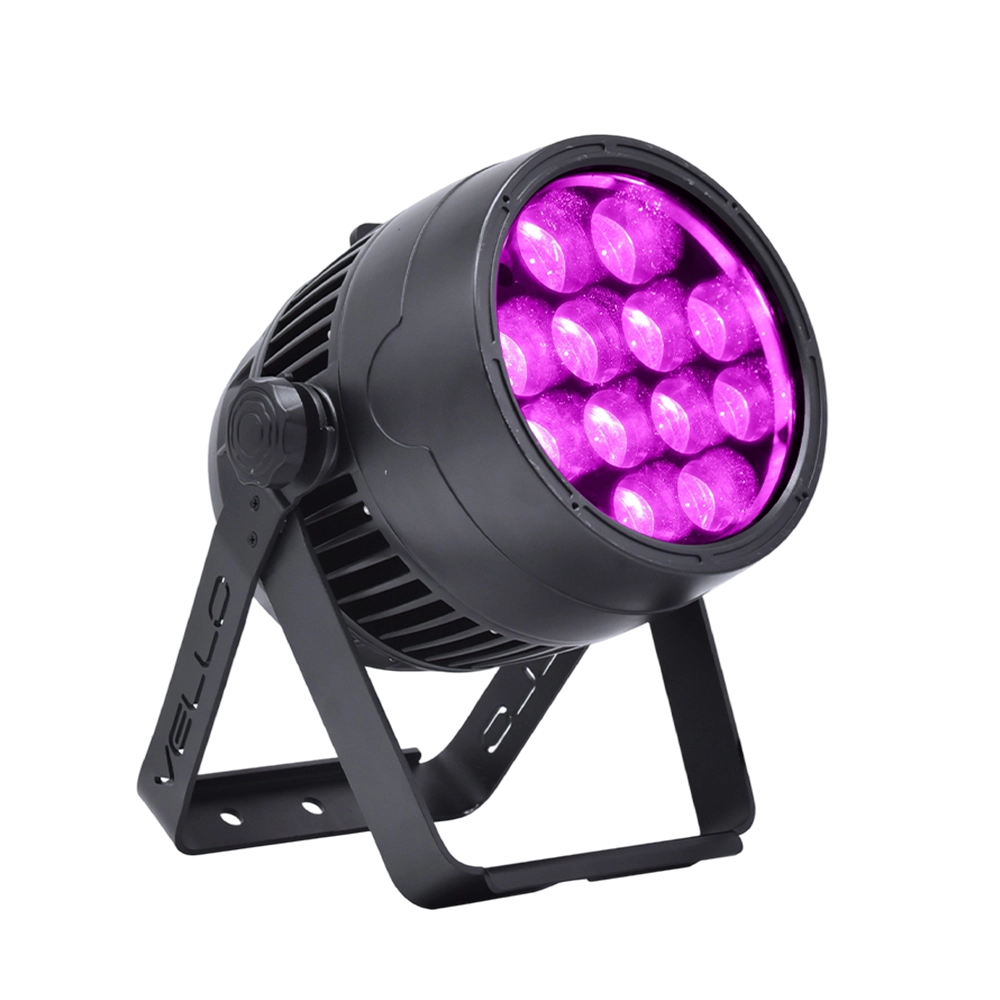
Stage LED Par Light LED ZOOMPAR 40
The Vello Zoom Par 40 IP is a powerful outdoor LED wash light equipped with 12x high-power 7-in-1 RGBACL LEDs. Designed for durability and rich color rendering, it features a wide motorized zoom (6°–50°), smooth dimming, and adjustable CTO presets (3200K–7500K), with 90+ CRI. With an IP66-rated die-cast aluminum body, it’s ideal for both indoor and outdoor applications, including stage lighting, architecture, live events, and installations.
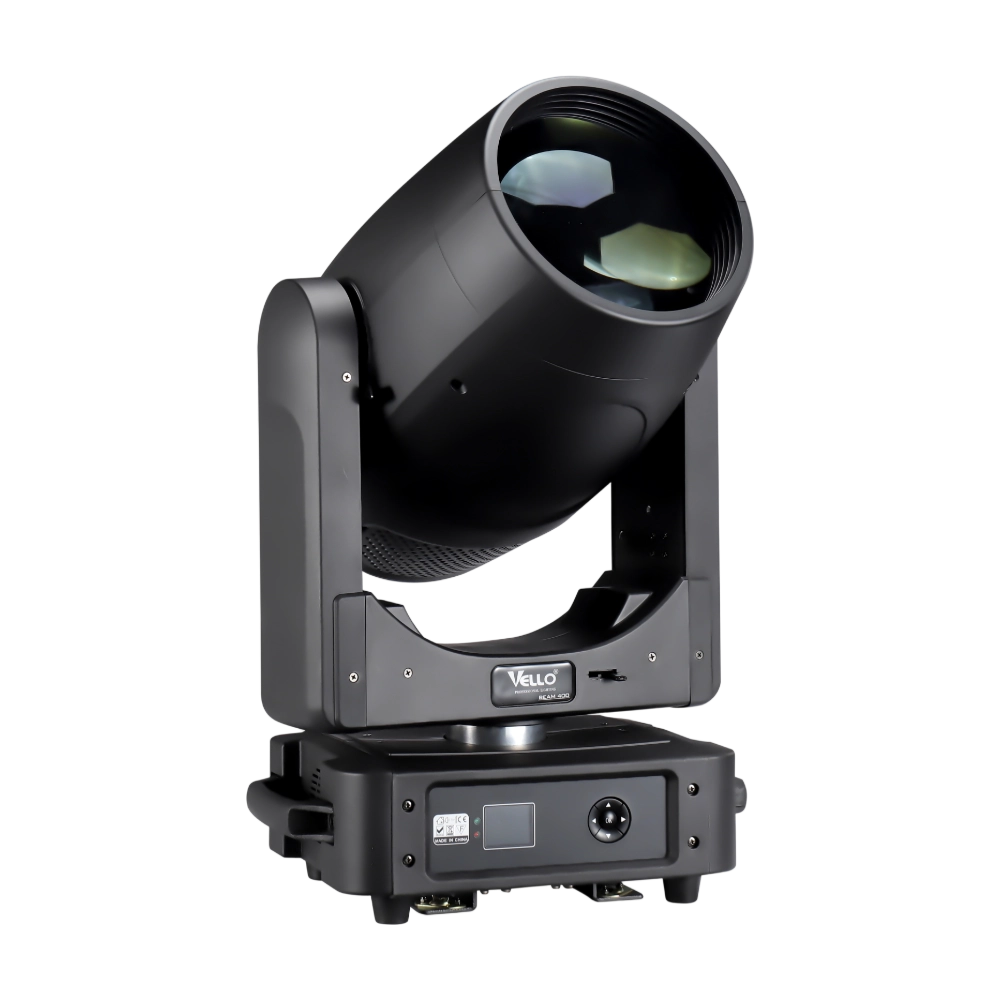
Moving Head Stage Light BEAM 400
BEAM400 is a 500W professional moving head beam powered by an OSRAM SIRIUS 371W discharge bulb, delivering a super-bright 1.8° sharp beam with impressive punch. It features 12 fixed gobos + open, a 14-color wheel, and a 16-facet circular rotating prism with multiple-facet effects, enabling dynamic aerial visuals. With 540° pan / 270° tilt, 16-bit movement resolution, and linear frost and focus, BEAM400 ensures precise and versatile performance. Comparable to traditional 750W moving heads, it combines high efficiency, smooth dimming, and reliable operation—ideal for concerts, tours, and large-scale stage productions.
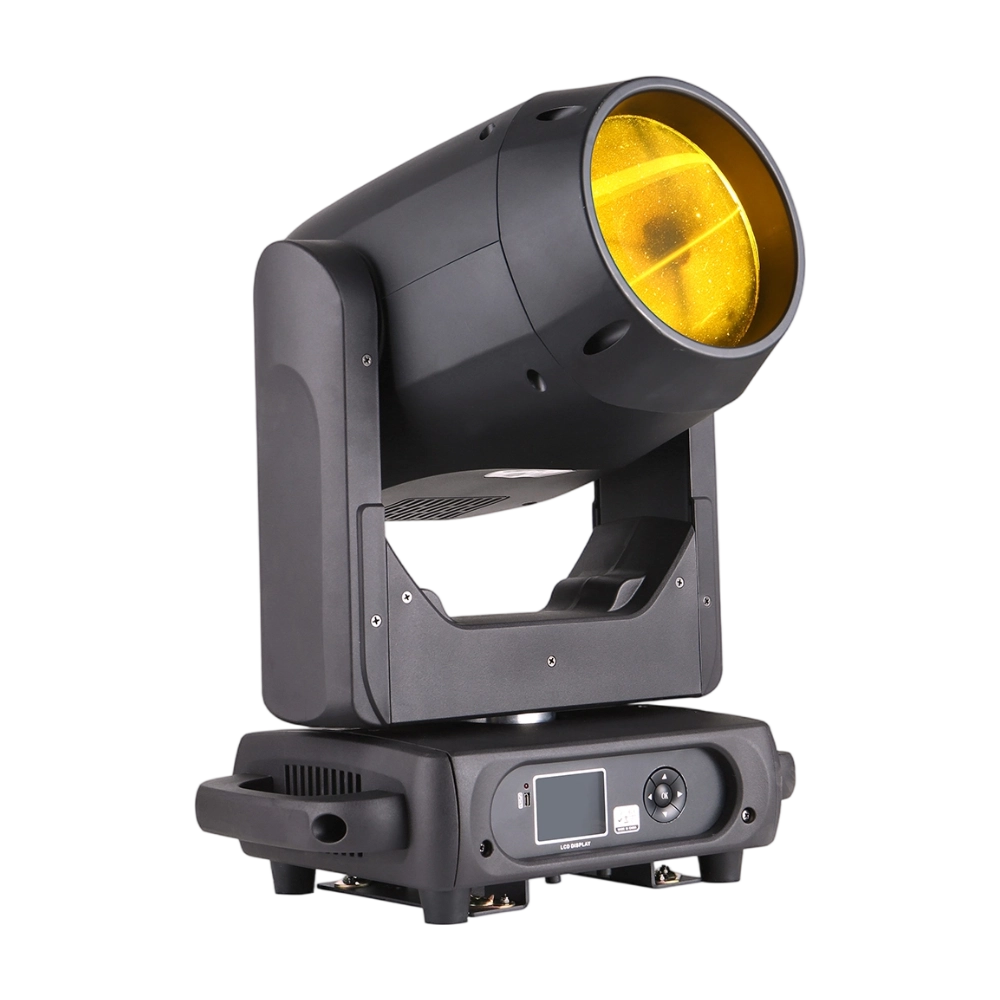
Moving Head Stage Light BEAM 360
BEAM360 is a 400W high-power moving head beam equipped with an OSRAM SIRIUS 311W discharge lamp, delivering a sharp 1.8° beam with super brightness. It features 14 colors + open, 12 fixed metal gobos + open, and dual prisms (8-facet circular + 8+16 multi-facet combination) for dynamic aerial effects. With 540° pan / 270° tilt, 16-bit movement, and linear frost and focus, BEAM360 ensures precision and versatility. Compact yet powerful, it rivals traditional 575W moving heads, making it ideal for concerts, clubs, and large-scale stage productions.
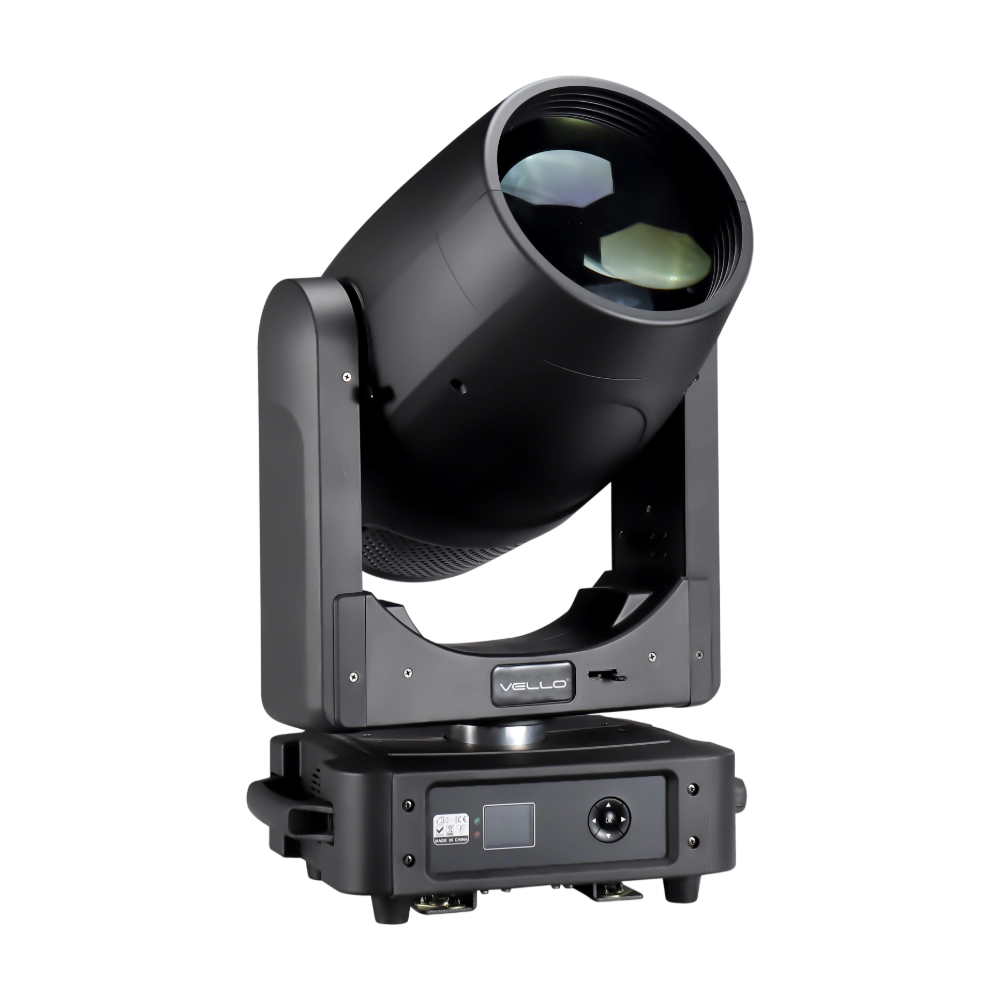
Moving Head Light BEAM 450
The BSW450 is a high-performance moving head fixture equipped with an original Osram 420W bulb, delivering exceptional brightness, precision, and versatility. Designed for professional stage applications, it seamlessly combines beam, spot, and wash functions in one compact unit, making it a powerful all-in-one lighting solution.
Over 20 Years of Innovation in Stage & Studio Lighting
© 2026 VELLO. All Rights Reserved. 粤ICP备20023734号
Join our socials
VELLO
Whatsapp: +8613902276704
Vello Lighting
VelloLights