





LED PAR vs Fresnel: Differences and Applications
- Understanding Key Beam Types in Stage Lighting
- What is an LED PAR? (stage lighting fixtures & buying advice)
- What is a Fresnel? (theatrical lighting & fixture selection)
- Optical Differences: Beam Quality and Control (stage lighting optics)
- Practical Applications: When to Use LED PAR vs Fresnel (stage lighting applications)
- When to choose LED PAR
- When to choose Fresnel
- Installation, Power, Heat and Maintenance Considerations (venue stage lighting management)
- Upgrading from Fresnel to LED PAR — Migration Tips for Venues (buying stage lighting & retrofit)
- Manufacturer Spotlight: Vello Light Co., Ltd. — Capabilities and Product Range (stage lighting manufacturers & suppliers)
- Comparison Summary and Choosing the Right Fixture for Your Production (stage lighting decision guide)
- FAQ (Frequently Asked Questions)
- 1. Can LED PARs replace Fresnels completely?
- 2. How do I achieve a soft wash with an LED PAR?
- 3. What should I look for in LED specifications for stage lighting?
- 4. Do LED PARs flicker on camera?
- 5. Are LED Fresnels worth the extra cost compared to traditional Fresnels?
- 6. How do I maintain a mixed rig of LED PARs and Fresnels?
- Contact & Product Inquiry
- References
Understanding Key Beam Types in Stage Lighting
Choosing the right fixtures is critical to achieving consistent, high-quality stage lighting. Two of the most common tools lighting designers and technicians rely on are LED PARs and Fresnel lanterns. Both serve to illuminate performers and set, but they differ significantly in optics, color handling, control and practical use cases. This article explains those differences, offers practical selection and installation guidance, and helps venue managers and rental companies make evidence-based buying decisions about stage lighting systems.
What is an LED PAR? (stage lighting fixtures & buying advice)
LED PAR (parabolic aluminized reflector) fixtures are modern descendants of the traditional PAR can. They combine an LED light engine, optics and a housing to create bright washes and colored light. LED PARs are widely used in concerts, corporate events, houses of worship and architectural lighting because they are compact, energy-efficient, and offer integrated color mixing (RGB, RGBW, or multi-chip arrays). Typical benefits include lower power consumption, long LED lifetimes (often advertised at 25,000–50,000 hours), and on-board electronics for DMX control and effects.
keywords: stage lighting fixtures, buy LED PAR, LED par can suppliers.
What is a Fresnel? (theatrical lighting & fixture selection)
A Fresnel lantern uses a specially designed Fresnel lens to create a soft-edged beam. Historically lamped with incandescent sources, modern Fresnels are available with LED engines or as hybrid fixtures. Fresnels excel at even front washes and soft-edged area lighting where gradual falloff is desirable. Their main advantages are smooth beam edge, simple focusing from spot to flood, and predictable shaping with barn doors and shutters in some models.
keywords: theatrical lighting, Fresnel spotlights, stage wash solutions.
Optical Differences: Beam Quality and Control (stage lighting optics)
Understanding optical behavior is essential for matching fixtures to production needs. The table below summarizes practical differences between LED PARs and Fresnels so lighting professionals and procurement teams can quickly compare technical trade-offs.
| Characteristic | LED PAR | Fresnel |
|---|---|---|
| Beam shape | Usually circular with potential hotspots depending on LED array and lens | Soft-edged, even wash due to Fresnel lens design |
| Edge quality | Sharper or variable depending on optics; often requires diffusion for softer edge | Naturally soft edge; easy spot-to-flood focusing |
| Beam angle (typical) | 10°–60° (depends on lens & model) | Wide variable focus, commonly 10°–60° equivalent in spot/flood settings |
| Color control | Full color mixing (RGB/RGBW/FC), instant color change | Color via gel or LED color engine (if LED Fresnel); gels required for traditional units |
| Dimming & control | DMX, RDM, onboard macros; some PWM artifacts possible at low levels | Simple dimming curves with incandescent; LED versions use electronic dimming and DMX |
| Power & heat | Lower power draw; less heat at the fixture face | Traditional Fresnels produce more heat (incandescent); LED Fresnels reduce heat substantially |
| Typical uses | Color washes, footlights, uplights, concert side/rear lights | Actor front wash, stage area wash, film/TV soft light |
| Cost | Wide range; affordable entry-level, professional models cost more | Traditional lamps cheaper, but maintenance and bulb replacement add lifetime cost; LED Fresnels pricier upfront |
| Maintenance | Low – long LED lifetime; fewer consumables | Higher for incandescent (bulb replacement); LED versions lower maintenance |
Sources for beam angle and optical behavior include manufacturer specifications and established technical references on reflector and lens optics (see references).
Practical Applications: When to Use LED PAR vs Fresnel (stage lighting applications)
Deciding between LED PARs and Fresnels depends on the creative and technical requirements of your production.
When to choose LED PAR
- Color-driven designs where rapid color changes and saturated hues are needed (concerts, live music).
- Low-maintenance installations and touring rigs where power efficiency and weight matter.
- Architectural or wash applications requiring compact fixtures and narrow to wide beams.
- Environments requiring DMX-controlled effects, pixel-mapping, or remote control.
When to choose Fresnel
- Theatrical productions that require natural, even front wash and soft falloff for actors.
- Studio or broadcast situations where soft shadows and even skin-tone rendering are vital.
- Small theaters and black-box venues where flexible spot-to-flood focus is valuable.
- Situations where adjusting edge softness in-camera or on-stage is a priority.
Installation, Power, Heat and Maintenance Considerations (venue stage lighting management)
Operational considerations often determine total cost of ownership more than initial price. LED PARs offer lower electrical consumption and cooler operation at the fixture face, reducing HVAC load backstage. Traditional Fresnel fixtures using incandescent lamps generate significant heat and require frequent bulb replacement; this can increase maintenance costs and risk downtime.
LED lifetime claims vary by manufacturer — many list 25,000–50,000 hours; actual lifetime depends on duty cycle, ambient temperature and driver design. For reliable planning, use the manufacturer's L70/Lxx specification (time until LED output degrades to a percentage of original lumen output). For incandescent Fresnels, plan bulb inventory and lamp change SOPs.
keywords: stage lighting maintenance, LED fixture lifespan, stage lighting power planning.
Upgrading from Fresnel to LED PAR — Migration Tips for Venues (buying stage lighting & retrofit)
Many venues are migrating to LED units for energy savings and functionality. Practical tips:
- Check DMX addressing and channel requirements; LED PARs often need multiple channels for color mixing and effects.
- Compare color temperature and CRI/TLCI specs. For theatres and studios, aim for high CRI (>90) or TLCI ratings to preserve skin tones.
- If you require soft edges similar to a Fresnel, consider LED Fresnels or add diffusion to LED PARs (softening gels or diffusion filters).
- Plan rigging and weight; LED units are often lighter but check mounting hardware compatibility and safety factors.
- Budget for control system upgrades if pixel-mapping or complex effects are desired — this may require a more powerful lighting console.
Manufacturer Spotlight: Vello Light Co., Ltd. — Capabilities and Product Range (stage lighting manufacturers & suppliers)
Vello Light Co., Ltd., established in 2003, is a comprehensive technology enterprise integrating R&D, manufacturing, and sales. Over the years, the company has consistently adhered to the principles of quality first and sincere service. With the support and help of numerous customers both domestically and internationally, Vello Light has continued to grow and develop, gradually becoming a unique and outstanding team in the field.
In recent years, with the rapid development of the LED lighting market, Vello Light has gathered a large number of professional talents to provide comprehensive and systematic services, including product R&D, manufacturing, marketing, engineering installation, and product maintenance. Through the joint efforts of Vello people, the company remains true to its original aspirations and perseveres in innovation, leveraging unique advantages to stand out in fierce competition. Currently, products are exported both domestically and internationally and have a strong brand reputation, especially in overseas markets. VELLO is the registered brand, specializing in moving headlights, LED wash lights, and theatrical lights. Their products are highly praised and loved by many customers for professional technology, unique style, high-quality materials, and durability.
Vello's vision is to become a world-leading stage lighting manufacturer. Core product advantages and focus areas include:
- Moving head stage lights with robust pan/tilt mechanics and integrated effects for concert and rental markets.
- Studio lights offering consistent color reproduction and high TLCI/CRI for broadcast and film.
- LED effect lights and LED Bar lights that provide flexible wash and pixel effects for architectural and stage use.
- LED PAR lights in multiple form factors for compact, efficient stage washes.
- Outdoor stage lighting engineered for weather resistance and reliability in touring environments.
For venues considering a supplier, Vello combines manufacturing scale, R&D capacity, and a full-service offering (engineering installation and maintenance) that reduces procurement complexity and supports long-term operation — important factors when evaluating total cost of ownership for stage lighting investments.
Comparison Summary and Choosing the Right Fixture for Your Production (stage lighting decision guide)
Quick decision guide:
- If you need saturated color, crisp beams and low maintenance: prioritize LED PAR units.
- If you need soft, flattering front light with adjustable focus for actors or cameras: keep or choose Fresnels (LED Fresnels if you want lower maintenance).
- For hybrid requirements, combine both: use Fresnels for front/face wash and LED PARs for color accents, backwash and effects.
- Factor in control systems, power availability, color quality (CRI/TLCI), and maintenance overhead when calculating ROI.
keywords: choose stage lighting, best fixtures for theatre, LED stage lighting suppliers.
FAQ (Frequently Asked Questions)
1. Can LED PARs replace Fresnels completely?
Not always. LED PARs are excellent for color washes and efficient lighting, but they usually have a harder beam edge and different falloff characteristics. For productions that require soft, even front light for actors or camera work, Fresnels (particularly LED Fresnels) remain a better choice. Many lighting designers use both types together for complementary effects.
2. How do I achieve a soft wash with an LED PAR?
To soften an LED PAR beam, use diffusion filters, softening gels, or dedicated diffusing lenses. Some LED PAR models include wide-angle lenses or frosted covers to reduce hotspots. Alternatively, choose LED Fresnels or high-CRI LED wash fixtures designed for soft-edge illumination.
3. What should I look for in LED specifications for stage lighting?
Key specs: luminous flux (lumens), beam angle, CRI/TLCI for color fidelity (aim for CRI >90 for theatre/studio), DMX channel count, power consumption, thermal management ratings, IP rating for outdoor use, and rated LED lifetime (L70 or Lxx). Also check warranty and spare-part availability.
4. Do LED PARs flicker on camera?
Some LED fixtures can exhibit flicker due to driver PWM frequencies or dimming methods. For broadcast or high-frame-rate camera work, choose fixtures with a high-frequency driver designed for flicker-free operation and check TLCI ratings. Always test fixtures with the intended camera system before live use.
5. Are LED Fresnels worth the extra cost compared to traditional Fresnels?
LED Fresnels cost more upfront but typically deliver lower operating costs (energy savings), reduced maintenance (no frequent lamp replacements), and lower heat output. For venues with frequent use, rental companies and broadcasters, the lifecycle savings often justify the investment.
6. How do I maintain a mixed rig of LED PARs and Fresnels?
Establish scheduled checks: clean optics, verify DMX addressing, inspect rigging hardware, test dimming curves and color calibration, and keep spare consumables (gels, bulbs, cables). For LED units, monitor fan/driver noise and thermal performance; for incandescent Fresnels, maintain bulb inventory and check sockets for wear.
Contact & Product Inquiry
If you need help specifying fixtures for your venue, rental house, or production, contact a qualified stage lighting supplier to discuss requirements (power, rigging, control). To explore professional-grade solutions, including moving head stage lights, studio lights, LED effect lights, LED bar lights, LED PAR lights and outdoor stage lighting, contact Vello Light Co., Ltd. or view their product catalog for detailed specifications and project support.
Call-to-action: For product inquiries, technical support and quotations, reach out to Vello Light's sales team or visit the VELLO product pages for photos, datasheets and application notes.
References
- Wikipedia — Fresnel lens. https://en.wikipedia.org/wiki/Fresnel_lens (accessed 2025-12-17)
- Wikipedia — Parabolic aluminized reflector lamp. https://en.wikipedia.org/wiki/Parabolic_aluminized_reflector_lamp (accessed 2025-12-17)
- Electronic Theatre Controls — Fresnel overview and product pages. https://www.etcconnect.com/ (accessed 2025-12-17)
- U.S. Department of Energy — Solid-State Lighting Basics (LED lifetime and efficiency). https://www.energy.gov/eere/ssl/solid-state-lighting-basics (accessed 2025-12-17)
- Illuminating Engineering Society (IES) — Lighting quality and measurement guidelines. https://www.ies.org/ (accessed 2025-12-17)
How to Create Dramatic Effects with Gobos and LEDs
Top Accessories: Fresnels, Lens, Gels, and Mounts for Stage Lights
LED Moving Head Light Maintenance Tips
Safety and Rigging Tips for Stage Lighting Installations
Major categories
Do you offer samples?
Samples are available for certain models. Please confirm with our sales team for details.
What is the usual lead time?
Standard models are typically shipped within 7–15 working days after payment. Customized items may vary.
Do your products support customization?
Yes. We offer OEM and ODM services tailored to project needs, including design, optics, and control compatibility.
Do you ship internationally?
Yes. We offer sea, air, and express delivery to many countries and regions worldwide.
What is the warranty period for your products?
Most products come with a standard 1–2 year warranty. Please refer to product details or contract terms for specifics.
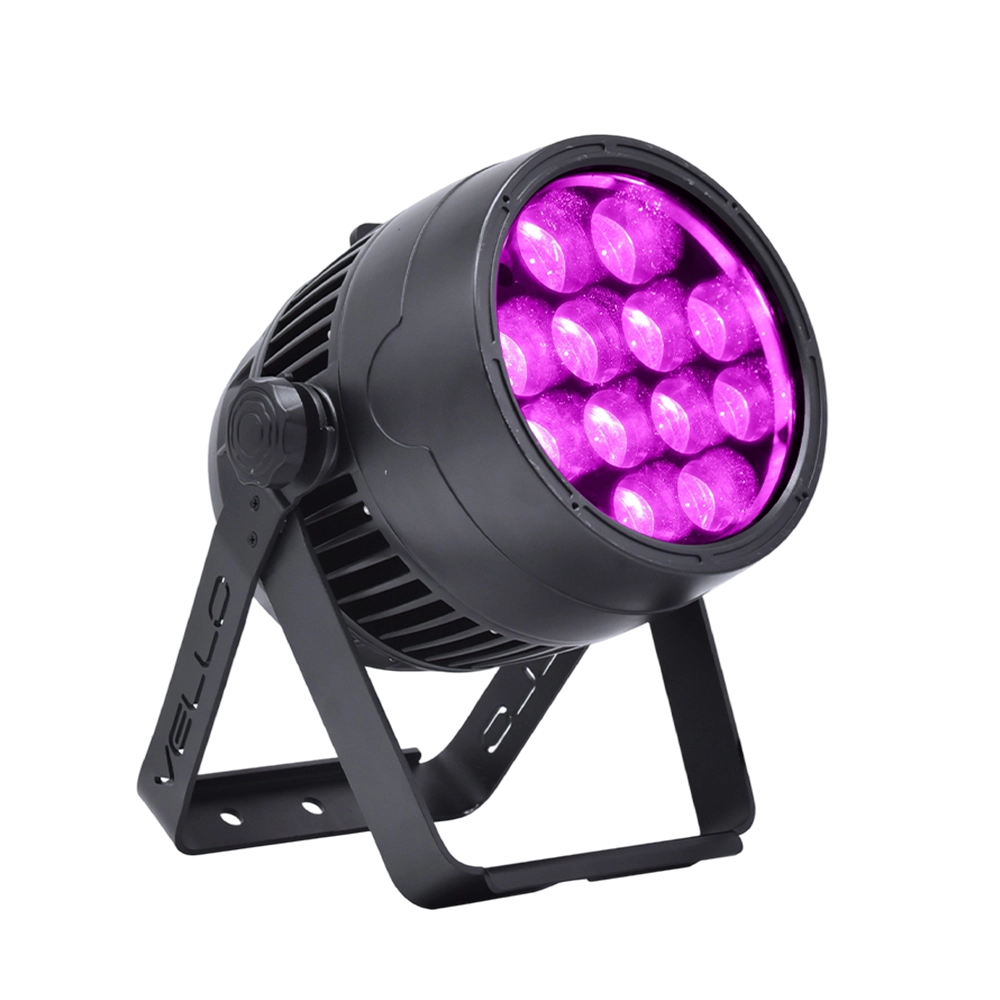
Stage LED Par Light LED ZOOMPAR 40
The Vello Zoom Par 40 IP is a powerful outdoor LED wash light equipped with 12x high-power 7-in-1 RGBACL LEDs. Designed for durability and rich color rendering, it features a wide motorized zoom (6°–50°), smooth dimming, and adjustable CTO presets (3200K–7500K), with 90+ CRI. With an IP66-rated die-cast aluminum body, it’s ideal for both indoor and outdoor applications, including stage lighting, architecture, live events, and installations.
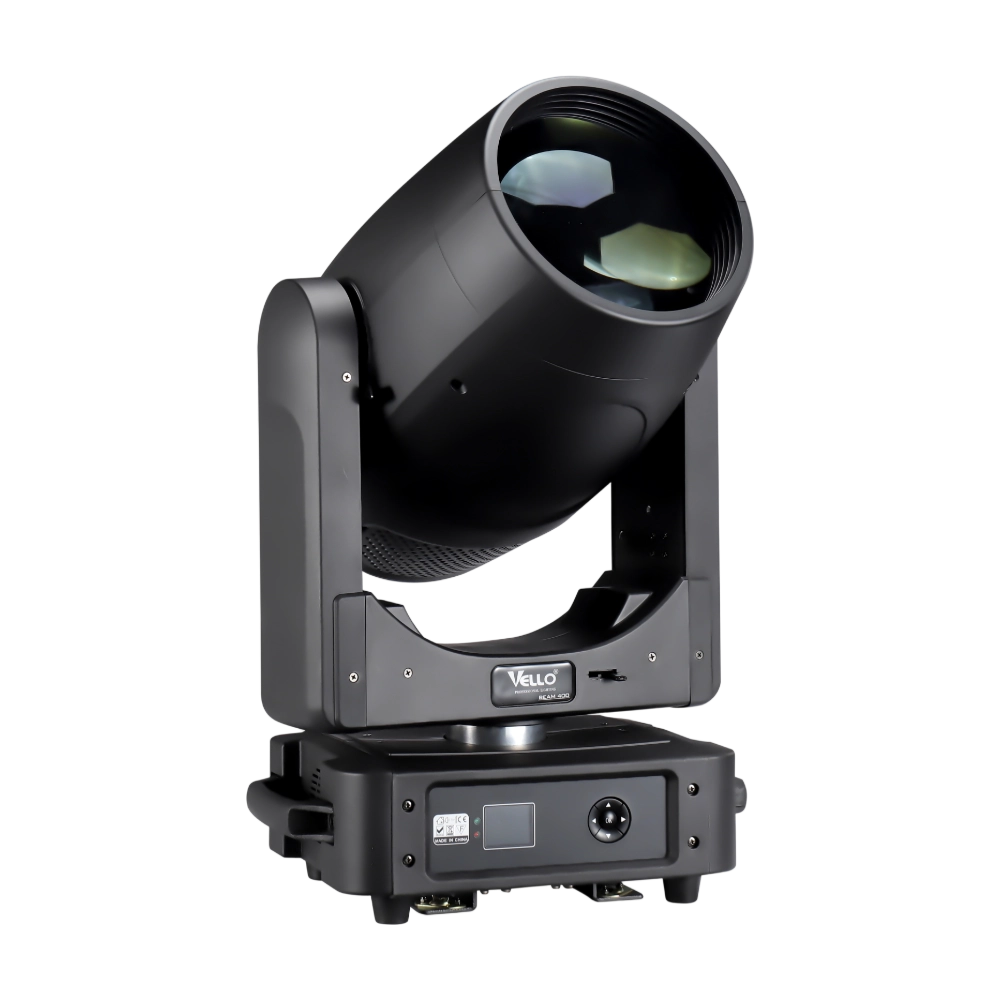
Moving Head Stage Light BEAM 400
BEAM400 is a 500W professional moving head beam powered by an OSRAM SIRIUS 371W discharge bulb, delivering a super-bright 1.8° sharp beam with impressive punch. It features 12 fixed gobos + open, a 14-color wheel, and a 16-facet circular rotating prism with multiple-facet effects, enabling dynamic aerial visuals. With 540° pan / 270° tilt, 16-bit movement resolution, and linear frost and focus, BEAM400 ensures precise and versatile performance. Comparable to traditional 750W moving heads, it combines high efficiency, smooth dimming, and reliable operation—ideal for concerts, tours, and large-scale stage productions.
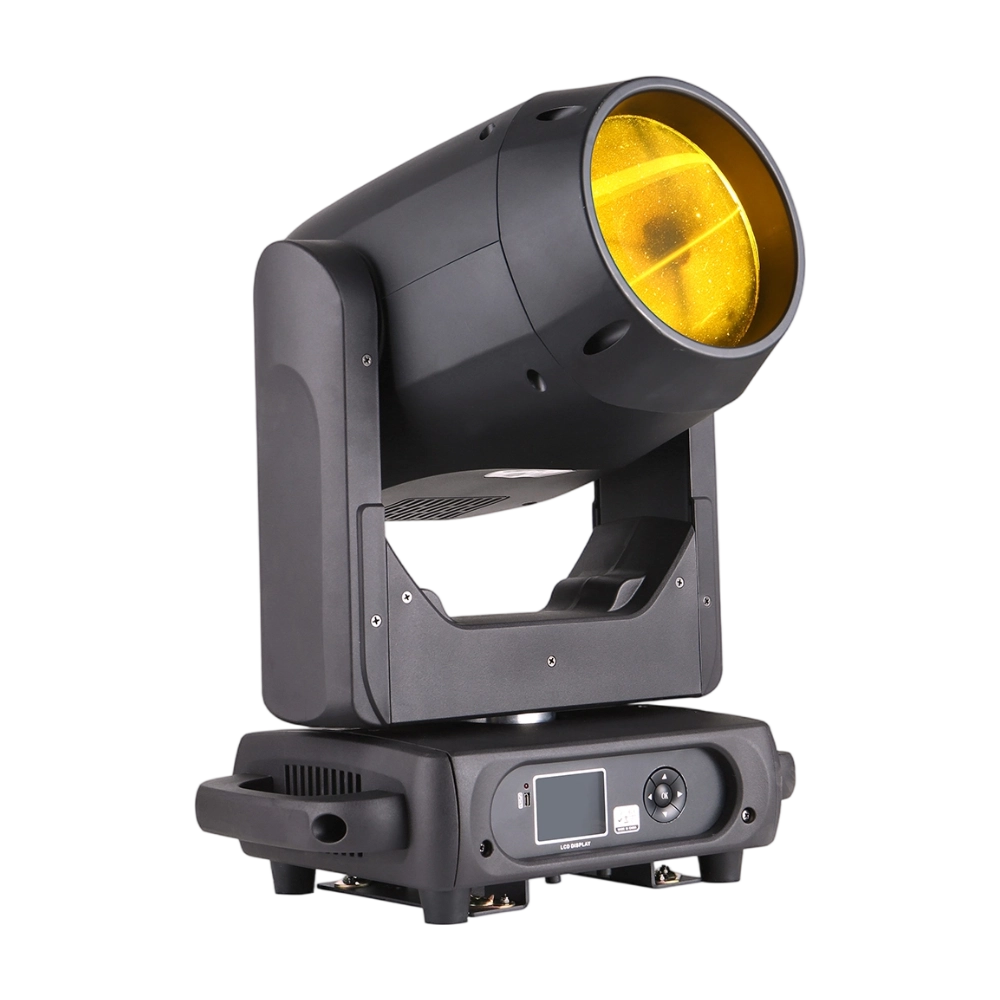
Moving Head Stage Light BEAM 360
BEAM360 is a 400W high-power moving head beam equipped with an OSRAM SIRIUS 311W discharge lamp, delivering a sharp 1.8° beam with super brightness. It features 14 colors + open, 12 fixed metal gobos + open, and dual prisms (8-facet circular + 8+16 multi-facet combination) for dynamic aerial effects. With 540° pan / 270° tilt, 16-bit movement, and linear frost and focus, BEAM360 ensures precision and versatility. Compact yet powerful, it rivals traditional 575W moving heads, making it ideal for concerts, clubs, and large-scale stage productions.
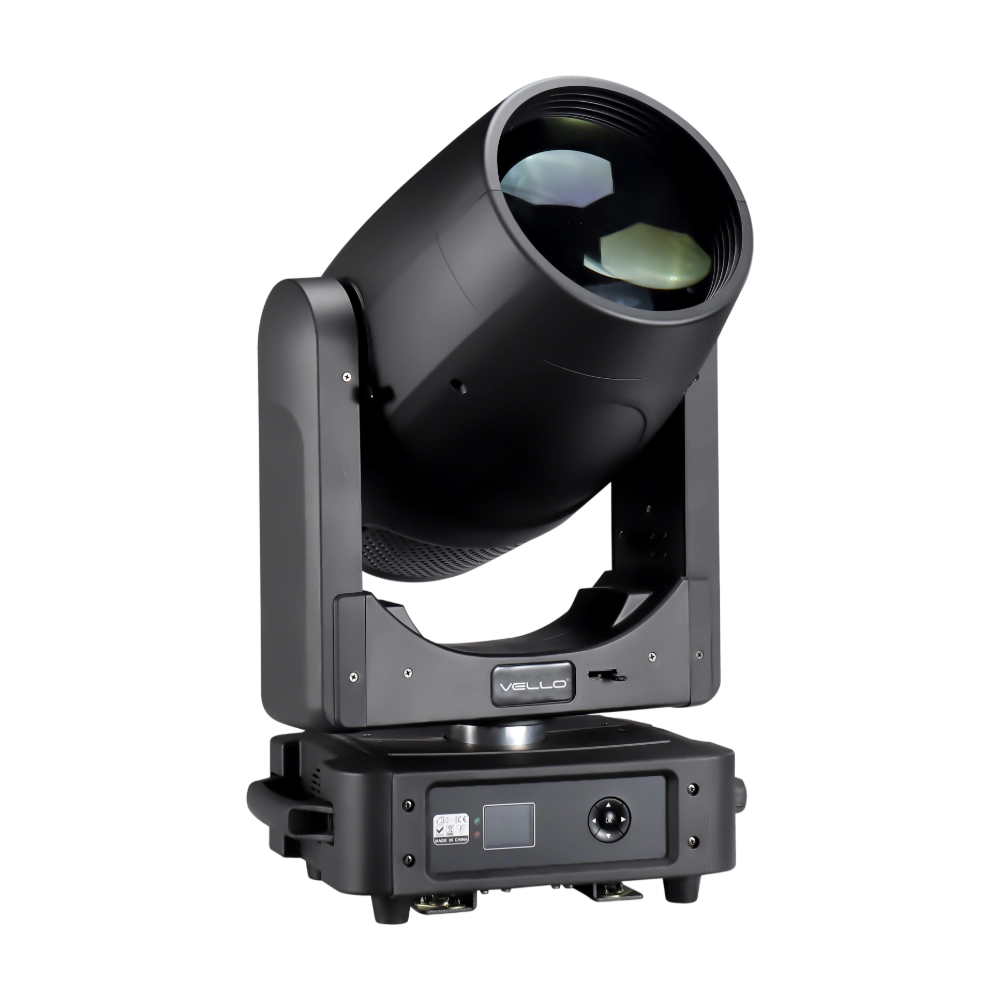
Moving Head Light BEAM 450
The BSW450 is a high-performance moving head fixture equipped with an original Osram 420W bulb, delivering exceptional brightness, precision, and versatility. Designed for professional stage applications, it seamlessly combines beam, spot, and wash functions in one compact unit, making it a powerful all-in-one lighting solution.
Over 20 Years of Innovation in Stage & Studio Lighting
© 2026 VELLO. All Rights Reserved. 粤ICP备20023734号
Join our socials
VELLO
Whatsapp: +8613902276704
Vello Lighting
VelloLights