




LED Moving Head Light Specifications Buyers Need to Know
- Understanding the core specifications of a professional LED moving head light
- Why specifications matter for different applications
- Key categories of specifications to check
- Photometrics and optical performance
- Lumens, lux and throw distance
- Beam angle, zoom range and spot vs wash vs beam
- Optics, gobos, prisms and effect modules
- Color systems, CRI, and broadcast considerations
- Color mixing: RGB, RGBW, CMY, CTO and white engines
- CRI, TLCI and flicker-free operation
- Color temperature range and presets
- Control, channels, and connectivity
- DMX channels, protocols, and modern control options
- Presets, onboard programs and pixel mapping
- Control connectors and power options
- Mechanical performance, build quality and serviceability
- Pan & tilt range, resolution, and movement speed
- Cooling, noise and operating environment
- IP rating, materials and weight
- Electrical, safety and longevity
- Power consumption and energy efficiency
- LED lifespan and maintenance intervals
- Certifications and warranty
- Choosing the right moving head: comparison and purchasing checklist
- Comparison table: Spot vs Wash vs Beam moving heads
- Practical buyer checklist
- Cost, total value and long-term ownership
- TCO considerations beyond initial price
- Rental vs purchase decision factors
- Trade-offs: weight vs output vs cost
- Vello Light Co., Ltd. — Company profile and why it matters for buyers
- FAQ — Frequently Asked Questions
- 1. What does “lumen” vs “lux” mean and which should I use?
- 2. How do I calculate the number of fixtures needed for my stage?
- 3. What is the difference between RGBW and CMY color systems?
- 4. Can moving head lights be used outdoors?
- 5. How important is RDM and Art-Net support?
- 6. What maintenance should I expect for LED moving heads?
- Contact and next steps
- References
Understanding the core specifications of a professional LED moving head light
Why specifications matter for different applications
When evaluating an led moving head light, specifications determine whether a fixture will perform as needed in a club, theater, touring rig, studio, or outdoor event. Buyers must match photometric output, optical characteristics, mechanical performance, control features, and ruggedness to their intended use—otherwise a light may be underpowered, too noisy, or incompatible with control systems.
Key categories of specifications to check
Top-level categories include photometrics (lumens, lux, beam angle), optics & effects (gobos, prisms, zoom), mechanical/motion (pan/tilt range & speed), control (DMX channels, protocols), electrical & thermal (power draw, cooling), environmental rating (IP), and serviceability (warranty, spare parts).
Photometrics and optical performance
Lumens, lux and throw distance
Manufacturers often list lumen output and lux values at specific distances. Lumens describe total light emitted; lux describes illuminance at a surface (lumens/m²). For stage work, lux at a given throw distance (e.g., 5 m) is more useful. Always request or calculate lux charts from the manufacturer or test data. Typical LED moving heads range from 5,000 lm (compact wash/spot) to 60,000 lm (high-output moving-head profiles).
Beam angle, zoom range and spot vs wash vs beam
Beam angle and zoom range directly affect the fixture’s application:
- Beam moving heads: narrow beam angles (1°–6°), designed for aerial beams and long throws.
- Spot/profile heads: medium beam angles (6°–20°) with sharp focus and gobos.
- Wash heads: wide beam angles (10°–70°) with soft edges and broad color mixing.
Confirm the zoom ratio (e.g., 5°–50°) to ensure coverage and intensity across distances.
Optics, gobos, prisms and effect modules
Look for glass gobos vs metal gobos (glass gives finer detail), number of gobo wheels, indexable prisms (3-, 4-, 6-facet), and built-in effects like frost, iris, and framing shutters. These determine creative flexibility and cost.
Color systems, CRI, and broadcast considerations
Color mixing: RGB, RGBW, CMY, CTO and white engines
Color systems vary:
- RGB or RGBW: common for vibrant colors; RGBW adds white for better pastel & white rendering.
- CMY (subtractive mixing): excellent for smooth color gradients and accurate whites.
- CTO/CTB or variable CCT: useful for matching studio or theatrical color temperatures.
Choose fixtures with the color system matching your needs: broadcast/studio work favors high CRI and variable CCT; concerts favor saturated colors and fast color macros.
CRI, TLCI and flicker-free operation
For accurate color rendering, especially in video, check CRI (Color Rendering Index) and TLCI. Aim for CRI > 80 for general stage use, > 90 for camera-critical applications. Also verify flicker-free performance at common camera frame rates—manufacturers should specify PWM frequencies or list “flicker-free for broadcast”.
Color temperature range and presets
Fixtures often provide adjustable CCT (e.g., 2,700K–8,000K) and presets for tungsten and daylight. Confirm whether CCT adjustment is continuous and whether the fixture supports CTO for warm looks.
Control, channels, and connectivity
DMX channels, protocols, and modern control options
DMX512 remains the baseline control protocol. Pay attention to channel modes: compact mode (16–24 channels) vs full-featured mode (40–60+ channels). Modern fixtures often support RDM (remote device management), Art-Net, sACN (streaming ACN), and sometimes wireless protocols. For complex fixtures, RDM simplifies addressing and status monitoring.
Presets, onboard programs and pixel mapping
Fixtures with onboard show memory, standalone operation, or pixel-mapping capability can operate without a full console. For LED matrix or bar fixtures, pixel mapping and multiple pixel outputs can be crucial. For moving heads, look for multi-fixture synchronized effects and fixture grouping options.
Control connectors and power options
Check physical connectors: 3-pin vs 5-pin DMX, Neutrik powerCON or IEC mains. For touring use, robust locking connectors and compatibility with global voltages (100–240V auto-switching) are important.
Mechanical performance, build quality and serviceability
Pan & tilt range, resolution, and movement speed
Typical professional moving heads offer 540° pan and 270° tilt, with high-resolution stepper or encoder feedback for smooth motion. Faster movement speeds help follow spots and quick effects. Verify the fixture’s movement response, backlash specifications, and whether it offers position feedback for automated systems.
Cooling, noise and operating environment
Cooling affects LED life and noise level. Passive-cooled fixtures are silent but limited in output. Active-cooled fixtures use fans—check dBA ratings if using in small theaters or studios. For outdoor or dusty venues, look for sealed optics and efficient thermal pathways.
IP rating, materials and weight
For outdoor events, IP65 or higher is required. Indoor fixtures commonly are IP20. Assess housing materials (die-cast aluminum vs plastic) and overall weight, which affect truss loading, rigging hardware, and transport logistics.
Electrical, safety and longevity
Power consumption and energy efficiency
Confirm maximum wattage, inrush current and power factor correction. LED moving heads are far more energy-efficient than discharge-based fixtures; still, high-output models can draw 700–2,000 W. Calculate total load for dimmer racks and generators.
LED lifespan and maintenance intervals
LED modules typically list L70 or L90 lifespans (e.g., 50,000–100,000 hours). Understand which components are user-serviceable: fans, lenses, and gobos. Ensure spare parts availability and local service networks to minimize downtime.
Certifications and warranty
Check CE/UKCA/ETL/UL marking, safety agency approvals, and warranty length. For rental companies, extended warranty and fast spare parts are critical. Also confirm compliance with regional EMC regulations.
Choosing the right moving head: comparison and purchasing checklist
Comparison table: Spot vs Wash vs Beam moving heads
| Feature | Spot/Profile | Wash | Beam |
|---|---|---|---|
| Typical Beam Angle | 6°–20° | 10°–70° | 1°–6° |
| Gobos | Multiple glass/metal gobos | Usually none or minimal | Limited |
| Use Case | Profiles, patterns, aerial effects | Color washes, stage coverage | Aerial beams, long-throw effects |
| Typical Output | 5,000–40,000 lm | 8,000–60,000 lm | 10,000–50,000 lm (focused) |
Practical buyer checklist
- Define the primary application (touring, theater, broadcast, club, outdoor).
- Match lumen/lux output to venue size and throw distance—ask for photometric charts.
- Verify color rendering (CRI/TLCI) and flicker-free specs for video work.
- Check control modes & channel counts for your console and network.
- Assess noise level, cooling, and IP rating for environment.
- Confirm connectors, voltage compatibility, and power draw for power budgeting.
- Ask about spare parts, local support, warranty, and firmware update paths.
- Request sample units or on-site demos when possible.
Cost, total value and long-term ownership
TCO considerations beyond initial price
Total cost of ownership includes purchase price, shipping, rigging hardware, power consumption, spare parts, maintenance labor, and depreciation. Higher up-front cost for better optical components and cooling often reduces downtime and replacement frequency.
Rental vs purchase decision factors
Rental houses prioritize durability, easy field service, and availability of spares; venues may prioritize quiet operation and lower power draw. For production companies, modularity and compatibility with existing ecosystems are essential.
Trade-offs: weight vs output vs cost
High-output fixtures usually weigh more and cost more. If portability is key, look for mid-output units with efficient optics and LED engines that optimize lumens-per-watt.
Vello Light Co., Ltd. — Company profile and why it matters for buyers
Vello Light Co., Ltd., established in 2003, is a comprehensive technology enterprise integrating R&D, manufacturing, and sales. Over the years, Vello has consistently adhered to the principles of quality first and sincere service. With the support and help of numerous customers both domestically and internationally, the company has continued to grow and develop, gradually becoming a unique and outstanding team in the field.
In recent years, with the rapid development of the LED lighting market, Vello Light has gathered a large number of professional talents to provide comprehensive and systematic services, including product R&D, manufacturing, marketing, engineering installation, and product maintenance. Through the joint efforts of Vello people, the company remains true to its original aspirations and perseveres in innovation, leveraging its unique advantages to stand out in fierce competition. Currently, products are exported both domestically and internationally and have a strong brand reputation, especially in overseas markets. VELLO is the registered brand, specializing in moving headlights, LED wash lights, and theatrical lights. Products are highly praised and loved by many customers for their professional technology, unique style, high-quality materials, and durability.
Vello’s vision is to become a world-leading stage lighting manufacturer. Key strengths include:
- Integrated R&D and manufacturing for faster iteration and consistent quality control.
- Comprehensive product portfolio: moving head stage lights, studio lights, LED effect lights, LED bar lights, LED par lights, and outdoor stage lighting.
- Focus on durable materials, effective thermal design, and competitive photometric performance.
- Strong export experience and established after-sales support for international clients.
FAQ — Frequently Asked Questions
1. What does “lumen” vs “lux” mean and which should I use?
Lumen measures total light output from the fixture. Lux measures illuminance at a surface at a given distance. For stage and venue planning, lux at your working distance is more actionable. Request lux charts (photometric) from the manufacturer.
2. How do I calculate the number of fixtures needed for my stage?
Start with a target lux level for the application (e.g., 300–750 lux for general stage, higher for television). Use the manufacturer’s lux-at-distance chart and factor in beam angle and throw distance. Allow headroom for dimming and fixture aging.
3. What is the difference between RGBW and CMY color systems?
RGBW mixes red/green/blue with an added white LED for improved pastel and white reproduction. CMY is an analog subtractive mixing system (cyan/magenta/yellow) offering smoother color control and more accurate whites in some theatrical applications.
4. Can moving head lights be used outdoors?
Yes, but only if rated for outdoor use (IP65 or higher). Indoor-only fixtures (commonly IP20) are unsuitable for rain, dust, or high-humidity conditions without additional protection.
5. How important is RDM and Art-Net support?
RDM allows remote addressing and status monitoring—very useful for large installs and touring. Art-Net or sACN support enables network-based control for complex distributed systems. If you run modern lighting networks, these features are highly recommended.
6. What maintenance should I expect for LED moving heads?
Regular checks include cleaning optics and air filters, fan replacement as needed, firmware updates, and verifying mechanical parts (gears, belts). Follow manufacturer-recommended service intervals.
Contact and next steps
If you need help selecting the right led moving head light for your venue or project, contact Vello Light for product specifications, photometric charts, and on-site demo arrangements. For immediate product listings and technical support, visit the VELLO catalog or reach out to their sales team for tailored recommendations.
Contact Vello Light Co., Ltd. to request quotes, datasheets, photometric reports, or arrange product demonstrations—and ensure the fixtures you buy will meet your performance, service, and budget expectations.
References
- Stage lighting — Wikipedia. https://en.wikipedia.org/wiki/Stage_lighting (accessed 2026-01-08)
- LED — Wikipedia. https://en.wikipedia.org/wiki/Light-emitting_diode (accessed 2026-01-08)
- DMX512 — Wikipedia. https://en.wikipedia.org/wiki/DMX512 (accessed 2026-01-08)
- ESTA: DMX512A standard documentation. https://tsp.esta.org/tsp/documents/docs/DMX512-A.pdf (accessed 2026-01-08)
- IP Code — Wikipedia. https://en.wikipedia.org/wiki/IP_Code (accessed 2026-01-08)
- Illuminance — Wikipedia. https://en.wikipedia.org/wiki/Illuminance (accessed 2026-01-08)
- VELLO official company information (company profile provided in brief)
DMX, RDM and Control Protocols for Professional Stage Lights
Pixel Mapping and LED Stage Light Effects for Shows
Gobos and Effects: Using Moving Head Lights
Troubleshooting Common LED Stage Light Issues
Major categories
Do you offer samples?
Samples are available for certain models. Please confirm with our sales team for details.
What is the warranty period for your products?
Most products come with a standard 1–2 year warranty. Please refer to product details or contract terms for specifics.
Do you ship internationally?
Yes. We offer sea, air, and express delivery to many countries and regions worldwide.
Do your products support customization?
Yes. We offer OEM and ODM services tailored to project needs, including design, optics, and control compatibility.
What is the usual lead time?
Standard models are typically shipped within 7–15 working days after payment. Customized items may vary.
Moving Head Stage Light BEAM 400
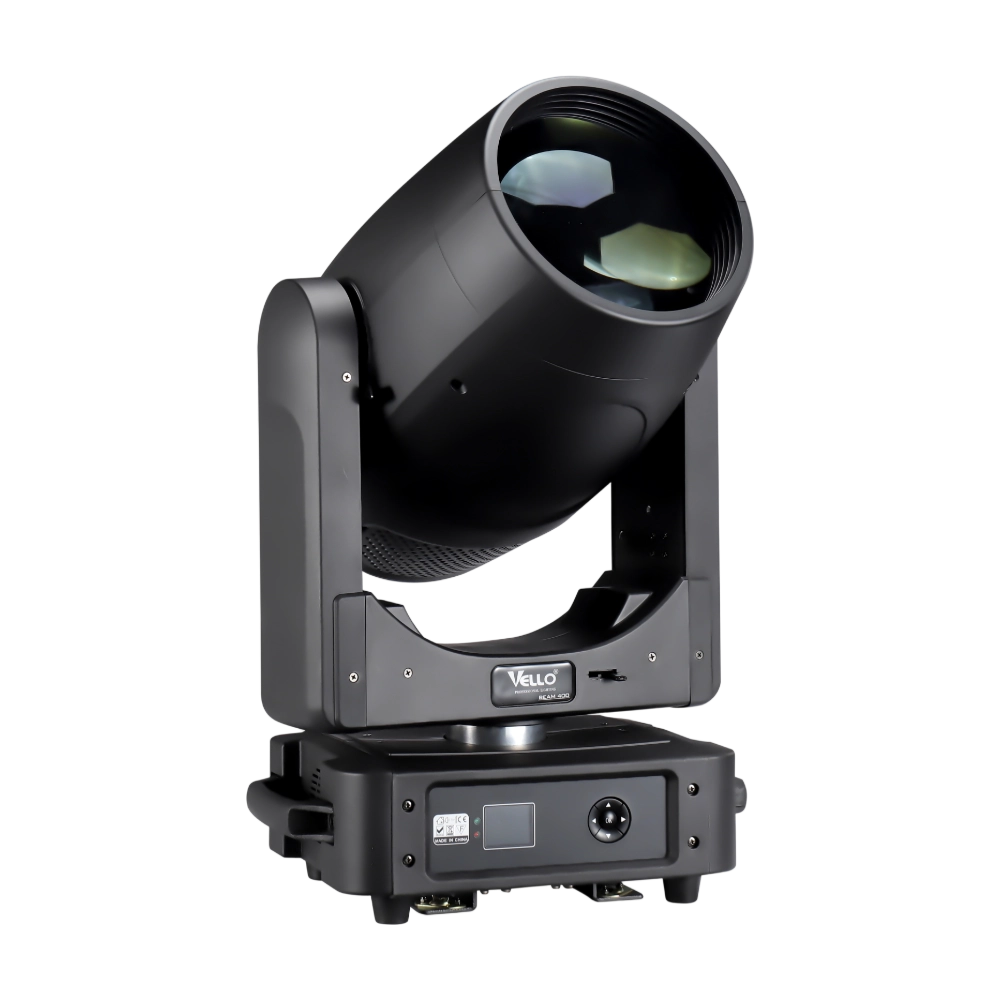
BEAM400 is a 500W professional moving head beam powered by an OSRAM SIRIUS 371W discharge bulb, delivering a super-bright 1.8° sharp beam with impressive punch. It features 12 fixed gobos + open, a 14-color wheel, and a 16-facet circular rotating prism with multiple-facet effects, enabling dynamic aerial visuals. With 540° pan / 270° tilt, 16-bit movement resolution, and linear frost and focus, BEAM400 ensures precise and versatile performance. Comparable to traditional 750W moving heads, it combines high efficiency, smooth dimming, and reliable operation—ideal for concerts, tours, and large-scale stage productions.
LED Light LED TOP P4
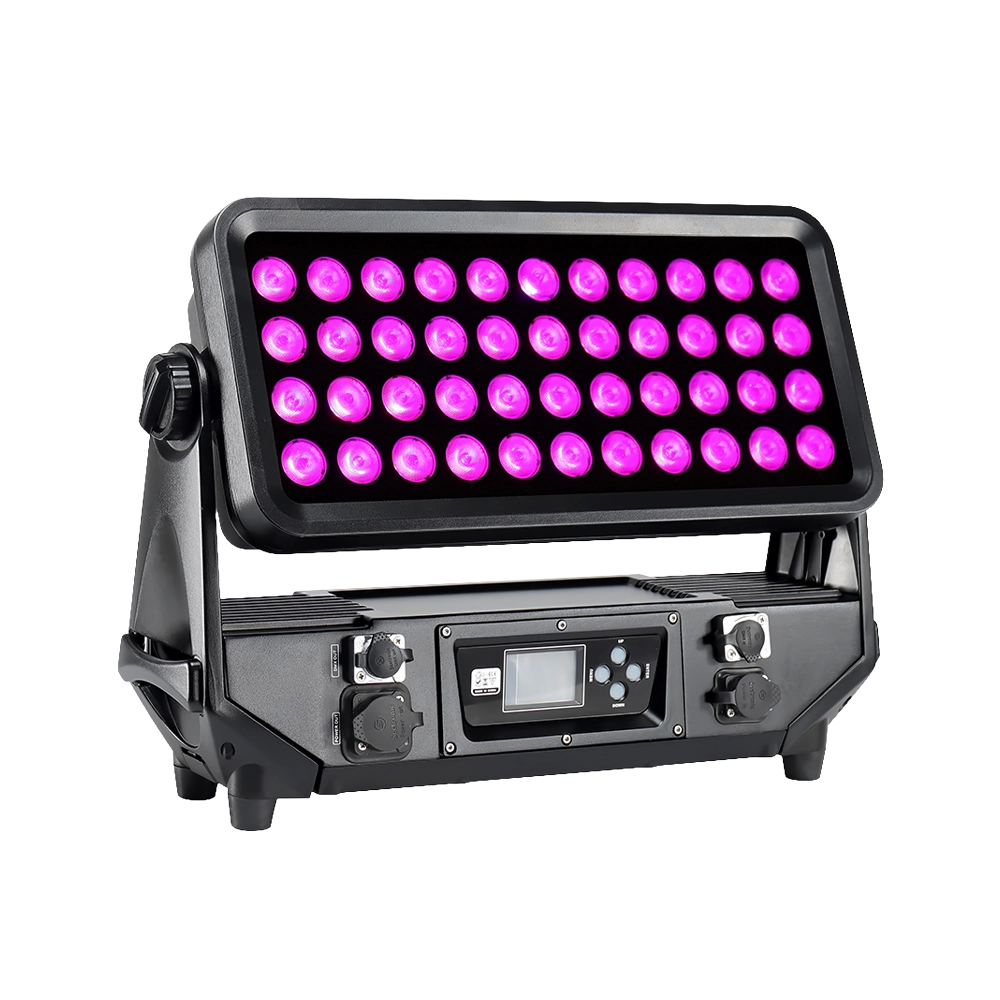
The Vello LED TOP P4 is a robust, high-output LED flood wash light designed for outdoor stages, architecture, and large-scale event lighting. Powered by 44x 15W RGBW LEDs from Cree, it delivers consistent brightness, smooth color mixing, and selectable beam angles of 20° or 40°. Built with a rugged IP65-rated die-cast aluminum housing, it withstands harsh weather conditions while offering smooth 0–100% dimming and flexible DMX control.
LED Moving Head Light XP800 (4in1)
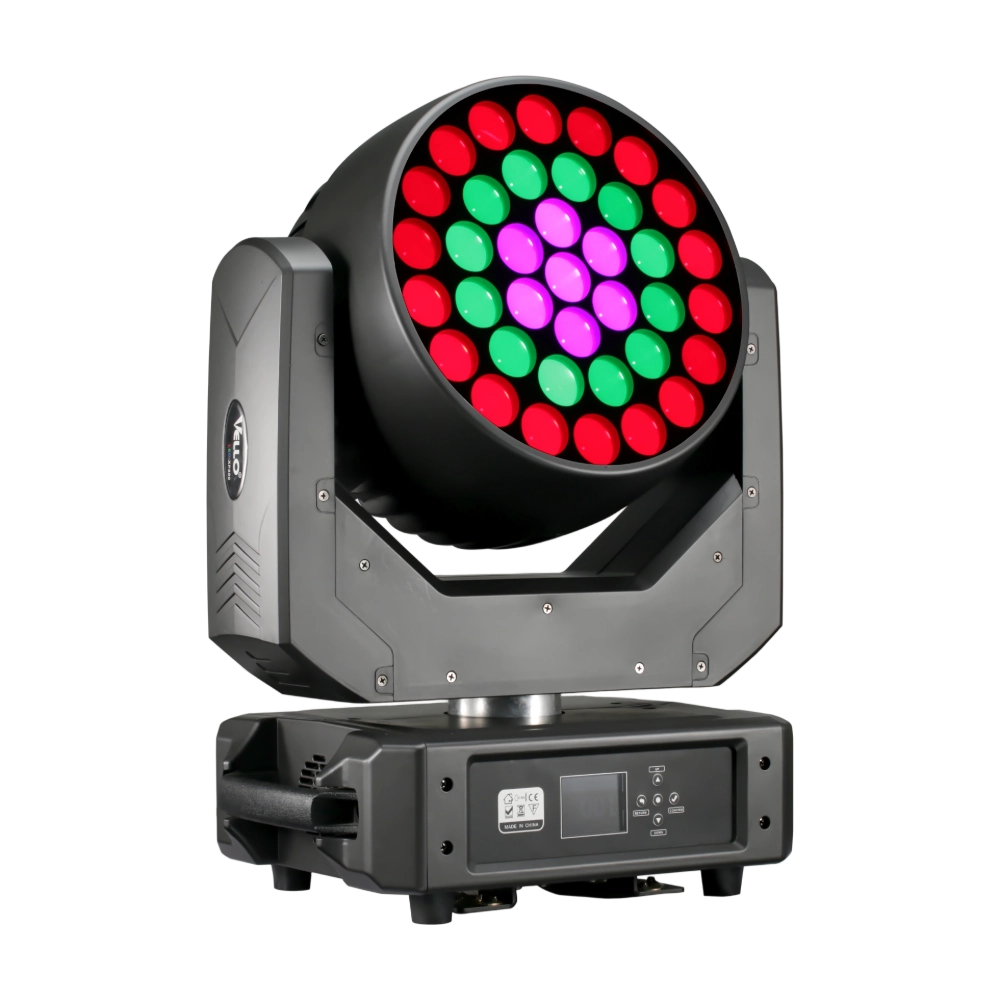
The LED XP800 is a 600W moving head wash fixture, equipped with 37 × 20W Osram RGBW LEDs for brilliant color mixing and high output. With a wide 6°–50° electronic zoom, it easily transitions from sharp beams to smooth washes. The fixture supports 3-ring pixel control and an adjustable CTO range (2800K–8500K) for versatile applications. Featuring 540° pan / 310° tilt, high-speed 3-phase motors, and multiple DMX modes (16/28 channels), XP800 delivers powerful, precise, and dynamic performance. Compact and durable, it is an excellent choice for stages, theaters, and large-scale events requiring high brightness and flexibility.
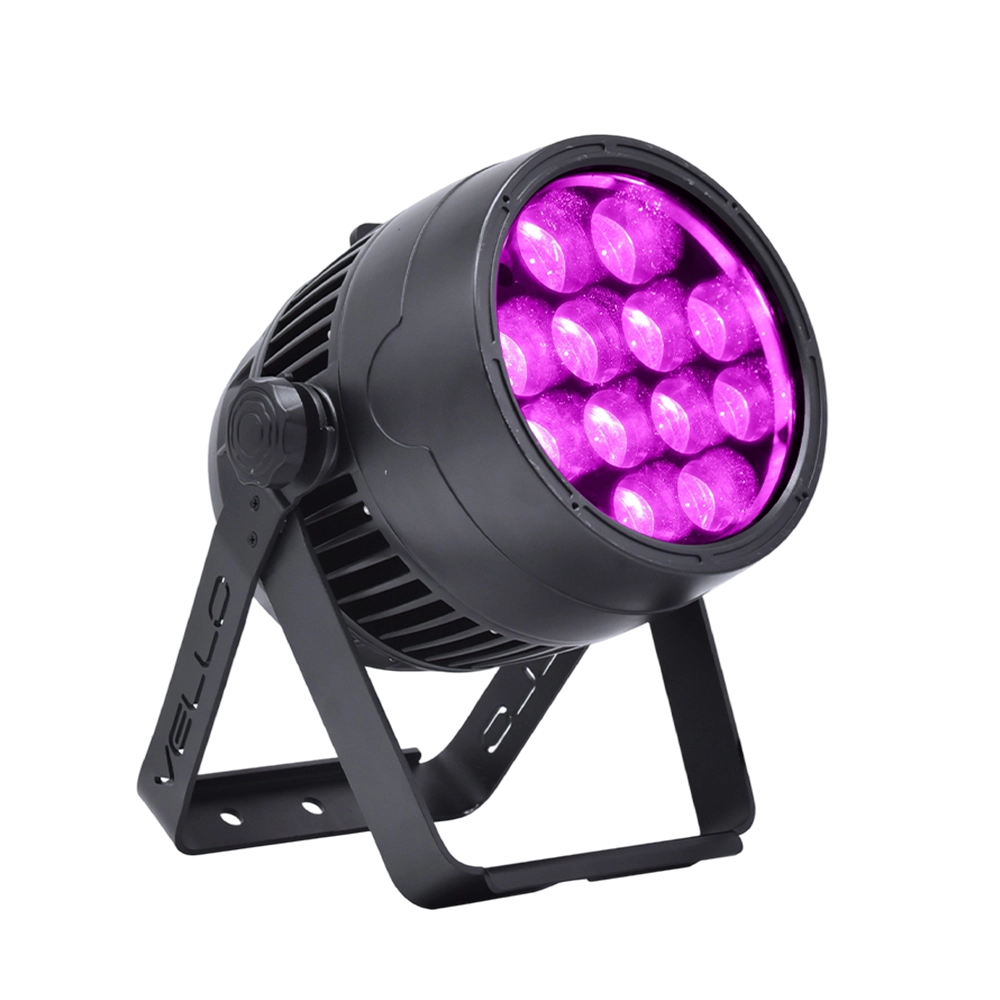
Stage LED Par Light LED ZOOMPAR 40
The Vello Zoom Par 40 IP is a powerful outdoor LED wash light equipped with 12x high-power 7-in-1 RGBACL LEDs. Designed for durability and rich color rendering, it features a wide motorized zoom (6°–50°), smooth dimming, and adjustable CTO presets (3200K–7500K), with 90+ CRI. With an IP66-rated die-cast aluminum body, it’s ideal for both indoor and outdoor applications, including stage lighting, architecture, live events, and installations.
Over 20 Years of Innovation in Stage & Studio Lighting
© 2026 VELLO. All Rights Reserved. 粤ICP备20023734号
Join our socials
VELLO
Whatsapp: +8613902276704
Vello Lighting
VelloLights