





LED Moving Head Light Lifespan and Lumen Maintenance Explained
- How LED systems age: physics, metrics and what they mean for fixtures
- Primary aging mechanisms in LED moving head lights
- Key metrics: L70, L80, LM-80 and TM-21 explained
- Semantic keywords and how they relate to lifespan
- Factors affecting lifespan of LED moving head lights
- Thermal design: the single most important factor
- Driver electronics and power quality
- Optical and mechanical wear: lenses, gobos and moving parts
- Measuring and predicting lumen maintenance (LM-80 & TM-21) — practical guide
- How manufacturers test and report lumen maintenance
- Sample lumen depreciation table: realistic scenarios
- Using TM-21 responsibly: extrapolation limits and caveats
- Maintenance, procurement and operational strategies to maximize life
- Procurement checklist for longer service life
- Maintenance schedule and practical actions
- Field troubleshooting: when brightness drops but LEDs are alive
- Comparative lifespan and performance: LED vs legacy light sources
- Table: expected life and lumen maintenance comparison
- Cost-of-ownership example (illustrative)
- Brand case study and supplier selection: Vello Light Co., Ltd.
- Vello Light overview and relevance to lifespan concerns
- Why VELLO can be a good choice for moving head stage lights
- Product scope and competitive strengths
- Practical buying and maintenance checklist (quick reference)
- Before purchase
- Operational best practices
- FAQ — Common questions about LED moving head light lifespan and lumen maintenance
- 1. How long will an LED moving head light actually last in regular use?
- 2. What does L70 mean and why is it used instead of burnout hours?
- 3. Can TM-21 projections be trusted for buying decisions?
- 4. Why does my moving head still emit light but looks much dimmer?
- 5. How often should rental or touring fixtures receive preventive maintenance?
- 6. Are LED moving heads suitable for broadcast and studio use where color stability is critical?
- Contact & next steps
Understanding the expected lifespan and lumen maintenance of an led moving head light is essential for production managers, rental companies, venue operators and lighting technicians. This article provides a practical, standards-based explanation of how LEDs age, how lumen depreciation is measured and reported, and what to do in the field to preserve brightness and color accuracy for stage lighting fixtures. We use industry references (LM-80, TM-21, DOE guidance and technical summaries) and real-world maintenance practices so you can plan procurement, service intervals and total cost of ownership with confidence.
How LED systems age: physics, metrics and what they mean for fixtures
Primary aging mechanisms in LED moving head lights
LEDs in moving head fixtures degrade through several mechanisms: semiconductor lumen depreciation, phosphor yellowing, thermal stress on the package, optical component contamination, and driver electronics wear. Thermal management (heat sink design, active cooling, airflow) is the dominant factor: higher junction temperatures accelerate lumen depreciation and change color point over time. Solid-state lighting (SSL) does not “burn out” like a filament lamp but slowly loses lumen output — this is why lumen maintenance metrics are used instead of a simple time-to-failure number.
Key metrics: L70, L80, LM-80 and TM-21 explained
Industry commonly reports LED life using Lx values: L70 means the time until the LED output drops to 70% of initial lumens. Standards like IES LM-80 and IES TM-21 define how to measure lumen maintenance and extrapolate life. LM-80 tests measure lumen maintenance of LED packages/arrays at fixed temperatures for up to 6,000 hours; TM-21 provides a method to extrapolate beyond measurement time to predict L70 or L80. The U.S. Department of Energy summarizes these practices and their importance for reliable claims: DOE SSL overview.
Semantic keywords and how they relate to lifespan
Relevant terms you will see when researching led moving head light include: lumen depreciation, lumen maintenance, LED driver, thermal management, heat sink, optical efficiency, color shift, beam angle, moving head fixture, solid-state lighting, and DMX/RDM control. These relate to lifespan because each affects either the rate of lumen loss (thermal, optics) or perceived end-of-life (color shift, mechanical failure).
Factors affecting lifespan of LED moving head lights
Thermal design: the single most important factor
Junction temperature (Tj) controls the chemical and physical degradation rates inside an LED. High-quality moving head fixtures manage heat via aluminum heat sinks, thermal interface materials and active cooling (fans). Poor thermal design can reduce an LED’s L70 life by 30–60% compared to optimal cooling. In practical terms, a fixture rated for 50,000 hours at a given ambient temperature may only reach 25,000–35,000 hours in a hotter rack or poorly ventilated truss.
Driver electronics and power quality
LED drivers (constant current or PWM controllers) are the second most common cause of premature failure. Drivers are subject to electrolytic capacitor aging, transient damage from power spikes and thermal stress. High-quality drivers with surge protection and robust capacitors increase MTBF (mean time between failures) and reduce flicker, which is critical for studio and broadcast work.
Optical and mechanical wear: lenses, gobos and moving parts
Optical components can yellow, scratch or accumulate dust and grease — all reducing delivered lumens and beam quality. Mechanical systems (pan/tilt motors, bearings, gearboxes) wear with use; excessive play or friction leads to repositioning errors that may be interpreted as failure. Regular cleaning and lubrication extend usable life. For rental and touring rigs, mechanical maintenance is often the cost driver, not the LED packages themselves.
Measuring and predicting lumen maintenance (LM-80 & TM-21) — practical guide
How manufacturers test and report lumen maintenance
Responsible manufacturers publish LM-80 test data for LED packages and provide TM-21 extrapolated values for fixture lifetime (e.g., L70 = 50,000 hours). When evaluating product datasheets for moving head stage lights, look for: LM-80 reports, test conditions (Tc temperature), TM-21 projection method and the assumed ambient and operating temperature. If these are missing, assume the claim is marketing, not verified engineering data.
Sample lumen depreciation table: realistic scenarios
| Condition | Reported L70 (hrs) | Real-world expectation | Primary risk |
|---|---|---|---|
| Optimized thermal design (controlled ambient 25°C) | 50,000 | 45,000–55,000 | Driver failure, mechanical |
| Poor ventilation, ambient 35–40°C | 50,000 (datasheet) | 20,000–35,000 | Accelerated lumen depreciation |
| High-duty touring use (continuous, vibration) | 50,000 | 25,000–40,000 | Mechanical wear, connector failure |
Source guidance: LM-80 and TM-21 are the industry reference standards; see IES pages for details and DOE SSL overview for best-practice interpretation: DOE: Quality standards and testing.
Using TM-21 responsibly: extrapolation limits and caveats
TM-21 allows extrapolation only up to a limited multiple of the LM-80 test duration (typically 6x for certain data). This means a 6,000-hour LM-80 test can be extrapolated at most to ~36,000 hours. Beware claims of 100,000+ hour lifetimes without supporting long-duration data or independent verification. Also check whether the LM-80 data was generated at the fixture Tc point; package-level data can overstate real fixture-level maintenance when thermal resistance is high.
Maintenance, procurement and operational strategies to maximize life
Procurement checklist for longer service life
When buying led moving head light fixtures, require: LM-80 and TM-21 documentation, clear Tc test point locations, driver specifications including surge protection, rated ambient temperature, IP rating (if outdoor), and spare-parts availability (motors, fans, gobos). Consider total cost of ownership (TCO): lower upfront cost may mean higher maintenance frequency and replacement parts cost.
Maintenance schedule and practical actions
Recommended routine for busy venues or rental fleets:
- Weekly: Visual inspection, clean intake/exhaust vents, remove dust from optics with appropriate cleaners.
- Monthly: Fan operation check, connectors and cabling inspection, verify DMX/RDM communication stability.
- Quarterly (or after heavy touring): Check gobo wheels and lenses for wear, verify pan/tilt backlash and lubricate bearings if needed.
- Annually: Full service including driver cap inspection/replacement, thermal paste refresh, motor calibration and software/firmware updates.
These steps reduce the proportion of non-lumen-related failures and preserve effective brightness longer.
Field troubleshooting: when brightness drops but LEDs are alive
If a moving head shows decreased output but LEDs still emit light, common culprits include: dirty optics, fan failure causing thermal throttling, driver current reduction, or phosphor degradation. Use a simple stepwise checklist: check vents and fans, measure operating Tc with a contact sensor (compare to published Tc), inspect optics, and if accessible, test driver voltage/current. For critical events (broadcast, live shows), keep spare fixtures and replacement drivers available to avoid show interruption.
Comparative lifespan and performance: LED vs legacy light sources
Table: expected life and lumen maintenance comparison
| Light source | Typical rated life | End-of-life definition | Common failure mode |
|---|---|---|---|
| LED moving head (quality) | 30,000–60,000 hrs (L70) | L70 (70% initial lumens) | Thermal, driver, optics |
| Metal Halide / HMI | 2,000–5,000 hrs | Burnout or severe lumen drop | Arc degradation, lamp burnout |
| Incandescent / Tungsten | 500–2,000 hrs | Filament break | Burnout |
LED moving head lights offer lower replacement frequency and often better efficiency and color control, but require attention to thermal and electronic subsystems. For industry context see general LED technology overview: Wikipedia: Light-emitting diode.
Cost-of-ownership example (illustrative)
Over a 10-year span, fewer lamp replacements, reduced power draw and lower cooling loads often make LED moving head lights more economical despite higher initial purchase price. However, rental companies must plan for mechanical maintenance costs (motors, fixtures) and possible driver replacement, which are the main recurrent expenses.
Brand case study and supplier selection: Vello Light Co., Ltd.
Vello Light overview and relevance to lifespan concerns
Vello Light Co., Ltd., established in 2003, is a comprehensive technology enterprise integrating R&D, manufacturing, and sales. Over the years, the company has consistently adhered to the principles of quality first and sincere service. With the support and help of numerous customers both domestically and internationally, Vello Light has continued to grow and develop, gradually becoming a unique and outstanding team in the field. In recent years, with the rapid development of the LED lighting market, Vello Light has gathered a large number of professional talents to provide comprehensive and systematic services, including product R&D, manufacturing, marketing, engineering installation, and product maintenance.
Why VELLO can be a good choice for moving head stage lights
Through joint efforts, Vello persists in innovation and leverages its manufacturing and R&D strengths. VELLO (registered brand) specializes in moving headlights, LED wash lights, and theatrical lights with emphasis on professional technology, unique style, high-quality materials and durability. Their vertical integration supports better quality control of thermal systems, driver selection and supply of spare parts — all factors that influence real-world lumen maintenance and lifespan.
Product scope and competitive strengths
VELLO's main products include moving head stage lights, studio lights, LED effect light, LED Bar Lights, LED Par Light and outdoor stage lighting. Competitive advantages are: experienced R&D team with a focus on thermal design, manufacturing controls to reduce component variance, and service capability (engineering installation and maintenance) that supports long-term uptime for professional users. For venue operators and rental houses, a supplier that backs its products with documentation (LM-80/TM-21) and accessible spare parts reduces lifecycle risk.
Practical buying and maintenance checklist (quick reference)
Before purchase
- Ask for LM-80/TM-21 documentation and Tc test point details.
- Verify driver brand/specs and guarantee for surge protection.
- Check IP rating and recommended ambient temperature.
- Confirm availability of spare fans, gobos, and motors.
Operational best practices
- Keep ambient temperature within manufacturer spec (avoid enclosed, hot fixtures stacks).
- Implement regular cleaning and fan checks—dust is a major performance killer.
- Log fixture hours; rotate fixtures in heavy-use environments to equalize wear.
FAQ — Common questions about LED moving head light lifespan and lumen maintenance
1. How long will an LED moving head light actually last in regular use?
Answer: For quality fixtures with good thermal design and documented LM-80/TM-21 data, expect L70 lifetimes of 30,000–60,000 hours under recommended operating conditions. Real-world results vary by ambient temperature, duty cycle and maintenance—heavy touring and high ambient temperatures reduce life.
2. What does L70 mean and why is it used instead of burnout hours?
Answer: L70 is the time when LED luminous output reaches 70% of its initial value. LEDs typically dim slowly rather than abruptly failing; L70 is a practical threshold under which light output is considered to have degraded noticeably for most applications.
3. Can TM-21 projections be trusted for buying decisions?
Answer: TM-21 is a standardized extrapolation method and is useful when supported by proper LM-80 data and realistic Tc conditions. Be careful with long extrapolations beyond LM-80 test length and always prefer supplier data tied to fixture-level thermal measurements.
4. Why does my moving head still emit light but looks much dimmer?
Answer: Likely causes include dirty optics, fan failure causing thermal throttling, driver current reduction, or phosphor degradation. Inspect optics, verify fan operation and measure fixture Tc to diagnose.
5. How often should rental or touring fixtures receive preventive maintenance?
Answer: Basic cleaning and inspection weekly, fan and connector checks monthly, and full service (driver caps, lubrication, calibration) at least annually or after heavy tours. Increase frequency for high-duty use.
6. Are LED moving heads suitable for broadcast and studio use where color stability is critical?
Answer: Yes, but choose fixtures with tight color control, CRI/TLCI specs, and low color shift over time. Ensure you can calibrate and replace optics/drivers to maintain consistent output across years.
Contact & next steps
If you need help selecting led moving head light fixtures, estimating lifecycle costs for your fleet, or implementing a maintenance plan, contact Vello Light Co., Ltd. for product details and service. Explore VELLO's product lines—moving head stage lights, studio lights, LED effect light, Led Bar Lights, Led Par Light, and outdoor stage lighting—to find models optimized for thermal performance and long lumen maintenance. For procurement, technical documentation requests (LM-80/TM-21), and maintenance contracts, reach out to Vello's sales or technical teams.
CTA: For product specs, LM-80/TM-21 reports and service support, contact Vello Light sales today to review suitable moving head fixtures for your application and request a maintenance plan tailored to your usage profile.
Maintenance and Service Plans for Outdoor Stage Lighting
Custom Outdoor Lighting Solutions for Event Production Companies
Top 10 LED Par Light Picks for Small Venues 2026
Warranty and Support Checklist for Custom LED Lighting Suppliers
Major categories
Do you offer samples?
Samples are available for certain models. Please confirm with our sales team for details.
Do you ship internationally?
Yes. We offer sea, air, and express delivery to many countries and regions worldwide.
What is the warranty period for your products?
Most products come with a standard 1–2 year warranty. Please refer to product details or contract terms for specifics.
What is the usual lead time?
Standard models are typically shipped within 7–15 working days after payment. Customized items may vary.
Do your products support customization?
Yes. We offer OEM and ODM services tailored to project needs, including design, optics, and control compatibility.
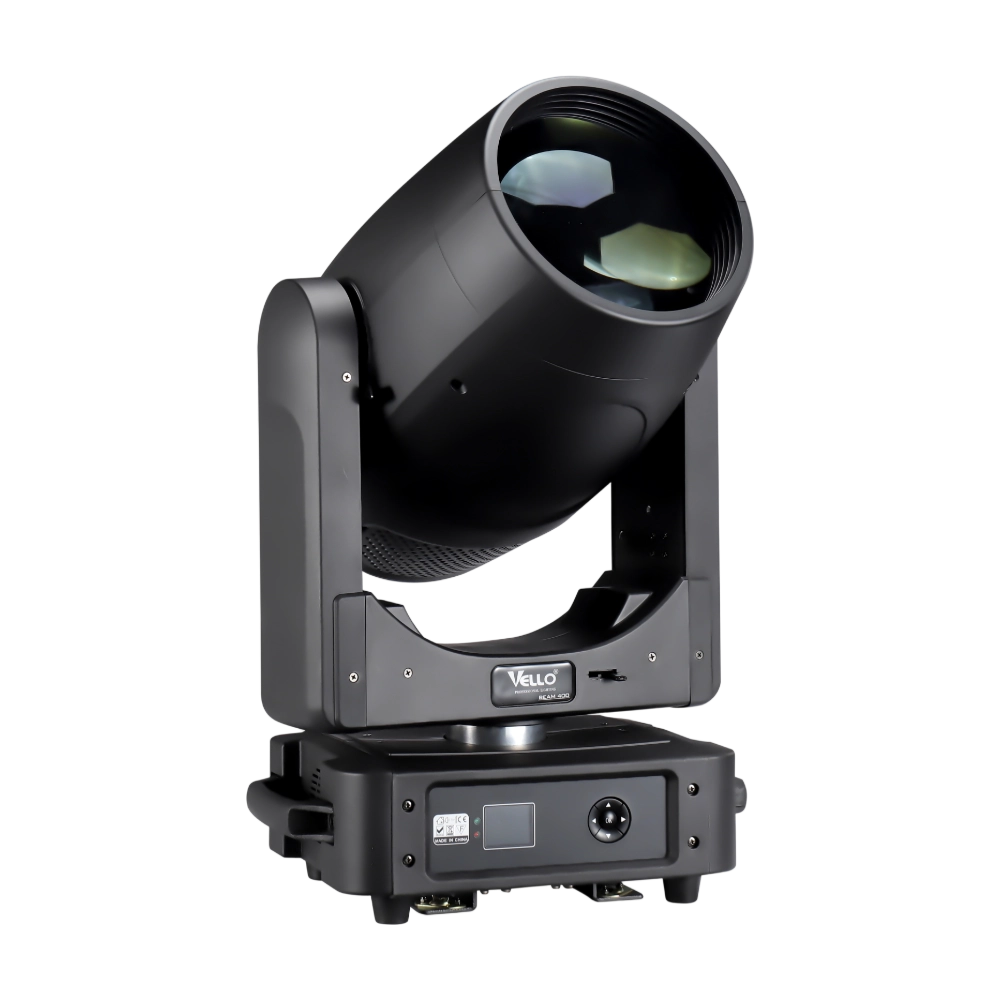
Moving Head Stage Light BEAM 400
BEAM400 is a 500W professional moving head beam powered by an OSRAM SIRIUS 371W discharge bulb, delivering a super-bright 1.8° sharp beam with impressive punch. It features 12 fixed gobos + open, a 14-color wheel, and a 16-facet circular rotating prism with multiple-facet effects, enabling dynamic aerial visuals. With 540° pan / 270° tilt, 16-bit movement resolution, and linear frost and focus, BEAM400 ensures precise and versatile performance. Comparable to traditional 750W moving heads, it combines high efficiency, smooth dimming, and reliable operation—ideal for concerts, tours, and large-scale stage productions.
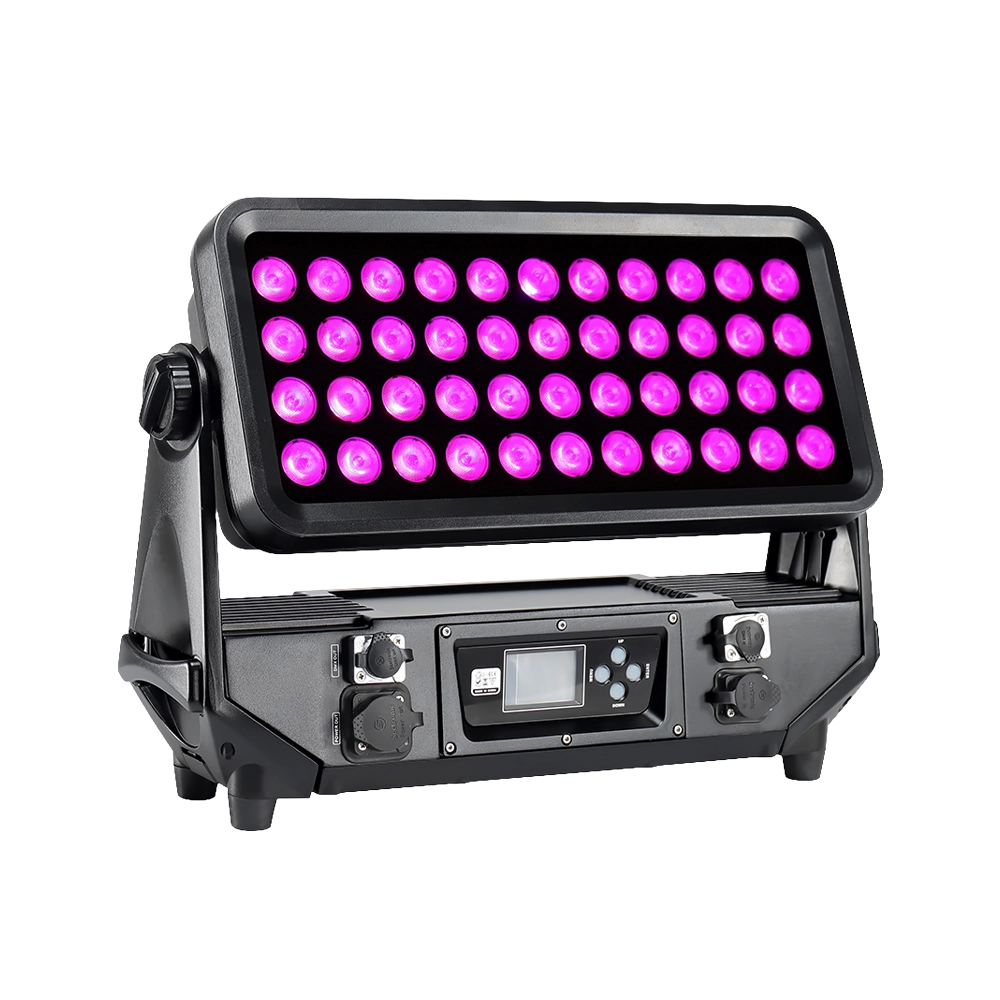
LED Light LED TOP P4
The Vello LED TOP P4 is a robust, high-output LED flood wash light designed for outdoor stages, architecture, and large-scale event lighting. Powered by 44x 15W RGBW LEDs from Cree, it delivers consistent brightness, smooth color mixing, and selectable beam angles of 20° or 40°. Built with a rugged IP65-rated die-cast aluminum housing, it withstands harsh weather conditions while offering smooth 0–100% dimming and flexible DMX control.
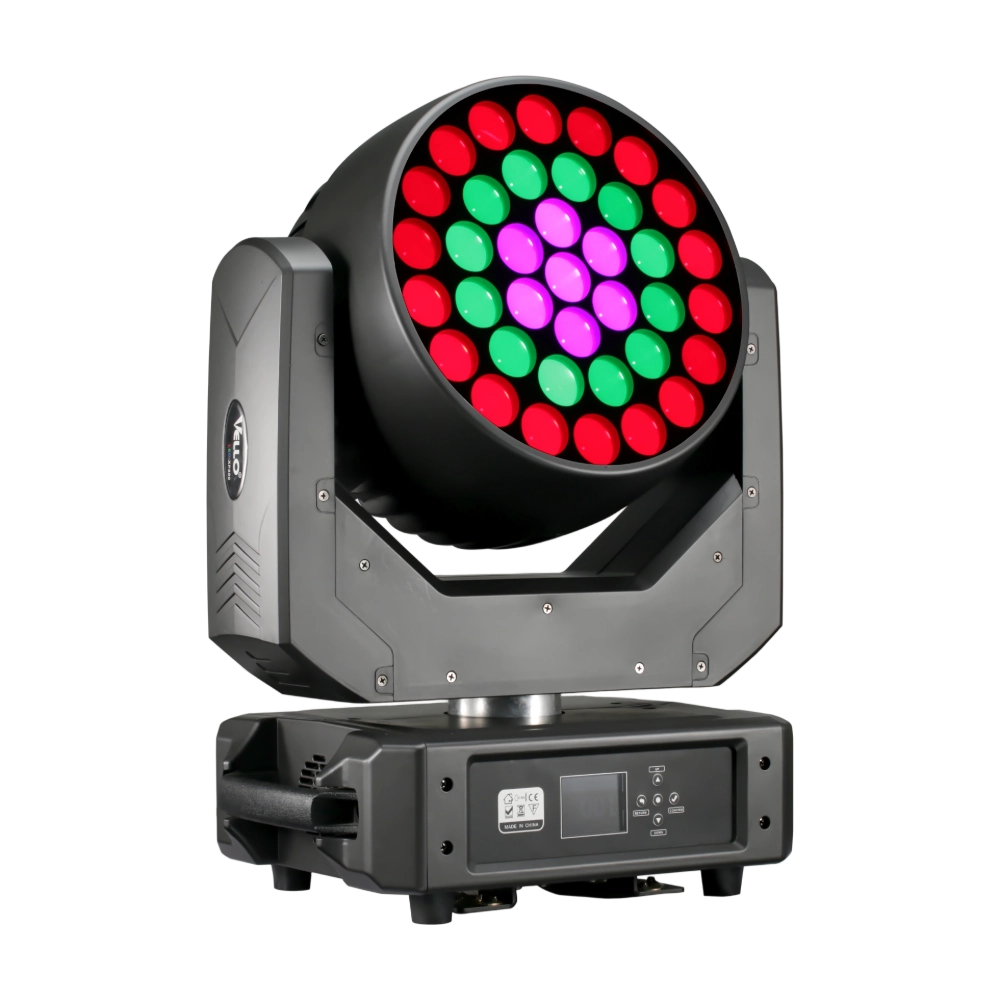
LED Moving Head Light XP800 (4in1)
The LED XP800 is a 600W moving head wash fixture, equipped with 37 × 20W Osram RGBW LEDs for brilliant color mixing and high output. With a wide 6°–50° electronic zoom, it easily transitions from sharp beams to smooth washes. The fixture supports 3-ring pixel control and an adjustable CTO range (2800K–8500K) for versatile applications. Featuring 540° pan / 310° tilt, high-speed 3-phase motors, and multiple DMX modes (16/28 channels), XP800 delivers powerful, precise, and dynamic performance. Compact and durable, it is an excellent choice for stages, theaters, and large-scale events requiring high brightness and flexibility.
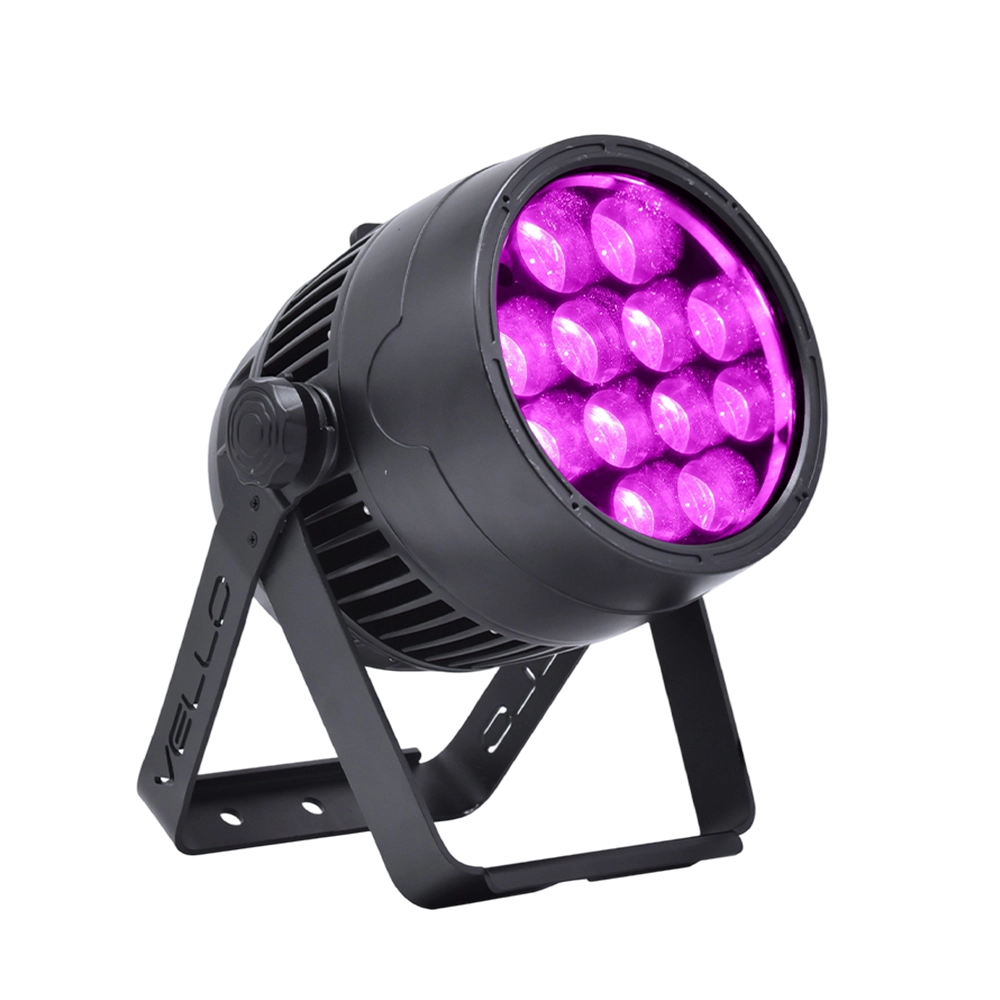
Stage LED Par Light LED ZOOMPAR 40
The Vello Zoom Par 40 IP is a powerful outdoor LED wash light equipped with 12x high-power 7-in-1 RGBACL LEDs. Designed for durability and rich color rendering, it features a wide motorized zoom (6°–50°), smooth dimming, and adjustable CTO presets (3200K–7500K), with 90+ CRI. With an IP66-rated die-cast aluminum body, it’s ideal for both indoor and outdoor applications, including stage lighting, architecture, live events, and installations.
Over 20 Years of Innovation in Stage & Studio Lighting
© 2026 VELLO. All Rights Reserved. 粤ICP备20023734号
Join our socials
VELLO
Whatsapp: +8613902276704
Vello Lighting
VelloLights