




Energy Efficiency and Power Consumption of LED Moving Heads
- Understanding power use in stage lighting
- What is a moving head fixture and how does it draw power?
- How LEDs changed the energy profile
- Energy-efficiency factors specific to LED moving head lights
- LED engine, binning and luminous efficacy
- Drivers, dimming curves and power factor
- Thermal management, optics and lumen maintenance
- Comparing power consumption: LED moving heads vs legacy fixtures
- Typical fixture power profiles (verifiable examples)
- Real-world operating cost comparison (example calculation)
- Optimization, procurement and installation tips to minimize power waste
- What to check on spec sheets
- Power distribution, dimmers and PDU considerations
- Maintenance and lifecycle cost management
- Choosing the right LED moving head light for your application
- Match output to task, not headline wattage
- Reliability, service network and spare parts
- Environmental and regulatory considerations
- Industry perspective and VELLO Light capabilities
- Market context and VELLO's role
- VELLO strengths and product scope
- How VELLO addresses efficiency and reliability
- FAQ — Energy Efficiency and Power Consumption of LED Moving Heads
- 1. How much energy can I realistically save by switching to LED moving heads?
- 2. Do LED moving heads require special dimmers or controllers?
- 3. What should I look for on a spec sheet to assess energy efficiency?
- 4. How does thermal design affect the lifetime and efficiency of LED moving heads?
- 5. Are LED moving heads better for touring and rental companies?
- Contact & Next Steps
The rapid adoption of LED moving head lights in live events, theatres, television studios, and rental fleets is driven not only by new creative possibilities but by measurable reductions in energy use and operating cost. This article synthesizes manufacturer data, industry standards and independent sources to explain how led moving head light fixtures consume power, what determines their efficiency, and how buyers and technicians can quantify savings in real-world deployments.
Understanding power use in stage lighting
What is a moving head fixture and how does it draw power?
A moving head light (also called a moving light or intelligent fixture) combines a light source, optical system, motors for pan/tilt, control electronics (DMX/Art-Net), and often on-board effects (gobos, prisms, zooms, shutters). The total power draw equals the sum of the light engine (LED array or discharge lamp), control electronics, motors/drivers, cooling fans, and auxiliary systems. For a technical overview of moving head fixtures and evolutions in lamp technology, see the Wikipedia moving head entry.
How LEDs changed the energy profile
Traditional moving heads used discharge lamps (e.g., metal halide/MSR) or halogen sources with ballasts consuming hundreds to over a thousand watts. LEDs shifted the energy balance by offering higher luminous efficacy, lower heat at the source, and more efficient dimming without mechanical shutters. The U.S. Department of Energy's Solid-State Lighting resources outline the basic efficiency advantages of LEDs over legacy lamps: DOE SSL Overview.
Energy-efficiency factors specific to LED moving head lights
LED engine, binning and luminous efficacy
LED moving head light efficiency depends heavily on LED chip efficacy (lm/W), the optical coupling efficiency, and thermal performance. Commercial LEDs vary: high-power white LEDs commonly achieve 100–200 lm/W at the component level under laboratory conditions; practical fixture-level efficacy is lower due to optics and thermal losses. For background on LED efficacy metrics, see the LED Wikipedia entry and DOE facts on LED performance (LED basics).
Drivers, dimming curves and power factor
LED drivers convert AC mains to the DC current the LEDs require. Quality drivers with active power factor correction (PFC) reduce reactive power and harmonics, improving the apparent power versus real power relationship. A fixture with poor PF may draw more VA from a dimmer or distro than the rated watts indicate. For guidance on power factor and electrical compatibility, see resources from the Illuminating Engineering Society (IES).
Thermal management, optics and lumen maintenance
Heat degrades LEDs and reduces lumen output over time (L70). Efficient thermal design keeps junction temperatures low, preserving luminous efficacy and reducing the need for larger LED arrays to meet initial lux targets. Optical losses (lenses, gobos, prisms) further reduce delivered lumens; therefore a high-rated lm/W chip does not automatically equal higher stage lux. Reliable manufacturers publish TM-21/L70 data and lumen maintenance curves—look for those specs on datasheets.
Comparing power consumption: LED moving heads vs legacy fixtures
Typical fixture power profiles (verifiable examples)
Below is a representative comparison of commonly encountered fixture categories. Values are typical ranges; exact models vary. Sources: manufacturer spec sheets; historical lamp data summarized in industry references (see Moving head) and DOE LED overview.
| Fixture type | Typical source wattage (W) | Typical total power draw (W) | Notes |
|---|---|---|---|
| Legacy discharge moving head (MSR/HTI) | 250–1200 | 300–1300 | High lamp wattage, ballast losses, longer warm-up/cool-down |
| LED moving head (small/compact) | 60–150 (LED engine) | 80–180 | Lower thermal load, fast startup, lower maintenance |
| LED moving head (high-output) | 200–600 | 220–650 | Comparable output to mid/high discharge units, with higher efficiency |
Real-world operating cost comparison (example calculation)
Example assumptions: two fixtures—one legacy 575W discharge fixture (total draw 650W) and one LED moving head at 200W. Use 8 hours/day operation, 200 event-days/year, and an electricity cost of $0.15/kWh (U.S. average approx. data: U.S. EIA). Calculation:
- Legacy: 0.65 kW × 8 h/day × 200 days = 1040 kWh/year → 1040 × $0.15 = $156/year per fixture
- LED: 0.20 kW × 8 h/day × 200 days = 320 kWh/year → 320 × $0.15 = $48/year per fixture
- Annual savings per fixture = $108
These figures show energy cost savings; additional savings accrue from lower HVAC loads (less heat expelled), reduced lamp replacement cost, and lower dimmer/distro stress. For authoritative energy-saving context, see the DOE's solid-state lighting reports (DOE SSL).
Optimization, procurement and installation tips to minimize power waste
What to check on spec sheets
When evaluating led moving head light fixtures, check these items on the spec sheet: rated power (W), power factor (PF), inrush current (A), driver type, rated luminous flux (lm), beam/lens transmission, cooling method (active/passive), and lumen maintenance data (L70 @ hours). Ask for measured power consumption at 100%, 50%, and standby modes. Manufacturers following good practice will supply inrush current and power factor details because rental and touring operations need that data for safe distro planning.
Power distribution, dimmers and PDU considerations
LED moving heads usually require constant current drivers and are often compatible with mains dimming via electronic control protocols. However, connecting many fixtures to a single distro without considering inrush and PF may trip circuits. Use PDUs with per-outlet current monitoring and ensure mains circuits are sized with diversity and headroom. For international deployments verify voltage ranges and onboard power supplies support 100–240VAC and relevant frequencies.
Maintenance and lifecycle cost management
Lumen depreciation, driver failures, and fan replacement determine lifecycle costs. Track run-hours and replace consumables proactively. A well-specified LED moving head with a robust driver and thermal design can reduce not only lamp replacement costs but also labor and downtime in touring/installation contexts.
Choosing the right LED moving head light for your application
Match output to task, not headline wattage
Compare measured lux (or lumen output at a target throw) rather than just wattage. Two fixtures with similar wattage can perform differently if optics or thermal management differ. Ask vendors for photometric files (IES/IESNA or Eulumdat) so you can simulate real-world coverage. The IES provides standards and guidance on photometric data.
Reliability, service network and spare parts
Energy efficiency is only as valuable as uptime permits. Choose brands with clear service support, spare parts availability (LED modules, drivers, motors), and documented firmware update policies. For rental houses and productions, mean time between failures (MTBF) and ease of swapping modules on-site matter more than marginal watt differences.
Environmental and regulatory considerations
LED fixtures generally reduce environmental impact through lower energy use and reduced hazardous waste (no mercury in LEDs). However, proper disposal of electronics and LEDs still matters. Check local directives for electronic waste recycling. Energy labeling or compliance with regional standards (CE, RoHS, ETL) also factors into procurement choices.
Industry perspective and VELLO Light capabilities
Market context and VELLO's role
As LED technology matured, manufacturers like Vello Light have focused on integrating efficient LED engines with robust mechanical platforms to deliver reliable moving head stage lights and theatrical luminaires. Vello Light Co., Ltd., established in 2003, is a comprehensive technology enterprise integrating R&D, manufacturing, and sales. Over the years, Vello has adhered to 'quality first' and 'sincere service', building expertise in product R&D, manufacturing, marketing, installation, and maintenance.
VELLO strengths and product scope
VELLO's registered brand, VELLO, specializes in moving heads, LED wash lights, theatrical lights, LED bar lights, LED par lights, outdoor stage lighting and studio lights. The company's competitive advantages include experienced R&D teams, attention to thermal design and driver selection, and a reputation in overseas markets for durable, professional fixtures. Visit the company site at Vello Light or contact via email at info@vellolight.com.
How VELLO addresses efficiency and reliability
Vello focuses on high-quality LED binning, active cooling strategies, and compliant drivers with power factor correction to minimize operational surprises. These design choices reduce total cost of ownership—lower energy, lower HVAC load, and fewer lamp/driver replacements—making VELLO fixtures attractive for rental companies, theatres, and broadcast installations seeking efficient, high-output moving head stage lights.
FAQ — Energy Efficiency and Power Consumption of LED Moving Heads
1. How much energy can I realistically save by switching to LED moving heads?
Savings depend on the legacy fixtures you replace. Replacing a 575W discharge moving head (total draw ~650W) with a 200W LED moving head can cut energy use by ~70% for that fixture. Include savings from reduced HVAC and lamp replacement for a fuller picture. Example references: DOE SSL programs and manufacturer spec comparisons (DOE SSL).
2. Do LED moving heads require special dimmers or controllers?
Most modern LED moving head lights accept DMX/Art-Net control and have internal drivers. They do not require legacy mains dimmers; in fact, feeding LED fixtures through conventional resistive/leading-edge dimmers can cause problems. Use manufacturer-recommended PDUs and control systems, and verify SPF/inrush specs before connecting many fixtures to one circuit.
3. What should I look for on a spec sheet to assess energy efficiency?
Key items: rated power (W), power factor (PF), inrush current, luminous flux (lm) or lux at throw, beam angle and optical transmission, L70 lumen maintenance prediction, cooling method, and photometric files (IES). These allow effective apples-to-apples comparisons.
4. How does thermal design affect the lifetime and efficiency of LED moving heads?
Poor thermal design raises LED junction temperatures, reducing lumen output and accelerating degradation. Good heat sinking and airflow extend LED lifetime and maintain efficacy, limiting the need for overdriving LEDs to compensate for early lumen loss.
5. Are LED moving heads better for touring and rental companies?
Often yes. LED fixtures typically start instantly, consume less power, produce less heat, and require fewer consumables (no lamp changes). Durability, ease of service, and availability of spare parts should be weighed when choosing fixtures for rental fleets.
Contact & Next Steps
If you're evaluating led moving head light options for your venue, rental fleet, or production, Vello Light offers product lines and technical support to help you balance output, energy use, and lifecycle cost. Learn more at https://www.vellolight.com or email our sales team at info@vellolight.com. Request photometric files and power-factor/inrush data when comparing models to ensure compatibility with your power distribution and performance goals.
VELLO product categories: moving head stage lights, studio lights, LED effect lights, LED bar lights, LED par lights, outdoor stage lighting. Our vision is to become a world-leading stage lighting manufacturer by combining technical strength, quality materials, and strong after-sales support.
For tailored recommendations, provide your venue size, throw distances, run-hours and budget and Vello's technical team can propose fixtures and a power-distribution plan to minimize consumption while meeting creative needs.
Energy Efficient LED Moving Head Lights: Save Power & Costs
Energy Savings of Custom LED Stage Lights for Venues
IP Rating and Durability: Outdoor LED Stage Lights Explained
Warranty, Service Contracts and Spare Parts Strategies
Major categories
Do you ship internationally?
Yes. We offer sea, air, and express delivery to many countries and regions worldwide.
Do you offer samples?
Samples are available for certain models. Please confirm with our sales team for details.
What is the warranty period for your products?
Most products come with a standard 1–2 year warranty. Please refer to product details or contract terms for specifics.
What is the usual lead time?
Standard models are typically shipped within 7–15 working days after payment. Customized items may vary.
Do your products support customization?
Yes. We offer OEM and ODM services tailored to project needs, including design, optics, and control compatibility.
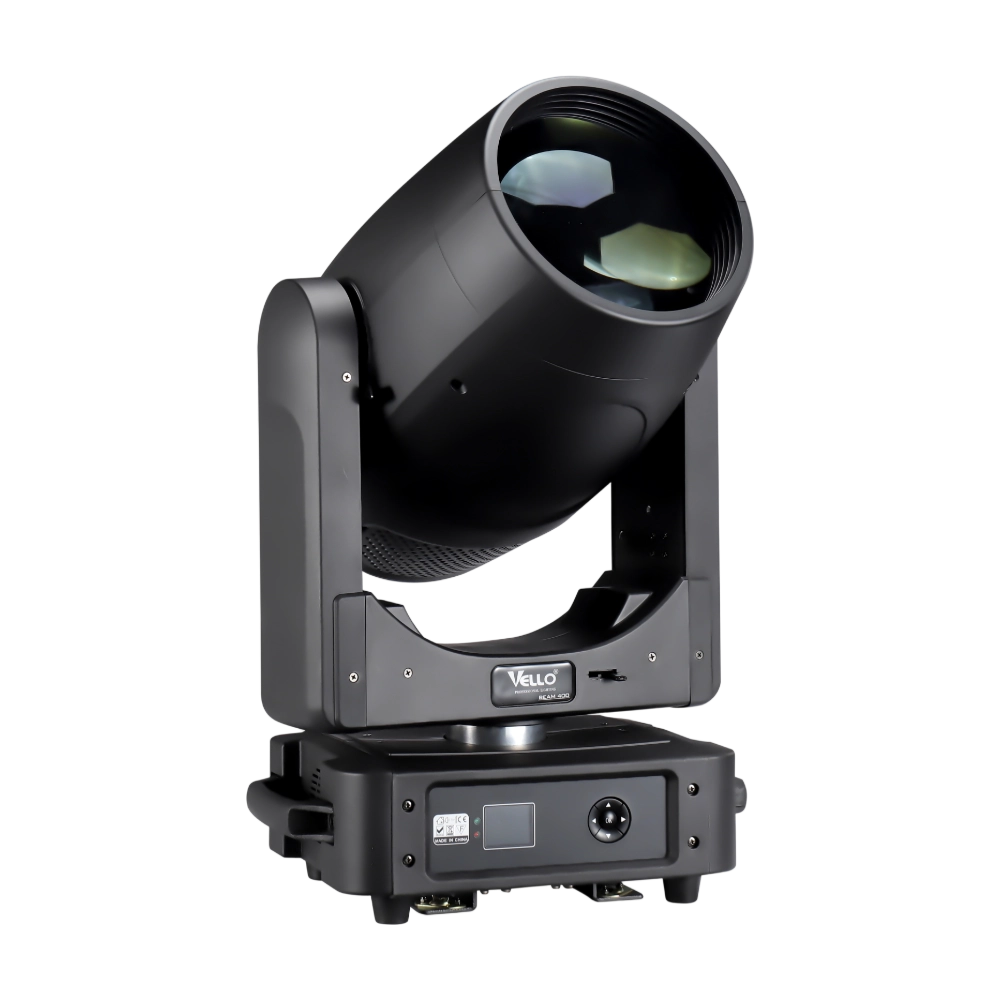
Moving Head Stage Light BEAM 400
BEAM400 is a 500W professional moving head beam powered by an OSRAM SIRIUS 371W discharge bulb, delivering a super-bright 1.8° sharp beam with impressive punch. It features 12 fixed gobos + open, a 14-color wheel, and a 16-facet circular rotating prism with multiple-facet effects, enabling dynamic aerial visuals. With 540° pan / 270° tilt, 16-bit movement resolution, and linear frost and focus, BEAM400 ensures precise and versatile performance. Comparable to traditional 750W moving heads, it combines high efficiency, smooth dimming, and reliable operation—ideal for concerts, tours, and large-scale stage productions.
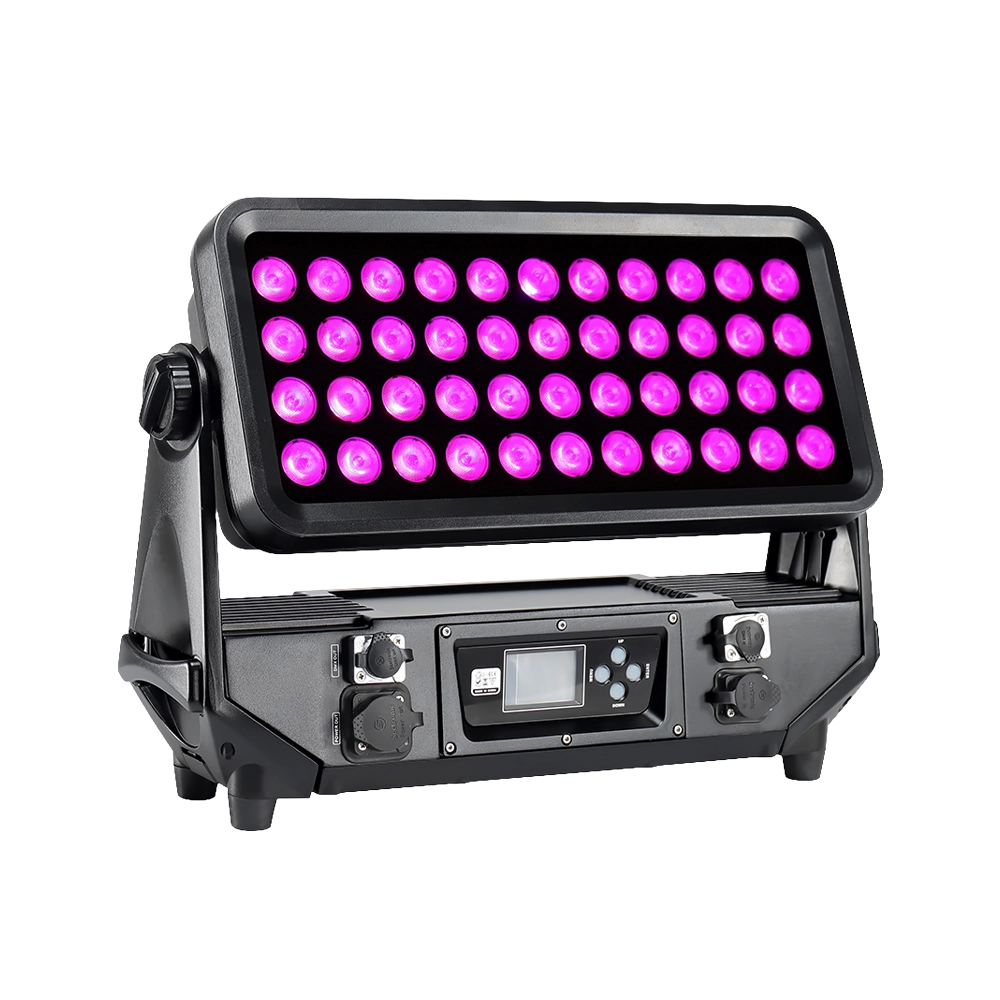
LED Light LED TOP P4
The Vello LED TOP P4 is a robust, high-output LED flood wash light designed for outdoor stages, architecture, and large-scale event lighting. Powered by 44x 15W RGBW LEDs from Cree, it delivers consistent brightness, smooth color mixing, and selectable beam angles of 20° or 40°. Built with a rugged IP65-rated die-cast aluminum housing, it withstands harsh weather conditions while offering smooth 0–100% dimming and flexible DMX control.
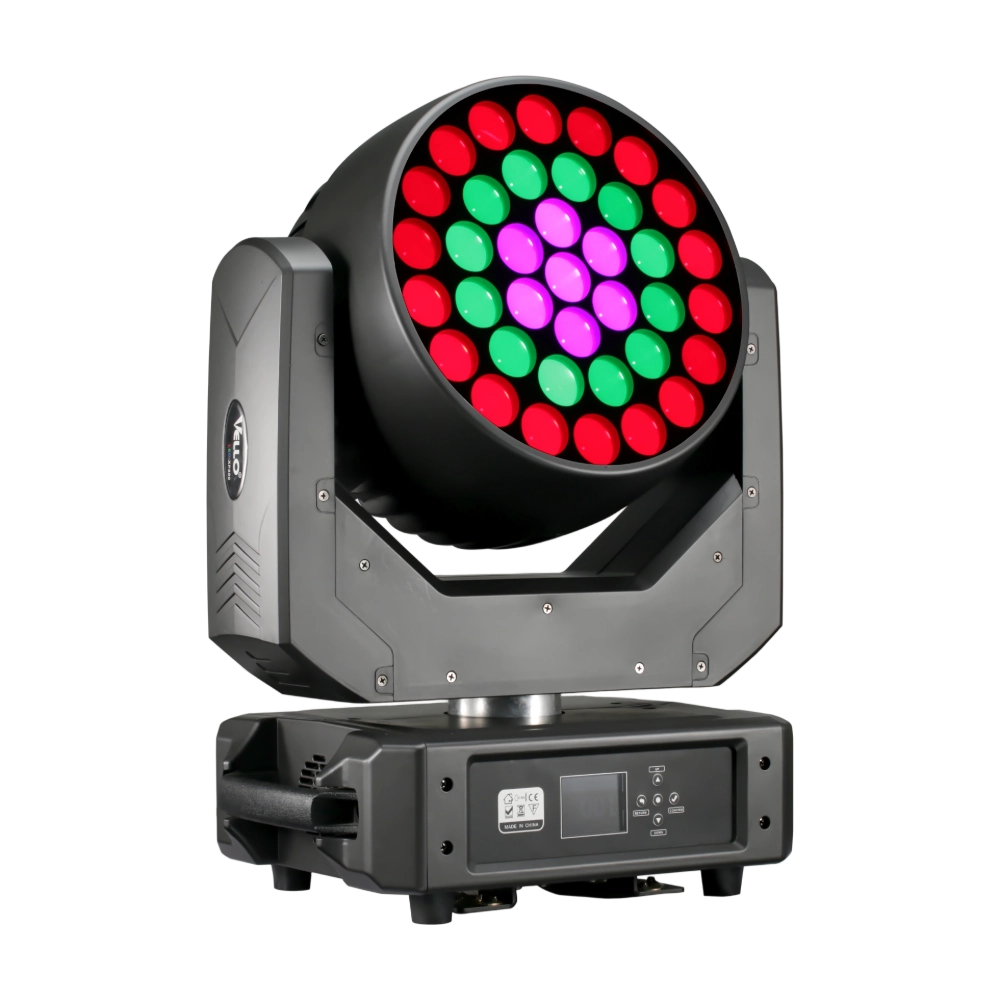
LED Moving Head Light XP800 (4in1)
The LED XP800 is a 600W moving head wash fixture, equipped with 37 × 20W Osram RGBW LEDs for brilliant color mixing and high output. With a wide 6°–50° electronic zoom, it easily transitions from sharp beams to smooth washes. The fixture supports 3-ring pixel control and an adjustable CTO range (2800K–8500K) for versatile applications. Featuring 540° pan / 310° tilt, high-speed 3-phase motors, and multiple DMX modes (16/28 channels), XP800 delivers powerful, precise, and dynamic performance. Compact and durable, it is an excellent choice for stages, theaters, and large-scale events requiring high brightness and flexibility.
Stage LED Par Light LED ZOOMPAR 40
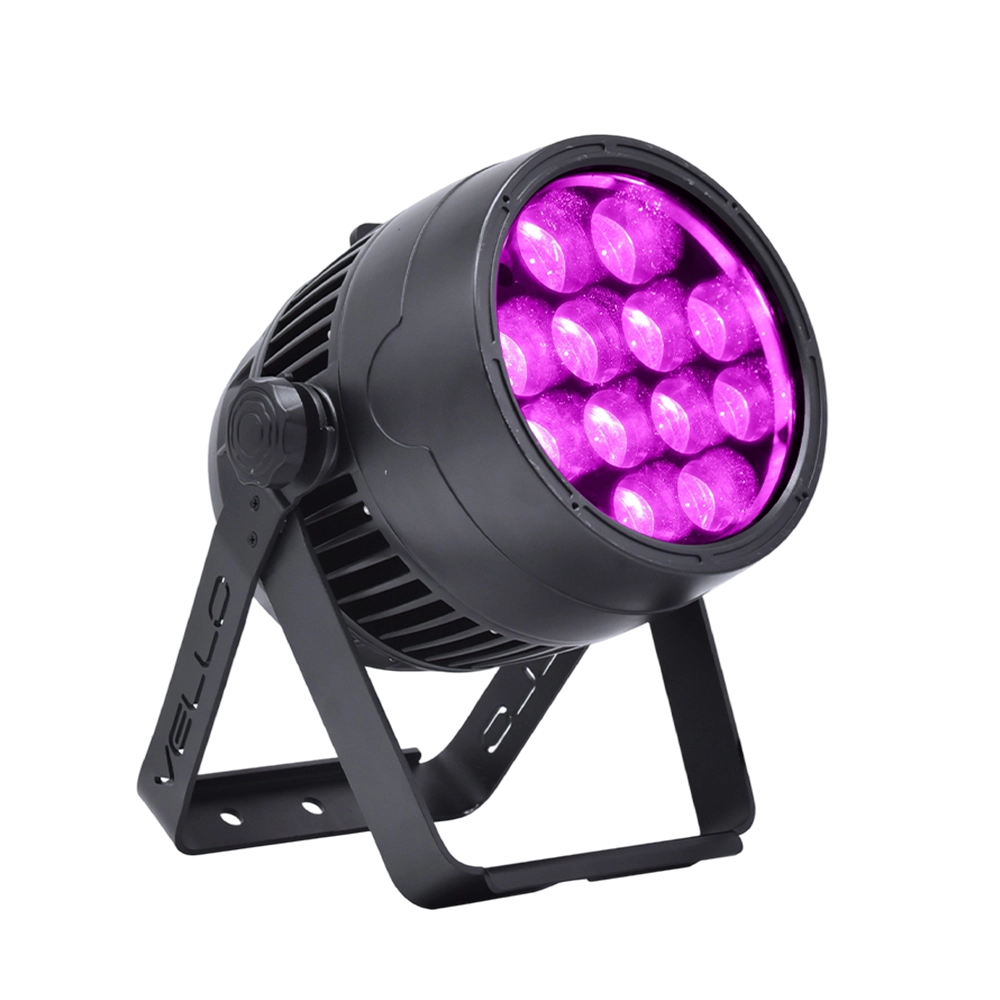
The Vello Zoom Par 40 IP is a powerful outdoor LED wash light equipped with 12x high-power 7-in-1 RGBACL LEDs. Designed for durability and rich color rendering, it features a wide motorized zoom (6°–50°), smooth dimming, and adjustable CTO presets (3200K–7500K), with 90+ CRI. With an IP66-rated die-cast aluminum body, it’s ideal for both indoor and outdoor applications, including stage lighting, architecture, live events, and installations.
Over 20 Years of Innovation in Stage & Studio Lighting
© 2026 VELLO. All Rights Reserved. 粤ICP备20023734号
Join our socials
VELLO
Whatsapp: +8613902276704
Vello Lighting
VelloLights