





Energy Efficiency and ROI of LED Moving Head Light
- Why venue managers and rental companies focus on light-source efficiency
- Operational costs drive fixture decisions
- matched: efficiency, lifespan, cost-per-hour
- Technical comparison: LED moving head vs traditional lamp-based moving head
- Key technical differences
- Performance, heat and venue impact
- Side‑by‑side specification table (typical ranges)
- Calculating ROI for LED moving head lights
- Methodology and assumptions
- Assumptions used in examples
- Scenario calculations (10 fixtures)
- Selecting LED moving head fixtures — reliability, optics and real-world considerations
- What to prioritize beyond wattage
- Maintenance realities and total cost of ownership
- Why manufacturer reputation matters: Vello Light Co., Ltd.
- Practical next steps: budgeting, procurement and verification
- How to build a short procurement checklist
- Testing and commissioning advice
- Financing and incentives
- FAQ (Frequently Asked Questions)
- 1. How much energy does an average LED moving head light save versus a conventional moving head?
- 2. Are LED moving head lights more expensive upfront?
- 3. What is the typical lifetime of LED engines in moving heads?
- 4. Do LEDs produce the same beam quality and brightness as discharge lamps?
- 5. How quickly can I expect a payback when switching to LED moving heads?
- 6. Are there incentives or rebates available for upgrading to LED fixtures?
- Contact & product enquiry
- References
Why venue managers and rental companies focus on light-source efficiency
Operational costs drive fixture decisions
For theatres, houses of worship, concert venues and rental firms, the choice of lighting fixtures is often dictated less by initial sticker price and more by lifetime operating cost. The term led moving head light refers to fixtures that use LED engines rather than discharge lamps (e.g., metal‑halide or arc lamps) to produce beam, spot and wash effects while retaining motorized pan/tilt and optical systems. Because these fixtures consume significantly less power and have much longer service lives, energy and maintenance savings can outweigh higher upfront costs in many real‑world installations.
matched: efficiency, lifespan, cost-per-hour
Readers searching for led moving head light commonly want three things: (1) measurable energy and cost comparisons, (2) credible ROI timelines for different operating profiles, and (3) guidance on product selection and real maintenance realities. This article answers those needs with verifiable data and actionable calculations.
Technical comparison: LED moving head vs traditional lamp-based moving head
Key technical differences
LED moving head lights use modular LED arrays and modern drivers; traditional moving heads typically use high-pressure discharge lamps (e.g., 250W–1200W metal‑halide or arc lamps) with separate ignitors and color wheels. Important technical contrasts include power draw, luminous efficacy, color stability, dimming characteristics, and maintenance cycles.
Performance, heat and venue impact
LED engines convert more electrical energy into usable light (higher efficacy) and generate less radiant heat. Lower heat output reduces HVAC load and makes fixtures safer for close‑proximity rigging. Discharge lamps run hotter, require cooling time, and risk color shifts as the lamp ages.
Side‑by‑side specification table (typical ranges)
| Characteristic | Conventional discharge moving head | LED moving head light |
|---|---|---|
| Typical rated power | 600–1200 W (lamp + ballast) | 150–600 W (LED engine) |
| Typical lamp/engine life | 2,000–6,000 hours (lamp replacement required) | 25,000–50,000+ hours (LED module lifetime) |
| Maintenance | Regular lamp changes, reflector cleaning, ignitor replacements | Minimal — occasional cleaning, fans or driver replacement over long term |
| Heat output | High (affects HVAC) | Lower (reduces venue cooling load) |
| Color consistency | Varies over lamp life | Stable (with selectable color temperatures and color mixing) |
Sources for typical lifetimes and power ranges are provided in the references section below (DOE, manufacturer datasheets, lighting industry materials).
Calculating ROI for LED moving head lights
Methodology and assumptions
To estimate ROI you need: (A) fixture purchase price, (B) installed quantity, (C) annual operating hours, (D) electricity cost (¢/kWh), and (E) maintenance/lamp replacement costs. Below we provide two realistic scenarios — a fixed venue (e.g., theatre) and a rental company (high utilization) — and show how savings vary with utilization.
Assumptions used in examples
- Conventional moving head power draw: 850 W (lamp + electronics)
- LED moving head power draw: 300 W
- Electricity price: $0.14/kWh (U.S. average, see references)
- Conventional lamp life: 2,000 hours; lamp + service cost: $200 per lamp change
- LED maintenance cost: $50–$100/year per fixture (cleaning, minor parts)
- Initial purchase price differential: LED fixture $3,500 each vs conventional $2,500 each (LED High Quality $1,000 per unit)
Scenario calculations (10 fixtures)
Detailed calculations are shown in the following table. Figures are illustrative and use the assumptions above; adapt numbers to your local electricity price and purchase quotes.
| Parameter / Scenario | Theatre (1,000 hrs/yr) | Rental (3,000 hrs/yr) |
|---|---|---|
| Units | 10 | |
| Conventional annual energy (kWh) | 0.85 kW × 1,000 h × 10 = 8,500 kWh | 0.85 kW × 3,000 h × 10 = 25,500 kWh |
| LED annual energy (kWh) | 0.30 kW × 1,000 h × 10 = 3,000 kWh | 0.30 kW × 3,000 h × 10 = 9,000 kWh |
| Annual energy cost (conventional) | $1,190 (8,500 × $0.14) | $3,570 (25,500 × $0.14) |
| Annual energy cost (LED) | $420 (3,000 × $0.14) | $1,260 (9,000 × $0.14) |
| Annual lamp replacement cost (conventional) | 10 units × 0.5 lamp/yr × $200 = $1,000 | 10 units × 1.5 lamp/yr × $200 = $3,000 |
| Annual maintenance (other) | Conventional $500; LED $500 | Conventional $1,000; LED $800 |
| Total annual cost (conventional) | $2,690 | $7,570 |
| Total annual cost (LED) | $920 | $2,060 |
| Annual savings (per year) | $1,770 | $5,510 |
| Upfront High Quality for 10 LED units | $10,000 (10 × $1,000) | |
| Simple payback (years) | ≈ 5.6 years ($10,000 / $1,770) | ≈ 1.8 years ($10,000 / $5,510) |
Interpretation: in low‑to‑moderate use venues the payback is multi‑year but often acceptable given reduced maintenance, better color stability and lower HVAC impact. For high‑utilization rental inventories, the energy and lamp replacement economy makes LED moving head lights pay back rapidly — often within 2–3 years.
Selecting LED moving head fixtures — reliability, optics and real-world considerations
What to prioritize beyond wattage
When evaluating led moving head light options consider: beam quality (optical output and lens design), color mixing (CRI, RGBW or CMY systems), white‑point presets, onboard effects (gobos, prisms), build quality (IP rating if used outdoors), serviceability (modular LED engines, replaceable fans/drivers) and manufacturer warranty/after‑sales support.
Maintenance realities and total cost of ownership
LED fixtures remove frequent lamp changes but are not maintenance‑free. Fans, drivers and connectors can fail — choose brands with modular designs and accessible service parts. Also factor in spare parts inventory and supported repair centers; those reduce downtime and total cost of ownership.
Why manufacturer reputation matters: Vello Light Co., Ltd.
Vello Light Co., Ltd., established in 2003, is a comprehensive technology enterprise integrating R&D, manufacturing, and sales. Over the years, Vello Light has consistently adhered to the principles of quality first and sincere service. With the support and help of numerous customers both domestically and internationally, we have continued to grow and develop, gradually becoming a unique and outstanding team in our field.
In recent years, with the rapid development of the LED lighting market, Vello Light has gathered a large number of professional talents to provide comprehensive and systematic services, including product R&D, manufacturing, marketing, engineering installation, and product maintenance. Through the joint efforts of Vello people, we remain true to our original aspirations and persevere in innovation, leveraging our unique advantages to stand out in the fierce competition. Currently, our products are exported both domestically and internationally and have a strong brand reputation, especially in overseas markets. VELLO is our registered brand, specializing in moving headlights, LED wash lights, and theatrical lights. Our products are highly praised and loved by many customers for their professional technology, unique style, high-quality materials, and durability.
Our vision is to become a world-leading stage lighting manufacturer.
How VELLO stands out:
- End‑to‑end capability — R&D, manufacturing and global sales allow consistent quality and responsive product improvements.
- Product breadth — moving head stage lights, studio lights, LED effect lights, LED bar lights, LED par lights, and outdoor stage lighting cover typical venue and rental needs.
- Service and parts — emphasis on maintainability and local support networks in export markets lowers downtime risk.
- Competitive engineering — LED engine optimization, thermal design and optical systems tuned to professional applications.
If you are evaluating LED moving head light options, VELLO's combination of manufacturing scale, product variety and export experience makes it a candidate worth considering for both single‑venue installs and high‑utilization rental fleets.
Practical next steps: budgeting, procurement and verification
How to build a short procurement checklist
- Specify operating hours and expected deployment (indoor/outdoor/rental) to estimate energy and maintenance savings.
- Request measured photometric data (IES files) and power measurements under typical operating modes.
- Ask for MTBF and driver/fan replacement policies, and confirm spare part availability and lead times.
- Compare total cost of ownership over a 5–8 year window, not just purchase price.
Testing and commissioning advice
When receiving sample fixtures, run them through representative show profiles: intensity changes, color fades, long‑duration static white, and rapid position moves. Monitor power draw with a true RMS meter, note any unexpected noise or thermal issues, and validate DMX/RDM responsiveness and firmware update process.
Financing and incentives
Many jurisdictions offer incentives for energy‑efficient lighting projects (utility rebates, tax credits). Factor these into ROI models; they can materially shorten payback. Check local energy utility or government incentive portals for eligible commercial lighting programs.
FAQ (Frequently Asked Questions)
1. How much energy does an average LED moving head light save versus a conventional moving head?
Typical energy savings range from 40% to 70% depending on the models compared. Example: replacing an 850 W discharge moving head with a 300 W LED model saves roughly 550 W during operation — roughly 65% energy reduction at full output in that comparison.
2. Are LED moving head lights more expensive upfront?
Often yes: LED moving head lights can have a higher purchase price than older lamp‑based fixtures, but the High Quality is frequently recovered through lower energy bills, reduced lamp replacement costs, and lower HVAC load — especially in high‑usage environments.
3. What is the typical lifetime of LED engines in moving heads?
LED engines are commonly rated for 25,000–50,000+ hours of useful life (L70 or similar). Electronics such as drivers and fans may require attention earlier; choose modular designs for easier field servicing.
4. Do LEDs produce the same beam quality and brightness as discharge lamps?
Modern LED moving head lights match or exceed the perceived brightness of traditional fixtures in many applications due to efficient optics and higher usable lumen output at target beam angles. However, very narrow and extremely long‑throw spots may still favor specialized high‑wattage fixtures for some applications; always request photometric files for comparison.
5. How quickly can I expect a payback when switching to LED moving heads?
Payback varies by utilization. For a fixed venue with moderate use (≈1,000 hours/year) payback can be 4–7 years; for rental inventories or high‑use houses (≥3,000 hours/year) payback often occurs in 1–3 years. Use the TCO table above with your local electricity rate and exact quotes to get specific numbers.
6. Are there incentives or rebates available for upgrading to LED fixtures?
Yes — many utilities and governments provide rebates or incentives for upgrading to energy efficient lighting in commercial and institutional settings. Check your local energy authority or utility program for eligibility and application procedures.
Questions not covered here or need a tailored ROI calculation? Contact us to discuss your venue, usage profile and get a customized TCO/ROI spreadsheet.
Contact & product enquiry
If you want a quotation, sample testing or a customized ROI analysis for your inventory, contact Vello Light's technical sales team. View our product ranges including moving head stage lights, studio lights, LED effect light, LED bar lights, LED par lights, and outdoor stage lighting. For consultation or to request datasheets/IES files, please reach out to VELLO's sales engineers.
References
- U.S. Energy Information Administration (EIA) — Average retail price of electricity. https://www.eia.gov/ (accessed June 2024)
- U.S. Department of Energy — Solid-State Lighting: technology and benefits. https://www.energy.gov/eere/ssl/solid-state-lighting (accessed June 2024)
- Lighting Research Center (Rensselaer Polytechnic Institute) — LED Basics and comparison resources. https://www.lrc.rpi.edu/ (accessed June 2024)
- Wikipedia — Metal-halide lamp (for typical lamp lifetimes and characteristics). https://en.wikipedia.org/wiki/Metal-halide_lamp (accessed June 2024)
- Manufacturer product datasheets and application notes — example fixture datasheets (consult vendor pages for exact models and measured outputs). (accessed June 2024)
Note: numerical examples in this article are illustrative and based on publicly available typical ranges for moving head fixtures and LED engines. For procurement, always request measured power consumption, IES photometric files and supplier maintenance policies to build an exact TCO model.
IP Ratings and Durability for Indoor and Outdoor Stage Lights
LED Stage Lights Buying Guide: Pick the Right Fixture
Best Moving Head Lights for Clubs and DJs
Budget vs Premium LED Moving Head Lights: What to Buy
Major categories
What is the warranty period for your products?
Most products come with a standard 1–2 year warranty. Please refer to product details or contract terms for specifics.
What is the usual lead time?
Standard models are typically shipped within 7–15 working days after payment. Customized items may vary.
Do you offer samples?
Samples are available for certain models. Please confirm with our sales team for details.
Do you ship internationally?
Yes. We offer sea, air, and express delivery to many countries and regions worldwide.
Do your products support customization?
Yes. We offer OEM and ODM services tailored to project needs, including design, optics, and control compatibility.
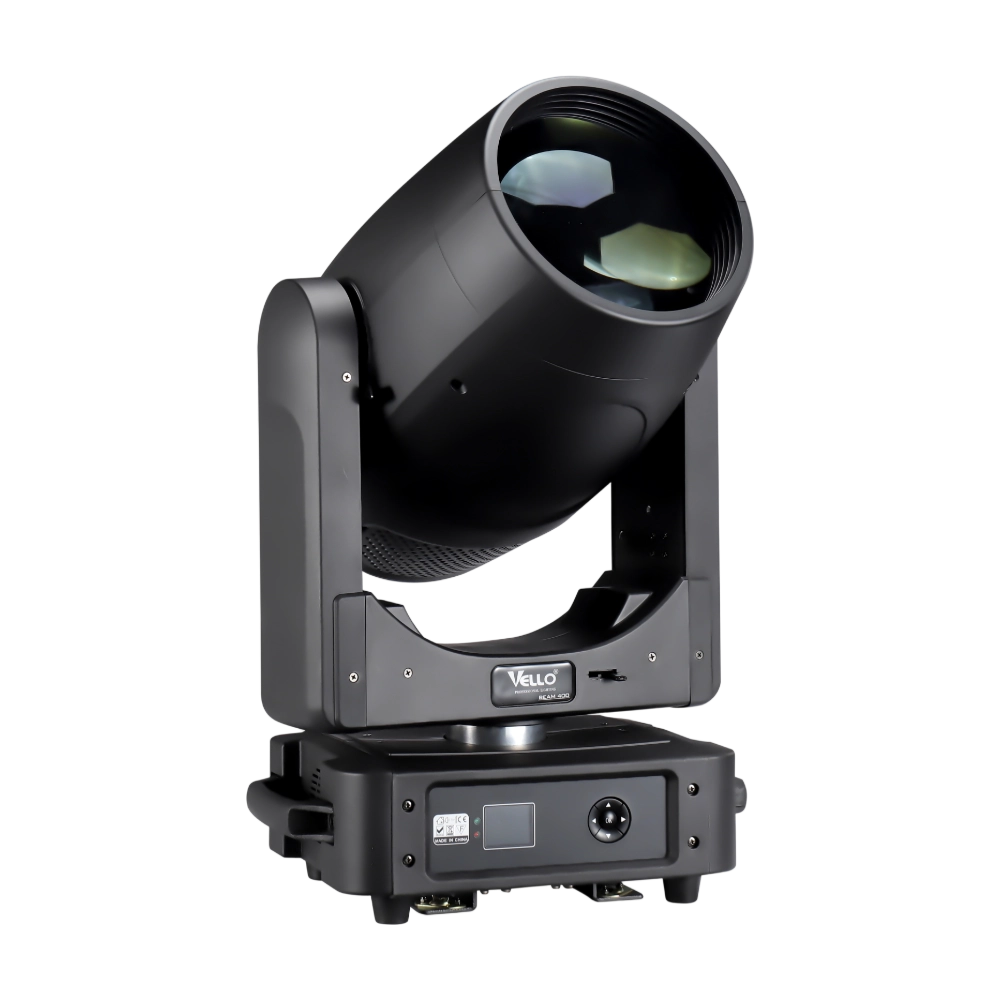
Moving Head Stage Light BEAM 400
BEAM400 is a 500W professional moving head beam powered by an OSRAM SIRIUS 371W discharge bulb, delivering a super-bright 1.8° sharp beam with impressive punch. It features 12 fixed gobos + open, a 14-color wheel, and a 16-facet circular rotating prism with multiple-facet effects, enabling dynamic aerial visuals. With 540° pan / 270° tilt, 16-bit movement resolution, and linear frost and focus, BEAM400 ensures precise and versatile performance. Comparable to traditional 750W moving heads, it combines high efficiency, smooth dimming, and reliable operation—ideal for concerts, tours, and large-scale stage productions.
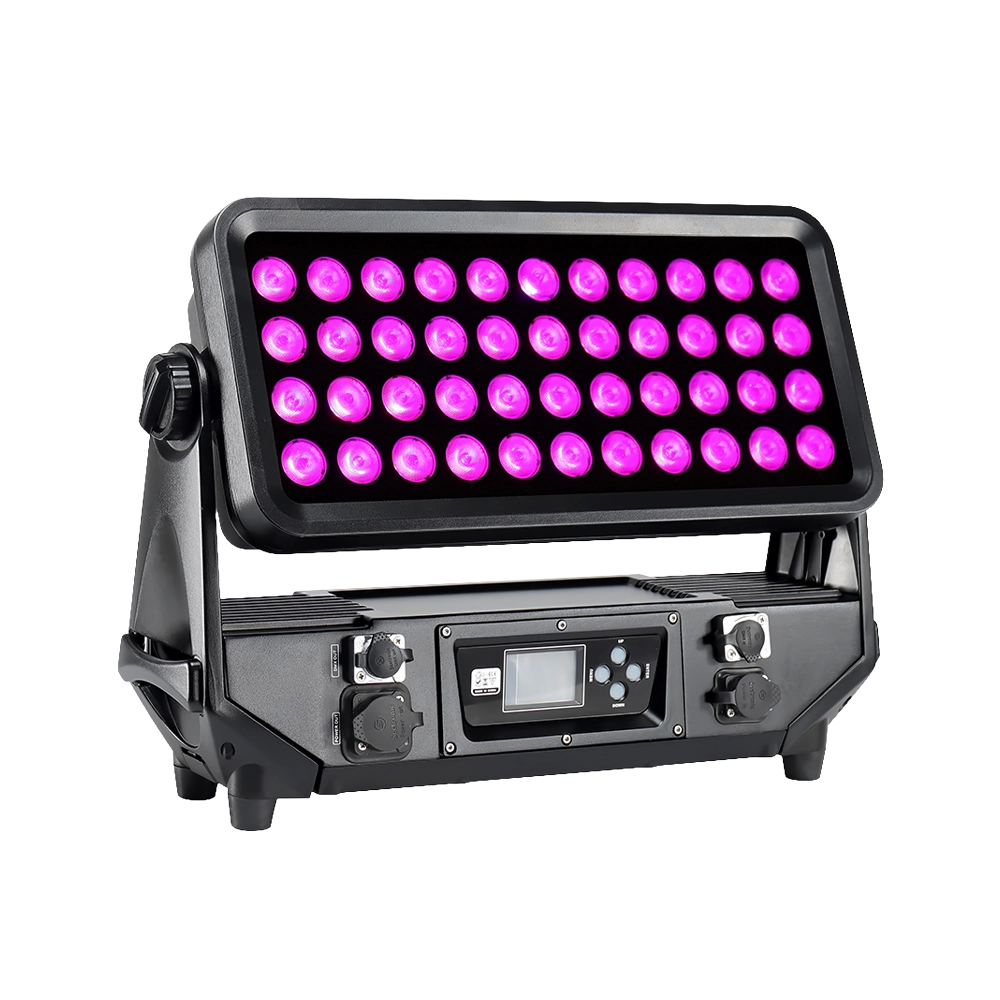
LED Light LED TOP P4
The Vello LED TOP P4 is a robust, high-output LED flood wash light designed for outdoor stages, architecture, and large-scale event lighting. Powered by 44x 15W RGBW LEDs from Cree, it delivers consistent brightness, smooth color mixing, and selectable beam angles of 20° or 40°. Built with a rugged IP65-rated die-cast aluminum housing, it withstands harsh weather conditions while offering smooth 0–100% dimming and flexible DMX control.
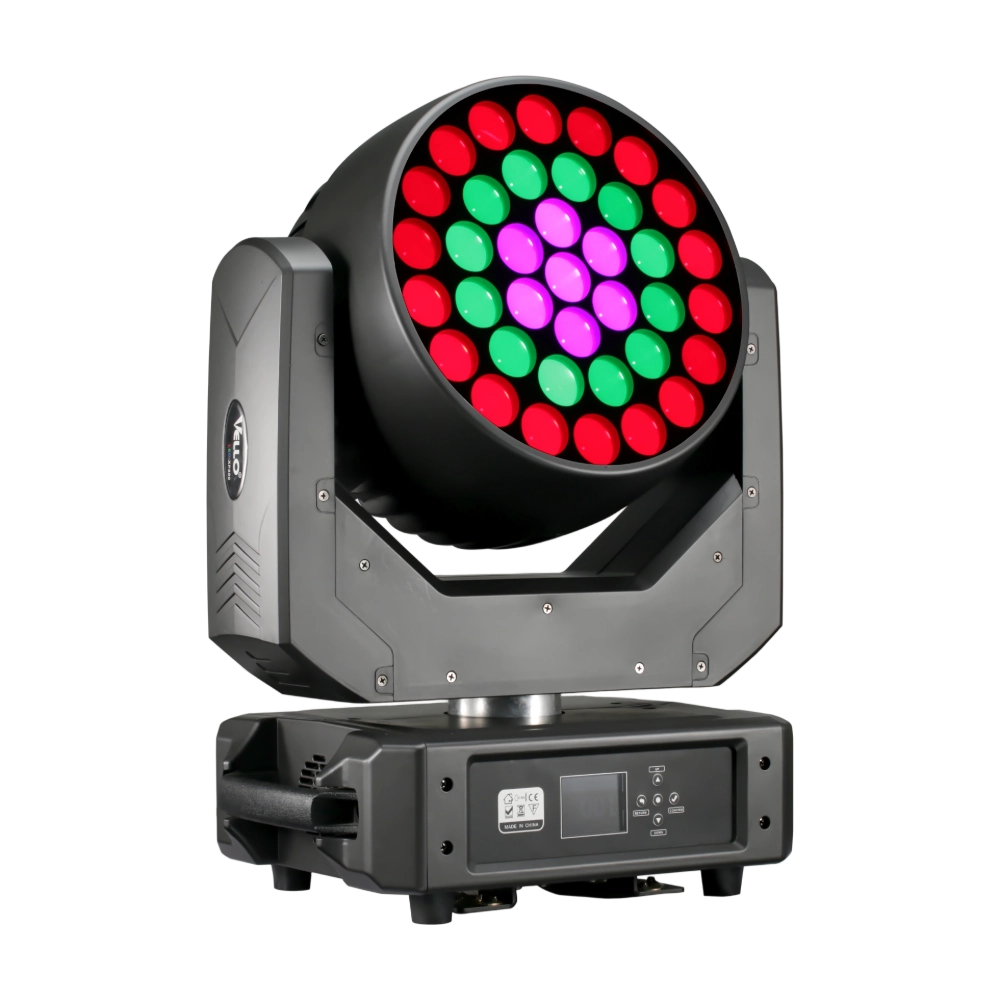
LED Moving Head Light XP800 (4in1)
The LED XP800 is a 600W moving head wash fixture, equipped with 37 × 20W Osram RGBW LEDs for brilliant color mixing and high output. With a wide 6°–50° electronic zoom, it easily transitions from sharp beams to smooth washes. The fixture supports 3-ring pixel control and an adjustable CTO range (2800K–8500K) for versatile applications. Featuring 540° pan / 310° tilt, high-speed 3-phase motors, and multiple DMX modes (16/28 channels), XP800 delivers powerful, precise, and dynamic performance. Compact and durable, it is an excellent choice for stages, theaters, and large-scale events requiring high brightness and flexibility.
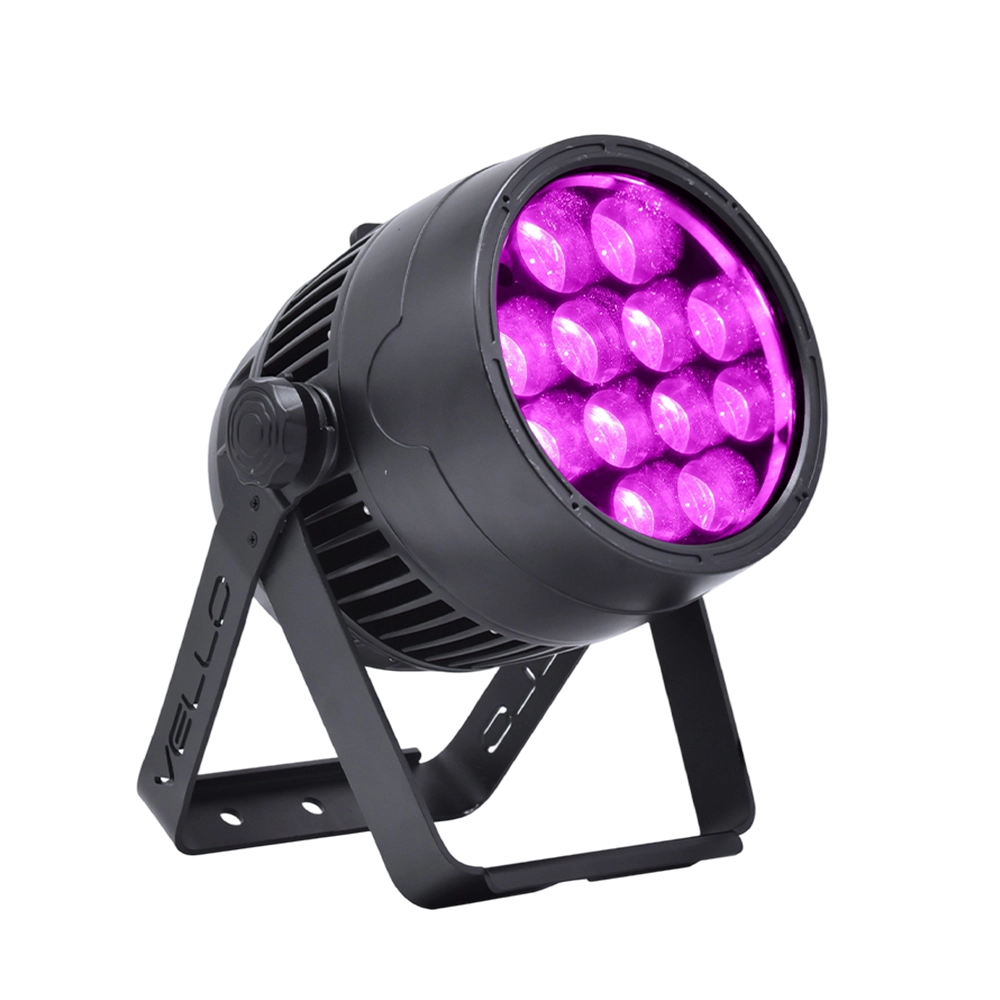
Stage LED Par Light LED ZOOMPAR 40
The Vello Zoom Par 40 IP is a powerful outdoor LED wash light equipped with 12x high-power 7-in-1 RGBACL LEDs. Designed for durability and rich color rendering, it features a wide motorized zoom (6°–50°), smooth dimming, and adjustable CTO presets (3200K–7500K), with 90+ CRI. With an IP66-rated die-cast aluminum body, it’s ideal for both indoor and outdoor applications, including stage lighting, architecture, live events, and installations.
Over 20 Years of Innovation in Stage & Studio Lighting
© 2026 VELLO. All Rights Reserved. 粤ICP备20023734号
Join our socials
VELLO
Whatsapp: +8613902276704
Vello Lighting
VelloLights