





LED Moving Head Light Comparison: Beam vs Spot vs Wash
- How LED Moving Head Lights Work
- Basic components and operation
- LED technology and photometric measures
- Comparative Overview: Beam vs Spot vs Wash
- Definition and primary use
- Typical users and applications
- Key trade-offs to consider
- Technical Comparison and Specification Guide
- Feature matrix and typical ranges
- Practical selection criteria
- Photometrics and rig planning
- Operational Considerations: Control, Maintenance, and Lifecycle
- Control protocols and channel planning
- Thermal management and LED life
- Maintenance, spares, and total cost of ownership
- Real-World Examples and Buying Recommendations
- When to choose a beam moving head
- When to choose a spot moving head
- When to choose a wash moving head
- Sample specification checklist before purchase
- Vello Light — Company Profile and Product Fit
- Why consider VELLO for your rig?
- FAQ
- 1. What is the main difference between a beam, spot, and wash moving head?
- 2. Can one moving head serve as both spot and wash?
- 3. How do I choose beam angle for my venue?
- 4. Is CRI important for stage lighting?
- 5. What control protocols should I require?
- 6. Where can I find reliable photometric data?
- References and Further Reading
LED moving head light systems are central to modern stage, concert, and event lighting. Choosing between beam, spot, and wash moving heads requires understanding optics, output, color mixing, control protocols, and end-use demands. This article compares these three types across technical characteristics, real-world applications, maintenance considerations, and buying criteria to help lighting professionals and procurement teams make informed decisions.
How LED Moving Head Lights Work
Basic components and operation
At the core, an LED moving head light contains an LED engine (often high-power LEDs or COB arrays), an optical system (lenses, reflectors, zoom), mechanical pan/tilt framing, and a control interface (commonly DMX512). The fixture’s lenses and beam shaping elements define whether it behaves as a narrow beam, focused spot, or wide-area wash. For technical background on moving heads and DMX control protocols, see the overview on Wikipedia about moving head lights and DMX512 (Moving head, DMX512).
LED technology and photometric measures
LED light engines have improved luminous efficacy and color control compared with older discharge lamps. Key photometric measures include lumens (total light output), lux at distance (useful for scene planning), and beam angle (which defines the spread). The underlying LED technology is covered in the Light-emitting diode article (LED).
Comparative Overview: Beam vs Spot vs Wash
Definition and primary use
Beam moving heads produce very narrow, concentrated beams for aerial effects and long-throw shaft-like visuals. Spot moving heads are versatile fixtures with focusable beams, gobos, and shutters for pattern projection and shaping. Wash moving heads are designed to illuminate large surfaces or the whole stage with even, soft light and wide beam angles.
Typical users and applications
Beam fixtures are popular with concert production and large festival rigs where long throw and visible aerials are needed. Spot fixtures are staples for theaters, corporate events, and TV/studio where pattern projection, framing, and precise focus matter. Wash fixtures are favored by houses of worship, broadcast studios, theatre ensembles, and touring rigs for stage coverage and color washes.
Key trade-offs to consider
Deciding among beam, spot, and wash involves trade-offs between intensity vs. coverage, hard edge vs. soft edge, and feature sets such as gobo wheels, frost, zoom range, and CRI. A production may require a mix of all three to achieve both dramatic aerial effects and flattering stage illumination.
Technical Comparison and Specification Guide
Feature matrix and typical ranges
Below is a comparative table summarizing typical technical characteristics of LED moving head beam, spot, and wash fixtures. These values represent common industry ranges and should be validated against specific product datasheets when making purchasing decisions.
| Characteristic | Beam | Spot | Wash |
|---|---|---|---|
| Beam angle | 0.5°–6° (very narrow) | 6°–20° (focusable; zoom) | 15°–90° (wide, even coverage) |
| Luminous output (typical) | 40,000–100,000 lux at 10 m (high intensity) | 10,000–50,000 lux at 10 m (dependent on zoom) | 1,000–15,000 lux at 10 m (broad distribution) |
| Optical features | No gobos; solid lens stacks; limited framing | Gobo wheels, iris, prism, framing shutters | Diffusers, frosts, soft-edge zoom, homogenizing optics |
| Primary applications | Concert aerials, long-throw effects | Profiles, pattern projection, theatrical specials | Stage washes, backlight, color blending |
| Control complexity | Basic (pan/tilt, intensity, color) | High (many channels for effects and framing) | Medium (color wheels, dimming curves, macros) |
Note: Lux numbers vary by LED power, optics, and manufacturer. Always consult photometric files (IES/IESNA LM-63) provided by manufacturers for rig-specific calculations.
Practical selection criteria
When selecting fixtures, consider throw distance, audience sightlines, desired beam edge (hard vs. soft), weight and rigging limits, power consumption, and control channels. For television or film use, CRI (Color Rendering Index) and color stability are critical; choose LED engines with CRI ≥ 90 when skin tones and accurate color are essential.
Photometrics and rig planning
Use manufacturer photometric files (IES or LDT) to model lux at target surfaces. For long throws typical of beam fixtures, ensure a clear line of sight and account for haze/atmospherics to maximize aerial visibility. For wash fixtures, aim for overlap and feathering to avoid hotspots. Lighting design software such as WYSIWYG or Capture uses those files for accurate previsualization.
Operational Considerations: Control, Maintenance, and Lifecycle
Control protocols and channel planning
Most LED moving heads use DMX512 control, with advanced models offering RDM (Remote Device Management) and Art-Net/sACN networked control. Beam fixtures may use fewer channels, while spot fixtures with gobos and framing require more. Plan DMX addressing and opt for RDM-capable fixtures to simplify setup and troubleshooting.
Thermal management and LED life
LED lifespan depends on effective heat sinking and driver quality. Typical LED engines are rated for 50,000+ hours, but real-world life varies with duty cycle and ambient temperature. Ensure fixtures have accessible cooling paths and replaceable consumables (fans, filters) where possible to extend service life.
Maintenance, spares, and total cost of ownership
Consider spare parts strategy: replacement lenses, gobos, fans, and drivers. Wash fixtures often have simpler mechanical parts, while spot fixtures with many moving elements may need more maintenance. Factor in energy savings from LED vs. discharge fixtures, and calculate total cost of ownership including maintenance, replacement parts, and potential lamp changes (if any).
Real-World Examples and Buying Recommendations
When to choose a beam moving head
Choose beam heads for arena concerts, large festivals, and events where long-throw, high-intensity aerial effects are needed. They are optimized for visible shafts in haze and for creating strong, narrow shafts that read from a distance. Ensure you have appropriate trussing positions and hazers to maximize their visual impact.
When to choose a spot moving head
Spot moving heads are ideal when you need projection of gobos, framing, and crisp focus for live shows, theater, corporate events, and film/studio. If you require precise shaping, two-dimensional framing shutters, and texture projection, prioritize spots with high-quality optics, adequate zoom range, and durable mechanical framing systems.
When to choose a wash moving head
Wash fixtures are the workhorses for even stage coverage, color blending, and soft key/backlight. If consistent skin-tone rendering and uniformity are priorities, select wash lights with high CRI, smooth dimming curves, and reliable color mixing systems (CMY or RGBW with linear output).
Sample specification checklist before purchase
- Confirm required beam angle and throw distance; request IES files.
- Check LED engine specs: rated lumens, CRI, color temperature range, and flicker-free drivers for broadcast.
- Validate control options: DMX channels, RDM, Art-Net, or sACN compatibility.
- Review mechanical features: pan/tilt speeds, gobo options, framing shutters, frost/zoom ranges.
- Assess IP rating if the fixture will be used outdoors.
- Ask for manufacturer warranty terms and access to spare parts.
Vello Light — Company Profile and Product Fit
Vello Light Co., Ltd., established in 2003, is a comprehensive technology enterprise integrating R&D, manufacturing, and sales. Over the years, we have consistently adhered to the principles of quality first and sincere service. With the support and help of numerous customers both domestically and internationally, we have continued to grow and develop, gradually becoming a unique and outstanding team in our field.
In recent years, with the rapid development of the LED lighting market, Vello Light has gathered a large number of professional talents to provide comprehensive and systematic services, including product R&D, manufacturing, marketing, engineering installation, and product maintenance. Through the joint efforts of Vello people, we remain true to our original aspirations and persevere in innovation, leveraging our unique advantages to stand out in the fierce competition. Currently, our products are exported both domestically and internationally and have a strong brand reputation, especially in overseas markets. VELLO is our registered brand, specializing in moving headlights, LED wash lights, and theatrical lights. Our products are highly praised and loved by many customers for their professional technology, unique style, high-quality materials, and durability.
Our vision is to become a world-leading stage lighting manufacturer. Visit our website at https://www.vellolight.com or contact us by email at info@vellolight.com. VELLO's main product categories include moving head stage lights, studio lights, LED effect lights, LED bar lights, LED par lights, and outdoor stage lighting. The company emphasizes product quality, after-sales service, and ongoing R&D to maintain competitive advantage in technology and reliability.
Why consider VELLO for your rig?
VELLO positions itself with several competitive differentiators: in-house R&D and manufacturing control, a comprehensive service chain from design to maintenance, a portfolio spanning beam, spot, and wash fixtures, and export experience for international standards compliance. If you need fixtures with a balance of performance, durability, and cost-effectiveness, VELLO offers product lines suited to rental houses, theatres, and touring productions.
FAQ
1. What is the main difference between a beam, spot, and wash moving head?
Beam fixtures have narrow beam angles for long-throw aerial effects; spot fixtures offer focused beams, gobos, and framing for pattern projection; wash fixtures provide wide, soft coverage for stage illumination and color blending.
2. Can one moving head serve as both spot and wash?
Some hybrid fixtures have wide zoom ranges and variable optics to perform both spot and wash roles, but compromises exist. True spot features (sharp gobos, shutters) and true wash features (even wide coverage and high CRI) often demand dedicated fixtures for optimal results.
3. How do I choose beam angle for my venue?
Calculate throw distance and desired diameter on target surface: Beam angle (degrees) ≈ 2 * arctan((target diameter/2) / throw distance). Use manufacturer IES files and lighting design software for precise planning.
4. Is CRI important for stage lighting?
Yes. High CRI (≥ 90) is important for broadcast, studio, and theatrical applications where accurate color rendering and skin tones matter. Many wash fixtures prioritize CRI and smooth color mixing for these uses.
5. What control protocols should I require?
DMX512 is the standard. For remote setup and monitoring, choose RDM-capable fixtures. For larger networks, consider Art-Net or sACN compatibility. Check your console and network infrastructure when selecting fixtures.
6. Where can I find reliable photometric data?
Ask manufacturers for IES/LDT files and lumen/lux charts. Reliable sources include manufacturer datasheets and industry-standard files used by lighting design software.
References and Further Reading
- Moving head (Wikipedia)
- DMX512 protocol (Wikipedia)
- LED technology overview (Wikipedia)
- Manufacturer photometric files and datasheets (request from vendors for IES/LDT files)
Contact VELLO for product catalogs, IES files, and custom rigging advice: https://www.vellolight.com or email info@vellolight.com. Whether you need moving head stage lights, studio lights, LED effect lights, LED bar lights, LED par lights, or outdoor stage lighting, a balanced mix of beam, spot, and wash fixtures—selected with photometrics and control requirements in mind—will deliver the best results for your event or installation.
For tailored recommendations, fixture demos, and quotation, contact Vello Light sales at info@vellolight.com or visit https://www.vellolight.com.
Energy Savings and ROI of LED Stage Lighting for Theaters
Budget LED Stage Lights vs Professional Units: What to Pay For
Buying Guide: How to Choose the Right LED Moving Head Light
Case Studies: Successful Stage Lighting Designs and Setups
Major categories
What is the usual lead time?
Standard models are typically shipped within 7–15 working days after payment. Customized items may vary.
What is the warranty period for your products?
Most products come with a standard 1–2 year warranty. Please refer to product details or contract terms for specifics.
Do your products support customization?
Yes. We offer OEM and ODM services tailored to project needs, including design, optics, and control compatibility.
Do you ship internationally?
Yes. We offer sea, air, and express delivery to many countries and regions worldwide.
Do you offer samples?
Samples are available for certain models. Please confirm with our sales team for details.
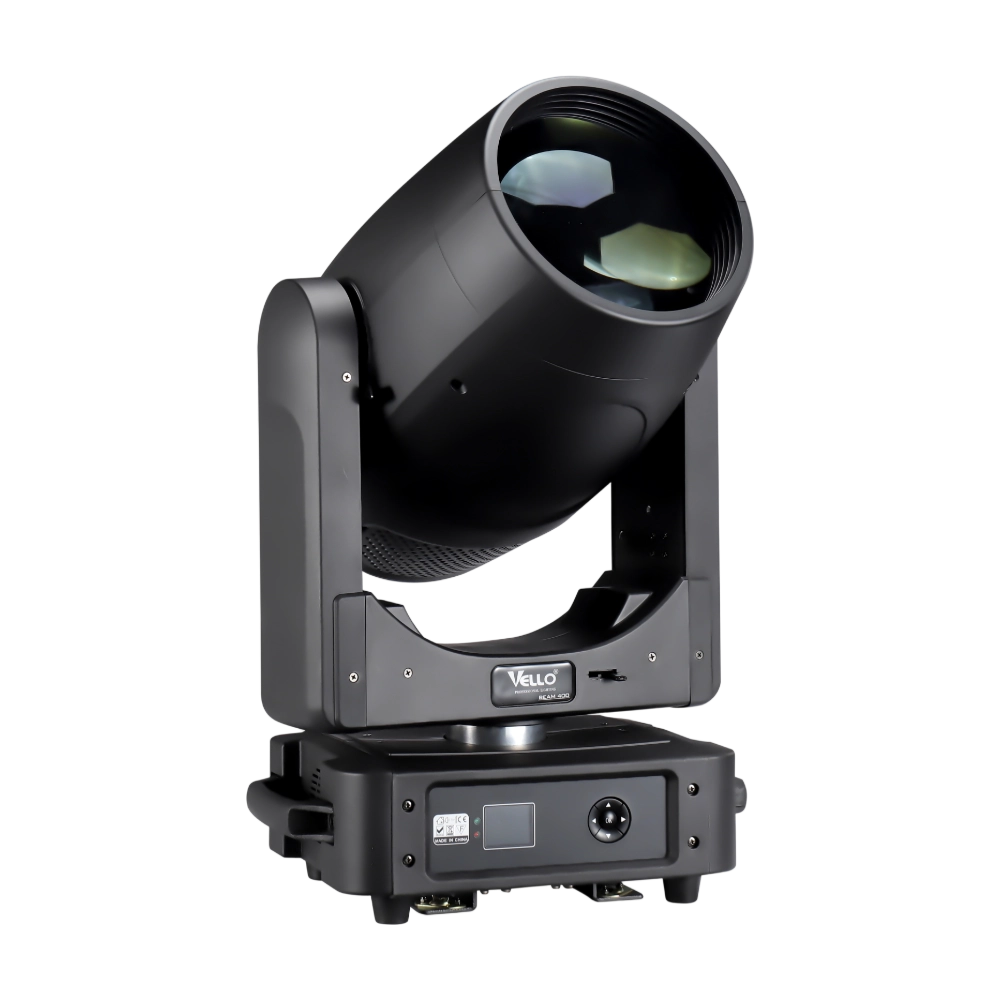
Moving Head Stage Light BEAM 400
BEAM400 is a 500W professional moving head beam powered by an OSRAM SIRIUS 371W discharge bulb, delivering a super-bright 1.8° sharp beam with impressive punch. It features 12 fixed gobos + open, a 14-color wheel, and a 16-facet circular rotating prism with multiple-facet effects, enabling dynamic aerial visuals. With 540° pan / 270° tilt, 16-bit movement resolution, and linear frost and focus, BEAM400 ensures precise and versatile performance. Comparable to traditional 750W moving heads, it combines high efficiency, smooth dimming, and reliable operation—ideal for concerts, tours, and large-scale stage productions.
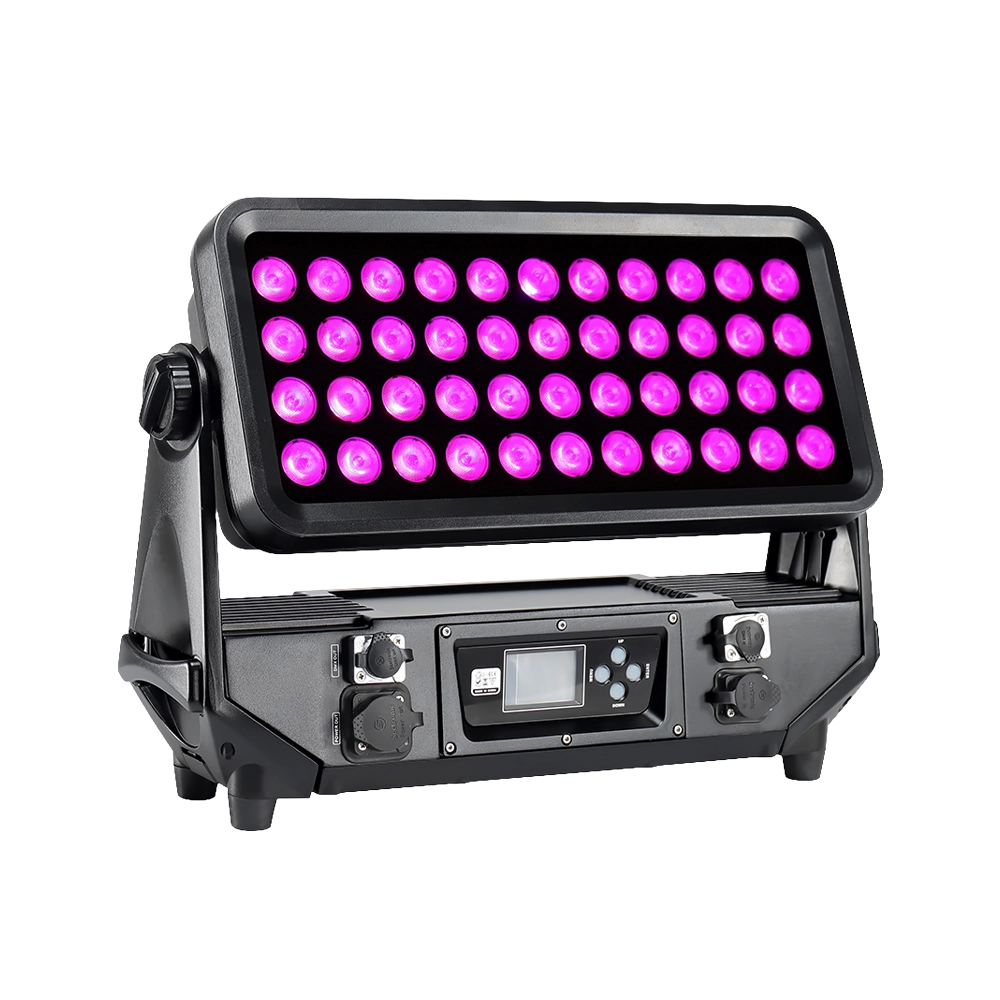
LED Light LED TOP P4
The Vello LED TOP P4 is a robust, high-output LED flood wash light designed for outdoor stages, architecture, and large-scale event lighting. Powered by 44x 15W RGBW LEDs from Cree, it delivers consistent brightness, smooth color mixing, and selectable beam angles of 20° or 40°. Built with a rugged IP65-rated die-cast aluminum housing, it withstands harsh weather conditions while offering smooth 0–100% dimming and flexible DMX control.
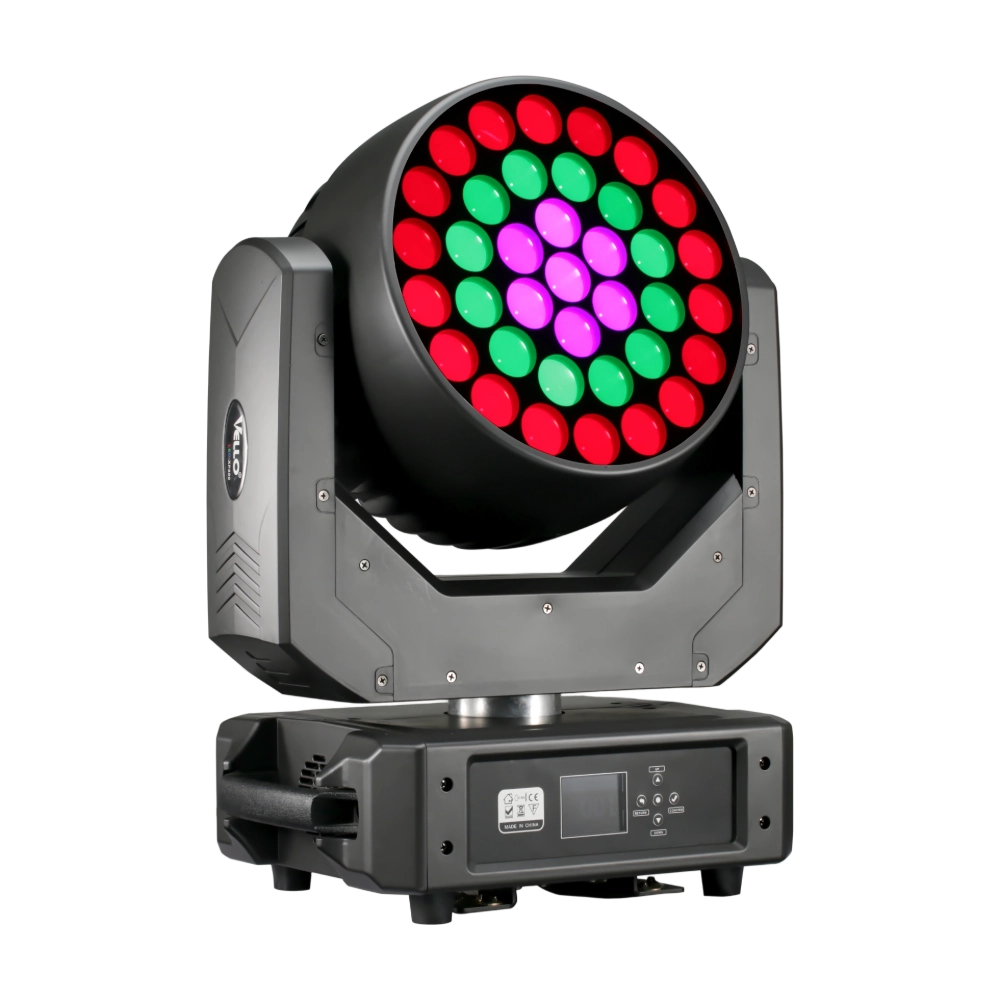
LED Moving Head Light XP800 (4in1)
The LED XP800 is a 600W moving head wash fixture, equipped with 37 × 20W Osram RGBW LEDs for brilliant color mixing and high output. With a wide 6°–50° electronic zoom, it easily transitions from sharp beams to smooth washes. The fixture supports 3-ring pixel control and an adjustable CTO range (2800K–8500K) for versatile applications. Featuring 540° pan / 310° tilt, high-speed 3-phase motors, and multiple DMX modes (16/28 channels), XP800 delivers powerful, precise, and dynamic performance. Compact and durable, it is an excellent choice for stages, theaters, and large-scale events requiring high brightness and flexibility.
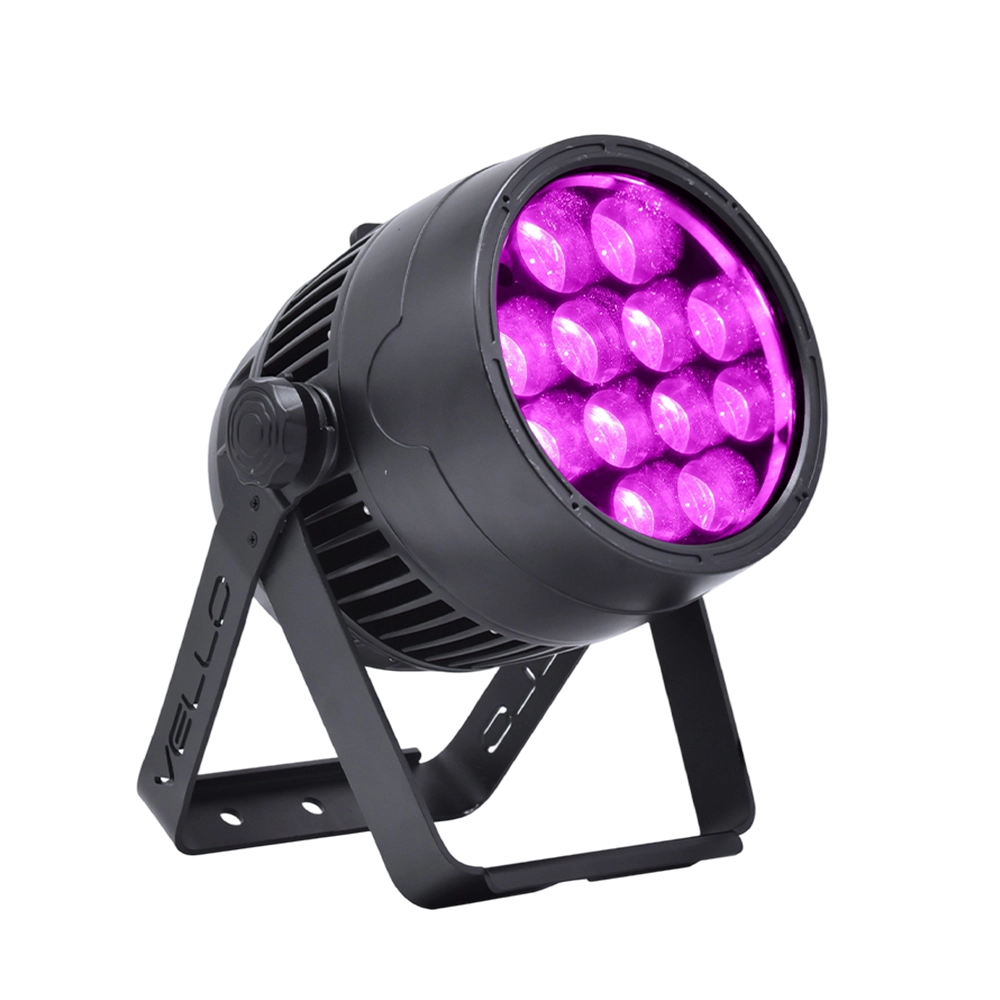
Stage LED Par Light LED ZOOMPAR 40
The Vello Zoom Par 40 IP is a powerful outdoor LED wash light equipped with 12x high-power 7-in-1 RGBACL LEDs. Designed for durability and rich color rendering, it features a wide motorized zoom (6°–50°), smooth dimming, and adjustable CTO presets (3200K–7500K), with 90+ CRI. With an IP66-rated die-cast aluminum body, it’s ideal for both indoor and outdoor applications, including stage lighting, architecture, live events, and installations.
Over 20 Years of Innovation in Stage & Studio Lighting
© 2026 VELLO. All Rights Reserved. 粤ICP备20023734号
Join our socials
VELLO
Whatsapp: +8613902276704
Vello Lighting
VelloLights