





Integrating LED Moving Head Light with Venue Lighting Systems
- Understanding Venue Lighting Architectures
- Common system topologies
- Key control protocols: DMX, Art‑Net, sACN
- Power distribution and electrical considerations
- Integrating LED Moving Head Light into Venue Systems
- Assessing compatibility and specifications
- Wiring and signal flow best practices
- Mounting, rigging and physical placement
- Control, Programming and Automation
- Control addressing and fixture profiles
- Show programming workflows
- Remote monitoring and diagnostics
- Performance Optimization, Safety and Maintenance
- Photometric and color calibration
- Thermal management and lifespan expectations
- Maintenance schedules and troubleshooting
- Comparative overview: LED moving head vs. discharge moving head
- Standards, Protocols and Deployment Examples
- Protocol capabilities and selection
- Example deployments by venue type
- Vello Light: Company Profile and Relevance for Integration
- Frequently Asked Questions (FAQ)
- 1. What is the main difference between an LED moving head light and an older discharge moving head?
- 2. Can I run LED moving head lights on my existing DMX cabling?
- 3. How do I ensure color consistency across multiple LED moving head fixtures?
- 4. Is RDM necessary for my installation?
- 5. What are the most common causes of LED fixture failure in venues?
- 6. How should I plan power distribution for multiple LED moving head fixtures?
- Contact, Consultation and Product Viewing
Integrating LED moving head light fixtures into a venue's lighting system requires more than buying fixtures. It demands an understanding of venue lighting architecture, control protocols, power and rigging constraints, photometric needs, and lifecycle economics. This guide provides pragmatic, verifiable steps—based on industry standards and published references—to help venue managers, lighting designers, and technicians plan, specify, and deploy LED moving head stage lights reliably and efficiently.
Understanding Venue Lighting Architectures
Common system topologies
Venues typically use one of several lighting topologies: centralized dimmer racks feeding distributed theater circuits, distributed power with intelligent fixtures addressed via DMX over long runs, or fully networked lighting where fixtures are nodes on an Ethernet-based control network. For modern LED moving head light deployment, a hybrid networked topology is common: power is distributed locally while control signals use Ethernet (Art‑Net or sACN) to reduce DMX cable runs and simplify addressing. For foundational context, see the general overview of stage lighting.
Key control protocols: DMX, Art‑Net, sACN
DMX512 remains the baseline protocol for addressing fixtures and channels; its specification and behavior are well documented (DMX512). For large installations or venues requiring many universes, Ethernet-based protocols—Art‑Net (Art‑Net) and Streaming ACN (sACN) (sACN)—are preferred. Remote Device Management (RDM) adds bidirectional configuration and diagnostics (RDM), allowing remote addressing, sensor readback, and firmware updates on supported LED moving head light fixtures.
Power distribution and electrical considerations
LED moving head light fixtures are far more power-efficient than older discharge lamps, but proper power distribution, inrush current planning, and circuit protection remain essential. Confirm fixture mains ratings (single‑phase 100–240VAC typical), inrush current specification, and ambient temperature derating. For outdoor or large touring rigs, consider isolated grounding and EMI suppression to avoid interference with long DMX or Ethernet runs.
Integrating LED Moving Head Light into Venue Systems
Assessing compatibility and specifications
Start with a specification checklist for each candidate LED moving head light: photometric output (lux at distance and beam angle), color system (CMY, RGBW, or color wheel), zoom range, pan/tilt resolution, beam/shutter/gobo options, power draw, control modes (DMX channels available), and protocol support (DMX, RDM, Art‑Net/sACN). Use manufacturer photometric files (IES/ANSI) when available to verify audience illumination and beam coverage. Manufacturers often provide IES files; if not, request them to validate sightlines and lux aims against your venue requirements.
Wiring and signal flow best practices
Design signal flow from console -> network node (Art‑Net/sACN) or DMX splitters -> fixtures. Keep DMX cable runs under recommended lengths for signal integrity, and use proper termination. For Ethernet-based control, segregate lighting control networks or use VLANs to avoid interference with house networks. When converting between DMX and Art‑Net/sACN, use reliable gateways and ensure universe mapping is documented and tested.
Mounting, rigging and physical placement
Consider line-of-sight for pan/tilt, cable access, fan noise and ventilation, and safe attachment points rated for moving loads. Use rated clamps and safety cables and follow local codes. For retrofit installations on existing trusses, check load capacity and dynamic loading characteristics of moving fixtures; pan/tilt motion imparts dynamic forces that should be considered by structural or rigging engineers.
Control, Programming and Automation
Control addressing and fixture profiles
Create a fixture inventory and DMX map before installation. Use fixture profiles in consoles (e.g., ETC, MA, GrandMA) to simplify programming. Profiles define channel functions (intensity, pan/tilt, color, gobo, macros). Where possible, use RDM to query devices for manufacturer and model information to reduce addressing errors.
Show programming workflows
Build a logical patch: group fixtures into zones (front wash, backlight, specials) and program cues using macros and submasters for rapid recall. For touring rigs, maintain portable showfiles with multiple patch layers (world view, venue offsets) so the same show can adapt quickly to different rig counts or fixture types. Record timing-critical moves and test transitions at performance speed to verify mechanical limits and avoid stress on motors.
Remote monitoring and diagnostics
Leverage RDM and network-based monitoring to track temperatures, lamp/fan status, and error logs. For larger venues, deploy monitoring dashboards that log device errors and runtime hours to schedule preventative maintenance. Many modern LED moving head light fixtures expose telemetry (fan rpm, LED array temperature) which can be polled and trended to extend service life.
Performance Optimization, Safety and Maintenance
Photometric and color calibration
LED fixtures exhibit manufacturing tolerances in color and output. Calibrate color output across fixtures using spectrometers or calibrated cameras when uniformity is critical—especially for broadcast, film, or high-end theatre. Use fixture calibration tools or console-level color correction (gel presets, white balance) to match hue and intensity.
Thermal management and lifespan expectations
LED arrays are thermal-sensitive: maintain adequate airflow and ambient temperature below manufacturer maximums. Proper heat-sinking and filtered vents are critical—excessive temperature accelerates lumen depreciation. LED lifetime is typically quoted in L70 (hours until 70% initial lumen output); verify the manufacturer's L70 figures and warranty terms.
Maintenance schedules and troubleshooting
Establish a maintenance plan: weekly visual inspections, quarterly cleaning of optics and filters, annual firmware checks, and component inspection (fans, motors). Common issues include DMX addressing errors, loss of network connectivity, mechanical binding in pan/tilt, and decreased LED output due to dust on optics. Use process-driven checklists and maintain spare parts for field-replaceable items like fans and power supplies.
Comparative overview: LED moving head vs. discharge moving head
| Characteristic | LED Moving Head Light | Discharge (e.g., HMI) Moving Head |
|---|---|---|
| Typical power draw | 100–700 W (fixture-dependent) | 800–2000 W |
| Color mixing | RGB/RGBW/CMY, instant; broad palette | Color wheels + dichroic filters; limited continuous spectrum |
| Maintenance | Lower (no lamp changes); fans/optics) | Higher (lamp changes, ballast service) |
| Warm-up time | Instant | Warm-up required for optimal color and output |
| Lifespan | L70 often 20,000–50,000+ hours | Lamp life 500–2000 hours |
Sources: general LED and lighting industry data, and reference context on LED technology: Light‑emitting diode, plus practical industry datasheets.
Standards, Protocols and Deployment Examples
Protocol capabilities and selection
Choose protocol based on scale and required features. The table below summarizes practical differences.
| Protocol | Max universes | Bidirectional | Best for |
|---|---|---|---|
| DMX512 | 1 per cable (512 channels) | No (unidirectional) | Small rigs, simple deployments |
| Art‑Net | Many (over Ethernet) | Depends on implementation | Large venues, ease of gatewaying |
| sACN (Streaming ACN) | Many (structured for lighting) | Depends; supports multicast | Large installs, universes management |
| RDM (E1.20) | Requires DMX line or compatible interface | Yes (device-to-controller) | Device setup, diagnostics |
For detailed protocol specifications, consult the DMX512 standard (DMX512) and protocol pages for Art‑Net and sACN (Art‑Net, sACN).
Example deployments by venue type
- Theatre: Fixed patching with DMX backbone and RDM-enabled fixtures for quick addressing; focus on color rendering and silent fans for audience comfort.
- House of worship: Mix of LED wash fixtures and moving heads for flexibility; emphasis on quiet operation and low power draw to fit existing electrical capacity.
- Live touring: Portable rigging points and robust networking (Art‑Net/sACN) with redundant network paths; fixtures chosen for transport durability and consistent color across batches.
- Outdoor festivals: IP-rated moving heads and distributed power hubs; weatherproof connectors and surge protection.
Vello Light: Company Profile and Relevance for Integration
Vello Light Co., Ltd., established in 2003, is a comprehensive technology enterprise integrating R&D, manufacturing, and sales. Over the years, Vello has consistently adhered to the principles of quality first and sincere service. With the support and help of numerous customers both domestically and internationally, Vello has continued to grow and develop, gradually becoming a unique and outstanding team in the field.
In recent years, with the rapid development of the LED lighting market, Vello Light has gathered a large number of professional talents to provide comprehensive and systematic services, including product R&D, manufacturing, marketing, engineering installation, and product maintenance. Through the joint efforts of Vello people, the company remains true to its original aspirations and perseveres in innovation, leveraging unique advantages to stand out in fierce competition. Currently, Vello products are exported both domestically and internationally and have a strong brand reputation, especially in overseas markets.
VELLO is the registered brand, specializing in moving head stage lights, LED wash lights, and theatrical lights. Vello products are highly praised and loved by many customers for their professional technology, unique style, high-quality materials, and durability. Their main product categories include moving head stage lights, studio lights, LED effect lights, LED bar lights, LED par lights, and outdoor stage lighting.
Vello’s competitive advantages include long-term manufacturing experience since 2003, integrated R&D and production capabilities, an emphasis on quality control, and experience exporting to multiple international markets. For venues integrating LED moving head light fixtures, Vello can provide end-to-end solutions—from product selection and configuration (including DMX/Art‑Net/RDM support) to installation and maintenance—making them a practical partner for both fixed venue installs and touring operations.
Frequently Asked Questions (FAQ)
1. What is the main difference between an LED moving head light and an older discharge moving head?
LED moving head lights use arrays of LEDs for light generation, offering instant on/off, lower power draw, longer service life (L70 ratings), and digital color mixing. Discharge moving heads (e.g., HMI) typically offer very high single-source output and different color characteristics but require lamp changes and have higher maintenance and power needs.
2. Can I run LED moving head lights on my existing DMX cabling?
Yes, most LED moving head light fixtures support DMX512 and can be run on existing DMX cabling, provided cable lengths and terminations follow DMX best practices. For larger installations, consider using Art‑Net or sACN over Ethernet to reduce wiring complexity.
3. How do I ensure color consistency across multiple LED moving head fixtures?
Use IES files and photometric data for initial selection, perform color calibration (spectrometer or calibrated camera), update firmware, and apply console-level color correction. Purchasing fixtures from the same production batch or same model line reduces variance.
4. Is RDM necessary for my installation?
RDM is not strictly necessary but is highly recommended for installations where remote addressing, monitoring, and diagnostics simplify setup and maintenance. RDM reduces ladder climbs and allows faster fault isolation and firmware management.
5. What are the most common causes of LED fixture failure in venues?
Common causes include inadequate cooling (dust-clogged heatsinks), mechanical wear on pan/tilt drives due to overuse or binding, power quality issues (surge, voltage dips), and poor network cabling causing communication errors. Regular cleaning, monitoring, and surge protection mitigate many issues.
6. How should I plan power distribution for multiple LED moving head fixtures?
Sum continuous power draw plus inrush considerations and distribute across circuits to avoid tripping protective devices. Use dedicated power runs for high-density clusters, and consider soft-start AC solutions where inrush is significant. Always follow manufacturer power specifications.
Contact, Consultation and Product Viewing
If you need assistance selecting LED moving head light fixtures, designing network and power infrastructure, or scheduling installation and maintenance services, contact our technical consultants for a venue assessment and customized integration plan. To view product lines and request IES files, photometrics, or demo units (including VELLO moving head stage lights, LED wash lights, effect lights, LED bar lights, LED par lights, and outdoor stage lighting), reach out to Vello Light Co., Ltd. for professional support and quotations.
Additional authoritative references: DMX512 (Wikipedia), Art‑Net (Wikipedia), Streaming ACN (sACN) (Wikipedia), and general LED technology context (Wikipedia). Industry market context available from market research (e.g., Grand View Research) and standards groups such as the Illuminating Engineering Society (IES).
Troubleshooting Common Moving Head Light Issues
Energy-Saving Tips for LED Stage Lighting
Top Moving Head Lights for Concerts and Tours
Energy Efficient LED Stage Lighting: Save Power and Costs
Major categories
Do you offer samples?
Samples are available for certain models. Please confirm with our sales team for details.
What is the usual lead time?
Standard models are typically shipped within 7–15 working days after payment. Customized items may vary.
What is the warranty period for your products?
Most products come with a standard 1–2 year warranty. Please refer to product details or contract terms for specifics.
Do you ship internationally?
Yes. We offer sea, air, and express delivery to many countries and regions worldwide.
Do your products support customization?
Yes. We offer OEM and ODM services tailored to project needs, including design, optics, and control compatibility.
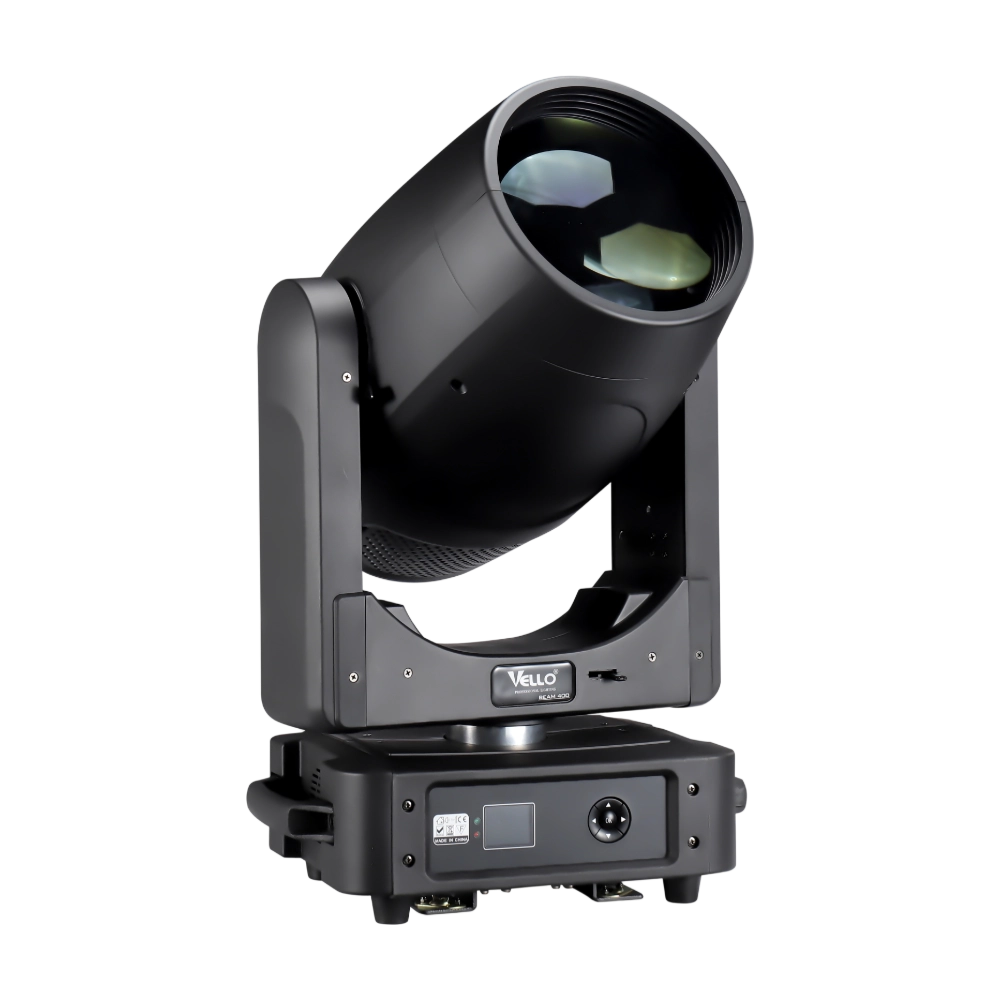
Moving Head Stage Light BEAM 400
BEAM400 is a 500W professional moving head beam powered by an OSRAM SIRIUS 371W discharge bulb, delivering a super-bright 1.8° sharp beam with impressive punch. It features 12 fixed gobos + open, a 14-color wheel, and a 16-facet circular rotating prism with multiple-facet effects, enabling dynamic aerial visuals. With 540° pan / 270° tilt, 16-bit movement resolution, and linear frost and focus, BEAM400 ensures precise and versatile performance. Comparable to traditional 750W moving heads, it combines high efficiency, smooth dimming, and reliable operation—ideal for concerts, tours, and large-scale stage productions.
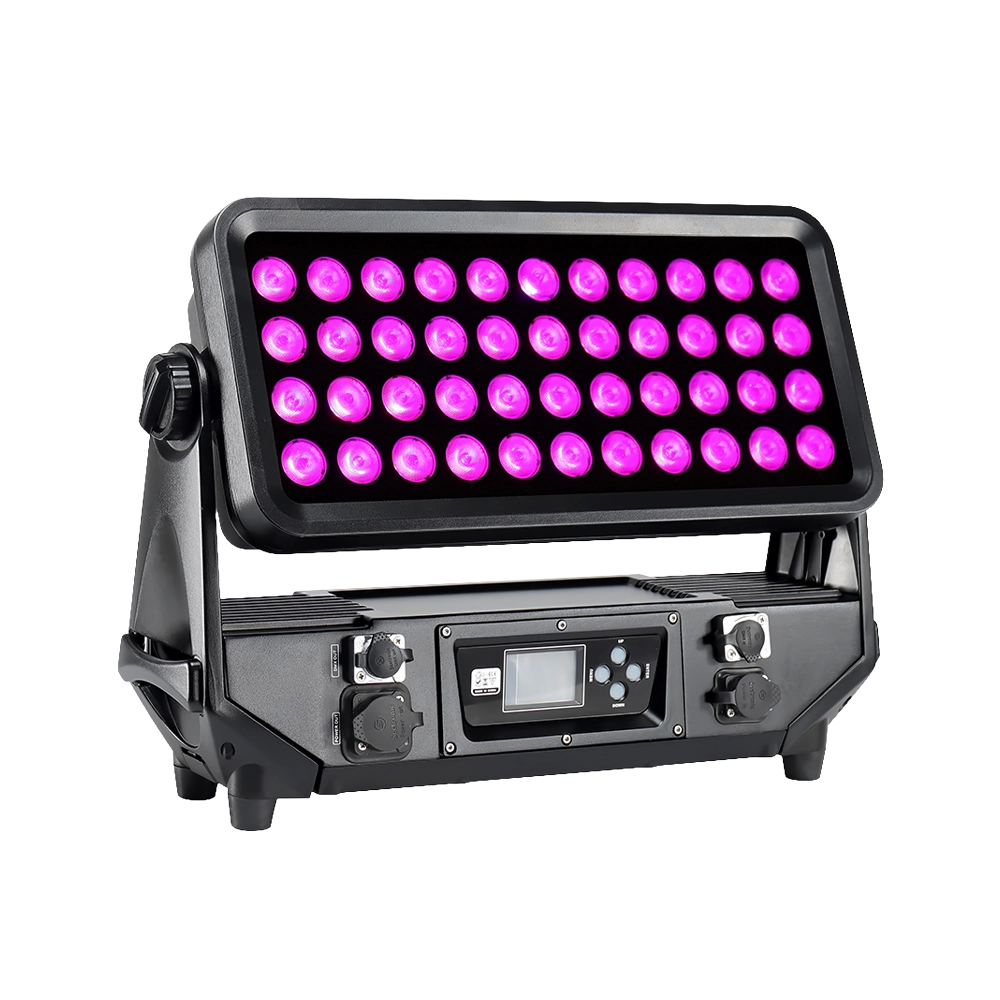
LED Light LED TOP P4
The Vello LED TOP P4 is a robust, high-output LED flood wash light designed for outdoor stages, architecture, and large-scale event lighting. Powered by 44x 15W RGBW LEDs from Cree, it delivers consistent brightness, smooth color mixing, and selectable beam angles of 20° or 40°. Built with a rugged IP65-rated die-cast aluminum housing, it withstands harsh weather conditions while offering smooth 0–100% dimming and flexible DMX control.
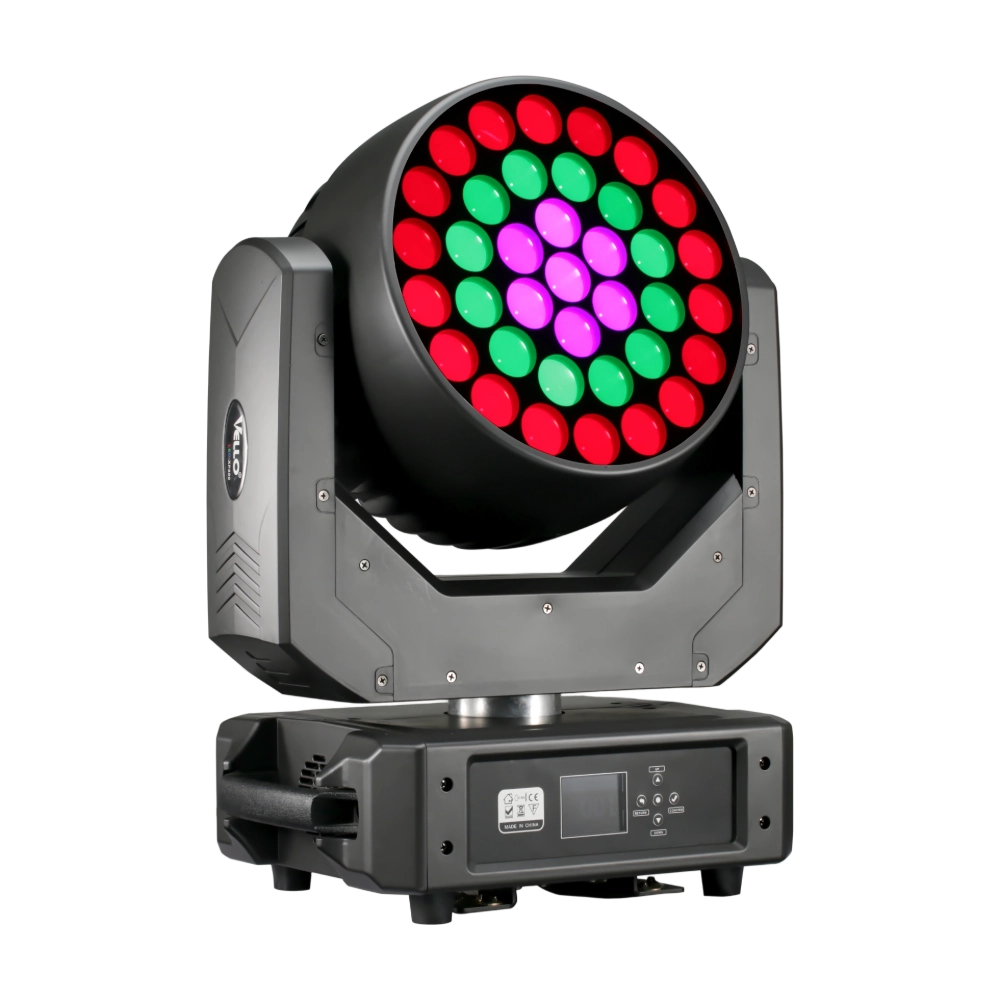
LED Moving Head Light XP800 (4in1)
The LED XP800 is a 600W moving head wash fixture, equipped with 37 × 20W Osram RGBW LEDs for brilliant color mixing and high output. With a wide 6°–50° electronic zoom, it easily transitions from sharp beams to smooth washes. The fixture supports 3-ring pixel control and an adjustable CTO range (2800K–8500K) for versatile applications. Featuring 540° pan / 310° tilt, high-speed 3-phase motors, and multiple DMX modes (16/28 channels), XP800 delivers powerful, precise, and dynamic performance. Compact and durable, it is an excellent choice for stages, theaters, and large-scale events requiring high brightness and flexibility.
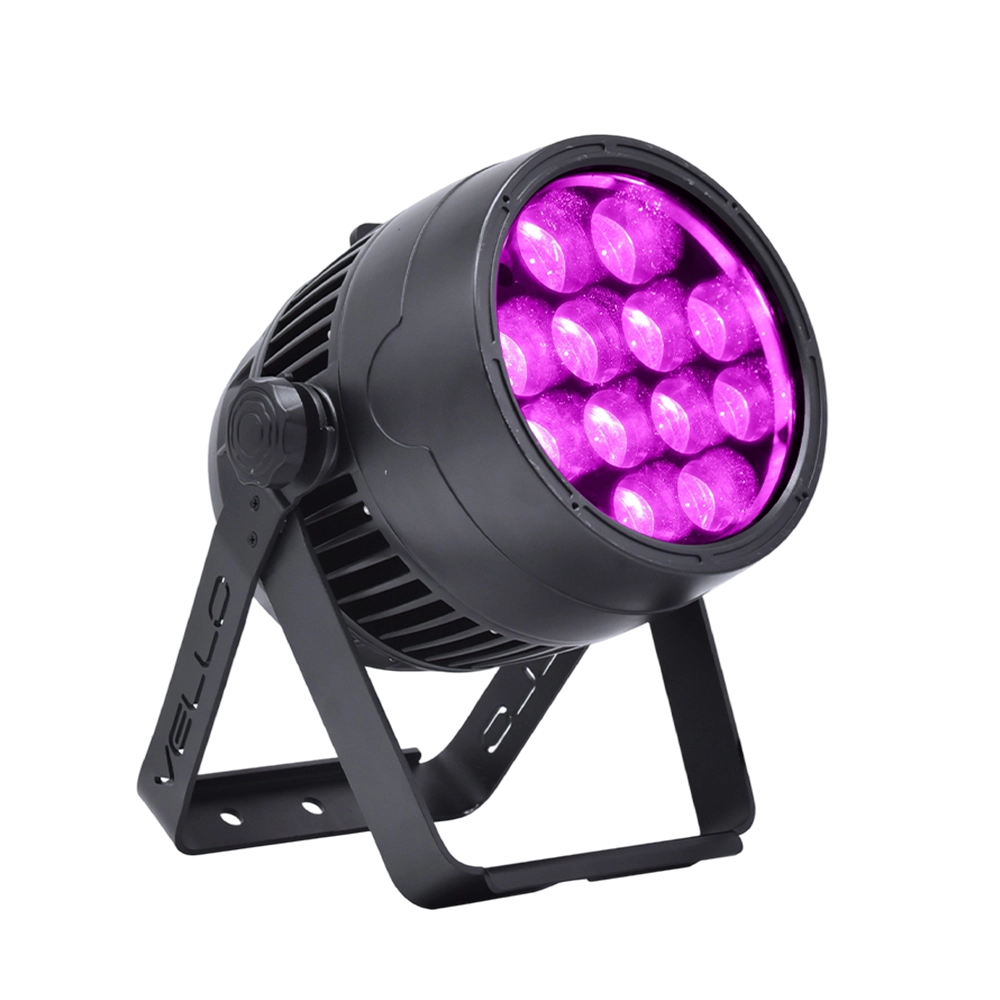
Stage LED Par Light LED ZOOMPAR 40
The Vello Zoom Par 40 IP is a powerful outdoor LED wash light equipped with 12x high-power 7-in-1 RGBACL LEDs. Designed for durability and rich color rendering, it features a wide motorized zoom (6°–50°), smooth dimming, and adjustable CTO presets (3200K–7500K), with 90+ CRI. With an IP66-rated die-cast aluminum body, it’s ideal for both indoor and outdoor applications, including stage lighting, architecture, live events, and installations.
Over 20 Years of Innovation in Stage & Studio Lighting
© 2026 VELLO. All Rights Reserved. 粤ICP备20023734号
Join our socials
VELLO
Whatsapp: +8613902276704
Vello Lighting
VelloLights