





Integrating DMX and Wireless Control with LED Stage Lights
- Understanding Stage Lighting Control Architectures
- Fundamentals of DMX512 and channel management
- Ethernet-based protocols: sACN and OSC
- Wireless approaches: W-DMX, Wi‑Fi, and BLE
- Integrating DMX and Wireless Control with LED Stage Lights
- Hybrid architectures: wired backbone with wireless nodes
- Addressing latency, interference, and reliability
- Power considerations and data termination
- Practical Implementation: Designing Systems for Real Events
- Small venues and touring rigs: best practices
- Large venues and fixed installations: redundancy and scaling
- Case study and example configurations
- Troubleshooting, Maintenance, and Future Trends
- Common failure modes and diagnostics
- Firmware, security, and remote management
- Emerging tech: IoT, BLE mesh, and 5G
- VELLO: A Partner for Reliable LED Stage Lights and Integrated Control
- FAQs
- 1. Can I mix wired DMX and wireless DMX in the same show?
- 2. What is the difference between DMX512 and sACN?
- 3. Are wireless DMX links secure?
- 4. How do I reduce latency and jitter in my lighting system?
- 5. What should I include in a maintenance checklist for LED stage lights?
- 6. How many DMX universes will I need?
- Contact and Next Steps
As a lighting systems designer and consultant, I have installed and commissioned hundreds of rigs that combine wired DMX, Ethernet-based control, and wireless links to operate LED stage lights in venues ranging from small clubs to large touring arenas. In this article I summarize proven architectures, standards, and best practices that let you deploy reliable, low-latency control networks for LED moving heads, wash lights, pars, and outdoor fixtures. I reference official standards and authoritative sources so you can validate choices against industry norms and plan installations that meet venue, broadcast, and safety requirements.
Understanding Stage Lighting Control Architectures
Fundamentals of DMX512 and channel management
DMX512 remains the baseline protocol for controlling LED stage lights in entertainment production. DMX512 is defined by the industry standard DMX512 (Wikipedia) and the ANSI E1.11 family. Key facts I use when planning systems: one DMX universe carries up to 512 channels, and physical DMX typically transmits at 250 kbps over balanced 5-pin XLR cabling or XLR-to-RJ45 adapters for routing. When I allocate channels for fixtures, I always map control parameters (dimmer, RGB or RGBW color, gobo, pan/tilt, etc.) so multiple fixtures and pixels do not inadvertently share channels, which causes unpredictable behavior.
Ethernet-based protocols: sACN and OSC
For larger installations and modern consoles, I recommend Ethernet-based control, commonly Streaming ACN (sACN / ANSI E1.31) and OSC for specialized triggers. sACN scales more easily than traditional DMX because Ethernet networks carry many universes and integrate with lighting consoles, media servers, and network management. See the sACN overview at sACN (Wikipedia). When designing networks, I treat each sACN universe as a logical DMX universe and ensure proper IGMP and multicast configuration on network switches to avoid flooding.
Wireless approaches: W-DMX, Wi‑Fi, and BLE
Wireless DMX systems (for example, proprietary W-DMX implementations) provide a drop-in replacement for copper DMX where cabling is impractical. Wi‑Fi and BLE can also be used for control, but they require careful handling of latency, packet loss, and security. The IEEE 802.11 family defines Wi‑Fi operation and is relevant when using wireless routers or access points for control data; you can read more at IEEE 802.11 (Wikipedia). For reliable theatrical use, I typically choose purpose-built Wireless DMX radios for fixture control and reserve Wi‑Fi for non-time-critical telemetry or configuration tasks.
Integrating DMX and Wireless Control with LED Stage Lights
Hybrid architectures: wired backbone with wireless nodes
In practice I design hybrid systems: a wired DMX or sACN backbone for core fixtures and critical paths, plus wireless nodes for FOH trims, remote followspots, or décor elements. A common pattern is console -> Ethernet switches -> DMX gateways (sACN to DMX) -> local Wireless DMX transmitters that feed groups of LED stage lights. This gives the deterministic benefits of a wired backbone while enabling flexibility for fixtures that move or are inaccessible by cable.
Addressing latency, interference, and reliability
Latency and interference are the top operational concerns. Wired DMX and sACN have predictable, low latency when configured correctly. Wireless links can introduce jitter or dropouts if RF planning is ignored. My checklist for reliable wireless control includes: perform an RF site survey, select frequencies to avoid local interference (e.g., avoid overlapping with venue Wi‑Fi 2.4 GHz networks if using a 2.4 GHz wireless DMX product), enable encryption where supported, and add redundancy such as dual radios or fallback wired paths. For protocol-specific technical details, consult the DMX512 specification summary at DMX512 and vendor documentation for wireless products.
Power considerations and data termination
LED stage lights require correct power distribution and data termination. When running copper DMX, use proper termination on the last fixture (typically a 120 ohm resistor across data+ and data-). For PoE or Ethernet-powered devices, follow manufacturer power budgets to avoid overload. I always document cable runs, termination points, and breaker assignments; a labeled system reduces troubleshooting time and risk of ground loops that can corrupt DMX signals.
Practical Implementation: Designing Systems for Real Events
Small venues and touring rigs: best practices
For small venues and touring bands, simplicity and repeatability are paramount. I prefer a single console that outputs both DMX and sACN, with compact Wireless DMX transmitters for a limited number of fixtures. Use short, high-quality DMX runs where possible, and carry spare terminators, XLR adapters, and a handheld RF analyzer. Map a minimal channel footprint per fixture (e.g., 8-16 channels) to save universes and simplify patching on the road.
Large venues and fixed installations: redundancy and scaling
Large fixed installations need redundancy. I design dual-consoled networks with mirrored sACN universes, redundant network switches with STP or equivalent, and multiple DMX-to-device gateways. For outdoor stages, use weather-rated DMX distribution and consider secondary wireless links with automatic failover for critical cues. Where broadcast or safety lighting is used, adhere to local electrical codes and standards such as IEC 60598 for luminaires.
Case study and example configurations
Below I compare representative architectures to help you choose a model that fits your project. The numbers are typical figures and depend on equipment and environment; I include references where applicable.
| Architecture | Max universes (typical) | Typical latency | Best use cases |
|---|---|---|---|
| Wired DMX (single universe) | 1 per cable (512 channels) | Sub 40 ms (depends on refresh) | Small rigs, simple patches |
| sACN over Ethernet | Many (limited by switch/config) | Sub 10-20 ms (network dependent) | Large venues, multi-universe management |
| Wireless DMX (proprietary) | 1-4 per transmitter (device dependent) | 20-50 ms (vendor varies) | Remote fixtures, temporary installs |
| Wi‑Fi/OSC/BLE | Many (network dependent) | Variable; can be higher jitter | Telemetry, non-critical control, mobile apps |
Sources: DMX512 technical details at Wikipedia, sACN overview at Wikipedia, and vendor wireless DMX information such as Wireless Solution AB documentation.
Troubleshooting, Maintenance, and Future Trends
Common failure modes and diagnostics
When a fixture fails to respond, my first steps are: verify power, check DMX addressing and termination, swap the cable to rule out wiring faults, and test with a known-good controller. For wireless failures, check signal strength, channel overlap with existing Wi‑Fi, and the radio pairing state. Tools I carry include a portable DMX tester, multimeter, and a laptop with network sniffer software for sACN troubleshooting.
Firmware, security, and remote management
Firmware mismatches and insecure defaults cause many operational issues. I maintain an inventory of fixture firmware versions and update schedules. For networked fixtures, change default passwords, use management VLANs for control traffic, and isolate lighting networks from public Wi‑Fi. For sACN over managed switches, configure IGMP snooping to reduce multicast noise and enable QoS for control packets.
Emerging tech: IoT, BLE mesh, and 5G
Trends that I track include BLE mesh for low-power pixel control, IoT-based device telemetry for predictive maintenance, and the potential role of 5G for ultra-low-latency wireless control in large outdoor events. While these technologies are promising, for mission-critical theatrical control I still favor dedicated lighting protocols and robust physical-layer planning.
VELLO: A Partner for Reliable LED Stage Lights and Integrated Control
Vello Light Co., Ltd., established in 2003, is a comprehensive technology enterprise integrating R&D, manufacturing, and sales. Over the years, Vello has consistently adhered to the principles of quality first and sincere service. With the support and help of numerous customers both domestically and internationally, Vello has continued to grow and develop, gradually becoming a unique and outstanding team in our field.
In recent years, with the rapid development of the LED lighting market, Vello Light has gathered a large number of professional talents to provide comprehensive and systematic services, including product R&D, manufacturing, marketing, engineering installation, and product maintenance. Through the joint efforts of Vello people, we remain true to our original aspirations and persevere in innovation, leveraging our unique advantages to stand out in the fierce competition. Currently, our products are exported both domestically and internationally and have a strong brand reputation, especially in overseas markets. VELLO is our registered brand, specializing in moving headlights, LED wash lights, and theatrical lights. Our products are highly praised and loved by many customers for their professional technology, unique style, high-quality materials, and durability.
As a lighting consultant working closely with vendors like Vello, I value manufacturers who combine solid engineering, transparent documentation, and responsive service. Vello offers a full range of LED stage lights and accessories that integrate well into hybrid DMX and Ethernet-based control systems. Their main product lines include moving head stage lights, studio lights, LED effect lights, LED bar lights, LED par lights, and outdoor stage lighting. You can review product specifications and support resources at vellolight.com or contact their team at info@vellolight.com.
Why I recommend VELLO for integrated systems: they maintain rigorous production standards, provide flexible firmware and DMX addressing schemes, and support custom configurations for touring and fixed installations. Their manufacturing maturity since 2003 and a clear vision to become a world-leading stage lighting manufacturer make them a reliable partner for projects that require both performance and consistency.
FAQs
1. Can I mix wired DMX and wireless DMX in the same show?
Yes. Mixing wired and wireless is common. Use a wired backbone for mission-critical fixtures and wireless for non-critical or mobile elements. Ensure proper DMX addressing, RF planning, and a clear failover plan.
2. What is the difference between DMX512 and sACN?
DMX512 is a serial protocol carrying up to 512 channels per universe over balanced cabling. sACN (ANSI E1.31) runs over Ethernet and can carry many universes with better scalability and network management; more details at DMX512 and sACN.
3. Are wireless DMX links secure?
Security depends on the product. Some wireless DMX systems offer encryption and frequency-hopping to improve security and resilience. I recommend choosing radios with encryption and physically securing access to transmitters.
4. How do I reduce latency and jitter in my lighting system?
Use a wired backbone where possible, select low-latency gateways, configure network QoS, and minimize multicast flooding. For wireless links, perform RF planning and choose high-quality radios engineered for live production.
5. What should I include in a maintenance checklist for LED stage lights?
Document firmware versions, wiring labels, termination points, DMX addressing, spare parts list (terminators, cables, fuses), and a schedule for lamp/LED module and cooling system inspections. Regular firmware and config backups are also important.
6. How many DMX universes will I need?
Calculate channels per fixture (consult the fixture manual), then divide total channels by 512. Allow headroom for future expansion and consider using sACN when you anticipate many universes.
Contact and Next Steps
If you are planning an installation, retrofit, or tour and want a system that combines DMX reliability with the flexibility of wireless control, I can help you design a solution or connect you with VELLO Light Co., Ltd. for compatible fixtures and OEM support. Visit https://www.vellolight.com to review product lines and technical documentation, or email info@vellolight.com to request a quote and detailed wiring/control diagrams. I also provide system design, RF surveys, and on-site commissioning for LED stage lights and integrated control networks.
Wireless and Art-Net for Moving Head Lights
Best LED Stage Lights for Concerts and Live Events
Compact and Portable Stage Lights for Touring Bands
Color Mixing and Effects with Stage LED Lights Explained
Major categories
What is the usual lead time?
Standard models are typically shipped within 7–15 working days after payment. Customized items may vary.
Do you ship internationally?
Yes. We offer sea, air, and express delivery to many countries and regions worldwide.
What is the warranty period for your products?
Most products come with a standard 1–2 year warranty. Please refer to product details or contract terms for specifics.
Do your products support customization?
Yes. We offer OEM and ODM services tailored to project needs, including design, optics, and control compatibility.
Do you offer samples?
Samples are available for certain models. Please confirm with our sales team for details.
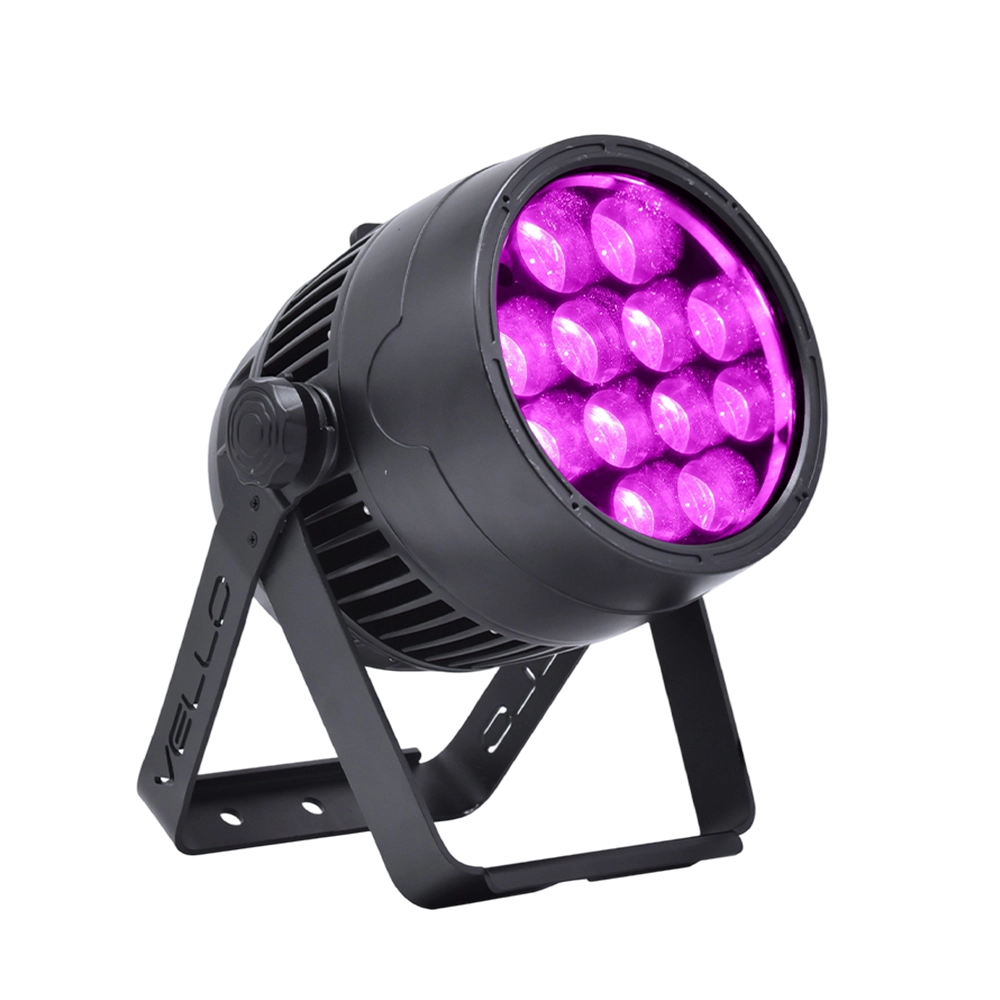
Stage LED Par Light LED ZOOMPAR 40
The Vello Zoom Par 40 IP is a powerful outdoor LED wash light equipped with 12x high-power 7-in-1 RGBACL LEDs. Designed for durability and rich color rendering, it features a wide motorized zoom (6°–50°), smooth dimming, and adjustable CTO presets (3200K–7500K), with 90+ CRI. With an IP66-rated die-cast aluminum body, it’s ideal for both indoor and outdoor applications, including stage lighting, architecture, live events, and installations.
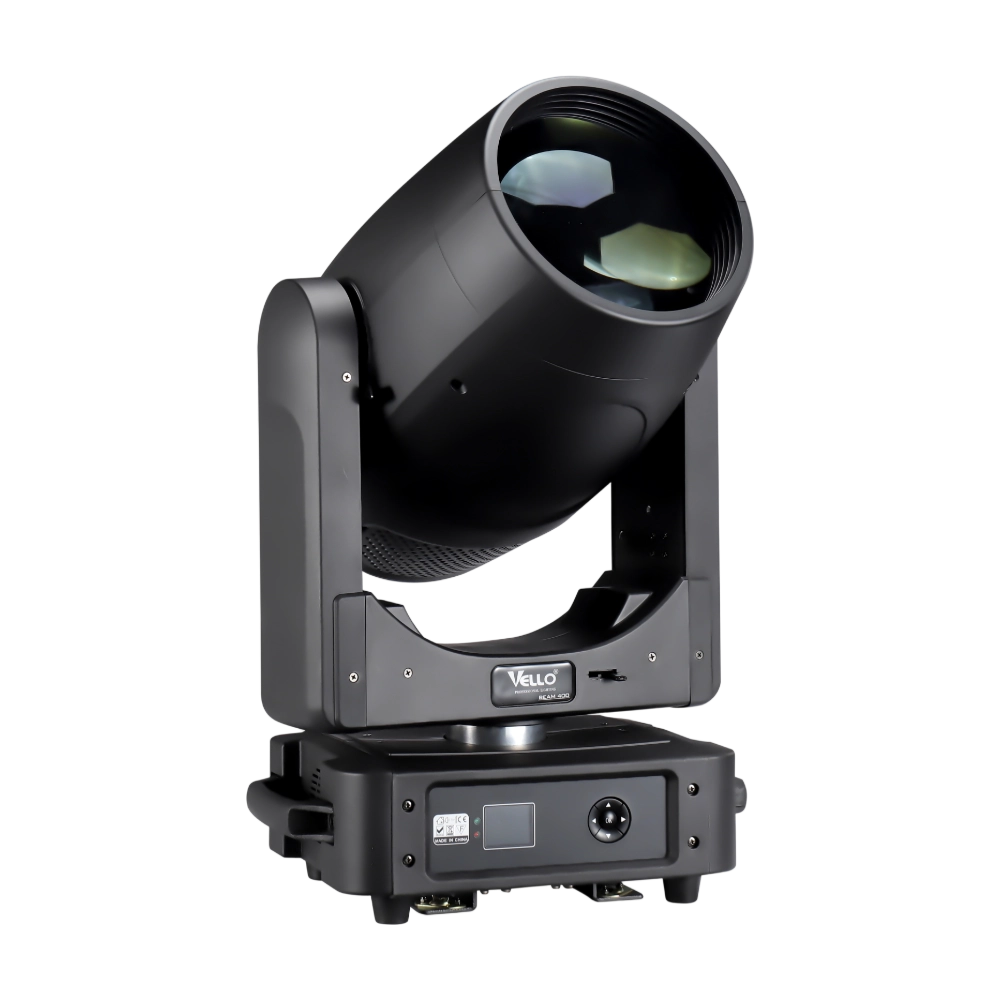
Moving Head Stage Light BEAM 400
BEAM400 is a 500W professional moving head beam powered by an OSRAM SIRIUS 371W discharge bulb, delivering a super-bright 1.8° sharp beam with impressive punch. It features 12 fixed gobos + open, a 14-color wheel, and a 16-facet circular rotating prism with multiple-facet effects, enabling dynamic aerial visuals. With 540° pan / 270° tilt, 16-bit movement resolution, and linear frost and focus, BEAM400 ensures precise and versatile performance. Comparable to traditional 750W moving heads, it combines high efficiency, smooth dimming, and reliable operation—ideal for concerts, tours, and large-scale stage productions.
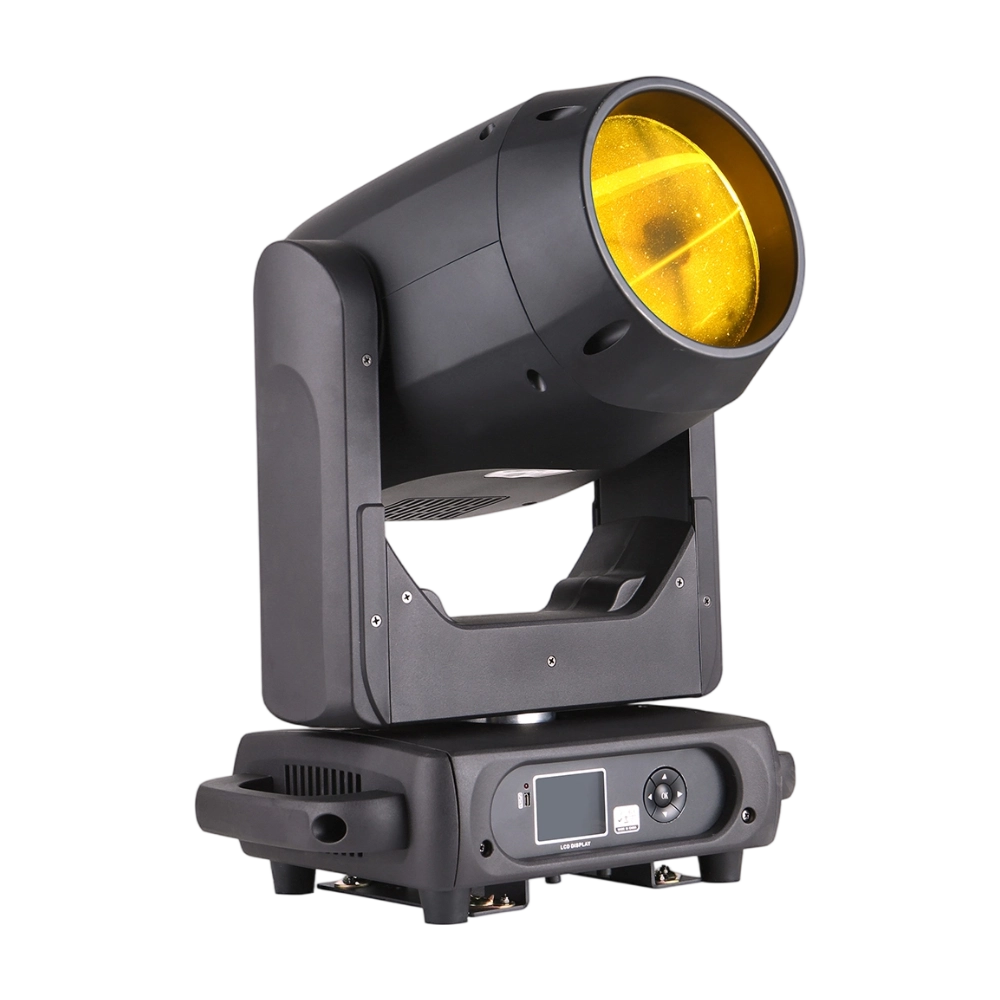
Moving Head Stage Light BEAM 360
BEAM360 is a 400W high-power moving head beam equipped with an OSRAM SIRIUS 311W discharge lamp, delivering a sharp 1.8° beam with super brightness. It features 14 colors + open, 12 fixed metal gobos + open, and dual prisms (8-facet circular + 8+16 multi-facet combination) for dynamic aerial effects. With 540° pan / 270° tilt, 16-bit movement, and linear frost and focus, BEAM360 ensures precision and versatility. Compact yet powerful, it rivals traditional 575W moving heads, making it ideal for concerts, clubs, and large-scale stage productions.
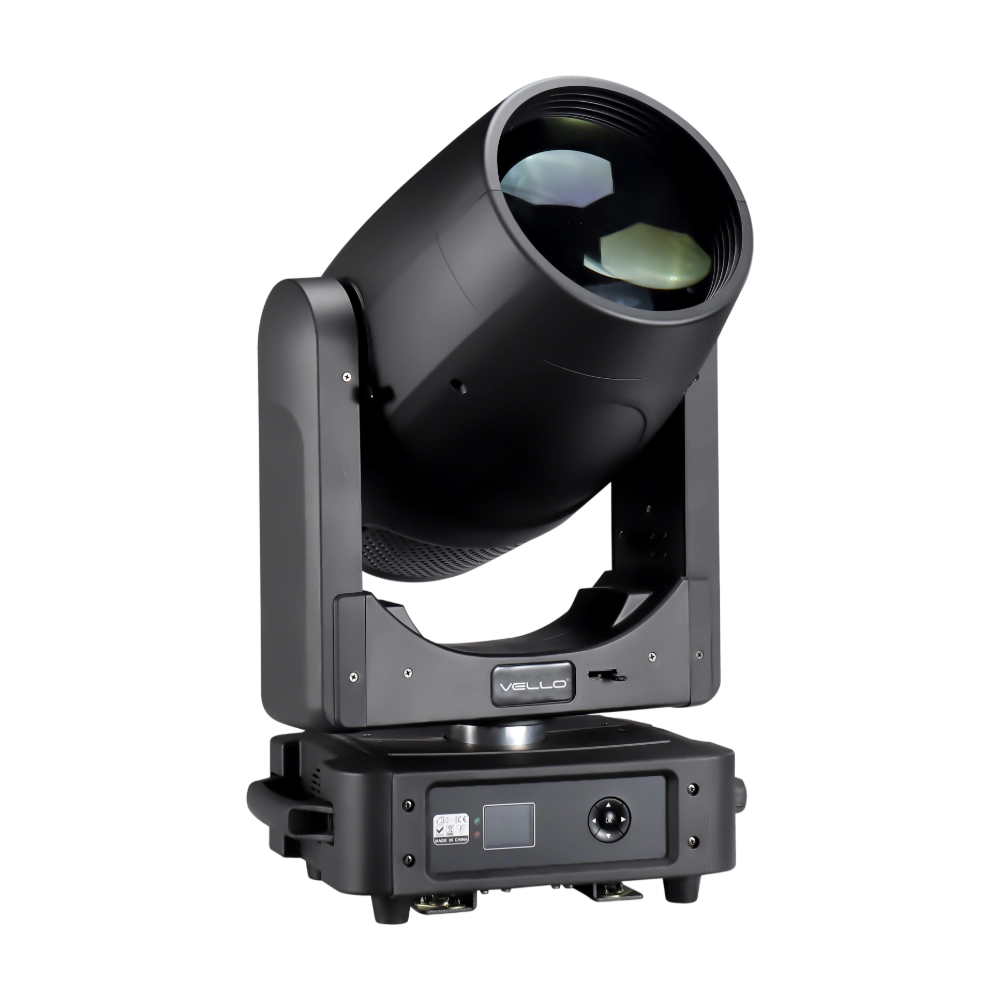
Moving Head Light BEAM 450
The BSW450 is a high-performance moving head fixture equipped with an original Osram 420W bulb, delivering exceptional brightness, precision, and versatility. Designed for professional stage applications, it seamlessly combines beam, spot, and wash functions in one compact unit, making it a powerful all-in-one lighting solution.
Over 20 Years of Innovation in Stage & Studio Lighting
© 2026 VELLO. All Rights Reserved. 粤ICP备20023734号
Join our socials
VELLO
Whatsapp: +8613902276704
Vello Lighting
VelloLights